

Power Your Software Testing with AI Agents and Cloud
The Native AI-Agentic Cloud Platform to Supercharge Quality Engineering. Test Intelligently and Ship Faster.


- TestMu AI (Formerly LambdaTest)
- /
- Blog
- /
- xUnit Setup for Selenium WebDriver: A Complete Guide
xUnit Setup for Selenium WebDriver: A Complete Guide
This Selenium xUnit testing tutorial covers different ways of installing Selenium WebDriver for the xUnit framework in C#.
Last Updated on:
Setting up Selenium WebDriver for xUnit in C# means creating an xUnit Test Project in Visual Studio, then installing the Selenium.WebDriver and Selenium.WebDriver.ChromeDriver NuGet packages. Both packages install through the NuGet Package Manager GUI or the Package Manager Console, and the default [Fact] attribute in the generated test class picks up the WebDriver calls with no extra configuration. This guide covers creating a new C# xUnit project, downloading Selenium WebDriver through Visual Studio or the Package Manager console, and how AI coding assistants speed up that setup.
Key Takeaways
- Setting up Selenium WebDriver for xUnit starts with creating an xUnit Test Project (.NET Core) in Visual Studio, which scaffolds a test class using the [Fact] attribute.
- Selenium WebDriver installs through the NuGet Package Manager GUI or through Package Manager Console commands, and both routes add the same Selenium.WebDriver and Selenium.WebDriver.ChromeDriver packages to the project.
- A working xUnit Selenium test also needs the Selenium.WebDriver.ChromeDriver package to drive Google Chrome through the OpenQA.Selenium.Chrome namespace.
- Running the Get-Package command in the Package Manager Console confirms which Selenium packages and versions are installed in the project.
- Selenium.WebDriver on NuGet is currently at version 4.49.0 and targets .NET 8.0, well past the 3.141.0 build shown in older Package Manager Console output.
- AI coding assistants such as GitHub Copilot can generate the NuGet install commands and the ChromeDriver initialization code for this project template, cutting manual setup time.
Creating a New C# Project in Visual Studio
New to the Selenium xUnit framework? Check out the installation guide on xUnit Testing Tutorial: Environment Setup For Selenium Testing before setting up Selenium WebDriver for xUnit.
Starting your journey with Selenium WebDriver? Check out this step-by-step guide to perform Automation testing using Selenium WebDriver Tutorial. If you are preparing for an interview you can learn more through Selenium interview questions.
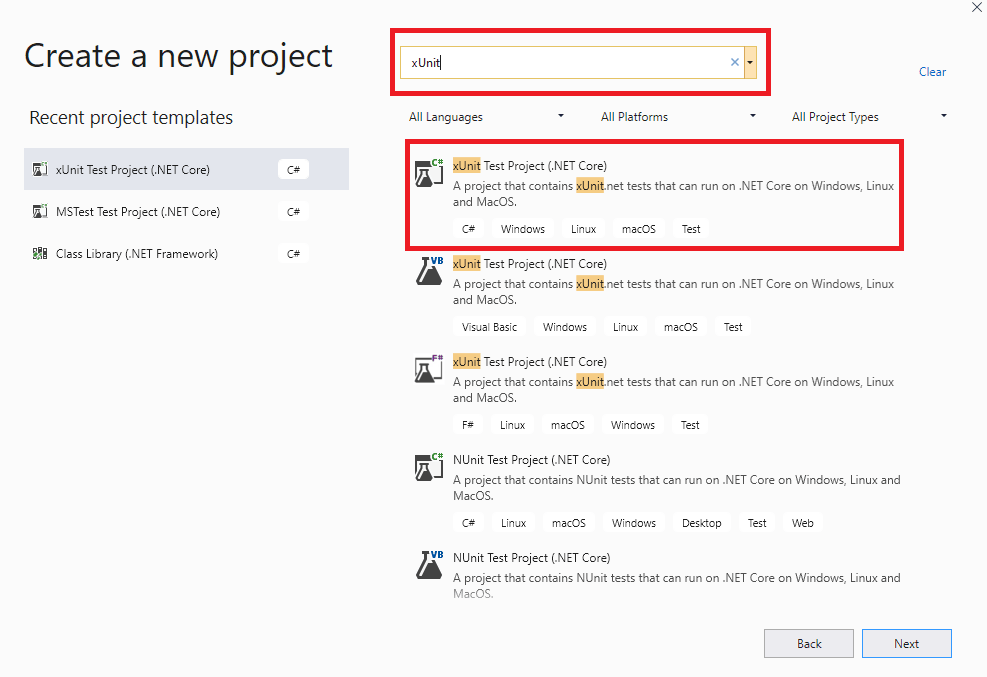
Before installing Selenium WebDriver, we create a new project in C# by following the below-mentioned steps:
- Open Visual Studio and create a new project of the type ‘xUnit Test Project (.Net Core)’.
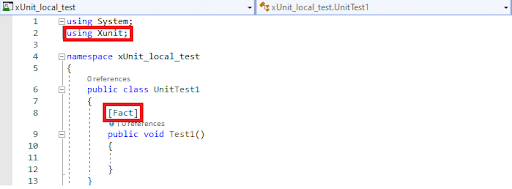
- As the project uses the xUnit.net (or xUnit) framework, the C# file contains the [Fact] attribute.
Steps to Download Selenium WebDriver for Selenium xUnit
Before running your first script in xUnit, you need to download and set up Selenium WebDriver.
Selenium WebDriver for the xUnit project can be installed using the NuGet Package Manager (PM). NuGet is a free and open-source Package Manager (PM) designed for the Microsoft Platform.
Installation of the Selenium WebDriver can be done either using the Visual Studio IDE, and NuGet Package Manager (PM) Commands.

Austin Siewert
Co-Founder, Steadfast Systems
Discovered @TestMu AI yesterday. Best browser testing tool I've found for my use case. Great pricing model for the limited testing I do 👏
2M+ Devs and QAs rely on TestMu AI
Deliver immersive digital experiences with Next-Generation Mobile Apps and Cross Browser Testing Cloud

Take this certification to master the fundamentals of Selenium automation testing with C# and prove your credibility as a tester.
Here’s a short glimpse of the Selenium C# 101 certification from TestMu AI:
Using Visual Studio IDE
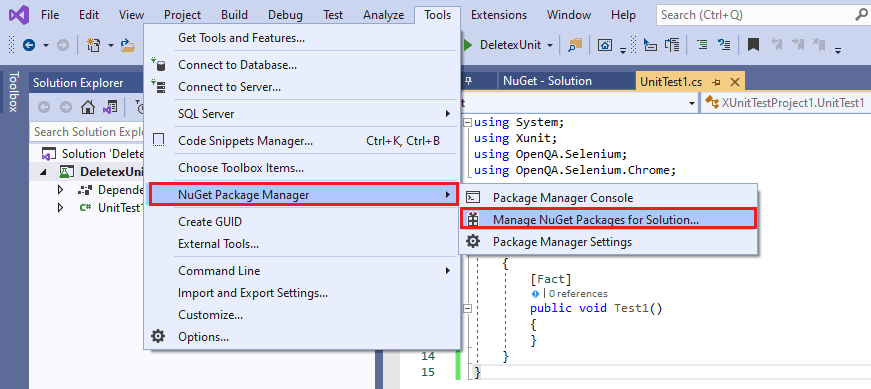
For installing Selenium WebDriver using the Visual Studio IDE, perform the following steps:
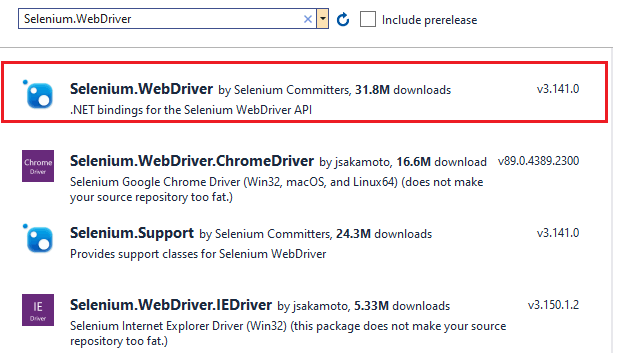
- Go to Tools -> NuGet Package Manager -> Manage NuGet Packages for Solution and search for ‘Selenium.’
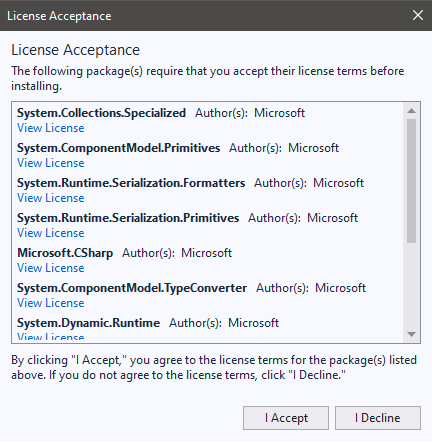
- Select Selenium.WebDriver from the search list and install the package by clicking the Install button.
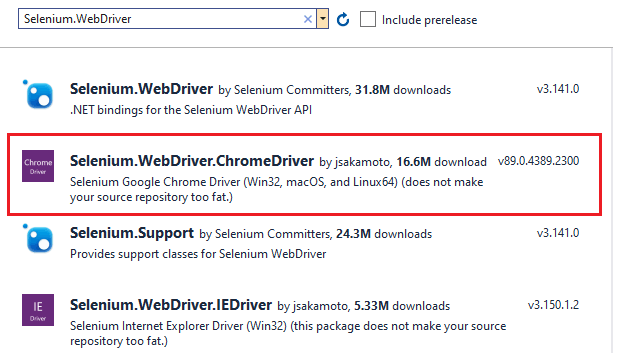
- For automated browser testing using Selenium xUnit, we use Google Chrome as the test browser. We install the Chrome WebDriver so that Chrome can be instantiated using the Selenium APIs. Select Selenium.WebDriver.ChromeDriver from the search list and click on the Install button.
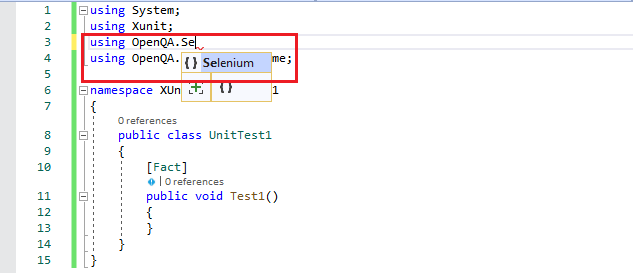
- As seen in the implementation below, we added the Selenium (OpenQA.Selenium) and Chrome WebDriver (OpenQA.Selenium.Chrome) references in the code.
using System;
using Xunit;
using OpenQA.Selenium;
using OpenQA.Selenium.Chrome;

namespace XUnitTestProject1
{
    public class UnitTest1
    {
        [Fact]
        public void Test1()
        {
        }
    }
}
Using Package Manager (PM) Commands
If you are more comfortable with the terminal, you can install Selenium WebDriver by invoking the Package Manager (PM) commands on the terminal.
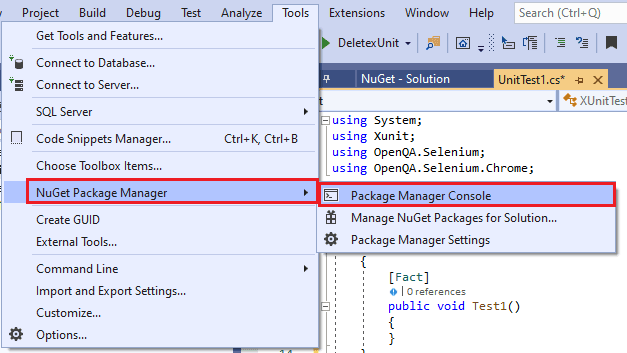
For executing commands from the PM console, go to Tools -> NuGet Package Manager -> Package Manager Console.
The Package Manager (PM) command Install-Package is used to perform the installation. Package Name is passed as an argument to the command. We also install the Selenium.Chrome.WebDriver from the terminal.
Install-Package Selenium.WebDriver
Install-Package Selenium.Chrome.WebDriver
Shown below is the snapshot of the Package Manager Console:

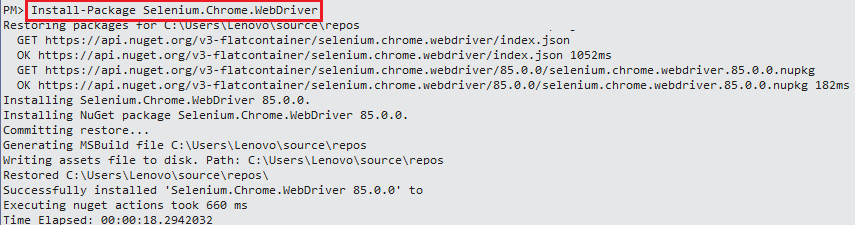
Get-Package command is used to verify whether the command installation is successful or not.
PM> Get-Package

Id                                  Versions
--                                  --------
Selenium.WebDriver                  {3.141.0}
Selenium.Chrome.WebDriver           {89.0.4389.2300}
...... ......
...... ......
Guide On xUnit Framework For Unit Testing With Selenium C#
This xUnit Tutorial for beginners and professionals will help you learn how to use xUnit framework with Selenium C# for performing Selenium automation testing.
How Do AI Coding Assistants Help Set Up Selenium WebDriver For xUnit?
AI coding assistants inside Visual Studio, such as GitHub Copilot, generate the xUnit boilerplate and Selenium WebDriver initialization code from a plain-language prompt, cutting manual setup time for this exact workflow. They do not replace the NuGet install step covered above, but they remove most of the repetitive typing around it.
- Inline code completion: GitHub Copilot in Visual Studio autocompletes the [Fact] attribute skeleton and the using OpenQA.Selenium.Chrome; import shown earlier in this tutorial as you type.
- Chat-based scaffolding: Copilot Chat or Claude can generate the NuGet install commands and a working ChromeDriver initialization block for an xUnit test class from one prompt, though the generated code still needs the manual verification steps covered above, since an assistant can suggest an outdated package version.
- Current package baseline: Selenium.WebDriver on NuGet is at version 4.49.0 and targets .NET 8.0, newer than the 3.141.0 driver shown in the Get-Package output above.
- MCP browser agents: Model Context Protocol servers built for Playwright or Selenium let an AI agent drive a real browser session directly from a natural-language instruction, a separate layer from the WebDriver setup this tutorial covers and not a replacement for it.
Conclusion
With the installation of Selenium WebDriver and the xUnit framework, you are all set to execute the first automation testing with C#, Selenium, and xUnit.net. The steps mentioned in this Selenium C# tutorial for the installation of Selenium WebDriver in xUnit are easy to understand. Terminologies like Selenium WebDriver, Package Manager, etc., are uniform across all the C# test frameworks.
A thorough understanding of these essential things forms the base on which you can enhance automation testing skills with C# and xUnit.

Author

Himanshu Sheth
Blogs: 140


Himanshu Sheth is the Director of Marketing (Technical Content) at TestMu AI, with over 8 years of hands-on experience in Selenium, Cypress, and other test automation frameworks. He has authored more than 130 technical blogs for TestMu AI, covering software testing, automation strategy, and CI/CD. At TestMu AI, he leads the technical content efforts across blogs, YouTube, and social media, while closely collaborating with contributors to enhance content quality and product feedback loops. He has done his graduation with a B.E. in Computer Engineering from Mumbai University. Before TestMu AI, Himanshu led engineering teams in embedded software domains at companies like Samsung Research, Motorola, and NXP Semiconductors. He is a core member of DZone and has been a speaker at several unconferences focused on technical writing and software quality.


Selenium WebDriver for xUnit FAQs
Did you find this page helpful?
More Related Blogs
TestMu AI forEnterprise
Get access to solutions built on Enterprise
grade security, privacy, & compliance
- Advanced access controls
- Advanced data retention rules
- Advanced Local Testing
- Premium Support options
- Early access to beta features
- Private Slack Channel
- Unlimited Manual Accessibility DevTools Tests