
Power Your Software Testing with AI Agents and Cloud
The Native AI-Agentic Cloud Platform to Supercharge Quality Engineering. Test Intelligently and Ship Faster.

- TestMu AI (Formerly LambdaTest)
- /
- Learning Hub
- /
- What Is Shift Left Testing? Types and How to Implement It
What Is Shift Left Testing? Types and How to Implement It
Shift left testing moves testing earlier in the SDLC so defects are caught in requirements, design, and code. Learn the four types and how to implement it.
Last Updated on:
Overview
Shift left testing is the practice of moving testing earlier in the software development life cycle, into requirements, design, and coding, so defects are found when they are cheapest to fix. Developers and testers write unit, API, and contract tests alongside the code, and the CI pipeline runs them on every commit.
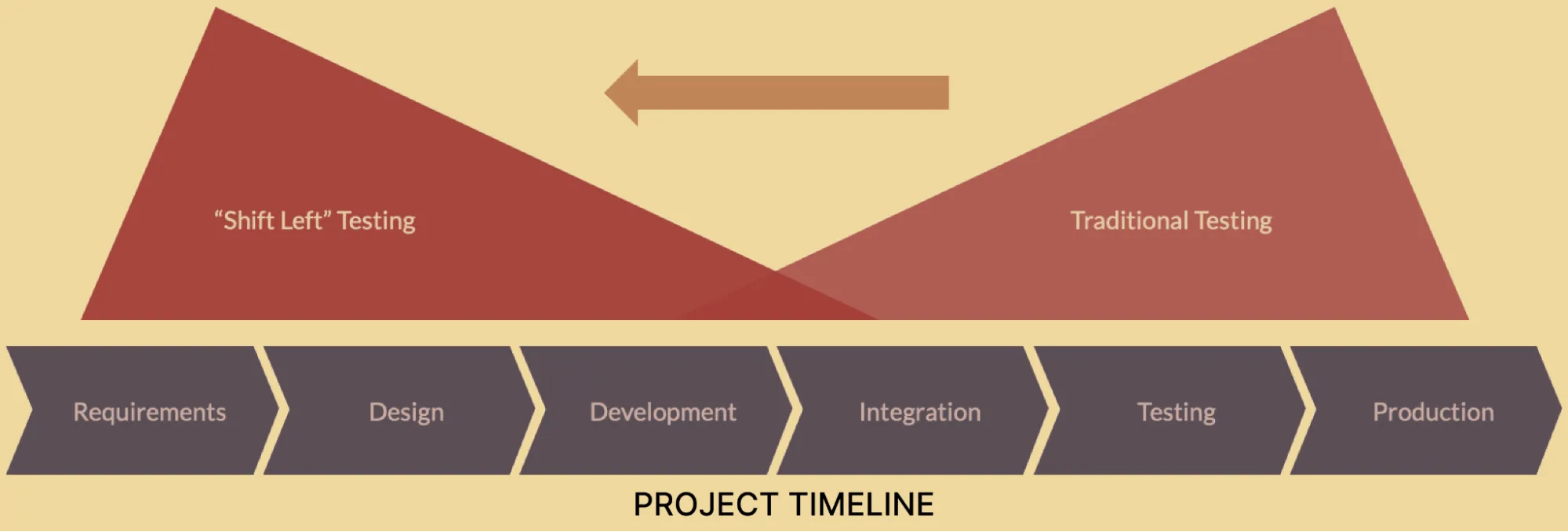
- Shift left meaning - On a timeline drawn from requirements (left) to release (right), shifting left means doing a quality check at an earlier stage. Security and DevOps teams use the term the same way.
- Cost of late defects - In an illustrative example in NIST Planning Report 02-3 (2002), a requirements error that costs 1X to fix in the stage where it was made costs 10X in integration and system testing and 30X after release.
- Shift left vs shift right - Shift left testing runs before release, in requirements, code, and CI, to prevent defects. Shift right testing runs in production, using monitoring, canary releases, and chaos experiments to find what only real traffic exposes.
What Are the Four Types of Shift Left Testing?
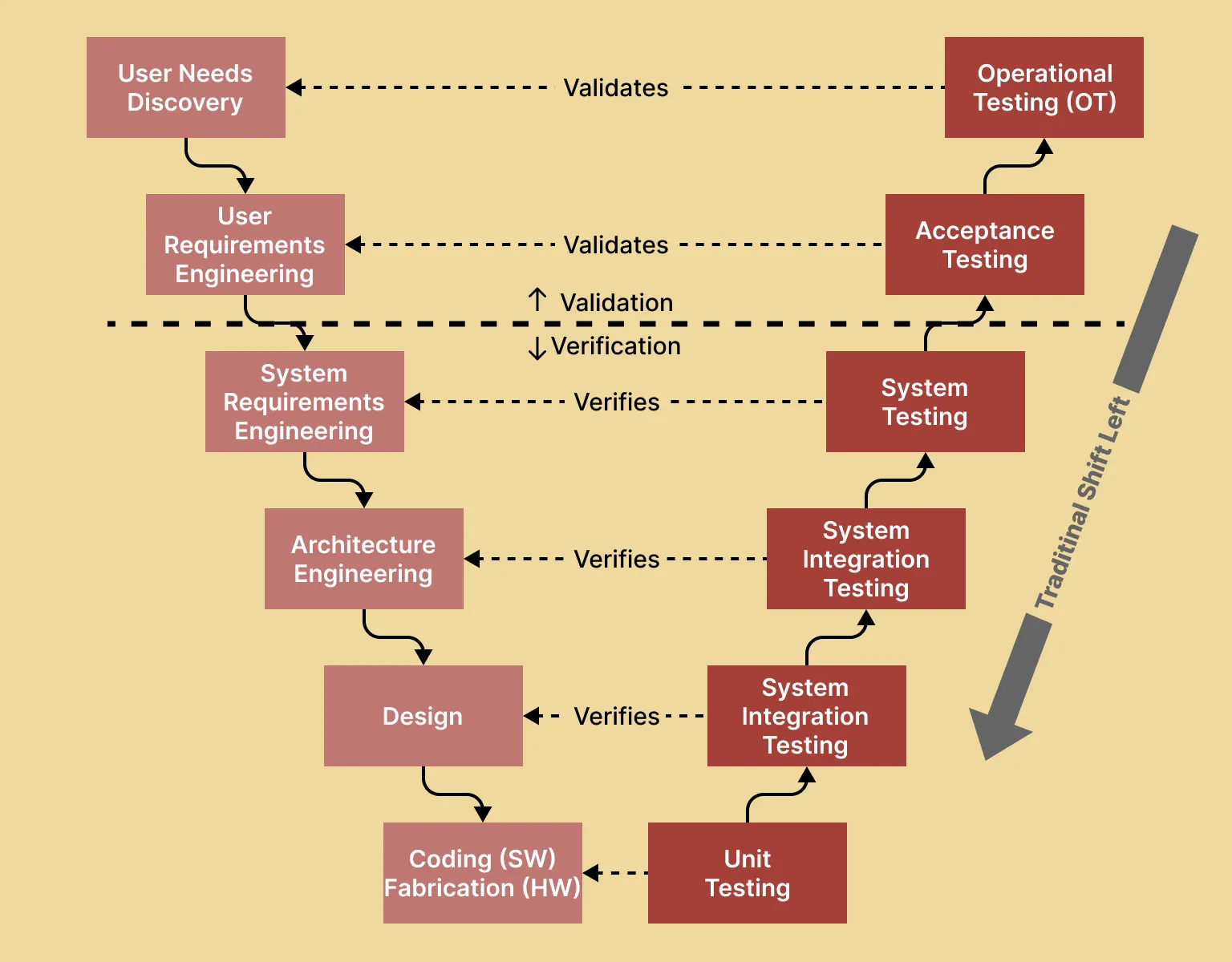
- Traditional shift left testing - Traditional shift left testing moves emphasis from system and acceptance testing to unit and integration testing on the V-model. Starts before code exists: no.
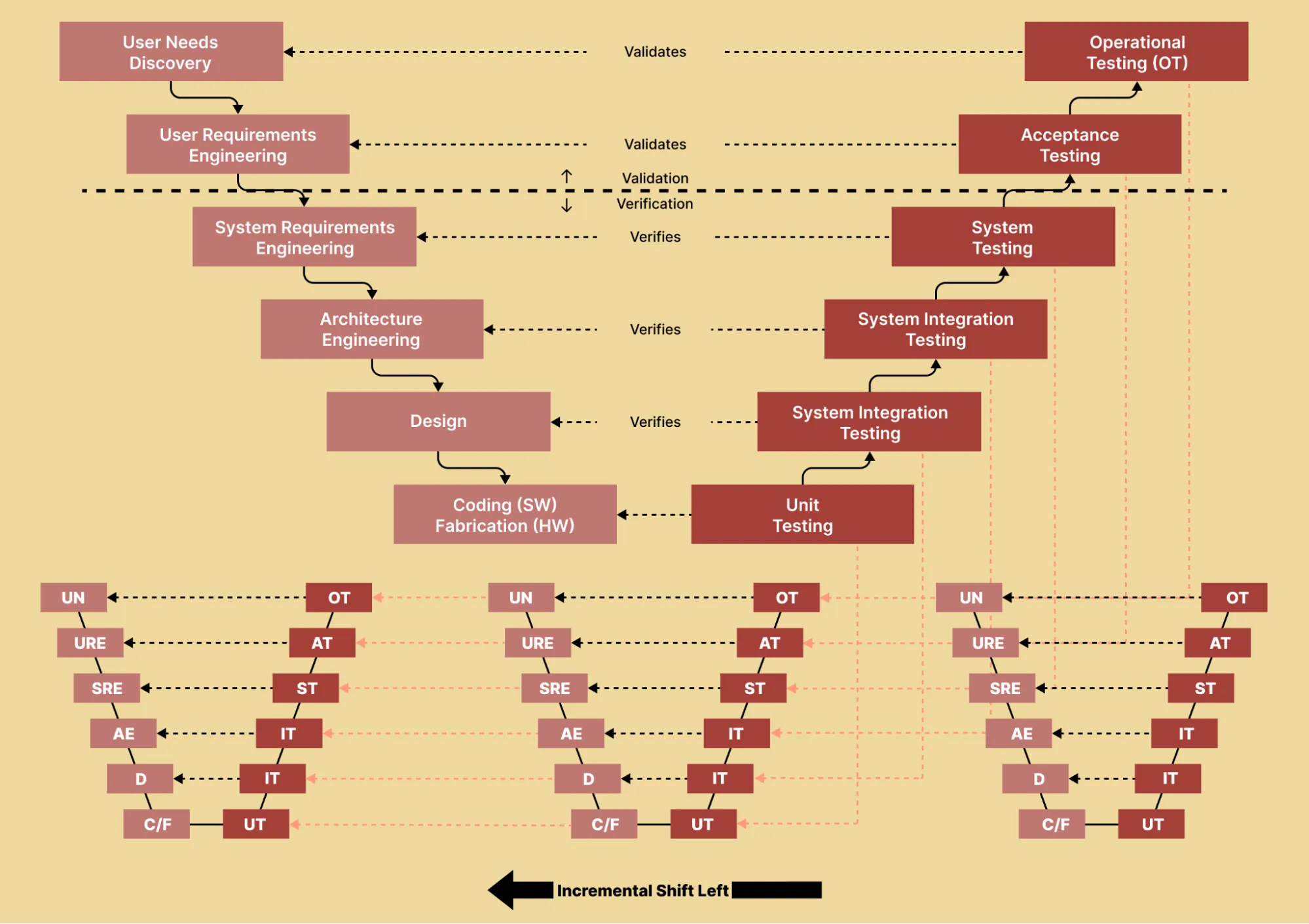
- Incremental shift left testing - Incremental shift left testing tests each increment of a large system as it is delivered, instead of the whole system at the end. Starts before code exists: no.
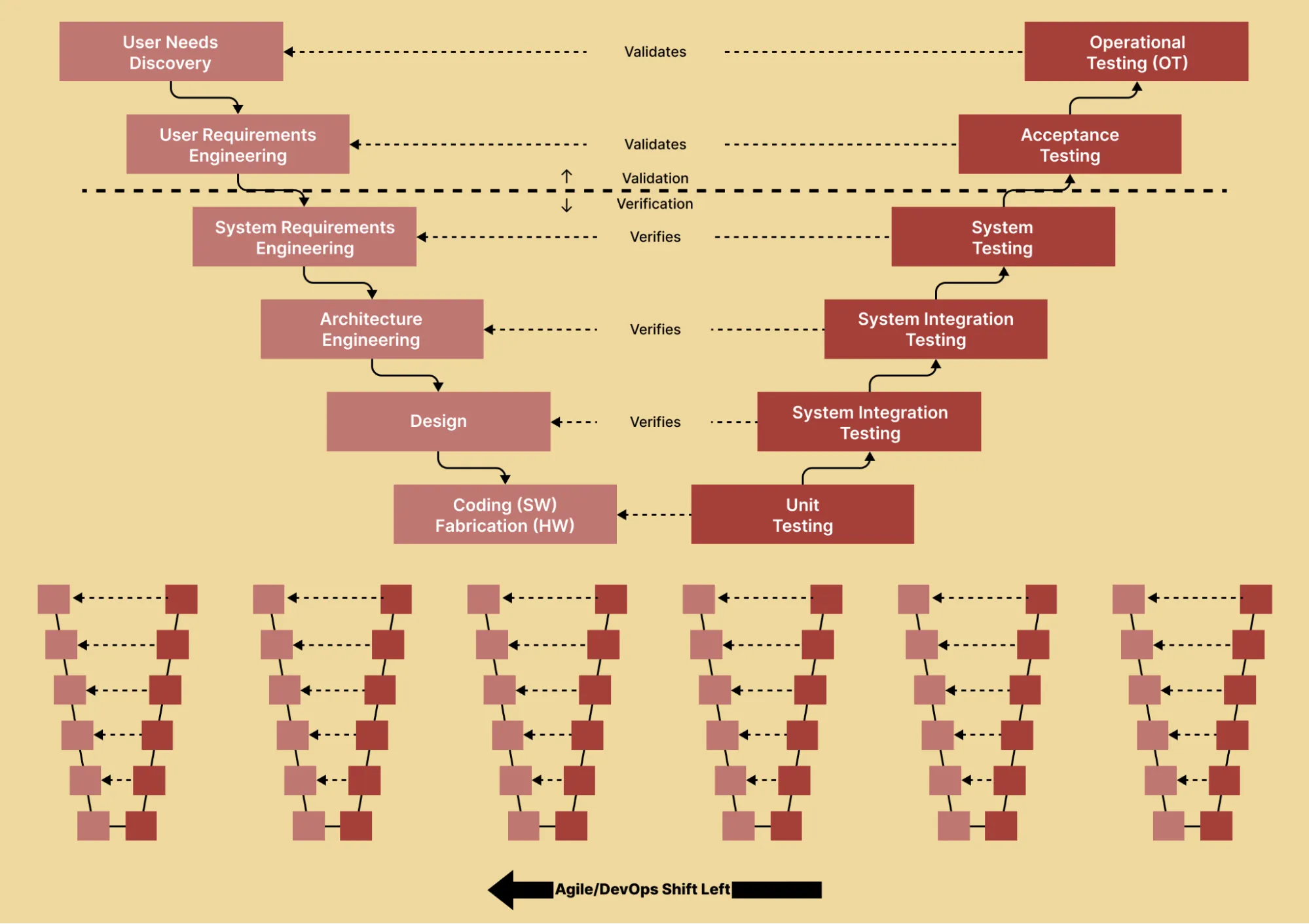
- Agile/DevOps shift left testing - Agile/DevOps shift left testing runs testing inside every short sprint and on each change in a continuous delivery pipeline. Starts before code exists: no.
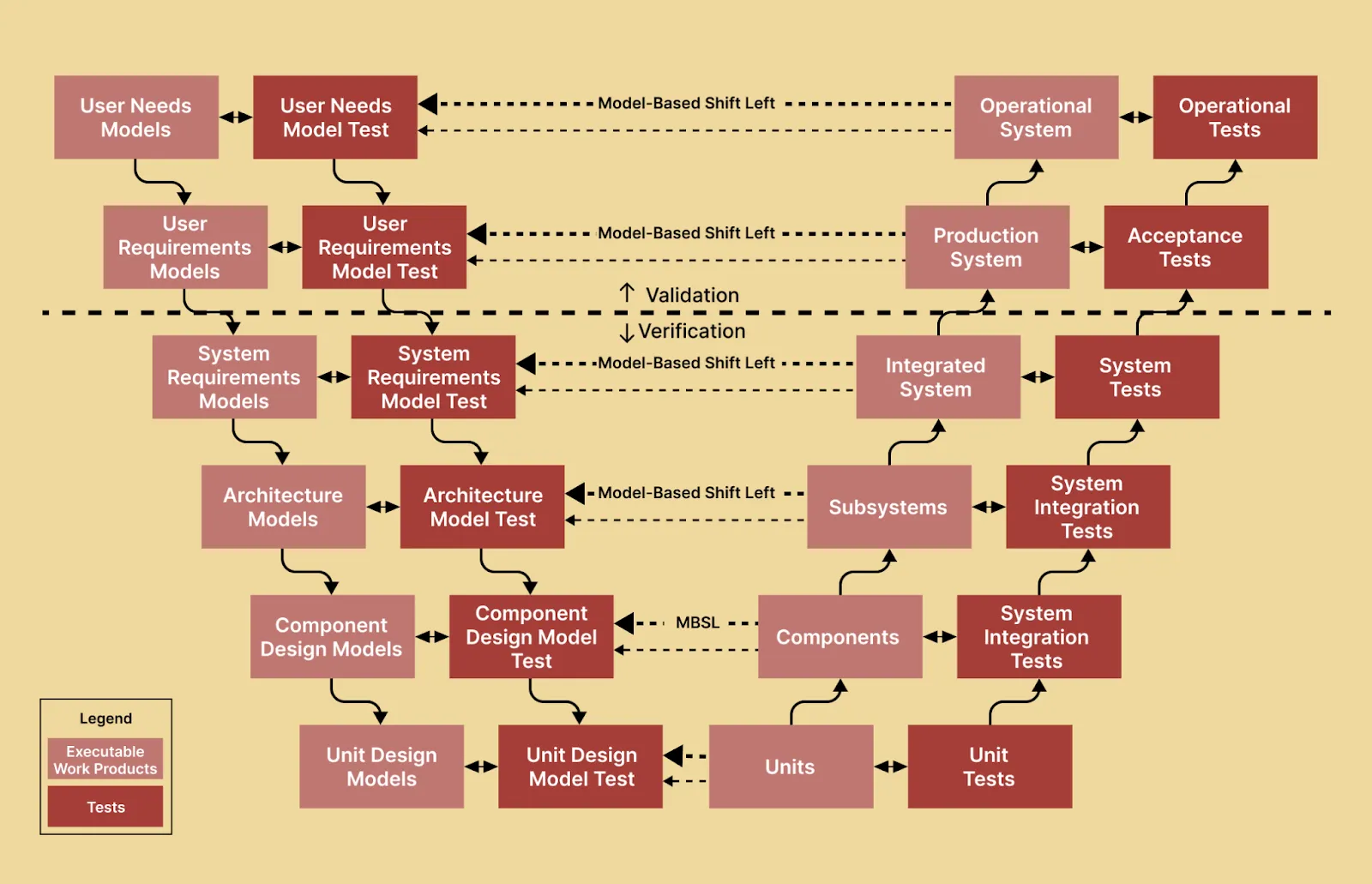
- Model-based shift left testing - Model-based shift left testing tests executable requirements, architecture, and design models. Starts before code exists: yes.
How Do You Implement Shift Left Testing?
- How to implement shift left testing - Teams implement shift left testing by reviewing requirements with testers, writing unit and API tests with the code, blocking failing merges in CI, and tracking where defects are found.
- Shift left automation - Shift left automation covers the fast unit and API layers first and keeps a thin set of browser tests, which TestMu AI's automation cloud runs in parallel across 3,000+ browser and OS combinations.
What Is Shift Left Testing?
Shift left testing is a software testing approach that moves testing activities to earlier stages of the software development life cycle (SDLC), so teams verify requirements, designs, and code as they are produced instead of in a test phase after development ends. The aim is to find each defect close to the point where it was introduced, when it is faster and cheaper to fix.

In a waterfall methodology, developers and QA worked in separate phases, and in many agile teams testing still trails development by a sprint. A common result: developers finish a release, hand it to QA for system testing, and start the next project. When QA reports bugs, developers stop new work to fix code they wrote weeks earlier, or the release waits for the next cycle.
Shift left removes that handoff by giving testing a place in every stage, starting with the requirement.
What Does Shift Left Mean?
"Shift left" comes from drawing the delivery process as a timeline that runs from requirements on the left to release and operations on the right, so moving an activity left means doing it sooner. Testing is the original use, but the term now covers other disciplines. Shift left security, a core practice of DevSecOps, adds threat modelling to design and static application security testing (SAST) and dependency scanning to the CI pipeline instead of relying on a penetration test just before release. In DevOps more broadly, shifting left means putting performance, accessibility, and compliance checks into the pipeline, where developers see the result on their own pull request.
Shift Left Testing and the Cost of Late Defects
The later a defect is found, the more work has already been built on top of it. In The Economic Impacts of Inadequate Infrastructure for Software Testing (NIST Planning Report 02-3, prepared by RTI in May 2002), Table 5-1 gives an illustrative example: an error introduced during requirements and architectural design costs 1X to fix in that stage, 5X during coding and unit testing, 10X during integration and system testing, 15X during beta testing, and 30X after release.
The same NIST report estimated the national annual cost of an inadequate software testing infrastructure in the US at $59.5 billion, and put the potential reduction from feasible infrastructure improvements at $22.2 billion. Testing late adds to that cost in predictable ways:
- Testers join planning late, so test resources and environments are under-planned.
- Requirements, architecture, and design flaws surface only after the code that implements them is written.
- Debugging gets harder as more components are integrated, and encapsulation makes white box testing and high code coverage harder to reach.
- Little time is left for test automation, which shows up later as regression defects.
- Defects found near the deadline are deferred to a later release, and customers meet them first.
Benefits of Shift Left Testing for Cost, Speed, and Team Culture
Cheaper fixes are the headline benefit, and shifting left also changes release speed and how the team shares quality work.
- Earlier defect detection - Progressive, continuous testing catches a defect at the commit or pull request that introduced it, before it reaches a shared environment.
- Lower cost and less technical debt - A defect fixed in the stage that created it avoids the rework that the NIST example prices at 10X to 30X.
- Wider coverage - When developers, testers, and product owners all write tests from the start, test coverage grows with the code instead of being added at the end.
- More predictable releases - Fewer late surprises mean fewer slipped dates and emergency patches, and shift left testing in DevOps keeps the main branch releasable.
- Developer wellbeing - Catching defects at commit time removes the late-night fire drills that follow a buggy release, and developers fix issues while the context is still fresh.
- Shared quality ownership - Quality becomes everyone's daily work instead of one team's final phase, in line with the Agile Manifesto value of individuals and interactions over processes and tools.
Shift Left vs Shift Right Testing: Differences at a Glance
Shift left and shift right work together. Shift left prevents defects before release, and shift right testing validates real behavior after release with production traffic and data. For choosing between them, see this guide on shift left vs shift right.
| Aspect | Shift left testing | Shift right testing |
|---|---|---|
| When it happens | Requirements, design, coding, and CI, before release | After deployment, in production or production-like environments |
| Main goal | Prevent defects and catch them where they are introduced | Find issues that only real users, data, and traffic expose |
| Typical practices | Requirement reviews, static analysis, unit tests, TDD, API and contract tests, CI quality gates | Monitoring, canary releases, feature flags, A/B tests, chaos engineering, synthetic monitoring |
| Who leads it | Developers and testers, with product owners in reviews | SRE, operations, and product teams, with developers on call |
| Feedback signal | A failing test, a lint error, or a blocked merge | Error rates, latency, user behavior, and incident reports |
| Risk it reduces | Rework, and defects escaping into a release | Unknowns of real environments, real data, and scale |
Types of Shift Left Testing: Traditional, Incremental, Agile/DevOps, and Model-Based
The four types of shift left testing are traditional, incremental, Agile/DevOps, and model-based, a classification Donald Firesmith set out in Four Types of Shift Left Testing for the Carnegie Mellon Software Engineering Institute (SEI) in 2015. Each moves testing earlier inside a different delivery model.
Traditional Shift Left Testing on the V-Model
The SDLC V-Model extends the waterfall model by pairing a testing phase with each development stage, which is why it is also called the verification and validation model.
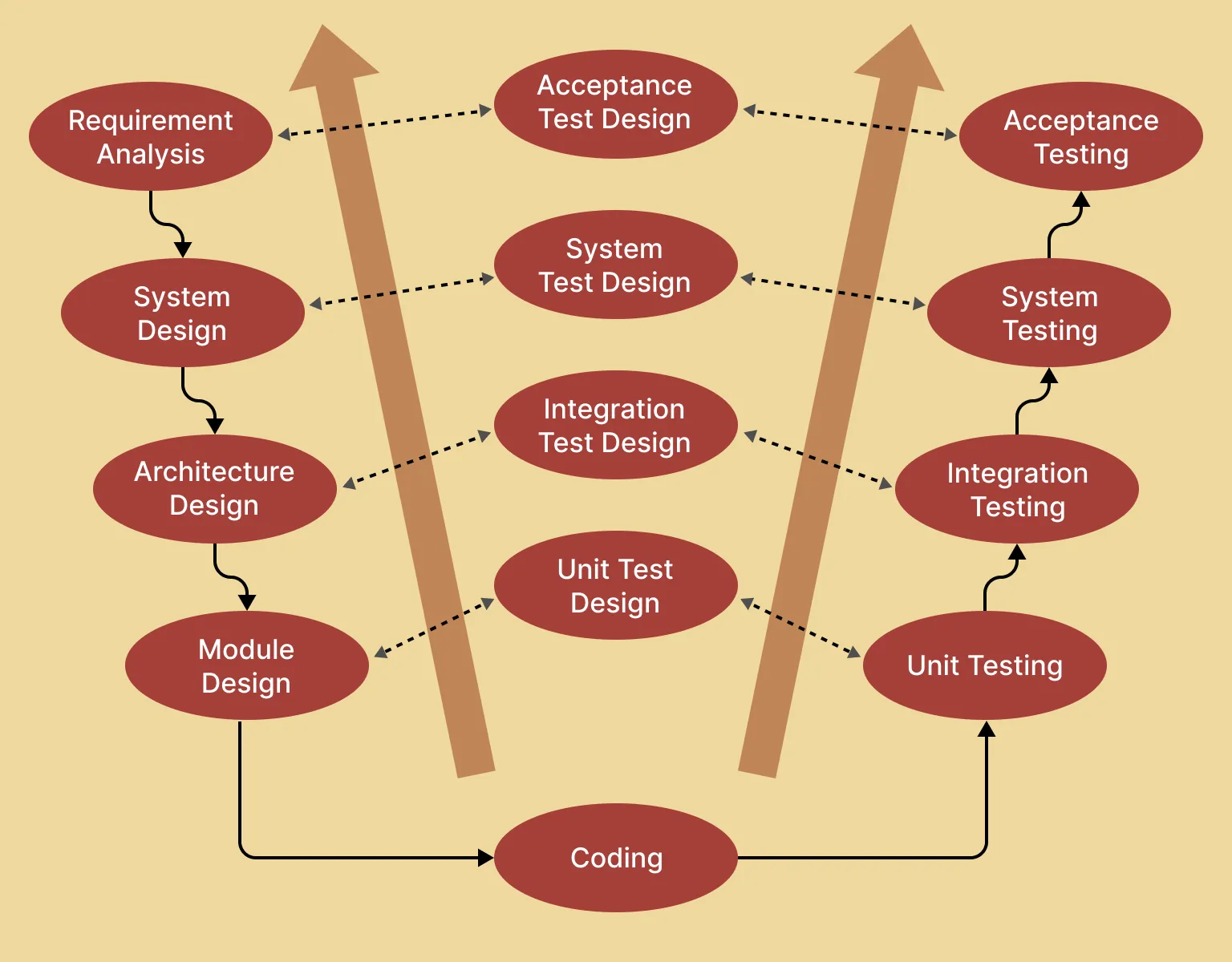
Traditional shift left moves testing down the right side of the V, toward unit testing and integration testing, usually with API testing and Selenium, while acceptance and system testing get less emphasis.
Incremental Shift Left Testing for Large Systems
Incremental shift left suits large, complex systems that are built and delivered in pieces. Each increment builds on the previous one, and development and testing for each delivery shift left, so every component is tested as it arrives through incremental testing.
Agile/DevOps Shift Left Testing Across Sprints
In agile development and DevOps, shift left runs over many short sprints, with continuous testing inside each one. It covers developmental testing rather than the operational testing that happens after the system is in service.
Model-Based Shift Left Testing Before Code Exists
The first three types still start testing once code exists, so defects introduced in requirements, architecture, and design surface late. Firesmith's SEI article states that 45 to 65 percent of defects are introduced in those activities. Model-based shift left tests executable requirements, architecture, and design models, so those defects are found before implementation begins.
Shift Left Testing Practices: The Checks That Move Earlier
In practice, shifting left means specific checks move out of a late test phase and into refinement, the editor, and the pull request.
- Requirement and design reviews - Static testing of user stories and designs, where testers ask how each acceptance criterion will be tested before anyone writes code.
- Static code analysis - Static code analysis tools such as ESLint and SonarQube inspect source without running it and flag bugs, code smells, and security issues on every change.
- Unit tests and TDD - In test-driven development, the developer writes a failing test, then the code that makes it pass, then refactors (red, green, refactor).
- API and contract tests - Contract testing checks that a service keeps the request and response shape its consumers depend on, long before an end-to-end test could run.
- Service virtualization - Service virtualization simulates dependencies that are unfinished, unstable, or costly to call, so integration tests run before those services are ready.
- CI quality gates - The CI/CD pipeline runs lint, unit, and API tests on every pull request and blocks the merge when one fails.
- Risk-based test planning - Software risk analysis ranks features by probability and impact of failure, and a unified test strategy sets automation, stub, environment, and test data needs from unit tests through end-to-end testing and user acceptance tests.
These checks follow the test pyramid, popularized by Mike Cohn: many fast tests at the bottom and few slow ones at the top. Shifting left reverses the "ice-cream cone" anti-pattern, in which slow, brittle UI tests dominate the suite.
| Layer | Share of tests | What it covers | Speed |
|---|---|---|---|
| Unit tests | Most (base) | Individual functions and classes tested in isolation | Milliseconds |
| Integration, API, and contract tests | Some (middle) | How modules and services work together, and whether each API keeps its promises to consumers | Seconds |
| UI and end-to-end tests | Fewest (top) | Critical user journeys through a real interface and browser | Minutes |
Shift Left Automation: Which Tests to Automate First
Shift left automation means automating each check at the lowest layer that can catch the defect and running it as early as the pipeline allows. Start with unit and API tests, which run quickly and fail with a precise location, and add browser tests only for critical user journeys. Manual testing stays for exploratory work, where a person's judgement finds what scripts miss.
Weigh these factors before automating a test case:
- Automation complexity and average script creation time
- How often the test must run, set by release frequency and the regression speed you need
- Stability of the feature and the build
- Rate at which test cases change or are added
Automated regression tests then document how each feature behaves and catch changes that break it. Fix or quarantine each flaky test quickly so a failed gate always means a real failure.
How to Implement Shift Left Testing
To implement shift left testing, bring testers into requirement and design reviews, have developers write unit and API tests alongside the code, run those tests in CI on every pull request, and block merges that fail. Then automate regression, measure where defects are found, and add earlier checks wherever escapes cluster.
- Plan testing with the requirements - Identify test needs during project planning and write a test plan covering budget, resources, environments, and strategy before development starts.
- Review stories before coding - For each story, testers, developers, and the product owner agree on acceptance criteria and examples of wanted and unwanted behavior, and ask "How will we test this?" in refinement.
- Make developers own unit and API tests - Developers test their code as they write it, using TDD where it fits, and maintain automated test suites as part of the codebase.
- Use one tool stack - Testers write automation in the languages and frameworks developers already use, so test code is reviewed and run like product code.
- Gate every merge in CI - Static analysis, unit tests, and API tests run on each pull request, a failure blocks the merge, and parallel runs keep the pipeline fast enough that developers wait for it.
- Review code against shared standards - Code reviews check coding standards and test quality, which frees testers for exploratory, security, and performance testing.
- Automate regression and keep it green - Each feature's tests join the regression suite, and flaky tests are fixed before they erode trust in the gate.
- Measure and adjust - Record the stage where each defect is found, review the trend in retrospectives, and move the next check earlier where escapes cluster.
Shift Left Testing Example: One User Story Moved Left
Take the story "As a shopper, I can apply a discount code at checkout." In refinement, the tester asks whether two codes can stack, what happens to an expired code, and whether the discount applies before or after tax. The product owner answers, and the answers become acceptance criteria. A defect such as codes stacking by accident is removed before any code exists.
Next, the developer writes failing unit tests for the agreed rules, then the code that makes them pass:
// checkout.test.js (Jest)
const { applyDiscount } = require('./checkout');

test('SAVE10 takes 10% off the cart total', () => {
  expect(applyDiscount(200, ['SAVE10'])).toBe(180);
});

test('a second code is rejected because codes do not stack', () => {
  expect(() => applyDiscount(200, ['SAVE10', 'FREESHIP'])).toThrow('Only one code per order');
});
Then an API test pins the response shape the checkout front end depends on, so a backend change that renames a field fails at the pull request instead of in the browser. A consumer-driven contract tool such as Pact formalizes the same check across teams.
// discount.api.test.js (Jest + supertest)
const request = require('supertest');
const app = require('./app');

test('POST /cart/discount returns the agreed response shape', async () => {
  const res = await request(app)
    .post('/cart/discount')
    .send({ cartId: 'c-101', code: 'SAVE10' });

  expect(res.status).toBe(200);
  expect(res.body).toEqual({
    cartId: 'c-101',
    code: 'SAVE10',
    total: expect.any(Number),
  });
});
Finally, the CI workflow runs lint and both test files on every pull request. Marking this job as a required status check in branch protection blocks the merge until it passes.
# .github/workflows/pr-checks.yml
name: pr-checks
on: pull_request
jobs:
  test:
    runs-on: ubuntu-latest
    steps:
      - uses: actions/checkout@v4
      - uses: actions/setup-node@v4
        with:
          node-version: 20
      - run: npm ci
      - run: npx eslint .
      - run: npx jest --ci
By the time the story reaches QA, its logic and API contract are covered, and QA can focus on exploratory testing of checkout across browsers and devices.
How to Measure Shift Left Testing
Record the stage where each defect is found in your defect management tool, so progress is a report rather than a guess. Track these signals release over release:
- Defects by detection stage - The share found in requirement reviews, code review, CI, QA, and production. The distribution should move toward the earlier stages.
- Escaped defects - Defects found in production per release, which should fall as earlier checks mature.
- Time to feedback - Minutes from a push to a test result on the pull request.
- Change failure rate - The share of deployments that cause a failure in production, one of the DORA software delivery metrics.
- Flaky test rate - The share of failures that pass on a rerun without a code change.
Challenges of Shift Left Testing and How to Handle Them
- Cultural acceptance - Developers and testers used to handoffs can see shift left as a disruption to their workflow, tools, and skills. Start with one team, run short learning sessions, and set quality goals for the whole team, accepting less feature work per sprint at first.
- Tester cognitive load - Testers now track requirements, pipelines, test data, and several tools at once. Shared ownership of quality, fewer overlapping tools, and risk-based scoping keep the load manageable.
- Residual effort - Not everything can be tested early. UI tests written before the interface settles often need rework, so test stable layers such as APIs and business logic first, and build an API early when testing it early matters to the project.
- Pipeline capacity - Frequent runs need a pipeline that exists early and finishes quickly, so infrastructure teams join the plan from the first sprint.
Shift-Left Tests You Can Run on TestMu AI
KaneAI turns PRDs, Jira tickets, and plain-English prompts into executable tests, so test cases can be written from the requirement while the feature is built. HyperExecute runs suites from your CI pipeline up to 70% faster than traditional grids, and the online browser farm covers 3,000+ browser and OS combinations and 10,000+ real devices for the thin layer of browser and mobile tests.

Conclusion
Start with one team and one pipeline: add a testability question to refinement, a unit and API test gate to pull requests, and a detection-stage field to your defect tracker. After two or three releases, that report shows whether defects are moving left and which check to add next.
Author

Piyusha Podutwar
Blogs: 4


Piyusha Podutwar is a Senior Software Engineer at DPS with over 12 years of experience in mainframe application and system programming. She has authored 20+ technical tutorials for TestMu AI on API testing, Agile, DevOps automation, software testing, automation testing, and digital transformation. She is skilled in Assembler, COBOL, DB2, and JCL, and has led large-scale modernization and migration projects across banking, finance, retail, and insurance domains. A Certified Scrum Master, Piyusha previously worked with IBM, TCS, BMC Software, and T-Systems.
Reviewer

Himanshu Sheth
Reviewer
Himanshu Sheth is the Director of Marketing (Technical Content) at TestMu AI, with over 8 years of hands-on experience in Selenium, Cypress, and other test automation frameworks. He has authored more than 130 technical blogs for TestMu AI, covering software testing, automation strategy, and CI/CD. At TestMu AI, he leads the technical content efforts across blogs, YouTube, and social media, while closely collaborating with contributors to enhance content quality and product feedback loops. He has done his graduation with a B.E. in Computer Engineering from Mumbai University. Before TestMu AI, Himanshu led engineering teams in embedded software domains at companies like Samsung Research, Motorola, and NXP Semiconductors. He is a core member of DZone and has been a speaker at several unconferences focused on technical writing and software quality.


Shift Left Testing FAQs
Did you find this page helpful?
More Related Learning Hubs

TestMu AI forEnterprise
Get access to solutions built on Enterprise
grade security, privacy, & compliance
- Advanced access controls
- Advanced data retention rules
- Advanced Local Testing
- Premium Support options
- Early access to beta features
- Private Slack Channel
- Unlimited Manual Accessibility DevTools Tests