

Power Your Software Testing with AI Agents and Cloud
The Native AI-Agentic Cloud Platform to Supercharge Quality Engineering. Test Intelligently and Ship Faster.


- TestMu AI (Formerly LambdaTest)
- /
- Learning Hub
- /
- What Is SIT Testing? System Integration Testing Guide
What Is SIT Testing? System Integration Testing Guide
What is SIT testing? Learn how system integration testing verifies interfaces between systems, how it differs from UAT and SAT, plus techniques and tools.
Last Updated on:
On This Page
- What Is SIT?
- Why Perform SIT?
- Example of SIT
- Advantages
- Limitations
- Granularity of SIT
- Prerequisites
- Steps to Perform SIT
- Data-Driven Approach
- SIT vs. System Testing
- SIT vs. UAT
- SIT vs. SAT
- Entry and Exit Criteria
- SIT Techniques
- Common Challenges
- Who Performs SIT?
- Skills Required
- SIT Tools
- Proving Flows End to End
- Conclusion
Every module passed its own tests, and the build still broke the moment they were wired together. That gap is what SIT testing exists to close.
System Integration Testing sits in the software development life cycle between unit testing and user acceptance testing, and it targets the seams rather than the components. This guide covers what it verifies, how it differs from UAT and SAT, the entry and exit criteria worth holding to, and how to run it.
TL;DR
SIT testing, or System Integration Testing, is the phase where individually tested modules are combined and tested as a group to verify that the interfaces between them exchange data correctly. It runs after unit testing and before user acceptance testing, and it targets the seams between components rather than the components themselves.
What Does SIT Actually Verify?
- Interface contracts: That the data one module sends is the data the next one expects, in the format, encoding, and order it expects it, including the fields nobody documented.
- Data integrity across boundaries: That a record created in one system arrives intact in the next, with no silent truncation, rounding, or timezone shift introduced in transit.
- Error handling at the seams: That a downstream failure surfaces as a handled error rather than a timeout, a partial write, or a success response that hides a rollback.
- End-to-end business flow: That a complete transaction crossing several systems finishes in a consistent state everywhere it touched, which no single module test can confirm.
- SIT is not UAT. It asks whether the system was built correctly, against technical specifications, before business users are asked whether the correct system was built.
When Does SIT Run?
After every participating module passes unit testing and before UAT begins. Running UAT against an unintegrated system spends business users' time on defects QA should have caught, which is the most common sequencing mistake on integration-heavy programmes.
What is System Integration Testing (SIT)?
System integration testing, or SIT, is a QA process where individual components or systems are combined and tested as a group. In system integration testing (SIT), the individual modules or components are first tested separately and then tested again once they are combined into a single system. It ensures that the functional and hardware aspects of the software are in complete synchronization.
The following testing types are performed once the development requirements are finalized.
- Unit testing
- System integration testing
- System testing
- User Acceptance Testing (UAT)
Unit testing allows you to test a unit - the smallest piece of code that can be a function, method, or property. The modern versions of unit testing can be found in popular frameworks such as JUnit and Jest. While automated testing tools like Lambdatest make it easy to run tests across various environments. TestMu AI is an AI-native test orchestration and execution platform that lets you run manual and automated tests at scale across 3,000+ browser and OS combinations, plus 10,000+ real devices.
System testing helps you to validate the complete software product. It falls under the category of black box testing, which is all about the external functionalities of the software from the user's perspective.
The end-user or client performs user acceptance testing (UAT) to verify the software product or system before it is moved to the production environment. UAT is completed at the final stages once the functional, integration, and system testing are completed.

Why Do We Perform System Integration Testing (SIT)?
Now that we have understood the basics of system integration testing, let us elaborate on some factors that highlight why it is crucial for your product's success and quality:
- Incompatibility Mitigation - It helps us to avoid errors by identifying and correcting software module incompatibilities.
- Database Interaction Validation - It helps developers verify that each software module and the database work together effectively. The benefit of this is a better data flow and higher system efficiency.
- Adaptation to Changing Requirements - It confirms that newly created requirements (that come from customer feedback) are carefully tested and seamlessly integrated into the existing system.
- Hardware Compatibility Assurance - It helps resolve potential hardware compatibility issues in advance before the deployment of the software.
- Third-Party API and Tool Interaction Verification - It carefully verifies the accuracy of the data shared with external tools and APIs. This ensures error-free and smooth interoperability, essential for the overall system functionality.
Example of System Integration Testing (SIT)
Let's consider an e-commerce platform that comprises a web application, a product catalog database, payment processing services, and shipping logistics. The complete system integration testing ensures that all the required systems work according to the defined functionality.
Scenario: Placing an Order
Components Involved:
- Web Application - The user interface where customers browse products, add items to the cart, and initiate checkout.
- Product Catalog Database - Stores product information, including availability, prices, and descriptions.
- Payment Processing Service - Handles secure transactions, validates payments, and communicates with external payment gateways.
- Shipping Logistics System - Manages order fulfillment, inventory management and coordination with shipping carriers.
Steps for System Integration Testing:
- Add to Cart Functionality -
- Objective - Ensure selected products are successfully added to the cart.
- Testing Steps - Perform tests to verify that the web application communicates effectively with the product catalog database to update the cart.
- Checkout Process -
- Objective - Confirm a smooth transition from cart to checkout without data loss.
- Testing Steps - Test the interaction between the web application and the payment processing service to validate that user details and selected products are accurately passed during checkout.
- Payment Processing -
- Objective - Validate secure and error-free payment transactions.
- Testing Steps - Simulate different payment scenarios, including successful payments, declined transactions, and refunds, to ensure proper communication between the web application and the payment processing service.
- Inventory Management -
- Objective - Prevent overselling and ensure accurate stock levels.
- Testing Steps - Confirm that the product catalog database and shipping logistics system sync real-time inventory data, preventing users from purchasing out-of-stock items.
- Order Fulfillment -
- Objective - Guarantee accurate and timely shipping of orders.
- Testing Steps - Test the coordination between the payment processing service and the shipping logistics system to verify that orders are fulfilled promptly and tracking information is updated accordingly.
Advantages of System Integration Testing (SIT)
Now, let's see some of the benefits of system integration testing.
- Detect defects early - It helps you identify defects early. The defects found are set back to the development teams for fixing. This means you can deliver high-quality software solutions and save considerable development efforts in the long run.
- Identification of Interoperability Issues - It helps identify interoperability between different subsystems or components. This is crucial to ensure that all parts of the system work together seamlessly.
- Validate data flow - It ensures correct data flow by validating seamless and accurate transfer of information between integrated components, enhancing the overall reliability and functionality of the system.
- Cost-effective - Detecting and fixing integration issues early in the development process is more cost-effective than addressing them in later stages or after the software has been deployed.
Limitations of System Integration Testing (SIT)
Let us understand some of the disadvantages of system integration testing, which you should be aware of:
- Time-consuming - It takes time to unit test all the modules in a system separately. It is possible that subsystems can fail even if they are tested individually since many issues arise when they interact with one another.
- Difficulty in Achieving 100% Test Coverage - It may be impossible to test all possible integration pathways and scenarios, leaving some areas untested.
- Limited Reusability of Test Cases - Test cases developed for a specific integration scenario may have limited reusability for other projects or components, particularly if the system architecture changes.
Boost your testing expertise by exploring Detailed Guide On Test Coverage: With Best Practices.
We discussed the pros and cons of system integration testing, but it all comes down to your experience and expertise in handling different testing types that apply to your product.

Granularity of System Integration Testing (SIT)
The granularity of system integration testing refers to the extent or level of detail at which the integration testing is performed. It helps to determine what components or modules are included in the process and how they are grouped for testing. System Integration Testing can be categorized into three levels: Intra-System Testing, Pairwise Testing, and Inter-System Testing. The differences among them are as follows:-
| Factor | Intra-System testing | Pairwise testing | Inter-System Testing |
|---|---|---|---|
| What does it mean? | Low-level testing involves individual components or modules within a single system. | Moderate-level testing involves only two systems. | High-level testing involves multiple independently tested systems within the overall integrated application. |
| Scope | Limited to components or modules within a system. | Limited to two subsystems in the entire system. | Involves interfaces and interactions between multiple systems. |
| Complexity | Generally less complex due to focusing on a smaller unit. | Moderately complex. | Highly complex due to the involvement of multiple systems. |
| Example | Testing of the user-authentication system in an e-commerce platform. | Testing of the interaction between the inventory management system and the product catalog system in an e-commerce platform. | Testing the interaction between multiple systems, such as the user authentication system, product catalog system, inventory management system, and payment processing system in an e-commerce platform. |
Prerequisites of System Integration Testing (SIT)
These prerequisites can help you build a great system integration test plan.
- Creation of a test environment that matches the required specifications for your production environment.
- Identify the scenarios you need to test.
- Establish a proper communication plan.
- Establish a shared repository.
- Involve all the required stakeholders.
Organizations need to build a plan or test strategy around system integration testing. That is why you will see more organizations investing much time and effort in reinventing their testing strategies and how they operate.
Steps To Perform System Integration Testing (SIT)
The steps used to perform system integration testing are as follows:
- Devise a Test Integration Plan
Outline the detailed steps and procedures for system integration testing by defining the scope, objectives, and resources needed. This plan will act as a roadmap, aligning team goals and managing the testing process effectively.
- Decide on an Approach
- Design Test Cases, Scenarios, and Scripts
- Test cases outline actions to verify specific features.
- Scenarios describe user tasks.
- Scripts provide detailed steps and data for operating the program.
- Deploy Integration Tests on Chosen Modules
- Track and Record Errors
- Resolve Errors and Retest
Consider various system integration testing techniques like top-down, bottom-up, sandwich, big bang, etc, based on project requirements. Factors such as project size, time constraints, and component priorities must be considered when deciding.
For example, testers often opt for top-down, bottom-up, or sandwich approaches for larger and more complex projects. These methods allow for a more granular and phased integration of components to ensure a systematic evaluation of the entire system. Conversely, in smaller projects, the big bang method is commonly favored. This method involves integrating all components simultaneously, providing a quicker assessment of the system's overall functionality.
Develop comprehensive test cases, scenarios, and scripts that align with our chosen system integration testing approach. Test cases, scenarios, and scripts perform the following functions.
Integrate selected modules and execute tests using the designed test cases, scenarios, and scripts. This step involves testing interface functionality and identifying any flaws or errors in the integrated system. Testing can be performed manually or through automated tools.
Record and document any errors or flaws encountered during testing. Include details such as the type of error, when it occurred, and its impact on the system. This documentation serves as a valuable reference for understanding and resolving issues.
Address the identified errors by implementing necessary fixes. After resolving issues, retest the integrated system to ensure the corrections succeeded. Continue this process iteratively until all identified issues are effectively resolved.
System Integration Testing (SIT) Using Data-Driven Approach
The most common method to perform system integration testing is the Data-Driven approach, where you are not required to rely much on the software testing tools.
In this method, the data export and import occur between the system modules, and then the performance of each data field within the individual layer is monitored.
The following are the three main states of data flow:
- Data state when flowing within the Integration Layer.
- Data state when flowing within the Database Layer.
- Data state when flowing within the Application Layer.
Let us understand each of these flows in more detail so you can have more clarity.
Data State when flowing within the Integration Layer
The integration layer acts as a medium or interface between import and export data. You must have basic knowledge of certain schema technologies for performing system Integration testing at this layer.
Follow the steps below to validate the data exchange:
- Authenticate the data properties within this layer as per the defined requirements.
- Validate the web service request.
- Run the required unit tests to verify the data mappings and requests.
- Review the logs.
Data State when flowing within the Database Layer
You must have a basic knowledge of SQL to perform the system integration testing at this layer.
Follow the below-mentioned steps to validate the data exchange:
- Check that all data has been reached and committed from the previous level.
- Authentication of the table and column properties as per the defined requirements.
- Verify that the data validation rules and constraints are applied to the database.
- Check the stored procedures for data processing.
- Review the logs.
Data State when flowing within the Application Layer
You must follow the steps below to validate the data exchange:
- Check the visibility of the fields in the user interface
- Execute the required test cases to confirm the data requirements.
System Integration Testing (SIT) vs. System Testing
Let us compare the two testing types based on different factors like testing scope, approaches, error type, etc.
| Factors | System Integration Testing (SIT) | System Testing |
|---|---|---|
| Testing Scope | It ensures individual modules interact when integrated into a complete system. | It checks if the entire system is working per its requirements. |
| Testing Stage | It is conducted after unit testing when a new module is introduced or added to the system. | It is performed at the final stages, which means after the completion of the integration testing and just before the user acceptance testing. |
| Error Type | Detects errors related to the integration of components and their interfaces. | Identifies errors related to system functionalities, data integrity, and overall performance. |
| Testing Level | This is categorized as low-level testing. | It is categorized as high-level testing. |
| Area of Focus | This testing addresses the interface requirements between different system components. | This testing focuses on validating different test cases based on the system requirements. |
| Production Environment | Requires a controlled environment that mimics the production setup to verify how the individual module works when integrated into the system. | Requires a setup that resembles the actual production environment for comprehensive system evaluation. |
| Testing Approaches | Approaches used are top-down, bottom-up, big-bang, or sandwich approach. | Types of testing used are functional testing, performance testing, and security testing. |
SIT vs. UAT: Key Differences Explained
SIT and UAT are the two gates a release passes through before production, and they are routinely confused because both run on an assembled system. The distinction is what each one is trying to prove. SIT asks whether the system was built correctly. UAT asks whether the correct system was built.
That difference decides who runs it. SIT testing is executed by QA engineers against interfaces, payloads, and error handling, so it needs people who can read an API contract. UAT is executed by business users or the client against real business processes, so it needs people who know what the process is supposed to achieve. A UAT participant is not expected to diagnose a malformed JSON payload, and a QA engineer is not the right person to decide whether a refund workflow matches company policy.
| Factor | System Integration Testing (SIT) | User Acceptance Testing (UAT) |
|---|---|---|
| What it proves | The system meets its technical and engineering specifications. | The system meets real business needs and is fit to accept. |
| Who executes it | QA engineers and test specialists. | Business users, product owners, or the client. |
| Focus | Interfaces between subsystems, data flow, and error handling across boundaries. | End-to-end business processes as a real user performs them. |
| Typical defects found | Mismatched data formats, broken contracts between services, failed handoffs, incorrect error propagation. | Workflows that function technically but do not match how the business actually operates. |
| Environment | A controlled test environment that mimics production. | A staging or pre-production environment with realistic business data. |
| When it runs | After unit testing, once modules are integrated. | Last, immediately before release, and only after SIT has passed. |
| Exit meaning | The parts talk to each other correctly. | The business signs off and accepts the release. |
The ordering is not a convention you can flex under deadline pressure. SIT always precedes UAT. Sending a system to business users while its interfaces are still failing means they spend their time re-reporting defects QA should have caught, which burns the goodwill that makes UAT sign-off meaningful in the first place.
SIT vs. SAT: What Is the Difference?
SAT stands for Site Acceptance Testing, sometimes written as System Acceptance Testing. Where SIT validates that subsystems integrate correctly in a controlled test environment, SAT validates the fully integrated system at the client's own site, in the place it will actually operate.
The distinction matters most where software meets physical reality. A system can pass every integration test in a clean lab and then fail on site because the network is slower than assumed, the hardware revision differs, the facility runs at a different temperature, or the local data volumes dwarf the test set. Those are environmental and operational failures, and only testing at the deployment location surfaces them.
- Location is the clearest separator. SIT runs in your controlled test environment; SAT runs at the client site on the final installation.
- Scope differs. SIT targets the interfaces between subsystems; SAT targets the assembled system as an operational whole.
- Acceptance criteria differ. SIT exits on technical specifications being met; SAT exits on operational and environmental requirements being met, and usually on the client formally accepting the installation.
- Prevalence differs by industry. SAT is standard in manufacturing, industrial, medical, and infrastructure delivery, where the system is commissioned somewhere specific, and rare in pure SaaS, where the deployment environment is the vendor's own cloud.
If your product ships to a customer's premises rather than to your own servers, treat SAT as a distinct phase after UAT and budget for it. If you deploy to your own cloud, SAT usually collapses into production validation and does not need separate naming.
Entry and Exit Criteria for System Integration Testing (SIT)
Typically, integration testing involves the ETVX method (Entry Criteria, Task, Validation, Exit Criteria). Let us understand the entry and exit criteria related to system integration testing.
- Entry criteria - on the completion of unit testing.
- Inputs - software requirements data, software design, verification plan, and integration documents.
- Activities - creation of test cases, develop a test strategy, plan, and execution of all the tests on the target system.
- Exit criteria - successful system integration completion and required software performance.
System Integration Testing (SIT) Techniques
It is essential to perform comprehensive system integration testing of apps and websites to deliver the right business value to the end users and customers.
Broadly, system integration testing can be classified into two types:
- Incremental Integration Testing
- Non-incremental Integration Testing
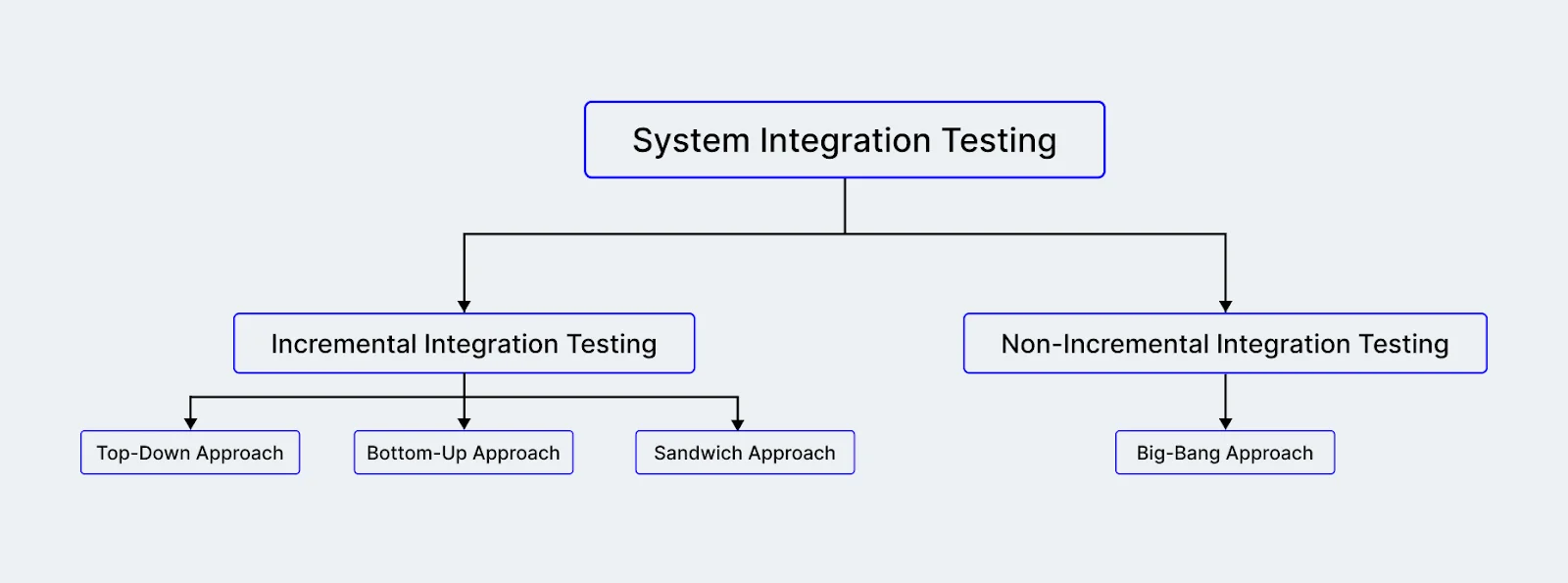
Let us understand each of these approaches in more detail so that you can choose the technique that works best for you and your teams.
Incremental Integration Testing
The incremental approach involves systematically adding modules individually or as per the requirement while maintaining a logical relationship between them. Considering the dependencies between modules, the process is crucial since this testing approach ensures seamless data flow between these modules.
Typically, two or more modules are incorporated and tested to verify the seamless functioning of their respective features. This testing process continues iteratively until all modules within the system have been successfully tested.
For example, consider a social media application like "SocialConnect". First, the login module is integrated and tested for secure user authentication. Subsequently, the timeline, post-creation, and chat are incrementally added and tested to guarantee smooth and independent functionality. The testing process concludes with the logout module, ensuring users can securely log out of their SocialConnect accounts. This incremental approach allows for identifying and resolving issues at each stage, contributing to the overall robustness and reliability of the social media application.
Top-Down Approach
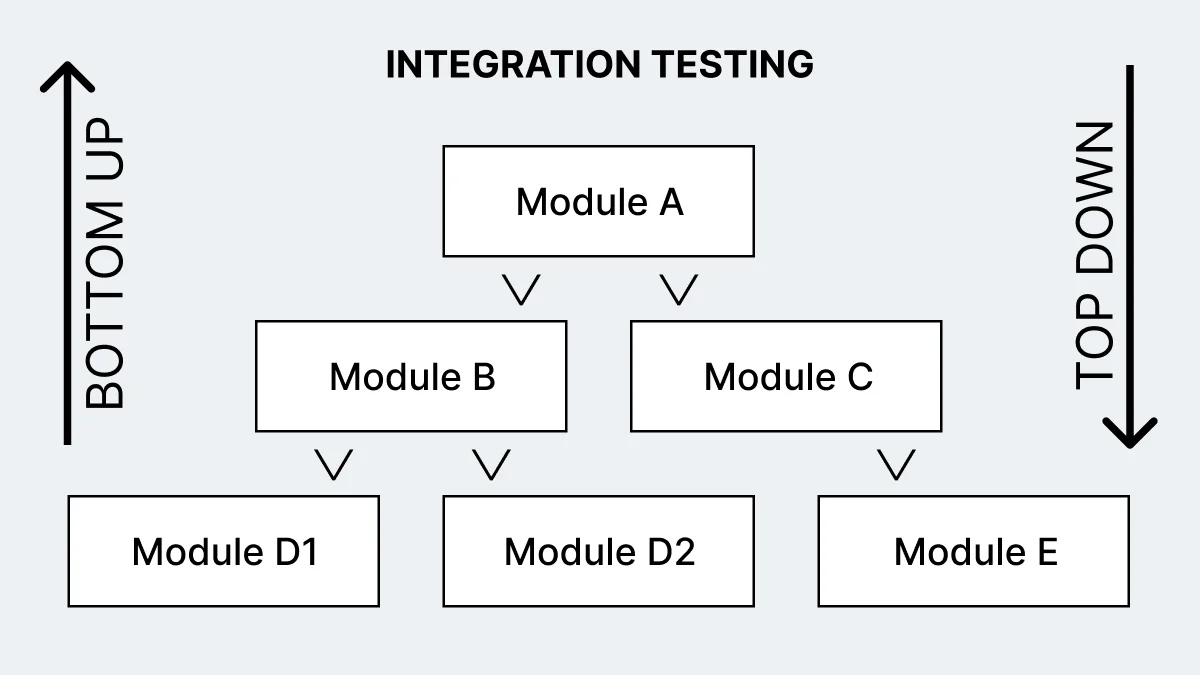
Under this approach, the testing starts with just the topmost module or component of an application. The functionality of the underlying modules is performed using stubs. Once each test is complete, the real module replaces the stub. The modules can be integrated either in a breadth-first or depth-first manner. Testing will continue until the application is complete.
The major challenge in this approach is the direct dependency on the availability of lower-level module functionality. There are delays once stubs replace the real modules, and writing stubs could be challenging when you are working with this approach.
Bottom-Up Approach
This approach helps eliminate the limitations and challenges encountered in the top-down approach. In this method, the lowest-level modules are assembled to create clusters. These clusters serve as a sub-function of the application. Then a driver is created to manage the input and output details related to the test case.
After this, you can perform testing of the cluster. Once the cluster is tested, you can remove the driver, and the cluster is combined with the next upper level. This process continues until we have traversed the entire application structure.
There is no need for stubs in this approach. It is a more simplified approach as the processing moves upward and the need for drivers gets reduced. This approach works well for object-oriented, real-time, and systems that follow performance standards. The only limitation of this approach is the UI testing, which is done at last.
Sandwich Approach / Hybrid Approach
The top-down and bottom-up approaches discussed in the previous sections are combined here. The system is categorized into three different layers - the middle layer is the target layer, one is above the target, and another is below the target.
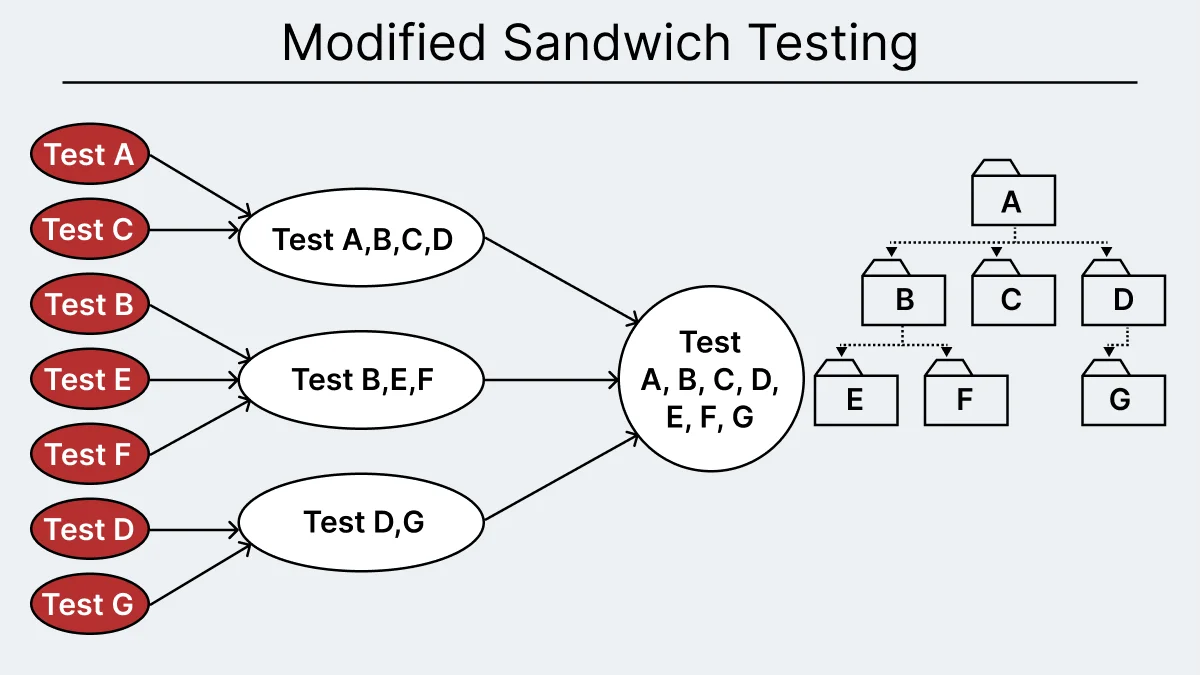
Testing is performed in both directions and is grouped in the middle layer. The top and bottom layers can be tested in parallel. However, there is also a limitation where you can thoroughly test the individual subsystems before integration.
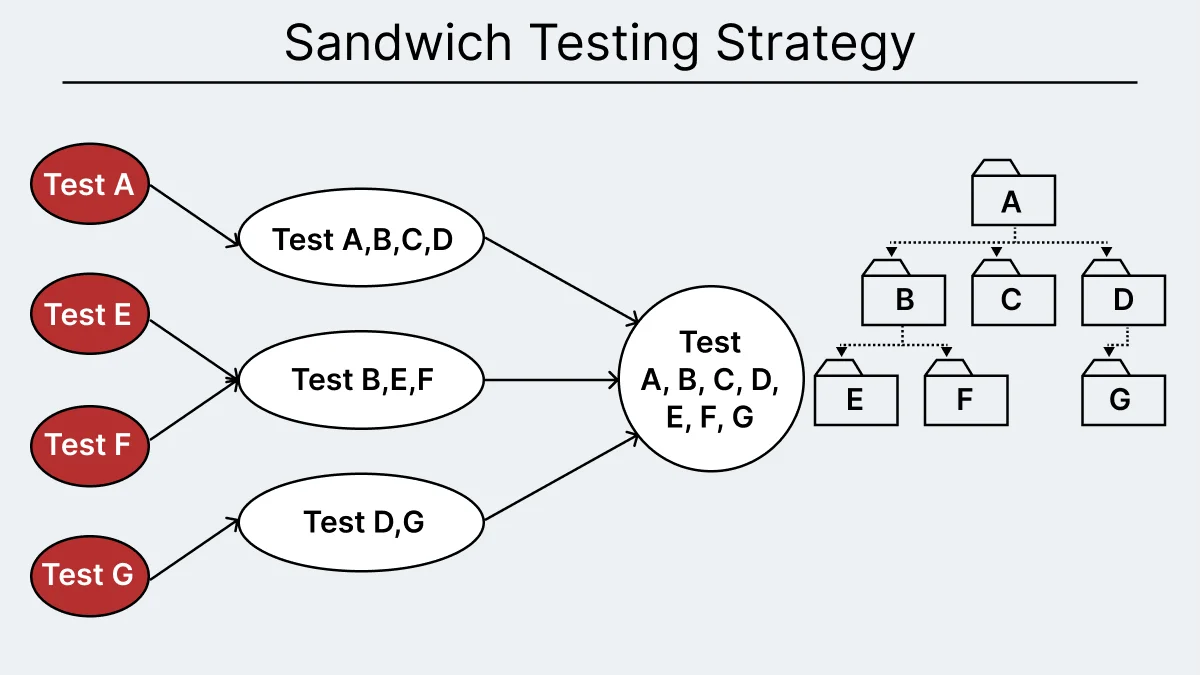
To overcome this limitation, we have modified sandwich testing so that you can test the top, middle, and bottom layers in parallel using stubs and drivers.
Non-Incremental Integration Testing
Non-incremental integration testing is a method in which we integrate and test all the units or modules simultaneously after they have been individually tested and verified. In this approach, we can test the system comprehensively, prevent redundant testing, and save time and resources.
Non-Incremental Integration Testing is often used when incremental testing is not feasible, e.g. when the system is small or when the components are tightly coupled. However, this approach is time-consuming and may make it challenging to find the root cause of problems that arise during testing. Therefore, it is important to carefully plan and execute Non-Incremental Integration Testing to ensure that it is effective and efficient.
For example, consider a non-incremental integration testing approach in the case of a social media platform where individual modules for features like user authentication, post creation, and notifications are independently developed. After all the components are finalized, the testing is done.
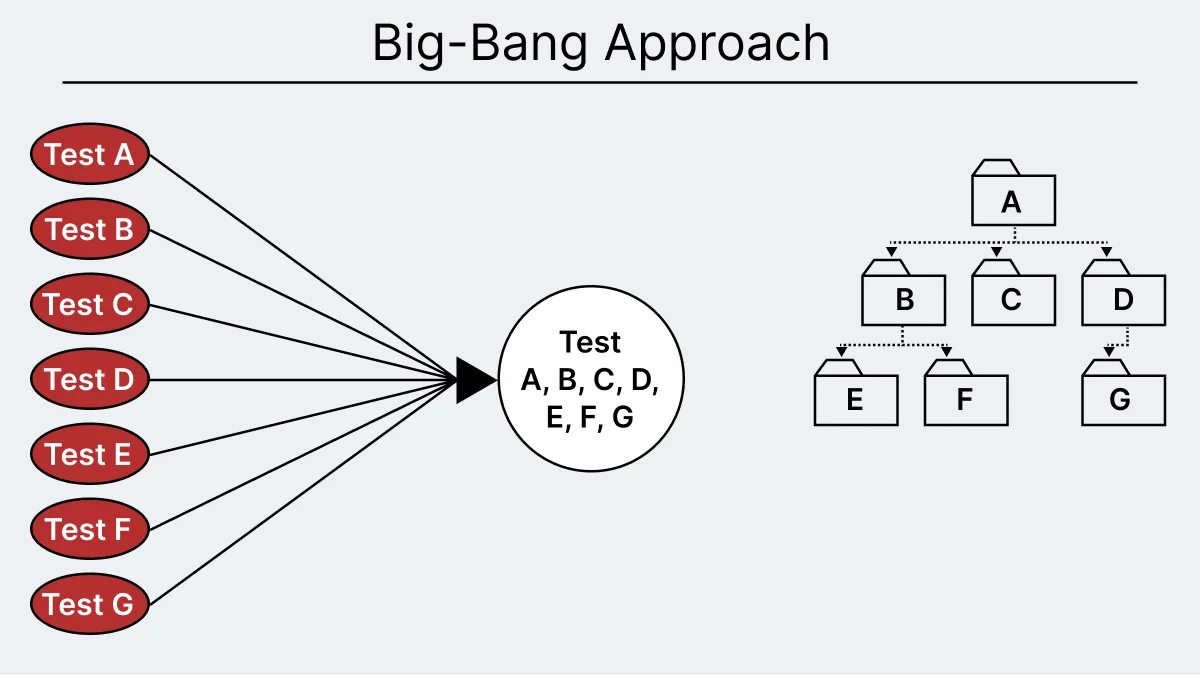
Big Bang Approach
In this approach, integration is done to make sure that the required modules related to the application are ready. Once the integration is completed, you can perform testing to check if the integrated systems are working.
Root Cause Analysis with this approach can be challenging when all the systems are closely integrated. This approach is useful when performing one round of system integration testing.
Common Challenges in System Integration Testing (and How to Overcome Them)
SIT fails in ways unit testing never does, because the thing under test is not code you own end to end. Five problems account for most of the lost time, and each has a known counter.
- Environment instability is the most common. SIT needs several subsystems up at once, and a run fails whenever any one of them is mid-deploy or misconfigured, which produces failures that look like defects and are not. Counter it by version-pinning every dependency in the test environment and running a health check on each subsystem before the suite starts, so an unavailable dependency reports as a blocked run rather than a false failure.
- Test data synchronization across multiple databases is the subtlest. When each subsystem owns its own store, a customer record in the CRM database must correspond to the same record in billing, or a passing test proves nothing. Counter it by seeding from a single source of truth and resetting state between runs rather than letting suites inherit whatever the last run left behind. How hard that mapping is often comes down to ERP configuration vs customization decisions made upstream, since custom fields and objects are what stop a record in one system from matching its counterpart in another.
- Third-party API rate limits and downtime break runs for reasons unrelated to your code. A suite that calls a live payment gateway on every execution will eventually hit a rate limit, and the vendor's sandbox has its own outages. Counter it with service virtualization, simulating the external service's responses so the suite tests your integration logic rather than the vendor's uptime.
- Maintaining stubs and mocks for incomplete subsystems carries a hidden cost. Stubs stand in for components that are not built yet, and every one is code that must be kept in sync with the real contract. A stub that drifts from the real API gives you passing tests and a broken integration, which is worse than no test. Counter it by generating stubs from the same contract definition the real service publishes, so drift surfaces as a build failure.
- Execution time grows with every integration. SIT suites are long-running by nature because each test exercises several systems, and a suite that takes hours stops gating merges and starts getting skipped. Counter it by distributing the suite rather than accepting serial execution.
- Old paths break as new integrations land. Every connection you add can quietly break one that worked yesterday, and the failure usually surfaces in production rather than in the suite that never covered it. Counter it by running regression testing on every integration instead of once at the end of the cycle.
- Systems that pass functionally still buckle under load, because SIT typically runs against a handful of test records while production carries millions. Counter it by folding performance testing into the SIT strategy, so bottlenecks at the seams surface while there is still time to fix them.
That last problem is where orchestration earns its place. TestMu AI's HyperExecute is an AI-native test orchestration cloud that runs suites up to 70% faster than traditional grids, by placing test scripts and execution components in a single isolated environment instead of paying the network hops a hub-and-node grid carries between them. It is framework-agnostic and driven by one declarative hyperexecute.yaml file, so an SIT suite spanning several frameworks runs under a single config, with auto-split distribution, targeted retries, fail-fast, and AI root cause analysis on the failures that matter. The 70% figure is a ceiling drawn from removing that overhead rather than a guarantee for every suite, so treat it as an upper bound and measure your own.

Note: Stop letting a slow integration suite gate your releases. Orchestrate any framework from one YAML on TestMu AI and cut wall-clock time. Try TestMu AI for free!
Who Performs System Integration Testing (SIT)?
SIT testing is a collaboration rather than one team's job, because no single role can see every interface. Four roles share it:
- QA engineers own execution. They track the functionality updates and upgrade changes, so they design the integration tests and run them once the development team gives the go-ahead.
- Developers validate the code requirements, peer-review each other's work, and write the automated scripts. Pull them in on the technically complicated workflows, which are the ones most often under-tested.
- Product owners and business analysts shape the high-level scenarios and review end-to-end cases, since they sit closest to the users and know what the process is meant to achieve.
- Release engineers wire the tests into the continuous integration pipeline, where the whole team sees the results.
In Agile and DevOps teams the boundaries blur, and anyone can write and execute end to end testing. That shift has a name: organizations increasingly treat this as quality engineering rather than quality assurance, which makes software quality a shared responsibility instead of a gate one team guards. The exact split still depends on your organization's goals.
Skill Set Required for System Integration Testing (SIT) Profile
Organizations are always looking to hire great system integration test specialists to manage complex testing requirements. The professionals can either work in a big team of testers or as individual contributors based on the project requirements. It is always great to have professionals who have previously encountered and handled testing challenges.
Some key skills required for this profile include:
- Configuring test environments that include data integration platforms.
- Monitor and test different systems and components.
- Curious to learn and implement different real-world concepts.
- Ability to implement and execute test suites.
- Experience with any programming language such as Python, Java, etc.
- Strong technical and communication skills for effective stakeholder management.
System Integration Testing (SIT) Tools
Integration testing tools are used to test the interface between modules and find the bugs; these bugs may happen because of the multiple modules integration. These tools' main objective is to ensure that the specific modules work according to the customer's needs.
Following are the test tools to create integration test suites.
VectorCAST/C++
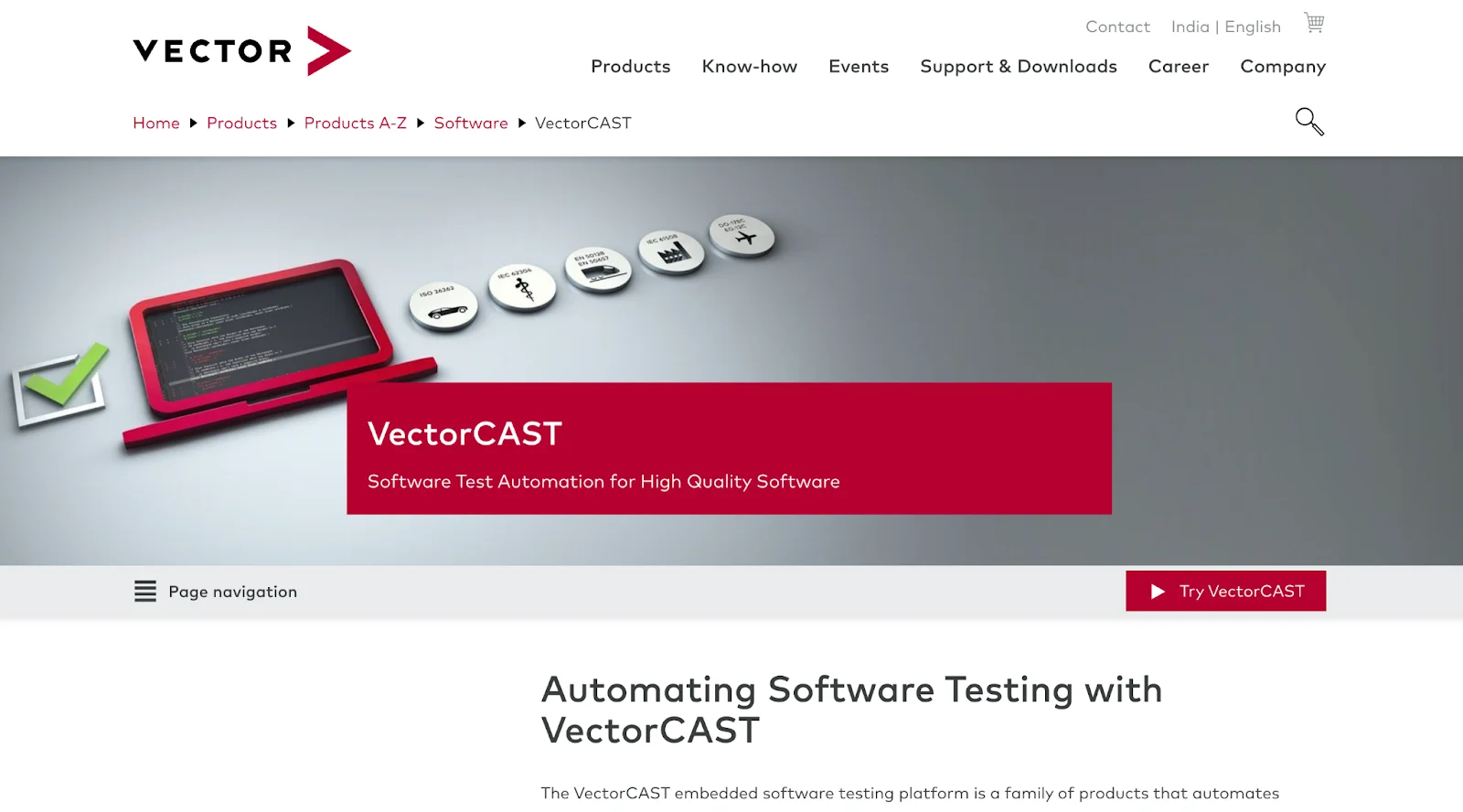
The Vector Software VectorCAST tool is popular for performing unit and integration testing requirements. Each module or component is tested independently to ensure the components work fine without any dependencies.
During the integration testing, the components are combined and verified to ensure that all the integrated modules work as a potent combination. This test solution is widely used in financial industries, medical devices, and railways.
The key features of VectorCAST/C++ are as follows:
- Compatible with C++11, C++14, and C++17.
- Supports a wide variety of processor architectures, simulators, and compilers.
- Eliminates the need for manually creating test drivers and stubs.
- Regression testing is automated.
- Compatible with Linux and Windows platforms.
- Provides integrated code coverage capabilities, including MC/DC (Modified Condition/Decision Coverage)
Citrus
Citrus is a widely used test framework written in Java. It helps in automated integration testing of message-based applications and data formats. The validation of JSON, XML, and plain text messaging requests and responses can be performed. In this case, Citrus works on both the client and server-side and helps to simulate the request and response messages.
The key features of Citrus are as follows:
- Provides a flexible test configuration that allows testers to configure tests using Java, XML, or Groovy.
- Integrates with various CI tools like Bamboo and Jenkins, facilitating easy integration of tests into a pipeline for continuous delivery.
- Designed to test messaging systems which makes it an excellent tool for testing message-based APIs and web services.
- Supports BDD (Behavior Driven Development) testing.
- Offers a wide range of features for verifying communications sent and received across systems during integration testing.
Smart Integration Test Accelerator (SITA)
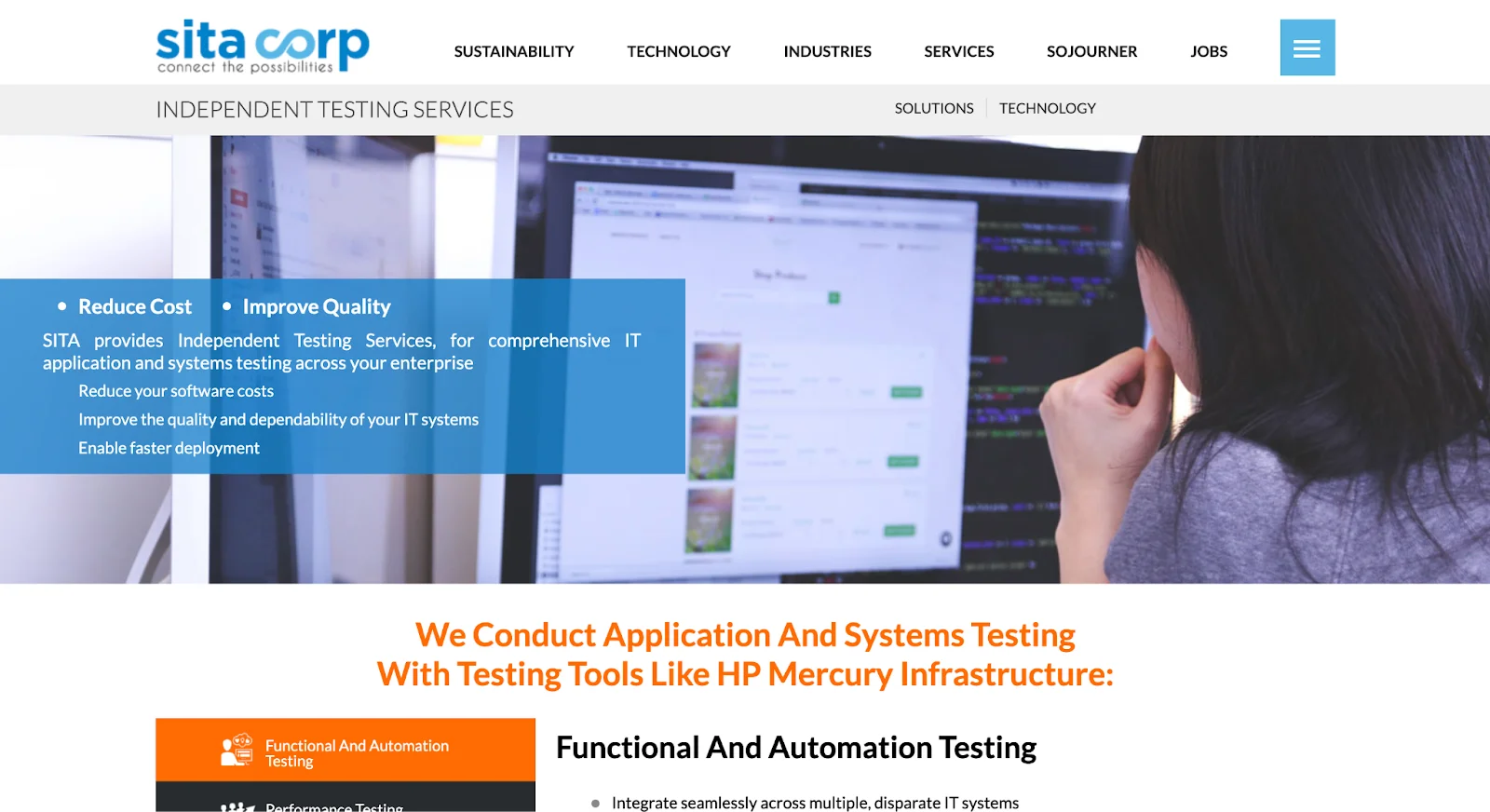
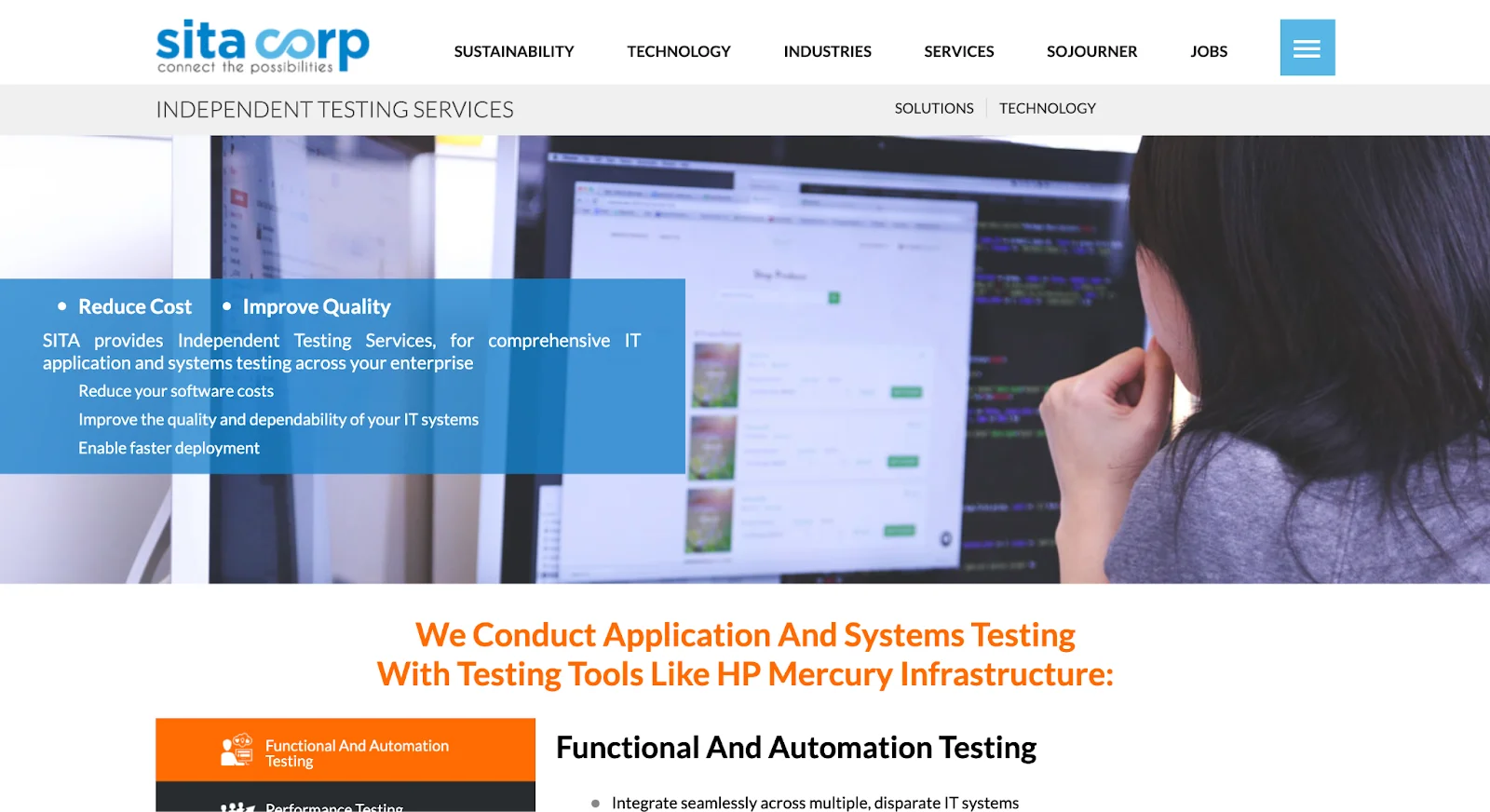
Organizations around the globe are now moving to business-oriented architecture. The traditional integration testing approach requires considerable effort when creating test data.
Wipro's SITA helps you to overcome such limitations. This tool helps accelerate the generation of test data and test design. This is a cost-effective approach as you can reuse test data and test cases.
The key features of SITA are as follows:
- Automate several tasks related to test design.
- Integrates with other tools such as IBM Rational, HP ALM, etc.
- Supports test cases and data reusability.
- Process flow for integration testing is simplified, and time spent is reduced.
You can choose the required tooling options available in the market based on different factors that include:
- Project requirements
- Ease of use
- Cost of the license
- Language support
So far, we have discussed different concepts that make system integration testing an essential part of any testing ecosystem. The true potential of system integration testing can only be leveraged when performed on scalable cloud testing platforms like TestMu AI, which simplifies your testing requirements as you grow.
When building your iterative product requirements, it is important to validate and test them quickly before they are handed over to the customers for feedback and input. You cannot rely on traditional working methods, where releasing the final product in the market takes much time. With TestMu AI's continuous quality cloud, you can test and ship your software products at a lighter pace.
TestMu AI offers automated browser testing and automated app testing using different automated testing tools like Selenium, Cypress, Playwright, Appium, Espresso, XCUITest, and more.
Want to elevate your test automation game? Check out our video on HyperExecute, TestMu AI's AI-native solution, and accelerate your testing process.

You can also subscribe to the TestMu AI YouTube Channel and stay updated with the latest tutorials and updates on Selenium automation testing, Playwright automation testing, and more.

Proving an Integrated Flow End to End
SIT has a reporting problem the other test phases do not. A unit test failure points at one function. A SIT failure points at a boundary, and the two teams either side of that boundary each have a reasonable story about why it is the other one's defect. What settles it is evidence of what actually happened during the run, at the seam, in order.
That is also what exit criteria demand. A programme manager signing off SIT is not asking whether the suite went green. They are asking which integration requirements were proven, by what, and whether the proof can be reopened next quarter when someone disputes it.
Driving the flow as a user, not as a script
Kane CLI takes a cross-system journey as a plain-English objective and drives real Chrome through it, which suits SIT because the flows that break at integration points are usually the long ones nobody wants to script. It is constrained to actions a real user could perform, so it cannot inject JavaScript to skip a broken handoff and report a pass, which is the exact failure mode that makes an integration suite untrustworthy.
kane-cli run "create an order in the storefront, confirm it appears in the admin console, \
assert the status reads Awaiting Fulfilment in both" --url https://your-staging-host
A single objective spanning two applications is the shape SIT actually needs, and it is awkward to express in a framework built around one application under test.
Evidence a reviewer can reopen
Every run seals into an evidence pack carrying per-step screenshots, DOM state, console output, and the network calls made at each boundary, content-hashed so the record cannot be edited after the fact. For a defect sitting between two teams, that pack replaces the argument with a timeline. For an auditor, it is the difference between a dashboard asserting a workflow ran and a record that replays it.
Coverage is counted the same way. A requirement is reported as verified only once a run asserted that exact promise and produced evidence for it, so a criterion with a test loosely attached does not quietly count as covered. That maps directly onto the exit criteria described earlier: instead of a pass rate, you get a list of which integration requirements are proven and which are not.
None of this replaces the interface inventory or the environment work above. It replaces the part where SIT sign-off depends on someone's word that the flow was checked.
Note: Give it a cross-system journey in plain English and it returns per-step screenshots, DOM state, and the network calls at each boundary, sealed into a pack that can be reopened during sign-off. Read the Kane CLI docs
Conclusion
Before writing a single SIT testing case, draw the interfaces. List every boundary where one subsystem hands data to another, and mark which of those handoffs would cost you most if it silently passed the wrong payload. That list, not a tool choice, is your SIT scope, and most teams find it is shorter and more specific than they expected.
From there, work in the order the failures actually arrive: pin the test bed so runs fail for real reasons, seed test data from one source of truth, virtualize the third-party services you do not control, and only then widen coverage. Keep SIT ahead of UAT, so business users spend their sign-off time on business questions rather than on integration defects.
When the suite gets long enough to stop gating merges, orchestration is the fix rather than deleting tests. Move it onto TestMu AI's HyperExecute with a single hyperexecute.yaml and let auto-split distribute it, or run the cross browser testing portion across TestMu AI's 3,000+ browser and OS combinations on the same platform. The HyperExecute getting started guide covers the YAML and the CLI setup end to end.
Author

Hari Sapna Nair
Blogs: 9


Hari Sapna Nair is a Community Contributor with experience spanning software development, technical writing, and open-source collaboration. A former Technical Content Writer at TestMu AI, she has authored guides and tutorials on Selenium, testing, microservices, and emerging technologies. Sapna has contributed 60+ technical blogs for platforms like Coding Ninjas and has been an active open-source contributor in programs such as GirlScript Summer of Code and HakinCodes, securing top contributor ranks. A GHC Scholar and an engineer turned management student at IIM Indore.
Reviewer

Harish Rajora
Reviewer
Harish Rajora is a Software Developer 2 at Oracle India with over 6 years of hands-on experience in Python and cross-platform application development across Windows, macOS, and Linux. He has authored 800 + technical articles published across reputed platforms. He has also worked on several large-scale projects, including GenAI applications, and contributed to core engineering teams responsible for designing and implementing features used by millions. Harish has worked extensively with Django, shell scripting, and has led DevOps initiatives, building CI/CD pipelines using Jenkins, AWS, GitLab, and GitHub. He has completed his post-graduation with an M.Tech in Software Engineering from the Indian Institute of Information Technology (IIIT) Allahabad. Over the years, he has emphasized the importance of planning, documentation, ER diagrams, and system design to write clean, scalable, and maintainable code beyond just implementation.


System Integration Testing FAQs
Did you find this page helpful?
More Related Blogs
TestMu AI forEnterprise
Get access to solutions built on Enterprise
grade security, privacy, & compliance
- Advanced access controls
- Advanced data retention rules
- Advanced Local Testing
- Premium Support options
- Early access to beta features
- Private Slack Channel
- Unlimited Manual Accessibility DevTools Tests