
Power Your Software Testing with AI Agents and Cloud
The Native AI-Agentic Cloud Platform to Supercharge Quality Engineering. Test Intelligently and Ship Faster.

- TestMu AI (Formerly LambdaTest)
- /
- Blog
- /
- Top 10 AI Test Management Tools in September 2026
AI test management tools are software testing platforms that apply artificial intelligence to plan, create, execute, and maintain tests with minimal manual effort. Instead of hand-written scripts and a static spreadsheet built from a test case template, they generate test cases from natural language, repair broken tests automatically, and surface coverage gaps and quality risks that humans would miss.
This guide compares the top 10 AI test management tools of 2026, including our own AI test management software, explains what actually makes a tool AI-powered, and walks through how AI test management tools differ from traditional ones so you can pick the right fit for your team.
According to Mordor Intelligence, the AI-powered software testing and QA market is projected to grow from USD 9.32 billion in 2025 to USD 39.43 billion by 2031, at a 26.88% CAGR.
TL;DR
AI test management tools plan, create, execute, and maintain tests with far less manual effort than a traditional repository. Pick by the job you need done: TestMu AI for bridging manual and automated work in one place, and aqua cloud where a requirements-to-defect audit trail is the constraint rather than the convenience.
- Best for bridging manual and automated testing: TestMu AI - unified manual and automated management with AI-assisted case creation, so both kinds of work report into one place.
- Best for CI-driven teams: Testomat.io - AI insights sitting on deep CI/CD integration, aimed at teams whose pipeline is already the centre of gravity.
- Best for complex traceability: SpiraTest - requirements, tests, and defects in a single workspace rather than three linked systems.
- Best for teams leaving manual testing: Testiny - AI-assisted case creation with a low learning curve, which is the usual blocker on that transition.
- Best for one modern QA workspace: Testmo - manual, exploratory, and automated management unified in a single fast interface.
- Best for regulated estates: aqua cloud - an AI copilot that drafts cases from requirements, with requirements-to-defect traceability for audit.
- Best for large-scale continuous testing: OpenText - centralised AI management across environments, aimed at enterprise scale rather than a single team.
- Best for teams working through coding agents: Qase - generates cases from Jira or GitHub issues and exposes the repository to Claude or Copilot over MCP.
- Best for an established system of record: TestRail - the Sembi IQ engine generates tests and BDD scenarios from requirements without changing platforms.
- Best for release-readiness intelligence: PractiTest - SmartFox AI prioritizes by risk, history, and change, and flags duplicated coverage before it spreads.
What Makes One Genuinely AI-Powered?
Generative authoring from plain-English requirements, self-healing when a locator moves, coverage gap analysis against requirements and code, and predictive flake detection. A tool offering only reporting charts and manual case entry is a traditional repository with a new label.
AI Test Management Tools at a Glance
| Tool | Standout AI Capability | Best For |
|---|---|---|
| TestMu AI Test Manager | Unified manual + automated management with AI-assisted creation | Teams bridging manual and automated testing at scale |
| Testomat.io | AI insights with deep CI/CD integration | Continuous-integration-driven teams |
| SpiraTest | Requirements, tests, and defects in one workspace | Teams with complex traceability needs |
| Testiny | AI-assisted creation with low learning curve | Teams moving from manual to automated testing |
| Testmo | Unified manual, exploratory, and automated management | Teams wanting one fast, modern QA workspace |
| aqua cloud | AI copilot that drafts test cases from requirements | Regulated teams needing requirements-to-defect traceability |
| OpenText | Centralized AI management across environments | Large-scale continuous testing |
| Qase | AI cases from Jira or GitHub issues, plus MCP for coding agents | Teams working through AI coding assistants |
| TestRail | Sembi IQ generating tests and BDD scenarios from requirements | Established systems of record adding AI |
| PractiTest | SmartFox AI with risk-based prioritization and duplicate detection | Enterprise QA needing release-readiness intelligence |
What Makes a Test Management Tool AI-Powered?
Many tools add an "AI" label to a basic dashboard. A genuine AI test management tool changes how the work gets done, not just how it looks. Before comparing products, it helps to know the five capabilities that separate real AI test management tools from rebranded legacy platforms.
- Generative test authoring: The tool turns plain-English requirements or user stories into structured test cases and automation scripts, so testers start from a draft instead of a blank page.
- Self-healing automation: When a locator or UI element changes, the tool re-maps the test to the new element automatically, cutting the maintenance that breaks most automation suites. See our deeper guide to self-healing test automation.
- Coverage and gap analysis: AI compares existing tests against requirements and code changes, then flags untested paths and high-risk areas so coverage decisions are data-driven.
- Predictive failure analytics: The tool learns from historical runs to predict flaky tests, prioritize the cases most likely to catch regressions, and triage failures faster.
- Agentic workflows: The most advanced tools run multi-step actions on their own, planning a test strategy, generating cases, executing them, and drafting defect reports with a human reviewing the output.
If a tool offers only reporting charts and manual case entry, it is a traditional test management tool with a new coat of paint. The tools below were selected because they deliver at least three of these five capabilities in practice.

Note: TestMu AI Test Manager generates structured test cases from a requirement and keeps manual and automated results in one pass/fail view. Start free
Top 10 AI Test Management Tools
The 10 tools below are grouped by the workflow they fit best, not ranked as a leaderboard. The right choice depends on your stack, team size, and how much of the testing lifecycle you want AI to handle. Each was selected for delivering real AI capability, whether generative authoring, self-healing, or coverage analysis, rather than a rebranded dashboard. Test management is one piece of a larger AI-augmented software testing practice that pairs AI-driven authoring and triage with engineer-led coverage strategy.
1. TestMu AI Test Manager
TestMu AI Test Manager is AI test management software for teams leaving TestRail, Zephyr, or Xray: one-click migration, AI test case generation from Jira tickets, and a deduplication agent that keeps the suite clean. TestMu AI, formerly known as LambdaTest, runs it as an AI-native test management platform that keeps manual and automated testing in one connected workspace. Its built-in AI turns a requirement or user story into a structured test case with steps, expected results, preconditions, and priority in seconds, and results from manual runs and CI/CD pipelines map back to those cases in a single pass/fail view.
A single traceability matrix connects requirements, test cases, runs, and defects, so coverage gaps surface before a release rather than after. See the generate test cases with AI documentation to try the authoring flow.
Key Features:
- AI-Assisted Test Creation: Offers capabilities to auto-generate test scripts using natural language inputs.
- Seamless Integration: Easily integrates with popular testing frameworks like Selenium and CI/CD tools for streamlined workflows.
- Unified Testing Workspace: Combines manual and automated test management in a single platform to reduce context switching.
- Comprehensive Reporting: Provides shareable and easy-to-understand reports that cover the entire testing process.
- Advanced Traceability: Links requirements, test cases, and defects for compliance and comprehensive insights.
- Duplicate Detection: The Test Deduplication Agent compares cases by meaning across a project or folder and opens each match in a compare view with an AI summary.
Pros:
- Increased Testing Speed: AI enhancements allow faster test creation and execution, boosting productivity.
- User-Friendly Interface: Designed with an intuitive UI, making it accessible even for beginners.
- Enhanced Collaboration: Facilitates better teamwork with integration capabilities and collaborative features.
- Improved Accuracy: AI-driven insights help maintain high software quality with minimal human intervention.
Cons:
- Review still required: AI-generated test cases need human review before they gate a release.
- Premium tiers: The most advanced AI capabilities sit in higher plans, a budget consideration for smaller teams.
TestMu AI is best suited for organizations looking to enhance their testing processes with AI-driven efficiencies. It's an ideal solution for teams aiming to bridge the gap between manual and automated testing, deliver high-quality software faster, and maintain comprehensive test management capabilities.
Why Choose TestMu AI Over Other Tools?
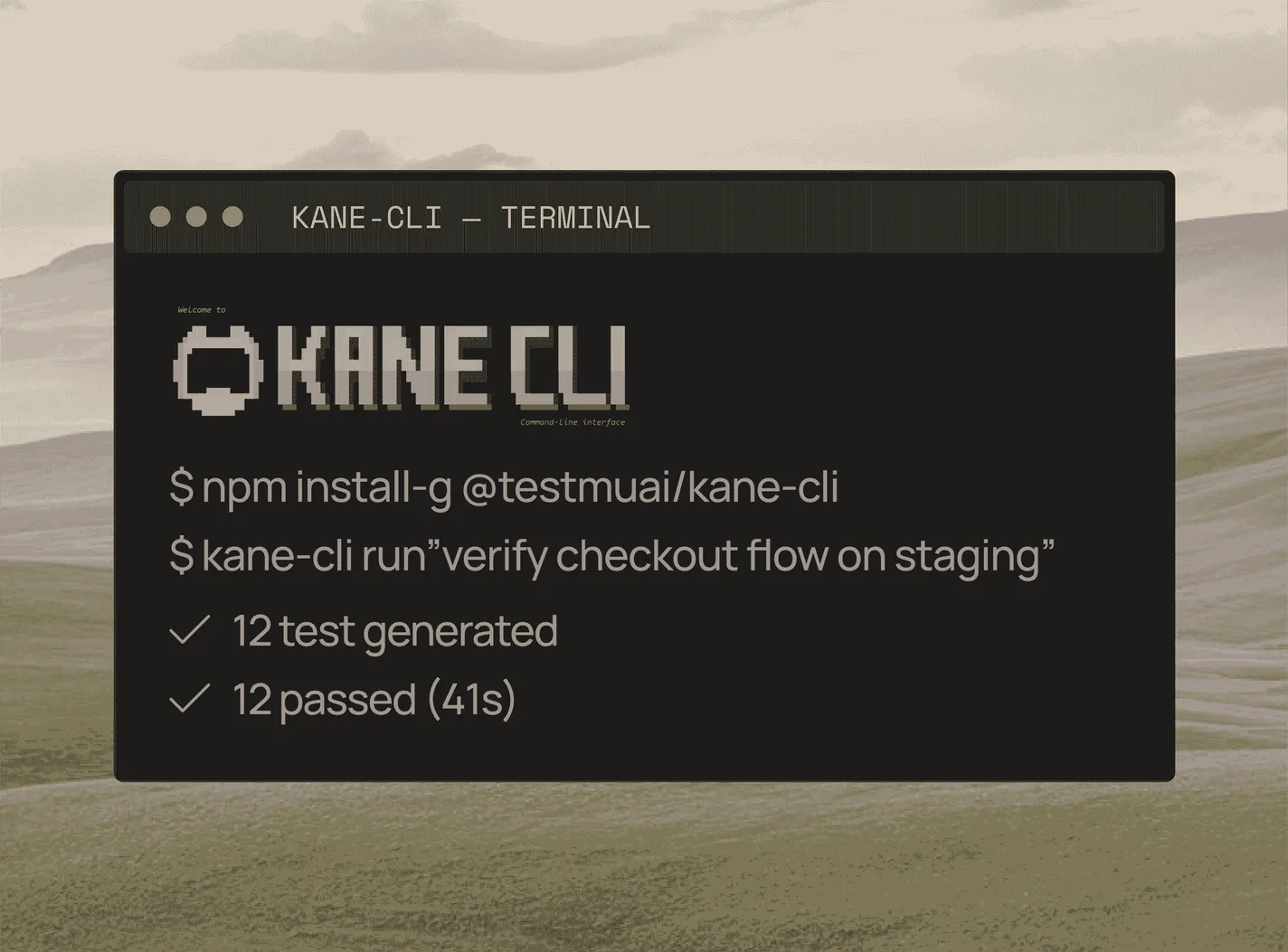
The other six here manage tests. TestMu AI also runs them, which is the difference that decides most evaluations: cases, cycles, and defects live in the same platform as the browser and real-device grid the runs execute on, so a failed case carries its own evidence instead of a link to a separate system. Kane CLI extends the same workspace to the terminal, taking a plain-English objective and returning a verdict a pipeline can act on.
2. Testomat.io
Testomat.io is a robust AI-powered test management tool designed to streamline testing workflows for software development teams. It emphasizes collaboration and integrates seamlessly with your CI/CD pipelines, making it ideal for teams adopting continuous integration practices. This platform provides advanced AI insights to improve the effectiveness and efficiency of test management.
Key Features:
- Collaborative Environment: Supports team collaboration with features like shared dashboards and real-time updates.
- AI Insights: Leverages AI to provide actionable insights that help optimize test plans and strategies.
- CI/CD Integration: Easily integrates with leading CI/CD platforms to automate testing within your development pipeline.
- Advanced Reporting: Provides detailed reports and visualizations to track test coverage and execution status.
- Customizable Workflows: Allows teams to tailor workflows according to their unique testing needs and methodologies.
Pros:
- Enhanced Collaboration: Facilitates communication and collaboration among team members through shared features.
- Improved Test Efficiency: AI insights help teams focus their efforts on critical test cases and areas that need improvement.
- Seamless Integration: Integrates smoothly with other tools and platforms, ensuring a unified development process.
- Real-time Updates: Offers real-time monitoring of test execution, enabling quick responses to potential issues.
Cons:
- Learning Curve: Might require an initial period of adaptation for teams unfamiliar with AI-driven testing tools.
- Complexity in Customization: Extensive customization options may be overwhelming for teams new to test management tools.
- Cost Considerations: AI-powered features may come at a higher cost compared to traditional test management tools.
Testomat.io is best suited for development teams looking for a comprehensive and collaborative AI test management tool that integrates well with existing CI/CD pipelines. It is ideal for teams that prioritize efficiency and want to leverage AI insights to enhance their testing processes.
3. SpiraTest
SpiraTest is an AI-powered test management tool that facilitates comprehensive testing activities by integrating requirements management, test case management, and defect tracking in a single platform. This makes it easier for QA teams to manage their testing processes and ensure software quality. SpiraTest is particularly effective for executing both manual and automated test cases.
Key Features:
- Integrated Requirements Management: Seamlessly links requirements to test cases and defects.
- Automation Support: Integrates with various automation frameworks for comprehensive testing.
- Real-time reporting: Offers dashboards and charts for tracking test progress and project health.
- Customizable workflows: Tailors processes to fit specific team needs with flexible workflow management.
- Test Case Reusability: Allows easy duplication and modification of existing test cases to save time.
Pros:
- Comprehensive Toolset: Combines test management, requirements, and defect tracking.
- Easy Integration: Connects with various automation tools for synchronized test execution.
- User-friendly Interface: Intuitive and easy to navigate for beginners and experienced users alike.
Cons:
- Learning Curve: Some users may face a steep learning curve initially to fully utilize all features.
- Customization Complexity: High customization capabilities can be challenging for users who prefer simplicity.
- Resource Intensive: Running extensive tests and reports may require significant system resources.
SpiraTest is best suited for teams looking for an all-in-one solution for test management that requires integrated support for manual and automated testing activities. It is particularly beneficial for organizations with complex testing requirements that demand detailed tracking and reporting capabilities.
4. Testiny
Testiny is an AI-powered test management tool designed to streamline the testing process and improve overall efficiency. It offers an intuitive interface that simplifies test management by automating mundane tasks, allowing QA teams to focus on more complex issues. As one of the top AI test management tools, Testiny supports teams in managing manual and automated tests seamlessly within a single platform.
Key Features:
- AI-Assisted Test Creation: Quickly generate test cases from natural language descriptions.
- Test Automation: Facilitate both script-based and scriptless tests with advanced AI support.
- Seamless Integration: Connect with popular development and CI/CD tools to maintain workflow consistency.
- Intuitive Reporting: Access detailed reports complete with analytics for data-driven insights.
- Collaboration Tools: Enhance team communication and document sharing to streamline processes.
Pros:
- Ease of Use: User-friendly interface that reduces the learning curve for new users.
- Increased Productivity: Automates repetitive tasks, freeing up time for more strategic testing activities.
- Integration Flexibility: Works well with a variety of tools and platforms used in software development.
- Improved Test Coverage: AI-driven insights help identify gaps in testing, leading to comprehensive test plans.
Cons:
- Limited Customization: Although feature-rich, some users may find customization options lacking compared to traditional tools.
- Initial Setup Time: Setting up integrations with existing tools can take a notable amount of time for new users.
- Dependency on AI: Reliance on AI for test creation might not suit all workflows, especially in complex test scenarios.
Testiny is best suited for software teams looking to enhance their testing capability through AI-driven automation and insights. It's particularly beneficial for organizations aiming to transition from traditional to AI-powered test management systems.
5. Testmo
Testmo is a modern, unified test management platform that brings manual, exploratory, and automated testing into a single workspace. Built for speed, it helps QA teams organize test cases, run test sessions, track automation results, and report on quality, with AI-assisted features layered across the workflow.
Key Features:
- Unified Test Management: Manage test cases, exploratory sessions, and automation runs in one place.
- Fast, Modern UI: A responsive interface designed to keep large test suites easy to navigate.
- Automation Reporting: Ingests results from CI pipelines and automation frameworks for unified reporting.
- Rich Analytics: Charts, metrics, and insights that highlight coverage gaps and quality trends.
- Integration Support: Connects with Jira, GitHub, GitLab, and popular CI/CD tools.
Pros:
- Speed and Usability: One of the fastest, most intuitive interfaces among test management tools.
- Full-spectrum Testing: Covers manual, exploratory, and automated testing rather than one slice.
- Strong Reporting: Detailed metrics and dashboards drive data-informed quality decisions.
Cons:
- AI Depth: AI assistance is lighter than platforms built AI-first from the ground up.
- Setup Effort: Getting automation ingestion and integrations tuned takes initial configuration.
Testmo is best suited for QA teams that want one fast, modern workspace to manage manual, exploratory, and automated testing together, with reporting that ties the whole quality picture into a single view.
6. aqua cloud
aqua cloud is an AI-powered test management system that keeps requirements, test cases, and defects in a single traceable workspace. Its AI copilot drafts test cases from plain-language requirements and helps testers expand coverage, which makes it a strong fit for regulated industries that need audit-ready traceability alongside AI assistance.
Key Features:
- AI Test Case Generation: The AI copilot turns requirements into structured test cases, so testers start from a draft instead of a blank page.
- End-to-End Traceability: Links requirements, test cases, runs, and defects for compliance-ready reporting.
- Manual and Automated Management: Manages both manual and automated suites in one place.
- Integrations: Connects with Jira, Jenkins, and popular automation frameworks to fit existing pipelines.
- Detailed Reporting: Offers dashboards and audit trails suited to regulated environments.
Pros:
- Traceability: Strong requirements-to-defect linkage for compliance-heavy teams.
- AI Assistance: Speeds up authoring without giving up review control.
- Unified Workspace: Keeps manual and automated testing in one system.
Cons:
- Learning Curve: The breadth of features can take time to configure for smaller teams.
- Enterprise Focus: Depth of traceability may exceed what lightweight projects need.
aqua cloud is best for QA teams in regulated or documentation-heavy environments that want AI-assisted authoring without losing end-to-end traceability across requirements, tests, and defects.
7. OpenText
OpenText is an AI-powered test management tool designed to streamline testing processes across various platforms. This tool integrates AI capabilities to enhance test management, offering a centralized solution for both automated and manual test scenarios. It's part of the best ai test management tools in the industry, recognized for its AI-driven features that simplify and expedite testing workflows.
Key Features:
- AI-Enhanced Test Creation: Utilizes AI to generate test scripts from plain-English descriptions, reducing the need for technical scripting knowledge.
- Centralized Management: Allows management of all testing activities from a single platform, ensuring organized and efficient workflows.
- Automated Maintenance: AI capabilities assist in maintaining tests, automatically adapting to changes in the application under test.
- Seamless Integration: Integrates with various development and CI/CD tools, facilitating continuous testing processes.
- Comprehensive Reporting: Offers detailed reports and dashboards to track test progress and results in real time.
Pros:
- Reduced Overhead: AI-driven automation reduces manual efforts in test creation and maintenance.
- Enhanced Productivity: Helps speed up the testing process, allowing teams to achieve faster release cycles.
- Ease of Use: User-friendly interface makes it accessible even for those new to AI test case management tools.
- Adaptability: Can handle changes in the application seamlessly, reducing the risk of flaky tests.
Cons:
- Learning Curve: While user-friendly, there may be a learning curve for teams newly transitioning to AI-powered test management.
- Cost Implications: Advanced features may come at a premium, although this varies based on organizational size and needs.
OpenText is ideal for teams looking to modernize their test management processes through AI. It suits organizations that need to scale quickly without compromising testing accuracy and want to leverage AI to differentiate between ai test case management tools vs traditional tools. It's a strong contender among other test management tools examples for those who want to stay ahead in efficient, automated testing.
8. Qase
Qase brings CI results, automated runs, and manual testing into one shared view, and its AI works at the two ends where test management usually leaks time: creating cases and converting them to automation.
Key Features:
- AI Case Generation: Generates structured test cases with steps directly from Jira or GitHub issues.
- Manual To Automated: Converts manual test cases into executable scripts for Playwright, Cypress, or Selenium.
- MCP Integration: Lets AI coding assistants such as Claude or GitHub Copilot read test cases and create runs inside Qase.
- Requirements Traceability Matrix: Links requirements through to runs, with centralized run history.
- Flaky Test Visibility: Surfaces unreliable tests rather than leaving them to be rediscovered each cycle.
Pros:
- Coding Agents Reach It Directly: The MCP server means an agent can work with the test repository without a human relaying cases.
- Broad Integration Surface: 35+ integrations named, including Jira, GitHub, Slack, Linear, Azure, and the major frameworks.
- One Shared View: Manual and automated results land together rather than in two systems.
Cons:
- Trial Rather Than Free Tier: A trial is offered with no card required, but a permanent free tier is not stated.
- Generated Cases Need Review: Cases drafted from an issue still need a human to confirm they test the right thing.
Qase suits teams whose coding agents are already part of the workflow and who want the test repository reachable from inside them.
9. TestRail
TestRail is the long-established system of record in this category, and its AI arrived as a layer over that base rather than a replacement for it. The AI engine is named Sembi IQ.
Key Features:
- Sembi IQ: The named AI engine behind the generation features.
- Requirements To Tests: Auto-generates tests and BDD scenarios from requirements and user stories, with tester control retained.
- Traceability And Compliance: Advanced traceability aimed at compliance-ready reporting.
- Customizable Dashboards: Progress tracking and reporting configured per team.
- Integrations: Jira and Azure DevOps named, alongside major CI/CD platforms and an extensive API.
Pros:
- Mature And Widely Known: The largest hiring pool and institutional familiarity of anything on this list.
- Tester Stays In Control: Generation is framed as assisted rather than autonomous.
- Compliance Reporting: Traceability is built for audit rather than added on.
Cons:
- AI Is A Layer, Not The Core: The platform was designed as a repository first, so AI depth is narrower than in AI-native tools.
- Execution Lives Elsewhere: It manages tests rather than running them, so the grid remains a separate purchase.
TestRail fits organizations that already treat it as the system of record and want AI authoring without changing platforms.
10. PractiTest
PractiTest positions itself as intelligent test management rather than a repository, aiming at enterprise QA teams that want live quality intelligence instead of an execution log. Its AI assistant is named SmartFox AI.
Key Features:
- SmartFox AI: A built-in AI assistant that generates tests grounded in real requirements.
- Risk-Based Prioritization: Prioritizes intelligently by risk, history, and change rather than by folder order.
- Duplication Alerts: Real-time alerts intended to prevent duplicated coverage and blind spots.
- Release Readiness Index: A named component reporting coverage, risks, and readiness in real time.
- Dynamic Data Structure: Keeps data findable, traceable, and reusable at large scale.
Pros:
- Built For Scale: The filtering model is designed for large, cross-team estates rather than a single squad.
- Deep Integration: Connects across ticketing, automation, BDD, CI/CD, and AI tooling with real-time sync.
- Regional Data Centers: US, EU, and AU regions are offered, which matters for data residency.
Cons:
- Configuration Effort: The flexibility that makes it scale takes time to set up well.
- Enterprise Weight: Heavier than a small team usually needs.
PractiTest suits enterprise QA teams that need one system of record and want AI-assisted, business-aligned reporting on release readiness.

Key Features to Look For in AI Test Management Tools
When you shortlist a tool, weigh these capabilities against the workflow you actually run, not the feature list on the marketing page.
- AI-driven authoring and maintenance: Generates test cases from requirements or user stories and adapts them when the UI changes, so testers start from a draft instead of a blank page.
- Self-healing automation: Re-maps a changed locator to the correct element automatically, removing the maintenance that breaks most regression suites.
- CI/CD and tool integration: Connects to Jira, GitHub Actions, Jenkins, and your automation frameworks so results land in one pass/fail view without manual reconciliation.
- Coverage and traceability: Links requirements to test cases, runs, and defects, and flags untested or high-risk paths before a release.
- Usability and reporting: A low-learning-curve interface and shared dashboards decide whether the whole team adopts the tool or only a few power users.
AI Test Management Tools vs Traditional Tools
Traditional test management tools are records systems: they store test cases, track runs, and report status, but every case is written and maintained by hand. AI test management tools keep that record-keeping and add a layer of automation on top, generating cases, repairing broken tests, and predicting where defects will appear. The table below highlights where the two approaches diverge in day-to-day work.
| Capability | Traditional Tools | AI Test Management Tools |
|---|---|---|
| Test creation | Manual scripting, case by case | Generated from requirements or natural language |
| Maintenance | Tests break when the UI changes | Self-healing re-maps elements automatically |
| Coverage analysis | Manual review of gaps | AI flags untested and high-risk paths |
| Failure triage | Engineers read logs manually | Predictive analytics rank likely root causes |
| Scaling effort | Effort grows with suite size | Automation absorbs much of the growth |
The takeaway is not that AI replaces testers. It removes the repetitive scripting and maintenance work so teams can spend their time on exploratory testing, edge cases, and quality strategy. For most teams the practical question is not whether to adopt AI test management tools, but how much of the existing workflow to hand over to AI versus keep under direct human control. Teams that want to move that line further can pass the scripting and repair work to a QA agent, which turns a written scenario into executable tests, runs them across browsers and devices, and re-maps steps when the UI shifts, with the tester approving the plan and owning the exploratory work.
How to Choose the Right AI Test Management Tool
Choosing the right AI test management tools is pivotal for enhancing testing efficiency and ensuring quality in software projects. This selection process involves a detailed examination of your current testing workflows and identifying areas that could benefit from AI interventions. The objective is to choose a tool that not only meets your present needs but also accommodates future growth and integration requirements.
- Assess Current Testing Processes: Start by evaluating your existing testing processes. Identify bottlenecks and repetitive tasks where AI can offer real value. Look for opportunities to automate test creation, execution, and maintenance, leveraging AI technologies that promise speed and accuracy.
- Identify Competitive Advantages: Compare AI test case management tools vs traditional tools. AI-powered tools often offer benefits like self-healing tests, smarter predictive analytics, and enhanced data analysis. Identify which advantages are crucial for your team and will lead to significant time savings and improved test coverage.
- Evaluate Costs and Benefits: Consider the financial impact by weighing the tool's cost against potential time and resource savings. Many AI test management tools offer advanced features at a premium. Ensure that the gains in productivity and defect detection justify the price.
- Check Scalability and Integration: As your projects grow, your test management tools must scale to handle increased load. Choose tools that offer seamless integration with current CI/CD pipelines and popular development tools for a more unified workflow.
- Review User Experience and Support: The best AI test management tools are designed with the user in mind. Assess the user interface and the quality of customer support as these will impact user adoption and the overall efficiency of your team.
- Consult Peer Reviews and Case Studies: An effective way to gauge a tool's performance is through user feedback and documented success stories. Look for real-world applications and case studies that highlight the tool's strengths and possible limitations.
By systematically evaluating these factors, you can make an informed decision on what are the best AI tools for your team. As the landscape of test management continues to evolve, prioritizing flexibility, integration capability, and real-time insights will ensure your chosen tools remain at the forefront of technology and efficiency.

Conclusion
Match the tool to your workflow, not to a ranking: a regulated team needs deep traceability, a CI/CD-driven team needs pipeline-native reporting, and a team bridging manual and automated testing needs both in one workspace. Shortlist two tools, run a real project through each for a sprint, and measure the maintenance hours saved before you commit.
If you want AI-assisted authoring and unified manual-plus-automated management in one view, start with TestMu AI Test Manager: generate your first test cases from a requirement, then organize them into a test cycle and track results in one workspace. For the broader picture of where AI fits across the testing stack, see our guide to AI testing tools.
Author

Anmol Gupta
Blogs: 9

Anmol Gupta is Vice President of Product Management at TestMu AI, driving HyperExecute, the test orchestration cloud that runs and accelerates automated test execution. He led the development of the Unified Test Execution Cloud Platform and now leads a 30-member cross-functional product organization across product lines contributing $7M+ in revenue. He brings over nine years of experience and previously co-founded the SaaS company Timble as CTO, where he grew the team from 5 to 40 and launched an AI KYC platform that processed 600K+ applications in five months while cutting verification time from 12 minutes to under 30 seconds. Anmol holds an MTech and BTech from IIT Delhi.
Reviewer

Abhishek Mishra
Reviewer
Abhishek Mishra is a Technical Product Manager at TestMu AI, where he owns Test Manager, the test management product. He has over 8 years of experience in product management and market analysis. His expertise spans across AI-native software testing, product strategy, and analytics. Previously, Abhishek served as the Product Lead at IndiaClan and co-founded Gartley618 Technologies, where he led innovative projects in quantitative trading and blockchain. He holds a B.Tech degree.
AI Test Management Tools FAQs
Did you find this page helpful?
More Related Blogs

TestMu AI forEnterprise
Get access to solutions built on Enterprise
grade security, privacy, & compliance
- Advanced access controls
- Advanced data retention rules
- Advanced Local Testing
- Premium Support options
- Early access to beta features
- Private Slack Channel
- Unlimited Manual Accessibility DevTools Tests