

Next-Gen App & Browser Testing Cloud
Trusted by 2 Mn+ QAs & Devs to accelerate their release cycles


On This Page
- What is a Test Plan?
- Types of Test Plan
- Advantages of a Test Plan
- Disadvantages of a Test Plan
- Objectives of a Test Plan
- Key Elements of a Test Plan Document
- When to Create a Test Plan?
- How to Write a Test Plan?
- What is a Test Strategy?
- Types of Test Strategy
- Advantages of a Test Strategy
- Disadvantages of a Test Strategy
- Objectives of a Test Strategy
- Key Elements of a Test Strategy
- When to Create a Test Strategy?
- How to Write a Test Strategy?
- Test Plan vs Test Strategy: Key Differences
- Test Plan vs Test Strategy: Similarities
- Test Plan vs Test Strategy: Best Practices
- Conclusion

Test Plan vs Test Strategy: Key Differences
The test plan creates the project-specific roadmap, while the test strategy sets the direction for testing. Learn more about test plan vs test strategy.

Nazneen Ahmad
December 25, 2025
Software testing is a crucial checkpoint in building high-quality software applications. Testers need the right approach, clear steps, and a well-coordinated team to ensure a smooth process. Here’s where test strategies and test plans come in.
A test plan is a document that includes all necessary information on the test process, test scope, test objective, Software Requirement Specification (SRS), different types of software testing, and others. However, test strategy is the part of the test plan that guides it. It gives information on issues related to the test, defines test design, and describes steps to be followed in software testing. Some may find it similar, but they hold some differences.
In this blog, we will discuss the test plan vs test strategy and highlight their key differences.
What is a Test Plan?
A test plan, sometimes referred to as a QA test plan, acts as a guide for your testing efforts, similar to an instruction manual. In technical terms, it is a formalized and focused document derived from the SRS document, describing the areas to be tested (scope) and the various activities involved in testing.
It outlines the testing objectives, specifying what is to be verified and validated and the scope of testing, including what will and will not be tested. Furthermore, it provides a general and, at times, detailed schedule of testing activities, indicating how and when the testing will be executed. This implies that the test plan conveys the approach to testing at a specific level or for a specific type of testing.
Fundamentally, a software test plan is seen as a roadmap for the testing team. It offers clear guidance to each team member to ensure comprehensive coverage of critical components of software applications during the QA process.
Key characteristics of the test plan include:
- Conciseness: Currently, people often scan rather than read, so keeping sentences short and to the point is crucial. The use of bullet points can be helpful.
- Organization: Start the test plan with a general introduction and then explore more specific details. Utilizing good test plan templates and adhering to standards contributes to effective content organization. Numbered sections and sub-topics are beneficial for referencing items within the test plan.
- Readability: Using plain language that is understandable by a broad audience is essential. Minimizing the use of acronyms is recommended.
- Adaptability to Change: Anticipate changes and plan accordingly. Excessive detail in the plan may necessitate frequent adjustments in response to project changes.
- Accuracy: The information in the test plan should be reliable, and if errors are identified, they should be promptly reported and corrected.
Remember, the primary objective of the test plan is to convey test details to readers in an organized manner. Therefore, any elements that enhance communication within the test plan contribute to a better connection with readers.
Types of Test Plan
This section of the blog on test plan vs test strategy will discuss the types of test plans.
- Master Test Plan: This involves the overall plan, roadmap, and outline of the Software Testing Life Cycle (STLC). It includes a list of tests that must be executed, test coverage, and the connection between various test levels.
- Phase Test Plan: This type of test plan focuses on a specific testing phase and provides further details on the levels listed in the master testing plan.
- Specific Test Plan: This test plan focuses on a particular test case scenario or tool, offering details on its specific functionality and how it should be tested.
Advantages of a Test Plan
As an important part of STLC, the test plan offers several other benefits for developing quality software applications. Read below to know those:
- A test plan directs software testers in mitigating risks to prevent issues.
- In software testing, a well-structured document, the test plan, is referenced at various testing stages to keep everyone aligned.
- It provides valuable information to the entire team, including managers, developers, and customers, enabling a clear understanding of testing specifics.
- It functions as a reference schedule.
- It keeps users in the loop about ongoing efforts to deliver a high-quality outcome.
- The test plan plays a crucial role as a guide for the subsequent stage of test case development.
- Test plans are used to compose sprints for Agile methodology in project management tools like Jira.
- It helps predict the time versus effort ratio and estimates additional costs in case of delays.
Disadvantages of a Test Plan
A test plan has some disadvantages that must be addressed to develop effectively.
- Creating and maintaining a detailed test plan takes time and resources. This is especially true for smaller projects, where the investment might not be as justifiable.
- The software development process is rarely static. A rigid test plan might struggle to adapt to changes in scope, features, or deadlines. This can lead to frequent updates and rework.
- Limited testing resources can make it challenging to create a comprehensive test plan. This could lead to delays or an incomplete plan that doesn’t cover all functionalities.
- The test plan might not be flexible enough to adapt to the most suitable testing methodologies or technologies for the project. This can lead to inefficiencies in the testing process.
- If the test plan doesn’t clearly communicate the testing approach and goals to stakeholders, it can lead to misunderstandings and disappointment regarding the scope and depth of testing.

Objectives of a Test Plan
In this section of the blog on test strategy vs test plan, let’s look at the key objectives of the test plan.
- Outline a roadmap for comprehensive testing, ensuring the software operates as intended and fulfills user requirements.
- Expect potential issues, such as bugs or performance bottlenecks, in advance to mitigate their impact on users.
- Define testing boundaries and prioritize tasks, ensuring efficient resource allocation.
- Establish expectations for testing activities, roles, and responsibilities to encourage teamwork and transparency.
- Specify success metrics (e.g., bug count, defect rate) to monitor progress and evaluate testing effectiveness.
Having a detailed test plan helps the testing and development team work together on a software project, as it makes communication transparent. In the next section of this blog on test plan vs test strategy, let’s understand the different test plan types used in the Software Development Life Cycle (SDLC).
Key Elements of a Test Plan Document
In this blog section on test plan vs test strategy, we will discuss the key elements of the test plan document.
When formulating a test plan, the test plan content is categorized systematically into group activities when formulating a test plan. Thus, there are suggested guidelines for preparing a summary of a test plan.
| Parameters | Description |
|---|---|
| Test plan identifier | Unique identifying reference. |
| Introduction | A brief overview of the project and the document. |
| Test items | Items constituting the application under test. |
| Feature to be tested | Features requiring testing on the testware. |
| Features not to be tested | Identification of features and reasons for excluding them from testing. |
| Approach | Details regarding the overall testing approach. |
| Item pass/fail criteria | Documentation of whether a software item has passed or failed its test. |
| Test deliverables | Deliverables are provided as part of the testing process, such as test plans, specifications, and summary reports. |
| Testing tasks | All tasks related to planning and executing the testing. |
| Responsibilities | Listing the roles and responsibilities of team members. |
| Test environment needs | Define test environment requirements, including hardware, software, OS, network configurations, and required tools. |
| Staffing and training needs | Documentation of actual staffing requirements and any specific skills and training needs. |
| Schedule | Indication of important project delivery dates and key milestones. |
| Risks and Mitigation | Identification of high-level project risks and assumptions, along with a mitigating plan for each identified risk. |
| Approvals | Capture all document approvers, their titles, and the sign-off date. |
When to Create a Test Plan?
A test plan for software testing needs to be created after the test strategy when more detailed information about the software project is available. It means that the testing team can only create a test plan once the test strategy is completed.
However, a test plan is created during the early phase of the STLC. This will help guide the team through the test approach and design before they start the testing process.
The right time to create a test plan varies with SDLC models. In this section of the blog on test plan vs test strategy, let’s see some common points in the development process when you might create a test plan:
- Agile model: In Agile development methodologies, including Scrum, test planning often takes place before each iteration or release planning meeting.
- Spiral model: This risk-driven model incorporates elements of Waterfall and Agile. The test plan is created iteratively, with each iteration focusing on specific risks identified during development.
- Incremental model: Similar to Agile, test planning happens in conjunction with each development increment. This ensures testing stays aligned with the evolving functionalities delivered in each phase.
- V-model: In this model, testing goes parallel with the development of software applications. So, the test plan is created in sync with testing and development activities.
- Waterfall model: In this SDLC model, a test plan is created before the development phase based on the requirements collected for the projects.
Also, please note that regular updates are essential in the test plan as the project progresses and more information becomes available.
In this section of the blog on test strategy vs test plan, we will look at the advantages and disadvantages of a test plan.
How to Write a Test Plan?
It’s important to note that only a portion of the test planning details will involve information on technical aspects. The remaining content of the test plan should be easily understandable by all stakeholders, regardless of their roles. This emphasizes the significance of running test plan reviews, particularly those involving stakeholders.
In this blog section on test plan vs test strategy, we will understand the key steps in creating a test plan.
- Collect information about the software application: Gather all the information on the application by posing inquiries regarding its development and understanding its intended purpose and workings.
- Define the testing scope: Initially, you have to specify what aspects will undergo testing, identify the modules or functions that require in-depth coverage, and confirm any other crucial aspects essential for testing.
- Create test cases: The most important task in creating a test plan is to develop a test case. This outlines the steps required to be executed while you perform software testing. It should include information such as
- What requires testing?
- The method of testing.
- Who will lead the testing?
- Expected results.
- Refer to the provided spreadsheet to set up test cases.
- Develop the testing strategy: Next, based on the information collected, you have to develop a test strategy that outlines the approach for the execution of software testing. It is imperative that all members of the testing team are aligned with the same plan, ensuring everyone is aware of their responsibilities at any given time.
- Define the test objective: For each test case created, you should define a specific test objective. This will ensure that all actions taken for the test approach are towards improving the quality of the application and meeting SRS. Test objectives may involve:
- Testing known features
- Evaluating newly implemented features
- Executing exploratory tests
- Ensuring stability throughout the SDLC
- Select testing tools: One of the most crucial steps in creating a test plan is to select the most appropriate software testing tools for your software application. Numerous testing tools are available. However, you have to select the tools that sync with each testing task.
- Detect bugs early: Allocate time in your test planning document for ‘bug fixing’ sessions.
- Define test criteria: While this information is typically part of the test case, it is beneficial to separate it. Test criteria break down objectives into smaller parts, providing specific details on how each objective will be met and helping in tracking testing progress.
- Resource planning: Incorporate a resource plan in your software testing document detailing the number of individuals required for the testing process. Specify each person’s role and any necessary training for effective fulfillment.
- Test environment: In your test plan, include details about the testing environment, including
- Hardware needed for software testing.
- Sizing requirements for software and servers.
- Supported platforms
- Also, other pertinent information that might impact the testing process should be considered.
- Communication: Effective communication with testers is crucial for successful test management. Ineffective communication can hinder progress, diminishing the usefulness of the testing document.
- Schedule and estimation: Include a schedule in your test plan, delineating specific testing milestones and deadlines. Milestones may involve the software application’s initial release, internal testing sessions, public beta tests, or other key points requiring focused testing efforts.
- Test deliverables: Your testing document should enlist all deliverables essential for testing and be linked to the schedule to ensure preparedness for action at the designated times.
- Test automation: Consider software test automation for complex software requiring numerous test cases. Automation allows testers to achieve more in less time, enhancing productivity and substantially reducing testing costs. Utilizing a cloud-based platform like TestMu AI may expedite testing activities. It is an AI-powered test orchestration and test execution platform that allows testing across 3000+ real browsers, devices, and combinations. It supports several automation testing tools like Selenium, Playwright, Cypress, Appium, and more.
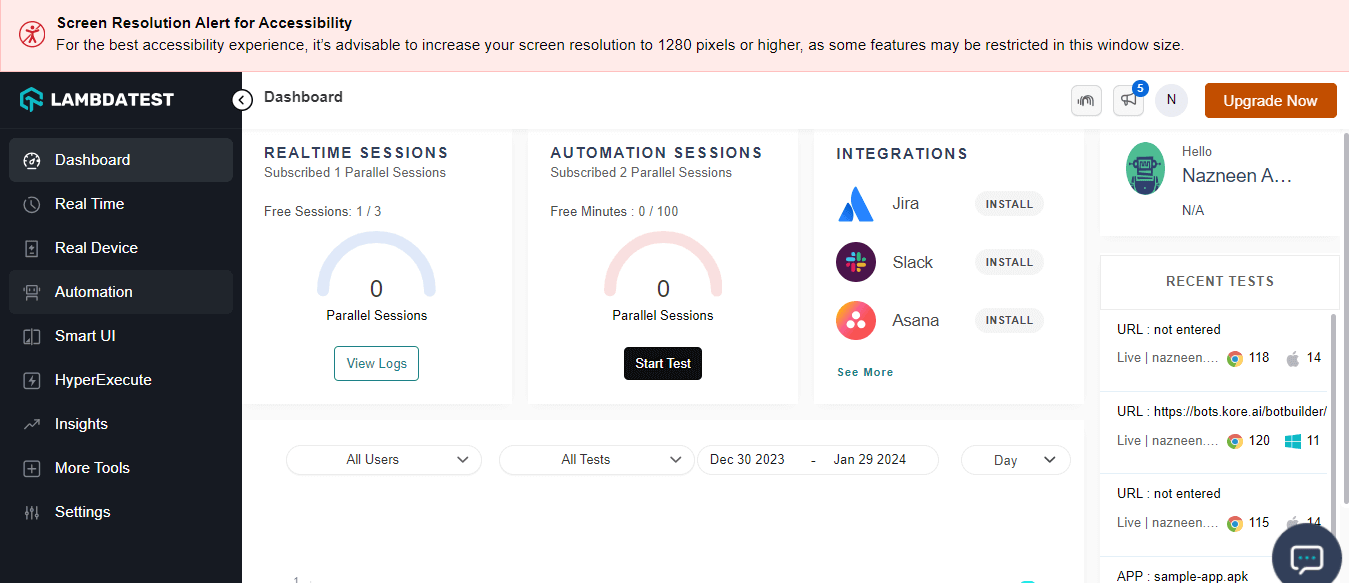
- Sign in to your TestMu AI account. Don’t have an account yet? Register for free!
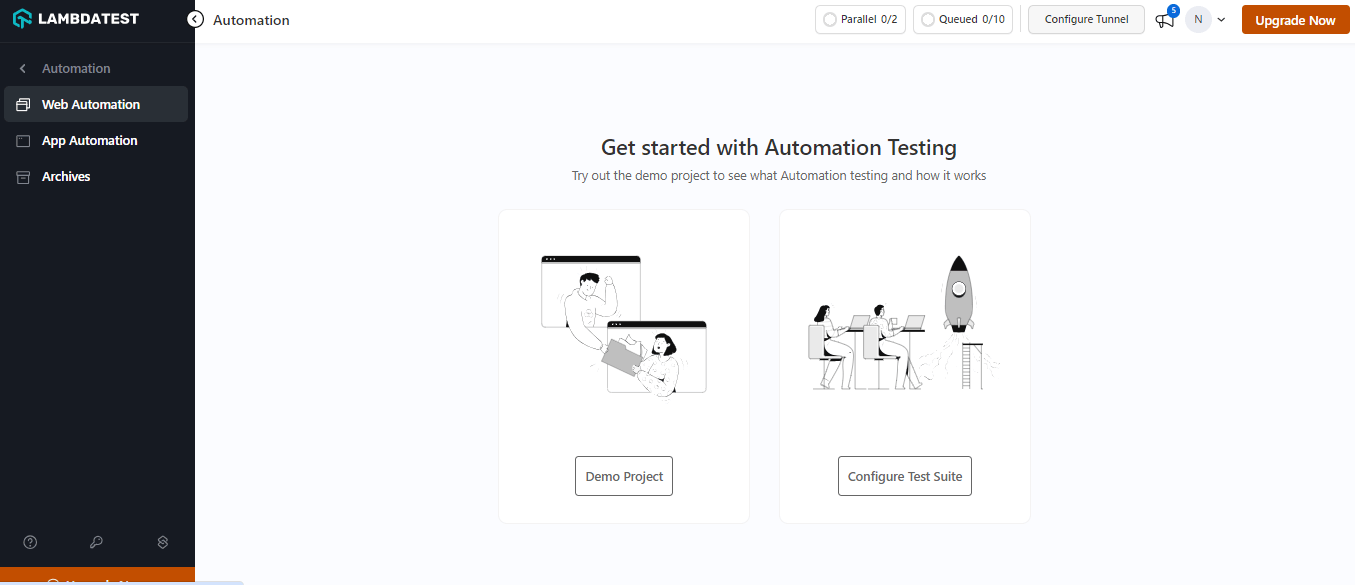
- On the left-hand panel, navigate to the Automation section.
- You have two options:
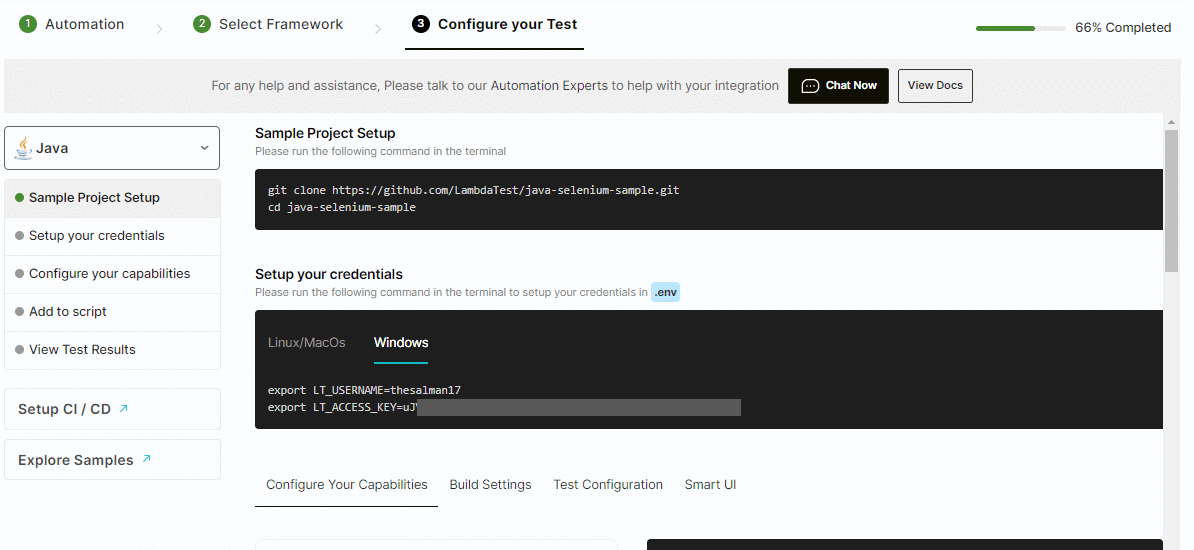
- If you chose Configure Test Suite, follow the on-screen instructions to set up your specific test.
Suspension criteria are conditions to be met before testing can halt, such as a specified number of detected bugs or performance issues preventing software execution.
Exit criteria are conditions to be met before testing concludes, including fulfilling each objective and resolving all identified bugs.
Following are the steps to run your first automated test using TestMu AI.
You can also check the below tutorial to get started.
Subscribe to our TestMu AI YouTube Channel for the latest updates on tutorials around Selenium testing, Cypress testing, and more.
So far, we have learned about the test plan, including its key elements and how to create it. In the next section of this blog on test plan vs test strategy, we will learn about test strategy.
What is a Test Strategy?
A test strategy functions as a plan for evaluating the software application, detailing the comprehensive approach to testing, including test objectives, test deliverables, testing methods, test tools, test environment and resources, and risk mitigation plans. It outlines how testing activities will be executed, managed, and supervised to ensure the software meets the specified requirements and quality standards.
A practical definition of a test strategy is provided in ISO Standard 29119-1: “A component of the test plan outlining the testing approach for a specific test project or test sub-process or sub-processes.”
Notably, ISO 29119 asserts that the test strategy is part of the plan. Although the test strategy can constitute a section within the test plan, it can also be formulated well before it is established to ensure synchronization with the primary test objectives.
Types of Test Strategy
Different software project types demand a specific test strategy that meets their requirements. They outline different test methods and purposes. In this section of the blog on test plan vs test strategy, let’s discuss some of the common types of test strategies:
- Analytical test strategy: These may involve risk-based testing or other analytical approaches to determine the test conditions to cover. For instance, a test analysis can generate test conditions using predetermined requirements during requirement-based testing. The tests are then prioritized based on each requirement’s importance, establishing a hierarchy for the initial tests.
- Model-based test strategy: These strategies include creating operational profiles to assist the test team in forming a model of the system’s environment, various inputs, and conditions to stress the system and its behaviors. In performance testing for mobile applications, for example, you might:
- Develop models for network traffic, active user groups, and processor loads based on current usage.
- Create models of the existing environment, including hardware, software, network, and infrastructure.
- Methodical test strategy: In this approach, test teams adhere to a predefined quality standard (such as ISO25000), checklists, or a set of test conditions. Standard checklists can be available for specific types of testing (such as security) and application domains.
- Reactive strategy: In this scenario, tests are formulated and executed only after the actual software is delivered. Testing is driven by defects discovered in the real application.
- Standards or process-compliant test strategy: The testing team adheres to processes or guidelines established by a committee for standards or a panel of industry experts to identify test conditions, define test cases, and establish the testing team.
- Consultative test strategy: As the name implies, this testing approach relies on input from key stakeholders to determine the scope of test conditions, as seen in the case of user-directed testing.
- Regression-based test strategy: In this approach, the testing strategies focus on minimizing regression risks for functional or non-functional components of the software applications. They may also utilize GUI-based automation tools to execute tests whenever application alterations occur.
For instance, in the case of maintenance testing, a checklist describing important functions, their attributes, etc., is sufficient to execute the tests.
Consider a situation where exploratory testing is employed. Test charters are developed based on existing features and functionalities. These test charters are updated according to the testing results provided by testers. Exploratory testing can be applied to Agile development projects as well.
In a project employing the Scrum Agile technique, testers will formulate a comprehensive test strategy involving the identification of test criteria, definition of test cases, execution of tests, reporting status, etc., around each user story.
Consider a scenario where the compatibility of a web-based application with various browsers needs testing. In this case, the application owner would provide a list of browsers and their versions in order of priority.
In the next section of this blog on test plan vs test strategy, we will see the advantages and disadvantages of test strategy.
Advantages of a Test Strategy
Following is the significance of the test strategy:
- Formulating a test strategy reveals areas that lack clarity and require additional identification and analysis.
- A test strategy outlines the testing approach, establishing clear expectations for the testing process.
- The test strategy can act as the foundation for the test plan, with many details found in a test strategy further expanded upon in a test plan.
- Creating a test strategy ensures that the planned tests align correctly.
- A test strategy assists in identifying potential risks and areas requiring heightened attention, contributing to enhanced software application quality.
- The test strategy provides information supporting decision-making throughout the SDLC, ensuring alignment with industry standards, regulations, and customer requirements.
Disadvantages of a Test Strategy
The test strategy is an important part of STLC, but it also holds certain disadvantages, which are important to know. In this section of the blog on test plan vs test strategy, we will discuss those disadvantages.
- Formulating a comprehensive test strategy demands a significant investment of time and resources.
- An overly rigid test strategy might impede adjustments in the testing approach throughout the project, resulting in a lack of flexibility.
- A test strategy marked by complexity can be confusing to understand and implement, leading to confusion and miscommunication within the testing team.
- Implementation of a test strategy may involve substantial overhead costs, including expenses related to testing tools and resources.
- Developing a test strategy requires substantial technical information, which may need to be more readily available in-house. This dependence on external consultants elevates costs and diminishes control over the testing process.
Objectives of a Test Strategy
In this section of the blog on test plan vs test strategy, let’s look at the key objectives of test strategy.
- The strategy guides testing efforts by providing a clear direction and prioritizing what to test.
- It ensures a streamlined testing process that identifies and addresses potential issues proactively.
- The strategy promotes adherence to best practices, leading to more consistent and effective testing.
- It fosters collaboration by establishing a common understanding of goals and testing approaches.
- The strategy helps determine the resources needed and how to best utilize them for testing.
- Clear benchmarks allow for efficient monitoring of testing progress and adjustments as needed.
Key Elements of a Test Strategy
The test strategy is a flexible and easily customizable document that considers the test requirement and software project. In this blog section on test plan vs test strategy, the following are the key elements that are included in the test strategy:
| Parameters | Description |
|---|---|
| Scope and objectives | Identify the testing tasks, responsibilities, and associated timelines. Specify the expert who will approve, review, and use the test strategy document. |
| Testing approach | Determine the testing approach to be followed, whether Agile or Waterfall. |
| Testing types to perform | Define the testing process and life cycle, covering various testing levels. Specify types of testing, such as regression testing, load testing, security testing, or performance testing. |
| Hardware-software configuration | Specify the requirements and hardware-software configuration for each environment. This will help you decide whether to invest in physical or virtual machines. |
| Testing tools | Choose test execution tools. Evaluate the tool’s capacity to support the desired number of users and plan accordingly. |
| Data | This section includes metrics related to the testing process. Visual tools like graphs, charts, and tabular data entry provide a systematic presentation. |
| Test deliverables | Outline artifacts and documents to be produced during testing to communicate progress and findings. As a high-level document, the test strategy requires only a brief outline of the items the team intends to create. |
| Testing metrics | Establish Key Performance Indicators (KPI) and success metrics for the project. These metrics measure efficiency and quality and facilitate communication among team members. Common QA metrics include test coverage, defect density, defect leakage, or Mean Time to Failure (MTTF). |
| Risks | List potential risks and plans to mitigate them or contingency plans if risks materialize. Testers perform a risk analysis, considering probability and impact, to prioritize addressing risks. For instance, realizing a tight timeline coupled with a lack of technical expertise is a high-probability impact scenario, requiring a contingency plan, such as adjusting objectives, investing in expertise, or outsourcing to meet the delivery date. |
When to Create a Test Strategy?
A test strategy can be created before the test plan is developed. This means that it is generally done before the start of software testing to meet the end user’s requirements. Test strategy acts as the guide upon which the software testers develop the test infrastructure.
The software application’s project manager creates the test strategy before the testers start work. They have the flexibility to establish a test strategy at the early stages of a project, even before formalizing requirements.
Initiating the definition of a test strategy serves as a valuable initial project task to collect input from stakeholders and have agreement on the testing approach.
However, it is crucial to note that each software project is different in terms of its specific characteristics and requirements. Hence, you must consider certain factors before beginning the development of the test strategy. In this blog section on test plan vs test strategy, let’s look at some of those factors:
- Project risks: Managing risks is crucial during the testing phase. Therefore, evaluating and understanding the level of risks before the project is important to address potential delays in later stages.
- Skills: It is essential to analyze the existing skills and knowledge within your testing team. If there are skill gaps, planning for training can be essential for effective implementation.
- Objectives: Before initiating the project, it is essential to clearly define the testing objectives. The focus should align with the stated objectives of the testing activity.
- Business: Business considerations and continuity play a significant role. Utilizing a legacy system as a model for a new system allows for a model-based strategy, potentially saving time, effort, and costs.
How to Write a Test Strategy?
The test strategy outlines the plan for distributing test efforts across the software project. This is mainly done at the initial phase of SDLC and aligns with identifying and tracking high-level system architecture and the testing process.
Let us understand the steps required to write a test strategy:
- Scope and overview: This segment defines the project overview and the intended audience for the document. Furthermore, testing activities and their timelines are delineated. The individuals responsible for reviewing and approving the document are also specified within this section.
- Test methodology: In this phase, the entire testing procedure and the roles and responsibilities of each team member are outlined. This section also specifies aspects such as the type of testing to be executed and the utilization of automation technologies.
- Test environment: At this point, we specify the various testing environments utilized throughout the testing procedure. For example, each member or stakeholder group might have a distinct testing environment.
- Tools: Here, we can describe the various tools utilized for different processes, including those for test management, automation testing, performance testing, and security testing.
- Release management: In this section, a release management plan is delineated to assist with maintaining version history.
- Risks and mitigations: In this section, the diverse testing-related risks and their corresponding mitigation measures are defined.
- Review and approvals: The various stakeholders review and approve the different activity areas.

Note: Run your test cases across 3000+ real environments Try TestMu AI Today!
Test Plan vs Test Strategy: Key Differences
In this section of the blog on test plan vs test strategy, we will look at the key differences between test plan and test strategy.
The test plan is a detailed roadmap for executing the tests. It defines what will be tested (objectives), how it will be tested (approach), what tools will be used, and the environment where the testing will occur. It also outlines the testing schedule and assigns responsibilities to team members.
However, before diving into these specifics, a broader understanding is necessary. The test strategy sets the foundation by defining the “why” behind the testing effort. It aligns test objectives with the organization’s overall goals and establishes the primary approach for testing.
| Aspects | Test Plan | Test Strategy |
|---|---|---|
| Purpose | Specifies detailed instructions and procedures. | Outlines broad testing approach and objectives. |
| Focus | Detailed test objectives, cases, data, and results. | Testing approach, levels, types, and techniques. |
| Audience | Testing team, leads, and involved stakeholders. | Stakeholders, project managers, testing team. |
| Scope | Specific project phase, feature, or component. | Entire testing effort throughout the project. |
| Level of Detail | High detail: scenarios, cases, scripts, and data. | Less detailed, more abstract. |
| Flexibility | Less flexible, changes occur during the testing phase. | Adaptable to changing project requirements. |
| Repetition | Specific to one project, rarely reused. | Reusable across multiple projects. |
| Performed By | Test Manager and Test Lead (collaboratively) | Test Manager |
| Origin | Use Cases, Software Requirement Specification (SRS), and Application Description Documents. | Business Requirement Specification (BRS) |
| Longevity | Evolves during testing and incorporates feedback. | Relatively stable throughout the project life cycle. |
| Existence | Typically, it is a standalone document. | Maybe part of the test plan in smaller projects. |
| Narration | Provides a narrative around shared project testing specs. | Provides a narrative around testing approaches. |
Other major five differences between the test plan and test strategy are the following:
- Usage level: The test plan is established by an organization on a project level. When considering a new feature addition or application upgrade, the organization views it as a project and accordingly formulates the test plan.
- Reuse: An organization rarely utilizes a test plan as it is individually prepared for each project. While some parts or ideas may be reused, duplicating an exact test plan is not recommended.
- Components: A test plan includes the following elements:
- Test plan ID
- List of application features requiring testing.
- To-follow technique or test approach for each component.
- Test automation tool selection.
- Pass or failure criteria, roles, schedules, and other project-specific details.
- Testing types for each scenario.
- Test processes within the organization.
- Objectives to track during any test activity and other generic control statements.
- Management: The test manager or test lead in a project formulates and oversees the test plan, drawing insights from the test strategy to design a unique test plan for each project.
- Existence: Fundamentally, a test plan exists independently in each project. As it describes the actions to be taken and assigns responsibilities, it has a focal point and individual existence.
Conversely, the test strategy is prepared at an organizational level, serving as an overarching document that lays the foundation for each project to construct its distinct test plan.
In contrast, a test strategy is a long-lasting document used across multiple projects simultaneously. It can be reused numerous times until the organization conducts an audit and finds necessary changes.
Comparatively, the test strategy document provides a generic roadmap for the following:
However, the test strategy requires input from the organization’s project managers, product managers, and other senior technology leaders. It outlines the overall quality objective to be adhered to in every development activity. Therefore, senior-level leaders or product/project managers usually prepare it.
On the contrary, the test strategy is often integrated into the test plan. It exists from an organizational strategy standpoint, serving as the foundation for defining end-to-end testing practices.
However, from a test focus, the test strategy lacks individual existence, being leveraged by multiple projects based on their unique test plans at different times.
Test Plan vs Test Strategy: Similarities
When discussing test plan vs test strategy, it is important to know their complete comparison. They both hold some similarities, which makes them essential parts of SDLC. Those similarities are the following:
The test plan and test strategy are similar in several ways. They both serve as guiding documents in the testing phase of a software application. These documents outline the testing process’s goals, objectives, and expectations, describing the test types, the testing environment, test data, and the test schedule. Both help coordinate the testing team’s efforts, ensuring careful planning and execution of all testing factors.
Furthermore, they align the testing process with stakeholders’ requirements and expectations. As reference materials, the test plan and test strategy help the testing team and stakeholders throughout the testing process’s development and execution. This explains goals and expectations for consistent and efficient software testing.
Test Plan vs Test Strategy: Best Practices
Neither the test strategy nor the test plan document adhere to a strict structure that everyone must follow. In this blog on test strategy vs test plan, we’ve only highlighted the information they should include to enhance the likelihood of the software functioning as intended. Here are some practical tips.
- Simplify and enhance readability. The test plan and test strategy serve as guidelines for various team members. Keep these documents simple and easy, avoid lengthy paragraphs, and utilize common words instead of technical terms whenever possible.
- Incorporate tables and lists: They help present information in a more digestible, visual manner.
Choose a document format that is comfortable for the team. While test plans and test strategies are typically presented in text files, this shouldn’t limit the test manager. Both documents can be created as mind maps or Wiki pages.
- Utilize test plan and test strategy templates. Fortunately, you don’t have to start your test strategy and plan from scratch. Numerous templates are available for selection, allowing you to download and customize the one that best fits your test project. Examples include a test plan outline based on the IEEE 829-2008 Standard for Software and System Test Documentation and a test strategy document template from Loyola University Chicago.
Conclusion
In this blog on test plan vs test strategy, we discussed the difference between the test plan and test strategy. Considering all that we’ve learned so far, both documents are integral and equally important in any project. Test planning remains crucial in testing, regardless of the project life cycle approach. Essentially, a test plan serves as a project plan tailored for testing purposes. Meanwhile, a test strategy ensures that all testing activities align with the project’s goals.
It’s crucial to note that a test strategy doesn’t replace a test plan. However, there are instances where having only a test strategy can effectively communicate the goals, risks, and responsibilities of a test. The decision on which to use depends on the nature of the project.
When executed properly, both the test plan and test strategy contribute to a high-quality software application. However, skipping any steps may result in an application still containing bugs. Therefore, distinguishing between the two proves beneficial in effectively progressing the testing process.


Frequently asked questions
Did you find this page helpful?
More Related Hubs
TestMu AI forEnterprise
Get access to solutions built on Enterprise
grade security, privacy, & compliance
- Advanced access controls
- Advanced data retention rules
- Advanced Local Testing
- Premium Support options
- Early access to beta features
- Private Slack Channel
- Unlimited Manual Accessibility DevTools Tests