

Power Your Software Testing with AI Agents and Cloud
The Native AI-Agentic Cloud Platform to Supercharge Quality Engineering. Test Intelligently and Ship Faster.


- TestMu AI (Formerly LambdaTest)
- /
- Blog
- /
- 15 Best Test Automation Frameworks for 2026
15 Best Test Automation Frameworks for 2026
The best test automation frameworks include Selenium, Cypress, Playwright, Appium, and more. Compare 15 frameworks by language, category, and use case for 2026.
Last Updated on:
The best test automation frameworks, from Selenium and Cypress to Playwright and Appium, each fit a specific stack. It compares 15 by language, category, and use case so you can shortlist fast.
They offer a structured approach to automation, making it easier to create, execute, and maintain tests. Many exist, but only a few will fit your stack, language, and team.
Not every framework fits every project, so this list breaks down where each one works best.
TL;DR
A test automation framework is the structure around your tests, coding standards, test-data handling, reporting, and CI/CD hooks, that keeps automated suites consistent and maintainable as they grow.
The right one depends on what you test (web, mobile, API, or unit), the language your team already writes, and how much scripting you want.
Types of Test Automation Frameworks
- Best for simple record-and-playback scenarios: Linear Automation Framework records user actions and replays them as tests, ideal for small suites.
- Best for reusable test modules: Modular Automation Framework splits suites into smaller, reusable modules to improve maintainability and organization.
- Best for testing multiple datasets: Data-Driven Framework separates test data from scripts, running the same logic across many datasets.
- Best for non-technical testers: Keyword-Driven Framework represents actions and objects as keywords, making test creation accessible to non-technical members.
- Best for flexible and scalable test management: Hybrid Automation Framework blends data-driven, keyword-driven, and modular methods for flexibility and scale.
- Best for collaborative natural-language scenarios: BDD Framework uses Given-When-Then syntax to define scenarios, improving collaboration with non-technical stakeholders.
Best Frameworks by Use Case
- Web and end-to-end: Selenium, Cypress, Playwright, Puppeteer, and WebdriverIO for cross-browser and modern JavaScript apps.
- Mobile apps: Appium for cross-platform, Espresso for native Android, and XCUITest for native iOS.
- Unit and API: JUnit, TestNG, pytest, Jest, and Mocha, chosen by language.
- BDD and keyword-driven: Cucumber for plain-English scenarios and Robot Framework for keyword-driven suites.
What Are Test Automation Frameworks
A test automation framework is a structured set of guidelines and tools that standardize how automated tests are written, executed, and reported, keeping suites consistent and easier to maintain.
These guidelines cover how to write automated test code, handle test data, store test results, or use resources from outside the software being tested.
While these guidelines aren't strict rules, they can make test automation more organized and efficient. Here are some of the benefits of using a test automation framework:
- Faster and more efficient test automation.
- Lower costs for maintaining automated tests.
- Less need for manual work in the automation process.
- Testing a wider range of aspects automatically.
- Being able to use the same automated test code for different tests.
There are several types of test automation frameworks, each designed to address specific automated testing needs and challenges.
What Are the Types of Test Automation Frameworks
The main test automation framework types are linear, modular, data-driven, keyword-driven, hybrid, and behavior-driven (BDD), each suited to a different mix of team skill and test complexity.
- Linear Automation Framework (Record & Playback)It records the user actions and plays them back as automated tests. These are straightforward to use, but they are less suitable for complex testing.
- Modular Automation FrameworkThis framework breaks down the test suite into smaller, manageable modules. Each module focuses on a specific feature or functionality, making it easier to maintain and reuse code.
- Data-Driven FrameworkIt separates test data from test scripts, allowing tests to run with different data sets and making it efficient for testing various scenarios.
- Keyword-Driven FrameworkThis framework uses a combination of keywords to represent actions and objects in test scripts. Test scripts are written using these keywords, making it easier for non-technical team members to understand and write tests.
- Hybrid Automation FrameworkIt combines elements of different frameworks that can include aspects of data-driven, keyword-driven, and modular frameworks, providing flexibility and scalability.
- Behavior Driven Development (BDD) FrameworkBDD frameworks like Cucumber use natural language and a Given-When-Then structure to define test scenarios, making them more accessible to non-technical stakeholders.
Before choosing a test automation framework in 2026, define your project's scope, test types, tool integration, and team skill set. Consider scalability, maintainability, and specific challenges.
Decide whether to adopt an existing framework or build a custom one. To check whether that investment pays back, estimate returns with this test automation ROI calculator.
How Do the Top Test Automation Frameworks Compare
The top test automation frameworks differ mainly by language support, application type, and authoring style; the table below compares the 15 by language, category, and the workload each one fits best.
| Framework | Language(s) | Category | Best For |
|---|---|---|---|
| Selenium | Java, Python, C#, JS, Ruby | Web browser automation | Cross-browser testing across many languages |
| Cypress | JavaScript | Web end-to-end | Fast, developer-friendly front-end testing |
| Playwright | JS, Python, Java, C# | Web browser automation | Modern cross-browser testing with one API |
| Puppeteer | JavaScript | Chromium automation | Chrome and Chromium control and scraping |
| WebdriverIO | JavaScript | Web and mobile | Extensible WebDriver and DevTools testing |
| Robot Framework | Python (keyword) | Keyword-driven | Non-technical, keyword-driven suites |
| Cucumber | Multiple (Gherkin) | BDD | Behavior-driven, stakeholder-readable tests |
| Appium | Java, Python, JS, more | Mobile | Cross-platform native and hybrid mobile apps |
| Espresso | Java, Kotlin | Mobile (Android) | Fast native Android UI tests |
| XCUITest | Swift, Objective-C | Mobile (iOS) | Native iOS UI tests inside Xcode |
| JUnit | Java | Unit testing | Java unit and integration tests |
| TestNG | Java | Unit and integration | Data-driven and parallel Java tests |
| pytest | Python | Unit and API | Python unit, API, and fixture-based tests |
| Jest | JavaScript | Unit testing | JavaScript and React unit testing |
| Mocha | JavaScript | Unit testing | Flexible Node.js test runner |
For web work Selenium and Playwright lead; for mobile, Appium, Espresso, and XCUITest; for unit and API tests, pytest, JUnit, and Jest. The sections below go deeper on each.

Note: Run any of these frameworks across 3,000+ browser and OS combinations, with no grid to maintain. Start testing on TestMu AI free
Running these frameworks at scale is where a cloud grid beats a local one: no infrastructure to maintain and far wider browser and device coverage than an in-house setup.
TestMu AI is an AI-native test automation platform that runs your existing Selenium, Cypress, Playwright, and Appium suites across 3,000+ browser and OS combinations and 10,000+ real devices, with no grid to maintain.
How TestMu AI runs any of these frameworks:
- Parallel execution across browsers and real devices to cut total test run time.
- Runs your framework-based suites as-is, with no rewrite or lock-in.
- Video, network, and console logs on every run to debug failures fast.
- A scalable mobile testing lab of thousands of real Android and iOS devices.
See how it runs your framework tests at scale on TestMu AI Automation Cloud.

Which Are the Best Test Automation Frameworks
The best test automation frameworks include Selenium, Cypress, and Playwright for web, Appium, Espresso, and XCUITest for mobile, and JUnit, TestNG, pytest, and Jest for unit and API testing.
Each framework is covered in detail below.
1. Selenium
Selenium is one of the best test automation frameworks. This open-source suite lets you write test scripts in many languages, including Ruby, Java, Node.js, PHP, Perl, Python, JavaScript, and C#.
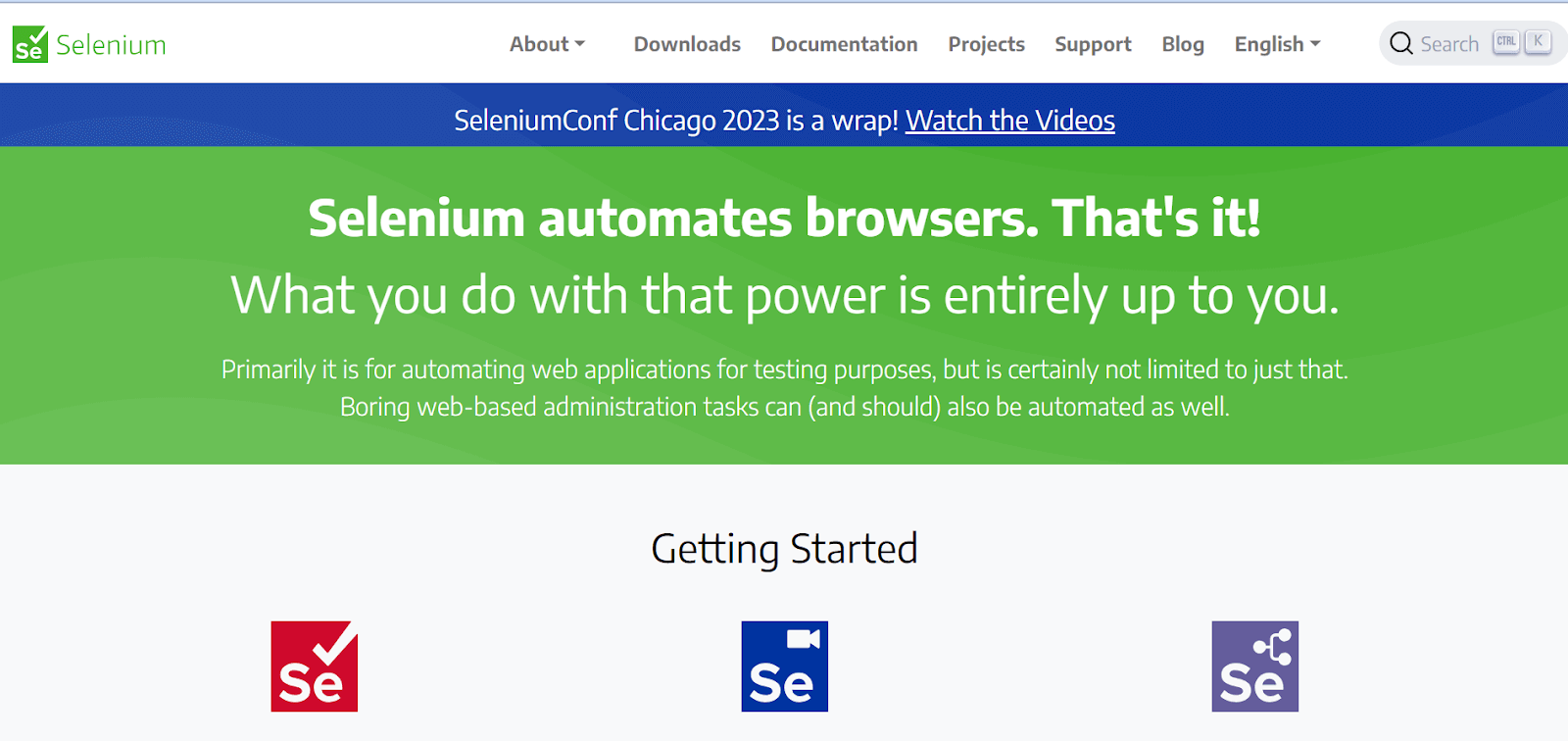
It is used for browser automation and enables cross browser testing to verify website consistency across browsers. It also supports functional testing of websites on different browsers.
Selenium integrates with other tools and frameworks such as TestNG, JUnit, and Cucumber.
Selenium is a widely used test automation framework with the following core components.
- Selenium WebDriver: Language-specific bindings that drive a browser like Chrome, Firefox, or Edge, letting you interact with web elements.
- Selenium IDE: A browser extension that records and plays back web page interactions to create and debug scripts.
- Selenium Grid: Runs tests in parallel across machines with different browsers and OSes, using a hub that manages nodes and routes commands.
Selenium 4 brought several improvements, and a standout is Selenium 4 relative locators, a faster way to locate elements on a web page.
Instead of relying on absolute positions, these locators are relative to the previous element, making them more robust with dynamic web content.
In addition, Selenium 4 brings significant improvements to the NetworkInterceptor, a key element in achieving complete browser automation, creating new opportunities for web app testing.
What makes Selenium strong:
- It is compatible with various web browsers, including Chrome, Firefox, Safari, and Edge.
- Offers support for various programming languages like Java, Python, C#, Ruby, and more.
- Integrates with frameworks and tools such as JUnit, TestNG, Maven, and Jenkins.
- Enables parallel testing, allowing multiple tests to be executed concurrently.
- Includes a recording and playback feature through Selenium IDE for test automation.
- Extensible with plugins and extensions as needed.
- Backed by a large, active user and developer community that eases problem-solving and support.
2. Cypress
Cypress is an open-source end-to-end testing framework for web applications. Its interactive test runner and fast feedback loop have made it popular for automation testing.
Developers favor it for testing applications directly inside the browser.
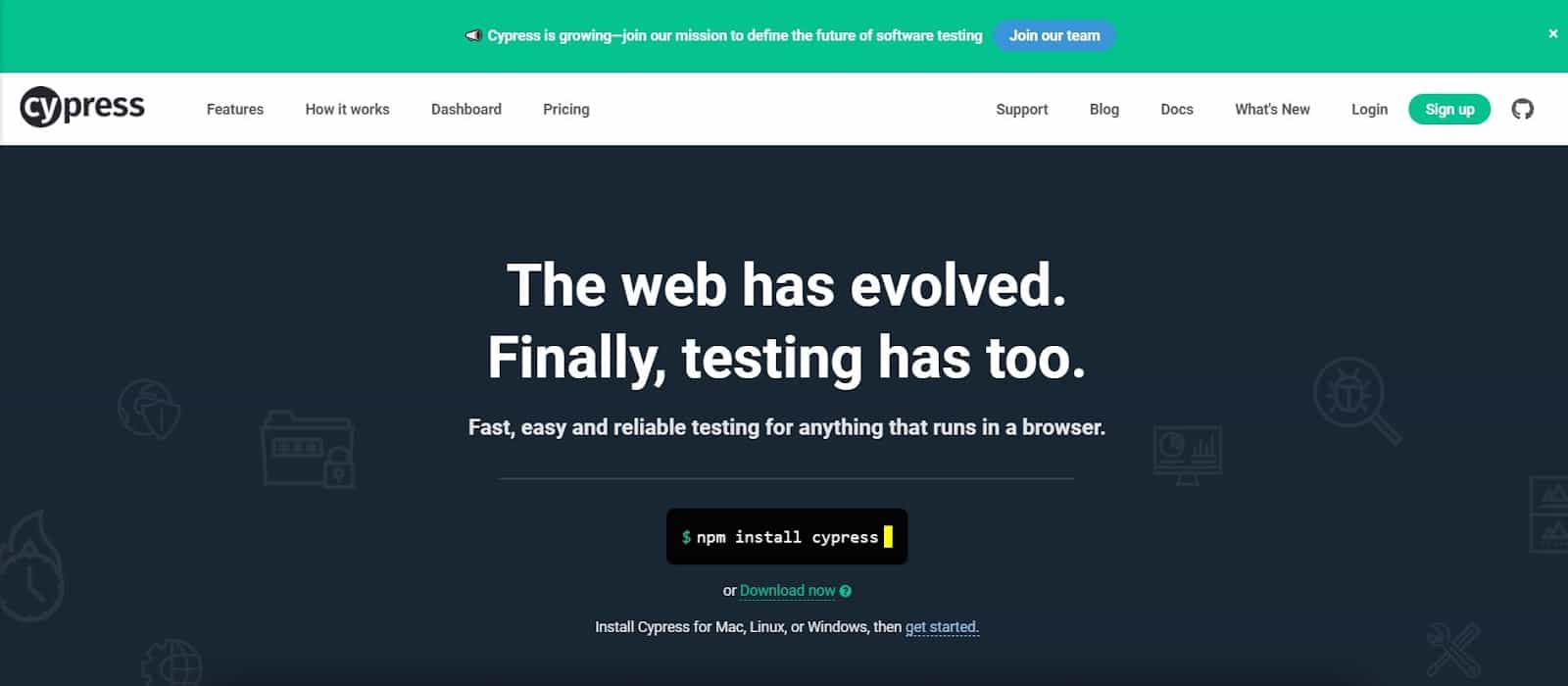
Its open-source platform gives a complete end-to-end testing experience and is fast and efficient for front-end testing. It uses JavaScript and TypeScript.
What makes Cypress fast:
- It provides a local test runner to execute automation tests on your local system, allowing quick feedback during test development.
- Supports running tests in parallel and can significantly reduce the time needed to complete test suites.
- It integrates with CI/CD tools like CircleCI and AWS CodeBuild for automated test execution in your pipeline.
- It automatically waits for elements to become available, reducing the need for manual waiting in test scripts.
- Screenshots are captured automatically when a test fails, which speeds up debugging.
3. Playwright
Playwright is an end-to-end testing framework developed by Microsoft and widely adopted. With a single API, it can automate Chromium, Firefox, and WebKit browsers.
You can carry out Playwright testing using Node.js, JavaScript, and TypeScript.
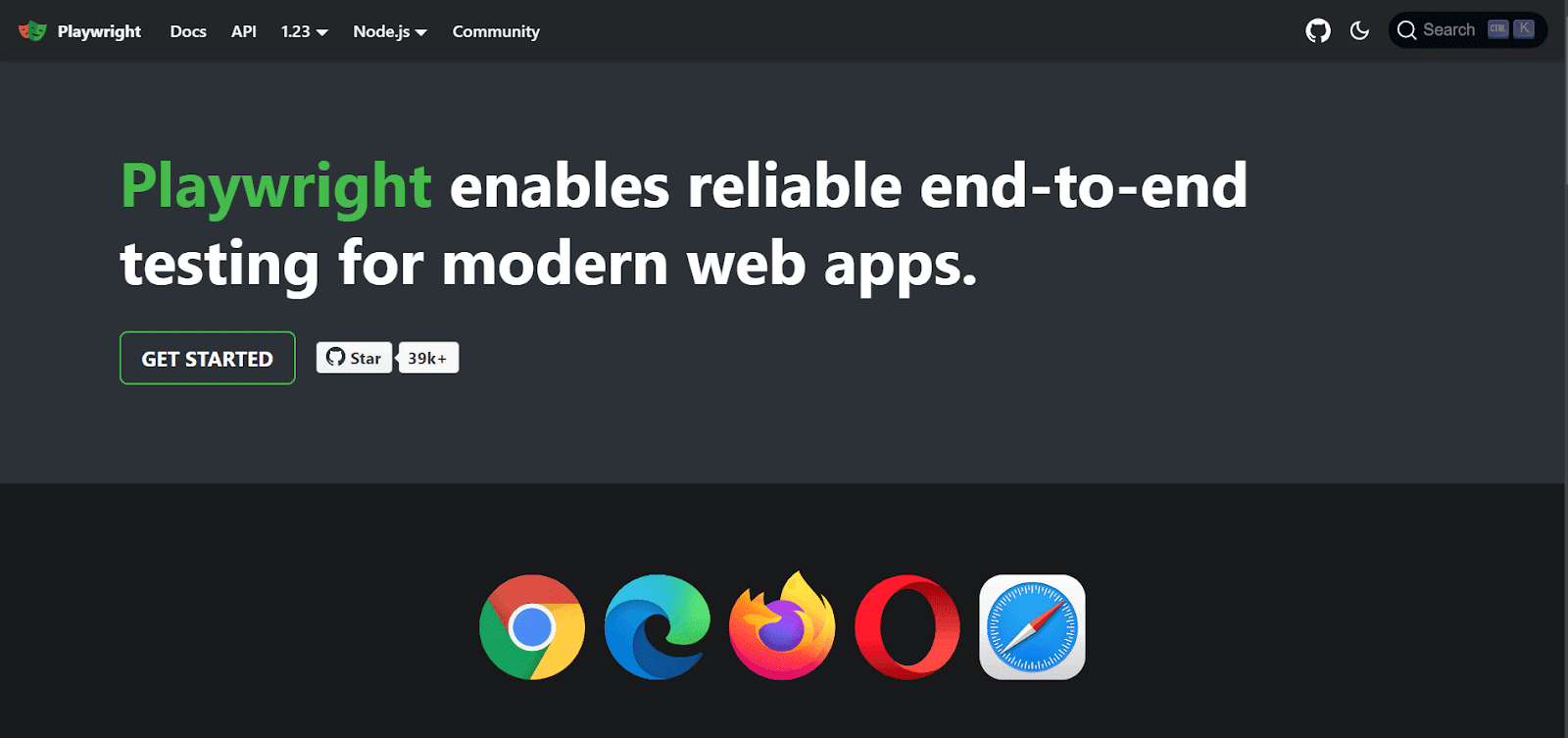
Playwright standout capabilities:
- You can run test cases on Chromium, WebKit, and Firefox from a single API, giving true cross-browser coverage.
- It runs on Windows, macOS, and Linux, so the same tests execute across environments.
- Playwright lets developers interact with page elements directly, so it can automate a wide range of browser tasks.
- Playwright receives real-time alerts like network requests, page navigations, and page load events, eliminating the need for unreliable sleep timeouts.
Watch this deep dive into Playwright as a modern end-to-end testing framework.

4. Puppeteer
Puppeteer lets you directly control Chrome and Chromium, and it now automates Firefox through the WebDriver BiDi protocol.
A key benefit is that you can install it with npm or Yarn and use it to access and manage the DevTools Protocol.
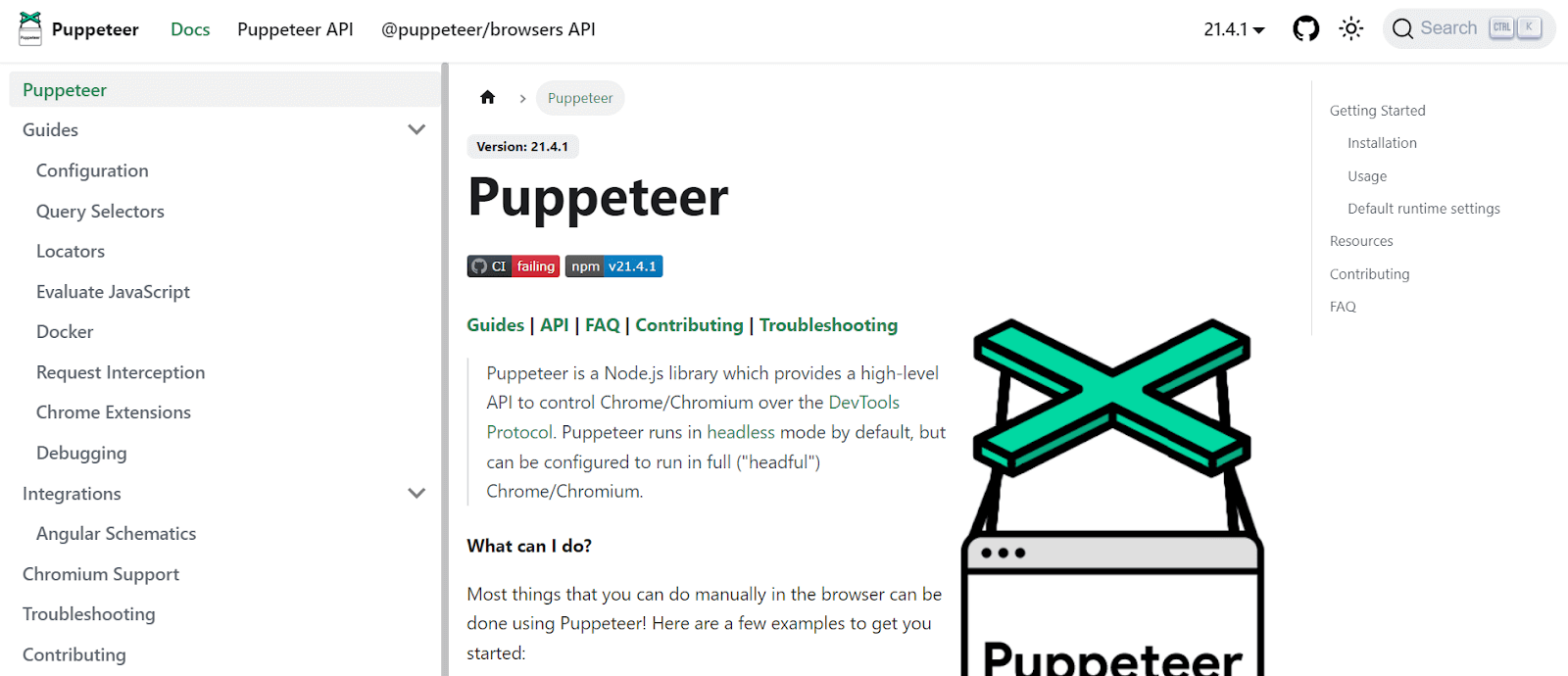
You can also build a testing environment that lets you update your tests and execute them in the newest Chrome version, including the latest JavaScript, browser features, and APIs.
Why teams use Puppeteer:
- It supports cross-browser and cross-platform testing, and it works smoothly with various operating systems and programming languages.
- Puppeteer integrates with Continuous Integration (CI) and Agile development tools such as Jenkins, TravisCI, and TeamCity.
- Generating screenshots help you visualize and document the behavior of web applications across different test scenarios.
- It lets you automate web form submissions, UI testing, and other browser actions programmatically.
Note: Route your existing Selenium, Cypress, Playwright, and Appium suites through smart parallelization to cut suite runtime. Start testing on TestMu AI free
5. WebdriverIO
WebdriverIO is a leading Node.js framework known for flexibility and support for modern browser protocols. It supports Chrome DevTools, WebDriver, and now WebDriver BiDi.
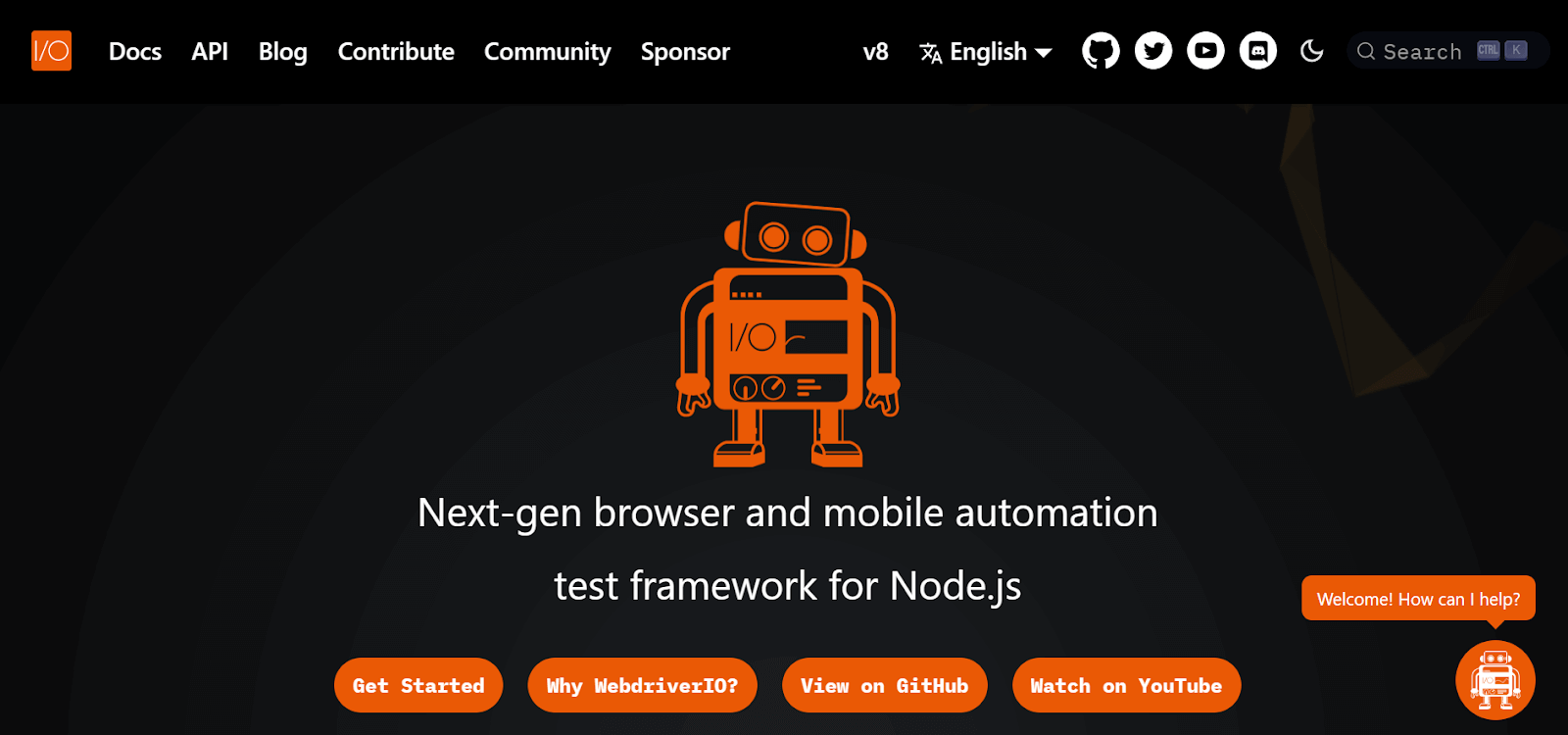
WebdriverIO adds real-time browser event monitoring, automatic Shadow DOM handling, and full request mocking across browsers, making tests more reliable and easier to debug.
You can test everything from modern web apps (React, Angular, Vue) to native Android and iOS mobile apps, all from one unified framework.
Why teams pick WebdriverIO:
- WebdriverIO runs automation tests across different browsers and operating systems, ensuring web applications work consistently across environments.
- It supports both the WebDriver and Chrome DevTools protocols, giving flexibility in how you interact with pages and access browser features.
- WebdriverIO facilitates the implementation of the Page Object Model pattern.
- It supports synchronous and asynchronous commands, making it flexible to test different scenarios and styles.
- It is compatible with testing frameworks like Mocha and Jasmine, letting you implement Behavior Driven Development (BDD) or Test Driven Development (TDD).
Our guide to WebdriverIO vs Selenium compares the two on protocol, setup, driver management, and language support.
6. Cucumber
Cucumber is a top framework that uses the Behavior Driven Development (BDD) language to create automation tests.
The tests resemble the English language, making them more readable and understandable than technical syntax or commands.
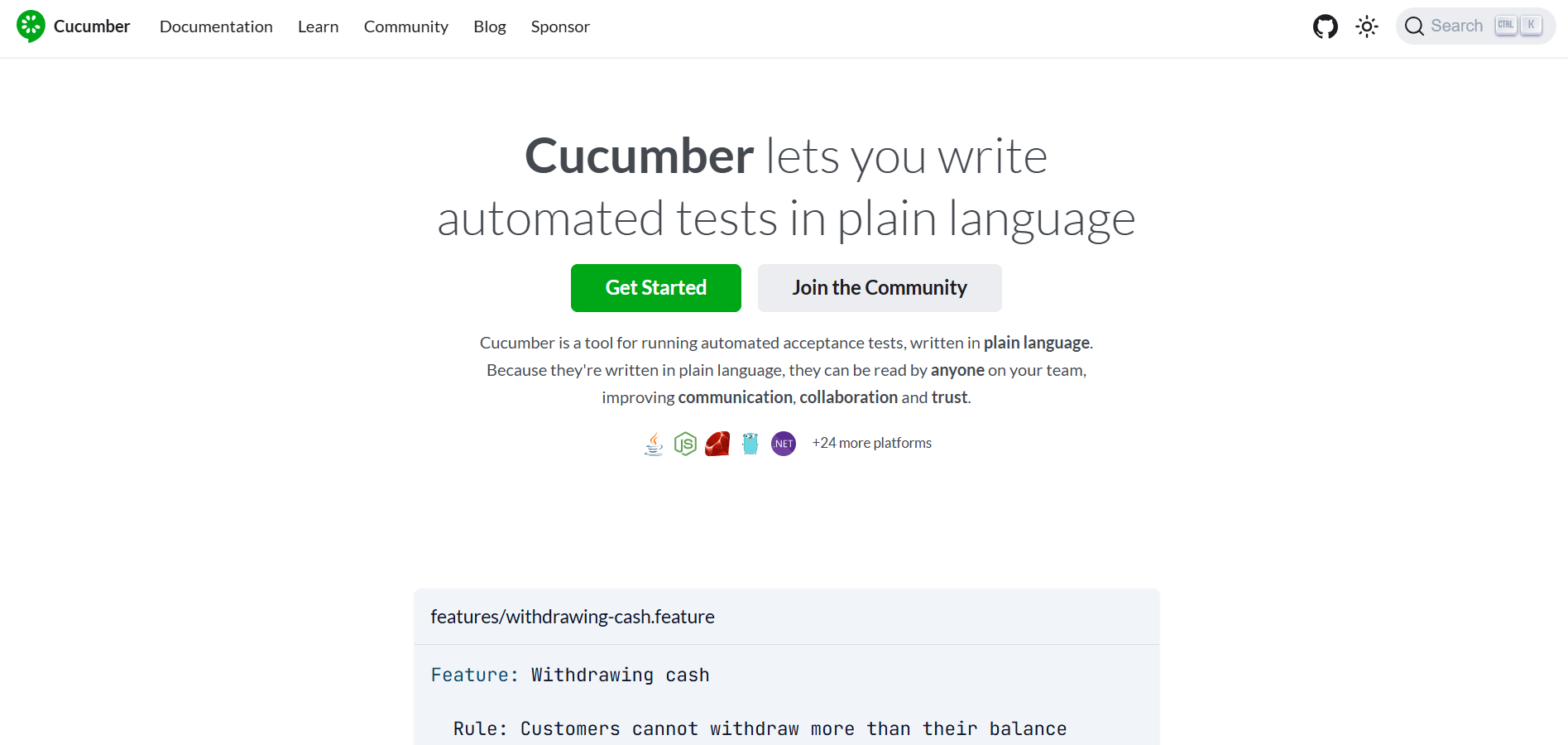
BDD tests are written in plain English and translated into code behind the scenes. Cucumber supports many languages and ranks among the leading automation frameworks; teams weighing options often compare a Cucumber alternative before committing.
It is particularly well-received by TypeScript and JavaScript coders, showing its versatility and appeal in the testing community.
Cucumber BDD strengths:
- You can write tests in plain language, fostering collaboration between technical and non-technical team members.
- Create modular and maintainable test scripts by reusing step definitions for different scenarios.
- Integrate Cucumber with CI/CD tools to automate testing in your development pipeline.
7. Jest
Jest is a popular JavaScript testing framework known for simplicity and speed. It offers built-in asynchronous testing, matchers, and automated screenshot testing, with fast execution and a rich plugin ecosystem.
Where Jest shines:
- Jest comes with built-in mocks, letting you create mock functions, methods, or modules efficiently to set up components during testing.
- It generates a detailed code coverage report showing which parts of your codebase are tested and which are not.
- Jest integrates with Git and Mercurial. By default, it runs tests for changes since your last commit, encouraging more atomic commits.
- It offers built-in matchers for your assertion; some are toBe, toEqual, toBeTruthy, and many more, which are easy to understand and read.
For Vite-powered projects, Vitest provides a modern alternative with a Jest-compatible API and significantly faster execution times. Our Vitest vs Jest comparison helps you decide which framework best fits your automation strategy.
8. Mocha
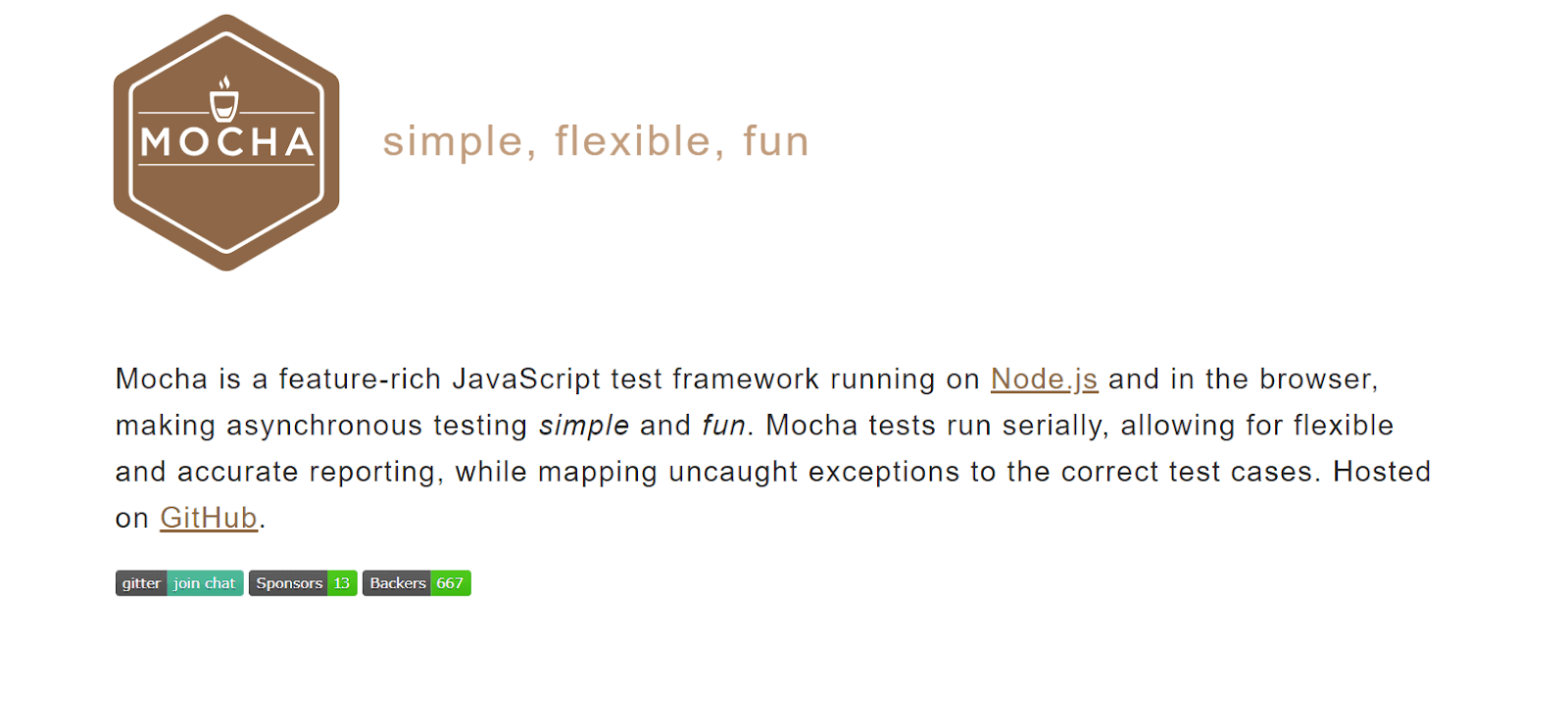
Mocha is simple and flexible, providing an excellent environment for running tests for Node.js and browsers. It supports both Behavior Driven Development (BDD) and Test Driven Development (TDD) styles.
This lets you choose whichever testing approach suits your project best. Mocha also maintains a hierarchical system for test suites and nested tests.
Mocha core strengths:
- You can set up Mocha using configuration files in various formats, such as .mocharc.js, .mocharc.json, .mocharc.yaml, etc.
- Mocha lets you specify test prerequisites and clean up afterward using synchronous or asynchronous hooks like before(), after(), beforeEach(), and afterEach().
- Mocha supports unit testing with hooks and controlled test execution for developers and testers.
9. Robot Framework
The Robot Framework is an open-source framework used for robotic process automation and test automation. First released in 2008, its community and customer base have grown significantly.
The framework is written in Python and can be used with other tools to create a complete test automation solution.
Want to learn Robot Framework with Selenium and Python? Explore this Robot Framework tutorial for a deeper understanding of the framework.
Watch this video to learn the basics of the Robot Framework for automation testing.

Robot Framework strengths:
- The Robot Framework supports libraries written in Python or Java, both widely used in the testing community.
- It orders test suites and nested tests. Data lives in suite files, and a directory forms a nested suite.
- The reports in the Robot Framework are clear and provide logs to analyze what went wrong.
10. Appium
Appium is an open-source framework for testing native, hybrid, and mobile web apps across various devices and platforms. It is based on the WebDriver protocol, a standard API for automating web browsers.
This makes it easy to write tests in your favorite language, such as Java, Python, or JavaScript.
Appium mobile capabilities:
- It can test any mobile application in any language and test framework, with full access to the back-end APIs.
- Appium's cross-platform compatibility lets the same API run tests across multiple platforms and operating systems, enhancing code reusability.
- With Appium, a tester need not recompile the mobile application every time they run the automation tests.
11. JUnit
JUnit is an open-source testing framework for unit testing. It makes it easier to write and run repeatable tests, which are very important for validating code changes during software development.
JUnit core features:
- These are used to mark test methods, which makes it easy to identify and execute tests.
- Its complete test runner supports JUnit parameterized testing, running the same method with multiple parameter sets. JUnit's implementation is widely used and well-documented.
- This feature helps organize or group the tests, especially when you want to run a collection of related tests together.
12. TestNG
TestNG is a fast, highly flexible framework built as a next-generation alternative to JUnit. It is widely used among Java developers and testers for its complete feature set.
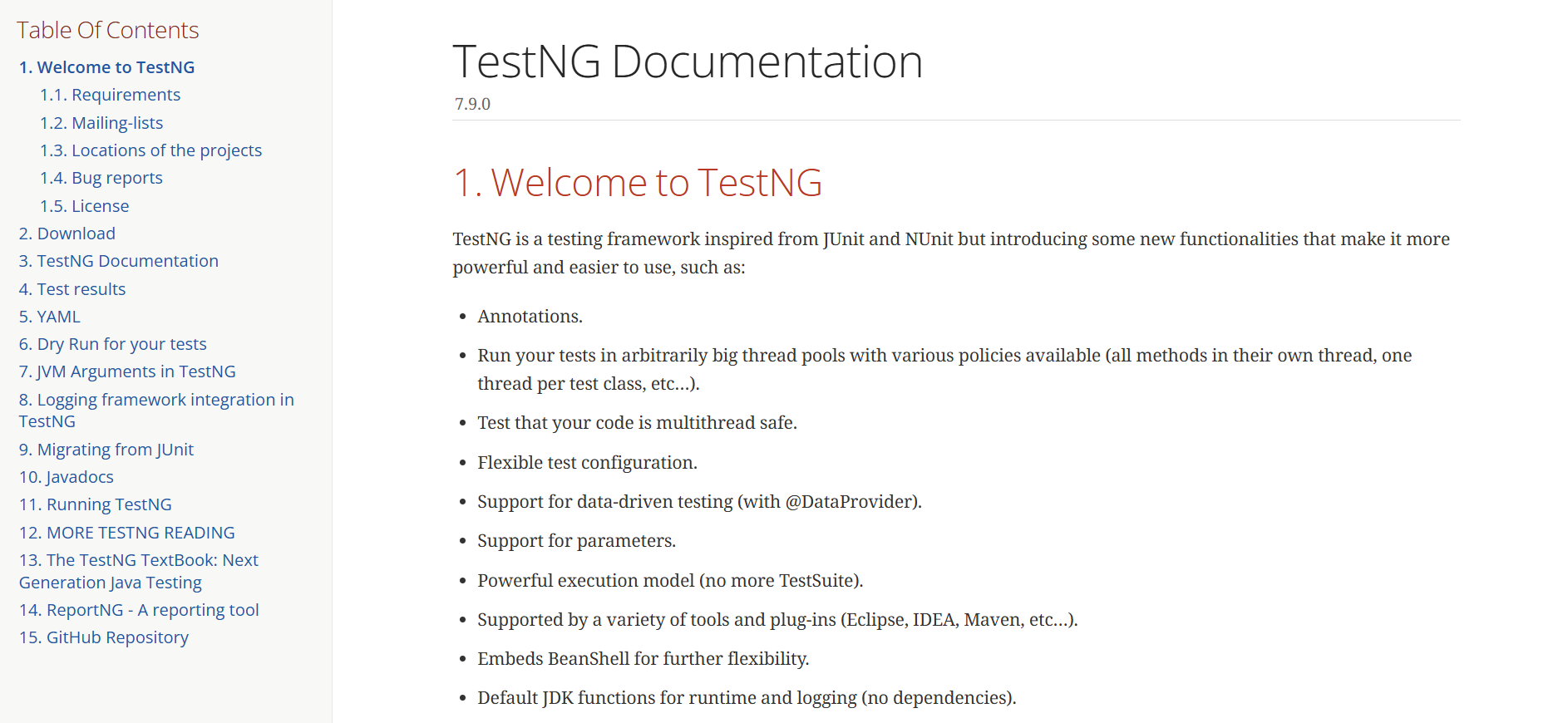
It removes many limitations of older frameworks, letting developers write flexible, maintainable tests through annotations, grouping, sequencing, and parameterization.
What TestNG adds:
- TestNG groups test methods so you can run specific subsets, useful for organizing tests by functional area, priority level, or environment compatibility.
- It provides built-in support for parallel test execution, running tests concurrently to take full advantage of multi-core processors.
- TestNG reads test data from XML files, Excel spreadsheets, and databases. Data-driven testing runs the same tests with multiple data sets.
- Its listener mechanism lets you define custom listeners for execution events, used for custom reports, logging, screenshots, and setup or teardown.
- You can specify dependencies between test methods so one runs only if its dependencies pass, keeping test scenarios logically ordered.
13. pytest
pytest is a flexible framework for various testing needs, used by testers and developers who follow Test-Driven Development (TDD) principles.
Well-known projects like Mozilla and Dropbox switched to pytest for its great features. Its popularity rests on its practicality and usefulness in software testing.
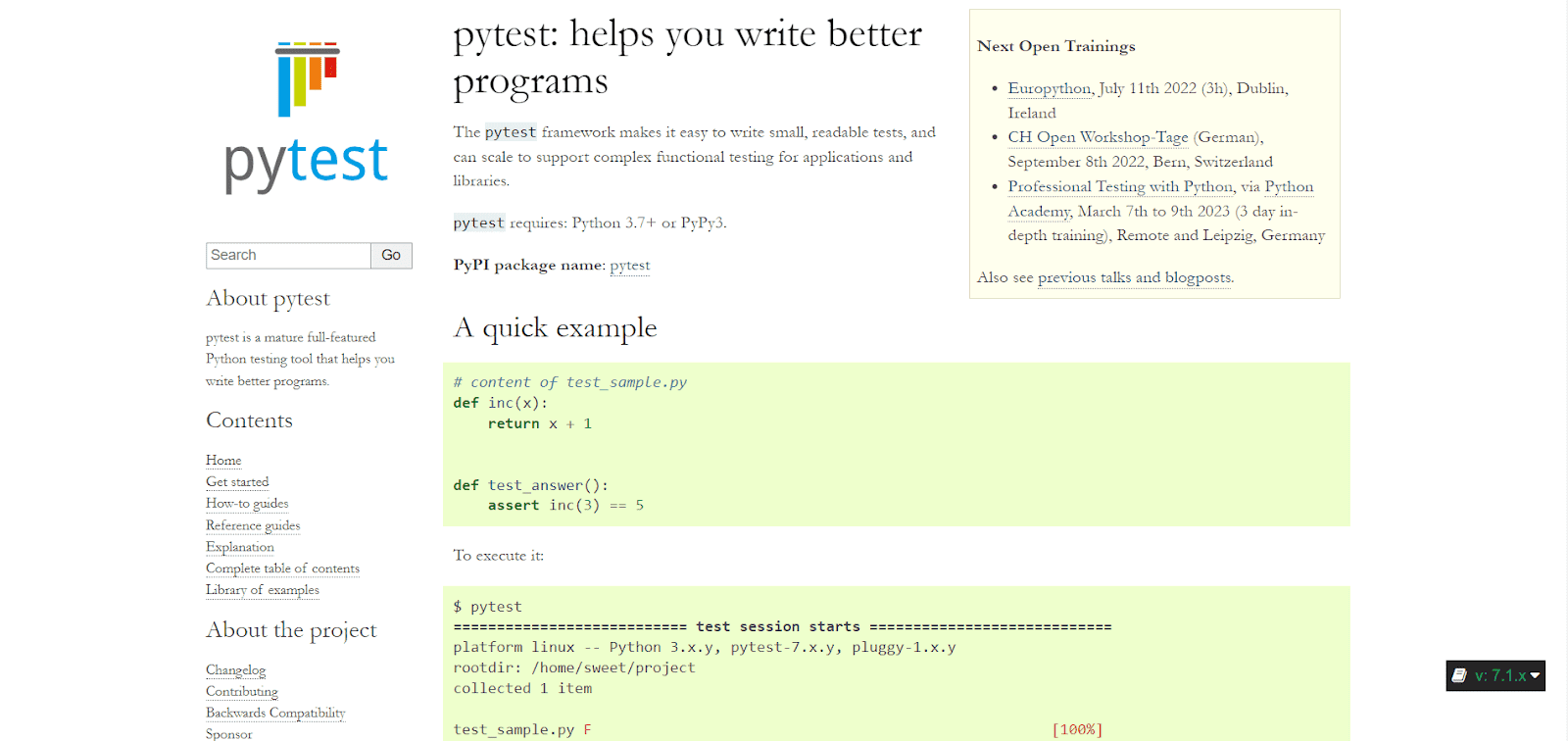
Why teams use pytest:
- It simplifies test design without overlapping the code.
- It eliminates the need for separate assertion methods such as assertEquals, assertTrue, and assertContains.
- It offers over 1,000 external plugins to support many kinds of testing.
- You can find plugins like pytest-bdd for behavior-driven tests and pytest-xdist for parallel runs.
14. Espresso
Espresso is a mobile test automation framework for Android applications, developed by Google and integrated with the Android SDK. It makes UI tests easy to write, run, and maintain.
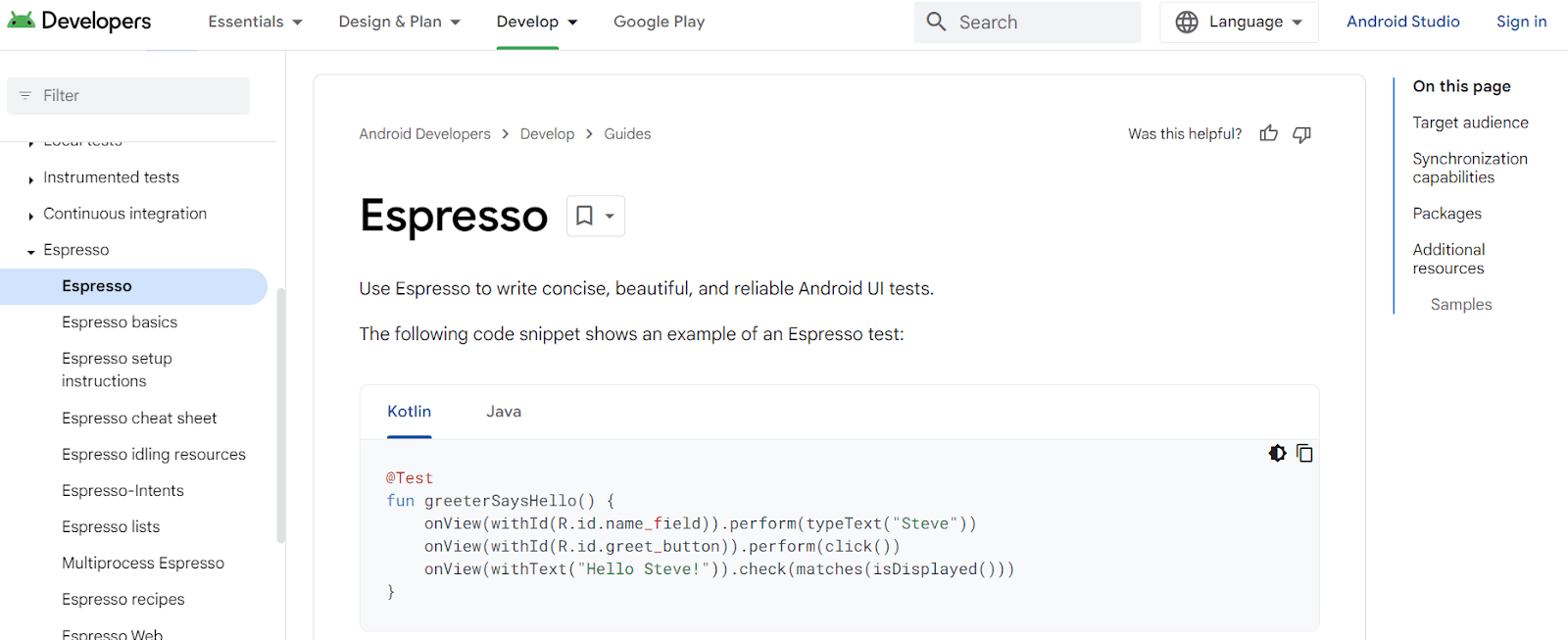
Espresso Android strengths:
- Espresso provides a concise API for writing UI tests.
- Its tests are fast and reliable, and they can be run on various devices and operating systems.
- Espresso provides several features for writing complex UI tests, such as support for data binding, custom matchers, and test hooks.
- It is integrated with the Android SDK, which makes it easy to set up and run tests.
15. XCUITest
XCUITest is a mobile test automation framework for iOS applications, developed by Apple and integrated with Xcode. It makes UI tests easy to write, run, and maintain.
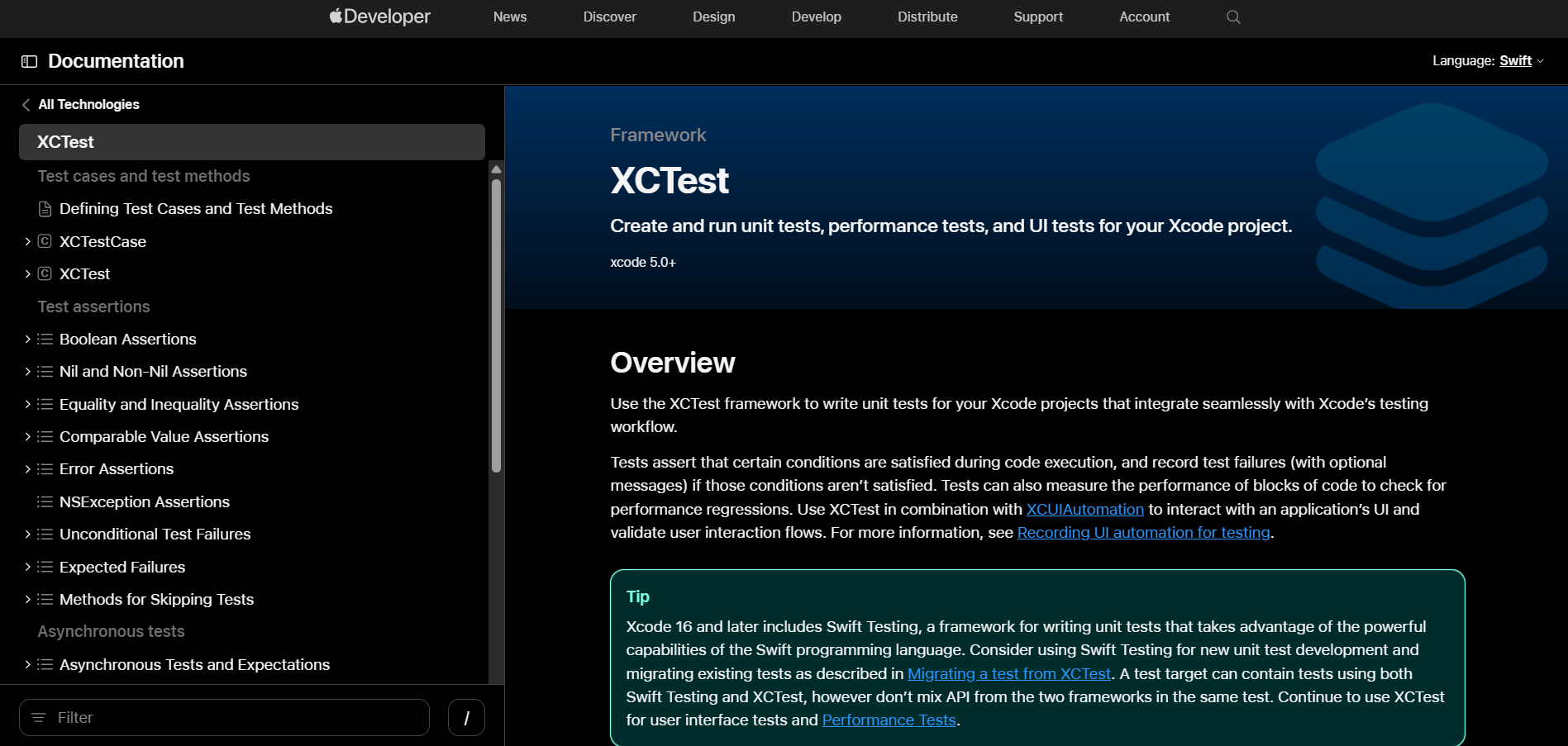
XCUITest iOS capabilities:
- XCUITest provides a concise API for writing UI tests.
- Its tests are fast and reliable, and they can be run on various simulators and devices.
- It provides several features for writing complex UI tests, such as support for gestures, custom matchers, and test hooks.
- XCUITest is integrated with Xcode, which makes it easy to set up and run tests.
Clone Selenium Skill and run your test on the first prompt.

How to Choose the Right Test Automation Framework
Choose a test automation framework by matching it to what you test, the languages your team already writes, and how it fits your CI/CD pipeline, execution scale, and long-term maintenance.
Weigh these factors before committing to one:
- Application type - web, mobile, API, or desktop decides the shortlist more than any other factor.
- Team language and skill - pick a framework your engineers can write and review without a steep ramp.
- CI/CD and cloud fit - it must trigger from your pipeline and scale across parallel, cross-browser runs.
- Community and maintenance - active releases and documentation lower the long-term maintenance cost.
- Execution scale - how many browsers, devices, and parallel threads you need on every run.
As a quick starting point, match the framework to the job:
- Web browser testing - Selenium for multi-language coverage, or Cypress and Playwright for modern JavaScript apps.
- Mobile apps - Appium for cross-platform, Espresso for native Android, and XCUITest for native iOS.
- API and unit testing - pytest, JUnit, TestNG, or Jest, depending on your language.
- Behavior-driven suites - Cucumber for stakeholder-readable, plain-English scenarios.
- Keyword-driven, low-code - Robot Framework for teams with non-technical testers.
Whichever framework you pick, running it across a real browser and device grid is what turns local tests into reliable coverage.
TestMu AI Automation Cloud runs suites from 50+ frameworks across 3,000+ browser and OS combinations and 10,000+ real devices, with no grid to maintain.
Wrapping Up
Test automation has no single best framework; each of these 15 fits a different stack, team skill level, and application type.
Shortlist two or three from the comparison table, weigh them on language fit, CI/CD integration, community support, and maintenance cost, then run a short proof of concept before you standardize.
If you are also validating front-end interfaces, see our guide to the best UI Testing Tools to pick the right tools for front-end validation.
Author

Saniya Gazala
Blogs: 44


Saniya Gazala is a Product Marketing Manager and Community Evangelist at TestMu AI with 2+ years of experience in software QA, manual testing, and automation adoption. She holds a B.Tech in Computer Science Engineering. At TestMu AI, she leads content strategy, community growth, and test automation initiatives, having managed a 5-member team and contributed to certification programs using Selenium, Cypress, Playwright, Appium, and KaneAI. Saniya has authored 15+ articles on QA and holds certifications in Automation Testing, Six Sigma Yellow Belt, Microsoft Power BI, and multiple automation tools. She also crafted hands-on problem statements for Appium and Espresso. Her work blends detailed execution with a strategic focus on impact, learning, and long-term community value.
Reviewer

Srinivasan Sekar
Reviewer
Srinivasan Sekar is Director of Engineering at TestMu AI (formerly LambdaTest), where he leads engineering and open-source initiatives behind the Selenium and Appium automation grid and owns TestMu AI's MCP Server. A committer to Appium and a contributor to Selenium, WebdriverIO, Taiko, and AppiumTestDistribution, he brings over 15 years of experience in quality engineering and open-source technologies. He is the author of the Apress book 'The MCP Standard: A Developer's Guide to Building Universal AI Tools with the Model Context Protocol,' a Certified Kubernetes and Cloud Native Associate, and an international conference speaker. Before TestMu AI he spent over eight years at Thoughtworks as a Principal Consultant and Quality Architect. Srinivasan holds a B.Tech in Information Technology from Anna University.


Test Automation Framework FAQs
Did you find this page helpful?
More Related Blogs
TestMu AI forEnterprise
Get access to solutions built on Enterprise
grade security, privacy, & compliance
- Advanced access controls
- Advanced data retention rules
- Advanced Local Testing
- Premium Support options
- Early access to beta features
- Private Slack Channel
- Unlimited Manual Accessibility DevTools Tests