

Power Your Software Testing with AI Agents and Cloud
The Native AI-Agentic Cloud Platform to Supercharge Quality Engineering. Test Intelligently and Ship Faster.


- TestMu AI (Formerly LambdaTest)
- /
- Blog
- /
- 15 Best API Testing Tools for 2026, Grouped by Job
15 Best API Testing Tools for 2026, Grouped by Job
Compare the 15 best API testing tools for 2026 by job: API clients, automation frameworks, contract testing, mocking, load testing, and security scanning.
Last Updated on:
Overview
The best API testing tool for most teams is Postman for exploring endpoints by hand and REST Assured for automated regression suites. Every other tool in this guide is a specialist, chosen for one job such as Git-stored collections, SOAP services, contract testing, load testing, or security scanning.
Which Tool Fits Which Job?
- Postman: best for shared team workspaces. Postman keeps collections, mock servers, and API docs in one hosted workspace, and its Newman CLI runs saved collections in CI. Open source: no. Free tier: yes.
- Bruno: best for Git-native API clients. Bruno stores every request as a plain-text file you can diff and review like source code. Open source: yes, MIT. Account required: no. GitHub stars: 46,885.
- Hoppscotch: best for zero-install exploration and first requests. Runs entirely in a browser tab. Open source: yes, MIT. Install required: no. GitHub stars: 80,279.
- REST Assured: best for Java teams keeping API regression tests beside application code in JUnit or TestNG. Open source: yes, Apache 2.0. Requires Java: yes. GitHub stars: 7,140.
- SoapUI: best for SOAP services described by a WSDL. SoapUI generates test requests, assertions, and mock services from the WSDL instead of hand-written XML. Open source: yes, EUPL 1.1. Command-line runner: yes.
- Pact: best for consumer-driven contract testing. Pact generates the contract from the consumer's own run and replays it against the provider, so services deploy independently. Open source: yes, MIT for JavaScript and Apache 2.0 for the JVM.
- Schemathesis: best for schema-driven fuzzing. Generates property-based cases from an OpenAPI or GraphQL schema. Open source: yes, MIT. Requires a machine-readable schema: yes.
- k6: best for scriptable load testing. Load scenarios are written in JavaScript and live beside the code they exercise. Open source: yes, AGPL 3.0. GUI recorder: no. GitHub stars: 31,440.
- ZAP: best for API security scanning. Imports OpenAPI definitions from 1.2 through 3.1 and actively scans the endpoints they describe. Open source: yes, Apache 2.0.
- TestMu AI: best for cross-layer checks. A KaneAI test performs a UI action and asserts the backing REST or SOAP API response in the same run. Open source: no. Free tier: yes.
What Do These Tools Not Cover?
Standalone API testing tools test the API in isolation. None of them confirm that clicking Checkout actually fired the right call, or that the call wrote the right row. Pairing an API tool with a platform that asserts across UI, API, and database in one run closes that seam.
Most API testing tool roundups rank a single list from 1 to 20, which assumes every reader has the same problem. They do not. Choosing a load testing tool when you need contract testing wastes a sprint, and no ranking can tell you which you need.
This guide groups 15 tools by the job they do. Pick your job, then pick from that shortlist. Each entry states who it is for and, more usefully, when to walk away from it. The final group covers a check no single-layer tool makes: confirming in one run that a UI action fired the right API call, which is where TestMu AI's KaneAI agent fits.
Quick Comparison of API Testing Tools
License and star counts below were read from each project's GitHub repository through the GitHub API on September 11, 2026. Star counts are an adoption proxy, not a quality score.
| Tool | Job | Protocols | License | Best for | Avoid if |
|---|---|---|---|---|---|
| Postman | API client | HTTP, SOAP, GraphQL, gRPC, WebSocket, MQTT | Commercial, free tier | Cross-functional teams that want one shared workspace for design, testing, and docs | You need collections in Git as plain text, or you cannot use a cloud account |
| Bruno | API client | REST, SOAP, GraphQL, gRPC, WebSocket | MIT, 46,885 stars | Teams that want API collections reviewed in pull requests like code | You depend on a large marketplace of prebuilt integrations |
| Hoppscotch | API client | REST, GraphQL, WebSocket, SSE, Socket.IO, MQTT | MIT, 80,279 stars | Quick exploration with nothing installed, and beginners sending a first request | You need deep offline desktop tooling or enterprise governance |
| Insomnia | API client | REST, GraphQL, gRPC, WebSocket, SSE | Apache 2.0, 40,003 stars | Teams that want to choose between local, Git, or cloud storage with optional end-to-end encryption | You work mainly with SOAP services and want requests generated from a WSDL |
| REST Assured | Automation framework | REST over HTTP, JSON and XML bodies | Apache 2.0, 7,140 stars | Java teams keeping API tests beside application code in JUnit or TestNG | Your team does not write Java, or you need first-class SOAP support |
| Karate DSL | Automation framework | REST, SOAP, GraphQL, WebSocket | MIT, 8,954 stars | Mixed-skill teams wanting readable tests without deep programming | You want tests in the same language as the product code |
| SoapUI | Functional testing | SOAP, REST, GraphQL, JMS | EUPL 1.1, 1,706 stars | SOAP services, where requests, assertions, and mocks are generated from a WSDL | You want tests stored as readable code, or need built-in CI plugins, which SmartBear lists only for ReadyAPI |
| Pact | Contract testing | HTTP and message queues | MIT (JavaScript, 1,814 stars), Apache 2.0 (JVM) | Microservices teams that want to deploy provider and consumer independently | One team owns both sides, or your contracts have no clear owner |
| Schemathesis | Schema testing | OpenAPI (REST), GraphQL | MIT, 3,597 stars | Finding edge cases automatically from an OpenAPI or GraphQL schema | You have no accurate machine-readable schema to generate from |
| WireMock | Mocking | HTTP, gRPC through an extension | Apache 2.0, 7,370 stars | Recording real traffic and replaying it as stateful stubs in JVM test suites | You only need a simple local mock and do not want a Java dependency |
| Mockoon | Mocking | REST over HTTP | MIT, 8,397 stars | Standing up a local mock API in minutes with a desktop app or CLI | You need GraphQL mocking or scenario-style state machines |
| Apache JMeter | Load testing | HTTP(S), SOAP, REST, JDBC, JMS, FTP, LDAP, TCP, mail | Apache 2.0, 9,528 stars | Protocol-level load testing across HTTP, JDBC, JMS, and FTP in one tool | You want load scripts version-controlled as readable code |
| k6 | Load testing | HTTP/1.1, HTTP/2, WebSocket, gRPC | AGPL 3.0, 31,440 stars | Developer-owned performance tests written in JavaScript and run in CI | You need a GUI recorder or broad legacy protocol coverage |
| ZAP | Security scanning | OpenAPI, SOAP, and GraphQL definitions | Apache 2.0, 15,762 stars | Scanning an OpenAPI-described API for vulnerabilities inside a pipeline | You are looking for functional correctness rather than security findings |
| TestMu AI | AI-assisted, end to end | REST and SOAP, alongside UI, database, and network checks | Commercial, free tier | Asserting an API response in the same run as the UI action that triggered it | You only ever test APIs in isolation and never touch a UI |
How We Picked These API Testing Tools
Every tool below was checked against the same six criteria, with GitHub data last refreshed on September 11, 2026. Tools are grouped by job rather than ranked, so the numbering is for navigation only and does not imply an order of merit.
- Project status, read from the GitHub API: star count, license, and the date of the most recent push. Anything without a commit in the last twelve months was excluded.
- The specific job it does, so that each entry answers one question rather than claiming to do everything.
- Protocol and format coverage, taken from official documentation rather than marketing pages.
- Whether it runs unattended in a pipeline, since a tool that only works on a laptop cannot gate a release.
- Licensing and whether the useful feature set is genuinely free, because that decides adoption more often than features do.
- A stated reason to avoid it, so every entry carries a disqualifier alongside its strengths.
Two tools that appear on many 2026 lists were deliberately left out. HTTPie remains widely used, but its command-line repository last received a push in December 2024, so it did not clear the activity bar. RapidAPI was removed because it now operates as Nokia API Hub and is positioned as an API marketplace rather than a testing tool.
API Clients for Manual Exploration
An API client sends handcrafted requests and shows you the response, which is where almost all API work starts. The decision here is mostly about where your requests live: in a vendor cloud, in your Git repository, or nowhere at all.
1. Postman
Postman has grown from an API client into a platform covering design, mock servers, and monitoring. Its command-line collection runner, Newman, executes saved collections headlessly, which is how most teams get Postman into a pipeline.
Best for: cross-functional teams where developers, testers, and technical writers all need the same shared workspace, and where a hosted collection is an advantage rather than a constraint.
Avoid if: you need collections stored as reviewable plain text in your own repository, or your organization cannot put request definitions in a vendor cloud.
- Collections group related requests and can be shared, versioned, and run as a suite.
- Built-in mock servers return example responses before a backend exists.
- Supports REST, SOAP, GraphQL, and WebSocket requests from one interface.
Scripts, test assertions, and a Newman pipeline setup are walked through step by step in this guide to Postman API testing.
2. Bruno
Bruno is an API client whose documentation describes it as offline-first by design, working locally without requiring a cloud account. It stores requests as plain-text files rather than syncing to a cloud workspace, using either its original .bru markup or OpenCollection YAML, which the Bru language documentation now recommends for new collections.
Because requests are files, a change to an endpoint shows up as a diff in a pull request, reviewers can comment on it line by line, and the collection branches with the code it tests.
Best for: teams that already review everything through pull requests and want API definitions held to the same standard, and anyone who needs to work without an account.
Avoid if: you rely on a large marketplace of prebuilt integrations, or your team wants a managed cloud workspace rather than files in a repository.
3. Hoppscotch
Hoppscotch is a browser-based API client that runs in a browser tab with nothing to install. By the star counts in the table above it is also the most starred project in this roundup.
Best for: sending a first request in under a minute, working on a machine where you cannot install software, and teaching API basics to someone new.
Avoid if: you need deep desktop tooling, offline-first file storage, or the governance controls that larger organizations require.
4. Insomnia
Insomnia is an open-source, cross-platform API client maintained by Kong, covering REST, GraphQL, WebSockets, Server-Sent Events, and gRPC. Its README lists three storage backends: Local Vault keeps everything on the machine, Git Sync pushes collections to a Git repository you choose, and Cloud Sync adds collaborative cloud storage with optional end-to-end encryption.
A team can start with local-only collections and move them to Git or cloud sync later without changing tools. The bundled Inso CLI runs linting and tests from the command line, which is how Insomnia collections reach a CI pipeline.
Best for: teams that mix REST with GraphQL, gRPC, or WebSocket APIs and want one client, with the choice of keeping collections local, in Git, or in collaborative cloud storage.
Avoid if: you work mainly with SOAP services and want requests generated from a WSDL, which is where SoapUI, below, is stronger.

Note: Run your API checks and your UI tests on the same cloud grid instead of stitching two systems together. Try TestMu AI free!
API Automation Testing Tools and Frameworks
Once a request is worth keeping, it belongs in a suite that runs on every commit. The choice comes down to who writes and maintains the tests: engineers who already work in Java, a mixed team that needs something more readable, or testers working against SOAP services described by a WSDL.
5. REST Assured
REST Assured is a Java library whose examples use a fluent when and then chain to assert on REST responses. Because it is a library rather than an application, those tests sit in the same project as the code they exercise. A full Maven setup with request specifications and JSON schema validation is in this REST Assured tutorial.
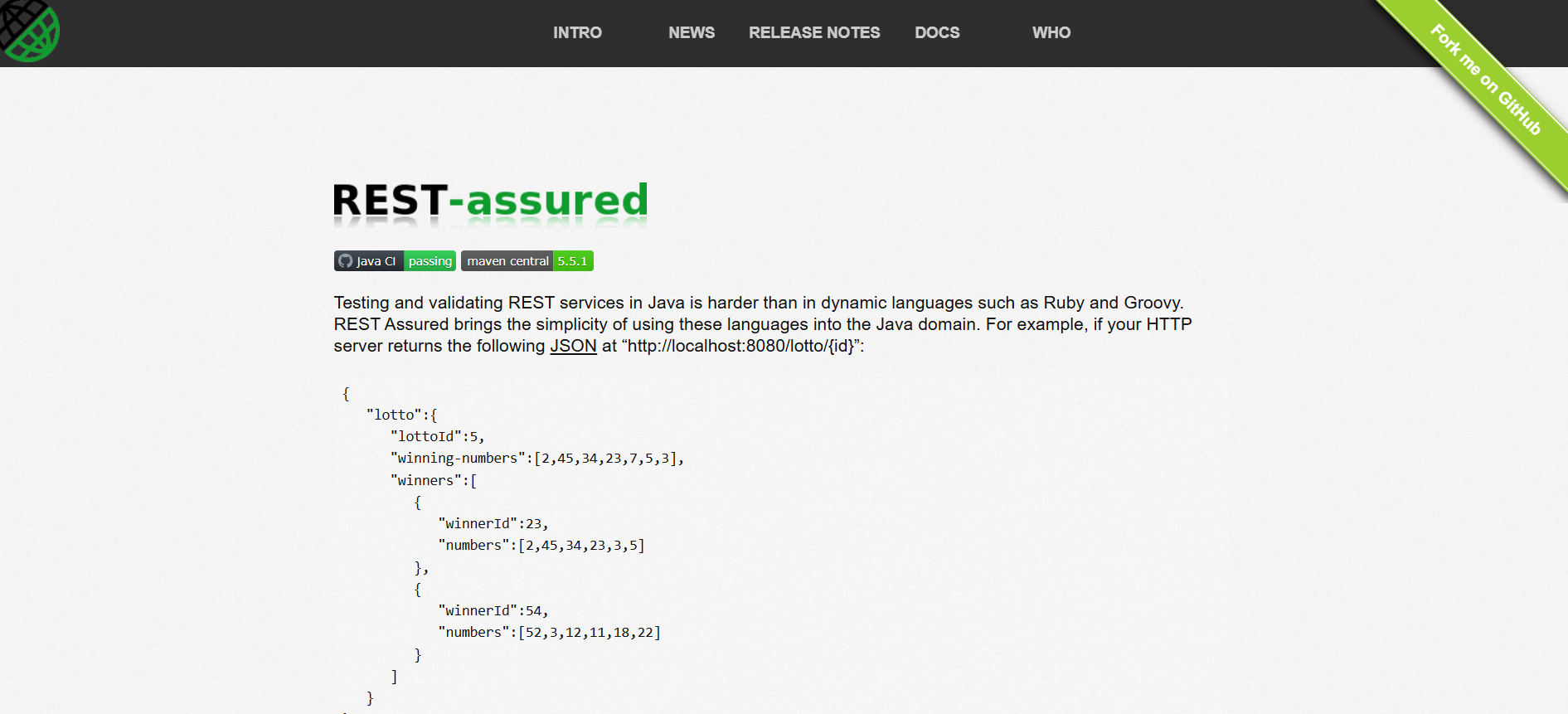
Best for: Java teams that want API tests reviewed, refactored, and versioned exactly like production code, with no separate tool to maintain.
Avoid if: your team does not write Java, or you need first-class SOAP coverage, which REST Assured does not target and SoapUI does.
6. Karate DSL
Karate is an open-source framework that combines API testing, mocks, and performance testing into a single tool, so a small team does not need three. Its scenarios are written in a readable keyword-driven syntax rather than in Java.
Best for: mixed-skill teams where testers who do not write Java daily still need to build and maintain real API suites.
Avoid if: you want every test written in the same language as the product, since Karate introduces a separate domain-specific syntax to learn and debug.
7. SoapUI
SoapUI is SmartBear's open-source functional testing tool, and its site lists REST, SOAP, GraphQL, and JMS support for the open-source edition. Its documentation describes using WSDL files to generate test requests, assertions, and mock services, which removes most of the hand-written XML that SOAP testing otherwise needs.
Suites built in the desktop GUI run unattended through the testrunner script in the installation's bin folder, which is how SoapUI tests reach a pipeline. Coverage reports and extra export formats from that runner require a license for ReadyAPI, SmartBear's commercial edition.
Best for: teams testing SOAP services described by a WSDL, especially when those services sit alongside REST endpoints in the same project.
Avoid if: you want tests stored as readable code in your repository, or you need built-in CI plugins, which the SoapUI site lists only for ReadyAPI.
Contract and Schema Testing Tools
These two tools answer a question functional tests cannot: does this API still match what its consumers and its specification expect? They catch breaking changes before deployment rather than after an integration fails.
8. Pact
Pact describes contract testing as checking each application in isolation to ensure the messages it sends or receives conform to a shared understanding documented in a contract. Pact is code-first and consumer-driven, which means the contract is generated during the execution of the consumer's own automated tests.
The payoff is that neither team needs a shared staging environment to know whether a change is safe. Pact ships a separate library per language, and the licenses differ: the JavaScript library is MIT and the JVM library is Apache 2.0, so check the implementation you adopt. The consumer and provider roles are explained in more depth in this guide to contract testing.
Best for: microservices organizations where separate teams own the provider and the consumer and want to deploy on independent schedules.
Avoid if: one team owns both sides of every integration, in which case an ordinary integration test is cheaper to write and maintain.
9. Schemathesis
Schemathesis reads an OpenAPI or GraphQL schema and generates test cases from it using property-based testing, building on the Python Hypothesis library. Its repository lists fuzzing among its topics, so the generated cases deliberately include malformed and boundary inputs a hand-written suite rarely covers.
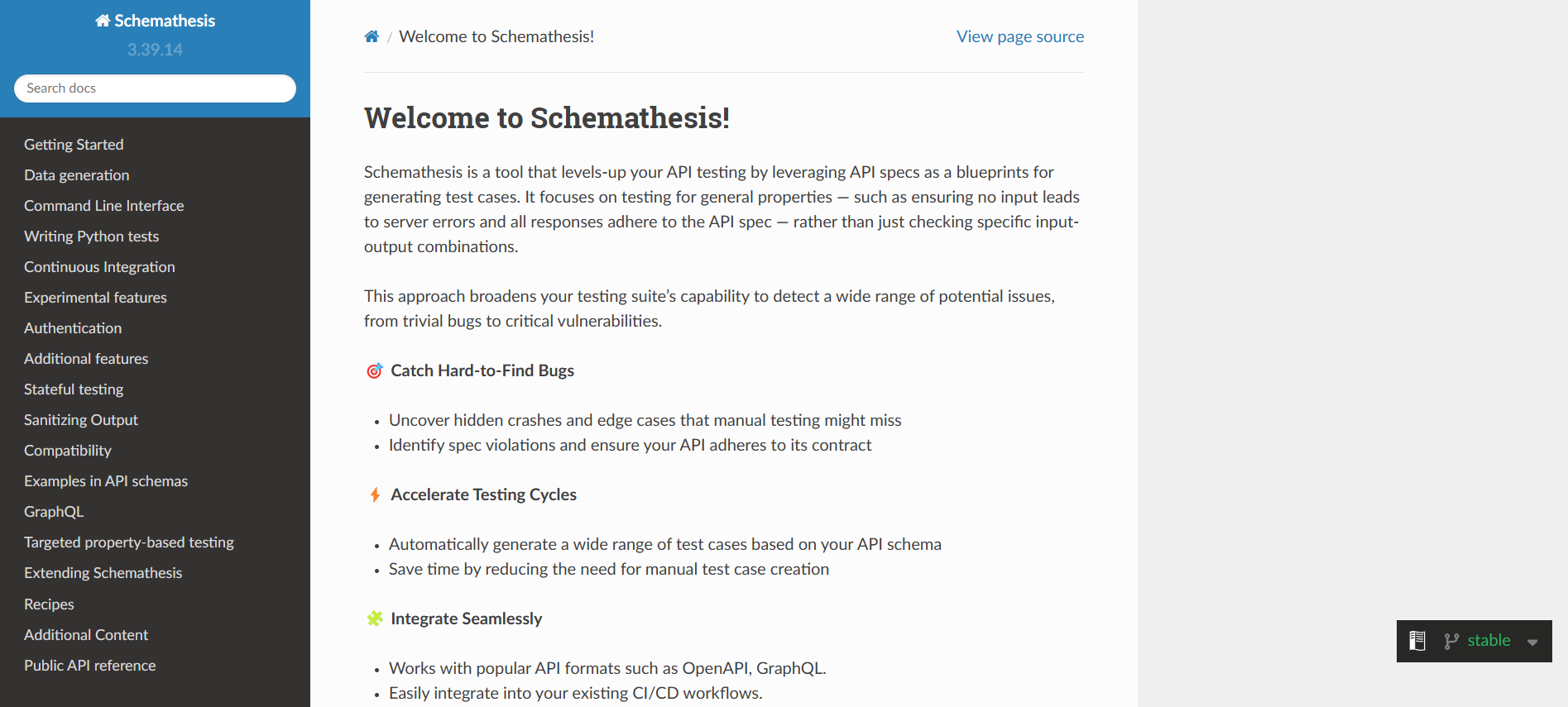
Best for: teams with an accurate OpenAPI or GraphQL schema who want edge-case coverage without hand-writing every case.
Avoid if: your schema is out of date or hand-maintained, because generated tests inherit every inaccuracy in the specification they read.

API Mocking and Service Virtualization Tools
Mocking replaces a real dependency with a controlled stand-in, so tests can run before a backend exists, without hitting a rate-limited third party, and with error conditions you could not otherwise reproduce on demand. Teams already automating in Playwright can also intercept calls in the test itself, covered in this guide to Playwright mock API testing.
10. WireMock
WireMock runs as a standalone mock server. It can record real traffic against a live service and replay it as stubs, so a mock can be built from observed behavior rather than written by hand.
Best for: JVM test suites needing stateful scenarios, request matching, and fault injection such as delays and malformed responses.
Avoid if: you want a lightweight local mock and would rather not introduce a Java process into your stack.
11. Mockoon
Mockoon is a desktop application and CLI that its site says creates mock APIs in seconds, is offline first, and needs no remote deployment. It supports dynamic templating and a rules-matching system for varying responses.
Best for: front-end developers who need a working endpoint today and do not want to learn a mocking framework to get one.
Avoid if: you need GraphQL mocking, an open feature request on the Mockoon repository since 2019, or scenario-style state machines. Mockoon persists state only through CRUD routes backed by data buckets, and its ordinary routes are stateless.
API Load and Performance Testing Tools
Load testing answers whether an API still behaves correctly under traffic. Both tools below simulate concurrent users and report latency percentiles, throughput, and error rates. The split between them is GUI-driven breadth against code-driven repeatability.
12. Apache JMeter
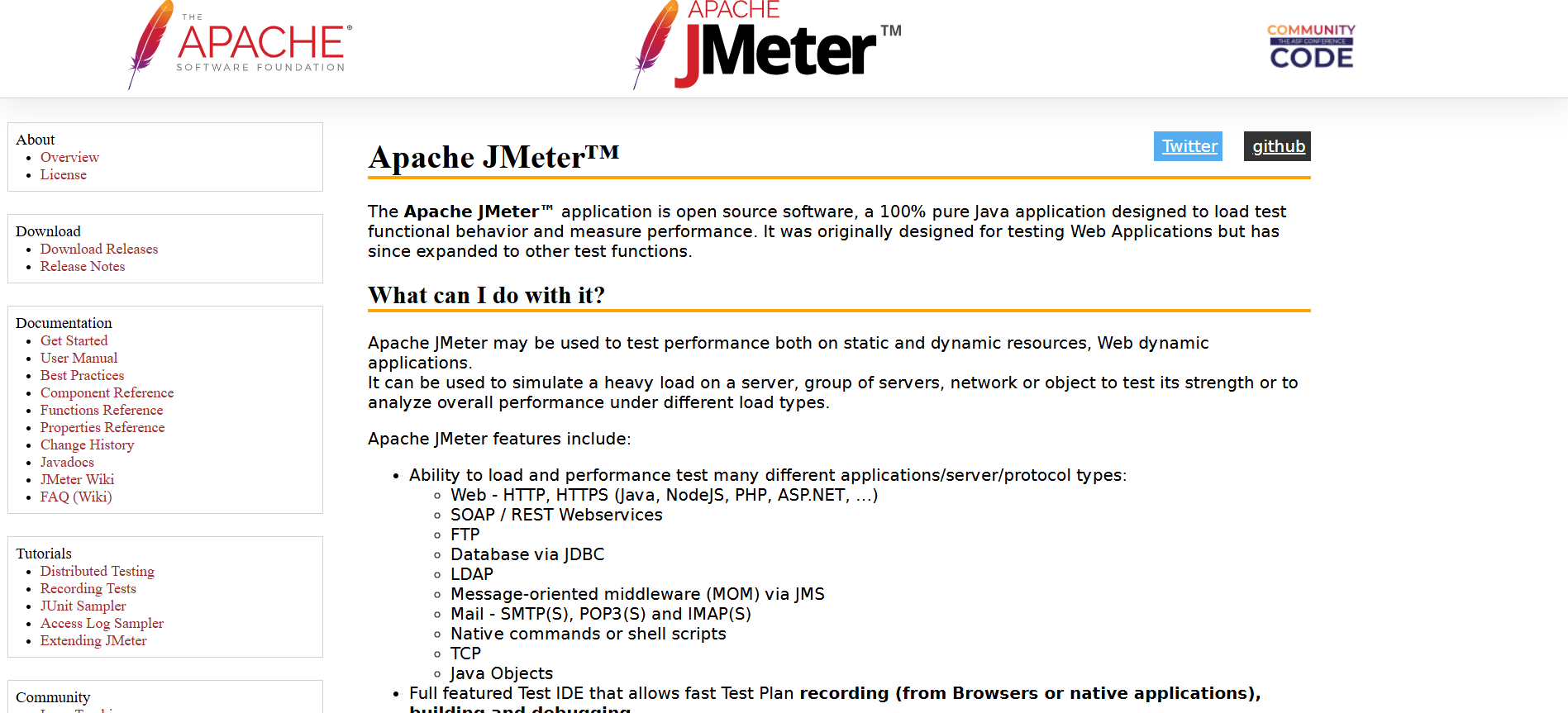
Apache JMeter is a long-established open-source load testing tool. Its documentation lists support for JDBC, JMS, FTP, and SMTP alongside REST and SOAP, so one tool can cover a mixed protocol estate.
When a SOAP test plan needs schema-valid sample payloads, a free XSD to XML converter generates them from your service's XSD.
Running a JMeter plan at scale usually means maintaining a fleet of load generators. HyperExecute runs an existing .jmx plan without a rewrite: you upload it through the Projects dashboard, set total users, duration, ramp-up time, and machine count, and HyperExecute provisions the load generators, drives the run, and tears them down afterward. The upload and override options are covered in the guide to running JMeter tests on HyperExecute.
Best for: protocol-level load testing across a mixed legacy estate where not everything speaks HTTP.
Avoid if: you want load scripts that read as code and diff cleanly, since JMeter test plans are XML built through a GUI.
13. k6
k6 is described in its documentation as an open-source, developer-friendly, and extensible performance testing tool, with tests written against a JavaScript API. A load scenario is therefore a source file that can be reviewed and versioned like any other. Virtual users, thresholds, and stages are demonstrated with runnable scripts in this k6 testing tutorial.
Best for: engineering teams that own their own performance budgets and want thresholds enforced automatically on every build.
Avoid if: you need a GUI recorder, or your estate depends on legacy protocols that require an extension to reach.

API Security Testing Tools
Functional tests confirm an API does what it should. Security testing confirms it refuses what it should not: unauthorized reads, injection payloads, and data exposure.
14. ZAP
ZAP is described on its own site as an independent open-source project, branded ZAP by Checkmarx, and as the world's most widely used web app scanner. Many older tutorials still call it OWASP ZAP, so search results for both names point at the same tool.
For API work the important capability is specification-driven scanning. ZAP's OpenAPI add-on imports definitions in versions 1.2, 2.0, 3.0, and 3.1, and its packaged API scan runs an active scan against every URL the definition lists, so coverage follows your specification instead of whatever a crawler happens to find.
Best for: adding an automated security gate to a pipeline that already publishes an OpenAPI definition.
Avoid if: you are looking for functional correctness, because ZAP reports security findings and will not tell you a business rule is wrong.
AI-Assisted and End-to-End API Testing
Every tool above tests the API on its own, so a UI action that fires the wrong call, or a call that writes the wrong row, can pass each suite separately. Catching that failure means one run has to drive the UI, call the API, and check the stored data together.
15. TestMu AI (Formerly LambdaTest)
TestMu AI approaches API testing from the opposite direction to the rest of this list. Its testing agent, KaneAI, authors tests from natural-language instructions and validates REST and SOAP endpoints alongside UI flows in the same run, so a single test can perform a UI action and assert that the backing API behaved correctly.
The same flow can extend to a database query check and a network-condition check, which is how seam-level failures get caught: a cart total that does not update because the pricing API returned a 500 is one test, not three disconnected ones. Setup steps are in the KaneAI API testing documentation.
When the UI changes, KaneAI re-anchors affected steps through smart element detection instead of failing on a stale locator. Each run produces a video, a step-level report with root-cause analysis, and an auto-drafted bug ticket, so a failed cross-layer check points at the step that broke along with its network and data state.
Best for: teams whose bugs appear between layers rather than inside one, and who want API assertions and UI coverage in a single reportable run.
Avoid if: your APIs are headless with no user interface anywhere in scope, where a focused open-source framework will be lighter and cheaper.
Moving Off Postman: What to Use Instead
Most teams evaluating API testing tools already use Postman and are looking for a specific escape route rather than a general replacement. The useful question is which constraint you are trying to escape, because each one points at a different tool.
- Requests must live in Git and be reviewed as code, so switch to Bruno and its plain-text collection files.
- Nothing may be installed on the machine, so use Hoppscotch in a browser tab.
- The team wants Postman-style cloud sync with optional end-to-end encryption, or a strictly local vault, so use Insomnia.
- Scripted checks need to run in CI without a GUI at all, so move the assertions into REST Assured or Karate DSL.
- The real need is load rather than functional coverage, so use k6 or Apache JMeter instead of scaling a collection runner.
- Nothing needs to be kept between requests, so plain curl in a terminal is sufficient and always available.
Import paths and a comparison table covering each option are in this roundup of Postman alternatives. Teams looking further ahead can also compare these options against AI API testing approaches, which cover generated test cases, semantic validation for model-backed endpoints, and self-healing across schema changes.
What Is API Testing?
API testing validates that an application programming interface returns the correct data, handles errors properly, performs within budget, and resists attacks. Requests go straight to the endpoint rather than through a user interface, so the tests run earlier, execute faster, and can catch broken behavior before a front end exists.
Two API styles dominate. REST, which stands for Representational State Transfer, uses standard HTTP methods and usually exchanges JSON, so tests assert on status codes and JSON structure. SOAP exchanges XML envelopes with stricter built-in standards, so tests parse XML and validate against a WSDL or XSD schema. Deeper coverage of the first style is in this guide to REST API testing.
Whatever tool you choose, the baseline assertions are the same. Running that baseline against the TestMu AI Selenium Playground on September 11, 2026 produced the output below. The response-time budget failed, just as it did on an earlier run on August 7, 2026 (2441ms), so latency is the assertion to watch first.
GET https://www.testmuai.com/selenium-playground/

  PASS  status is 200  (got 200)
  PASS  content-type is text/html  (got text/html)
  FAIL  response under 2000ms  (got 4985ms)
  PASS  body is non-empty  (got 116614 bytes)

4 assertions, 3 passed, 1 failed
response time: 4985ms | payload: 116614 bytes
Status, content type, schema, and latency are the four checks every tool in this guide is ultimately making. The tools differ in how they let you express those assertions, where the results are stored, and whether the check can run unattended on every commit.
How Do You Choose the Right API Testing Tool?
Match the tool to the job and the team, in that order. The routing below maps a situation to a specific starting point rather than to a list of criteria.
- Exploring an unfamiliar API by hand, with nothing to install: start with Hoppscotch, then move to Bruno once the requests are worth keeping.
- Writing tests that run on every commit in a Java codebase: REST Assured, because the tests live with the application code.
- Testers on the team do not write Java daily: Karate DSL, which trades a separate syntax for far lower authoring cost.
- The services speak SOAP and publish a WSDL: SoapUI, which generates the requests, assertions, and mocks from that WSDL.
- Collections should start on one laptop and may later move to Git or cloud sync: Insomnia, which offers all three storage backends in one client.
- Separate teams own the services and releases keep breaking each other: Pact, so each side is verified against the contract in isolation.
- An accurate OpenAPI or GraphQL schema already exists: Schemathesis, to generate the edge cases nobody wrote by hand.
- The backend is not ready or a third party is rate limited: Mockoon for speed, WireMock when the mock needs scenario-based state.
- The question is how the API behaves under traffic, so reach for k6 when engineers own the performance budget, or Apache JMeter when the estate is not all HTTP.
- The API is public or handles sensitive data: add ZAP to the pipeline, driven by your OpenAPI definition.
- The team already writes UI tests in Playwright or Cypress: send API requests from that framework first, through Playwright's request fixture or Cypress's cy.request(), covered in these guides to Playwright API testing and Cypress API testing.
- Failures keep appearing between the UI and the API rather than inside either: use a platform that asserts across both in one run, such as TestMu AI.
Most teams end up with two or three of these rather than one. A client for exploration, a framework for regression, and a load or security tool covers the majority of real API programs.
Conclusion
Pick the row in the comparison table that matches the job in front of you this week, install that one tool, and move a single existing manual check into it so it runs on every commit. If the product behind those APIs is a SaaS app, the other quality layers are compared in our roundup of SaaS testing tools.
If your failures keep landing between the UI and the API rather than inside either one, run both layers in a single test on the TestMu AI API testing platform, then follow the KaneAI getting started guide to author your first cross-layer test. Preparing for a role rather than a release? Work through these API testing interview questions.
Author

Akash Nagpal
Blogs: 7


Akash Nagpal is a Software Engineer with 4+ years of experience in software development and technical writing. He specializes in React.js, Node.js, MongoDB, RESTful APIs, JavaScript, CSS, and HTML for building dynamic user interfaces. Akash has published 70+ technical blogs on data structures, algorithms, and modern frameworks during his time at Coding Ninjas. At TestMu AI, he has authored 10+ articles on software testing, automation testing, automated regression testing, performance testing, Selenium, and API testing.
Reviewer

Rishabh Arya
Reviewer
Rishabh Arya is a community contributor with 7+ years of experience building platform-scale systems at TestMu AI. Currently an Engineering Manager – Platform, he has worked extensively on screenshot testing infrastructure, developing Kafka-based queues, REST APIs, and CI pipelines to support large-scale testing workflows. Rishabh has also built and maintained core products such as TestMu AI Tunnel and UnderPass, and works with Golang, Kubernetes, and SQL.


API Testing Tools FAQs
Did you find this page helpful?
More Related Blogs
TestMu AI forEnterprise
Get access to solutions built on Enterprise
grade security, privacy, & compliance
- Advanced access controls
- Advanced data retention rules
- Advanced Local Testing
- Premium Support options
- Early access to beta features
- Private Slack Channel
- Unlimited Manual Accessibility DevTools Tests