

Power Your Software Testing with AI Agents and Cloud
The Native AI-Agentic Cloud Platform to Supercharge Quality Engineering. Test Intelligently and Ship Faster.


- TestMu AI (Formerly LambdaTest)
- /
- Blog
- /
- Top 15 Postman Alternatives for API Testing in 2026
Top 15 Postman Alternatives for API Testing in 2026
Explore the best Postman alternatives for API testing in 2026. Discover open-source and commercial tools to find the right solution for your team's needs.
Last Updated on:
API testing is a crucial part of the software development lifecycle, and while Postman has been the go-to solution for many, there are various Postman alternatives that cater to different project needs. If you are staying on Postman, this Postman API testing walkthrough covers collections, scripts, and Newman in CI.
Overview
For API testing, the best Postman alternatives are TestMu AI for natural language test creation and Tricentis Tosca for enterprise-level model-based test automation. Other options range from lightweight command-line tools to comprehensive collaborative platforms that support REST, GraphQL, and SOAP protocols.
Top Postman Alternatives
- Best for natural language testing: TestMu AI - This AI testing agent allows users to write test cases in plain English using Natural Language Processing, supports multiple HTTP methods, and integrates curl commands.
- Best for lightweight VS Code testing: Postcode - This lightweight VS Code extension is designed for sending HTTP requests and performing quick RESTful API validation without requiring complex setup or configurations.
- Best for real-time team collaboration: Firecamp - This collaborative API testing platform supports REST, GraphQL, and WebSocket protocols, enabling development teams to collaborate in real time on API collections.
- Best for comprehensive functional and security testing: TestMace - This API testing tool is designed for functional, performance, and security testing, offering real-time monitoring, advanced reporting, and collaboration features for distributed teams.
- Best for privacy and Git integration: Bruno - This fast, open-source API client stores collections locally to ensure data privacy and integrates with Git for version control.
- Best for command-line simplicity: HTTPie - This open-source, command-line HTTP client provides a simple syntax and formatted, readable output for quick API testing and debugging in the terminal.
- Best for script automation and protocol versatility: cURL - This highly flexible, open-source command-line tool supports numerous protocols like HTTP, HTTPS, and FTP, making it ideal for terminal-based testing and automated scripts.
- Best for API design and interactive documentation: Swagger - This suite of tools helps design, document, and test REST and GraphQL APIs, allowing users to interact with and test APIs directly from their documentation using Swagger UI.
- Best for web-based, no-installation testing: Hoppscotch - This free, open-source, web-based API testing tool features a minimalist design and supports REST, GraphQL, and WebSocket protocols without requiring any installation.
- Best for load and performance testing: JMeter - This open-source tool is designed to simulate large numbers of API requests, making it ideal for testing API scalability, stress, and performance.
- Best for enterprise SOAP and REST testing: SoapUI - This open-source tool provides comprehensive security, performance, and load testing for SOAP and REST APIs, with support for CI/CD automation.
- Best for enterprise-level API lifecycle management: ReadyAPI - This enterprise-level extension of SoapUI offers advanced security testing, performance testing, and seamless integration with CI/CD workflows for automated testing.
- Best for automated CI/CD integration: Assertible - This automated API testing tool integrates with continuous integration pipelines to run automated regression and integration tests with real-time health monitoring.
- Best for BDD-style test creation: Karate Labs - This tool uses a BDD-style Gherkin syntax to let technical and non-technical users write functional, performance, and security tests for both APIs and user interfaces.
- Best for model-based test automation: Tricentis Tosca - This enterprise-grade platform uses model-based test automation to create reusable test models for API, web, and mobile testing within CI/CD pipelines.
15 Best Postman Alternatives
There are numerous Postman alternatives available that provide robust API testing and development features, offering various functionalities such as automation, security testing, and performance analysis.
1. Postcode
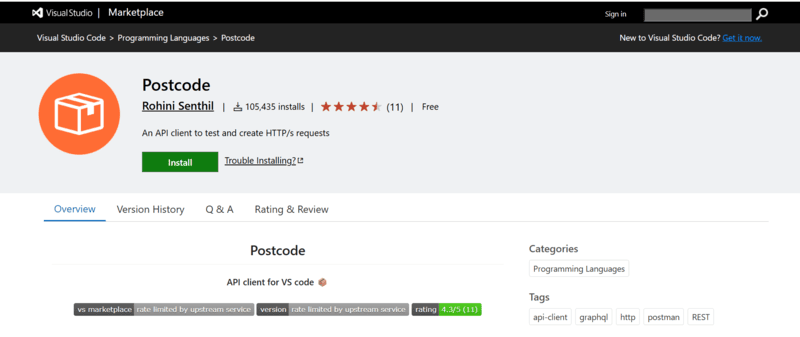
Postcode is a lightweight VS Code extension primarily designed for sending HTTP requests and performing quick API testing. It’s ideal for developers who need to validate APIs without dealing with complex setup or configurations. Postcode offers a simple and fast interface for testing RESTful APIs, making it one of the postman alternatives that streamline the testing process.
Features:
- Quick setup: No configuration needed, perfect for developers who need fast API testing without a setup.
- Supports RESTful APIs: Focuses on testing REST APIs, the most common API format used in modern applications.
- Lightweight interface: Offers a simple, user-friendly design for quick validation.
- Ideal for solo developers: Best for small-scale testing projects or individual developers who need speed over advanced features.
2. Firecamp
Firecamp is a comprehensive platform designed for collaborative API testing and development. It supports multiple protocols such as REST, GraphQL, and WebSocket, providing flexibility for developers working with various API technologies. It’s particularly valuable for teams that need real-time collaboration.
Features:
- Supports multiple protocols: Includes support for REST, GraphQL, and WebSocket APIs, making it versatile for diverse testing needs.
- Real-time collaboration: Teams can collaborate in real time while working on the same API collections.
- Advanced API monitoring: Keeps track of API health with real-time monitoring, providing insights into performance.
- Seamless integration with development tools: Firecamp integrates well with existing development workflows to streamline API testing.
3. TestMace
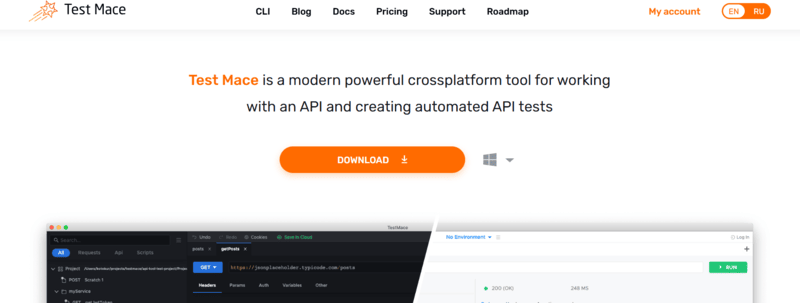
TestMace is designed for comprehensive API testing, supporting performance, security, and functional testing. It’s built with teams in mind, offering collaboration features, real-time monitoring, and advanced reporting to ensure your APIs perform well in all conditions.
Features:
- Performance and security testing: Tests both performance (load testing) and security of your APIs to ensure they are robust.
- Real-time API monitoring: Provides insights into the health and status of your APIs during testing.
- Advanced reporting: Detailed reports and analytics to understand how your APIs are performing.
- Collaboration features: Supports team collaboration, making it ideal for distributed development teams.
4. Bruno
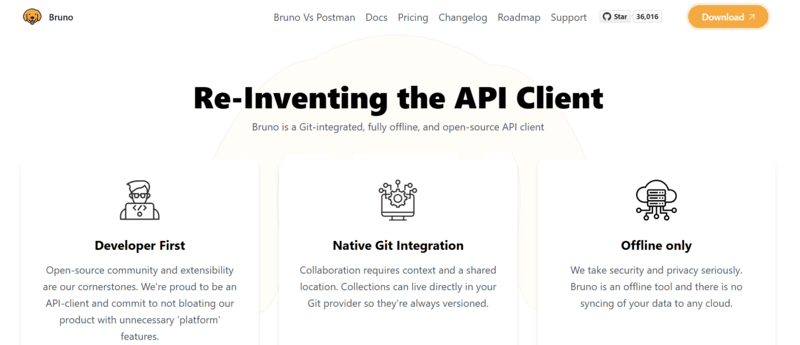
Bruno is a fast, privacy-focused, open-source API client. It allows users to store collections locally and integrates seamlessly with Git for version control. Ideal for developers who want a simple yet effective tool for quick API testing.
Features:
- Fast and lightweight: Optimized for speed, making it perfect for quick testing without the overhead of more complex tools.
- Local data storage: Data is stored locally, ensuring that sensitive information remains private.
- Git integration for version control: Easily manage API collections and keep them versioned through Git.
- Simple user interface: Offers a clean and intuitive interface for easy API testing without unnecessary complexity.
5. HTTPie
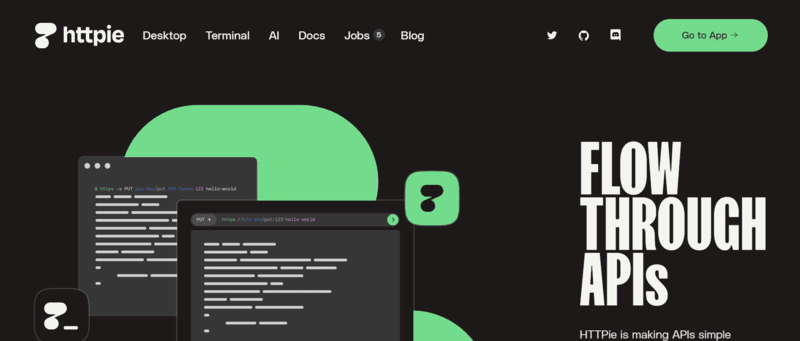
HTTPie is an open-source, command-line HTTP client that prioritizes simplicity and ease of use. It allows developers to send HTTP requests and view responses in a readable format. HTTPie is great for quick testing and debugging, especially for those who prefer working in the terminal.
Features:
- Simple and intuitive syntax: Makes API testing easy with a user-friendly command-line syntax.
- Supports multiple protocols: Works with HTTP, HTTPS, and WebSocket protocols.
- Lightweight and fast: A minimal tool for quick and efficient API tests.
- Readable output: Clear and formatted output for easier debugging and understanding of responses.
6. cURL
cURL is another open-source, command-line tool that supports transferring data over various protocols, including HTTP, HTTPS, FTP, and more. It’s commonly used for testing APIs and debugging network-related issues. cURL is highly flexible and is often integrated into scripts for automated testing.
Features:
- Supports numerous protocols: cURL works with HTTP, FTP, and many other protocols, making it highly versatile.
- Command-line tool: Offers terminal-based API testing, ideal for automation.
- Wide community support: cURL has a large user base, ensuring good documentation and resources.
- Easy script integration: Can be easily incorporated into automated scripts for continuous testing.
7. Swagger
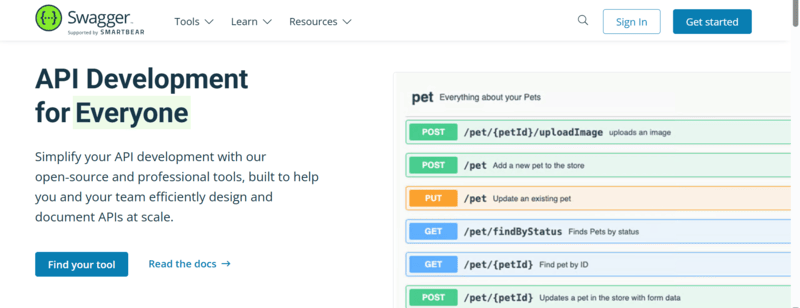
Swagger is a suite of tools that helps developers design, document, and test APIs. With Swagger UI, which is an open-source tool, users can interact with APIs directly from their documentation, making it a popular choice for teams working on API design in addition to testing.
Features:
- API design and documentation tools: Swagger helps design and document APIs in a streamlined process.
- Interactive API documentation: With Swagger UI, users can test APIs directly from the documentation.
- Supports REST and GraphQL: Ideal for testing both RESTful and GraphQL APIs.
- Collaboration tools: Integrates with SwaggerHub for team collaboration and API versioning.
8. Hoppscotch
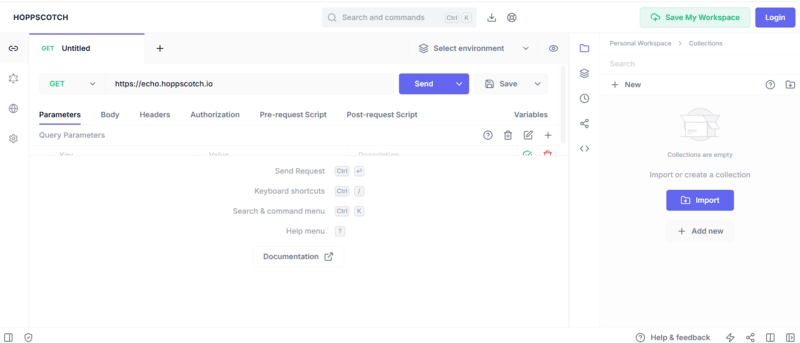
Hoppscotch is an open-source, web-based tool for API testing. It’s simple to use and supports REST, GraphQL, and WebSocket protocols. Hoppscotch’s minimalist design makes it fast and ideal for quick, no-frills testing, making it one of the top postman alternatives for developers seeking simplicity.
Features:
- Web-based, no installation required: No setup necessary, making it easy to get started right away.
- Supports REST, GraphQL, and WebSocket: Flexibility for different types of API testing.
- Open-source and free: Fully open-source and available for free.
- Simple and intuitive interface: Easy-to-use, minimalist design for faster API testing.
9. JMeter
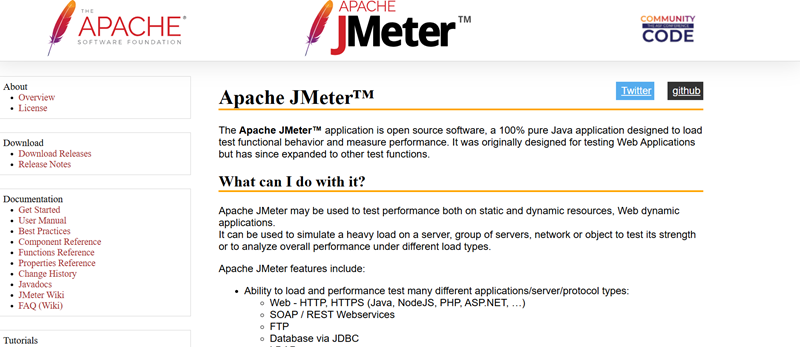
Apache JMeter is a popular open-source tool for load and performance testing, but it also supports API testing. It allows users to simulate large numbers of API requests to check how APIs handle stress, making it ideal for testing scalability and performance.
Features:
- Excellent for load and performance testing: Simulate high traffic to test API performance under load.
- Highly customizable with plugins: Extend JMeter’s functionality with additional plugins.
- Free and open-source: No cost for using JMeter, and it’s community-driven.
- Supports both API and web testing: Versatile enough for testing various types of web services.
10. SoapUI
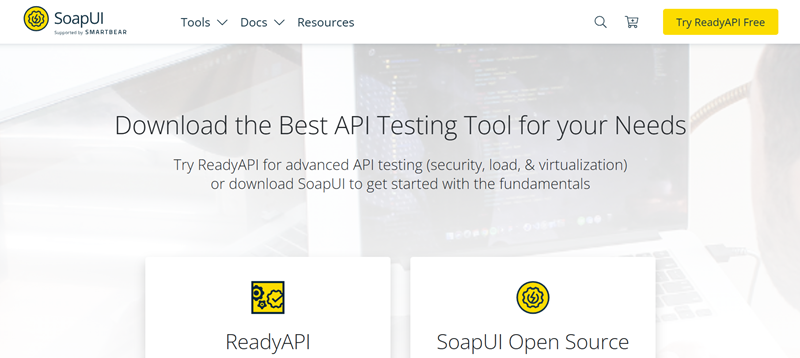
SoapUI is a comprehensive API testing tool, especially for SOAP and REST APIs. It is an open-source tool and it offers advanced testing capabilities like security, performance, and load testing. SoapUI is highly suitable for enterprise-level applications. When crafting SOAP request bodies for it, an online XSD to XML converter helps you generate schema-valid sample XML quickly.
Features:
- Comprehensive security and load testing: Test APIs for security vulnerabilities and performance under load.
- Supports SOAP and REST APIs: Ideal for testing both SOAP and RESTful services.
- Detailed reporting and analytics: Track and analyze test results with comprehensive reports.
- Integrates with CI/CD tools: Supports automation and integration into continuous deployment pipelines.
11. ReadyAPI
ReadyAPI, an extension of SoapUI, offers advanced features for API testing, including security testing, performance testing, and automation. It’s a comprehensive solution for enterprise-level testing and integrates seamlessly with CI/CD workflows.
Features:
- Advanced API security and performance testing: Strong tools for security checks and load testing.
- CI/CD integration for automation: Easily integrate API tests into continuous testing workflows.
- Comprehensive API management: Covers the entire API lifecycle from design to testing.
- Enterprise-level features: Suitable for large teams with complex testing needs.
12. Assertible
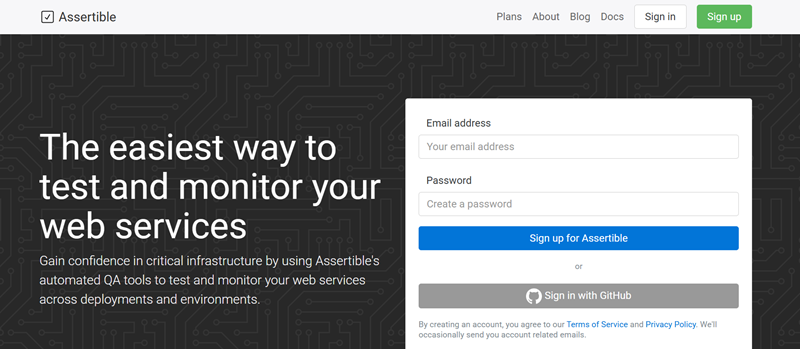
Assertible is an automated API testing tool designed for continuous integration workflows. It integrates seamlessly with CI/CD systems to run API tests automatically, making it perfect for teams practicing continuous testing.
Features:
- Automated regression and integration testing: Automatically tests your APIs with every update.
- Easy integration with CI/CD pipelines: Seamlessly integrates into existing automated workflows.
- Real-time monitoring: Keeps track of your API’s health as it’s being tested.
- Clear reporting: Provides detailed test results and actionable insights.
13. Karate Labs
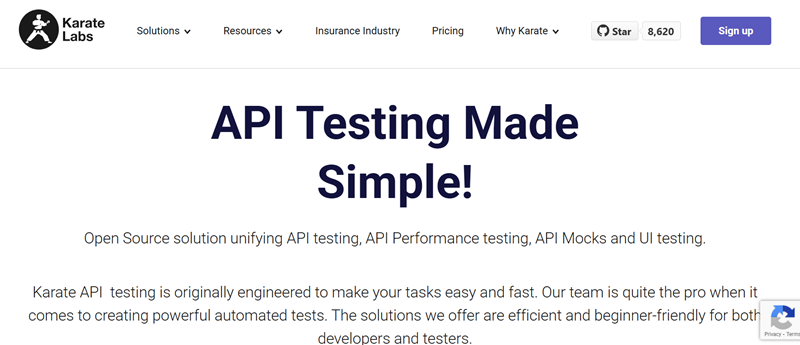
Karate Labs uses BDD syntax, making API testing easier. It supports functional, performance, and security testing. Its use of Gherkin syntax makes it easy for both technical and non-technical users to write tests.
Features:
- BDD-style syntax for easy test creation: Write tests in plain English with Gherkin syntax.
- Supports both functional and performance testing: Combines functional testing with performance testing.
- Open-source with community support: Free and backed by a strong community.
- API and UI testing: Tests both APIs and user interfaces in the same framework.
14. Tricentis Tosca
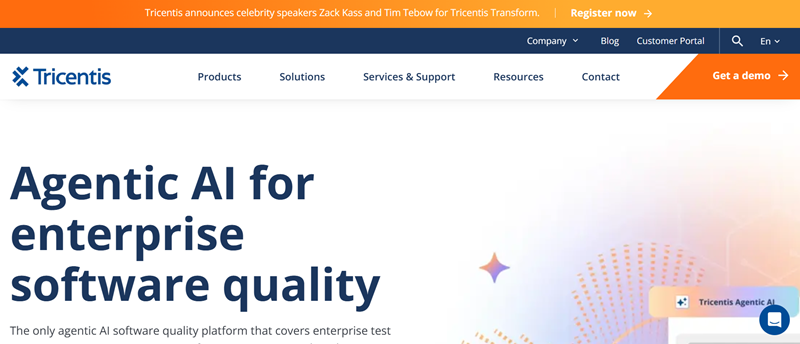
Tricentis Tosca is an enterprise-level test automation platform known for its model-based testing approach. It supports API, web, and mobile testing, and integrates well with CI/CD pipelines for automated testing.
Features:
- Model-based test automation: Create reusable test models for scalable testing.
- Supports API, web, and mobile testing: Comprehensive support for various test environments.
- Strong CI/CD integration: Easily integrates with continuous testing workflows.
- Enterprise-level solution: Ideal for large teams and complex testing projects.
15. TestMu AI KaneAI
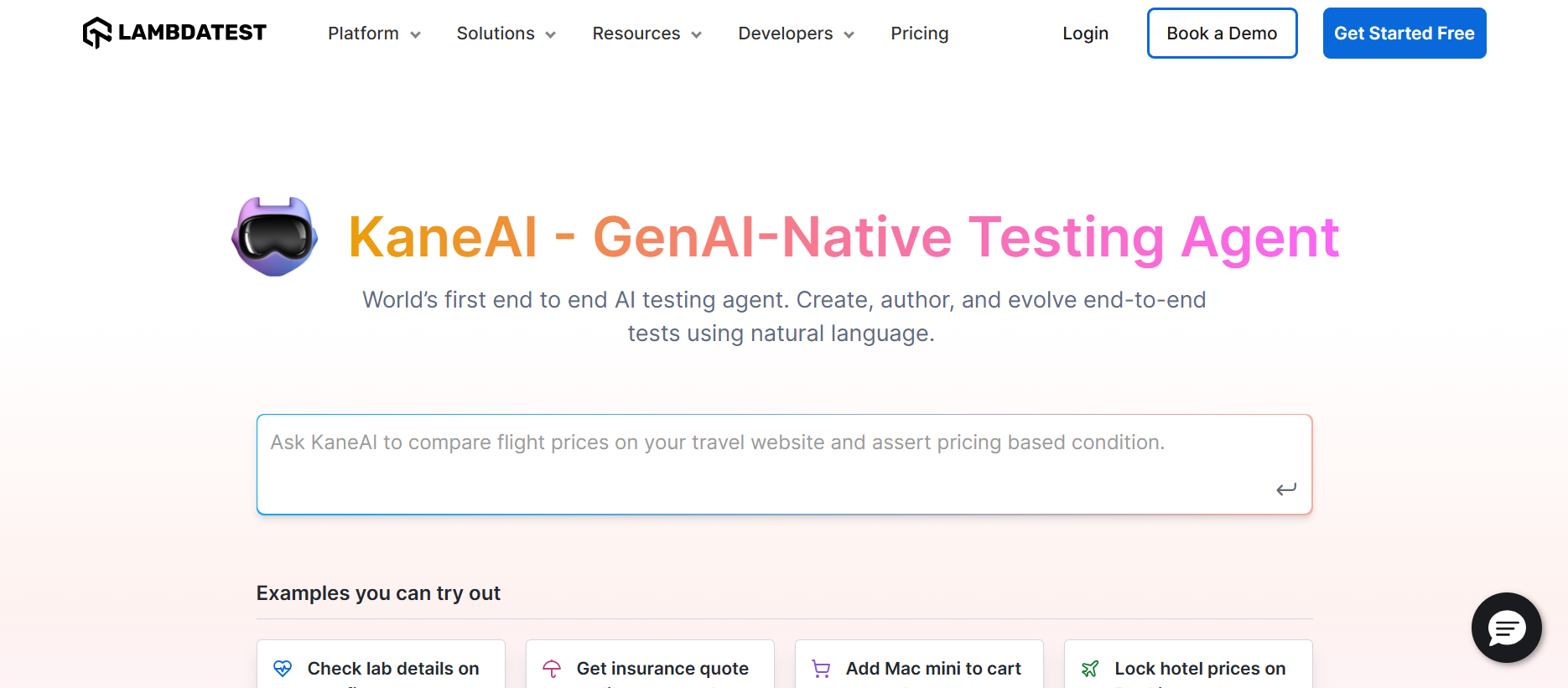
TestMu AI KaneAI is an AI testing agent designed to enhance the API testing process. By using Natural Language Processing (NLP), KaneAI enables users to write test cases in plain English, reducing the complexity of API test creation. It integrates seamlessly into development pipelines and offers extensive support for multiple HTTP methods.
Features:
- Natural language test creation: Easily create test cases by describing them in plain English, making it accessible for both technical and non-technical users.
- Supports multiple HTTP methods: Allows you to test all major HTTP methods like GET, POST, PUT, DELETE, and PATCH.
- Curl command integration: Input curl commands directly and KaneAI automatically populates the required details, simplifying integration.
- Batch API testing: Test multiple APIs simultaneously, saving time when validating several endpoints.
- Dynamic variable support: Use variables within API bodies for flexible testing with varying data inputs.

Comparison Table For Postman Alternatives
| Alternatives | Features | Open Source |
|---|---|---|
| Postcode | Lightweight, fast REST API testing | Yes |
| Firecamp | Supports REST, GraphQL, WebSocket with real-time collaboration | No |
| TestMace | Performance, security & functional API testing with collaboration | No |
| Bruno (httpYac) | Fast, privacy-focused API client with Git integration | Yes |
| HTTPie | Simple CLI-based API testing with readable output | Yes |
| cURL | Supports multiple protocols; script automation | Yes |
| Swagger (Swagger UI) | Interactive API documentation & testing | Yes (UI) |
| Hoppscotch | Web-based, supports REST, GraphQL, WebSocket | Yes |
| TestMu AI KaneAI | AI-native natural language test creation | No |
How to Choose the Right Tool for Your API Testing Needs
When selecting an API testing tool, consider these key factors:
- Project Complexity: For simpler projects, tools like HTTPie or Postcode are great, while more complex applications may require tools like ReadyAPI or TestMu AI KaneAI. These postman alternatives offer specialized features for different project needs.
- Team Size: If you’re working in a team, tools with collaboration features like Firecamp will be beneficial. For individual use, lightweight tools like cURL or HTTPie can suffice as postman alternatives.
- Integration Needs: Consider tools like TestMu AI KaneAI, JMeter, or ReadyAPI if you need seamless CI/CD integration. These postman alternatives provide robust support for complex workflows.
- Budget: For more advanced features, consider commercial tools like TestMu AI KaneAI or Tricentis Tosca, which offer a wider range of capabilities than Postman. Otherwise, open-source tools like Karate Labs, Hoppscotch are perfect for those with a limited budget.
Conclusion
Choosing the right API testing tools depends on your specific needs, whether it’s simple testing or a comprehensive solution for complex projects. From open-source tools like HTTPie and Hoppscotch to enterprise-grade solutions like Tricentis Tosca and SoapUI, the market offers a variety of postman alternatives to meet different requirements. Consider your team size, project complexity, and budget when making your decision.
Author

Poornima Pandey
Blogs: 8


Poornima is a Community Contributor at TestMu AI, bringing over 4 years of experience in marketing within the software testing domain. She holds certifications in Automation Testing, KaneAI, Selenium, Appium, Playwright, and Cypress. At TestMu AI, she contributes to content around AI-powered test automation, modern QA practices, and testing tools, across blogs, webinars, social media, and YouTube. Poornima plays a key role in scripting and strategizing YouTube content, helping grow the brand's presence among testers and developers.
Reviewer

Saurabh Prakash
Reviewer
Saurabh Prakash is an Engineering Manager at TestMu AI (formerly LambdaTest), where he leads engineering on agentic AI development and scalable system architecture for the quality engineering platform. He has also contributed to Test at Scale, the company's open-source test intelligence platform. He brings over 9 years of experience across Node.js, Java, Spring, MVC, data structures, algorithms, and scalable system design, with earlier roles as SDE 2 at Zomato, Senior Software Engineer at LogicHub, and Software Development Engineer at Directi. Saurabh holds a B.Tech in Computer Science and Engineering from Delhi Technological University.


Postman Alternatives FAQs
Did you find this page helpful?
More Related Blogs
TestMu AI forEnterprise
Get access to solutions built on Enterprise
grade security, privacy, & compliance
- Advanced access controls
- Advanced data retention rules
- Advanced Local Testing
- Premium Support options
- Early access to beta features
- Private Slack Channel
- Unlimited Manual Accessibility DevTools Tests