

Power Your Software Testing with AI Agents and Cloud
The Native AI-Agentic Cloud Platform to Supercharge Quality Engineering. Test Intelligently and Ship Faster.


- TestMu AI (Formerly LambdaTest)
- /
- Blog
- /
- 18 Best AI Platforms to Try in 2026
18 Best AI Platforms You Must Try in 2026
Explore the 18 best AI platforms to try in 2026, covering advanced features and how they can enhance automation, machine learning, and innovation.
Last Updated on:
On This Page
Artificial intelligence is reshaping every industry across various domains. In this transformation, AI platforms play a key role, providing the tools to optimize your workflows. They automate complex workflows, adapt to changing demands, and help you achieve faster and accurate results.
Overview
To automate workflows and build machine learning models, use PyTorch for deep learning development or Microsoft Azure AI for scaling generative AI. These platforms, along with specialized tools for data management, conversational agents, and computer vision, help organizations optimize processes and make smarter decisions.
- Best for automating secure workflows: Iguazio - This platform organizes and automates AI workflows, establishes security mechanisms to manage risks and compliance, and launches software applications in any location.
- Best for unifying data and AI: Databricks - This data intelligence platform combines data lakes and data warehouses using a Lakehouse architecture to streamline data environments, reduce costs, and unify AI projects.
- Best for multi-model database management: SAP HANA Cloud - This database management system uses a multi-model engine to handle relational, document, geospatial, graph, vector, and time-series data for large-scale intelligent applications.
- Best for automated enterprise insights: DataRobot - This platform uses machine learning to automate complex tasks, optimize decision-making processes, and extract actionable insights from databases while minimizing operational risks.
- Best for deep learning development: PyTorch - This open-source machine learning library, coded primarily in Python with Java and C++ interfaces, builds deep learning models for natural language processing and object recognition.
- Best for building virtual agents: watsonx Assistant - This IBM platform features a drag-and-drop conversation builder and templates to create virtual agents, utilizing large language models, speech models, and natural language processing.
- Best for automated document analytics: Alteryx Intelligence Suite - This enterprise analytics platform automates data analysis and uses Google Tesseract Optical Character Recognition to extract information from PDFs, invoices, and forms.
- Best for collaborative knowledge mapping: ClickUp Brain - This platform uses a neural network to connect tasks, documents, people, and organizational knowledge, integrating with apps like Google Drive, GitHub, and Salesforce.
- Best for multi-platform model deployment: TensorFlow - This platform provides a user-friendly interface and code snippets to quickly build, train, and deploy machine learning models across cloud servers and mobile devices.
- Best for no-code data integration: Gathr - This cloud-based, no-code platform enables users to gather, reshape, and integrate vast amounts of data to build machine learning-driven applications that deliver predictions and recommendations.
- Best for open-source machine learning: H2O.ai - This provider delivers open-source generative AI and machine learning cloud solutions, designed with insights from 30 Kaggle masters to solve real-world business challenges.
- Best for unified AWS development: Amazon SageMaker - This platform provides a collaborative, unified studio environment to access data lakes and warehouses, build models, perform SQL analytics, and develop generative AI.
- Best for no-code conversational assistants: RASA - This conversational AI platform features a user-friendly, no-code interface and natural language processing to build, automate, and integrate customized AI assistants.
- Best for conversational content generation: ChatGPT - Developed by OpenAI, this virtual assistant engages in human-like conversations, generates content, debugs code, summarizes information, and drafts technical documentation to enhance productivity.
- Best for text-to-visual generation: KREA - This platform allows users to generate, refine, and customize high-quality images and videos in seconds using simple text prompts without requiring advanced design skills.
- Best for everyday task assistance: Claude - Developed by Anthropic, this AI assistant helps users summarize articles, refine writing, brainstorm ideas, make decisions, and generate code to simplify daily workflows.
- Best for open-source computer vision: OpenCV - Backed by the Open Source Vision Foundation, this library offers over 2,500 algorithms for image manipulation, face detection, and object recognition.
- Best for scaling generative AI: Microsoft Azure AI - This platform provides secure, cost-effective deployment options, a 99.9% SLA, and tools to customize models and develop intelligent agents.
What is an AI Platform?
An AI platform is an integrated collection of technologies that understand, process, and generate human-like responses using advanced natural language processing. It analyzes large amounts of data, learns from patterns, and creates responses based on those patterns.
AI platforms harness deep learning models and constantly refine their performance and efficiency, which makes them powerful models that can help increase productivity and decision-making, as showcased in leading AI conferences.
Best AI Platforms
Here are the 18 best AI platforms organizations can use in 2026 to automate tasks, boost productivity, and make smarter decisions:
1. Iguazio
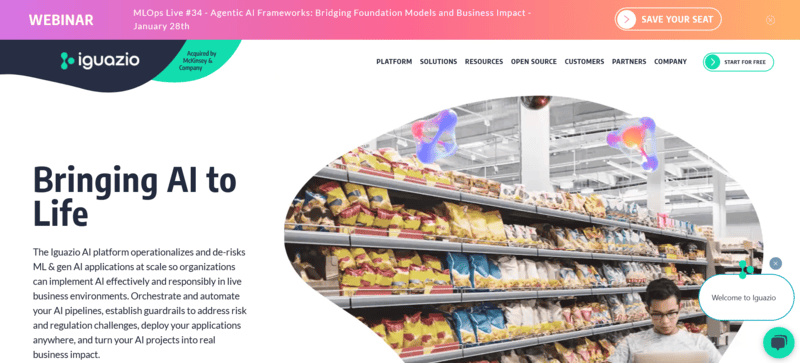
Iguazio platform lets you organize and automate AI workflows, establish security mechanisms to handle risks and compliance issues, launch software applications in any location, and achieve tangible results. With Iguazio, you can bring artificial intelligence to life on a grand scale, all while managing risks.
2. Databricks
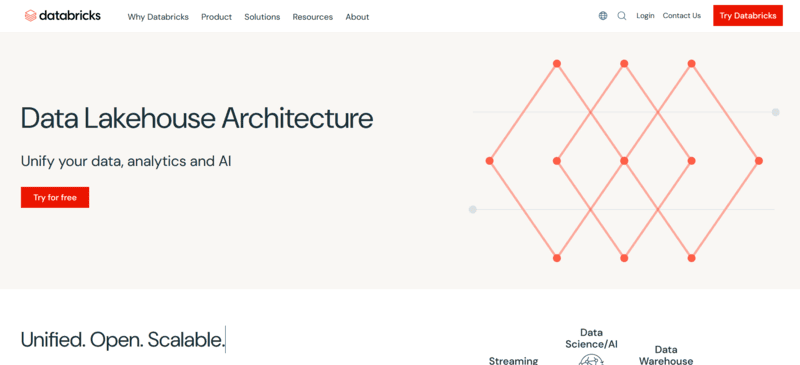
Databricks is a data intelligence platform that blends the finest features of data lakes and data warehouses, aiming to slash costs and unify your data approach and AI projects.
Using open-source tools and standards, its Lakehouse architecture streamlines your data environment by breaking down the barriers that have traditionally tangled up data and AI processes. For more tools enhancing such integrations, explore the DevOps AI tools.
3. SAP HANA Cloud
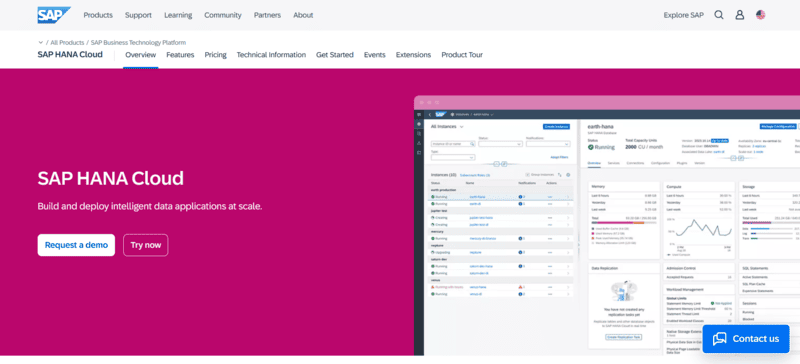
SAP HANA Cloud is a database management system that allows you to create and launch large-scale intelligent data applications. With SAP HANA, you can harness the potential of its multi-model engine to handle various data models such as relational, document store, geospatial, graph, vector, and time series with unparalleled efficiency.
For more insights, explore our detailed guide on AI in data integration.
You can move beyond traditional transactional applications and create innovative applications that leverage GenAI to adapt to different contexts and securely integrate with critical business data.
4. DataRobot
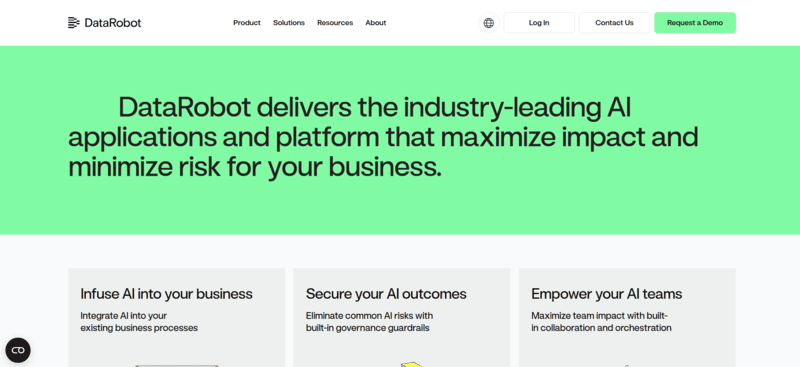
DataRobot offers an AI platform that empowers businesses with powerful solutions while minimizing risks. It leverages AI and advanced machine learning that lets organizations automate tricky tasks, fine-tune decision-making processes, and extract actionable insights from their databases.
This AI platform is all about tackling real-world problems head-on and ensuring that it works as intended with existing workflows.
5. PyTorch
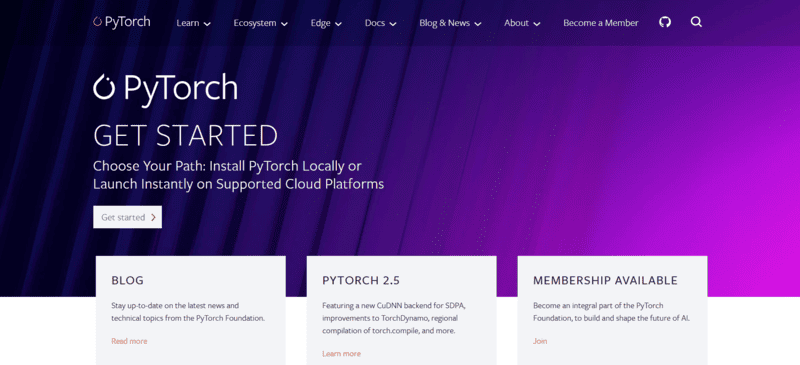
PyTorch is an open-source machine learning library for building deep learning models. Primarily coded in Python, it also offers interfaces in Java and C++.
For natural language processing tasks, PyTorch is vital for analyzing and understanding text. It also proves valuable for analyzing images and videos to develop models with object recognition capabilities.
6. watsonx Assistant
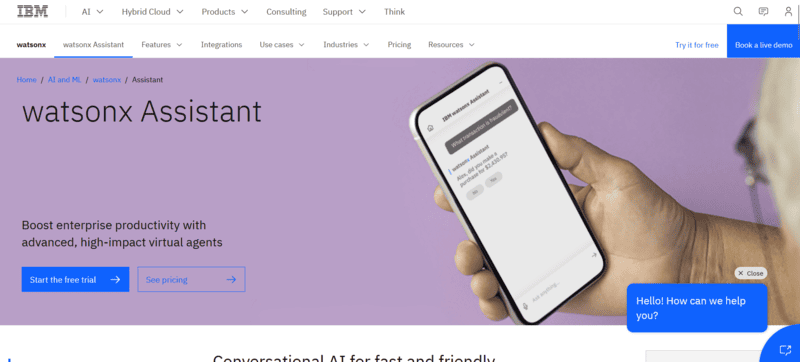
watsonx Assistant by IBM that assists businesses in creating top-notch virtual agents that boost efficiency and offer super-smooth self-service interactions.
Its user-friendly interface helps you easily craft engaging conversations with just a few clicks with its drag-and-drop conversation builder and ready-made templates. Once those conversations are live, watsonx Assistant testing covers how to validate dialog and search skills.
This AI platform fully uses the latest technologies, including advanced large language and large speech models and powerful NLP and NLU capabilities.
7. Alteryx Intelligence Suite
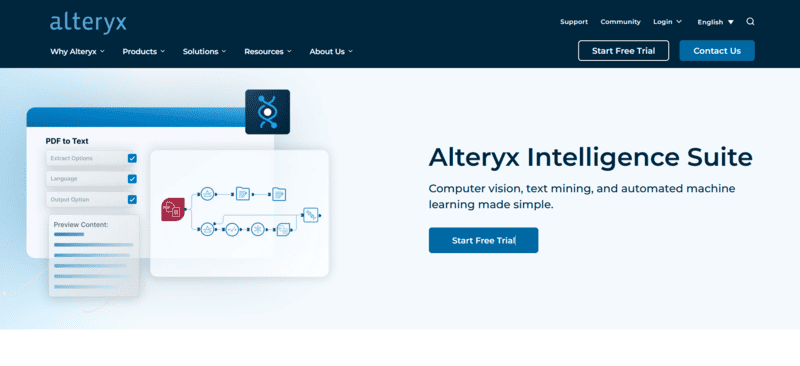
Alteryx Intelligence Suite provides you with an AI platform for enterprise analytics, enabling the automation of analytics to produce actionable insights.
This lets you extract information from auto-generated PDFs. You can also leverage the powerful Optical Character Recognition (OCR) capabilities of Google Tesseract for extracting content from the images in the document, such as invoices, business cards, and forms.
8. ClickUp Brain
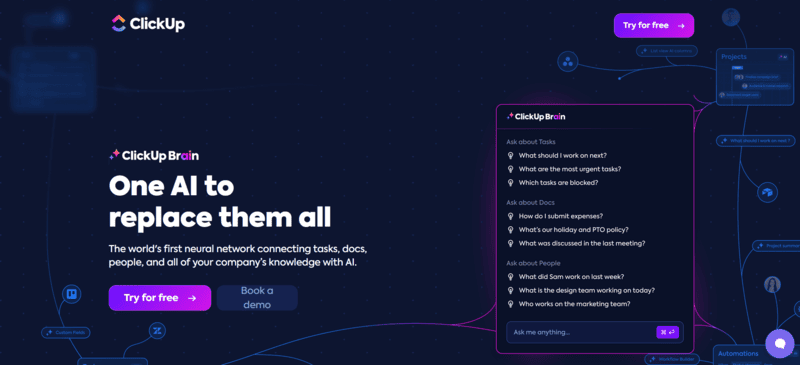
ClickUp Brain is changing the landscape of team collaboration. By incorporating a neural network that links tasks, documents, individuals, and organizational knowledge with advanced AI capabilities, ClickUp Brain is reshaping how work gets done.
This AI platform smoothly connects with some of the most popular apps, such as Google Drive, GitHub, and Salesforce, to provide a unified workspace that fulfills all needs.
9. TensorFlow
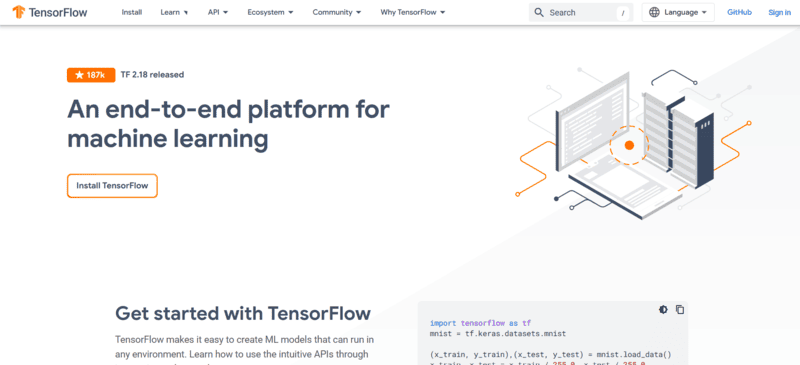
TensorFlow truly makes the task of creating machine learning models easy, allowing them to operate smoothly on different platforms, be it cloud servers or mobile devices.
It has a user-friendly interface that allows you to create, train, and deploy models quickly. TensorFlow offers practical experience for grasping important ideas and executing complex ML processes most efficiently by providing useful snippets of code.
10. Gathr
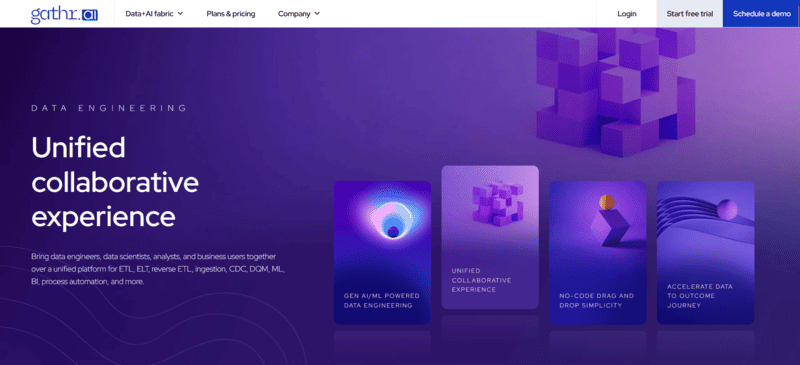
Gathr is a cloud-based platform that lets you handle vast amounts of data effortlessly without coding. This AI platform allows you to create machine learning-driven applications that convert data into valuable results.
From gathering and reshaping data to uncovering insights, making predictions, and offering recommendations, Gathr covers it all. It boasts top-notch features suitable for enterprises, including robust capabilities in integrating data, implementing machine learning models, and more.
11. H2O.ai
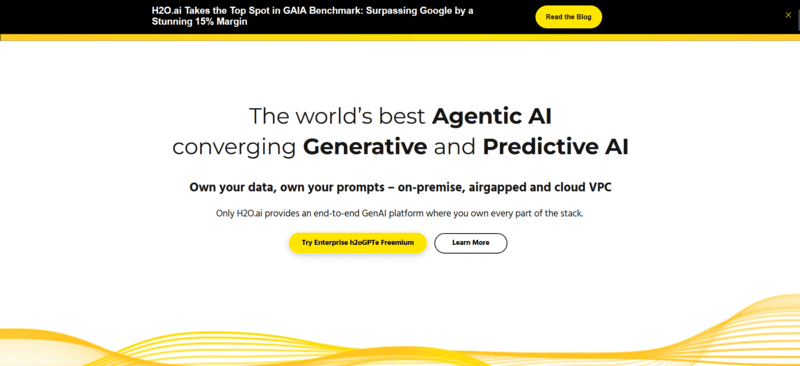
H2O.ai stands out as a prominent provider of open-source Generative AI and machine learning platforms. Leveraging insights from 30 Kaggle masters, they provide intuitive AI cloud solutions built around GenAI and machine learning and solve real-world challenges like a breeze.
Stakeholders, community members, and partners are at the forefront as the strategic supporters of H2O.ai to create a positive impact of AI.
12. Amazon SageMaker
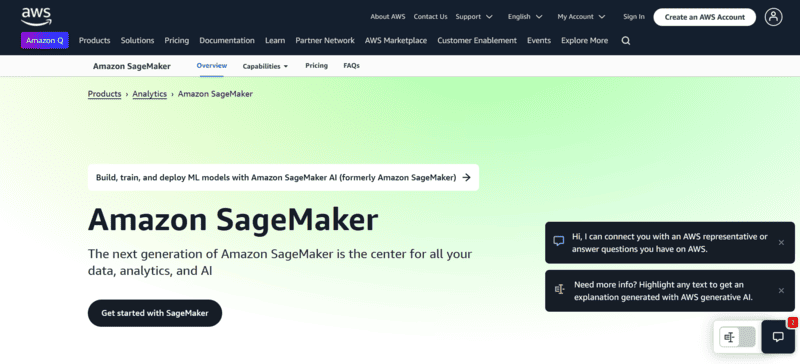
Amazon SageMaker offers a holistic environment for analytics and AI, granting you streamlined access to all your data. It offers a collaborative space where you can expedite development within a unified studio (currently in preview mode).
You can leverage the familiar tools of AWS for creating models, Generative AI, data manipulation, and SQL analytics. Plus, you can effortlessly tap into your data from various sources like data lakes, warehouses, or third-party/federated databases.
13. RASA
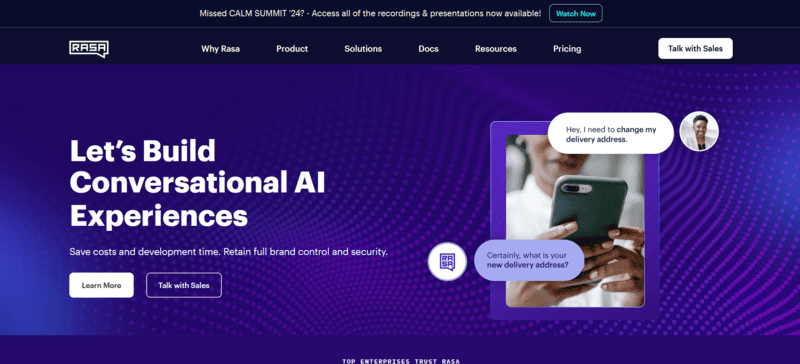
RASA allows you to create AI assistants using a conversational AI platform with a user-friendly, no-code interface. It offers automation and intelligent interactions to build AI-driven solutions based on your needs.
It has NLP features and supports integrations to enhance engagement, streamline operations, and drive innovation. Once an assistant is live, Rasa testing checks its NLU, dialogue policies, and custom actions across real chat and phone conversations.
14. ChatGPT
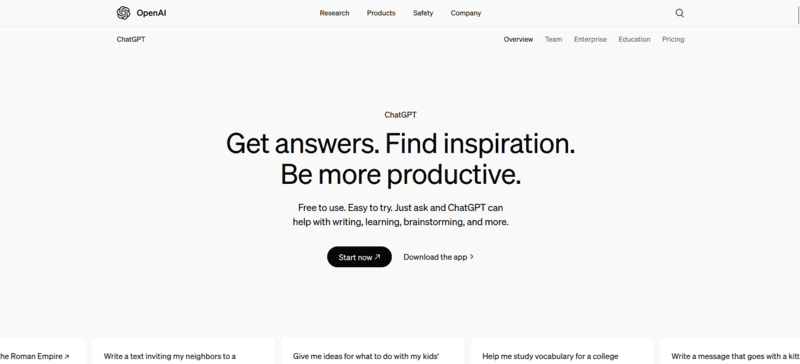
ChatGPT is an AI platform developed by OpenAI. It functions as a virtual assistant capable of engaging in human-like conversations, generating content, assisting with coding, and providing research insights.
It can help with tasks such as summarizing information, debugging code, and drafting technical documentation. As an AI platform, ChatGPT enhances productivity by automating responses, streamlining workflows, and offering real-time assistance across various domains.
15. KREA
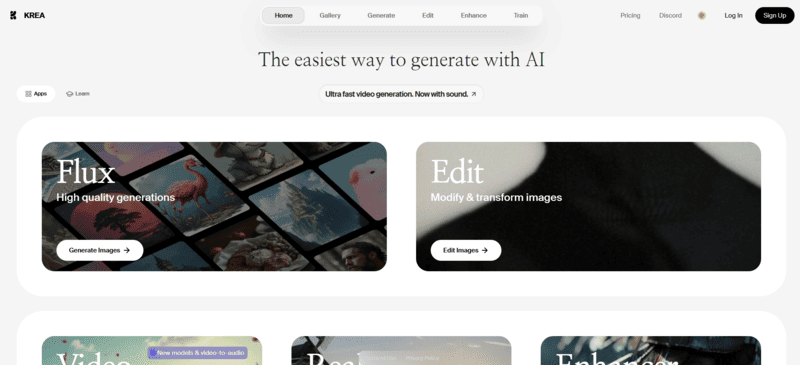
KREA is an AI platform that makes it easy to create and enhance images and videos. With just a text prompt, you can generate high-quality visuals in seconds.
It has features to refine and customize your content. Also, you don’t need to have advanced skills. The AI takes care of the complex work, allowing you to focus on creativity and bring your vision to life effortlessly.
16. Claude
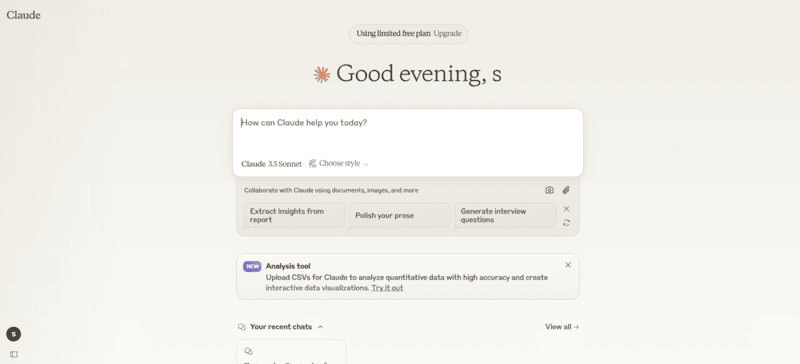
Claude is an AI assistant developed by Anthropic to make everyday tasks easier. If you need to summarize articles, refine your writing, find answers, brainstorm ideas, make decisions, or even generate code, Claude is there to assist. It adapts to your needs, helping you work smarter without the complexity of traditional AI tools.
17. OpenCV
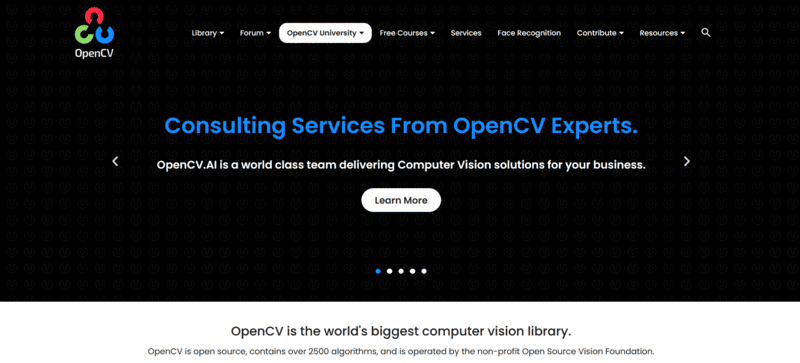
OpenCV, the leading computer vision library globally, is backed by the non-profit Open Source Vision Foundation.
With a suite of more than 2,500 algorithms at its disposal, OpenCV empowers functions such as image manipulation and detecting objects & faces. Embraced by countless researchers and programmers alike, this tool sets a sturdy groundwork for crafting cutting-edge computer vision solutions spanning diverse sectors.
18. Microsoft Azure AI
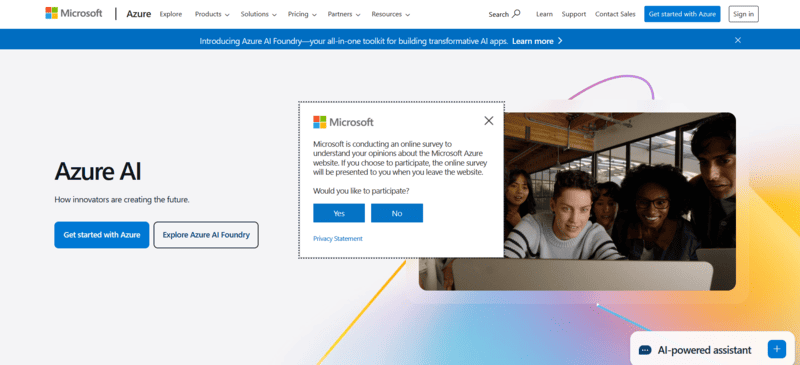
When it comes to scaling up Generative AI, look no further than the Microsoft Azure AI platform. It provides top-notch security measures, cost-effective deployment options, an impressive 99.9% SLA, and innovative ways to tailor models and develop agents like never before.

Note: Generate AI-native test cases with Test Manager. Try TestMu AI Today!
Conclusion
As AI continues to evolve and push the boundaries for the future of technology and business, it becomes imperative that the right AI platform be selected in order to stay ahead of the competition.
In areas like software testing as well, AI is driving a major shift, as highlighted in our blog on Traditional Testing vs AI Testing.
That shift also changes how the software built on these platforms gets validated. GenAI-native assistants like KaneAI from TestMu AI let teams author and evolve tests in natural language, so quality keeps pace with AI-accelerated development. With AI app testing, one test flow can combine UI actions, API validation, and database checks, and self-healing re-anchors steps when the UI changes.
These platforms are also accelerating AI in Data Integration, enabling smarter, automated workflows across diverse datasets.
There are also dedicated AI tools that focus specifically on helping developers and DevOps, here are the best AI tools for developers and Top DevOps AI Tools.
Beyond dedicated platforms, AI browsers are making AI capabilities more accessible by integrating intelligent search, content summarization, and AI-powered assistance into everyday browsing.
For developers evaluating AI-powered app builders that turn prompts into production-ready code, our detailed Lovable vs Replit comparison helps you choose between two of the most popular platforms in this space.
Author

Zikra Mohammadi
Blogs: 18


Zikra brings 5+ years of hands-on expertise in AI, web development, and software testing to her role as a technical content strategist. Certified in AI, manual, and automation testing, she breaks down complex ideas into step-by-step guides, tutorials, and reference docs, helping teams unlock the full power of AI-driven, codeless automation on web and mobile.
Reviewer

Samyak Goyal
Reviewer
Samyak Goyal is a Senior Member of Technical Staff at TestMu AI engineering Kane CLI, the command-line tool that runs browser automation from the terminal, where a flow described in natural language executes in a real Chrome browser and returns pass or fail with shareable proof. He is a backend engineer with 4+ years of experience, previously an SDE at Innovaccer, where he built APIs, introduced Kafka, and cut deployment from weeks to hours. Samyak also builds multi-agent systems, skill-orchestration frameworks, and a personal copilot that indexes 200+ microservice repositories.


Frequently asked questions on AI Platforms
Did you find this page helpful?
More Related Blogs
TestMu AI forEnterprise
Get access to solutions built on Enterprise
grade security, privacy, & compliance
- Advanced access controls
- Advanced data retention rules
- Advanced Local Testing
- Premium Support options
- Early access to beta features
- Private Slack Channel
- Unlimited Manual Accessibility DevTools Tests