
Test the web apps you build with Claude before real users sign in
Claude builds web apps and can drive a browser, but a model's confidence is not a verified result. Point Kane CLI at your live Claude web app and confirm the flow in a real browser, with a deterministic pass or fail. Free to install.
or read the documentation
Why test web apps built with Claude
Claude turns a prompt into a working web app: frontend, backend wiring, auth, and forms. That speed is the point, but the generated web app only gets exercised once a real user shows up on the deployed build.
That is where it breaks. Auth that works for you errors for a fresh signup, a form submits but never persists, and a web app that runs locally goes blank in production from a missing env var or SPA routing.
Kane CLI is the second pair of eyes. Describe the journey in plain English and it drives your live Claude web app in a real Chrome browser, as a real user. Claude can run it too, with --agent, to verify its own work.
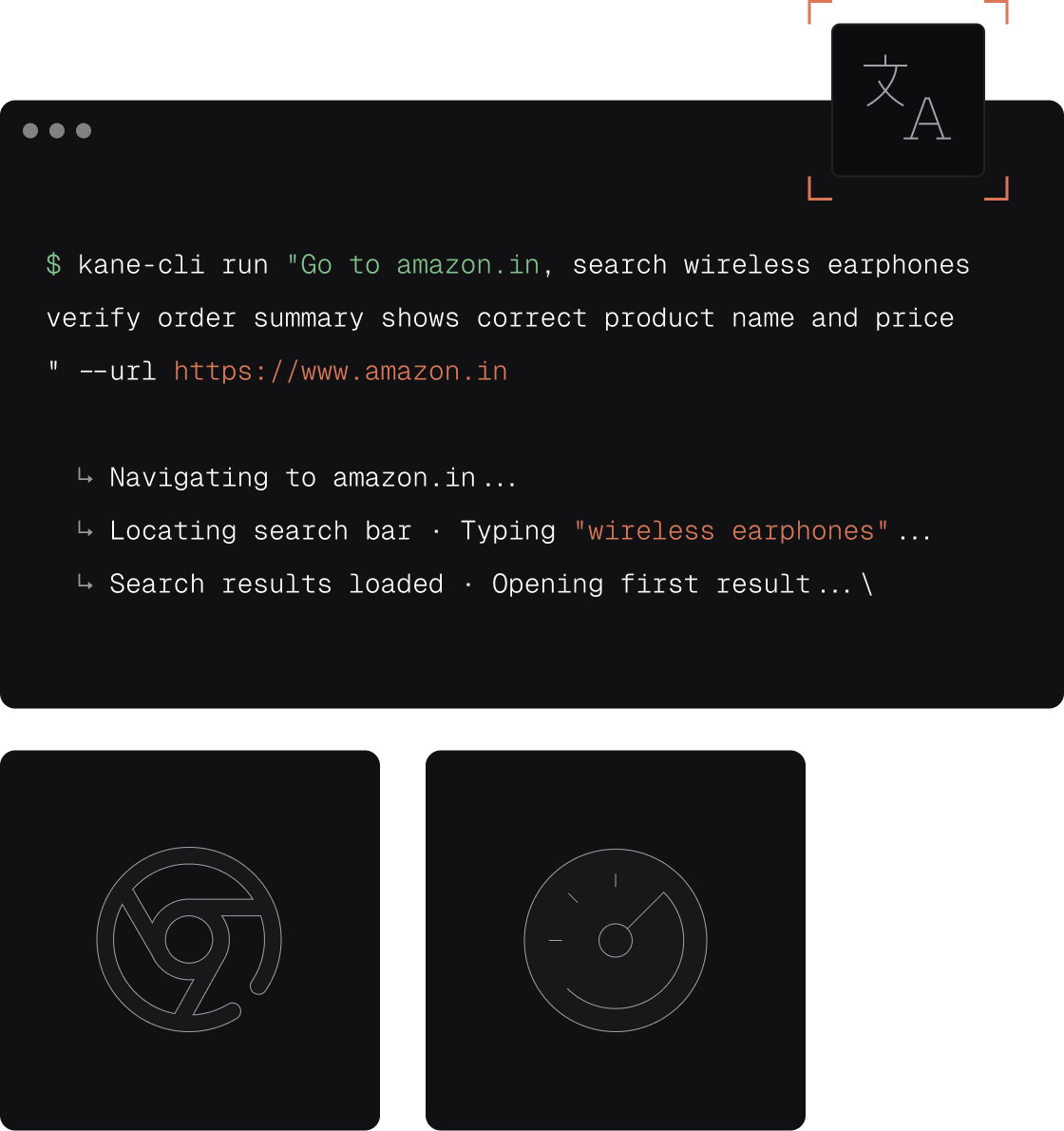
What Kane CLI tests in your Claude web app
Signup, forms, and the deployed build, verified in a real browser for a real user.

Fresh-user signup and auth
Walk the full signup, login redirect, and session-persistence path as a brand-new account. Claude often wires auth that passes for the logged-in builder yet fails the first real visitor, so Kane CLI proves it works for someone who is not you.

Forms, CRUD, and validation
Submit the forms Claude generated, exercise the validation rules, and confirm each row writes and reads back. Kane CLI catches the insert that silently never reaches the database and the submit button pointed at the wrong endpoint.

Deployed build, not the chat preview
Verify the live domain rather than the version that looked fine in the Claude session, catching the blank screen from a missing env var, the refresh 404 from SPA routing, and asset chunks that vanish after a redeploy.

Regression after every prompt
Each new prompt has Claude rewrite components and add routes, and the next edit can quietly break a journey that worked an hour ago. Pin your known-good flows and re-run them after every Claude change.

Confirm Claude's browser actions
When Claude uses the browser, its account of what it clicked is a claim, not proof. Kane CLI replays the same journey in real Chrome and confirms the web app actually reached the state Claude reported reaching.

Shareable proof of each result
Every run leaves a saved video, a step-by-step trace, and a replay link to drop into a PR, a bug report, or a team thread, so a Claude-built pass is something a teammate can independently review.
Build up confidence before real users sign in
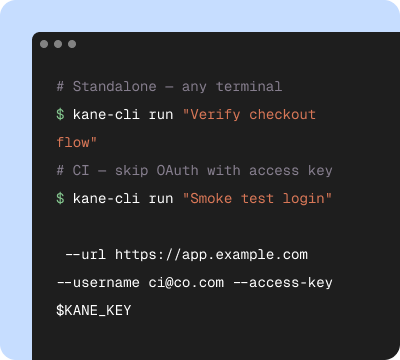
Start in your terminal
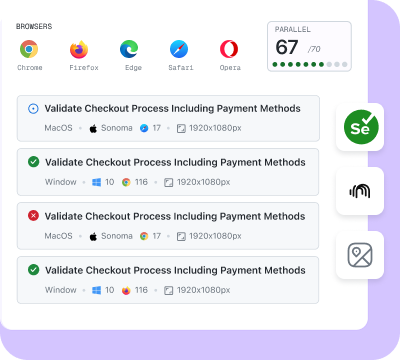
Validate on the cloud
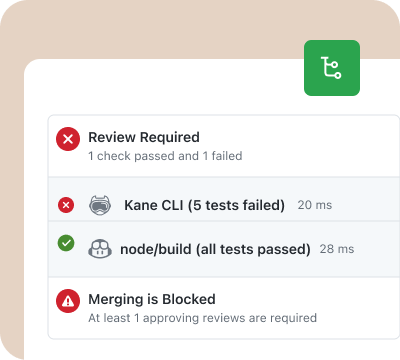
Release with confidence
Built for the build-then-verify loop
Kane CLI and KaneAI share the same automation engine and dashboard.
From a generated web app to a checked one
Claude turns your prompt into a running web app in minutes. Kane CLI takes that generated auth, data layer, and deployed build and confirms they hold up for a real visitor before anyone else signs in.
Trust the run, not the model's confidence
Claude-generated code reads correctly far more often than it runs correctly, and the model's confidence that a feature is finished is not the same as a checked result. You or Claude aim Kane CLI at the live URL and let real Chrome decide whether the flow actually works.
Let Claude check its own work via --agent
With the --agent flag, Claude calls Kane CLI on the web app it just built, reads the structured pass or fail, and fixes the broken flow before it ever reaches you. The model that wrote the code is the one that confirms it runs.
Test your Claude web app in three steps
Install Kane CLI
Run npm install -g @testmuai/kane-cli and sign in with your TestMu AI account. There is nothing to add to the code Claude generated and no test framework to set up.
Aim it at your Claude web app URL
Give it the deployed domain or the local preview of the web app Claude built. Kick journeys off from the terminal yourself, or let Claude trigger them with the --agent flag right after each edit.
Describe the journey in plain English
Write what a real user would do, such as sign up, create a record, and confirm it appears. Kane CLI carries it out in real Chrome and hands back a pass or fail with a video and a shareable replay link.
Get Started With Kane CLI
🎉 Launch offer: Bonus credits for the first 3 months on paid plans
Choose the right plan for you
Local test authoring via CLI
Auto-heal & vision
View test cases on UI
Test Manager

Free
$0
/month
200 Credits
Resets in every
30 days

Starter
$19
/month
2000 Credits
Launch: 4,000 Credits (+100%)
Bonus for first 3 months

Pro
$99
/month
10,000 Credits
Launch: 15,000 Credits (+50%)
Bonus for first 3 months

Enterprise
Get access to solutions built on Enterprise-Grade Security, Privacy, and Compliances.
Need more credits?
Got a bigger use case in mind?
Let’s talk
Choose the right plan for you
Free
$0
/month
200 Credits
Resets in every
30 days
Starter
$19
/month
2000 Credits
Launch: 4,000 Credits (+100%)
Bonus for first 3 months
Pro
$99
/month
10,000 Credits
Launch: 15,000 Credits (+50%)
Bonus for first 3 months
Enterprise
Get access to solutions built on Enterprise-Grade Security, Privacy, and Compliances.
Need more credits?
Got a bigger use case in mind?
Let’s talk
Get the technical rundown

Documentation
Everything you need to install, configure, and run Kane CLI in under 2 minutes.
Frequently asked questions
Install Kane CLI and describe the user journey in plain English, for example "open the web app, sign up as a new user, create a record, and confirm it shows on the dashboard." Kane CLI opens the live URL of your Claude-generated web app in real Chrome, walks the journey, and reports a pass or fail with video proof for each step. Point it at your deployed domain from the terminal, or have Claude trigger it with the --agent flag the moment it finishes writing the code.
When Claude reports a feature works, it is describing the code it wrote or the browser action it believes it took, not what a real user actually experiences on the deployed web app. That confidence and a verified result are two different things. The login button can point at the wrong endpoint, a form can submit without ever persisting, or the production build can render blank from a missing env var. Kane CLI exercises the real web app in Chrome and returns a deterministic pass or fail, turning Claude's "done" into something you have actually checked.
The fresh-user signup and auth journey, create-read-update-delete across the forms and tables Claude wired up, the deployed build rendering instead of a blank page, and whatever flow Claude touched on its latest edit. It also surfaces SPA 404s on refresh, console errors, and failed API calls. Because it verifies every step rather than only the final screen, it pinpoints exactly where the Claude web app breaks, and it can confirm whether a browser action Claude says it performed actually reached the claimed state.
Yes. Hand Claude the guide at testmuai.com/kane-cli/agents.md and it will install Kane CLI, run journeys with the --agent flag, parse the structured NDJSON result, and repair the broken form or redirect before it reaches you. Claude generates the web app, calls Kane CLI to verify it in a real browser, reads the pass or fail, and closes its own build-and-check loop.
Yes. Sign in with your TestMu AI credentials, add --headless and --timeout, and gate the pipeline on the exit code: 0 on pass, 1 on fail, 2 on setup or auth errors, and 3 on timeout. Re-run the signup, CRUD, and checkout journeys on every Claude commit so a missing env var or broken redirect never ships to production.
Installing and using the CLI is free. Local runs cost nothing; cloud runs on the TestMu AI grid bill against your TestMu AI plan. Start on the free tier and verify your Claude-built web app end to end without a credit card.
Teach Claude to test what it builds
Point Claude at the Kane CLI guide and it will install, authenticate, and verify the signup, form, and deployed-build flows in a real browser on its own, then fix what broke before you see it.
 Point your agent to: testmuai.com/kane-cli/agents.md