

Power Your Software Testing with AI Agents and Cloud
The Native AI-Agentic Cloud Platform to Supercharge Quality Engineering. Test Intelligently and Ship Faster.


- TestMu AI (Formerly LambdaTest)
- /
- Blog
- /
- What Is QAOps? Framework, Life Cycle, and Best Practices
What Is QAOps? Framework, Life Cycle, and Best Practices
QAOps applies a DevOps mindset to quality assurance, moving automated, parallel, and scalable testing into the CI/CD pipeline. Learn its lifecycle and practices.
Last Updated on:
On This Page
- Introduction to QAOps Framework
- Definition of QAOps
- Basic Practices For QAOps Frameworks
- Life Cycle Of QAOps Framework
- Where can QAOps be used?
- How QAOps can be used within an organization?
- QAOps Framework: Different Schools of Thought
- Can QAOps Be Referred As Continuous Testing in DevOps?
- How Does AI Change The QAOps Pipeline In 2026?
- Best Practices
- Wrapping Up
A QAOps framework moves quality assurance inside the CI/CD pipeline, so tests run on every build instead of at fixed intervals. It rests on four practices: automated testing, parallel testing on a grid such as Selenium Grid, test scalability, and QA ownership of the CI/CD pipeline. This guide covers the definition of QAOps, basic practices, the life cycle, where QAOps can be used, how teams use it within an organization, schools of thought, the link to continuous testing in DevOps, how AI changes the pipeline, and best practices.
Key Takeaways
- QAOps integrates QA processes, test automation, and QA reporting dashboards into the CI/CD pipeline instead of running software testing at indefinite intervals.
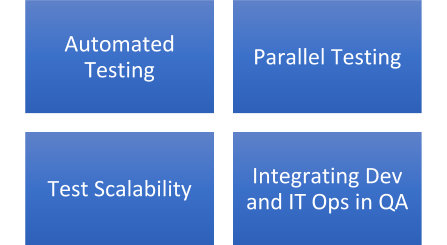
- The basic practices of a QAOps framework are automated testing, parallel testing, test scalability, and making QA activities part of the CI/CD pipeline alongside development and IT operations.
- The QAOps life cycle runs through three steps, Trigger, Execute, and Report, so tests are mapped to the functionality that changed, run in parallel, and reported as both a quick summary and a stored history.
- QAOps applies beyond cross browser testing to functional exploratory testing, regression testing, and geolocation testing.
- The term QAOps is contested, with a Reddit thread arguing that QA already sits inside DevOps and a Selenium Conference 2018 proposal presenting QAOps as a practice worth naming.
- AI shifts the QAOps pipeline at the trigger, execute, and report steps, but coverage-derived test selection stays probabilistic, so a full regression pack still belongs on release branches and a person still owns the merge.
Introduction to QAOps Framework
In simple terms, QAOps aims at improving the software delivery process, making it faster and stable without compromising on the quality of your website or web application. Technically speaking, a QAOps framework integrates the QA processes into the software operation to make a more seamless and integrated software operational model. QAOps framework integrates the QA processes, automation and QA Reporting dashboard with the Software Development Lifecycle (SDLC) process. In a nutshell, QAOps takes the core ideas from continuous testing in DevOps, such as CI/CD and bringing together the siloed teams together to work on the pipeline and applies the same to QA process.
Key Takeaway: The QAOps framework merges QA processes, test automation, and QA reporting dashboards into the software development lifecycle so software ships faster without a drop in quality.
Definition of QAOps
While there is no official definition for QAOps, we can define the technique based on these two principles.
- The main idea of introducing the QAOps framework is to integrate the continuous testing in DevOps with the Continuous Integration (CI)/Continuous Deployment(CD) pipeline rather than performing software testing at indefinite intervals.
- QAOps framework increases the collaboration between the QA engineers and developers. Therefore, QA engineers must work closely with software developers, operations personnel and everyone involved in the CI/CD pipeline.

Key Takeaway: QAOps has no official definition but rests on two principles: run testing inside the CI/CD pipeline rather than at indefinite intervals, and have QA engineers work closely with developers and operations staff.
Basic Practices For QAOps Frameworks
QAOps solves the most common disputes that persist between the testing team and Quality Assurance teams. Problems where testers "expect" the issue to have been solved by the QA team and vice versa are completely eliminated through the QAOps practice. QAOps brings in cooperation among the different departments of the organization. QAOps makes use of the following high-level testing practices to put the concept of QAOps into action:
1. Automated Testing
This is one of the main pillars of the QAOps framework. Automation testing means performing tests with the help of technology and tools, and very minimal human effort. QA engineers must study the product in detail and understand the specifications before building the automation framework. Depending on the product and the actual stage of development, QA engineers can decide which tests can be automated successfully to help save time and test the functionalities in a more effective way.
17 Key Benefits Of Automation Testing For A Successful Release
The most obvious types of testing to automate are going to be your regression test cases. They consume the quality time of the testers which can be effectively used to build automation test cases. Similarly, frequently used functionality in the product should also be automated. Why? As your product grows in functionality and features, you don't want your most-used functions to fail and create a bad experience for the users!
Let us consider a user story to understand this better. Andrew, a web tester who is primarily tasked to ensure browser compatibility of the web-application. Andrew being in the testing domain realizes how time-consuming manual cross browser testing can turn out to be. Testing a web-application or a webpage over hundreds of browsers + OS combinations one by one can consume a significant amount of his time and his bandwidth in a release window.
Not to mention, testing the same dozens or hundreds of browsers + OS combinations is bound to get monotonous and dull for Andrew after a while. Andrew also realizes that if he devotes all of his time in performing manual browser compatibility testing over the same test script and combinations, every week, then finding unique test cases would be a little too much to expect. So what can Andrew do?
This is exactly where automated cross browser testing can come to his aid. With open-source frameworks like Selenium, automation testing can become a lifeline for Andrew to complete his test cycles on-schedule. However, Andrew would still need to figure out which test cases to automate as he cannot automate everything.
Automation testing from scratch will require a thorough phase of planning and documentation. However, once that phase gets over and Andrew has got the right test suites at his disposal, along with the right automated cross browser testing tool then the road ahead is going to be very pleasant.

2. Parallel Testing
As part of the QAOps framework, testing should run quickly (in parallel with the delivery pipeline). Slowing down the testing efforts will directly affect the delivery process. Running automated tests will definitely speed up the testing process, but not when they are being executed run in a serial manner. To overcome this issue, it's important for testing engineers to run multiple tests at once (together) rather than running them one after the other.
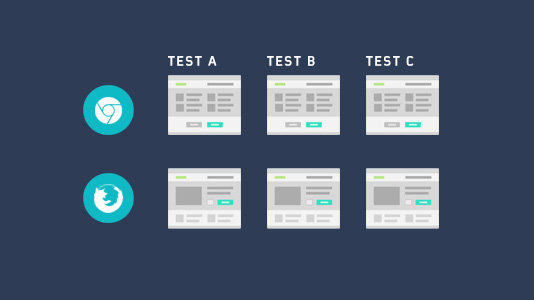
Let's continue with the story of Andrew that we considered in the example of automated cross browser testing.
Realizing the perks of automation testing over manual cross browser testing, Andrew came up with multiple automation test scripts to cover different modules of his web application. However, there came another issue that he wasn't ready for! Andrew used Selenium WebDriver to automate his test scenarios for browser compatibility. Selenium WebDriver would only execute one test at a time and will queue the others. As a consequence, Andrew noticed that the test cycles are still going to get delayed due to serial execution of test scripts.
Selenium WebDriver Tutorial for Cross Browser Testing
Now, he implemented his test suite over a Selenium Grid to leverage parallel testing with Selenium. Using Selenium Grid capabilities Andrew was able to run multiple test cases, simultaneously. This reduced his overall test execution by multiple folds allowing him to complete his test requirements on time.
Read More: How Parallel Testing Instantly Improves Your Workflow
Parallel testing requires larger hardware and infrastructure with more CPUs to run the tests simultaneously. But, the benefits of getting results quickly without disturbing the delivery pipeline is definitely worth the investment in a few CPUs when compared to revenue losses due to delayed product delivery. In modern-day technology, businesses can take advantage of cloud-based cross browser testing tools such as TestMu AI which provides a scalable infrastructure to perform parallel testing.
3. Test Scalability
Once you go-live with your web-application, you collect feedback from your customers, work on suggestions, consider incorporating new features in your upcoming sprints. After every release cycle, your web-application continues to scale, and with it scales the testing requirements! As for every new migration that is committed from CI/CD pipeline, the ripple effect of new code changes over an already running code has to be calculated and validated. So when it comes to infrastructure investment, you need to keep the Scalability testing in your checklist.
That is not all that Scalability is about! Scalability testing also helps to determine the application performance at various conditions by modifying the testing loads. The results of the test show the application's response to differential loads. The testing routine should be scalable with the CI/CD pipeline. At times, the CI/CD pipeline scales up and down depending on the project requirements. During these times, the testing should also be in sync with the CI/CD pipeline. Scalability testing helps QA engineers to reveal the performance-related challenges of web applications.
As a standard QAOps practice, QA teams must have the scalable infrastructure to perform testing and increase the speed of tests when needed.
Let us wander upon what Andrew did to overcome the issues around scalability?
As Andrew's web application added more features, the cross browser testing checklist also expanded for him. Some screens relied on newer CSS layout properties that the older browser versions in his support matrix did not implement.
As a workaround, developers had set fallbacks for these problems and Andrew's responsibility was to make sure that these new applied workarounds are working well with the existing application.
He had to consider scaling up his Selenium Grid to test on more legacy and latest browsers, browser versions, operating systems for both Windows and macOS, also for Android and iOS. Turns out if he keeps on adding these devices to his in-house Selenium Grid infrastructure, he may end up having a huge bill on his manager's desk. Working in a small scale enterprise he cannot go for cloud-based device labs or infrastructure providers such as RackSpace, or AWS device farm. So what can he do?
He looked out for more options and landed on TestMu AI, which offered him an online Selenium Grid that can scale as per his requirements. He was able to eliminate the hassle of maintaining his in-house infrastructure now, as TestMu AI provided him with machines hosted on-cloud, ready to fire up with a click of his mouse. The best part about TestMu AI Selenium Grid was that not only was it offering the legacy browser versions, it was also updated with the latest browser versions. This saved him time, effort, and the headache that comes with maintaining a Selenium Grid of his own.

Integrating Dev & Ops with QA
The final practice to achieve a QAOps framework is to make the QA activities a part of the CI/CD pipeline. One of the easiest ways to integrate Development and IT operations with QA is to make developers write test cases and IT operations engineers to identify potential UI/UX problems with the web application through QA team assistance. This gives the perfect opportunity for developers and QA engineers to collaborate and get a clear picture of the complete QA process. It also does not mean that QA engineers can take their hands off these processes and stay idle. This collaboration between the different stakeholders only makes the whole process of development and testing more efficient.
Back to Andrew, our test automation specialist, who decided to give QAOps ago and shared his perspective with his manager and stakeholders. He realized that the sooner test cases are written, the faster is the go-to-market launch. He suggested implementing shift-left testing to incorporate the QAOps framework in his enterprise. Ever since the number of anomalies caught after CI/CD pipeline migration was notably reduced.
Key Takeaway: The four basic practices of a QAOps framework are automated testing, parallel testing, test scalability, and folding QA activities into the CI/CD pipeline with developers and IT operations.
Life Cycle Of QAOps Framework
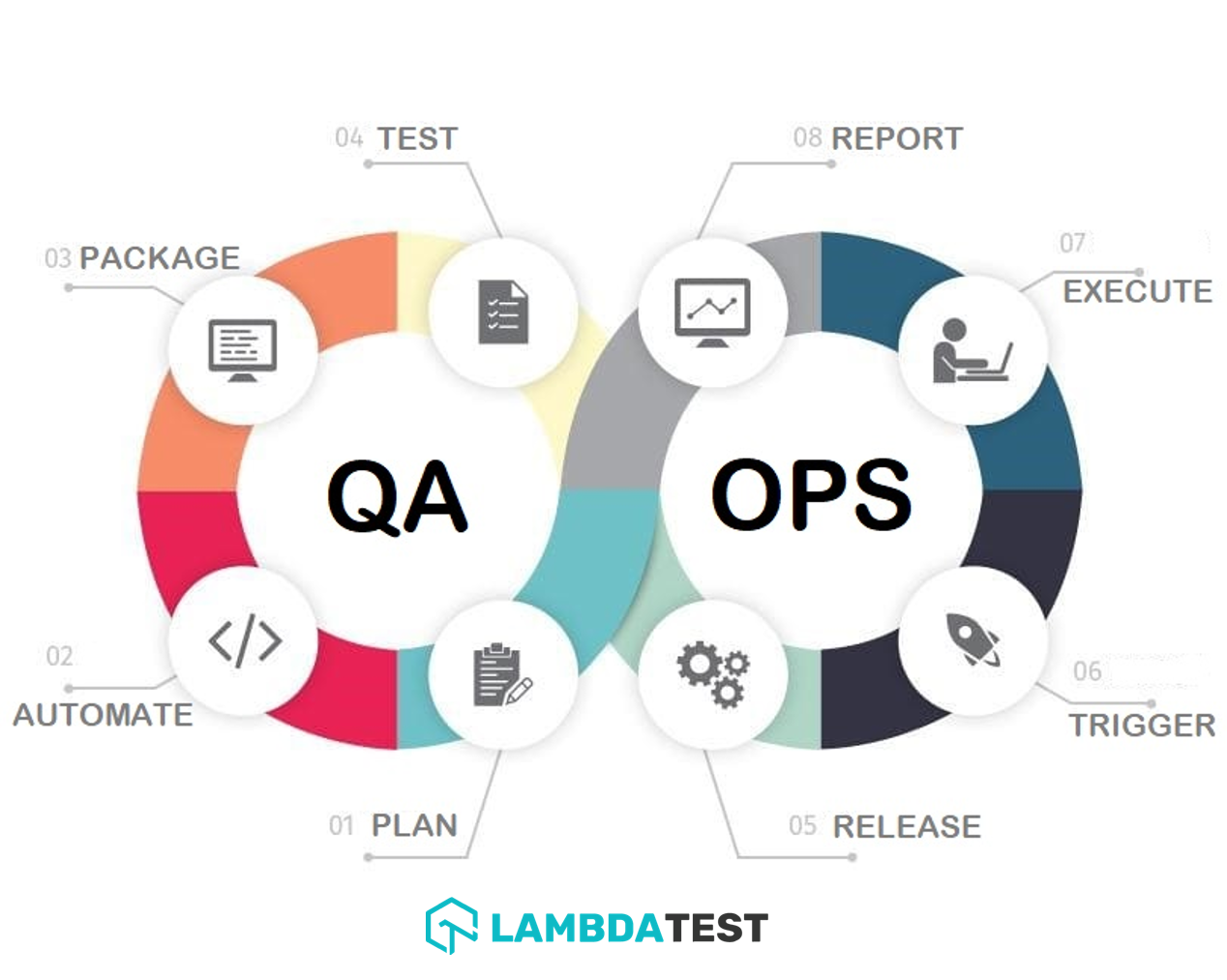
QAOps is about setting the right platform with the tools on the CI/CD pipeline to make sure the newly built code is tested and validated. The process of setting up the testing platform involves three major steps (as shown in the above diagram). The processes under QA are familiar to us all as they are similar to the major steps involved in an automation testing life cycle to ensure a stable release of the application.
The QAOps process contains three unique steps: Trigger, Execute, and Report.
1. Trigger
One of the important aspects of QA testing is to trigger the right tests whenever an application functionality change is made in the CI/CD pipeline. The tests should be triggered only based on the changes that are made on the functionality. Otherwise, precious time will be lost in testing the unwanted areas of the application (where there are no changes) or critical areas might be missed out. In short, the more the number of tests, the greater the time to run the tests and share the results. To balance this situation, it's important for the business to map the tests to the features that are getting built.
Modern CI platforms give you a concrete place to store that mapping. GitLab CI/CD exposes a rules:changes keyword that runs a job only when the listed files are modified, and GitHub Actions offers path filters on its workflow triggers. Bind each suite to the directories it covers, so a commit to the checkout module runs the checkout suite while the full regression pack stays reserved for release branches and scheduled nightly runs.
Therefore, the triggering step should be well planned and mapped with the automation testing life cycle. This is the first step in the QAOps process and if all goes well, the whole team can be confident of the product release.
2. Execute
The next step in the QAOps process is Execution. After the triggering step, different tests will execute on the functionality. As explained previously, it's important to make sure the tests run in parallel to save time and generate faster results. To achieve parallel testing, make sure you have the infrastructure that can scale and distribute the loads according to the need. Also, make sure the continuous testing in DevOps environment is highly available to avoid any testing hiccups during the QAOps life cycle.
3. Reporting
Once the tests are triggered and executed, the reporting process kicks in. The reporting module showcases the results of the tests. It's important to design the reporting module correctly to make the QAOps process an efficient one. A perfect reporting module design should provide quick summary information (in a snapshot) as well as provide detailed information. This will be helpful for anyone taking a look at the reports. Additionally, the reporting module should also be able to store the history of previously run tests so that individual stakeholders can compare the results. Reports should be made easily available and on-demand, when in need.
Pipeline-native reporting removes most of the work of building that module yourself. If your test runner writes JUnit XML, GitLab CI/CD collects it through the artifacts:reports:junit setting and renders a Test summary panel on the merge request plus a Tests tab on the pipeline details page, and Jenkins reads the same format through its JUnit plugin. Standardize on that format first, then add a separate dashboard only when the pipeline view stops answering your questions.
It's important that you have the QAOps process implemented properly within your business to make sure you get benefited not just for the project that you are working on, but also on other projects within the organization.
Key Takeaway: The QAOps life cycle has three steps: Trigger runs only the tests mapped to the changed functionality, Execute runs those tests in parallel on scalable infrastructure, and Report returns a snapshot summary plus stored history of earlier runs.
Where can QAOps be used?
As pointed out earlier, though the QAOps framework is more powerful with the help of automated browser testing, it does not rule out the possibility of performing manual testing on the application. Manual cross browser testing can be extremely useful to provide detailed information about the web-application, not to forget, you need unique test cases that can come only by manual testing.
With that said, let us look into particular types of testing, apart from cross browser testing, where the QAOps framework can be a handful.
Functional Exploratory Testing
This testing makes sure if the application is running as expected when met with unexpected scenarios on the fly. No test cases are created in advance, as this type of testing is mostly based on the "thinking" of the testing personnel. Experienced test engineers reproduce the potential application crash scenarios and uncover the bugs using this technique.
Here are a few advantages of functional exploratory testing.
- It is more an ad-hoc kind of testing approach with the intention of finding bugs in the web application.
- Cognitive thinking from the tester when compared to scripted code.
- The next steps of action are decided based on what is currently performed by the user.
- Helps the tester to drill down to the smallest areas of the application and cover different edge cases.
Functional Exploratory testing can be used in organizations when a critical application has to be tested and there are experienced testers in the team. It can also be a great learning curve for new testers as they can look at the application from a completely different perspective.
Using QAOps, the collaboration between the QA & Operations team can be well established. With a better understanding of the operation, a QA can deep dive further for exploratory testing in the wild.
Regression Testing
Regression testing plays an important role when you have already developed the software and you want to release an update with a new feature or an enhancement to the existing feature(s). At this time, QAOps will be helpful for test engineers to see if the newly added information has introduced any faults to the existing product.
In an agile software development model, regression testing is often viewed as a process that adds additional overhead to the existing process. QAOps can solve this problem as the process is very easy and affordable by the business.
Geolocation Testing
Every product development company or even for the simple fact, if you are developing a web application, you must know whether it will fit into a particular location. For example, you are developing a B2C web-application for Spain then you have to test over different browsers from various GeoIPs belonging to Spain. Why? It may sound a little shocking to you, but your web application may render differently on different GeoIPs due to internet standards and policies of a country.
Geolocation Testing With TestMu AI
With the help of QAOps, your QA team can collaborate with the Operations team to be more familiar with these internet standards. That way they will be able to get the test cycle driven in the right direction from the very start, rather than wandering in the dark and figuring it out by themselves later on.

Key Takeaway: QAOps suits functional exploratory testing, regression testing, and geolocation testing, and manual cross browser testing still has a place because unique test cases come from human testers.
How QAOps can be used within an organization?
QAOps might seem a similar term like DevOps, but it does not require a complete cultural change in the workplace. This framework aids developers and testers to mutually collaborate and work in getting faster results and/or testing new pieces of the application thoroughly before release.
However, to make this happen, it's very important to communicate the value of QAOps to key decision-makers and stakeholders (especially the technical team). They must understand the value behind implementing a QAOps framework. By doing this, it helps the rest of the organization (developers, testing engineers, IT operations managers, etc.,) to understand the requirements and work accordingly. It will take time to convince the stakeholders about this new framework; however, once in place, the company will start realizing the importance of having the QAOps framework in practice.
Key Takeaway: Adopting QAOps inside an organization needs no full cultural change, but the value of the QAOps framework must first be communicated to key decision-makers and the technical team.
QAOps Framework: Different Schools of Thought
There are different school of thoughts that revolve around the concept of QAOps. While it is relatively a new term, some people even question if the term is a valid one or not. A thread on Reddit says that "QAOps ain't a thing, and it can never be a thing". QA is a part of the DevOps process and there is no point simply adding an "Ops" term after the word QA. DevOps includes every aspect of development as well as operations and if QA is a part of the development pipeline, it will be included as part of the development cycle. On the other hand, there are social media tags being used for QAOps by various software testing communities.
QAOps was also a proposal raised in the Selenium conference 2018.
Even though the debate exists whether the term QAOps should exist or not, from a business perspective, it's important for the company to understand the importance of QA Testing. In this modern age of DevOps, QAOps helps to highlight the challenges faced by the QA engineers and showcase the importance of keeping QA testing in line with the DevOps process. QAOps has immensely helped the testing engineers to be on a par with the development (CI/CD) pipeline.
As discussed earlier, QAOps will take its time to get into organizations and become a part of the DevOps process. The stakeholders must explain the benefits and the value of the framework to the key decision-makers and make them understand the importance of it for the organization. Once the framework is introduced, the framework will emphasize the importance of automated software testing and QA to deliver quality applications.
Key Takeaway: Opinion on QAOps is split, since a Reddit thread argues QA is already part of DevOps and adding "Ops" changes nothing, while testing communities and a Selenium Conference 2018 proposal use QAOps to highlight the challenges QA engineers face.
Can QAOps Be Referred As Continuous Testing in DevOps?
In a common DevOps approach, both developers and testers play a vital role. It's the role of the QA that brings together both the development team and the IT operations together. When we say QA, it's not just plain testing but continuous testing in DevOps! An organization with a strong strategy for continuous testing in DevOps makes them collaborate to deliver the best web application in the quickest of time. As a result, it's fair enough to refer to QAOps as Continuous Testing in the DevOps approach.
Let's see how organizations can embrace continuous testing in DevOps across their different business functions.
- A Continuous Integration environment (with both CI/CD) should be configured in order for the developers and testers to perform the tests on the code.
- Dev teams MUST perform continuous testing by testing every new functionality that is built in the application. They must test the application for its functionality, performance, ease of use of the interface. One of the best tools for this purpose is Selenium. They must build aggressive test cases to ensure every edge case scenario for the functionality that is built. It is the developer who is the best person to know the entire functionality in detail since he built it.
- In parallel, QA teams must also start testing the new functionality to stay on course with the development pipeline.
- After the testing is completed by the QA team and sign off is given, the IT Operations team must perform a deployment of the web application and provide sign off. Only after the signoff, the release process should begin.
- Similarly, post the release activities, the IT Operations team should keep an eye on the web application to make sure everything is working as expected. They must monitor every aspect of the application to ensure efficiency.
By integrating the Continuous testing process into the SDLC process, businesses can achieve a successful product delivery cycle.
QAOps and DevOps are not competing models. DevOps covers the full development and operations pipeline, while QAOps applies that same pipeline thinking to quality assurance in particular. In a DevOps flow, QA is often one step inside a developer-led pipeline. In a QAOps flow, QA engineers help design the pipeline itself, decide which suites a commit triggers, and own the sign off that gates the release. QAOps therefore needs no complete cultural change, because QAOps extends a DevOps pipeline that already exists rather than replacing it.
Key Takeaway: QAOps can fairly be called continuous testing in DevOps, where developers test every new functionality they build, QA teams test the same functionality in parallel, and IT operations sign off the deployment and monitor the application after release.
How Does AI Change The QAOps Pipeline In 2026?
AI changes three points in the QAOps loop: which tests the trigger selects, how the browser is driven during execution, and who reads the failure first. At the trigger step, file path rules are giving way to coverage derived selection. Datadog Test Impact Analysis records the code each test covers, cross references that map against the files a commit changed, and runs only the tests that match. Datadog documents support for .NET, Java, JavaScript, Swift, Python, Ruby and Go, and states that the match is made with a Bloom filter carrying a false positive rate of roughly 0.04 percent. Because the selection is probabilistic rather than exhaustive, keep a full regression pack on release branches.
At the execute step, agents drive a real browser through a protocol instead of replaying a recorded script. The Playwright MCP server, published as @playwright/mcp, exposes browser actions to a language model through Playwright's accessibility tree, and its documentation states that it needs no vision model and operates purely on structured data. An opt-in testing capability adds tools such as browser_generate_locator and browser_verify_element_visible, so the agent hands back a real Playwright locator for an element rather than a guessed selector. That output is readable and reviewable, which matters more inside a pipeline than raw authoring speed.
At the report step, the question shifts from who reads the dashboard to who fixes the build. GitHub documents a Copilot agent you can assign an issue to. It researches the repository, plans the change, commits to a branch and opens a pull request, working inside an ephemeral environment powered by GitHub Actions. It stops at the pull request, so a person still owns the merge. Keep that boundary. A QAOps pipeline earns its authority from deterministic gates, so treat an agent as one more contributor whose work must pass the same suite, the same review and the same quality gate as any human commit.
Key Takeaway: AI changes the QAOps pipeline at three points, coverage-derived test selection at the trigger step, agent-driven browsers at the execute step, and an agent that opens a pull request at the report step, while a person still owns the merge.
Best Practices
Based on previous experiences and hearing from a lot of people about the DevOps practices across different organizations, here is a set of best practices to embrace Continuous Testing as a part of the DevOps process.
- The Continuous Testing process should be integrated into the software development lifecycle. This helps businesses to reduce the risks and ensure faster product release and time to market.
- All the teams in the organization (dev, IT operations, QA) should be part of the entire release cycle. They must ensure to collaborate and communicate effectively during the entire course of the release.
- CI/CD should be done on a regular basis, preferably daily basis. Everyone's work must be merged into the release pipeline. This helps in identifying the defects at the early stages and rectifying them before it's too late.
- Quality teams should be a part of the release planning, requirements gathering process. It will be more effective if the quality teams work alongside the development teams to provide vital inputs during development.
- Every team's metrics should be defined and measured at defined intervals during the release process.
- QA test engineers should make use of automation tools and scripts to automate as much of the testing possible. Deep regression testing should be performed on the existing features when new functionality is developed to make sure existing features are not broken.
- Developers must start thinking as testers, and testers must do the vice versa, (i.e.) fix the code. This makes everyone in the organization takes responsibility for the overall quality of the product.
Key Takeaway: QAOps best practices include integrating continuous testing into the software development lifecycle, merging every team member's work into the release pipeline daily, bringing quality teams into release planning, and measuring defined metrics for each team.
Wrapping Up
QAOps, Continuous Testing in DevOps as we can also call it, when correctly designed and implemented, definitely paves the road to faster software delivery. This gives the development teams the confidence for a faster time to market without any quality compromises. Reiterating the same point from above, putting QAOps into operation requires a lot of convincing to the stakeholders of the business. Once you are past this stage, it should pretty much be a smooth sail forward.

Austin Siewert
Co-Founder, Steadfast Systems
Discovered @TestMu AI yesterday. Best browser testing tool I've found for my use case. Great pricing model for the limited testing I do 👏
2M+ Devs and QAs rely on TestMu AI
Deliver immersive digital experiences with Next-Generation Mobile Apps and Cross Browser Testing Cloud

Author

Praveen Mishra
Blogs: 23


Praveen Mishra is a community contributor with 7 years of experience in B2B SaaS, specializing in testing automation and data-driven testing strategies. He holds a Bachelor's degree in Computer Applications (Computer Science) and has written 25+ technical articles on automation testing, CI/CD, cross-browser testing, and related topics. Praveen is followed by over 10,000 professionals from the QA community, including QA engineers, tech leaders, AI enthusiasts, and DevOps professionals, on LinkedIn.


QAOps FAQs
Did you find this page helpful?
More Related Blogs
TestMu AI forEnterprise
Get access to solutions built on Enterprise
grade security, privacy, & compliance
- Advanced access controls
- Advanced data retention rules
- Advanced Local Testing
- Premium Support options
- Early access to beta features
- Private Slack Channel
- Unlimited Manual Accessibility DevTools Tests