

Power Your Software Testing with AI Agents and Cloud
The Native AI-Agentic Cloud Platform to Supercharge Quality Engineering. Test Intelligently and Ship Faster.


- TestMu AI (Formerly LambdaTest)
- /
- Blog
- /
- Optimize CI/CD Pipelines and Continuous Testing With HyperExecute
Optimize CI/CD Pipelines and Continuous Testing With HyperExecute
Learn how continuous testing fits into a CI/CD pipeline, what slows feedback down, and how test orchestration shortens release cycles without cutting quality.
Last Updated on:
On This Page
Optimize a CI/CD pipeline with continuous testing by running automated tests on every commit, so defects surface while they are still cheap to fix. Splitting the suite by feedback tier keeps unit and contract tests on the pull request and moves the full end to end suite to merge or nightly. This guide covers why continuous testing matters, its advantages, the common challenges and their fixes, the role of CI/CD pipelines, how AI coding agents change testing in your pipeline, and how test orchestration shortens the run.
Key Takeaways
- Continuous testing runs automated tests from code creation through deployment and is a core component of both DevOps and Agile delivery.
- Reports and Data sizes the global continuous testing market at USD 2.43 billion in 2025 and forecasts USD 9.01 billion by 2035, a revenue CAGR of 14.0%.
- CI/CD pipelines automate build, test, and deployment so every commit runs through the same checks, which cuts manual error and shortens the time from commit to production.
- Splitting a test suite by feedback tier, with unit and contract tests on the pull request and the full end-to-end suite at merge or nightly, stops a slow run from blocking a one-line fix.
- Quarantining a flaky test and sending it to a fix queue keeps its result visible without gating the release, while blanket retries make a pipeline look green when a real defect is still there.
- The 2025 DORA report found that 90% of nearly 5,000 surveyed technology professionals use AI at work, and that a higher change volume without strong automated testing lowers delivery stability.
Why do we need continuous testing in software development?
Continuous testing is a software development practice that involves running automated tests throughout the entire software development lifecycle, from code creation to deployment. It's a core component of DevOps and Agile methodologies and ensures that code changes are thoroughly evaluated for quality, functionality, and performance in an ongoing and automated manner. Continuous testing identifies and addresses issues as early as possible in the development process, leading to higher software quality, faster delivery, and reduced risks.
Reports and Data sizes the global continuous testing market at USD 2.43 billion in 2025, and forecasts USD 9.01 billion by 2035 at a revenue CAGR of 14.0%. The main drivers of this growth are the growing demand for faster application releases and the increasing need to reduce costs while enhancing test coverage.
Key Takeaway: Continuous testing evaluates each code change for quality, functionality, and performance as development proceeds, so defects are found while they are still cheap to fix.
Advantages Of Continuous Testing
- Early Issue Detection: Continuous testing detects errors, bugs, and regressions early in the development cycle, reducing the time and cost of fixing them.
- Rapid Feedback: Developers receive immediate feedback on their code changes, enabling quick adjustments and improvements, which boosts productivity.
- Faster Delivery: Continuous testing integrated into the CI/CD pipeline accelerates software releases, allowing organizations to respond rapidly to market demands.
- Reduced Costs: Continuous testing lowers development and maintenance costs by addressing issues early and automating repetitive testing tasks.
- Risk Mitigation: It helps identify and address security vulnerabilities, performance bottlenecks, and compatibility problems, reducing the risk of critical issues in production.
- Improved Quality: Continuous testing ensures that software meets quality standards consistently, enhancing customer satisfaction and reducing post-release defects.
- Alignment with Agile and DevOps: Continuous testing in DevOps aligns with the automated practices of Agile, supporting the goals of collaboration, speed, and reliability.
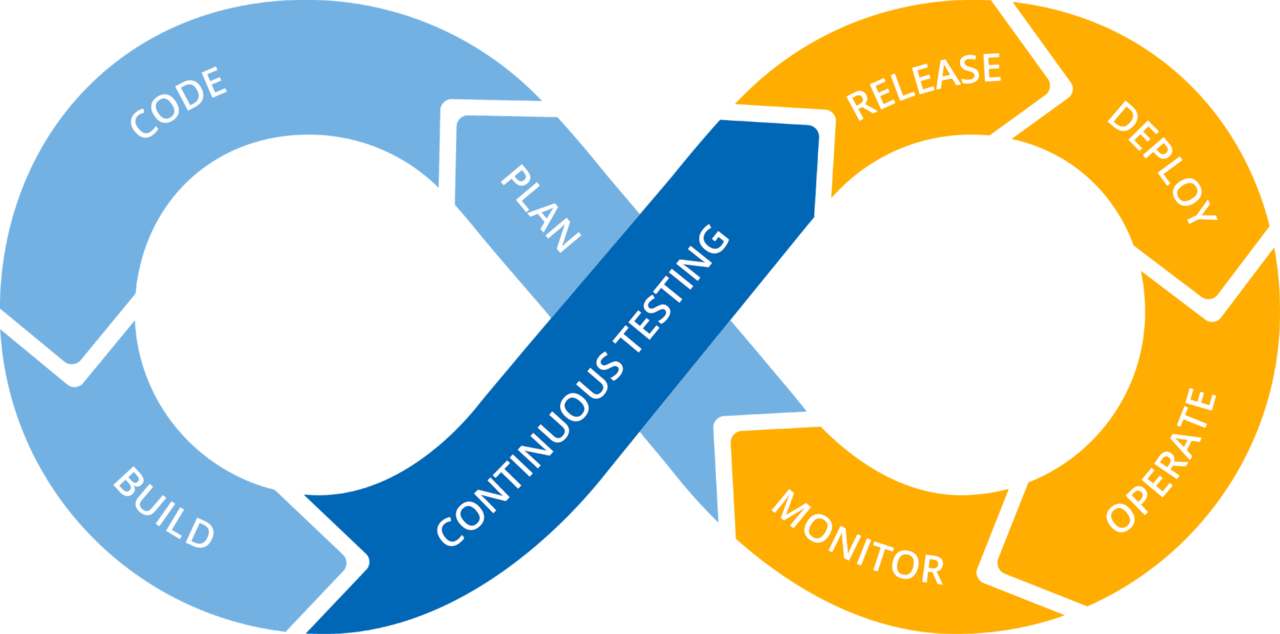
Key Takeaway: The main advantages of continuous testing are early defect detection, rapid developer feedback, faster releases, lower development and maintenance costs, reduced security and performance risk, and consistent software quality.
Continuous Testing Challenges and How to Fix Them?
Addressing continuous testing challenges, learn how to overcome resistance, automate effectively, manage false positives/negatives, optimize resource utilization, enhance security, and adapt tester roles for successful Continuous Testing.
- Implementing a New Mindset: Transitioning to Continuous Testing can be met with resistance due to changes in team culture and mindset. To overcome this challenge, organizations should communicate the benefits of the change and give teams time to adapt.
- Automating Effectively: Instead of automating everything, organizations should focus on tests that provide the highest return on investment, considering factors like business value and risk.
- Continuous Testing Beyond Testing: Continuous Testing involves more than just testing; it includes creating health dashboards, testing on multiple platforms, and handling test failures effectively.
- False Positives and False Negatives: Organizations should be aware of false positives (reporting issues when there are none) and false negatives (not detecting real issues). Proper rollback and testing procedures are essential.
- Inadequate Resource Utilization: Organizations should ensure efficient resource usage in Continuous Testing, as it can be expensive. This is particularly important when using cloud providers.
- Security Vulnerabilities: Continuous Testing pipelines are attractive targets for hackers due to the sensitive information they contain. To mitigate this, organizations can hire external contractors for security testing and implement monitoring systems.
- Role and Responsibilities of Testers: In Continuous Testing, the roles and responsibilities of software testers change. Testers may need to focus on tracking and debugging automation results, performing ad-hoc tests, managing defects, and designing test scenarios.
A practical way to work through most of these challenges is to split the suite by feedback tier instead of running everything on every commit. Keep unit and contract tests on the pull request, move the full end-to-end and cross-browser suite to the merge or nightly stage, and put long-running performance and security checks on their own schedule. Each tier then gets its own time budget, so a slow end-to-end run never blocks a one-line fix.
Flaky tests need a written policy rather than blanket retries. A retry loop makes the pipeline look green while a real defect stays hidden, so record the pass rate of every test across runs, quarantine any test that fails intermittently, and send it to a fix queue. A quarantined test still runs and still reports its result, but it stops gating the release until someone finds the root cause.
Key Takeaway: Continuous testing stalls on team resistance, blanket automation, false positives, resource cost, and security exposure, and the practical fixes are splitting the suite by feedback tier and quarantining flaky tests instead of retrying them.
The Role of CI/CD Pipelines
Continuous Integration/Continuous Deployment (CI/CD) pipelines play a pivotal role in addressing several of these critical challenges. These pipelines automate the build, test, and deployment processes, ensuring that code changes are continuously integrated, tested, and delivered to production.
Here's an in-depth elaboration of how CI/CD pipelines and CI/CD testing contribute to the development process:
Automation:
- CI/CD pipelines automate the entire software delivery pipeline. This automation encompasses everything from code integration to deployment in production environments.
- By automating these processes, CI/CD reduces the required manual intervention, which minimizes the chances of human error. Developers can focus more on writing code and less on the repetitive and error-prone tasks associated with deployment.
Consistency:
- One of the major challenges in software development is maintaining consistency across various development and deployment stages. Different environments (development, testing, staging, and production) often have subtle differences that can lead to unexpected issues when deploying code.
- CI/CD ensures consistency using the same automated processes and configurations throughout the pipeline. This means that what works in the development environment is more likely to work seamlessly in production, leading to fewer "it works on my machine" scenarios.
Quick Feedback:
- CI/CD pipelines provide rapid feedback to developers. Every time a developer commits code to the version control system, the pipeline automatically triggers a series of tests and checks.
- This rapid feedback loop allows developers to catch and address issues early in the development cycle when they are easier and less expensive to fix. It encourages a culture of continuous improvement, where code quality is consistently monitored and maintained.
Efficiency and Speed:
- CI/CD accelerates the software development lifecycle. By automating repetitive tasks, developers can release new features and updates more frequently.
- With automated testing and deployment processes, the time from code commit to production deployment is significantly reduced. This speed of delivery is crucial in today's fast-paced software industry, where the ability to quickly respond to user needs and market changes is a competitive advantage.
Traceability and Accountability:
- CI/CD pipelines provide clear visibility into the entire software delivery process. Each step of the pipeline is recorded and tracked, allowing for easy traceability of changes and identifying bottlenecks or issues in the process.
- Additionally, CI/CD promotes accountability as it becomes evident who made what changes and when. This transparency can be invaluable for debugging and auditing purposes.
Key Takeaway: CI/CD pipelines automate build, test, and deployment to give every commit identical environments, fast feedback, a shorter path to production, and a recorded trail of who changed what.
How do AI coding agents change continuous testing in your pipeline?
AI coding agents raise the number of changes reaching your pipeline, so the test stage becomes the limiting factor rather than the speed of writing code. The 2025 DORA report, drawn from nearly 5,000 technology professionals, found that 90% of respondents use AI at work, and that AI adoption has a positive relationship with software delivery throughput but a negative relationship with delivery stability. The report ties that gap to missing controls, stating that "without robust control systems, like strong automated testing, mature version control practices, and fast feedback loops, an increase in change volume leads to instability".
Two concrete pipeline changes follow. First, an agent branch is not tested until a person approves it. GitHub's coding agent automates branch creation, commit message writing and pushing, but Actions workflows do not run automatically when the agent pushes changes to a pull request. A reviewer has to click "Approve and run workflows" in the merge box first. Build that manual gate into your review process, or agent pull requests will queue up with no test signal attached.
Second, the environment the agent works in is a pipeline artifact you maintain. GitHub reads a copilot-setup-steps.yml file from .github/workflows, runs the steps in a single job named copilot-setup-steps before the agent starts, and only picks the file up when it sits on your default branch. Version it, review it, and update it whenever the build toolchain moves, the same way you treat the rest of your CI configuration.
The practical result is that the test stage decides how fast changes reach production. If a team merges more changes per day, the suite that gates those merges has to return a trustworthy result quickly. That is the control DORA describes, and it is the work that pipeline and test orchestration has to absorb.
Key Takeaway: AI coding agents raise the number of changes reaching a pipeline, which makes the test stage the limiting factor, and the 2025 DORA report links rising change volume to lower delivery stability when automated testing and fast feedback loops are weak.
Optimizing CI/CD Pipelines & Continuous Testing with HyperExecute
HyperExecute is an AI-native test orchestration cloud platform that enables test automation teams all over the world to achieve a faster time to market by providing JIT (Just-in-time) testing infrastructure with enhanced test execution speeds, smart test orchestration, detailed execution logs, and much more. The platform is framework-agnostic, and .NET shops in particular can review the common C# use cases for HyperExecute to see how NUnit, xUnit, and SpecFlow suites map onto its orchestration model.
HyperExecute runs tests on short-lived, pre-provisioned infrastructure instead of holding them in a queue, which is where most of the wall-clock saving comes from. Every orchestration and speed change is listed in the HyperExecute release notes for 2025 so you can plan around every update.
HyperExecute seamlessly integrates with continuous testing, optimizing the CI/CD pipelines helping you achieve:
Speed: HyperExecute offers unparalleled testing speed, enabling you to execute tests at hyper-speed.
Traditional testing methods can be time-consuming, often causing delays in software development cycles. HyperExecute, on the other hand, is engineered to provide exceptional testing speed. This means that it can rapidly execute tests, allowing you to assess your software's functionality and quality much faster than before.
The significance of this speed cannot be overstated. It enables you to:
- Accelerate Development: Faster tests mean quicker feedback for developers. They can identify and address issues promptly, leading to shorter development cycles and faster releases.
- Enhance Productivity: Testers can cover more ground in less time, allowing them to focus on more critical aspects of testing, such as exploratory testing and test strategy refinement.
- Meet Deadlines: Rapid testing enables your team to meet project deadlines with confidence, even in fast-paced development environments.
Efficiency: It streamlines testing processes, automates tedious tasks, and dramatically reduces the time spent on testing.
Manual testing processes are often plagued by repetitive, time-consuming tasks that can be error-prone and monotonous. HyperExecute is designed to streamline these processes, making testing more efficient.
Here's how it achieves this:
- Automation: HyperExecute automates various testing tasks, from test case execution to result analysis. This reduces the need for manual intervention and minimizes the chances of human error.
- Resource Optimization: By automating repetitive tasks, you can allocate your testing resources more effectively. Testers can focus on creating valuable test scenarios and ensuring comprehensive test coverage.
- Time Savings: With tasks automated, testers can spend more time on strategic testing efforts, ensuring that the most critical areas of the software are thoroughly tested.
Scalability: HyperExecute is engineered to effortlessly handle large-scale testing efforts, no matter how extensive they may be.
As software projects grow in complexity, so do testing requirements. Traditional testing tools may struggle to scale effectively to meet these demands. HyperExecute, on the other hand, is built to handle large-scale testing with ease, and it keeps pace with modern browser protocols too, letting teams run BiDi-based testing on HyperExecute for richer bidirectional control over network events, logs, and DOM interactions during those large runs.
Here's what scalability means in the context of HyperExecute:
- Large Test Suites: HyperExecute can manage extensive test suites, ensuring that all necessary test cases are executed efficiently, regardless of how many there are.
- Parallel Testing: It can execute tests in parallel, further increasing testing speed and efficiency, even when dealing with a substantial number of test cases.
- Growing Teams: As your development team expands, HyperExecute can accommodate more testers and testing environments, seamlessly adapting to the evolving needs of your project.
Compatibility: HyperExecute is compatible with popular CI/CD tools and workflows, ensuring a smooth transition. It effortlessly syncs up with the tools you're already comfortable using.
Continuous Integration/Continuous Deployment (CI/CD) is a widely adopted approach in modern software development. It involves frequent code integration, automated testing, and continuous delivery of software changes. HyperExecute is designed to seamlessly fit into this CI/CD landscape. Here's how it achieves compatibility:
- Tool Integration: HyperExecute can integrate with popular CI/CD tools such as Jenkins, Travis CI, CircleCI, GitLab CI/CD, and others. This means you can continue to use the tools you're familiar with while enhancing your testing capabilities.
- API Support: HyperExecute often provides APIs that enable easy integration with CI/CD pipelines. This allows for a smooth flow of information and automation between your CI/CD processes and testing activities.
- Data Exchange: HyperExecute ensures that data, test results, and reports can be easily shared with your CI/CD tools. This facilitates seamless collaboration and visibility for your entire development team.
Enhanced Workflow: HyperExecute seamlessly augments your existing testing workflow without causing any disruption. It complements your established processes, making them even more efficient.
When you've already established workflows and processes within your development team, introducing a new testing tool can be disruptive. HyperExecute aims to enhance your existing workflow without causing any interruption. Here's how:
- Minimal Learning Curve: HyperExecute is designed with user-friendliness in mind. Its interface and workflows are intuitive, requiring minimal training for your team to get up to speed.
- Integration with Existing Processes: Instead of replacing your current processes, HyperExecute complements them. It seamlessly slots into your workflow, allowing your team to continue using familiar tools and methods.
- Customization: HyperExecute can be tailored to align with your specific testing requirements and processes. It adapts to your workflow, ensuring that it enhances rather than hinders productivity.
Flexibility: HyperExecute adapts to your specific needs, offering tailored testing solutions that align with your unique requirements.
Every software development project is unique, and testing needs can vary significantly. HyperExecute recognizes this and provides flexibility to cater to your specific requirements:
- Custom Test Configurations: HyperExecute allows you to define and customize test configurations, ensuring that your testing aligns with your project's specific needs.
- Integration Options: It offers various integration options to accommodate different workflows and toolchains, ensuring that it can be molded to suit your project's unique requirements.
- Scalability: HyperExecute can scale as per the requirements of your projects, i.e., different sizes and complexities. It adapts to the demands of your project.
Key Takeaway: Running a test suite on short-lived, pre-provisioned infrastructure instead of holding it in a queue removes most of the wall-clock wait from a CI/CD run, and tools such as Jenkins, GitLab CI/CD, and CircleCI can trigger that run through existing integrations and APIs.

Austin Siewert
Co-Founder, Steadfast Systems
Discovered @TestMu AI yesterday. Best browser testing tool I've found for my use case. Great pricing model for the limited testing I do 👏
2M+ Devs and QAs rely on TestMu AI
Deliver immersive digital experiences with Next-Generation Mobile Apps and Cross Browser Testing Cloud

Summing Up!
Wiring HyperExecute into your CI/CD pipelines and continuous testing practice keeps release cycles short without cutting test coverage. The demand for faster application releases, lower costs, and wider test coverage is what keeps pushing teams in that direction.
HyperExecute empowers you to accelerate development, enhance productivity, meet deadlines, improve efficiency, and ensure scalability. It fits seamlessly into your existing workflow, complements your processes, and offers customization to align with your unique testing requirements.
In conclusion, the journey to achieving faster feedback loops, continuous delivery, and higher software quality begins with the strategic integration of HyperExecute into your CI/CD pipelines and continuous testing practices. Embrace this transformative solution, and you'll not only keep pace with the ever-changing software landscape but also gain a competitive edge in delivering software excellence.
Author

Misba Kagad
Blogs: 5


Misba Kagad is a community contributor with 6+ years of experience in content strategy and technical content development within B2B SaaS and software testing platforms. At TestMu AI, she works as a Marketing Content Manager, creating content around software testing solutions, testing workflows, and product-led narratives for QA and engineering audiences. Misba has previously led content initiatives across fintech and enterprise SaaS organizations and brings a strong background in integrated marketing and account-based content programs. She holds a Diploma in Computer Engineering.


Continuous Testing and CI/CD FAQs
Did you find this page helpful?
More Related Blogs
TestMu AI forEnterprise
Get access to solutions built on Enterprise
grade security, privacy, & compliance
- Advanced access controls
- Advanced data retention rules
- Advanced Local Testing
- Premium Support options
- Early access to beta features
- Private Slack Channel
- Unlimited Manual Accessibility DevTools Tests