

Next-Gen App & Browser Testing Cloud
Trusted by 2 Mn+ QAs & Devs to accelerate their release cycles


Top 15 Mobile Testing Tools You Need in 2026
Top 15 mobile testing tools you need in 2026 to improve app quality, automate testing, boost performance, and deliver seamless user experiences.

Mehul Gadhiya
February 7, 2026
mobile testing tools has become an essential part of the development process as technology and user expectations evolve rapidly. To meet up with these expectations, it's important to create mobile experiences that feel smooth and easy to use.
Mobile app testing ensures that apps function flawlessly across different devices, operating systems, and user scenarios, which is vital for user satisfaction and the app's reputation.

According to a survey, smartphone penetration and mobile application usage continue to grow. In 2022, there were approximately 6.4 billion smartphone users. By 2028, mobile subscriptions are projected to reach around 7.95 billion.
With the growing complexity of the mobile app market, manual testing is no longer sufficient. Developers now rely on advanced mobile testing tools with automation features to accelerate testing, boost productivity, and identify issues early.
In this blog, we'll explore the best mobile testing tools and how they enhance app quality and performance.
Overview
Choosing the right tool is crucial for efficient and effective mobile app testing. Here are some of the top tools that help automate and streamline the testing process:
Top Mobile Testing Tools
These tools are widely used in the industry for various mobile testing purposes:
- TestMu AI: AI-native platform that allows testing on real devices across both Android and iOS.
- Appium: Open-source tool for automating Android and iOS apps, supporting multiple languages.
- Robotium: Ideal for automated UI testing on Android apps.
- Selendroid: Automates testing for Android native and hybrid apps, leveraging the Selenium WebDriver.
- Espresso: Google’s official tool for Android UI testing, known for its speed and reliability.
- Detox: A JavaScript-based end-to-end testing framework for React Native apps.
- Calabash: Offers behavior-driven development (BDD) testing for Android and iOS.
- TestFlight: Apple’s beta testing platform for iOS apps, helping you gather feedback before release.
- XCUITest: Apple’s native testing framework for iOS UI automation.
- ACCELQ: A codeless, AI-powered mobile testing platform for web and mobile apps.
Types of Mobile Testing Tools
These types cover a broad spectrum of app testing areas:
- Functional Testing: Verifies app features, ensuring all elements work as intended.
- Performance Testing: Evaluates app speed and stability under various conditions.
- Security Testing: Identifies vulnerabilities and ensures app security.
- Usability Testing: Assesses UI/UX for user-friendly experiences.
- Cross-Platform Testing: Ensures consistent functionality across Android and iOS.
What Are Mobile Testing Tools?
Mobile testing tools are software solutions that test apps across devices and operating systems, ensuring functionality, identifying bugs, and automating quality assurance.
Mobile testing tools are software solutions that help test mobile apps across different devices and operating systems. They ensure apps function properly, identifying bugs and performance issues early. These tools automate testing for functionality, security, and usability, improving app quality and speeding up development.
Why is Mobile App Testing Important?
Adopting an effective mobile app testing strategy is crucial for the success of mobile applications. Here’s why it’s important:
- Automated and Cross-Platform Testing: Speeds up testing by running it across various devices and platforms without extra effort.
- Cost Efficiency: Saves money over time by automating testing, reducing manual labor, and identifying issues early.
- Easy Sharing of Results: Facilitates quick sharing of test outcomes among team members for faster decisions.
- Faster Execution: Ensures quicker, more reliable execution of tests to meet fast-paced development cycles.
- Quality Assurance: Ensures the app meets performance, security, and functionality standards before release.
- Improved Coverage: Increases the test coverage by checking apps on a range of devices, operating systems, and network conditions.
- Consistent User Experience: Validates that the app performs well across all user devices and settings.
Challenges in Mobile App Testing:
- Selecting the Right Tool: Choosing the appropriate tool that fits your app’s needs and budget.
- Device Fragmentation: Testing on different devices, screen sizes, and OS versions can be complicated.
- User Interface Variations: Ensuring consistency in design and functionality across various device interfaces.
- Network Conditions: Handling testing for apps under various network speeds and connectivity conditions.
Other Considerations:
- Compatibility: Ensuring the app works across different browsers, networks, and devices.
- Bandwidth and Security: Testing the app’s performance and security under different network loads.
- Multiple Software Upgrades: Keeping the app functional with continuous software updates.
- User Expectations: Ensuring the app meets user needs for speed, performance, and reliability.
Using the right mobile testing tools helps automate and streamline the testing process, delivering faster, more efficient results.

What Are the Types of Mobile Testing Tools?
Mobile testing tools include functional, performance, security, usability, and cross-platform testing tools, each addressing specific app quality aspects.
Mobile testing tools are designed to address different aspects of app quality, from functionality to performance and security. Here's a breakdown of the main types of mobile testing tools and their focus areas:
- Functional Testing Tools: These tools ensure that all features of the mobile app work as expected, such as buttons, forms, navigation, and interactions. They help test the app's core functionality and ensure that the user experience is smooth and error-free.
- Functional testing tools simulate real user behavior to detect bugs and issues.
- Performance Testing Tools: Performance testing tools are essential to evaluate how the app performs under various conditions, such as high traffic, heavy load, or limited resources.
- These tools check factors like response time, app speed, and stability, ensuring the app performs optimally across different environments and network conditions.
- Security Testing Tools: Security is a critical factor in mobile apps, especially with sensitive user data being handled. Security testing tools identify vulnerabilities and potential risks, ensuring that the app is resistant to attacks, data breaches, or unauthorized access.
- These tools assess security loopholes and help protect user information.
- Usability Testing Tools: Usability testing tools focus on the user experience (UX) and ensure that the app is intuitive, easy to navigate, and meets the needs of the users.
- These tools gather feedback on app usability, highlighting areas where users may struggle, and helping developers optimize the interface and interactions for a smoother experience.
- Cross-Platform Testing Tools: These tools allow developers to test mobile apps across multiple platforms (Android and iOS) and devices using a single set of test scripts.
- Cross-platform testing ensures that the app delivers a consistent experience across different devices, operating systems, and screen sizes, reducing the need for multiple testing cycles and improving overall efficiency.
What Are the Top Mobile Testing Tools to Enhance Your Testing Process?
Top mobile testing tools include TestMu AI, Appium, Robotium, Selendroid, Espresso, XCUITest, and more, offering automation for Android and iOS apps.
Having the correct mobile testing tools in your arsenal is critical for assuring the quality and performance of your Android and iOS mobile apps. These tools are great assets for properly managing and implementing mobile app testing strategies.
They are proven to streamline your operations and produce results, whether you're a developer, tester, or an individual trying to improve your mobile app testing efforts. Here is the list of the best mobile testing tools for mobile app testing.
1. TestMu AI
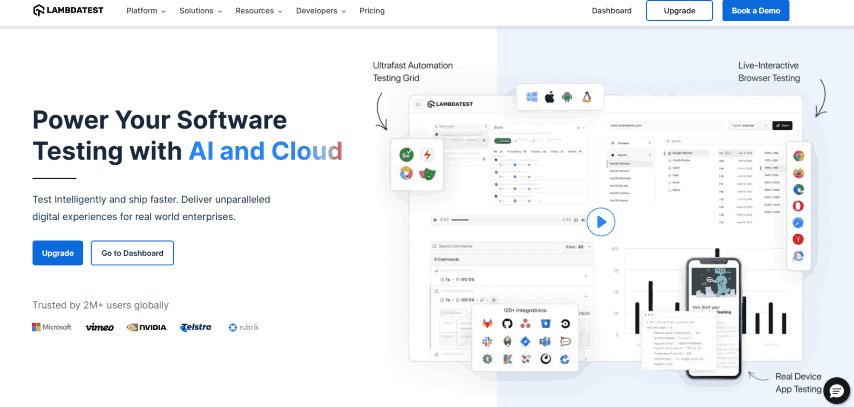
In our list of Top 15 Mobile Testing Tools, TestMu AI grabs the first place. It is an AI-native test orchestration and execution platform that enables you to test mobile apps on simulators & emulators, and real devices.
You can run tests across multiple devices using TestMu AI online real device cloud.
TestMu AI also lets you perform manual app testing and app test automation of your native apps on a wide range of 10,000+ Android and iOS devices.
This helps to replace your expensive testing strategies with an easy-to-implement cloud mobile testing platform that is more reliable and compatible with testing on real devices.
TestMu AI offers both real devices cloud and virtual devices (Emulator and Simulator) for mobile app testing. Here are the steps for mobile app testing on TestMu AI Real Device cloud.
- Register for free on TestMu AI and log in to your account.
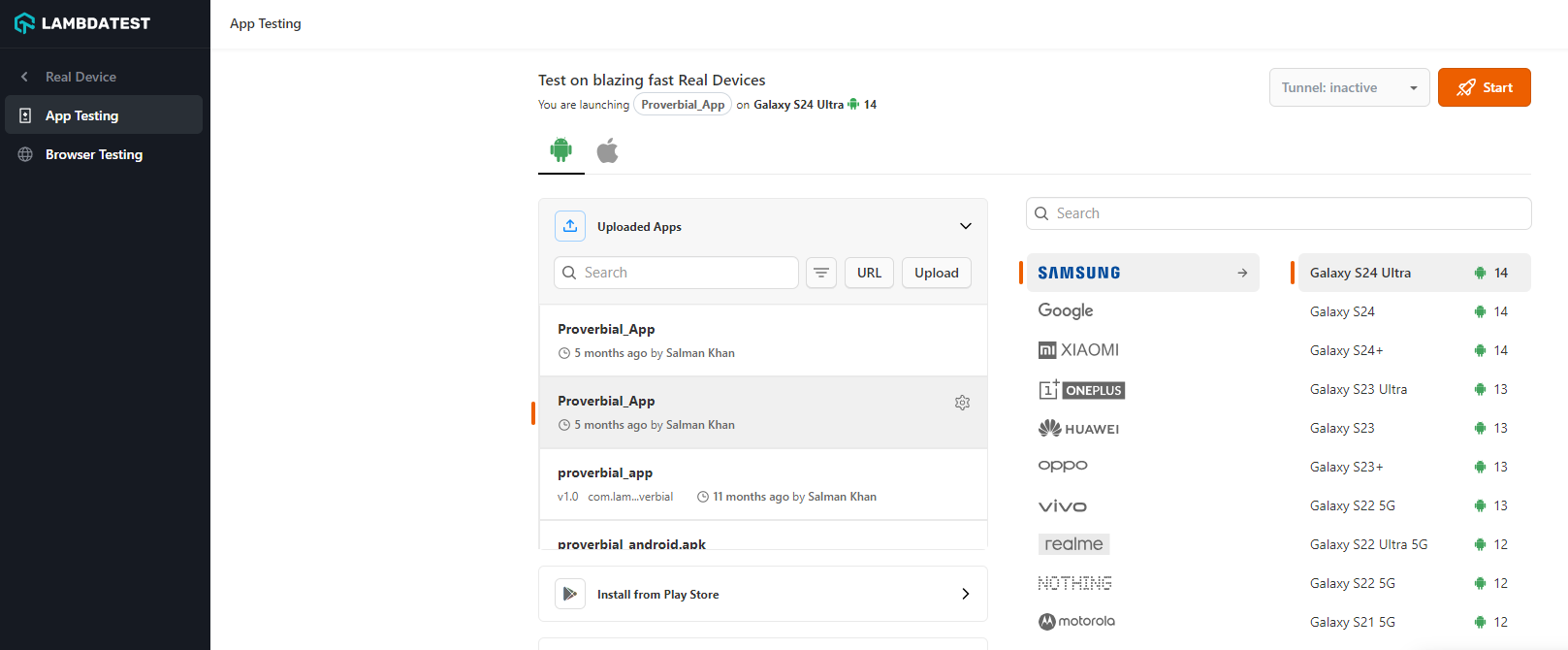
- From the left sidebar menu, go to Real Device > App Testing
- Select OS (Android or iOS) as per your requirement, upload your application, and select the device, and OS version of your mobile device. Once you’ve completed these steps, click the Start button to proceed.
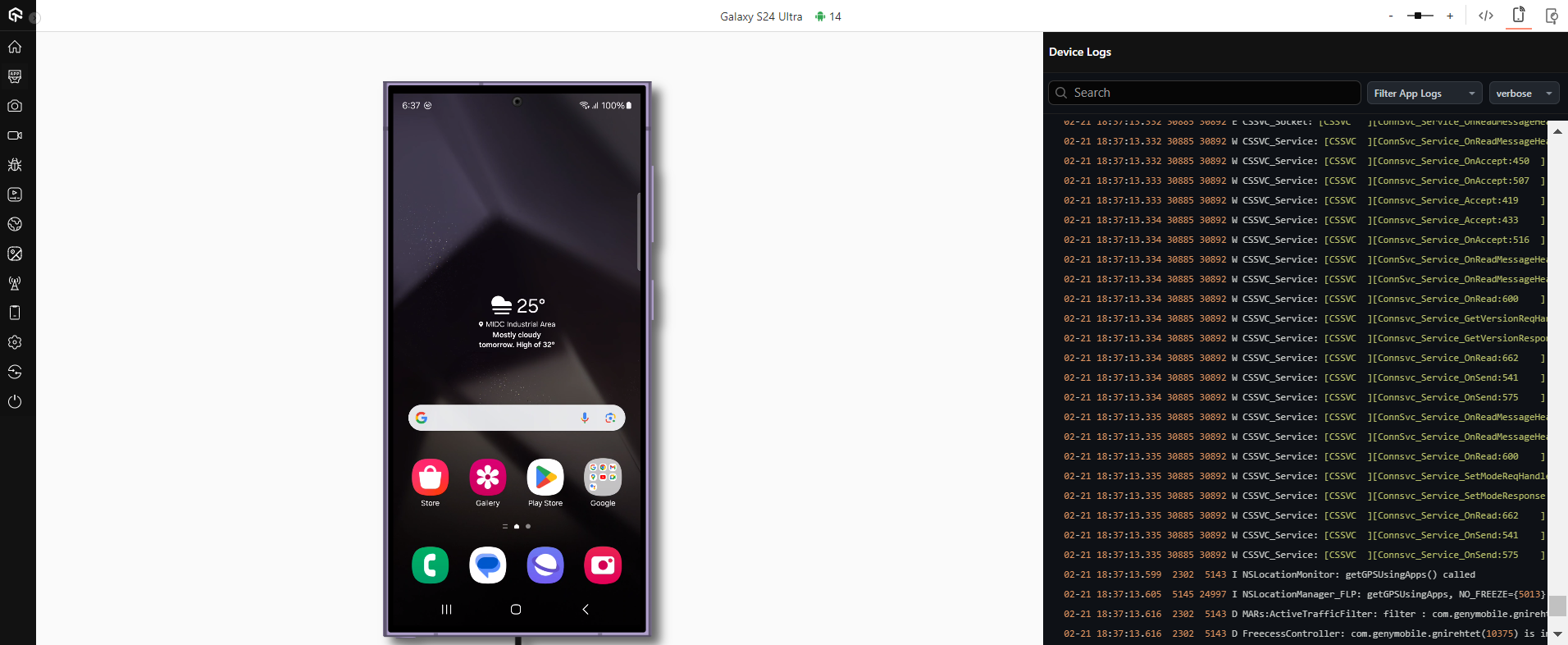
When you click on the Start button, it will launch a cloud-based real device where you can perform mobile app testing as per real-world conditions.
If you want to perform mobile app testing on virtual devices (Emulator and Simulator), the process is the same.
With TestMu AI, you can automate mobile app testing on a real device cloud using popular frameworks like Appium, Espresso, and XCUITest.
Refer to support documentation to start app automation with Appium.
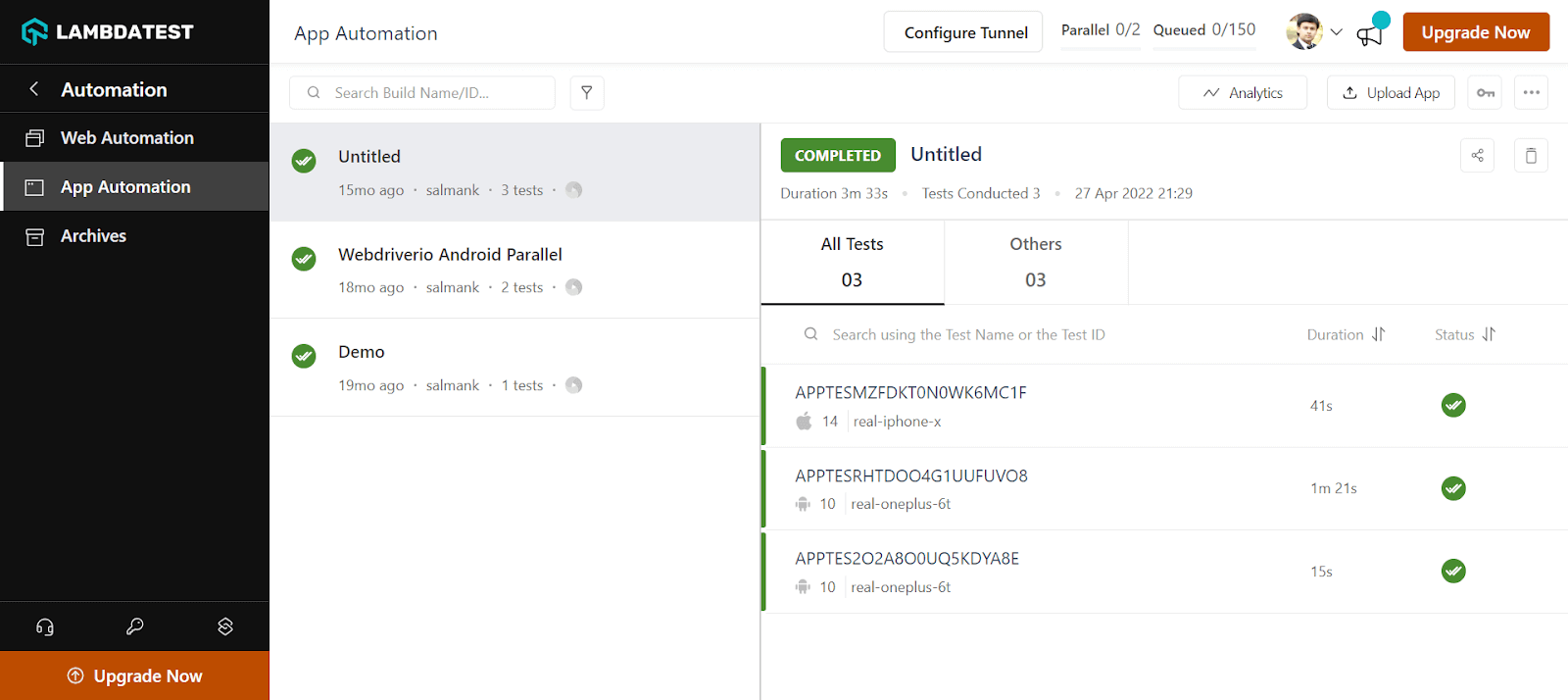
If you want to perform app automation on a real device, you should check out our video tutorial, where you can learn in detail from experts about mobile app testing.
Subscribe to the TestMu AI YouTube Channel to stay updated on the latest tutorials about Selenium testing, Appium automation, and more.
2. Appium
Appium is an open-source automation testing tool that can be used for both Android and iOS apps. It is an effective tool for web and mobile application testing and works even for hybrid apps.
Appium is also used for automated functional testing that improves the overall functionality of the applications. To know more, refer to the blog on the difference between Web vs. Hybrid vs. Native apps.

Pros of using Appium mobile testing tool
- Multiple language support: Supports end-to-end testing in languages like Java, JavaScript, Node, Python, Ruby, and C#.
- Cross-platform compatibility: Supports testing on both iOS and Android devices using the same API.
- Record and playback: Enables fast testing with test scripts in multiple languages.
- Easy integration: Easily integrates with Jenkins and other popular CI/CD tools.
Cons of using Appium mobile testing tool
- Complex setup: Requires advanced programming skills for setting up the client-server model.
- Flaky tests: Tests can be inconsistent, leading to different results for the same configuration.
- Slower execution: The architecture causes slow server startup and delays in test actions.
- Element location issues: Struggles with locating elements and recognizing images, requiring manual input.
- Limited support for older Android versions: Doesn’t support Android versions earlier than 4.2, reducing test coverage.
Here is a quick video tutorial on mobile app automation using the Appium framework.

Note: Refer to our support doc to get started with app automation with Appium.
3. Robotium
Robotium is an open-source and one of the best mobile testing tools, which means it's a set of tools and guidelines that developers can use for testing their apps.
It's designed to automate the testing process so developers don't have to manually check every aspect of their app.
With Robotium, developers can write test cases for different testing scenarios. These scenarios can include checking if specific functions in the app are working as expected, testing how the app behaves in different situations, or even testing if the app meets certain acceptance criteria.
One cool thing about Robotium is that it can handle multiple activities in an Android app. Activities are like different screens or sections of an app. So, if an app has multiple screens, Robotium can still test it effectively.
Pros of using Robotium mobile testing tool
- Simplifies test case creation with shorter code and less time spent.
- Allows developers to create test cases with minimal app understanding.
- Automatically handles multiple Android activities, making test cases more readable.
- Automates timing and delay management, reducing manual intervention.
- Easily integrates with Maven or Ant, and doesn’t require Android platform changes.
Cons of using Robotium mobile testing tool
- Doesn’t support Flash or Web components.
- Can only handle one app at a time.
- Requires the ‘enterText()’ function to input text into EditText fields.
- Doesn’t support interaction with Status Bar Notifications.
- Performance can be slow on older devices.
4. Selendroid
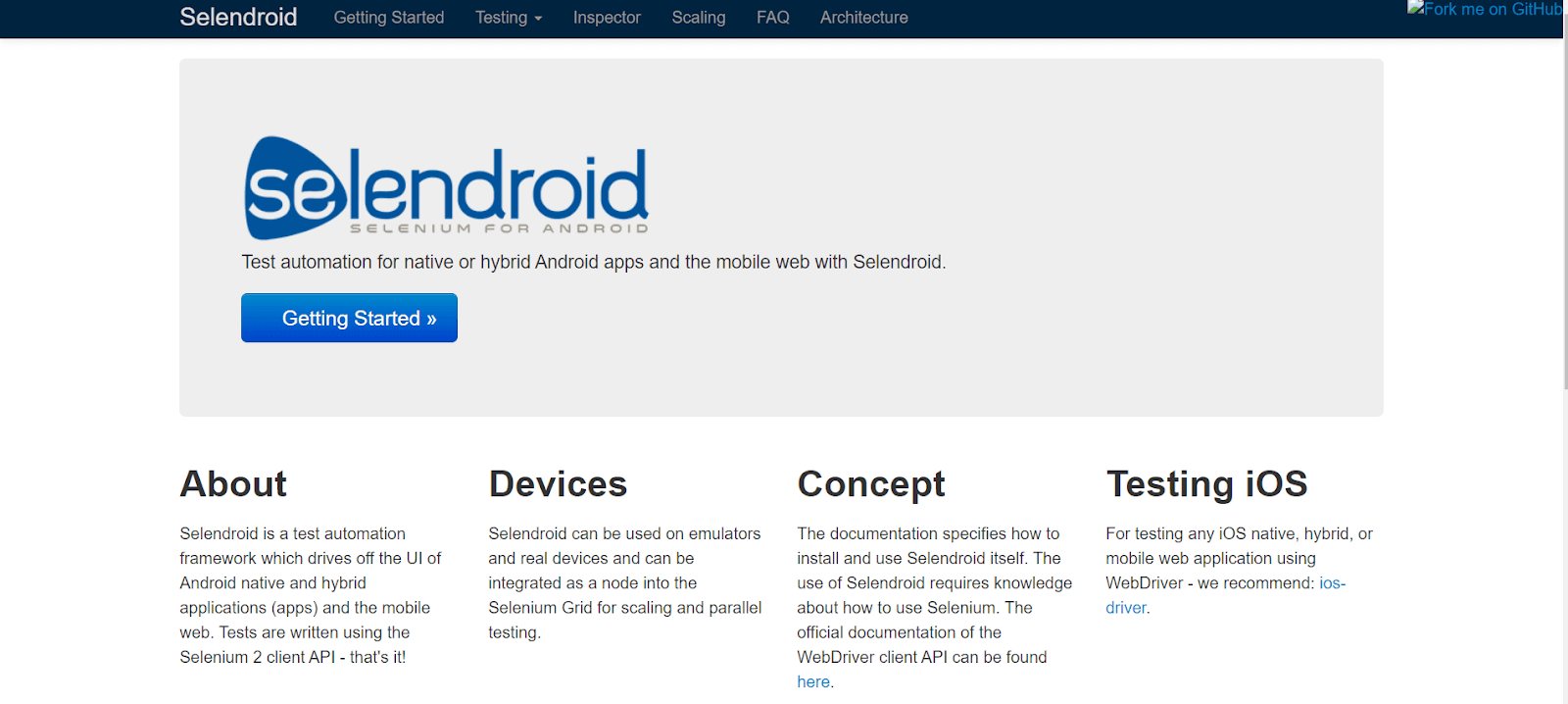
Selendroid is an open-source automation framework designed to operate through the user interface (UI) of Android native, hybrid, and mobile web applications. It leverages the underlying Android instrumentation framework to achieve this functionality.
In addition, the tests are scripted utilizing the API of the Selenium 2 client, also known as the Selenium WebDriver; that integration allows Selendroid to utilize and build upon the existing Selenium framework effectively.
Pros of using Selendroid mobile testing tool
- Seamlessly integrates with JSON wire protocol and is compatible with Selenium 3.
- Doesn’t require app modification, simplifying the testing process.
- Efficiently tests mobile web apps with its built-in web view Android driver.
- Supports native and hybrid apps, ensuring consistency.
- Easily locates UI elements with various locator support.
Cons of using Selendroid mobile testing tool
- May have slower test execution speeds.
- Requires high-end machines or devices with sufficient processing power.
- Not ideal for systems with less than 4 GB of RAM.
5. XCUITest
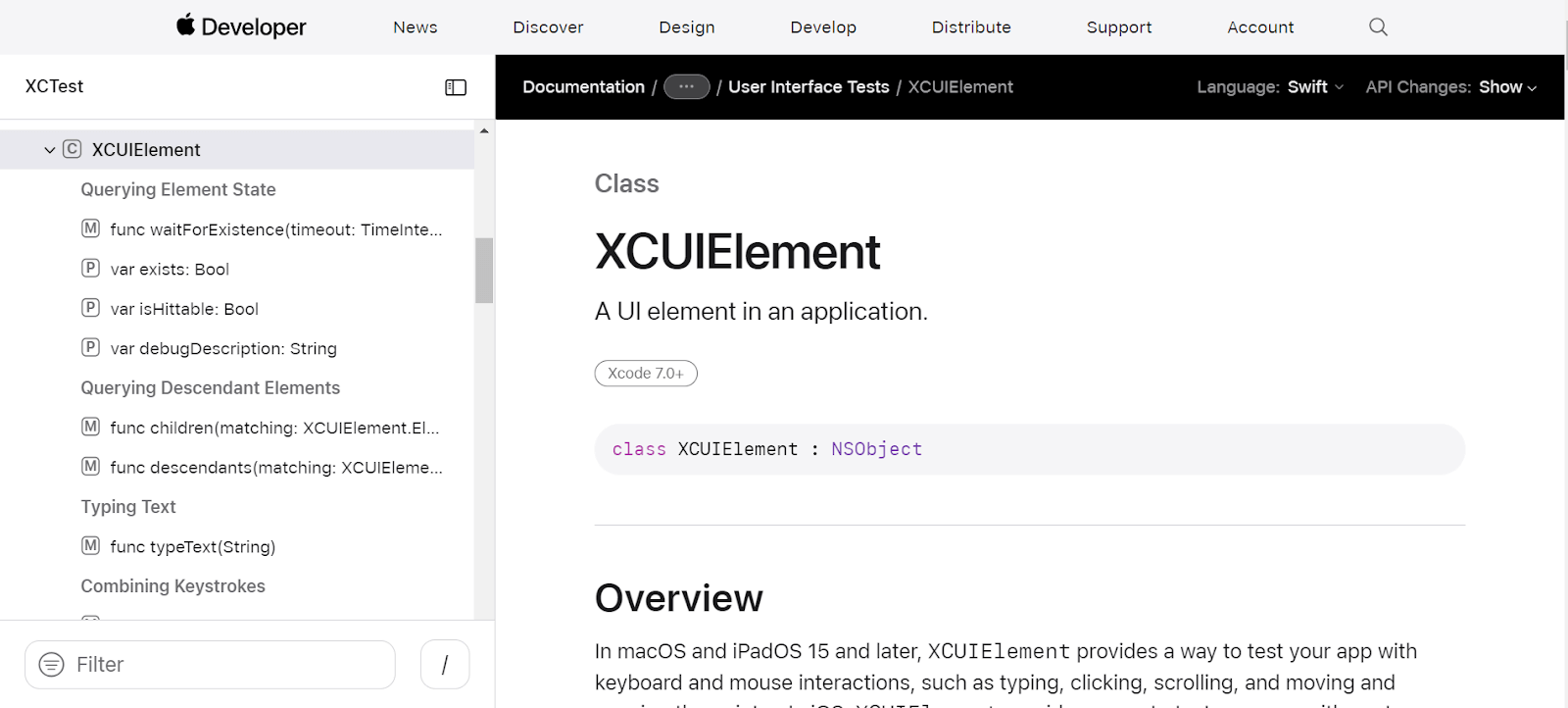
In 2015, Apple introduced XCUITest, one of the most powerful mobile testing tools designed specifically for automating UI tests on iOS devices. Built upon XCTest, which is Apple's integrated test framework for Xcode, XCUITest offers a seamless and efficient testing experience.
With XCUITest, you can write automated UI tests using Swift or Objective-C, the two programming languages commonly used for developing native iOS and macOS applications.
Pros of using XCUITest mobile testing tool
- Integrates seamlessly with Xcode IDE, making it easy for developers to use.
- Delivers faster test results for iOS devices due to its efficient architecture.
- Reliable test execution with minimal flakiness and consistent results.
- APIs and framework have matured, improving stability and robustness.
- Operates at the object level, reducing maintenance efforts for app changes.
Cons of using XCUITest mobile testing tool
- Device fragmentation can make testing on various devices time-consuming.
- Requires additional frameworks for testing across multiple Android platforms.
- Complex apps with multiple screens and data make testing edge cases harder.
- Test maintenance as the app evolves can be time-consuming and require a dedicated team.
Note: Refer to our support doc to get started with app automation with XCUITest.
6. Espresso
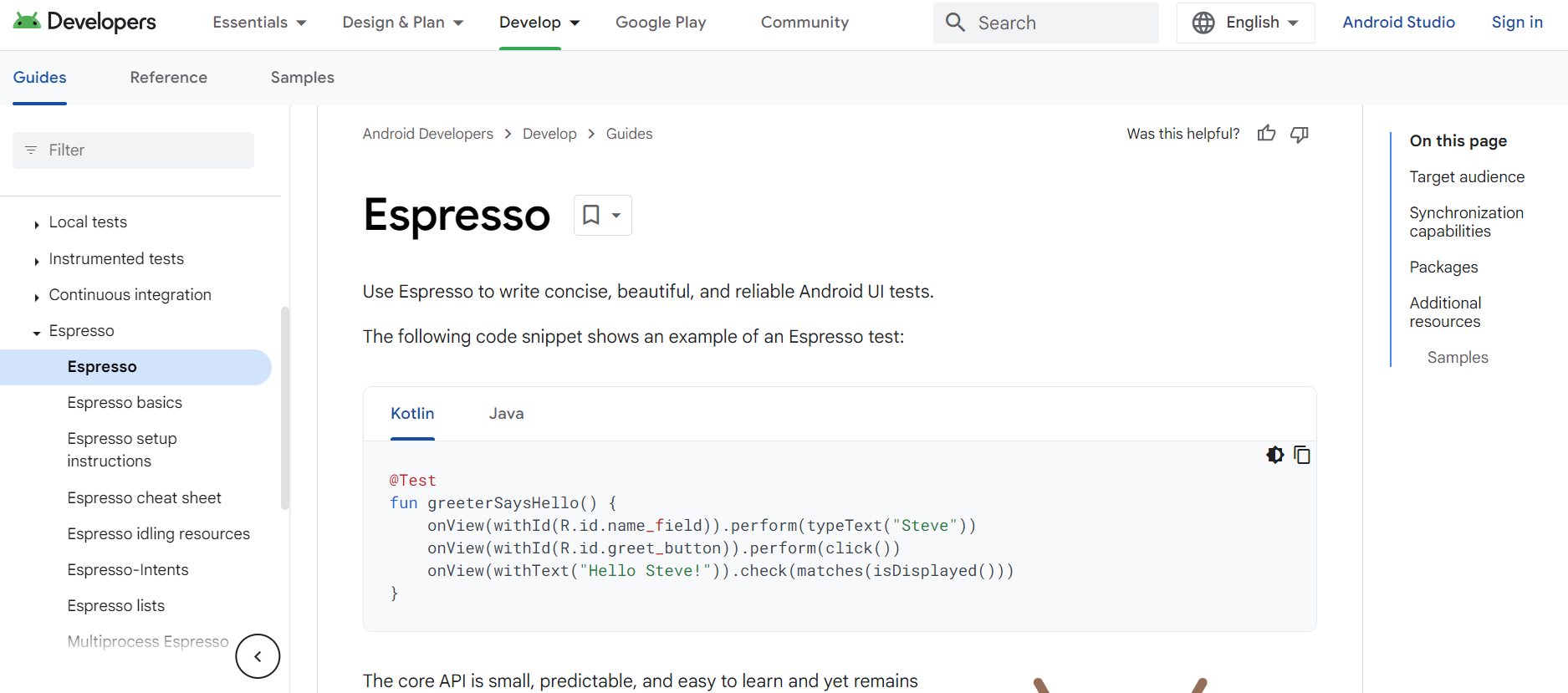
Espresso is a framework for Android automation testing developed by Google and has gained significant popularity due to its exceptional performance. With Espresso, you can effortlessly create straightforward tests without the need to be concerned about the intricacies of the application's infrastructure.
Moreover, this open-source framework allows developers to customize it according to their requirements. Such features make Espresso one of the best mobile testing tools.
Research conducted by the University of Oulu has revealed that Espresso boasts remarkable speed, offering the shortest test execution time and fallibility among testing frameworks. This makes it a preferred choice for efficient testing.
Pros of using Espresso mobile testing tool
- Allows building a standalone APK for easy installation and quick execution on devices or emulators.
- Provides faster feedback on code changes, helping with quicker debugging.
- Runs alongside the application, offering instant test results without needing a separate server.
- Ensures stable test cycles with synchronized execution and element confirmation.
- Easily set up within Android Studio, simplifying test suite development.
Cons of using Espresso mobile testing tool
- Limited to testing user interfaces, unable to test other aspects of the app.
- Does not support iOS automation testing.
- Only supports Java and Kotlin, limiting language options.
- Requires access to the app’s source code for testing.
Note: Refer to our support doc to get started with app automation with Espresso.
7. Nightwatch.js
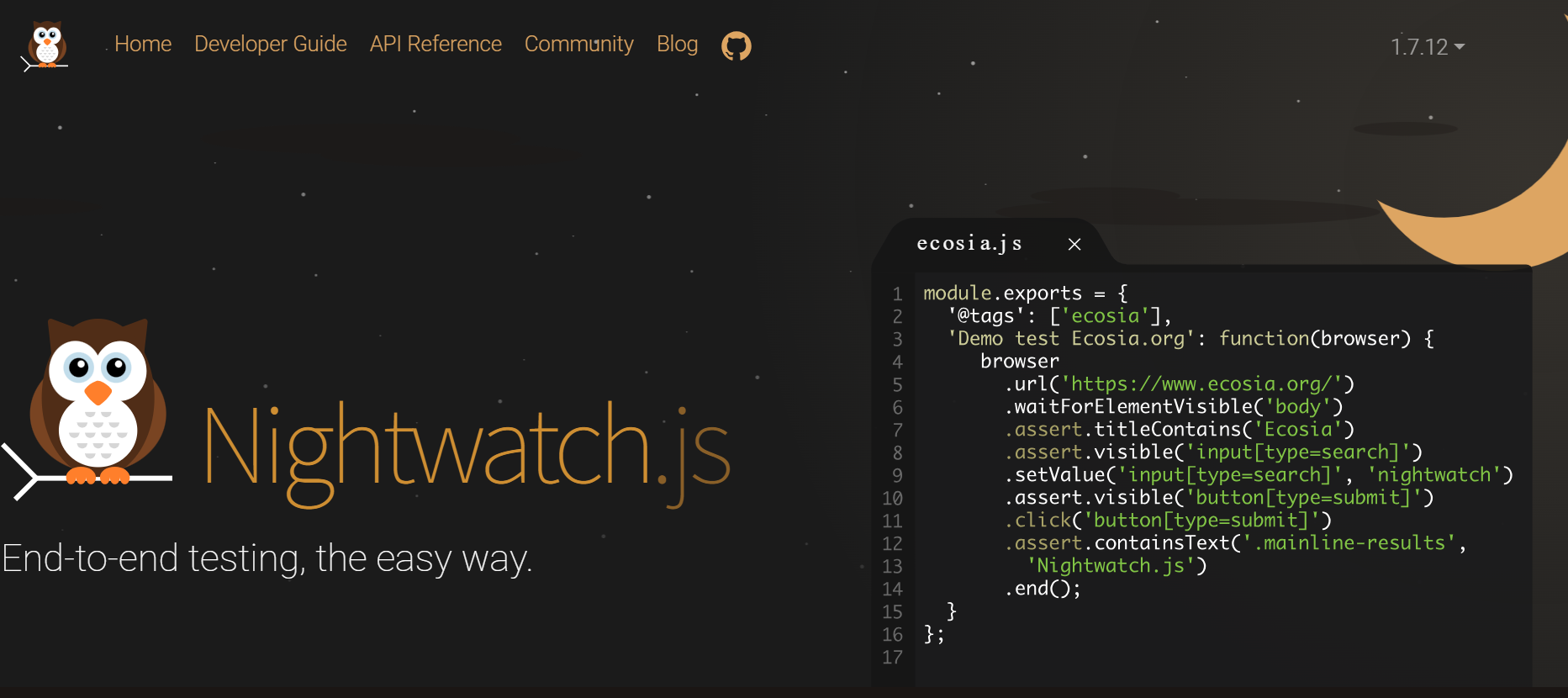
Nightwatch.js is a comprehensive testing tool that facilitates the automated end-to-end testing of web applications and websites across popular browsers. Developed in Node.js, it leverages the W3C WebDriver API to interact with different browsers seamlessly.
This framework provides a holistic approach to testing, covering end-to-end and cross-browser scenarios. Its primary objective is to streamline the creation and execution of diverse test types, such as:
- End-to-end tests: These tests encompass all major web browsers and allow for a thorough evaluation of application functionality.
- Unit tests: Nightwatch.js supports the testing of Node.js services, enabling developers to assess the individual components of their applications.
- Integration tests: With Nightwatch.js, HTTP APIs can be thoroughly examined to ensure seamless integration between different components.
Pros of using Nightwatch.js mobile testing tool
- It possesses a powerful setup and a streamlined framework that enhances performance.
- Requires minimal code upkeep and enhances the organization of tests.
- Offers superior performance and facilitates advanced parallelism.
- Enables configuration with Cucumber to establish a BDD (Behavior Driven Development) environment.
- Supports a wide range of features, including multi-tabs, iFrames, pinch-zoom, and geolocation.
- Provides built-in support for Page Object Model, implicit waits, HTML reporter, and other useful functionalities.
Cons of using Nightwatch.js mobile testing tool
8. Robot Framework
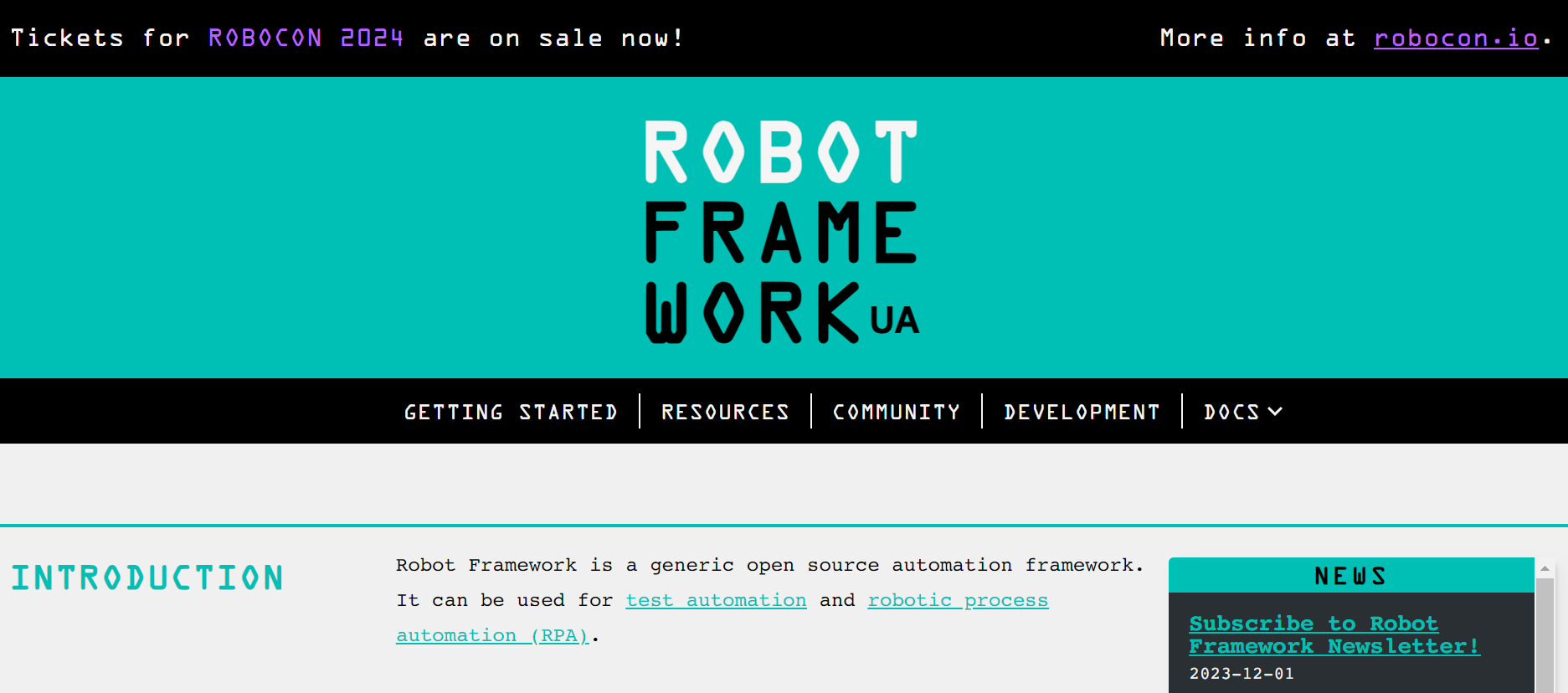
Robot framework is an open-source framework designed for test automation and the development of acceptance tests. It offers various styles for writing test cases, including keyword-driven, behavior-driven, and data-driven approaches.
This diversity in test case styles contributes to its exceptional ease of understanding. Test cases are composed in a tabular format using a keyword style, further enhancing readability and clarity.
Pros of using Robot mobile testing tool
- Seamlessly integrates with external libraries and tools for automation.
- Simple installation, making it easy for beginners to create and execute test cases.
- Supports various test case writing styles, including keyword-driven, behavior-driven, and data-driven approaches.
Cons of using Robot mobile testing tool
- Lacks support for if-else and nested loops, making complex code challenging.
- Maintenance can be difficult due to the framework’s complexity.
- Customizing HTML reports can be challenging.
- Does not support parallel test execution.
9. Xamarin.UITest
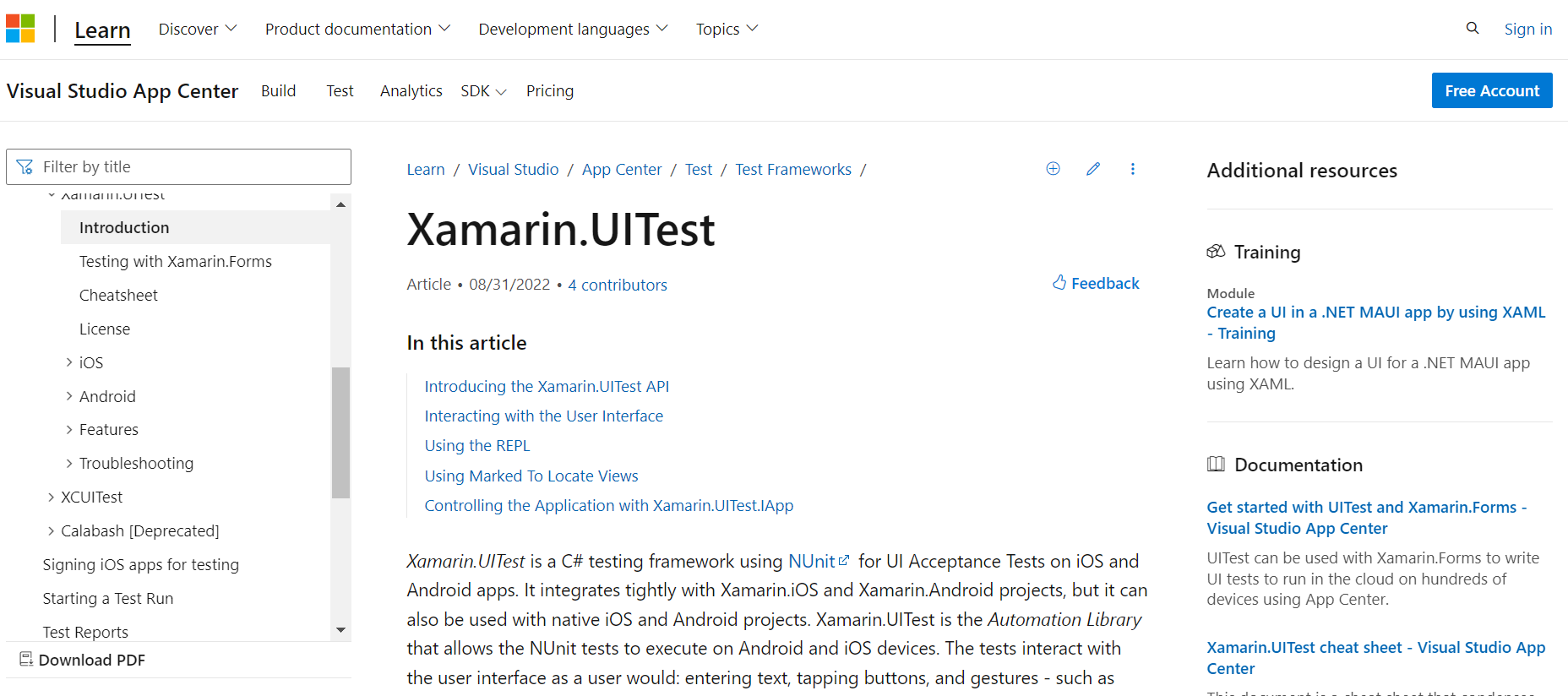
Xamarin.UITest is a C# testing framework that uses NUnit to perform UI Acceptance Tests on iOS and Android applications. This framework works smoothly with Xamarin.iOS and Xamarin. Android applications, as well as native iOS and Android projects.
Developers may successfully automate the execution of NUnit tests on Android and iOS devices using Xamarin.UITest. These tests mimic user interactions with the app's UI, including text input, button tapping, and even motions like swiping.
Pros of using Xamarin.UITest mobile testing tool
- Enables cross-platform testing with similar app pages across platforms.
- Uses the Page Object Pattern (POP) for scalable, maintainable, and readable tests.
- REPL tool allows real-time interaction and UI element exploration.
- Supports native Xamarin Test Cloud for running tests on a wide range of devices in the cloud.
Cons of using Xamarin.UITest mobile testing tool
- Requires Xamarin.Forms, which may not suit all projects.
- Limited API, restricting advanced UI property evaluation.
- Minimal distinctions between Android and iOS may be a limitation.
- Slow scrolling performance can be a drawback.
- Reliability issues, such as device port conflicts, may occur.
10. Frank

Frank is a comprehensive and one of the best mobile testing tools meant to make developing and running tests for Mac and iOS native apps easier.
Frank serves as a vital adaptor, building a connection between the app and Cucumber by using the capabilities of Cucumber, a well-known tool for behavior-driven development (BDD).
This integration enables testers to write tests in clear and straightforward English, ensuring a thorough evaluation of the app’s functionality and user experience. Frank allows testers to imitate user behaviors easily, thoroughly inspect UI elements, record images, and run tests on simulators or real devices.
Pros of using Frank mobile testing tool
- Cucumber allows testers to write tests in plain English, improving communication and collaboration.
- Supports testing for both Mac and iOS native apps, ensuring comprehensive platform coverage.
- Can simulate user actions, inspect UI elements, take screenshots, and run tests on simulators or real devices for thorough testing.
Cons of using Frank mobile testing tool
- Requires modifications to the app’s source code for testing.
- Lacks a recording feature for capturing user actions and generating test scripts.
- Supports only Ruby as the programming language, using the Cucumber framework.
11. EarlGrey
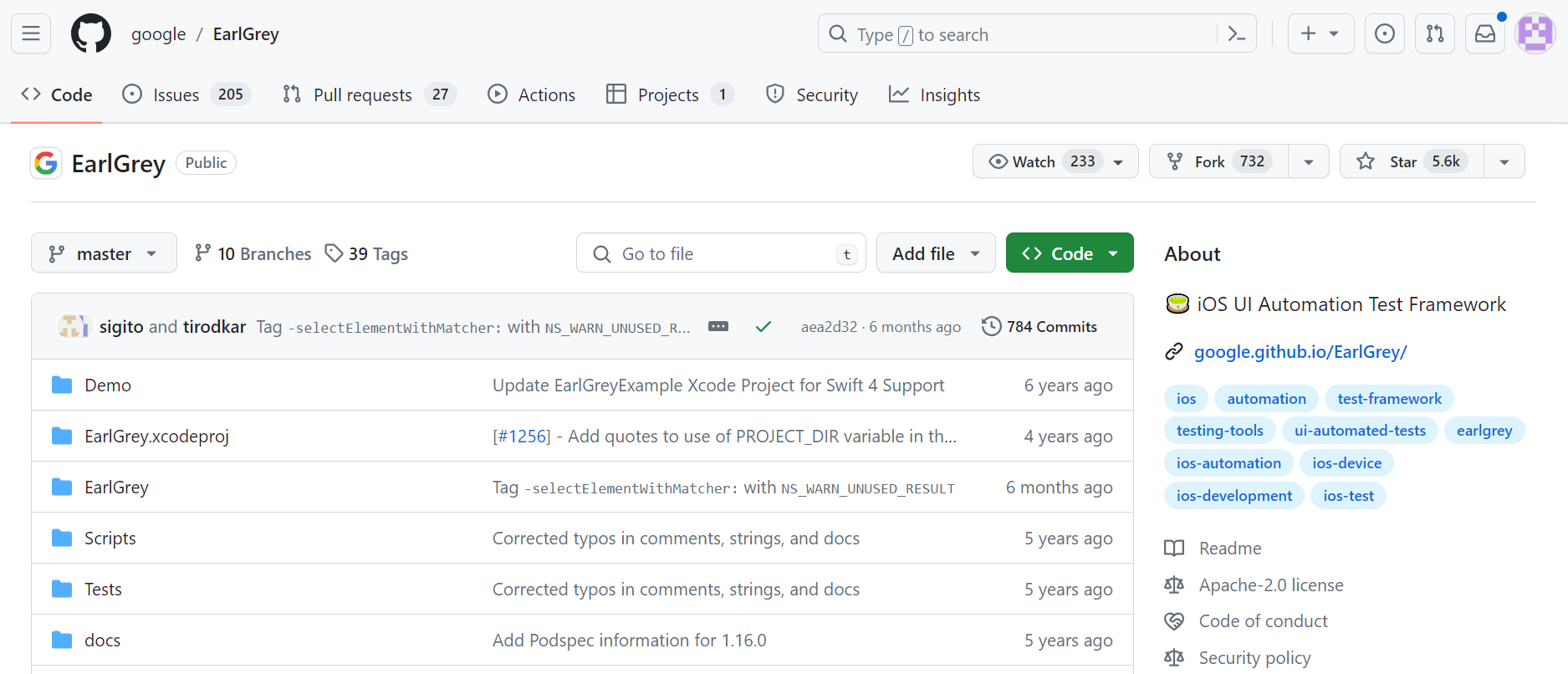
EarlGrey serves as a native iOS UI automation test framework that empowers you to create clear and concise tests. By utilizing the EarlGrey framework, you gain access to advanced synchronization functionalities.
EarlGrey automatically synchronizes with the user interface, network requests, and various queues while still providing the option to implement custom timings, if necessary, manually.
The synchronization features offered by EarlGrey are instrumental in ensuring that the user interface remains stable before executing actions. This significantly enhances the stability of tests and renders them highly repeatable.
Pros of using EarlGrey mobile testing tool
- EarlGrey simplifies test writing with the XCTest framework, making tests clear and concise.
- Enhanced synchronization in EarlGrey automatically handles UI, network requests, and queues, improving test reliability.
- EarlGrey supports testing for native and hybrid iOS apps, providing versatility in test coverage.
Cons of using EarlyGrey mobile testing tool
- The app exclusively works on iOS devices, excluding Android and other platforms.
- Xcode is necessary for running tests; alternative IDEs are not supported.
- Possible compatibility problems may arise with certain third-party libraries or frameworks.
12. Calabash
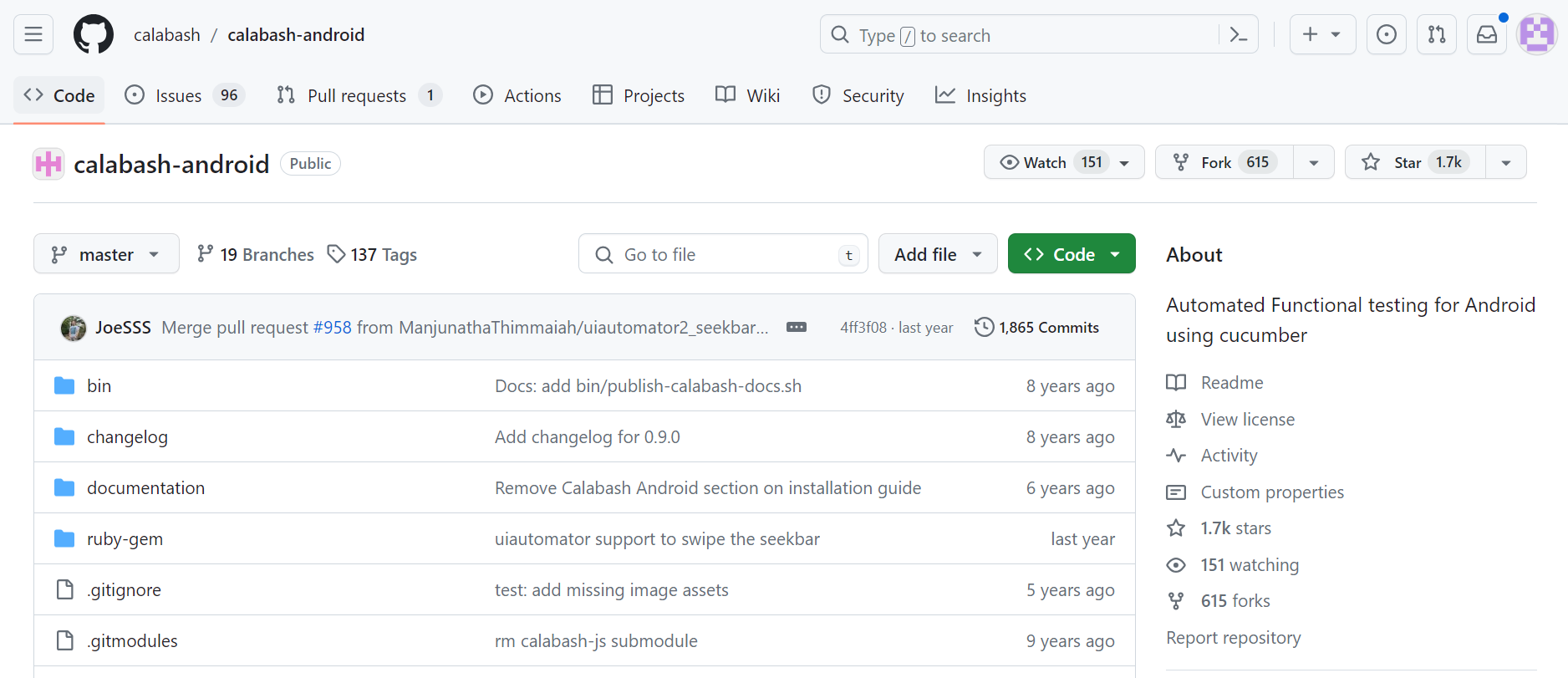
Calabash is an open-source acceptance testing framework that makes it easy to create and run tests for iOS and Android apps. This framework functions as an automated user interface framework, allowing developers to write Cucumber tests in Ruby.
Its core premise is to enable automatic UI interactions within a mobile application, such as pushing buttons, entering text, and validating responses. Its adaptability enables configuration across Android and iOS devices, ensuring real-time feedback and thorough validations.
Pros of using Calabash mobile testing tool
- Provides a unified interface for both Android and iOS, simplifying development with a single script.
- Cucumber integration allows easy writing of feature files using simple or domain-specific language, improving readability.
- Supports testing on physical devices and simulators for concurrent testing across multiple devices.
- A large community contributes to improving the tool and extending its functionality.
Cons of using Calabash mobile testing tool
- Requires proficiency to write effective test scripts for accurate results.
- Debugging test scripts can be challenging and time-consuming.
- Maintaining playback methods for automation can be costly due to frequent updates.
- Managing test data becomes more complex when scripts cover multiple screens.
13. Detox
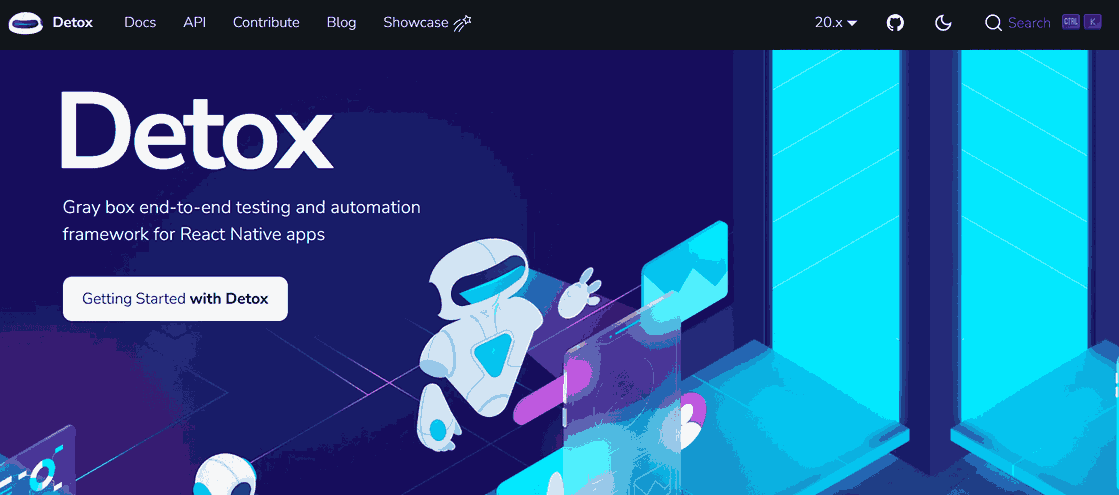
One of the most challenging aspects of automated testing in the mobile realm pertains to the apex of the testing pyramid, namely end-to-end testing. E2E tests commonly face the issue of flakiness, where the tests' outcomes are often non-deterministic.
To confront this problem directly, a shift from black box testing to grey box testing becomes necessary. This is precisely where Detox proves its value.
By employing Detox, you can conduct tests on your mobile application while it runs on an actual device or simulator, effectively interacting with it as a genuine user would.
Pros of using Detox mobile testing tool
- Allows JavaScript-based end-to-end tests on both iOS and Android.
- Modern async-await API for easier debugging and troubleshooting.
- Prevents test flakiness by monitoring asynchronous operations for reliable results.
- Integrates easily with CI platforms like Travis CI, Circle CI, and Jenkins.
- Tests can simulate real user interactions on devices or simulators (iOS support is limited).
Cons of using Detox mobile testing tool
- Android support is improving, but still limited.
- iOS lacks real testing capabilities, limiting app assessment.
- Does not support web views or hybrid apps.
- Lacks key methods like text extraction and coordinate location.
- Falls short in test reporting and screenshot capabilities compared to other tools.
14. TestFlight
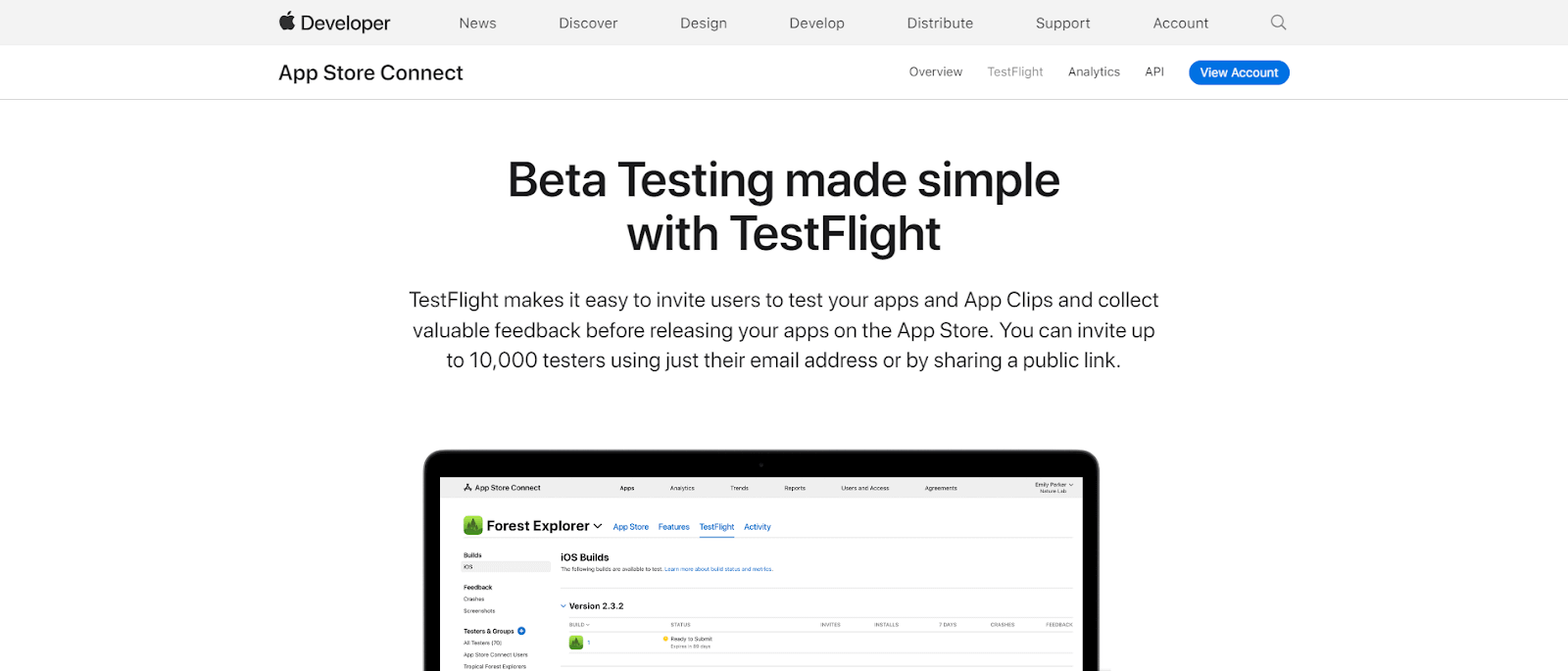
TestFlight offers a user-friendly solution for inviting individuals to test your apps and App Clips, enabling you to gather valuable feedback before launching them on the App Store.
By leveraging TestFlight, you can easily upload a beta version of your app or App Clip to App Store Connect. Testers can then utilize the TestFlight app to install your application and share their feedback.
TestFlight supports iOS, iPadOS, macOS, tvOS, watchOS, and iMessage apps while ensuring that testers consistently work with the most up-to-date build through automatic updates.
Pros of using TestFlight mobile testing tool
- Test up to 100 apps simultaneously, both internally and externally.
- Assign up to 100 beta testers with various roles.
- Each tester can test on up to 30 devices for thorough evaluation.
- All beta builds are accessible to team members for comprehensive feedback.
- Builds remain active for 90 days, allowing ample time for testing and improvements.
Cons of using TestFlight mobile testing tool
- Excludes 25% of users on iOS 7, limiting availability to iOS 8+.
- Requires a “beta review” process before external testers can access apps.
- Uploaded builds need several hours of processing before becoming accessible.
15. ACCELQ
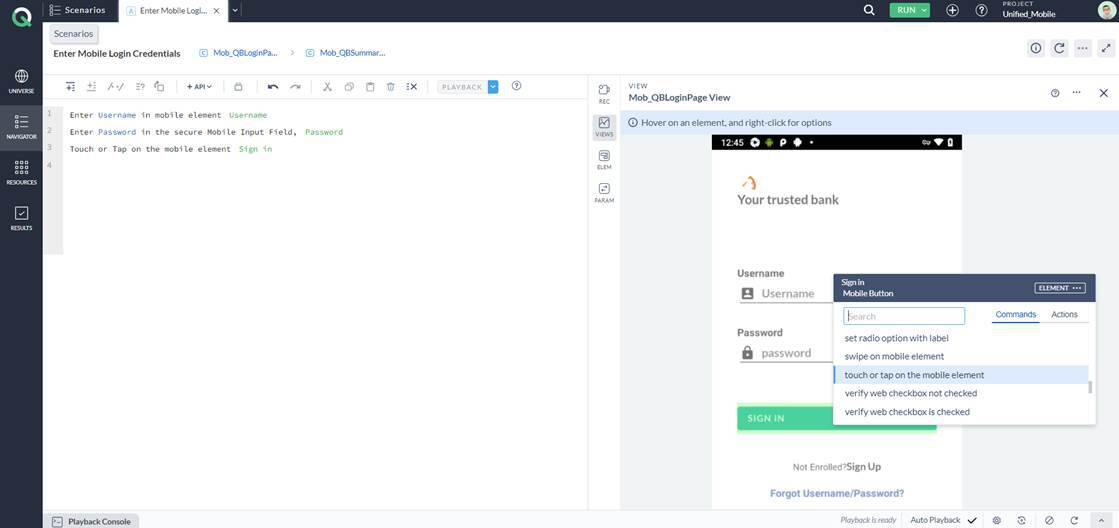
ACCELQ is a cloud-based continuous testing platform that can automate Web, API, and mobile testing in a unified flow without a single line of code. This is achieved through AI-powered technology using integrated device cloud labs for cross-device testing with error-fixing and self-healing abilities.
Design and user experience are focused, while their continuous innovative capabilities help seamless mobile testing deliver quality outcomes.
Pros of using ACCELQ mobile testing tool
- Allows non-specialists to perform testing with a functional automation approach.
- Intelligent mobile element identification for accurate testing.
- No coding required for testing complex mobile apps.
- Integrates with popular tools like Jenkins, TeamCity, and Bamboo.
Cons of using ACCELQ mobile testing tool
- Only a 14-day free trial is available.
- Commercial tool, not open-source.
What Are Essential Factors to Consider When Choosing a Mobile Testing Tool?
Consider multi-language support, CI/CD integration, codeless testing options, cross-platform compatibility, and comprehensive logging and reporting features when choosing tools.
A good mobile application testing tool should let you set smart testing strategies and define clear goals before you perform the actual testing.
Finding the right tool for script generation is the first step toward automation testing. Once the tool is chosen, you can start setting up the testing environments.
You need to pay attention to the features of the mobile application testing tools and ensure to pick a reliable solution that gives you different test creation options with multiple programming languages and platform support.
Here are some mobile app testing checklists that your team should consider while choosing the right mobile testing tool:
- Supports multiple programming languages: Mobile apps can be developed in any programming language depending on cost, requirements, and target audience. However, it is always good to choose mobile testing tools that allow the mobile tester to write test cases in various programming languages.
- As per the Stack Overflow Developer Survey, JavaScript is the most preferred programming language among developers, with a 63.61% share, followed by HTML/CSS, Python, etc.
- Seamless integration with the widely used CI/CD tools: Integrate with third-party applications to build a robust automation framework.
- For example, good mobile application testing tools can be integrated with multiple third-party applications and top CI/CD tools to achieve various purposes, including execution, revision control, test management, record defects, and inspection.
- Provides codeless options to create and run test cases: Creating codeless tests is fast, easy, and great for users with no programming skills. With codeless mobile testing tools, you can reduce the execution time for repetitive test cases.
- Supports multiple operating systems: If you are looking for a cost-effective and time-saving option or planning to migrate to cross-platform technology, make sure the mobile testing tools you choose support multiple operating systems, such as Android and iOS.
- Record & play options: Mobile application testing tools should be able to sense, record, play, and automate every single action of the test scenarios.
- Logs and report handling: Any mobile testing tools should be able to log test reports that display a detailed description of the plan, screenshots, defect points, and so on.

Conclussion
In this blog, we explored popular mobile testing tools that help streamline testing, reduce manual work, and improve efficiency. These tools ensure compatibility, robustness, and a great user experience by testing across multiple platforms, devices, and scenarios.
Mobile testing tools are essential for ensuring the quality, performance, and user satisfaction of apps. Equip yourself with the best tools to create exceptional mobile experiences.
To further strengthen your expertise in mobile app development and mobile testing, be sure to check out our comprehensive guide on top asked mobile testing interview questions. This resource will equip you with the knowledge needed to excel in this dynamic field.


Frequently asked questions
Did you find this page helpful?
More Related Hubs
TestMu AI forEnterprise
Get access to solutions built on Enterprise
grade security, privacy, & compliance
- Advanced access controls
- Advanced data retention rules
- Advanced Local Testing
- Premium Support options
- Early access to beta features
- Private Slack Channel
- Unlimited Manual Accessibility DevTools Tests