
Codeless, AI-Native Test Automation: From Natural Language to a Regression Suite
Codeless, AI-native test automation is a way to build automated tests from natural-language steps, Jira tickets or documents instead of code. An AI agent finds each element, runs the test, and proposes a fix with a reviewable diff when the UI changes. KaneAI by TestMu AI (formerly LambdaTest) does this for web, mobile web and native apps.


Trusted by 3M+ users globally at




"We have tripled our tests and are now executing tests in less than 2 hours with 78% Faster Test Execution"


"We figured out a more efficient way to monitor system health and resolve failures earlier in lower environments."





"TestMu AI has significantly boosted our testing speed, is easy to implement, and provides exceptional support."


"With 70% faster test execution, TestMu AI helped us achieve faster time-to-market and enhanced CX."



What is codeless, AI-native test automation?
Codeless test automation lets you create automated tests without writing scripts: you describe steps in natural language or record them, and the tool turns them into runnable tests that re-run in CI. KaneAI, TestMu AI's testing agent, does this for web and native mobile apps, self-heals broken locators and exports tests to Selenium, Playwright or Appium.
Older codeless tools recorded clicks and replayed them, then broke on the next redesign. AI changes two things: tests start from intent instead of a recording, and they survive UI changes without a re-record. This page covers how it works, what it costs, where it stops working, and a four-week path from zero to a CI-gated regression suite.
Codeless, AI-native test automation treats a test as a description of user behaviour, not a script. You write "Open the staging login page and sign in with {{username}} and {{password}}", and KaneAI turns each line into a step with an element and an action, running it as you add it. Credentials live as masked secrets, never inside the test.
The AI does three jobs that record-and-playback can't:
Generation.
KaneAI drafts structured test cases from a Jira ticket, a PRD, a PDF, a screenshot or a spreadsheet.
Healing.
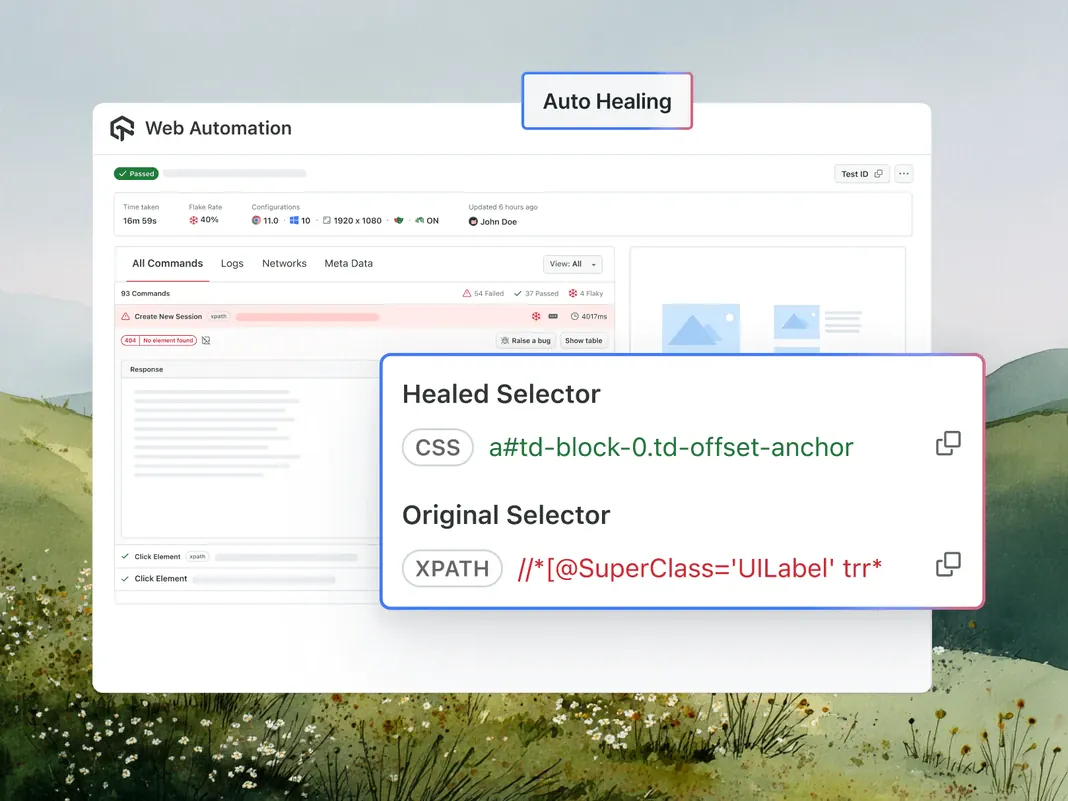
When an element moves or is renamed, KaneAI re-finds it from your original instruction and shows a before-and-after diff for you to accept or reject.
Analysis.
AI-native insights flag flaky tests and root causes, and Smart Bug Detection drafts the bug ticket.
How it works
How does codeless, AI-native testing work, step by step?
Worked example: a profile update on staging. A codeless test starts as a sentence and ends as a test you can run anywhere. In KaneAI, your app runs in a browser or on a device on one side of the authoring session, and the step list builds on the other.
Describe the test
Or paste the Jira ticket and let KaneAI draft it.
Review the plan
KaneAI shows the plan before it runs. Edit it, approve it, then run. Set each step to stop the run, continue past a failure, or skip.
Run at scale
In parallel on HyperExecute, on demand or on a schedule, across desktop browsers, mobile web and native apps on 50,000+ real devices.
Gate the build
By running the same test headless in CI:
kane-cli run "verify the profile update flow on staging" --headless --agent. Exit codes (0 pass, 1 fail, 2 setup error, 3 timeout) stop the pipeline. On a GitHub pull request, comment @KaneAI Validate this PR (beta) and KaneAI runs the tests and posts the results.Heal, then review
When the Save button moves, the step heals and the diff waits for your approval. Every change is versioned, with compare and rollback.
Export if you want code
Once every step has passed, export the test to Selenium, Playwright or Appium.
The test in natural language
Open the staging login page and sign in with {{username}} and {{password}}
Go to Settings
Change the display name to "QA Bot 42"
Click Save
Verify a confirmation message appears and the header shows "QA Bot 42"
{{username}} and {{password}} are secrets stored in KaneAI, so no credential sits in the test.
Exported as Playwright (Python)
import os
from playwright.sync_api import Page, expect


def test_update_display_name(page: Page):
    page.goto(os.environ["BASE_URL"] + "/login")
    page.get_by_label("Username").fill(os.environ["APP_USER"])
    page.get_by_label("Password").fill(os.environ["APP_PASSWORD"])
    page.get_by_role("button", name="Sign in").click()
    page.get_by_role("link", name="Settings").click()
    page.get_by_label("Display name").fill("QA Bot 42")
    page.get_by_role("button", name="Save").click()
    expect(page.get_by_role("status")).to_be_visible()
    expect(page.get_by_role("banner")).to_contain_text("QA Bot 42")
Illustrative: the shape of a Playwright export for the test above. KaneAI generates the real file from your saved steps and adds TestMu AI's published Playwright bindings, so the details differ.
Compare the approaches
How is codeless, AI-native testing different from record-and-playback and low-code?
Codeless and no-code are used almost interchangeably in testing: neither asks you to write code to build a test. Where people separate them, codeless is the broader testing term and no-code is the strict end, with no code layer at all. Low-code is the real split, because it expects someone to script the hard parts.
As of November 2026.
| Aspect | Record-and-playback | Low-code | Codeless, AI-native (KaneAI) |
|---|---|---|---|
| How tests are built | Record clicks | Visual builder plus a script editor | Natural language, a recording, or generated from tickets and documents |
| What is stored | Recorded selectors | Selectors plus code for the hard parts | What each step is meant to do |
| Branching and test data | Usually needs a script | Written in code | If/Else and While in natural language; variables and datasets |
| After a UI change | Breaks until re-recorded | An engineer fixes the selector | Re-finds the element and shows a diff for review |
| Who builds tests | Testers | Testers plus a scripter | Testers and PMs; engineers through Kane CLI |
| Getting code out | Rarely | Partly | Export to Selenium, Playwright or Appium after a passing run |
| API, visual and accessibility checks | Separate tools | Varies | In the same run, including a WCAG audit |
KaneAI sits in the codeless column: steps, assertions and branches stay in natural language, a step can run a JavaScript snippet when you need one, and finished tests export as code.
For when hand-written code beats any codeless approach, read code-based vs codeless test automation.
Cost
What does codeless, AI-native test automation cost?
KaneAI is priced per agent, and AI work is metered in credits. New accounts get 10,000 Kane CLI credits for 30 days with no credit card. There is no free KaneAI plan.
| Plan | Price per agent | What it adds |
|---|---|---|
| Starter | $17/month billed annually | Kane CLI authoring |
| Pro | $89/month billed annually | KaneAI web app for codeless authoring, plus 100 HyperExecute minutes |
| Max | $179/month billed annually | Adds mobile |
| Enterprise | Custom | SSO, unlimited credits, custom concurrency |
What a test costs in credits: creating a 40-step test uses about 80 credits; a vision check or auto-heal uses 1.5–2.5 credits per step; an AI root-cause analysis uses 12; unchanged steps replay from cache with no LLM cost. Credit costs are from KaneAI pricing, as of November 2026.
Limits
Where does codeless, AI-native test automation stop working?
Codeless removes scripting, not test design. These are the places where it falls short, on KaneAI and on any other tool.
Vague goals make vague tests.
"Check the checkout" proves little. Name the outcome: "Verify the order total equals the cart total plus shipping."
Healing fixes locators, not behaviour.
Auto-heal recovers an element that moved or was renamed. If a feature was removed on purpose, the step should fail so a person decides whether it's a bug.
Some tests belong in code.
Unit, component, load and heavy test-data setups stay in code frameworks. Use codeless for end-to-end coverage.
Some steps block every tool.
CAPTCHAs, hardware security keys and SMS one-time codes need a test account or a staging bypass.
Export needs a passing test.
You can export code only from a test whose steps have all run and passed, and not every framework is available yet: Cypress and WebdriverIO are listed as coming soon.
Coverage
What should codeless and no-code automation tools cover?
A codeless tool that only records web clicks is not a platform. On TestMu AI, one codeless test can cover:
Web, mobile web and native iOS and Android apps from one agent
API calls next to UI steps, plus network checks for failed requests
Visual comparison of every screen
A WCAG accessibility audit on every run
Reusable modules, and environments that carry from dev to production
A native Jira and Azure DevOps app
SSO on Enterprise plans
Comparing named no-code automation tools? Our guide to the top 10 codeless testing tools compares KaneAI, Testsigma, testRigor, mabl and six others by approach, best fit and pricing.
Everything Codeless Automation Should Be
Author in natural language, cut maintenance with self-healing, cover web and mobile at scale, and run it in your pipeline. No scripting at any step.
 KANE CLI
Codeless web and mobile tests from one terminal
Write codeless tests in natural language for web, iOS Simulator, and Android Emulator apps.
Read the docs
- Native apps on iOS Simulator, Android Emulator
- Pick devices by name and OS
- PR checks in GitHub Actions

NATURAL-LANGUAGE AUTHORING
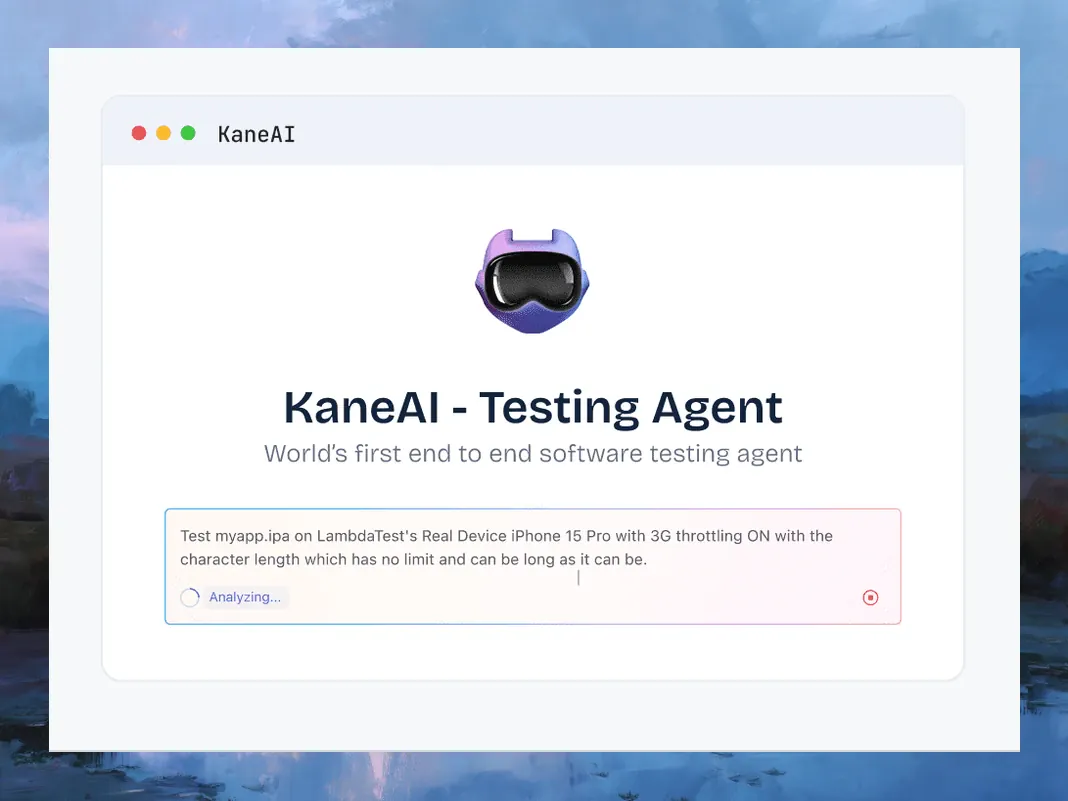
Describe the Test, Skip the Script
Write the flow the way you would explain it, or start from a PRD or recording. KaneAI reads the intent and builds the steps and assertions.
Try for free- Steps, conditionals, and loops all in natural language
- Generate tests from a prompt, ticket, PDF, or recording
- Adjust any step by asking, never by editing code
 AI SELF-HEALING
Fewer Broken Tests After Each Release
A renamed button breaks most codeless recordings. KaneAI finds elements by intent and re-anchors the step, so rewrites become a quick review.
Try for free- Smart element detection over brittle CSS/XPath selectors
- Steps re-anchor by intent when the interface shifts
- Review an automatic heal instead of rewriting the test
 WEB AND MOBILE, NO CODE
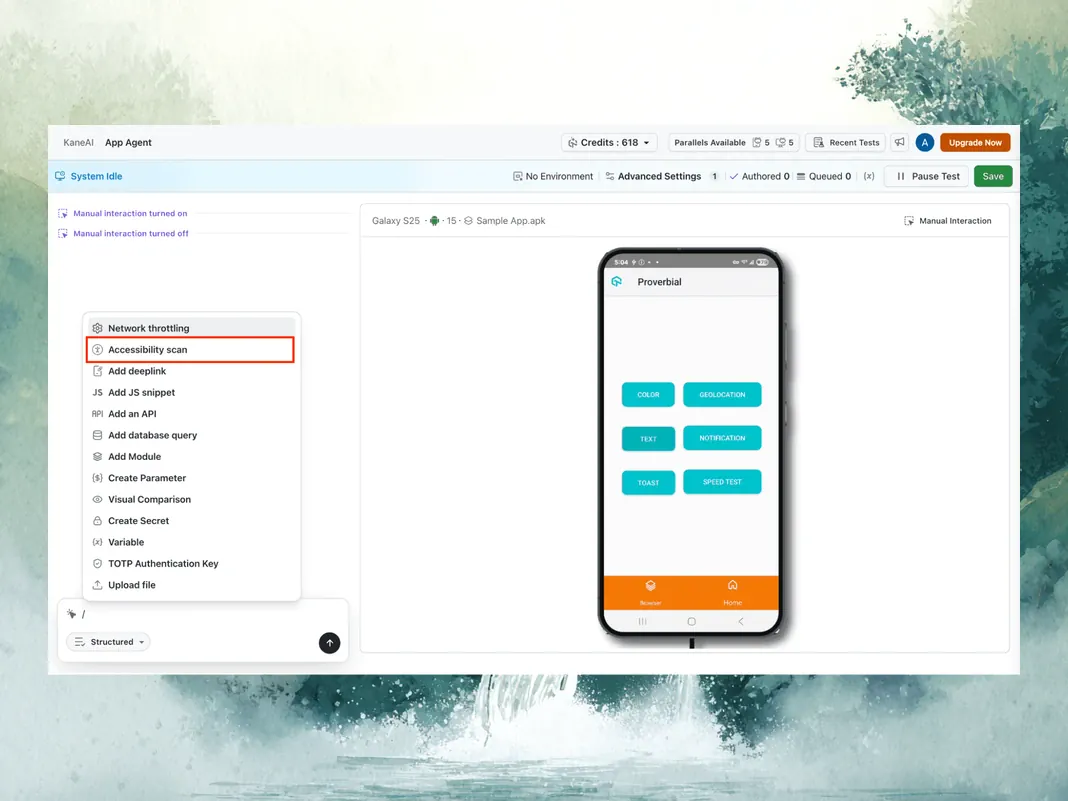
Web and Native Mobile in One Flow
Codeless is not just the browser. Author web and native mobile in one flow, then run across 3,000+ browser and OS combos and 50,000+ real devices.
Try for free- Web testing across 3,000+ browser and OS combinations
- Native mobile across 50,000+ real devices
- One authoring flow, run in parallel on the TestMu grid
 CI AND PR VALIDATION
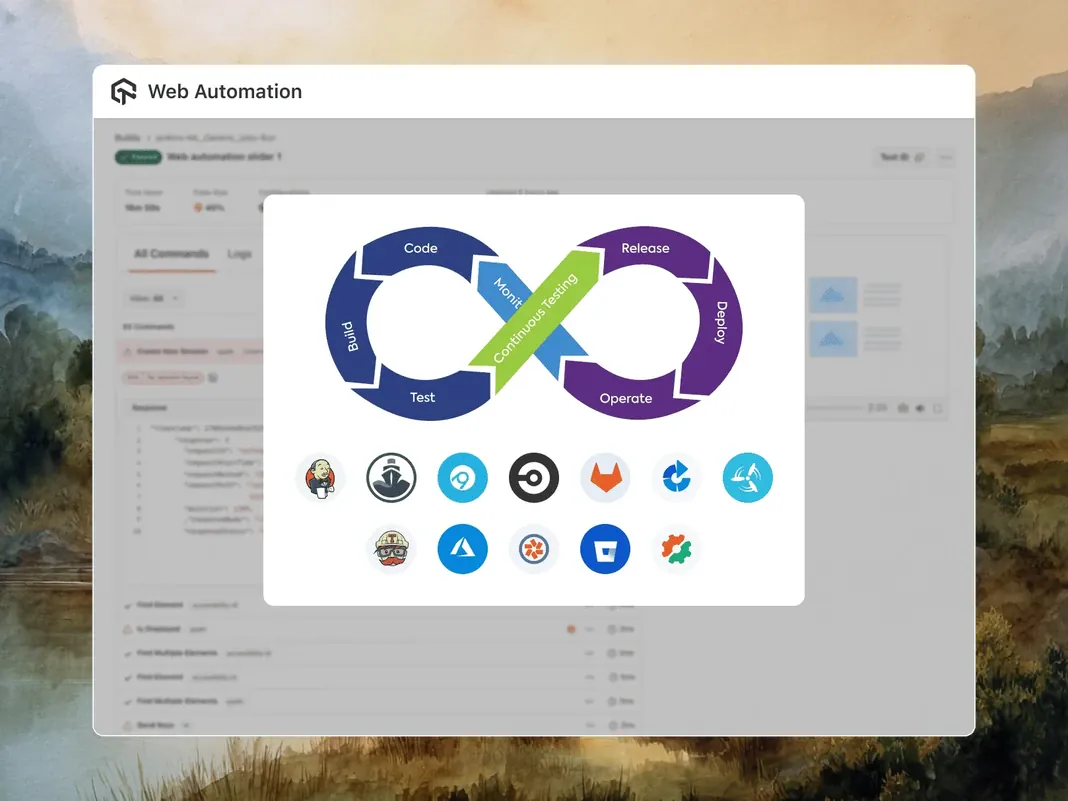
Export, Run in CI, Validate PRs
Export tests to Selenium, Playwright, or Appium code with no lock-in. Run headless in CI with Kane CLI, or validate a PR from a GitHub comment.
Start Testing Without Code- Export to Selenium, Playwright, and Appium
- Headless CI runs with Kane CLI and clear exit codes
- GitHub App validates a pull request on request
How do you evaluate a codeless automated testing platform?
Run a two-week pilot and answer six questions. To compare named vendors, see our list of codeless testing tools.

Can a tester finish a real flow, with a login, a condition and an assertion, without help?
Ask a manual tester to build one of your own journeys, with a condition and an assertion in it. If an engineer has to finish it, the tool is low-code.

When a developer renames a button, does the tool heal it, and can you see the diff?
Rename a button in staging and rerun. Check whether the step heals, fails clearly or passes silently, and whether you can review what changed.

Can you get the code out, and in which frameworks?
Export one test to the framework your team already runs and read it. Ask which frameworks are generally available and which are on request or still on the roadmap.

Does it cover what you ship: native mobile, APIs, accessibility?
Confirm native iOS and Android on real devices, not only mobile web, plus API checks if your journeys depend on them.

Will a failure stop the build through exit codes or a PR check?
Wire a deliberately failing test into CI and confirm the pipeline stops, rather than a report arriving after the release.

What does it cost at full volume, in credits per step and execution minutes?
Model the price at your real run count, including parallel sessions and any AI operations billed per use. For KaneAI, compare plans on the KaneAI pricing page.
Rollout
How do you go from zero to a codeless regression suite in four weeks?
Week 1
Generate test cases from your 10 most important Jira stories, approve the plans, and run them.
Week 2
Add data-driven variants and If/Else branches; build reusable modules for login and navigation.
Week 3
Schedule nightly runs on HyperExecute (Pro or above) and add
kane-cli run … --headlessto CI.Week 4
Turn on PR validation and Smart Bug Detection, and route bugs to Jira.
Already have a Selenium suite to move off? See the Selenium alternatives.
What results have teams seen?
Fyscal Technologies: 60% faster test creation with KaneAI's natural-language authoring and 600–700 engineering hours saved per month.

60%
Faster test creation


With KaneAI and HyperExecute, we've achieved a 60% reduction in test execution time, compressed regression cycles from 10 hours to a mere couple of hours




What teams say about testing on TestMu AI
As Best Egg expanded its product offerings and entered new markets, we knew our old testing infrastructure couldn’t keep up.
With support from Tenny Agustin, our Engineering Operations Lead, we modernized our approach with
TestMu AI

Best Egg
best-egg

Attended an onboarding call for KaneAI by TestMu AI.
KaneAI is the world's first end-to-end software testing agent.
KaneAI

Anmol Baranwal
anmol-baranwal
I just discovered KaneAI by TestMu AI, and it's a game-changer! Let me walk you through how it's transforming my testing workflow
KaneAI

Muhammad Noorani
muhammadnoorani
More Reasons to Love TestMu AI
TestMu AI is a leading agentic AI quality engineering platform, trusted globally, that assures your AI deployments work as intended, safely and securely, across enterprise and real-world conditions.
Users
3M+
Tests
1.5B+
Enterprises
18K+
Countries
132
TestMu AI positioned as a Leader in the 2026 Gartner® Magic Quadrant™
Read ReportTestMu AI recognized in The Forrester Wave™: Autonomous Testing Platforms, Q4 2025
Read ReportWall of Fame
TestMu AI is the #1 choice for SMBs and enterprises across the globe.
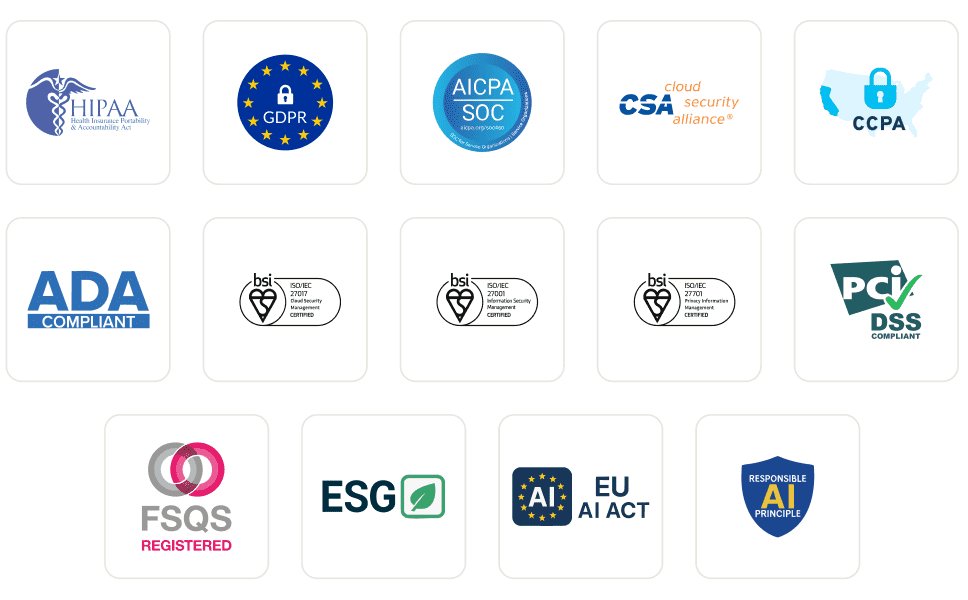
Enterprise-Grade Security
We safeguard your data and AI systems with global security, privacy, responsible AI, and ESG standards.
Integrations
Works where you work, 120+ integrations with the tools your team relies on.



As Seen On
Frequently asked questions
TestMu AI for Enterprise
Get access to solutions built on enterprise-grade
security, privacy, & compliance
- Advanced access controls
- Advanced data retention rules
- Advanced Local Testing
- Premium Support options
- Early access to beta features
- Private Slack Channel
- Unlimited Manual Accessibility DevTools Tests