Backwards Scoring: Ranking Test Suites by Which Real Incidents They Would Have Caught | TestMu 2026
Backwards Scoring: Ranking Test Suites by Which Real Incidents They Would Have Caught | TestMu 2026

 Playlist

- Welcome to TestMu Conference 2026 | TestMu 2026
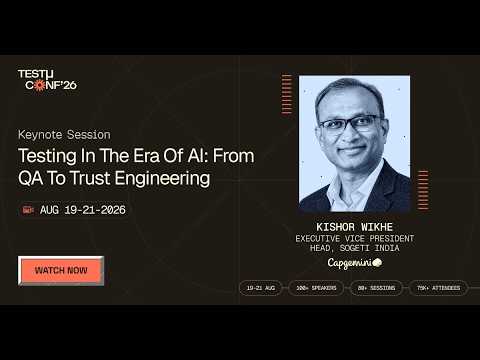
- Keynote: Testing In The Era of AI - From QA to Trust Engineering | TestMu 2026
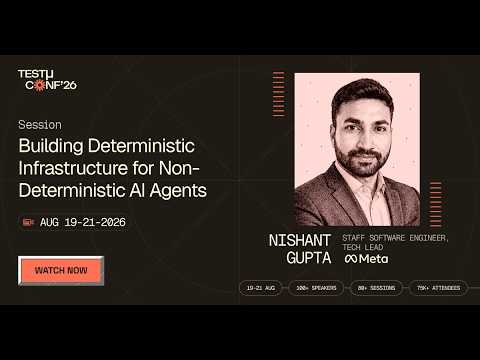
- Building Deterministic Infrastructure for Non Deterministic AI Agents | TestMu 2026
- Confidence - Correctness The Agentic Validation Loop | TestMu 2026
- Ask Me Anything: AI Agents, Skills, Career & Growth | TestMu 2026
- Context That Dreams | TestMu 2026
- From AI Assistants to AI Coworkers: How Engineering Teams Ship Faster with Enterprise Context | TestMu 2026
- Architects of Trust: Redefining Quality Leadership in an Agentic World | TestMu 2026
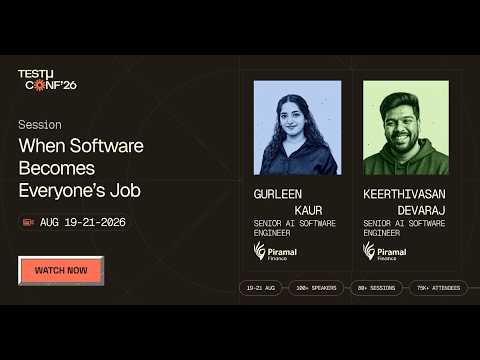
- When Software Becomes Everyone's Job | TestMu 2026
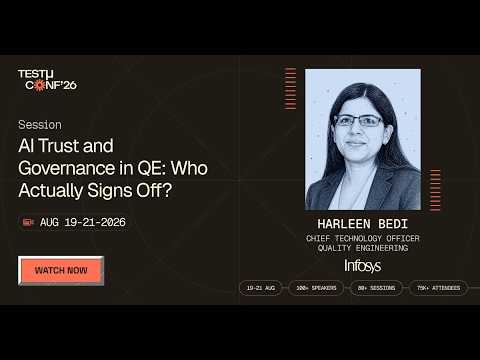
- Fireside Chat: AI Trust and Governance in QE - Who Actually Signs Off | TestMu 2026
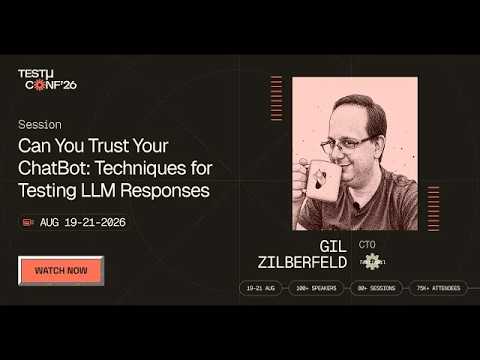
- Can You Trust Your ChatBot: Techniques for Testing LLM Responses | TestMu 2026
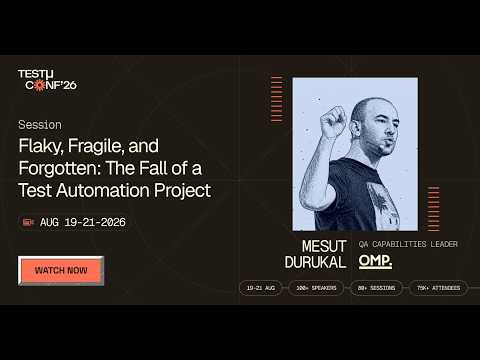
- Flaky, Fragile, and Forgotten: The Fall of a Test Automation Project | TestMu 2026
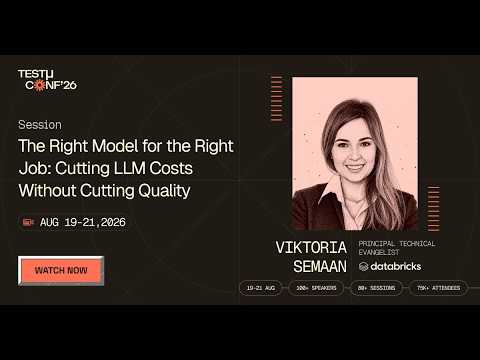
- The Right Model for the Right Job: Cutting LLM Costs Without Cutting Quality | TestMu 2026
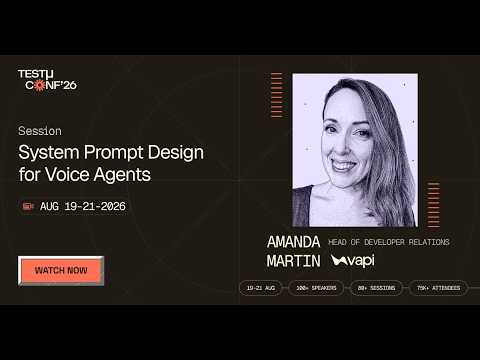
- System Prompt Design for Voice Agents | TestMu 2026
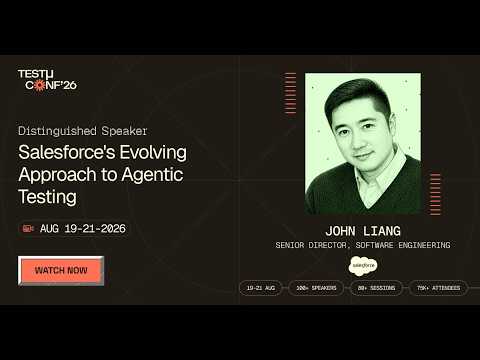
- Testing at the Speed of Agents: Salesforce's Evolving Approach to Agentic Testing | TestMu 2026
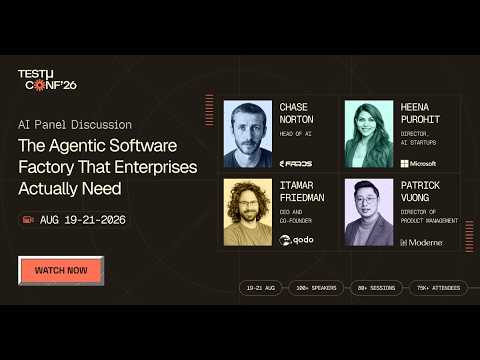
- Panel Discussion: The Agentic Software Factory That Enterprises Actually Need | TestMu 2026
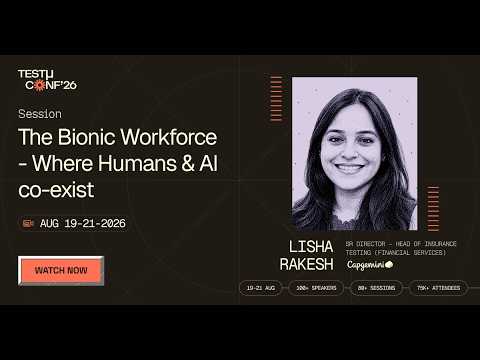
- The Bionic Workforce: Where Humans and AI Co-exist | TestMu 2026
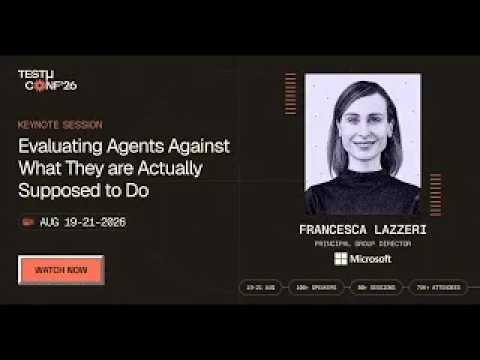
- Keynote: Beyond Benchmarks - Evaluating Agents Against What They Are Actually Supposed to Do | TestMu 2026
- Build Trustworthy AI Agents powered by Evals | TestMu 2026
- Real World Lessons from Scaling Test Automation at Microsoft | TestMu 2026
- Canal Mania and the Philosopher's Stone | TestMu 2026
- Why RL Environments Are All You Need for Building Agents | TestMu 2026
- Panel Discussion: QE at Enterprise Scale - What Will a QE Org Look Like in 2027? | TestMu 2026
- Working With Developers: A Tester's Survival Guide | TestMu 2026
- Testing What Matters: Evaluating LLM Relevancy with DeepEval | TestMu 2026
- Beyond Scoring: Rethinking Ranking in the LLM Era | TestMu 2026
- Backwards Scoring: Ranking Test Suites by Which Real Incidents They Would Have Caught | TestMu 2026
- Panel Discussion: The BFSI Playbook - Scaling AI with Trust and Quality | TestMu 2026
- Keynote: Is the Developer Lifecycle Dead? | TestMu 2026
- Going Past the Vibes: How to Build Real Apps | TestMu 2026
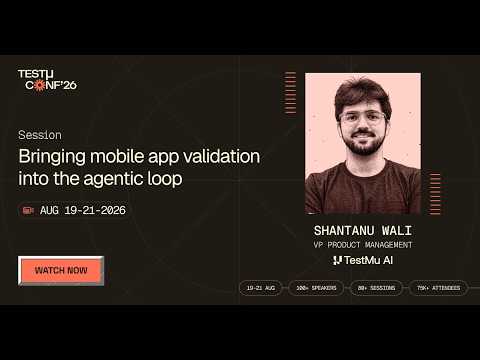
- Bringing Mobile App Validation into the Agentic Loop | TestMu 2026
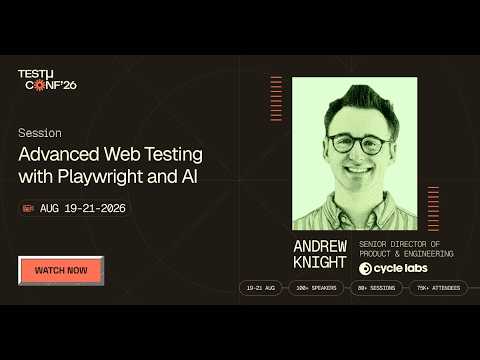
- Workshop: Advanced Web Testing with Playwright and AI | TestMu 2026
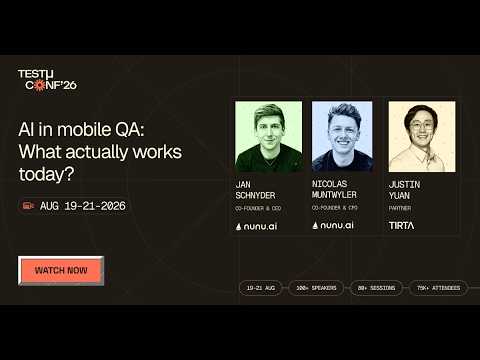
- Panel Discussion: AI in Mobile QA - What Actually Works Today? | TestMu 2026
- Local Agentic Theory for Accessible Mobile Games | TestMu 2026
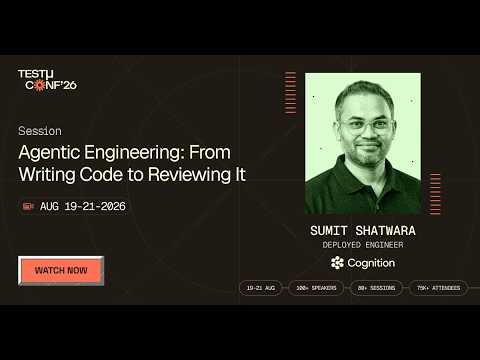
- Agentic Engineering: From Writing Code to Reviewing It | TestMu 2026
- Revisit Old Problems with New Eyes | TestMu 2026
- Panel Discussion: Scaling Enterprise Practice in the Agentic Era | TestMu 2026
- Workshop: The Full Agentic QA Loop for Web Applications | TestMu 2026
- The Trust Problem: Designing Quality Frameworks for AI-Generated Code | TestMu 2026
- Why Does AI Suddenly Need Forward-Deployed Engineers? | TestMu 2026
- Stop Guessing A11y: Auto-Generate Playwright Tests from Your GraphQL Schema | TestMu 2026
- Workshop: Debug with Appium MCP | TestMu 2026
- Your AI Agent Passed Every Test. Your Humans Still Rejected It. Now What? | TestMu 2026
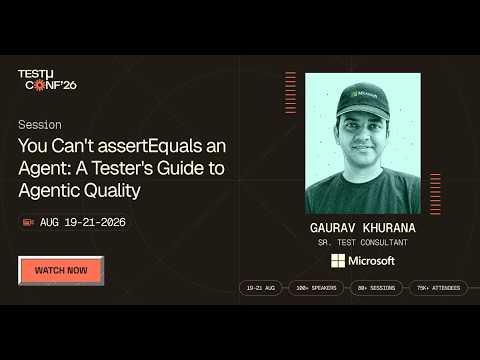
- You Can't assertEquals an Agent: A Tester's Guide to Agentic Quality | TestMu 2026
- Panel Discussion: Money Moves at Machine Speed - Trust, Risk, and Quality in Agentic Finance | TestMu 2026
- From Load Testing to Reliability Engineering: Making Performance Testing Predict Production Behavior | TestMu 2026
- Scaling Trust, Not Automation - Rethinking Quality for the AI Era | TestMu 2026
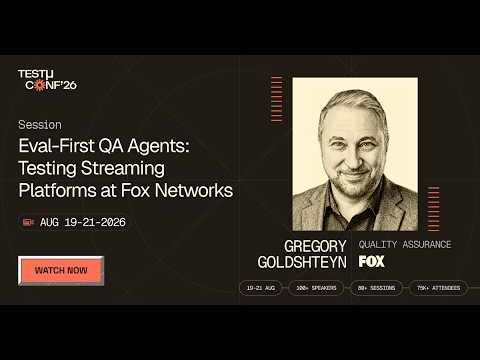
- Eval-First QA Agents: Testing Streaming Platforms at Fox Networks | TestMu 2026
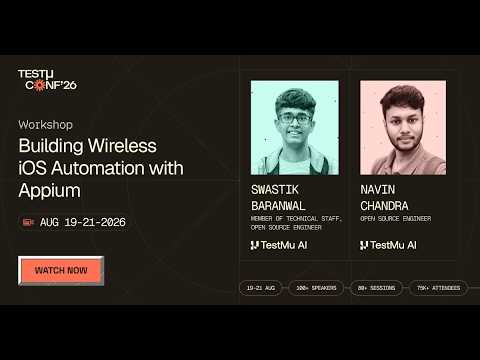
- Workshop: Engineering RemoteXPC: Building Wireless iOS Automation with Appium | TestMu 2026
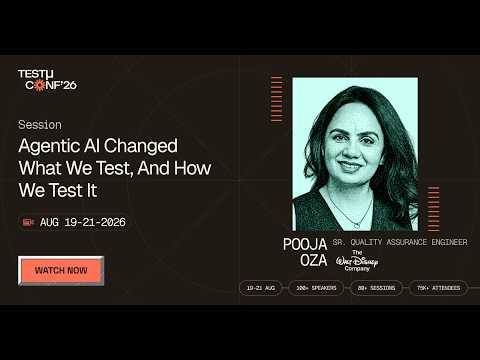
- Agentic AI Changed What We Test, And How We Test It | TestMu 2026
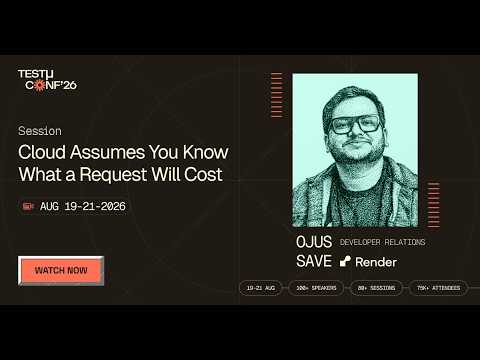
- Cloud Assumes You Know What a Request Will Cost | TestMu 2026
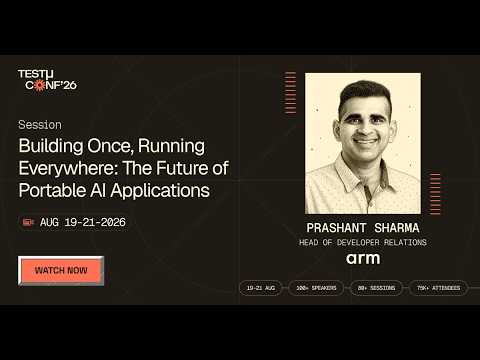
- Building Once, Running Everywhere: The Future of Portable AI Applications | TestMu 2026
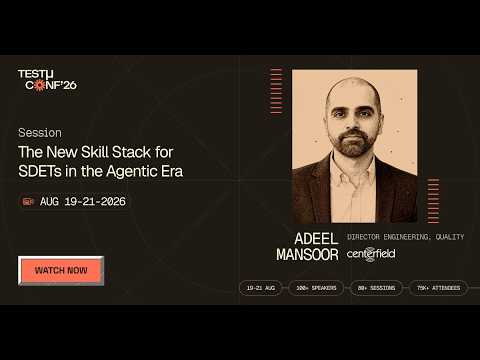
- The New Skill Stack for SDETs in the Agentic Era | TestMu 2026
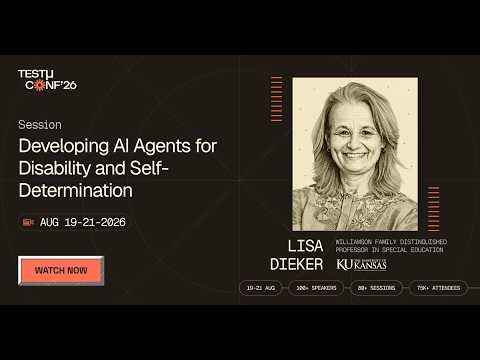
- Developing AI Agents for Disability and Self Determination: Lessons from Project RAISE | TestMu 2026
- Panel Discussion: Who Tests the Machines? QE Leaders on Quality in the Age of AI-Written Code | TestMu 2026
- Fireside Chat: The Economics of AI Agents: How Startups Are Rethinking Value and Monetization | TestMu 2026
- Agentic AI and the Next Decade of Quality Engineering | TestMu 2026
- When You Run Out of Requirements: What Happens When You Go All-In on Agents | TestMu 2026
- Keynote: The Next Era of AI: Moving from “Can We Build It?” to “Can We Trust It?” | TestMu 2026
- Panel Discussion: Mission-Critical Priorities in Quality Engineering: The Leader's Playbook | TestMu 2026
- Panel Discussion: Agentic Engineering and Quality in Healthcare | TestMu 2026
- Scaling Quality in a Decision Intelligence Platform: The Agentic QA Playbook | TestMu 2026
- Panel Discussion: Driving the Agentic Shift in Banking Adoption Governance and Scale | TestMu 2026
- Keynote: The Self Driving Company | TestMu 2026
- AI Applications Security Puzzle | TestMu 2026
- The Last Manual Handoff: Redesigning End-to-End Testing in the Age of AI | TestMu 2026
- Panel Discussion: Reinventing the QE Practice at Global Scale in Agentic Era | TestMu 2026
- Workshop: The Full Agentic QA Loop for Mobile Applications | TestMu 2026
- The Copilot Wrote It but Who Saves It: Surviving the AI Code Tsunami | TestMu 2026
- Evidence-Based QA: Proving Quality with Agentic Test Runs and OpenSourcing How We Do It | TestMu 2026
- ML-Driven Test Intelligence at Scale - What Works What Fails and Why It Matters | TestMu 2026
- Workshop: Legacy vs Autonomous QA Arena - Surviving the AI Driven Quality Evolution | TestMu 2026
- Building a Billion-Dollar Healthcare Product at Zebra Technologies | TestMu 2026
- Productize Yourself: AI Proof Yourself | TestMu 2026
- AI Architecture Thinking: From Idea to Impact | TestMu 2026
- Keynote: Will the Real Autonomous Agent Please Stand Up | TestMu 2026
- Redefining Test Data Strategy in the Gen AI Era | TestMu 2026
- Build Your Own Benchmark: Why Agents Need Custom Evals and How to Create Them | TestMu 2026
- From Pilots to Practice: Transforming Sales with AI | TestMu 2026
- Fast, Smart, and Fragile: Rethinking Testing Leadership in the Age of AI | TestMu 2026
- Autonomous Quality Engineering: AI Systems That Generate Execute Heal Learn and Govern Quality | TestMu 2026
- Panel Discussion: Engineering Trust Quality in AI-Driven Commerce | TestMu 2026
- Discovery Found Everything: Your Agent Still Doesnt Know What Matters | TestMu 2026
- Testing the Untestable: Turning OWASP AILLM Risks into Practical QA Checks | TestMu 2026
- When Software Starts Thinking: The Now of Quality Engineering | TestMu 2026
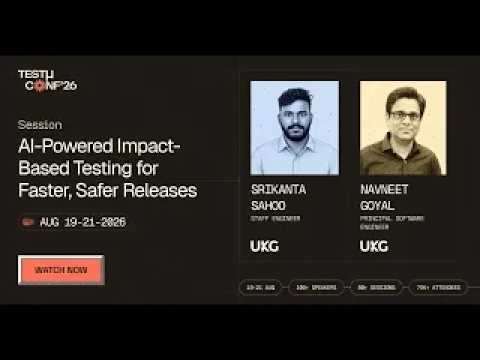
- AI-Powered Impact-Based Testing for Faster Safer Releases | TestMu 2026
- Closing Note TestMu Conference 2026 | TestMu 2026
About the talk
Test coverage is the metric everyone has and nobody trusts. A 90%-covered codebase still ships incidents. The question worth answering is harder: of the tests we run, which ones have ever caught anything that mattered?
This paper proposes a backwards effectiveness score. For each historical incident in our streaming QE database, we replay candidate test suites against the pre-incident state of the system and record which tests would have failed. Tests that fail on real historical incidents score high. Tests that have never failed on anything real score low, regardless of code coverage or assertion count.
We applied the method to roughly 4,200 automated test cases over an 18-month incident window. About 12% had no historical catch evidence. Another 8% caught incidents already caught earlier in the pipeline, contributing duplicate coverage. We did not auto-delete those tests. We flagged them for owner review, and the conversation that followed surfaced cases where the test was preventive rather than reactive (caught problems before they entered the incident database) and others where the test was simply dead weight.
The contribution is the scoring method, the limits of the method (it punishes preventive tests, it depends on incident data quality), and a sober view of what "test effectiveness" can and cannot tell.
Key Takeaways:
The Flaw in Traditional Metrics: Understand why high code coverage doesn't equate to incident prevention and why we need a "backwards" approach to validation.
The Backwards Scoring Framework: Learn a repeatable methodology for replaying historical incidents against existing test suites to identify which tests actually provide value.
Identifying "Dead Weight" Tests: How to use incident data to pinpoint tests that provide duplicate coverage or no historical evidence of catching real-world issues.
Balancing Reactive vs. Preventive Testing: Insights into the limits of effectiveness scoring, specifically how to distinguish between "useless" tests and those that are vital for prevention but don't show up in incident logs.
Data-Driven Test Maintenance: A practical workflow for flagging low-scoring tests for owner review rather than relying on blunt auto-deletion.
More from TestMu Conf 2026

TestMu Conf
Testμ(TestMu) Conference is TestMu AI’s (Formerly LambdaTest) annual flagship event, one of the world’s largest virtual software testing conferences dedicated to decoding the future of testing and development. Built by the community, for the community, it’s a space where you’re at the center, connecting, learning, and leading together. From deep-dive sessions on emerging trends in engineering, testing, and DevOps, to hands-on workshops and inspiring culture-driven talks, every experience is designed to keep you at the heart of the conversation.
More Videos from TestMu 2026
From AI Assistants to AI Coworkers: How Engineering Teams Ship Faster with Enterprise Context
TestMu 2026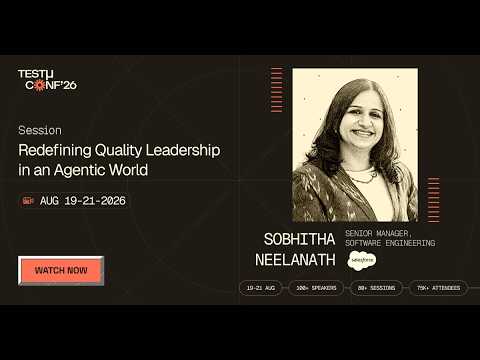
Keynote: Beyond Benchmarks - Evaluating Agents Against What They Are Actually Supposed to Do
TestMu 2026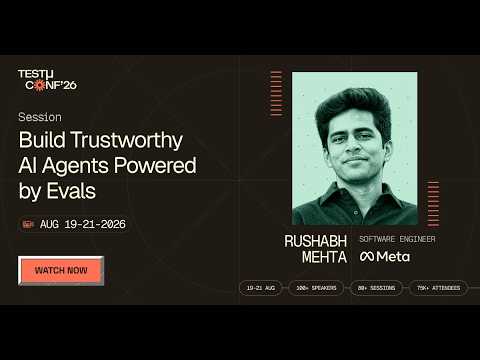




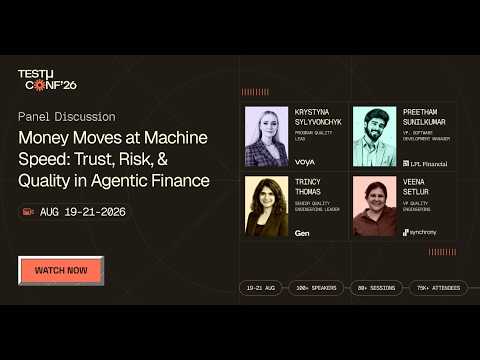
Panel Discussion: Money Moves at Machine Speed - Trust, Risk, and Quality in Agentic Finance
TestMu 2026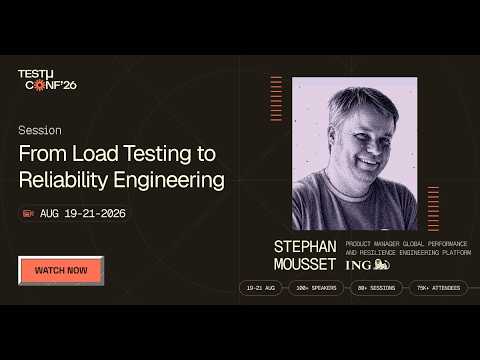
From Load Testing to Reliability Engineering: Making Performance Testing Predict Production Behavior
TestMu 2026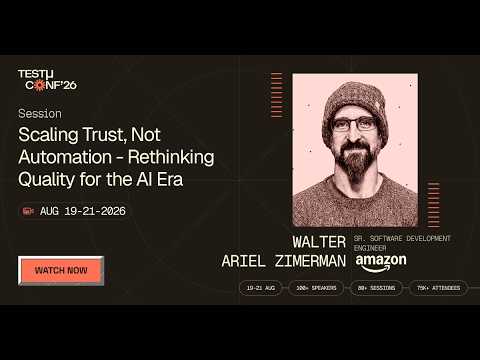
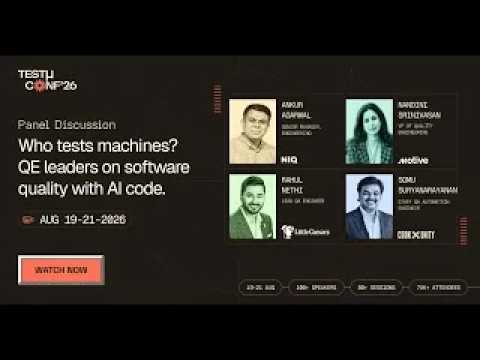
Panel Discussion: Who Tests the Machines? QE Leaders on Quality in the Age of AI-Written Code
TestMu 2026
Fireside Chat: The Economics of AI Agents: How Startups Are Rethinking Value and Monetization
TestMu 2026
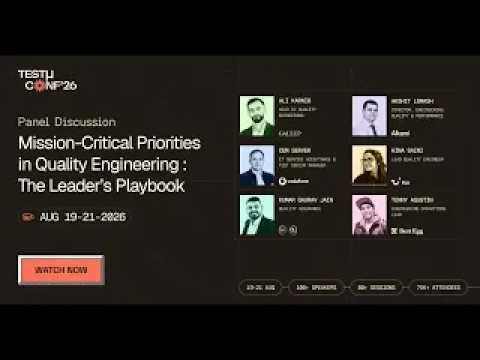
Panel Discussion: Mission-Critical Priorities in Quality Engineering: The Leader's Playbook
TestMu 2026