

Next-Gen App & Browser Testing Cloud
Trusted by 2 Mn+ QAs & Devs to accelerate their release cycles


How To Move From Manual Testing To Automation
Are you thinking to move from manual testing to automation? Read this blog to learn about some key points to keep in mind as you make that transition.

Shahzeb Hoda
January 19, 2026
As software requirements are changing faster than ever, more organizations are adopting agile methodologies to achieve shorter development cycles and accelerated Time to Market (TTM).
In this rapidly changing technology landscape, where application quality matters more than ever, manual testing seems time-consuming, repetitive, and prone to human errors. The necessity to move from manual testing to automation testing seems to fit well in the fast-changing technology business landscape. The movement (or migration) can be largely attributed to the flexibility of better test coverage and early detection & resolution of issues, in comparison to manual testing.

Having said that, the importance of manual testing in the software development life cycle will never fade away; though it has to be coupled with a formidable automation testing strategy. With an increasing number of organizations making the shift, a move from manual testing to automation testing is the need of the hour.
Keeping in mind that the importance of both manual and automation testing is an important factor, therefore it is essential to know at first on the idea of shifting from manual testing to automation seems intimidating. You may get stormed with questions such as how to start and where to start from?
In this blog, I will highlight some key notes to keep in mind before you decide to make the much-needed move from manual testing to automation testing.
Evolution: Manual Testing to Automation Testing
In a business environment where time is money, the importance of speed cannot be overstated. Agile methodology has enabled fast development cycles while ensuring that the user experience remains consistent. However, while feature-rich new features are constantly being introduced, some users with older devices continue to witness an average experience.
Businesses today call for a faster and more efficient way to test software. Agile methodologies have helped solve these issues, but companies risk falling short due to historical issues with maintenance of manual test cases and lack of visibility into testing progress.
As per a study conducted by Statista, developers worldwide attributed 32% of all software project failures to a lack of time allocated to testing.
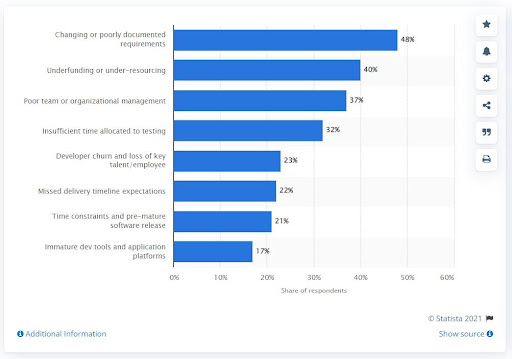
It is important to note that manual testing, which involves the execution of software manually by a human to ensure its quality before release, is not sufficient for releasing quality products. It is not helpful in repeated iterations and large code setup, as it is an error-prone and time-consuming affair. Manual testing is not the ideal approach to scale the testing efforts.
With advancements in technology over the past decade, automation testing and RPA (Robotic Process Automation) is becoming the norm for testing software products. With automation testing, QA teams are able to run tests on multiple devices, browser versions, operating systems, and more in an accelerated manner. The speed of execution can be a major differentiating factor between a laggard and a leader.
The need for cost-effective testing to provide maximum test coverage along with short sprint times made automated testing on the cloud a natural choice.
Enhance your Automation Testing interview proficiency with our meticulously curated compilation of questions and answers. Explore the comprehensive list of Automation Testing Interview Questions and Answers for valuable insights.
Also Read – Code Coverage Vs Test Coverage

Why is Automation Testing critical in SDLC
As a QA, you might have to test applications with countless fields that require input. You can go about running a few tests and might find new bugs every time you test the application. However, the investment of time and effort might increase exponentially if you are opting only for manual testing.
This complexity can increase manyfold if you have to test a newer version with newer features. Automation testing is a great way to reduce time & effort in testing and build a better product at a faster pace. It ensures that testers don’t have to spend time doing mundane, repetitive tasks. Instead, they can use their time on more valuable tasks that involve automating the test scenarios that help run tests at scale!
Manual to Automation Testing migration blockers
Automation testing is considered a widely preferred approach to overcome issues that are encountered during the process of manual testing. Performing the transition isn’t a piece of cake and may lead to multiple blockers that may come during this pathway. The few challenges one would face are:
- Frequent releases
You might be too busy writing effective manual test cases and devising test strategy due to back-to-back planned-up releases. As a result, you forget to plan a time window for developing automation test scripts.
- Rising complexity, time, and resource usage
Learning new processes requires investment of time (and/or money). If you are making a move from manual testing to automation, then you need to have an initial investment in terms of training the resources and the time they will take to be ready for automation.
- Test stability and scalability
While making a move from manual testing to automation, the Application Under Test (AUT) must be stable to avoid multiple rounds of reworks. If AUT is not stable, it can lead to major re-work and lesser efficiency in terms of quality. It’s important to have a scalable automation suite which sometimes becomes redundant and repetitive as the regression testing suite increases post every release.
- E2E (End-to-End) Automation
Automation is about automating the tests and having an approach and pathway for reporting, cleaning test data, setting up, and tearing down various environments. Turning a blind eye to those may not return the quality and the metrics we were supposed to achieve from this transition.
- Decision making
The results of automation testing may reap immediate or late results. Hence, getting a nod from the top management is very important to make the transition. Pursuing management and promising quicker and sooner benefits of automation can be tricky to resolve. Having a long-term view is extremely important.
Advantages of moving from Manual testing to Automation
Both Manual and Automation Testing have different advantages and disadvantages. Testing without automation requires significant extra work for every little change in your software, especially if the team is large or has long lead times between releases. Here are some of the major advantages offered by automation testing:
- Faster testing
As a tester, you should be seeking efficient testing methods to help you finish more in each sprint. This demand cannot be resolved with live testing (manual testing). Automated testing helps you streamline your workflow to get regression testing out of the way and focus on the more important aspects of testing.
- Reduced cost (of failure)
Compared to manual testing, the initial cost of starting with automation testing is pretty low. But once your organization is truly up and running with the idea of test automation, you need to invest in sophisticated automated testing tools and maintain the infrastructure required for automation testing. At times, it may just not be feasible to carry out regression tests manually. Organizations must leverage the benefits of cloud testing to shed in-house infrastructure maintenance and up-gradation costs.
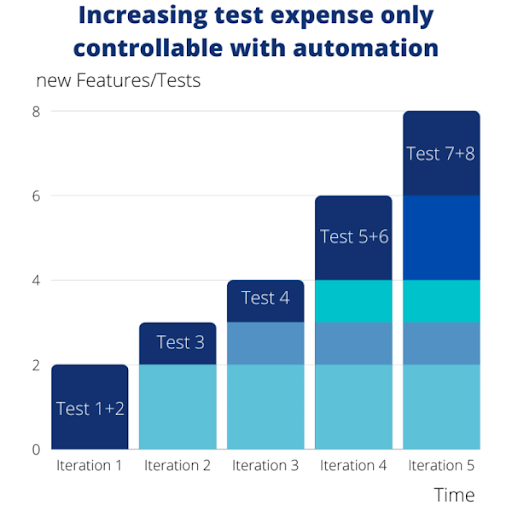
Moreover, agile software development has a lot of iterations and the increasing test effort can be better handled by automation.
- Saves time
The initial setup of automated tests may take some time, but they are worth it in the end. Once you have automated your tests, you can reuse them easily. Furthermore, automated tests run significantly faster than manual ones; they are more accurate and require less effort.
- Foundation for CI and DevOps
An automated testing suite is essential for any Continuous Integration or DevOps setup. This suite of tests forms the basis of a quality assurance process that detects regressions as soon as they happen. In addition, a test should be run with each commit to the code base to ensure that the mainline code works as expected.
- Accuracy and Reliability
Uncovering defects late in the development cycle is expensive and time-consuming for your team and can lead to unhappy customers or product delays. Automated software testing improves efficiency by doing what humans aren’t always capable of—running tests repeatedly, with precision, every time.
- Increased Productivity
Test automation can free up other engineering resources to work on different tasks, thus increasing productivity. A team that’s used to working with manual testing may not immediately perceive the benefits of a tool that automates their tests, but they will see them if they compare the productivity of the new team with that of a team still doing manual testing.
Read: Selenium Automation Best Practices
Run Selenium, Cypress, and Appium tests on TestMu AI to scale with the demand of your website and web apps.
How to move from Manual to Automation Testing?
The first step to consider while you move from manual testing to automation would be defining a proper scope for the automation testing. 100% automation is one of the myths related to automation, so defining its scope is a very important element to distinguish what to automate and how much to automate?
Read More: How To Decide What Should Be Automated When You Cannot Test Everything?
What to Automate?
For starters, it is important to remember that automated testing is not a magic pill that applies to all testing scenarios. However, by heeding the following points described below, you can choose what to automate and what not to automate:
- Considering the frequency of testing
Suppose you have frequent releases hitting the market. In that case, it’s of more importance to automate your smoke testing and regression testing first, as that would help speed up the testing cycles with quicker time to market with lesser manual intervention.
- Business and technical priority
This is important, as testers can split functionalities that need automation support first compared to others based on the business needs and complexity. Areas with less business priority can be removed from the automation scope.
- What can be automated
This factor depends upon many areas like the usability aspect, which cannot be automated, other aspects like tool dependency can also limit the areas to be automated. In addition, other aspects like applications supporting multiple browsers should be prioritized for automation testing to save time on cross-browser testing.
What not to automate?
There are few testing techniques that, if done manually, will yield more powerful results than automation or cannot be achieved via automation at all. As I said earlier, assuming everything can be automated is a myth and should not be preached. Some key areas where manual testing is still prevailing than automation testing:
- Exploratory testing: In the real world, users intend on exploring applications rather than following them in the standard streamlined workflows we intend to automate. Exploratory testing cannot be automated as they may tend to follow a hay-way process which can only be achieved via human thought process.
- User experience testing: Automation tools can’t fully capture the emotions, the likelihood of usage, eye-soothing experience, etc., for the application users tend to use. For example, suppose you need to experience your user issues or area. In that case, they face difficulty using the application, which can only be achieved through a human experience rather than via a tool.
- Accessibility testing: This testing helps to evaluate how accessible your application is for end-users. A tool cannot measure the accessibility rate. This can only be achieved through manual testing by analyzing the experience through the workflow or application usage.
Also Read: Curated Tools For Accessibility Testing Of Websites
Watch this video to learn how Cypress can be used to automate accessibility testing.
How to Automate?
One basic fundamental that a team or any organization overlooks is that not all tests can be automated. So, instead of targeting the unrealistic goal of 100% automation for your application under test, set a target for the portion of tests you wish to automate. Here are some considerations for how you can go about automation testing:
- If you are new to automation testing, you can start by moving just a few per cent of your tests from manual to automation. The key goal is to start small. Writing smaller test cases will help you maintain and reuse them in future areas of the application you wish to automate. Mapping your test cases with each method or function will help provide better coverage. Also, labelling your test cases helps in easier identification, so the team can figure out which ones to automate and which ones to not! This also helps in better bug reporting.
- As I said before, do not aim for 100% automation. Rather, when you start automation testing from manual testing, it would be better to explore new areas of the application via manual means and create a risk plan as to what needs to be automated and what needs not, based on the business priorities.
- Also, create a list of browsers and devices with the help of web analytics to understand your end-user preferences as you start automation testing from manual testing. This helps to ensure you are covering your application from a cross browser compatibility point of view.
A clear distinction of what areas should remain manual is as important as deciding what should be automated. Keeping these criteria to decide on the scope of automation helps evaluate automation in the long run and provides better ROI when planning to move from manual testing to automation testing.
Read: How Do You Calculate Your ROI On Test Automation With Selenium?
Prerequisites: Moving from Manual testing to Automation
To reduce the risk during migrations and test automation, it is critical to understand the technical and business environments of the target application. In other words, the organizations should have domain experts on both teams who know how the applications are developed and tested. If you don’t have enough domain expertise, you can outsource it to a third-party automation testing firm.
- Coding skills
Learning how to program is a valuable skill that can help you test software effectively. You don’t need to learn how to code to become a great tester. However, coding knowledge is an intrinsic part of test automation; it would be impossible without it, so learning to code will be an essential skill for automated testing.

If you have a certain level of coding expertise, you can build your skills and prove your expertise by adding top automation testing certification from TestMu AI to your profile.
- Tools and frameworks
Moving to automation will save you a lot of time and help you be more efficient. For example, if something breaks, you won’t spend days fixing it by hand. Instead, use a combination of frameworks, open-source tools, and third-party tools to automate your testing. Selenium WebDriver will probably be the foundation of your automated testing approach as it’s by far the most popular.
- Start small
How small your test cases are will directly correlate to how well they work, meaning that the easier they are to debug and maintain, the better they will perform. Make sure to keep them separate and labelled, so they’re easy to locate and report on.
- Stick to basics
When you start building and using automated tests, you’ll probably feel overwhelmed. Indeed, you don’t need to know everything right away, but you will want to build on your knowledge overtime to hone your skills. Acquiring the skills to become an expert automated tester requires time, patience, and continued learning. In addition, expert automated testers are always looking for ways to improve because no one knows everything about all aspects of testing.
Getting started with Automation Testing
The decision to move from manual testing to automation should be based on the current issues you face while testing your application and not merely because your team or you are fascinated by the word automation. Taking the right decision at the right time is more important for better quality achievement and ROI. The below factors highlight the key areas as to why you need automation.
Making a move from manual testing to automation can help you with these testing types:
- Regression Testing: An ever-increasing regression suite that needs to be executed post every release to ensure no new or older functionality tampers.
- Complex functionalities: Complex calculative areas which lead to human errors.
- Smoke testing: Running an automation suite for major functionalities will help assess the quality of the build. This helps to save time for teams by analyzing whether the build needs in-depth testing or not post the automation suite results.
- Data-driven testing: Functionalities that are required to be tested with multiple sets of data.
- Cross browser testing: This is one of the bigger issues that arise when supporting applications on multiple browsers and versions or referring to responsive testing for validating the website’s RWD(Responsive Web Design). Running manual tests repeatedly on multiple browsers takes a lot of effort, time, and investment. Automating the application and running those tests on multiple browsers in parallel help make testing quicker, efficient, less monotonous, and redundant. Cross browser testing tools such as TestMu AI can help teams ensure their applications are functional and cross browser accessible across the broadest range of browsers, versions, and devices.
- Repetitive tests: Tests that are relatively repetitive and unchanged from one test cycle to the other.
- Performance testing: Manual alternatives for performance testing do not exist and need an intervention of tool support.
A very important key area to kick-start automation testing from manual testing is to ensure the application under test(AUT) is stable in all terms. An unstable application with too frequent changes will lead to a lot of effort in maintenance, thereby leading to larger investment and lower ROI.
Now start your free test on the world’s fastest automation testing tool.
Automation testing may seem fascinating, but figuring out the pain areas that should encourage automation for the organization is important. The project at initial stages may not require automation to focus on and would rely completely on manual testing.
Selecting the right test grid infrastructure
One of the key testing areas is to have a versatile and supportive test grid infrastructure for your application under test. A test grid is an environment containing a collection of multiple devices, browsers, versions, and operating systems.
This helps run your application on all these multiple combinations for better app compatibility. Building your test grid infrastructure is very important as it directly impacts your maintenance and overall cost.
- On-premises test grid infrastructure
This helps to have access to a collection of real devices, which helps control data but can become expensive in maintenance, making it all the more difficult to have access to a wide variety of devices introduced into the market every month.
- Cloud-based test grid infrastructure
It offers anytime accessibility from anywhere with the opportunity of scaling as much as you want. A cloud-based testing infrastructure grid would help to provide access to a vastly larger combination of software and hardware environments than most organizations could afford to manage and maintain in their internal on-premises grid.
It helps to expand the possibility of running your applications across different versions and devices for all the newly introduced devices in the market now and then via cloud-based tool support. In addition, in comparison to the on-premises grid infrastructure, cloud infrastructure helps to provide greater scalability and does not need much maintenance.
Selecting the right Automation Testing tool
Automation testing is highly tool-dependent. Deciding which tool to use for automation testing of your application depends on multiple factors like:
- The domain of your application
Tool selection depends majorly on your application’s domain, whether the application targets a web-based application or a mobile-based application. For example, if it is based on the web-UI application, one can go for tools like Selenium, QTP and if it is a mobile-based application, you can go for tools like Appium, Robotium, etc.
Read: What is Selenium?
- Programming experience
This is more oriented to the comfort level of the resources. One can choose from the top programming languages helpful for any tester or resource. For example, Java, JavaScript, Ruby, C#, and many more.
- Open Source or Commercial
This is one factor that is ruled more from an organizational perspective than from just the mere choice of an individual when making a move from manual testing to automation testing, as this has budget constraints. Examples of a few open-source tools are Selenium, Appium, etc., and commercial tools like LoadRunner, QTP, etc.
Starting Automation Testing from Manual Testing
This step can be achieved through planning, estimating, and concluding to delivery date. It’s important to train teams to deliver maximum productivity and efficiency. Do not start analyzing the ROI from the initial days, as those can be bad or even worse.
Automation testing provides results in the long run and probably a bigger picture. Creating a test automation framework for easy maintenance and better usage for a longer run. Easier reporting and smoother execution are the keys to a successful automation journey.
Also Read: 13 Best Test Automation Frameworks: The 2021 List
As you begin to move from manual testing to automation, it will not only save you time but will also provide you better coverage, efficiency, quality, and a means to cope up with development methodologies like Agile, Kanban, etc. Moreover, as we continue to grow in the software industry, test automation seeks an important part in the development lifecycle.
Imagine you running tests manually on multiple browsers would cost you hours of testing, whereas running the same test on multiple browsers via automation would last a few minutes.
Choosing our platform for cross-browser testing means you’ll see higher-quality software releases at a faster pace. It’s almost like running your 2-hour testing suite in just minutes across a wider range of browsers and devices and ultimately bringing in a stronger and faster product in the market.

Test Automation Pyramid
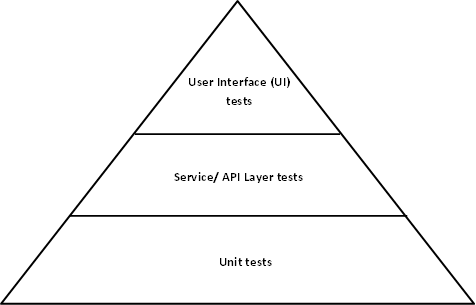
Test Automation Pyramid is a part of Risk-Based Testing and it relies on the idea that we should automate tests, where it’s most likely to fail rather than everywhere since doing so would mean writing a lot of code for no good reason. Tests are inserted into the pyramid depending on how many other components depend on them.
- Unit Test
Good unit tests are the foundation of great software. To build a really great piece of software, you need to have a strong foundation, and that comes with having good unit tests.
- Service/API Layer tests
Testers can make use of the APIs to identify entry points and verify the functionality. APIs are used to validate business logic, database interactions, user experience, etc.
- UI Tests
Testers test the product using the interface provided by the UI; however, this should not be done until all functionality/business rules are verified and working.
Furthermore, delve into an extensive compilation of over 170 commonly asked Manual Testing Interview Questions in 2023. This invaluable resource is designed to aid interview preparation and enhance your Manual Testing proficiency.
Conclusion
A thorough testing process is critical for a project’s success. However, manually running tests can be time-consuming and expensive. Therefore, numerous organizations are switching to automated testing to maximize efficiency and make the most use of scarce resources. In addition, a well-planned and implemented test automation strategy allows teams to focus on new features of a project rather than managing current ones. After all, the prime objective of any software project is to deliver a high-quality product in a timely and cost-effective way, and automated testing can facilitate your business in accomplishing this goal.
Also, read about the distinctions between Manual Testing v/s Automation Testing in this Comprehensive Guide.


Frequently asked questions
Did you find this page helpful?
More Related Hubs
TestMu AI forEnterprise
Get access to solutions built on Enterprise
grade security, privacy, & compliance
- Advanced access controls
- Advanced data retention rules
- Advanced Local Testing
- Premium Support options
- Early access to beta features
- Private Slack Channel
- Unlimited Manual Accessibility DevTools Tests