

Power Your Software Testing with AI Agents and Cloud
The Native AI-Agentic Cloud Platform to Supercharge Quality Engineering. Test Intelligently and Ship Faster.


- TestMu AI (Formerly LambdaTest)
- /
- Blog
- /
- Self-Healing vs Manual Maintenance: Where ROI Breaks Even
Self-Healing vs Manual Maintenance: Where ROI Breaks Even
A measured comparison of self-healing and manual locator repair, with a cost model you can run on your own suite.
Last Updated on:
A front-end engineer renames an input id on Thursday afternoon. On Friday morning the regression suite is red in fourteen places, none of the fourteen is a real defect, and a QA engineer spends the morning re-pointing selectors. That morning is the entire argument for self-healing tests, and it is also the reason the argument gets sold badly.
The self healing vs manual maintenance decision is usually presented as a choice between paying engineers forever and buying a tool that makes the problem disappear. Neither side of that framing survives contact with a measurement. We ran the comparison on TestMu AI cloud across nine real sessions, then built a cost model that prices both options with the same inputs, so you can decide with arithmetic instead of vendor adjectives.
Key Takeaways
Self-healing pays for itself when a large suite absorbs frequent cosmetic UI churn, because it converts a locator rewrite into a locator review. It does not remove maintenance. In nine measured cloud sessions it recovered every renamed locator correctly, and it also re-anchored a deleted field onto the wrong element twice.
- Cosmetic drift - Renaming an element id broke the lookup in every baseline run and was recovered in every run with healing enabled, landing on the correct field all three times.
- Silent wrong heal - When the email field was deleted outright, healing resolved the same locator onto the password field in both runs, which would turn a broken login form into a passing test.
- Review cost - Every heal produces a change that a human still has to accept or reject, so the honest model prices review minutes instead of assuming healed tests are free.
- Break-even - Savings scale with the number of breaks per year, not with suite size alone, so a small suite on a stable UI can spend more on tooling than it recovers in engineer time.
- Lookup latency - A healed lookup took a median of 826 ms against 109 ms for a baseline failure, so healing trades a fast red build for a slower green one.
- TestMu AI publishes both sides of this: its Auto Healing documentation states the feature may mask real issues in your application or test scripts, which is the caveat the cost model has to respect.
Why Locators Break, and Why That Is Not the Whole Story
A UI test fails for one of two reasons. Either the application is wrong, or the test can no longer find what it is looking for. Only the second category is a maintenance problem, and only part of that second category is a locator problem.
This distinction decides how much money self-healing can possibly save you. Locator drift is the visible, annoying, easily-narrated failure, so it dominates the marketing without dominating the failure population.
Timing, ordering and shared state produce a large share of unstable tests, and no locator healer touches any of them. The root causes of flaky tests break down in ways that make this clear.
TestMu AI puts a number on its own addressable slice. The Auto Healing Agent is described as fixing broken locators and overcoming 45% of unexpected test failures, which is a useful figure precisely because it is not 100%. Read it as a ceiling on the portion of your maintenance bill that healing can attack, and the remaining 55% stays exactly where it was.
- Renamed or restructured attributes - An id, class or data attribute changes during a refactor while the element itself survives. This is the case healing was built for.
- Moved elements - A node shifts position in the DOM hierarchy, breaking an absolute XPath while leaving every attribute intact.
- Deleted or replaced elements - The thing the test needs is genuinely gone. A healer that recovers here is not helping you.
- Timing and ordering faults - The element exists but is not ready, or a previous test left state behind. Healing has nothing to offer.
What Manual Repair Actually Costs
Most published cost models for test maintenance start with a salary figure that nobody sources. This one starts with a government statistic. The US Bureau of Labor Statistics puts 2024 median pay for software developers, quality assurance analysts, and testers at $131,450 per year, or $63.20 per hour.
Use that as a floor rather than a final answer. It is a wage figure, so it excludes benefits, payroll taxes and overhead, and a fully loaded internal rate will land higher. The model below uses $63.20 so that every reader starts from the same published number and can raise it to match their own finance team.
The cost of a single broken locator is not the two minutes it takes to type a new selector. It is the triage that comes first: opening the failure, deciding whether the application broke or the test did, finding the element, confirming the fix did not change what the test asserts, and pushing it through review. For the worked example we price that whole loop at 25 minutes, which is an assumption, clearly labelled, that you should replace with your own observed number.
Annual breaks are what actually drive the bill, and they come from three inputs multiplied together: suite size, the share of tests a release disturbs, and release frequency. A 400-test suite where 3% of tests break per release, shipping every fortnight, produces 288 broken locators a year.
At 25 minutes each that is 120 engineer hours, or $7,584. For a broader treatment of the arithmetic, our guide to AI-powered test maintenance covers where those hours usually hide.
That bill is the starting point of this TestMu Conf 2026 workshop, Legacy vs. Autonomous QA Arena - Surviving the AI-Driven Quality Evolution, in which Athresh Guruprakash runs a suite that fails more from flaky locators than from actual bugs, at a cost of 30 to 40 percent of the QA budget, as a live arena rather than a talk about AI hype.

What Self-Healing Actually Does at Runtime
Self-healing, as a platform capability, is a runtime element-resolution strategy rather than a code-repair tool. During a passing run the platform records the DOM path and attributes of elements it successfully locates. When a later lookup fails, it evaluates the current page and builds a replacement locator from those stored benchmarks, then carries on executing.
That boundary is worth stating because a second class of feature has since crossed it. An agent that keeps the objective behind each step can re-author the step itself, which changes the test rather than resolving one lookup. KaneAI groups these under a Self-maintenance setting, where Adaptive Heal re-authors the objective that failed and Dynamic Test authors every objective from its goal on each run, as the documentation on healing and dynamic test describes.
This matters to the cost model below, not just the taxonomy. A swapped locator is cheap to check against the page. A re-authored objective is a changed test, so the reviewer has to confirm the test still asserts what it used to, which is why the result is held as a draft version that becomes current only after approval.
On TestMu AI it is a capability rather than a code change, which matters for the cost model because adoption effort is close to zero. Web suites set autoHeal to true inside LT:Options, and Appium real-device suites use smartHeal instead. The Auto Healing documentation for Selenium test suites carries the full configuration and the limitations that go with it.
const capabilities = {
  browserName: "Chrome",
  browserVersion: "latest",
  "LT:Options": {
    platformName: "Windows 11",
    build: "Self-Healing ROI Study",
    name: "Locator rename - autoHeal enabled",
    autoHeal: true
  }
};

const driver = await new webdriver.Builder()
  .usingServer("https://hub.lambdatest.com/wd/hub")
  .withCapabilities(capabilities)
  .build();
One consequence gets lost in most write-ups. The heal happens in the running session, so a green build does not mean your repository is fixed.
The stale selector is still committed in your page objects, and the next engineer who reads that file still sees a locator that no longer exists in the application. Healing buys you time to make the edit, not an exemption from making it.
That is also why the audit trail matters more than the heal rate. A heal nobody can inspect afterwards is indistinguishable from a test that has stopped checking what it claims to check. If you want the deeper mechanics, our explainer on how self-healing test automation works and where it fails goes through the resolution strategies one by one.

Note: Auto Healing and Smart Heal run on the same TestMu AI cloud that executes your Selenium, Playwright and Appium suites, so switching them on is a capability flag rather than a migration. Try it free and check the healed-locator log on your own suite before you model the savings.
What We Measured on Nine Real Cloud Sessions
Vendor pages assert heal rates. We wanted to watch the mechanism decide, including the case where deciding wrongly is worse than failing. So we ran a controlled experiment on TestMu AI cloud, on Chrome and Windows 11, against the login form of the public ecommerce playground.
The method was identical in every session. Locate the email field by By.id("input-email"), which is unique on that page, and type a marker value into it so the element can be identified later.
Then change the DOM, ask for the same original locator again, and record what comes back.
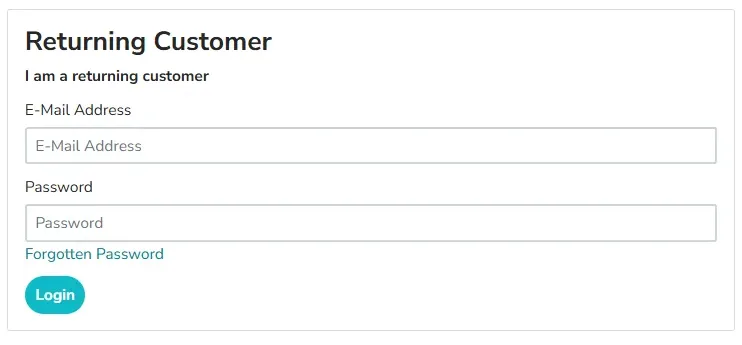
Two scenarios were applied. In the first, the email field was renamed from input-email to input-email-v2, which is what a refactor does.
In the second, the email field was removed from the DOM entirely, which is what a regression does. Each scenario ran with healing off as a baseline and on as the treatment, and every session asserted that the DOM change had actually taken effect before testing the lookup.
| Scenario | Healing | Sessions | Lookup resolved | Element returned | Correct element |
|---|---|---|---|---|---|
| Id renamed | Off | 3 | 0 of 3 | NoSuchElementError | Not applicable |
| Id renamed | On | 3 | 3 of 3 | input-email-v2 | 3 of 3 |
| Element removed | Off | 1 | 0 of 1 | NoSuchElementError | Not applicable |
| Element removed | On | 2 | 2 of 2 | input-password | 0 of 2 |
The rename result is the good news and it is unambiguous. Healing recovered the locator in all three sessions and landed on the right field every time, which we confirmed by reading back the marker value we had typed rather than trusting the element id alone.
The deletion result is the finding worth your attention. With the email field gone, the same locator resolved to input-password in both sessions.
The marker value came back empty, proving the healer had anchored onto a different field. A suite running that flow would have typed an email address into a password box and carried on.
{
  "scenario": "remove",
  "autoHeal": true,
  "sessionId": "3b5481588ed68c117c021d66e94cfa96",
  "mutationApplied": true,
  "afterMs": 535,
  "resolved": true,
  "resolvedId": "input-password",
  "resolvedName": "password",
  "resolvedValue": "",
  "correctElement": false
}
Latency moved in the direction you would expect. A healed lookup took a median of 826 ms against 109 ms for the baseline failure in the rename scenario, and 626 ms against 98 ms in the deletion scenario. Failing is fast, and recovering is not free.
Two limits on how far you should take this. Nine sessions on one form is a mechanism demonstration, not a population estimate, so treat the counts as evidence of behaviour rather than a heal-rate benchmark. And the rename case is the friendliest possible input, because the element still existed with all its other attributes intact.
The Costs Self-Healing Adds
Every published ROI model for this decision treats a healed test as a test that cost nothing. The deletion result above is the reason that assumption fails. If a heal can be silently wrong, then somebody has to look at heals, and looking at things costs money.
TestMu AI states the risk in its own documentation rather than burying it: Auto Healing may mask real issues in your web application or test scripts. That is the correct disclosure, and it converts directly into a line item. The review is not optional overhead you can skip when sprint pressure rises, because the runs you skip reviewing are exactly the runs that hide a regression.
- Heal review - Each healed locator produces a before-and-after pair that a human accepts or rejects. The worked model prices this at 6 minutes, well below a manual repair but firmly above zero.
- Draft version review - Where an agent re-authors a failing objective instead of swapping a locator, the reviewer reads a changed test rather than a before-and-after pair, so the read runs longer and the assertion is the part that needs checking.
- Deferred source repair - The stale selector stays in your page objects until somebody edits it, so healing shifts the repair into a backlog rather than deleting it.
- Execution overhead - Healed lookups are slower than both a successful lookup and a fast failure, which compounds across a large parallel suite.
- Configuration constraints - Healing interacts with other capabilities, so a suite that depends on particular wait behaviour may not be able to enable both at once.
- False confidence - The most expensive failure mode is a suite that stays green while coverage erodes without anyone noticing, which is a cost that shows up as an escaped defect rather than as engineer hours.
Product design can shrink the review cost without pretending it away. KaneAI, TestMu AI's GenAI-native test agent, re-anchors affected steps with smart element detection and then surfaces the change for human review, so maintenance becomes a review step rather than a rewrite. Its own positioning is deliberately bounded: KaneAI significantly reduces authoring and maintenance effort and augments QA rather than replacing it, which is the claim the arithmetic below actually supports.

The Two-Arm Cost Model
Comparisons of this decision usually price one side. A maintenance-cost article models the manual arm and stops before the tool; a vendor article models the savings and never prices the review. Running both arms through one set of inputs is the only way to see the difference rather than the pitch.
The worked example uses a 400-test suite, 24 releases a year, 3% of tests disturbed per release, a 25-minute manual repair loop, a 6-minute heal review, the BLS rate of $63.20 per hour, and TestMu AI's published 45% figure for the share of unexpected failures healing addresses. Only the rate and the 45% are sourced; the rest are inputs you should overwrite.
| Line item | Manual maintenance | Self-healing |
|---|---|---|
| Broken locators per year | 288 | 288 |
| Resolved without a rewrite | 0 | 130 at the 45% figure |
| Minutes of engineer time each | 25 to repair | 6 to review, 25 for the rest |
| Engineer hours per year | 120 | 79 |
| Labour cost at $63.20 per hour | $7,584 | $4,990 |
| Annual labour difference | Baseline | $2,594 saved, before platform cost |
That saving is smaller than the six-figure numbers that circulate on this topic, and the gap is instructive. Those larger figures typically apply a heal rate to an entire QA salary line rather than to the specific hours spent repairing locators. Once the addressable slice is capped and review time is priced, a mid-sized suite recovers thousands per year rather than hundreds of thousands.
Run your own numbers rather than borrowing these. Our test automation ROI calculator handles the broader automation business case, and the per-break arithmetic below plugs into it.
Finding Your Break-Even Point
Savings scale with broken locators per year, not with suite size on its own. A thousand stable tests against a frozen UI generate almost no breaks and almost no savings, while three hundred tests against a weekly-redesigned interface generate plenty of both.
The saving per broken locator is the heal rate multiplied by the minutes you avoid, converted to hours and priced at your rate. With a 45% heal rate, 19 minutes avoided per healed break, and $63.20 per hour, each break returns about $9.01. Divide whatever incremental platform cost you are considering by that figure and you have the number of breaks a year you need before the tooling pays for itself.
| Incremental platform cost per year | Broken locators needed to break even | Equivalent suite size at 3% churn, 24 releases |
|---|---|---|
| $1,000 | 111 | About 154 tests |
| $2,500 | 278 | About 386 tests |
| $5,000 | 555 | About 771 tests |
| $10,000 | 1,110 | About 1,542 tests |
Three levers move those thresholds more than anything else. Raise your loaded hourly rate above the BLS wage figure and every row gets easier to clear.
Cut the manual repair estimate below 25 minutes, because your team is fast and your page objects are tidy, and every row gets harder. Push the review estimate above 6 minutes, because heals need careful auditing in a regulated codebase, and the gap narrows from the other side.
One measurement makes all three honest. Count the locator repairs your team actually shipped last quarter, time a handful of them properly, and the model stops being a hypothetical.
When Manual Maintenance Still Wins
There are suites where enabling healing is the wrong call, and the deletion result explains why. For a strict regression suite, any unexpected UI change is information you want, and a mechanism that resolves around the change is destroying the signal you built the suite to capture.
- Strict regression gates - When the suite exists to catch any deviation, prefer explicit stable selectors and leave healing off so a changed element fails loudly.
- Small suites on stable interfaces - Too few annual breaks to clear the break-even line, so the tooling is a cost with no offsetting recovery.
- Compliance-sensitive flows - Where evidence that a specific control was exercised matters, a silently re-anchored locator undermines the audit trail.
- Suites already dominated by timing failures - If most red builds come from waits and ordering, healing addresses a slice you do not have and the money is better spent on stability work.
Knowing which bucket you are in requires data rather than instinct. Failure-frequency analysis will tell you which tests fail repeatedly and which errors recur, and our walkthrough of flaky test detection and its thresholds covers how that classification is tuned. Note the current scope honestly: flaky detection covers web automation today, with other frameworks listed as upcoming.

Locator Hygiene, the Option Nobody Prices
The self healing vs manual maintenance framing hides a third option, and it is often the cheapest one. Most locator breakage comes from tests that depend on incidental markup, so a suite anchored to stable, purpose-built test attributes generates far fewer breaks to heal or repair in the first place.
This arm has a different cost shape. A hygiene refactor is a one-time capital cost that lowers the break rate permanently, while healing is a recurring cost that leaves the break rate untouched and absorbs the consequences. Reducing your annual break count by half halves the savings healing can deliver, which sounds like an argument against hygiene until you notice it also halved the underlying problem.
- Agree a dedicated test attribute with the front-end team and treat it as a contract that refactors must preserve.
- Rank your page objects by how often each has been edited in the last two quarters, and refactor only the top decile.
- Replace absolute XPath expressions first, since they break on structural moves that leave every attribute intact.
- Re-count breaks after a release cycle to confirm the refactor moved the number before extending it further.
The two arms combine well, which is the practical answer for most teams. Hygiene lowers the break rate, healing absorbs the cosmetic drift that survives it, and the review queue stays small enough that people actually work it. Our guide to Selenium locators covers which strategies survive refactors and which do not.
Making the Call on Your Own Suite
Start by counting last quarter's locator repairs and multiplying by four. That single number, set against the $9.01 per-break saving and whatever incremental platform cost you face, answers the self healing vs manual maintenance question for your suite more reliably than any published percentage.
Then enable healing on one non-gating suite rather than the whole estate, and read the healed-locator log for a full release cycle. You are checking two things: how many heals happened, and how many of them were anchoring around a change somebody should have been told about. The second number is the one that decides whether your review budget is realistic.
To run that pilot, set autoHeal in your capabilities as the Auto Healing documentation describes, and execute against TestMu AI's cloud, which covers 3,000+ browser and OS combinations and 10,000+ real devices. Keep the strict regression suites on explicit selectors while the pilot runs, so you always have one signal that has not been smoothed over.
How Startups Are Rethinking Value and Monetization, presented at Testμ 2026, works through the same problem.
Author

Himanshu Sheth
Blogs: 142


Himanshu Sheth is the Director of Marketing (Technical Content) at TestMu AI, with over 8 years of hands-on experience in Selenium, Cypress, and other test automation frameworks. He has authored more than 130 technical blogs for TestMu AI, covering software testing, automation strategy, and CI/CD. At TestMu AI, he leads the technical content efforts across blogs, YouTube, and social media, while closely collaborating with contributors to enhance content quality and product feedback loops. He has done his graduation with a B.E. in Computer Engineering from Mumbai University. Before TestMu AI, Himanshu led engineering teams in embedded software domains at companies like Samsung Research, Motorola, and NXP Semiconductors. He is a core member of DZone and has been a speaker at several unconferences focused on technical writing and software quality.
Reviewer

Srinivasan Sekar
Reviewer
Srinivasan Sekar is Director of Engineering at TestMu AI (formerly LambdaTest), where he leads engineering and open-source initiatives behind the Selenium and Appium automation grid and owns TestMu AI's MCP Server. A committer to Appium and a contributor to Selenium, WebdriverIO, Taiko, and AppiumTestDistribution, he brings over 15 years of experience in quality engineering and open-source technologies. He is the author of the Apress book 'The MCP Standard: A Developer's Guide to Building Universal AI Tools with the Model Context Protocol,' a Certified Kubernetes and Cloud Native Associate, and an international conference speaker. Before TestMu AI he spent over eight years at Thoughtworks as a Principal Consultant and Quality Architect. Srinivasan holds a B.Tech in Information Technology from Anna University.


Self-Healing Test Maintenance FAQs
Did you find this page helpful?
More Related Blogs
TestMu AI forEnterprise
Get access to solutions built on Enterprise
grade security, privacy, & compliance
- Advanced access controls
- Advanced data retention rules
- Advanced Local Testing
- Premium Support options
- Early access to beta features
- Private Slack Channel
- Unlimited Manual Accessibility DevTools Tests