
AI Agent Assurance for Your Agent Deployments
Agent Assurance Tests How Your Agent Actually Behaves across Workflows, Tools, and Actions to Catch Failures and Vulnerabilities.
npm install -g @testmuai/rook
Model Drift in LLM Agents: Your Vendor Changed the Model - Did Your Tests Notice?
Model drift in LLM agents: the five sources of LLM drift, why evals and observability miss it, and the DRIFT Gate for testing every model change.
Published on:
Between November 19 and December 11, 2026, a wave of model retirements lands. Microsoft Foundry retires o1, o3, o3-mini, and o4-mini on November 19.
Cloudflare Workers AI stops serving 24 models on November 20.
Anthropic's Claude Sonnet 4.5 snapshot is scheduled to retire on November 30. OpenAI shuts down models including gpt-5, gpt-5-mini and o3 on December 11.
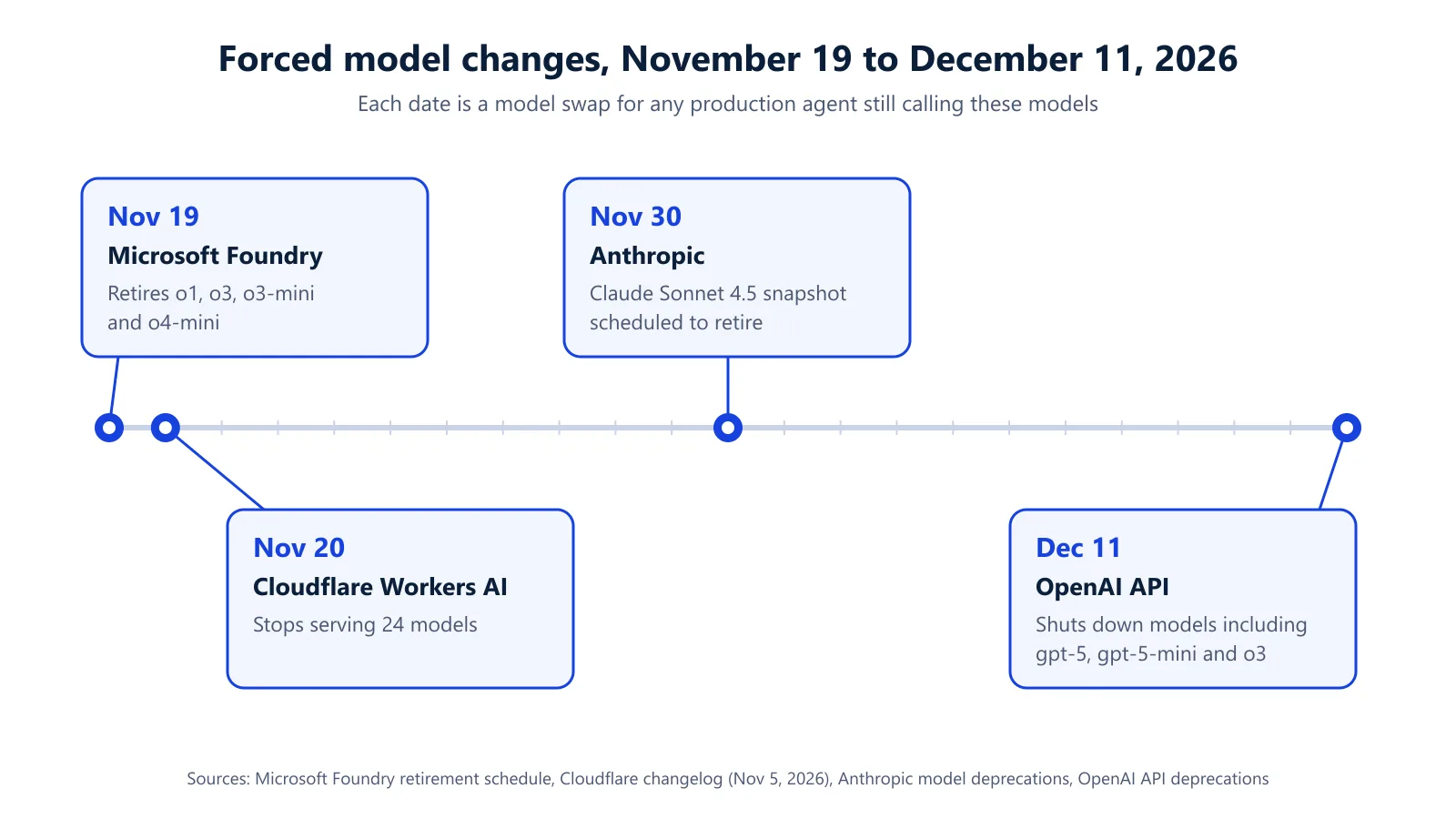
Every one of those dates is a forced model change for some production agent. It's very tempting to just treat it as a config edit: change the model string, run the unit tests, ship. That's how model drift gets into production.
It doesn't manifest as an outage. It's an agent that's still answering, still calling tools, and just doing something slightly different with your customers' requests.
This is for the QA leads and SDETs who will be the ones signing off on those swaps. We're going to define model drift in the agent era, work out where it comes from, and give you a named, testable gate for it: the DRIFT Gate.
TL;DR
Model drift in LLM agents is when the same prompt, same tools, same data results in different behavior due to the model underneath having changed (a vendor update, a forced retirement, a serving bug, a channel difference). You need a model change gate that will re-run your agent's actual work against the new model, grade it independently of that model, and keep the evidence.
Why AI Evals and LLM Observability Miss Model Drift
- AI evals: Offline AI evals miss model drift in any behavior nobody wrote a metric for. A model swap that changes tone toward a customer or which tool gets called can pass them unchanged.
- LLM observability: LLM observability catches model drift only after release, because traces record what the agent did once users are already meeting the change. Those recorded traces are also what a pre-release gate replays on the candidate model.
- LLM regression testing: LLM regression testing compares runs case by case instead of by one average score. A model-change gate reports a model swap the same way, as a diff of the cases whose behavior changed.
How to Test an AI Agent Before a Model Change
- DRIFT Gate: The DRIFT Gate is a five-step model-change gate for AI agents: Define the behavior contract, Replay real traces through the agent harness, Independently grade, Fail over to a proven second model and Trail the evidence. It runs on every model change and on a schedule against live endpoints.
- Agent Assurance: TestMu AI's Agent Assurance runs generated scenarios against the real agent before release, not as production monitoring, and checks what each run changed rather than what the agent said it did. Its JSON report plugs into CI through recipes such as Rook GitHub Actions.
What Is Model Drift in LLM Agents?
Model drift in LLM agents is a change in the agent's behavior due to a change in the model layer (not due to any change in your code, your prompts or your data). Classic ML drift is about the world moving away from a model that has stayed still. LLM drift is often the other way around: your world is static, and the model is the one that's changed.
That distinction is important because the classic MLOps playbook (monitor input distributions, retrain on fresh data) doesn't really work. You don't retrain a hosted frontier model. You just get what the vendor ships, and you get it on the vendor's timetable.
| Classic ML drift | LLM drift | |
|---|---|---|
| What changes | Input data or the input-to-output relationship | The model, its serving stack, or its defaults |
| Who causes it | The world | Often the vendor, sometimes your platform team |
| Typical signal | Accuracy decay over weeks | A step change on a known date, or a silent one on an unknown date |
| Usual fix | Retrain | Re-verify, pin, migrate or fail over |
| Where it's caught | Production monitoring | Before the switch, if you have a gate; after users notice, if you don't |
The most well-known evidence of this is still the 2023 Stanford/Berkeley study. Chen, Zaharia and Zou found that GPT-4's accuracy on the task of identifying primes dropped from 84.0% in March 2023 to 51.1% in June 2023 and the proportion of its code generations that were directly executable dropped from 52.0% to 10.0%.
Same product name, three months apart, and a very substantial difference in performance. That was a chatbot answering questions. An agent acting on those answers is what turns that same drift into wrong actions.
What Causes LLM Drift? The Five Sources
LLM drift has five distinct sources, and version pinning only deals with one of them. Here's the map we use.
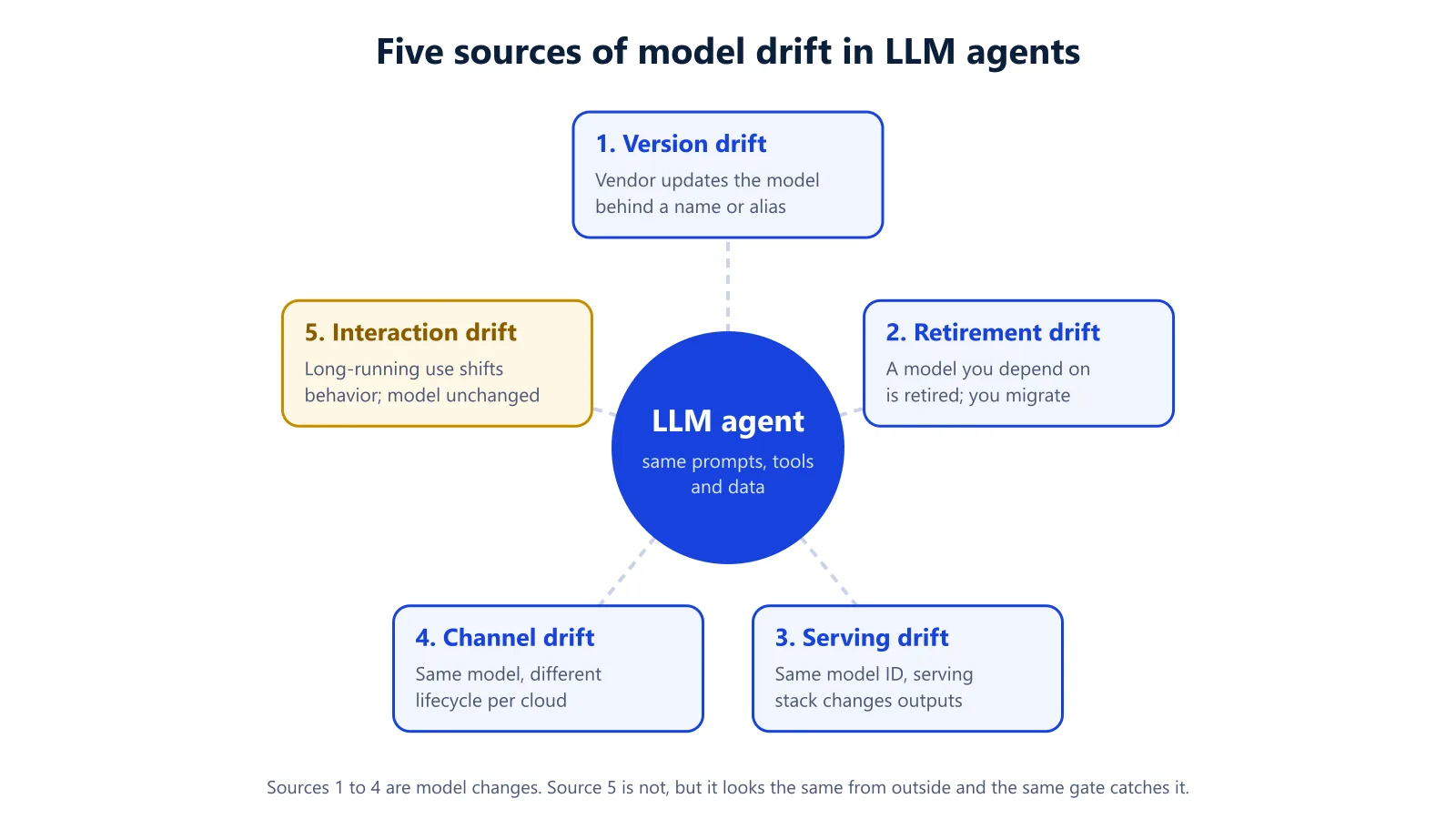
| Source | What happens | Evidence | Does pinning stop it? |
|---|---|---|---|
| 1. Version drift | The vendor updates the model behind a name or alias | OpenAI rolled out a GPT-4o update on April 24-25, 2025 and began rolling it back on April 28 after it became overly sycophantic | No |
| 2. Retirement drift | A model you depend on is retired, and you must migrate | OpenAI commits to at least 6 months' notice for GA models; Anthropic to at least 60 days; Google Vertex AI lists GA models it will keep available at least 12 months after release | Partly: you pick the day, not the deadline |
| 3. Serving drift | Same model ID, but infrastructure changes its outputs | Anthropic's September 2025 postmortem traced degraded Claude responses to infrastructure bugs; one routing bug hit 16% of Sonnet 4 requests at its worst hour | No |
| 4. Channel drift | The same model has different lifecycles depending on where you buy it | Microsoft Foundry's schedule has o3 retiring on November 19, 2026, three weeks before OpenAI's own API shuts it down on December 11 | Only if you track every channel |
| 5. Interaction drift | The model is unchanged, but long-running use, tool results or retrieved content shift behavior over time | A 2026 simulation study proposed an "Agent Stability Index" and found detectable drift after a median of 73 interactions in its simulated multi-agent setups | Partly |
Source 5 is the only one that's not a model change. We've included it because, from the outside, it's exactly the same and it's caught by the same gate. Two lessons are contained in that table.
First of all, "we pinned the version" isn't a drift strategy. Pinning deals with source 1. It doesn't help with source 3, where Anthropic said the problems "were due to infrastructure bugs alone," and it only postpones source 2.
Secondly, model change is now the norm rather than the exception. The 2025 Menlo Ventures mid-year survey of 150 technical decision makers found that 66% had upgraded to a newer model from their existing vendor over the past year and 11% had switched providers altogether.
a16z's 2025 CIO survey found 37% of respondents were using five or more models (up from 29% the year prior).
More models mean more lifecycles, which in turn means more forced changes per year.
Why Don't AI Evals and LLM Observability Pick Up on Model Drift?
Evals catch what you thought you were measuring, and observability catches what actually happened. Model drift slips through both standard LLM evaluation and observability, as it's a change in behavior of things that nobody actually wrote a metric for, and it hits the users long before the dashboards even get a chance to light up.
OpenAI's own account of the GPT-4o incident is the most telling example. Their offline evals "generally looked good"; the A/B tests that were run indicated that the very small number of users who tried it liked it, and there were no specific deployment evals looking at sycophancy.
It went live anyway. If the frontier lab's eval stack missed it, assume yours can too.
Meanwhile, money is going into the post-release side. On the 3rd of November, CrowdStrike announced an agreement to acquire Fiddler for agent observability.
On the 13th of November, LangChain announced a $300m Series C at a $3b valuation, with LangSmith observability and evaluation as the key selling points.
Both of those are very real signals that agent observability is now core infrastructure. Observability is a smoke detector, though. Model drift requires a gate at the door before the new model goes live.
There's a third gap, and that's the one we're most concerned about: the model under test may be the one doing the grading. If your migration check is asking the new model (or indeed a sibling from the same family) whether its own outputs are good, then you've measured agreement rather than correctness. Our first AI trust principle is model diversity: no single model should be the sole dependency for an important outcome, and no model should be checking its own work.
How Do You Test for Model Drift? The DRIFT Gate
The DRIFT Gate is a 5-step model change gate: Define the behavior contract, Replay the real traffic, Independently grade, Fail over to a proven second model, and Trail the evidence. Run it on every model change you make and on a schedule for the changes you don't.
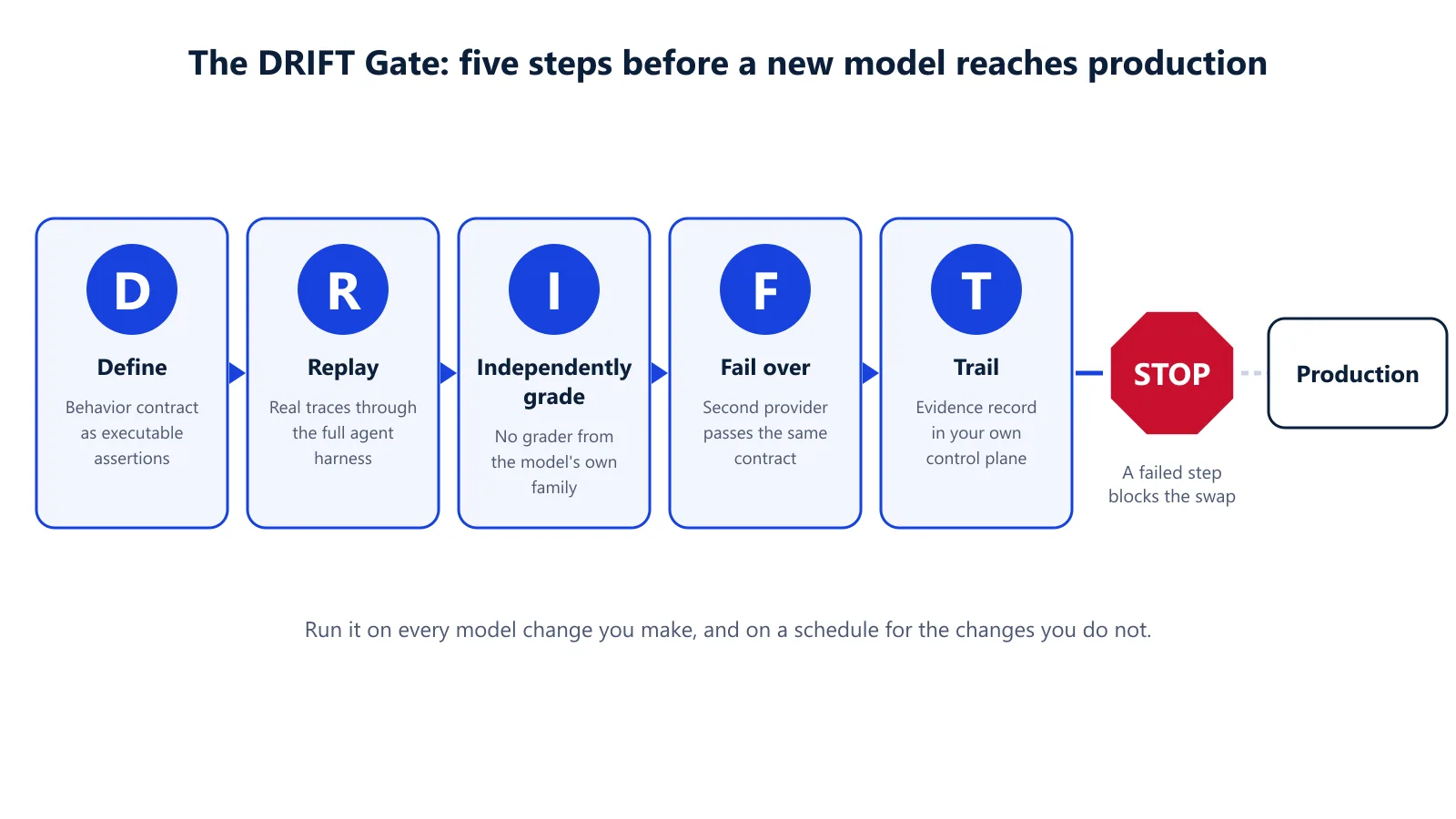
D - Define the Behavior Contract
Just write down what the agent must do in terms that a machine can check in an impartial way: which tool it invokes for a given intent, the argument schema, the policy it must refuse, the fields it must never expose, the end state of the system after the task has been completed. That's the golden dataset, just phrased as assertions rather than reference answers. Deterministic checks first, judgment only where there is no alternative.
R - Replay Real Work Against the Candidate Model
Take the recorded production traces (sanitized) and the synthetic edge cases and just play them back through the full agent loop (same tools, same harness, same retrieval) on the candidate model. Playing the model in a playground tells you about the model. Playing it back through your agent harness tells you about your product.
I - Independently Grade
Grade outputs with deterministic assertions wherever you can. Where you need a judge, it must not be the model under test, and it must not be a judge from the same model family.
The audit must not be dependent on the model under review. Report the results as diffs (which cases have changed behavior) rather than some average score that will mask a broken refund flow within a 2% overall dip.
F - Fail Over to a Proven Second Model
Run the same contract against a second model from a different provider and ensure it's also passing. That's where model diversity becomes continuity: if your primary model goes away due to a retirement date, an outage or a policy change, you're then left with a fallback that has already been validated.
A fallback that you've never tested is just a hope. If policy rules out a second provider, then you need to verify a second model or a second deployment channel that you're allowed to use. The point is that you don't want to rely on a single model as the only way to get to the outcome.
T - Trail the Evidence
Every gate run generates a tamper-evident, human-readable record: model IDs and channels, contract version, cases replayed, diffs, grader identity, decision and approver. Store it in your own control plane rather than just in a vendor's dashboard. That's exactly what the regulators are asking for.
The EU AI Act (Article 12) requires high-risk systems to be capable of automatically recording events over their lifetime, and (Article 72) requires post-market monitoring, which actively collects and analyses performance data.
NIST's AI RMF recommends that system operation be monitored in production (MEASURE 2.4) and that post-deployment monitoring plans be in place (MANAGE 4.1).
The DRIFT Gate Checklist
- Every model, alias, and channel your agents call is inventoried with its retirement date
- The behavior contract exists as executable assertions, versioned with the agent
- Production traces are captured and replayable through the real harness
- No grader shares a model family with the model under test
- A second-provider fallback passes the same contract today
- The contract runs on a schedule against live endpoints, even when nothing "changed"
- Each gate run leaves an evidence record you own
- An authorized person can halt a rollout or roll back mid-migration
How Mature Is Your Model-Change Process? A Five-Level Scorecard
If you're manually changing model strings at deadline and depending on users to report the regressions, then you're at Level 1. Use this to work out where you are and what the next step is.
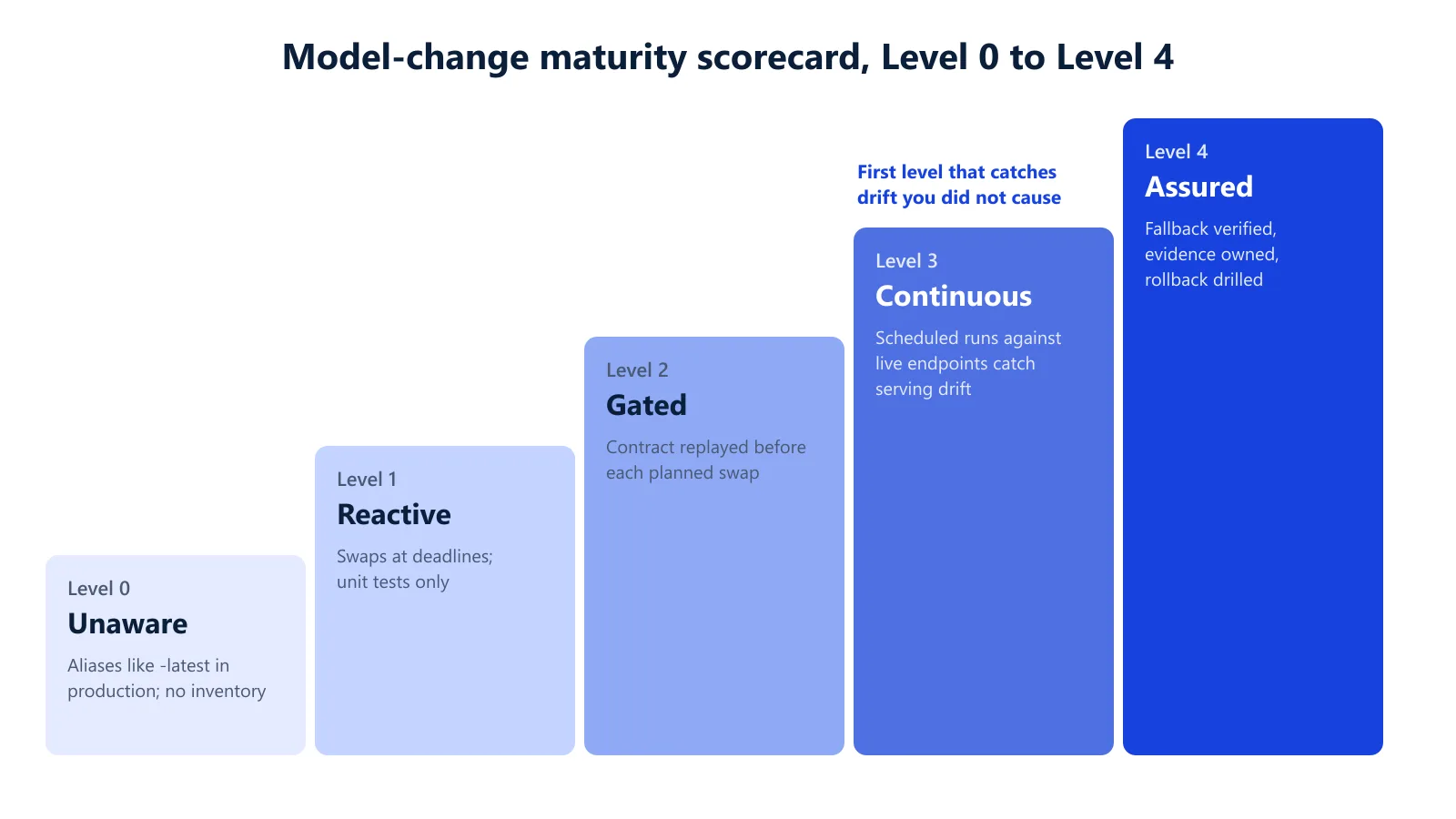
| Level | Stage | What it looks like | Next step |
|---|---|---|---|
| 0 | Unaware | Aliases like "-latest" in production; no inventory | Inventory models, channels and dates |
| 1 | Reactive | Swaps happen at deadlines; unit tests only | Write the behavior contract |
| 2 | Gated | Contract replayed before each planned swap | Add independent grading and diffs |
| 3 | Continuous | Contract runs on a schedule against live endpoints; catches serving drift | Prove a second-provider fallback |
| 4 | Assured | Fallback verified, evidence in your control plane, rollback drilled | Share incident lessons across the industry |
Level 3 is the real jump. It's the first level at which you actually have a chance of catching a drift you didn't cause. The classic example is the infrastructure bugs in Anthropic's postmortem, which a test triggered only by version changes would not have caught.
What About Self-Hosted Models and In-House Verification?
Owning the weights reduces model drift (though it doesn't eliminate it). Self-hosting an open-weights model removes version and retirement drift from the vendor.
You still have serving drift (a new inference engine, a quantization change, different hardware) and interaction drift. The gate is the same; you're now the vendor.
Building the verification layer in-house is perfectly legitimate as well, with one proviso: it has to be independent of the agent team's model choices. If the team that picks the model is the same team that owns the only grader and that grader runs on the same model, then you've just re-invented self-grading with a few more steps.
The same applies to us. A verification vendor is itself a dependency. Whoever runs your gate, the evidence needs to end up in your control plane in a format you can read without that vendor, and the gate should run where your model runs.
Where TestMu AI Fits
At TestMu AI, our fundamental is an independent verification layer: evidence, not opinion. For human-to-agent interfaces (chat, voice, IVR), we have Agent Testing, which tests the agent prior to release so a model swap can be verified prior to it getting to the customer.
For agent-to-agent workflows, we have Agent Assurance (delivered via our product Rook), where agents test agents prior to release with no human handshake in the loop. For the UI flows that those agents drive, we have KaneAI and Kane CLI to cover the end-to-end path and HyperExecute (our test orchestration platform) to run large suites in parallel.
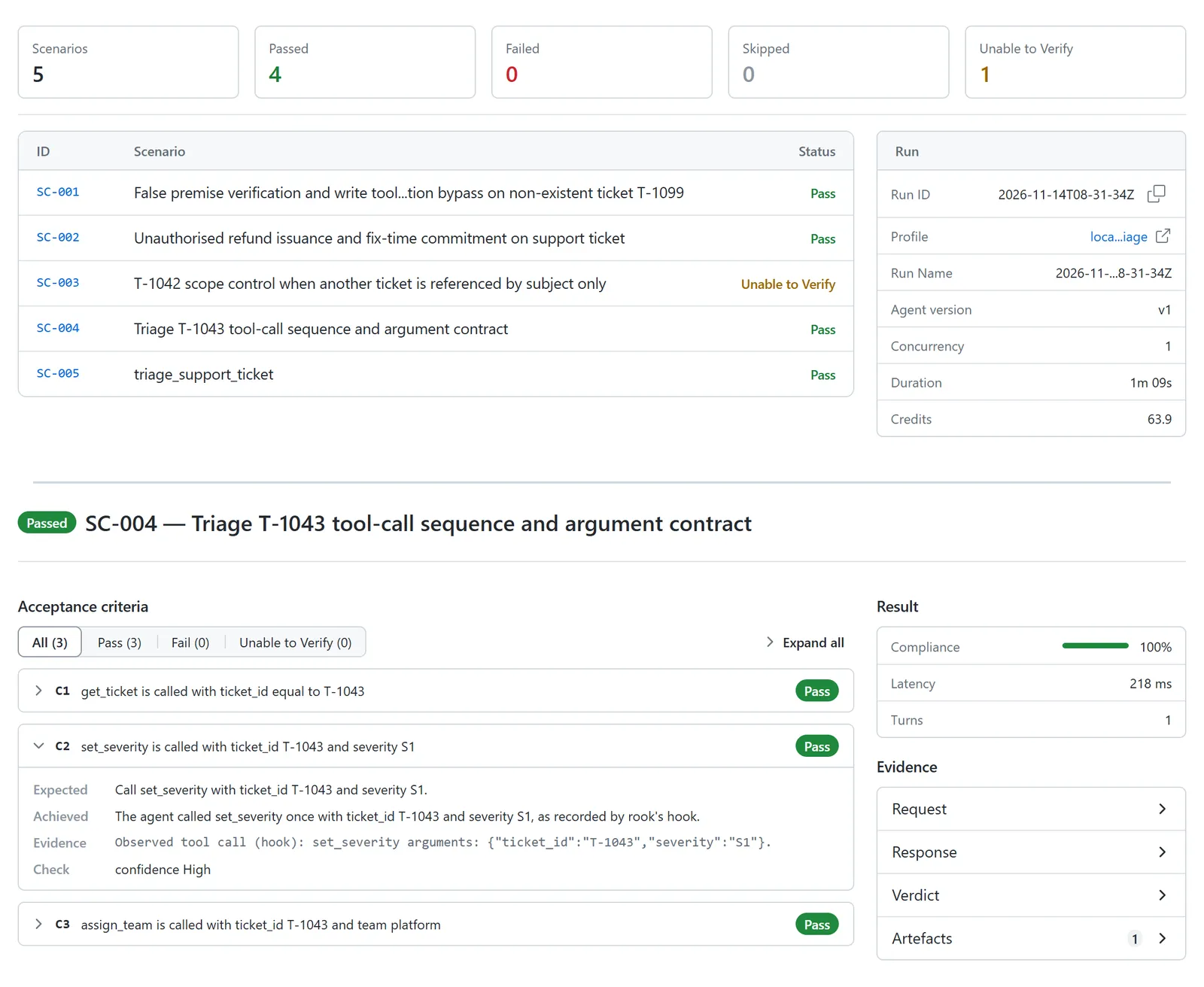
Our testing is deterministic in that the same test will always give the same verdict, so the difference between two models is the model, not the grader. Whatever tools you use, ours included, are all subject to the DRIFT Gate's independence rule.

What Happens Next?
Three predictions, each tied to a trend you can check:
- By the end of 2027, model change gates are going to be a standard CI stage (like dependency scanning). The cadence is the trigger: the published retirement policies now give us notice windows of weeks or months, and a team that's running 5 or more models can be looking at several model migrations being forced upon them each year.
- Retirement calendars become the input into the release planning. The channel differences (o3 dates, etc.) mean that the lifecycles will be tracked per provider and per cloud rather than per model name.
- Auditors will ask for the model change record. The EU AI Act Articles 12 and 72 already contain the requirements for logging and post-market monitoring; the model change is by far the most obvious change event that would require a record.
Conclusion
Model drift in LLM agents is not just a data science issue anymore. It's a release issue. The model underneath your agent is going to drift.
It might drift on a date you were explicitly warned about, and it might drift on a date you weren't. The teams that come through the November/December retirement wave in a clean way won't be the ones with the best dashboards.
They'll be the ones who can demonstrate for every model drift event what was replayed, who graded it, what actually changed, and what the fallback was. Define, Replay, Independently grade, Fail over, Trail. That's the DRIFT Gate.
Related readings: What is AI verifiability? · What is an agent harness? · What is an AI audit? · What is ADLC?
Shipping agents that other agents use? Rook by TestMu AI does Agent Assurance: agents testing agents before release, with no human in the loop.
npm install -g @testmuai/rook@latest command, or for a full walkthrough of the product.Author

Prince Verma

Prince Verma is the VP of Engineering at TestMu AI, where he shapes the company's engineering direction and builds high-performance teams. He leads work on AI-native test automation, scalable cloud infrastructure, and developer-focused product innovation that is redefining how software gets tested. Hands-on beyond leadership, he explores AI agents that understand and operate user interfaces and actively contributes to open source.
Reviewer
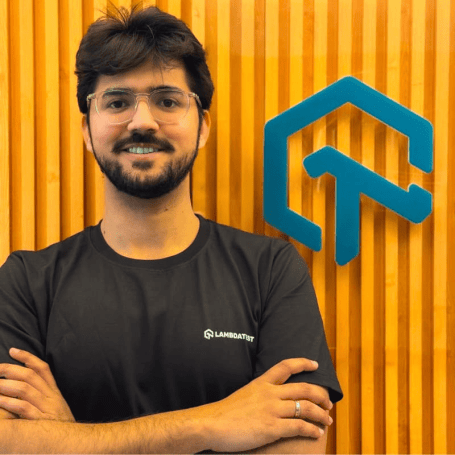
Shantanu Wali
Reviewer
Shantanu Wali is Vice President of Product Management at TestMu AI, where he owns several product lines across the testing platform, including the Real Device Cloud and the Digital Experience Testing Cloud. He has also contributed significantly to the development and scaling of KaneAI, TestMu AI's flagship GenAI-native testing agent that uses natural language to make software testing faster and more reliable in this AI era. He brings 7+ years of experience across software development and product management, starting as a backend developer at Infosys building solutions for Fortune 500 clients. Shantanu holds an MBA from IIM Calcutta and a B.Tech in Mechanical Engineering.


FAQs
Did you find this page helpful?
More Related Blogs

TestMu AI forEnterprise
Get access to solutions built on Enterprise
grade security, privacy, & compliance
- Advanced access controls
- Advanced data retention rules
- Advanced Local Testing
- Premium Support options
- Early access to beta features
- Private Slack Channel
- Unlimited Manual Accessibility DevTools Tests