
Agent Assurance for your AI Deployment
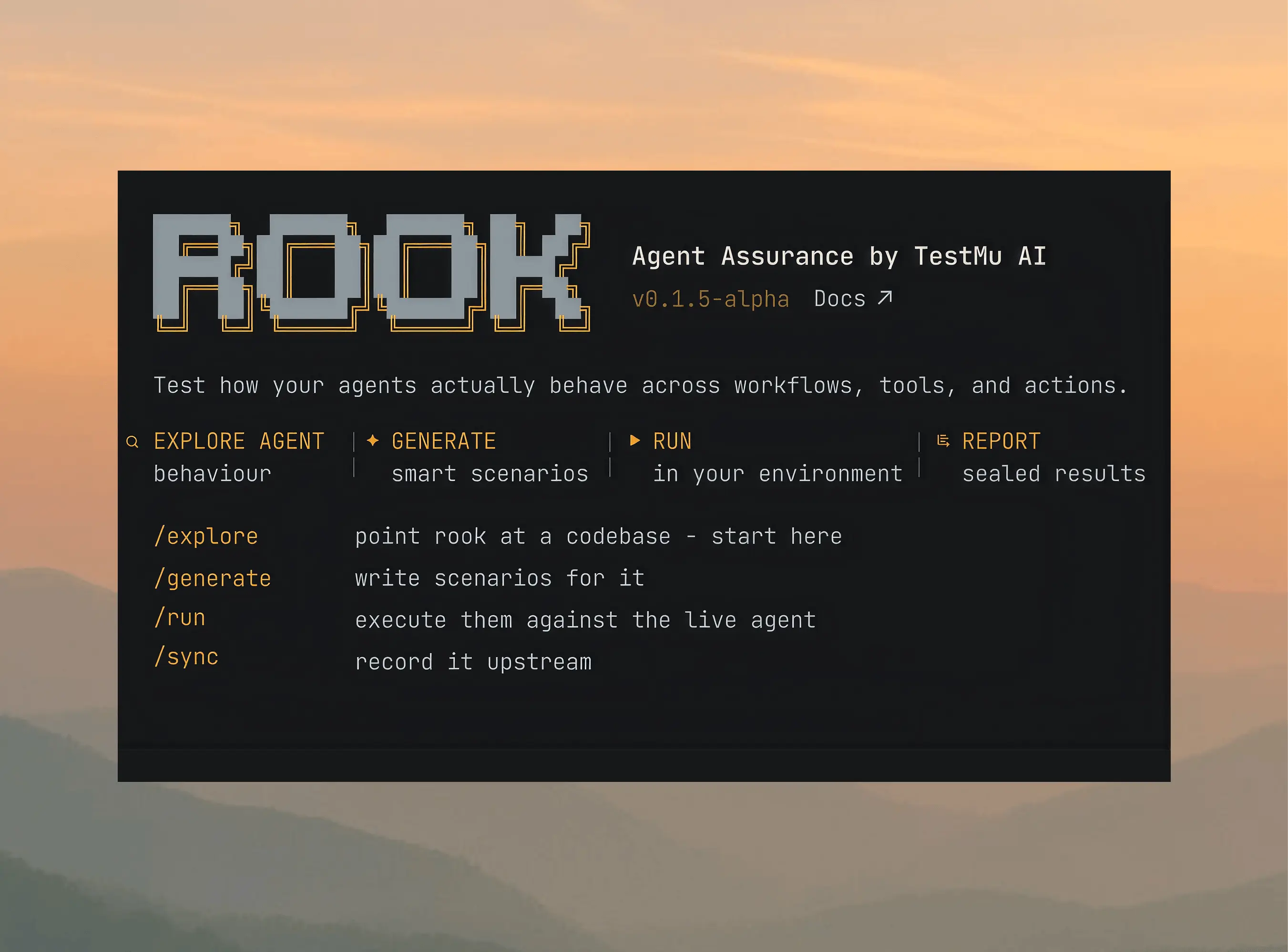
Test how your agents actually behave across workflows, tools, and actions. Catch failures and vulnerabilities before they ship.
npm install -g @testmuai/rook@latest
- TestMu AI (Formerly LambdaTest)
- /
- Learning Hub
- /
- What Is AI Trust?
What Is AI Trust?
AI trust is the confidence people place in an AI system. Learn how it differs from trustworthy AI, what calibrated trust is and how to measure the trust gap.
Published on:
OVERVIEW
Within one quarter, the share of US business leaders confident in the governance and capabilities they have in place rose from 57% to 73%, in the Q3 2026 AI Pulse survey that KPMG published on September 24, 2026. Over two quarters, the proportion of organizations that build controls into their agents, alongside monitoring and evaluation procedures, fell from 43% to 30%, and KPMG's explanation is that many are relying on guardrails already in place.
Read together, the two figures suggest that AI trust inside organizations is running ahead of the evidence about how their agents behave.
Take a support agent that issues refunds and then tells each customer it has. Its replies read the same whether or not the refund exists, so the checks in this guide read the refund records first.
Overview
AI trust is the confidence people place in an AI system: their willingness to rely on it to be reliable, safe, fair and compliant when they cannot check every output. Trust belongs to people and trustworthiness to the system, and trust is calibrated when it matches what evidence shows the system can do.
How Do You Measure Trust in AI?
- Trust vs trustworthiness: AI trust is not the same as trustworthy AI. AI trust is an attitude held by people, while trustworthiness is a property of the system, which NIST's AI Risk Management Framework describes through seven characteristics.
- Calibrated trust: AI trust is calibrated when reliance on an AI system matches its verified performance. Relying more than the evidence supports is over-trust, or misuse, and relying less is under-trust, or disuse, in Parasuraman and Riley's 1997 terms.
- Reliance signals: Reliance on an AI system is measured from usage logs: the share of its outputs used unchanged, edited, overridden or redone by hand after the system reported the task done.
- Verified performance: Verified performance comes from test results: the criterion pass rate, reported beside verification coverage, the share of acceptance criteria that evidence settled with a Pass or Fail verdict.
- Over-trust and under-trust: High reliance on weakly verified performance is over-trust, and low reliance on strongly verified performance is under-trust, so a single blended trust score hides which side is off.
- Trust in AI agents: An AI agent earns trust from evidence of its actions, not from its replies, because a refund agent can report a refund that does not exist. Agent Assurance from TestMu AI checks claimed actions against evidence before release.
What Is the Difference Between AI Trust and Trustworthy AI?
AI trust is an attitude held by people: the confidence that users, customers, regulators and the organization itself place in an AI system, and their willingness to rely on it when they cannot check every output. Trustworthy AI is a property of the system. Calibrated trust is the state in which the first tracks the second.
Reliance is the behavior that trust influences. In a 2004 paper in Human Factors, Lee and See argue that automation often causes problems because people fail to rely on it appropriately, and that trust guides reliance especially when complexity and unexpected situations make it impractical to understand the system completely.
| Term | Belongs to | What it is | What shows it |
|---|---|---|---|
| AI trust | People: users, customers, regulators and the organization | An attitude: confidence that the system will do its job well enough to rely on | What people say in surveys and interviews |
| Reliance | People | A behavior: using, editing, overriding or redoing what the system produces | Logs of outputs used unchanged, edited, overridden or redone |
| Trustworthy AI | The system | A set of properties, such as the seven characteristics NIST lists | Test results and other evidence that each property holds |
| Calibrated trust | The match between people and system | Trust that rises and falls with verified performance, seen in reliance | Reliance compared with the criterion pass rate and verification coverage |
NIST's AI Risk Management Framework lists the characteristics of trustworthy AI systems as valid and reliable, safe, secure and resilient, accountable and transparent, explainable and interpretable, privacy-enhanced, and fair with harmful bias managed.
NIST calls valid and reliable "a necessary condition of trustworthiness" and the base for the other six. The framework's functions and testing guidance are covered in the NIST AI RMF guide.
A system can meet those characteristics and go unused, or miss them and still be relied on. Producing evidence that they hold for one specific system is the work of AI assurance. Keeping a system trustworthy, secure and compliant through policies and technical controls is the subject of AI TRiSM.
What Is Calibrated Trust in AI?
Calibrated trust is trust in an AI system that matches its verified performance, and it shows in reliance: people rely on the system for the tasks where evidence shows it works, and check or override it where the evidence is thin or poor.
Human factors research named the two ways to miss long before generative AI: misuse and disuse, as Parasuraman and Riley defined them in 1997.
| Aspect | Over-trust (misuse) | Under-trust (disuse) |
|---|---|---|
| What people do | Use the output without checking it | Ignore the output or redo the work by hand |
| Definition, 1997 | Misuse: "over reliance on automation, which can result in failures of monitoring or decision biases" | Disuse: "the neglect or underutilization of automation", which "is commonly caused by alarms that activate falsely" |
| Common trigger (this guide's reading) | Fluent output and no failure seen yet | False alarms, or one visible failure |
| What it costs | Errors reach customers and records unchecked | The money spent on the AI returns little |
| The fix | Verify before granting autonomy | Show the people who use the output the verification results, including what could not be verified |
| For the refund agent | A support lead approves its refunds in bulk because the replies read well | A team re-keys every refund by hand for months after one wrong refund, while later test runs pass |
Is More Trust in AI Always Better?
No. The aim is reliance that matches the evidence, and a research review and survey data both show people using AI more than they trust it, and the survey shows many relying on its output without checking it:
- Trust and adoption - a 2019 Partnership on AI review of 78 research articles found that, apart from some papers concerned about the dangers of overtrust, they largely share "the goal of fostering more trust in AI", and that "The link between trust and adoption is tenuous at best, as people often use technologies without trusting them."
- Use ahead of trust - in the University of Melbourne and KPMG global study of more than 48,000 people in 47 countries, run between November 2024 and mid-January 2025, 66% of people use AI regularly, while only 46% are willing to trust AI systems.
- Reliance ahead of checking - in the study's findings on AI at work, 66% rely on AI output without evaluating its accuracy.
- Mistakes at work - in the same findings, 56% are making mistakes in their work due to AI.
NIST makes a related point from the system side: trustworthiness "is a social concept that ranges across a spectrum and is only as strong as its weakest characteristics." So set reliance task by task: let people use an output unchecked only for tasks whose acceptance criteria have passed with evidence, and keep a check step everywhere else.
What Is the AI Trust Gap in 2026?
The AI trust gap is the difference between how much an organization trusts and relies on its AI systems and how much evidence it holds that they behave as intended. KPMG's Q3 2026 AI Pulse, which surveyed 314 US C-suite and business leaders at organizations with annual revenue of $1 billion or more between July 24 and August 25, 2026, shows the organizational side of it:
| Measure in KPMG's survey | Change | Period |
|---|---|---|
| Leaders confident in the governance and capabilities they have in place | 57% to 73% | One quarter |
| Organizations building controls into agents, with monitoring and evaluation procedures | 43% to 30% | Two quarters |
| Organizations building, deploying or developing AI agents | 53% to 62% | One quarter |
- Reliance on guardrails - KPMG's reason for the smaller share building controls into agents is that many organizations are counting on guardrails they already have, and the release does not say which kind. Runtime AI guardrails act while an agent runs, blocking or flagging inputs, outputs and tool calls that break a policy, so they limit what a live agent can do without showing how it behaves before release.
- The confidence control gap - Maneesh Sharma, TestMu AI's COO and the reviewer of this guide, uses that name for the pattern in his piece on AI agent governance. In this guide's reading, which goes beyond what KPMG reports, the pattern is over-trust at organizational scale.
- Trust against capability - in a Testμ Conf 2026 session, Moving from "Can We Build It?" to "Can We Trust It?", Andrew Duncan framed the trust gap as the space between the trust people place in an AI solution and what it can really do.
To size your own gap, list the actions each agent may take, mark which have evidence from tests run before release and which rest on runtime guardrails alone, and close the gaps for the actions people rely on most first.
How Do You Build Trust in AI Agents?
Build trust in an AI agent from evidence of its actions, gathered before it gets autonomy. A fluent reply proves nothing about the refund behind it: the refund agent's message can be accurate, or it can describe a refund that was never issued, was issued twice or went to the wrong order.
The README of Rook CLI, TestMu AI's command-line tool for testing agents, states the principle: "An agent's account of what it did is the weakest evidence available about what it did."
- Criteria written before any run - stakeholders agree in writing what the agent has to do, what it may never do and what it hands to a person, such as "never refund more than the order total". Criteria fixed before testing are the core of AI agent validation.
- Evidence of actions before release - each criterion is checked against what changed in staging: the refund record, the order status and the tool calls it made.
- Evals before deployment - a release decision rests on scored test results. In Build Trustworthy AI Agents Powered by Evals, a Testμ Conf 2026 session, Rushabh Mehta, Software Engineer at Meta, argued that vibes and a reviewer's "looks good to me" are not a deployment strategy.
- Gaps kept in view - criteria that end without a Pass or Fail, because nothing recorded could settle them, are reported with their own count and never added to the passes, so a reviewer sees what nobody checked.
- Review outside the build team - someone who did not build the agent reviews the evidence before the agent gets more autonomy.
- Autonomy granted in steps - the agent starts with actions a person approves one by one, and its limits rise only as the evidence for each action builds up.
- Re-checks after every change - a new model, prompt or tool reopens the criteria it touches, and trust carries over only once those checks pass again. In an agent development lifecycle, those re-checks run at a change gate.
Who Is Accountable When an AI Agent Is Trusted to Act?
The organization and the named people who release and run an AI agent should stay accountable for what it does, whatever share of the work, testing included, AI takes on.
- Liability stays with people - in a Testμ Conf 2026 fireside chat on who signs off when AI writes the tests, Harleen Bedi, Chief Technology Officer for Quality Engineering at Infosys, said: "End of it, liability still remains with humans. We as humans still own that." Her governance layer fixes criteria and thresholds before anything is handed to AI, traces why the AI wrote each test and marked it passed, and watches for drift after release.
- Decisions kept with people - in KPMG's Q3 2026 survey, 49% of leaders have defined high-risk use cases where they do not allow agents to make decisions autonomously.
For that accountability to hold, record each grant of autonomy: what the agent may do alone, the evidence behind the decision, who approved it and when, and which changes reopen it. When an outside reviewer later asks how the decision was made, that record is what an AI audit examines.
How Do You Measure AI Trust?
Measure AI trust from both sides and compare them: how much people rely on the system, and how well evidence shows it performs. Stated trust can be surveyed as well, but it often differs from what people do, so the comparison in this section uses logged reliance.
Verified Performance: The Evidence Side of AI Trust
Verified performance needs a second number beside the pass rate, because a pass rate counts only what reached a verdict. The guide to AI verifiability covers how to raise that second number, verification coverage, before release.
- Criterion pass rate - criteria that passed, out of the criteria given a Pass or Fail verdict. A scenario pass rate, such as the one Agent Assurance reports, counts scenarios instead, so name the denominator beside every pass rate.
- Verification coverage - criteria settled as Pass or Fail, out of all the criteria the run was meant to check.
- Passed out of all criteria - criteria that passed, out of every criterion the run was meant to check: the criterion pass rate multiplied by coverage, and the share a team can claim from evidence. The script below prints it in its shown column.
Reliance Signals to Log for an AI System
Reliance is what people do with the output, and the systems around an AI tool can usually log it. For the refund agent, the signals sit in the support tool and the payment system:
- Acceptance rate - outputs used unchanged, such as refund replies sent as the agent drafted them.
- Edit rate - outputs changed before use, such as a refund amount a person corrected.
- Override rate - outputs rejected or reversed, such as a refund a supervisor canceled.
- Redo rate - tasks a person did again by hand after the agent reported them done.
- Spot-check rate - outputs someone verified before relying on them, the step that the University of Melbourne and KPMG findings on AI at work show many people skip.
Sorting AI Agents Into Calibrated, Over-Trust and Under-Trust
| Reliance | Low verified performance | High verified performance |
|---|---|---|
| High reliance | Over-trust: people rely on what the evidence does not support | Calibrated: reliance matches the evidence |
| Low reliance | Calibrated, though the system needs work before anyone should rely on it | Under-trust: work the evidence supports goes unused |
A script prepared for this guide turns that grid into a ranking. It was run under Node.js 25.5.0 on a Windows machine on October 29, 2026, over six support agents whose names and counts are invented to show the method, so none of its numbers describes a real system. These are its inputs and the function that classifies each agent:
const agents = [
  // accepted / outputs: outputs staff used unchanged
  // passed, failed, unverified: criterion verdicts from
  // one pre-release test run
  { name: 'refunds', accepted: 455, outputs: 500,
    passed: 9, failed: 1, unverified: 14 },
  { name: 'order-status', accepted: 880, outputs: 1000,
    passed: 26, failed: 2, unverified: 2 },
  { name: 'address-change', accepted: 70, outputs: 200,
    passed: 17, failed: 1, unverified: 0 },
  { name: 'store-credit', accepted: 216, outputs: 300,
    passed: 8, failed: 4, unverified: 4 },
  { name: 'return-labels', accepted: 366, outputs: 600,
    passed: 7, failed: 1, unverified: 4 },
  { name: 'warranty', accepted: 30, outputs: 125,
    passed: 2, failed: 5, unverified: 3 },
];

const TOLERANCE = 10; // percentage points

function assess(a) {
  const all = a.passed + a.failed + a.unverified;
  const decided = a.passed + a.failed;
  const rely = a.accepted / a.outputs;
  const pass = a.passed / decided;
  const cover = decided / all;
  const shown = a.passed / all; // pass x cover
  const gap = Math.round((rely - shown) * 100);
  const call = gap > TOLERANCE ? 'over-trust'
    : gap < -TOLERANCE ? 'under-trust'
    : 'calibrated';
  return { ...a, rely, pass, cover, shown, gap, call };
}
Sorted by the gap between reliance and what the evidence shows, the script printed:
Reliance vs evidence: illustrative numbers, not data

agent          rely  pass cover shown  gap  call
refunds         91%   90%   42%   38%  +54  over-trust
store-credit    72%   67%   75%   50%  +22  over-trust
warranty        24%   29%   70%   20%   +4  calibrated
return-labels   61%   88%   67%   58%   +3  calibrated
order-status    88%   93%   93%   87%   +1  calibrated
address-change  35%   94%  100%   94%  -59  under-trust

rely  = outputs used unchanged / all outputs
pass  = passed / decided criteria (Pass or Fail)
cover = decided criteria / all criteria
shown = passed / all criteria (pass x cover)
gap   = rely - shown, in percentage points
call = over-trust above +10, under-trust below -10- refunds - a 90% criterion pass rate looks healthy, but only 10 of its 24 criteria reached a verdict, so the evidence shows 38% of its required behavior working while staff use 91% of its output unchanged.
- store-credit - four failed and four unverified criteria leave only half of its 16 criteria passing, against 72% reliance.
- address-change - evidence settles every criterion and 94% of them pass, yet staff use only 35% of its output unchanged, so most of its output is edited, overridden or redone despite strong evidence.
- warranty - low reliance on a weak agent comes out calibrated, which is the right call until more of its criteria pass.
The 10-point tolerance is an arbitrary setting: choose it per action by what a wrong result costs, tighter for refunds than for order-status lookups. A single blended trust score would hide which side is off, so report reliance, the criterion pass rate and coverage together.
How Do You Measure an AI Agent's Verified Performance With Agent Assurance?
Agent Assurance, the TestMu AI product built to test agents that act, supplies the verified-performance side of the comparison before release. You run it from the terminal as Rook CLI (command rook): it reads the agent's code or spec and generates functional and adversarial scenarios, each with acceptance criteria such as "the refund exists once, for the right order and amount".
Most eval and observability tools concentrate on the text an agent returns and the traces it leaves behind. Agent Assurance examines the changes a run made, within what your profile and access let it observe, and reports the unverifiable criteria on their own.
- Invoking the real agent - Rook CLI reaches the refund agent through a profile that names an MCP tool, a command or an HTTP endpoint; the profile's hook scripts, readable before any run, send each turn and can collect evidence afterward.
- Evidence of the refund - what the hooks report about tool calls and state changes is compared with what the scenario expects, including calls the agent must not make, and a judge can also check the refund through a read-only tool, once you have approved that tool.
- Read-only by instruction - judges are told to check without writing anything: the agent's refund tool issues refunds, so a judge that called it to check would create another one. Give the verifying tool read-only credentials as well.
- What the reply says - the reply is scored on quotations of what the agent actually wrote, a model judge decides some criteria, and the reply never counts as proof that a refund happened.
- Criteria left open - each criterion is marked Pass or Fail, or else Unable to Verify if no evidence settles it. Unable to Verify gets its own count and is never folded into Pass or Fail, and the pass rate is a scenario count: scenarios that passed, out of those that reached a decided verdict.
- Saved with each run - a record a reviewer can reopen later: each scenario as it stood for that run, which agent version ran under which profile revision, and every verdict beside the quote it rests on, kept in your project as plain files.
- Run-to-run changes - after a second run, Rook CLI compares it with the previous one, showing how the scenario pass rate moved and naming the scenarios that began failing or got fixed. Because an agent may choose another route through the same input, a sign-off rests on these records instead of a promise that the next run will match.
- Where to point it - a staging copy of the payment system with synthetic orders, because a refund the agent issues during a run is a real write that Rook CLI cannot take back. These checks belong before release: Agent Assurance does not see the refunds a live agent issues and cannot halt one at runtime.
Rook CLI works on macOS and Linux, and 64-bit Windows through npm or WSL. To set it up from npm, and to add its skill if Claude Code drives your work, run:
npm install -g @testmuai/rook@latest
npx @testmuai/rook-skill@latest install \
--agent claude-code- npm - requires Node.js 20 or newer on the machine.
- Homebrew or the shell installer - works without Node, and the Rook CLI installation guide gives the command for each.
- Claude Code skill - set up by an npx installer that runs on Node.js 22 or newer.
- Plan or trial - Agent Assurance is generally available, its free trial runs for 14 days with 4,000 credits, and the self-serve plans are compared on the Agent Assurance plans page. Rook CLI will not call a model or spend credits until your TestMu AI account has an active plan or trial.
To confirm a refund without asking the agent, follow the guide to configure MCP servers in Agent Assurance, which shows how a judge calls an approved read-only tool.

Where Should You Start Calibrating AI Trust?
Start with the agent your team relies on most: pull a month of its outputs and count how many were used unchanged, edited, overridden or redone. Then write its acceptance criteria, test them against staging, and set the reliance rate beside the criterion pass rate and coverage before you widen or narrow what the agent may do alone.
For an agent that acts in other systems, the Agent Assurance quickstart covers a first run on a public sample agent. If the agent talks to people or analyzes images, use Agent Testing instead, a separate TestMu AI product that puts chat, voice, phone and video agents through simulated conversations and scores image agents on test images, before launch and after model updates.
Author

Asad Khan
Blogs: 5


Asad Khan is the Co-Founder and CEO of TestMu AI, with over 15 years of experience in software testing, product strategy, and leadership. Under his leadership, TestMu AI has grown into an AI-native software testing platform trusted by 2.5M+ users across 132 countries, including startups, enterprises, and Fortune 500 companies. He is a member of the Forbes Technology Council and is followed by 39,000+ professionals on LinkedIn from the software testing and quality assurance community. Before TestMu AI, Asad co-founded 360logica, a software testing company that he grew into a multi-million-dollar business before its acquisition by Saksoft. Earlier, he began his career at GlobalLogic as a Lead Engineer serving top Wall Street banks. He holds a Bachelor of Technology from JSS Academy of Technical Education, Noida.
Reviewer

Maneesh Sharma
Reviewer
Maneesh Sharma is Chief Operating Officer at TestMu AI, where he leads the company's revenue functions across go-to-market, sales, RevOps, customer success, and the partner ecosystem, driving its global expansion. He brings over 28 years of experience across product, go-to-market, and business operations. Before TestMu AI he was Managing Director and General Manager for GitHub across India and APAC, Head of Partner Sales and Ecosystem at Adobe, Chief Revenue Officer at WizIQ, and Head of Products and Solutions at SAP India. Maneesh holds an MBA from IIM Bangalore and a B.E. in Electronics and Communications from NIT Surat.


AI Trust FAQs
Did you find this page helpful?
More Related Learning Hubs

TestMu AI forEnterprise
Get access to solutions built on Enterprise
grade security, privacy, & compliance
- Advanced access controls
- Advanced data retention rules
- Advanced Local Testing
- Premium Support options
- Early access to beta features
- Private Slack Channel
- Unlimited Manual Accessibility DevTools Tests