

Power Your Software Testing with AI Agents and Cloud
The Native AI-Agentic Cloud Platform to Supercharge Quality Engineering. Test Intelligently and Ship Faster.


- TestMu AI (Formerly LambdaTest)
- /
- Blog
- /
- AI-driven Test Execution Strategy Optimization
AI-driven Test Execution Strategy Optimization
Explore the need for AI-based test execution strategies and how AI impacts test execution, analysis, and defect predictions for optimal software quality.
Last Updated on:
On This Page
- Understanding AI-Based Test Execution
- The Need for AI-based Test Execution Tools
- Key Factors Driving the Shift to AI-Based Test Execution
- What Makes Agentic Test Execution Different From AI-Assisted Authoring?
- What are the Benefits of AI-Based Test Execution Strategies?
- AI-Based Test Execution is Transforming the Software Landscape
AI-driven test execution strategy optimization uses models trained on code changes, past results, and defect history to pick which tests run and in what order.
Test impact analysis is the core mechanism. It maps every test to the source files it exercises, so a commit that touches one module runs only the tests bound to that module.
This guide covers how AI-based test execution works, why teams need AI test execution tools, the factors driving the shift, how agentic execution differs from AI-assisted authoring, the benefits, and how the practice is changing software delivery.
Key Takeaways
- AI-driven test execution strategy optimization selects and orders test cases from code changes, historical results, and defect data instead of running every test on every commit.
- Test impact analysis maps each test to the source files it exercises, so a commit that touches one module runs only the tests bound to that module.
- Self-healing test automation repairs locators that break when element attributes change, which removes most of the maintenance work that follows a user interface release.
- Agentic test execution decides each step at runtime, while AI-assisted authoring generates a script once that a human reviews and that then runs the same way on every build.
- The Model Context Protocol gives a test agent a standard way to call tools such as a browser driver, a test runner, or a defect tracker.
- An agent run needs a recorded trace before it can gate a release, because two runs against the same build can take different paths.
Understanding AI-Based Test Execution
Reliable tests are pivotal. AI app testing tools update tests dynamically, which keeps test maintenance low even when the application changes significantly.
When it comes to testing, it is the increased time to value that makes AI so promising. AI has redefined software testing by introducing intelligent algorithms and automated systems that can analyze large volumes of data and make informed decisions.
AI makes test executions more fluid and dynamic. With AI and machine learning algorithms, organizations can translate user stories, documentation, and acceptance criteria to create executable test cases. AI-based test execution also ensures greater efficiency by prioritizing test cases based on risk, code coverage, real-time analytics, and historical data.

In this TestMu Conf 2026 session, Srikanta Sahoo and Navneet Goyal put that prioritization to work in AI-Powered Impact-Based Testing for Faster, Safer Releases, where a Smart Engine analyzes code modifications, dependencies, historical test results, semantic relationships, and test reliability to pick the tests most relevant to each change.

Key Takeaway: AI-based test execution ranks test cases by risk, code coverage, and past failure data, so the tests most likely to catch a defect run first.
The Need for AI-based Test Execution Tools
Code complexity and shorter release cycles have outpaced fixed test suites. AI algorithms execute tests, analyze results, and monitor system behavior in real time, so a team sees a failure pattern during the run rather than after it. TestMu AI's HyperExecute applies this to test runs: it executes suites in parallel and uses AI root cause analysis to separate product bugs from test automation bugs and environment issues.
A few of the primary reasons for transitioning from traditional testing methods to AI-based test execution tools include:
- Greater speed in testingOne of the most time-consuming aspects of software testing is test case generation and covering various scenarios and edge cases. AI and automation together remove most of that manual effort. AI-based testing tools automate repetitive and laborious tasks, boosting testing efficiency and speeding up testing cycles. By quickly addressing code coverage issues and accelerating bug resolution, AI-based test execution enables faster time to market.
- Enhanced reliability of test resultsAI algorithms can be used to execute tests and analyze test results and data in real-time to identify patterns, detect anomalies, and predict potential defects. Machine learning techniques can further provide insights into which areas of the software application are prone to errors, ensuring QA teams are spending their time wisely and concentrating on critical areas that require additional investigation.
- Capability to self-healWith AI-based test execution tools, you can automatically fix broken test scripts caused by changes in the application. AI provides teams with intelligent and adaptive test frameworks for continuous testing. These test frameworks introduce auto-healing capabilities, also known as self-healing test automation, as they adapt testing dynamically to changes in the application in order to continue testing without human intervention.
The self-healing test functionality studies testing data to identify potential issues or element changes that caused a test script to break, and then it applies changes to fix the issue while continuing to run the test. Moreover, the self-healing feature speeds up the testing process, all the while providing exclusive insights into application issues and component performance.
Key Takeaway: Teams adopt AI-based test execution tools for three concrete gains: faster cycles, real-time result analysis, and self-healing scripts that survive changes to element attributes.
Key Factors Driving the Shift to AI-Based Test Execution
AI touches three areas of testing directly: test execution, result analysis, and defect prediction. Each one changes how a team decides what to run and what to fix first.
- Optimizing test case prioritizationAI ranks test cases by the risk each change carries, so the checks most likely to fail run first. Prioritizing test cases this way cuts machine time and shortens the feedback loop on a pull request. Critical paths get verified early in the development lifecycle instead of at the end of a full suite.
- Increased test coverageAI-driven testing widens coverage by generating cases for scenarios that human testers skip, such as unusual input combinations, error branches, and rarely used code paths. A model reads the application under test and proposes the paths that no existing test reaches.
- Lowers dependency on manual interventionSelf-healing capabilities reduce the occurrence of false positives, and the auto-healing test functionality fixes locator failures in real time without human intervention. That lowers the number of reruns a tester triages by hand after a user interface release.
- Continuous improvementAI-based test execution strategies effectively address the complexities and variations present in modern software applications and provide predictive insights into potential flaky tests and failure points. These AI models learn and improve from every test execution and past test results. This ensures a dynamic and responsive testing process along with continuous improvement. It also simplifies the testing pipeline, which gives faster feedback loops and more agility in software development cycles.
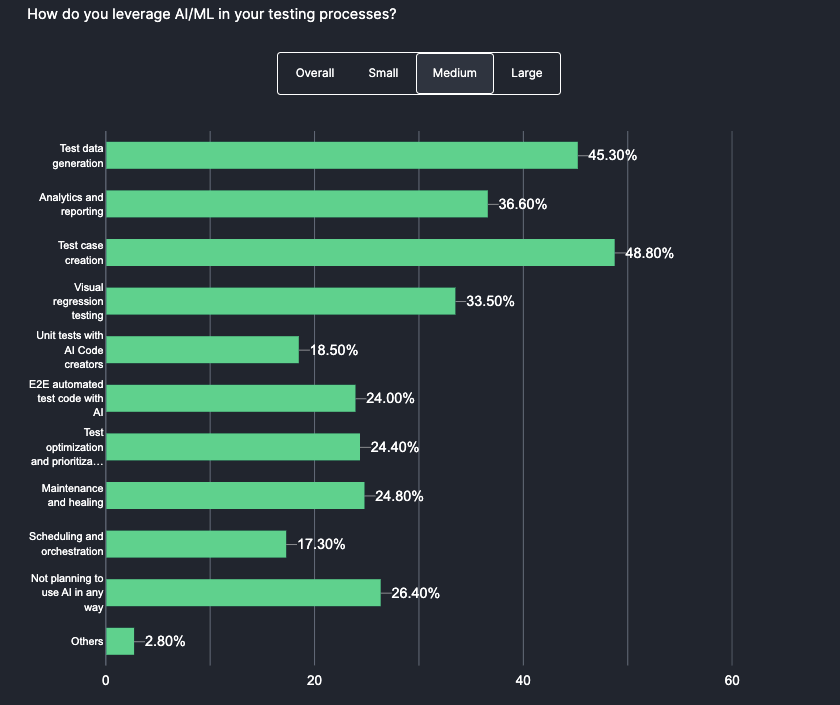
Many modern automation architectures discussed in MCP and AI Agents show how intelligent systems maintain testing context and coordinate tools across the QA workflow to enable this continuous learning cycle.
To learn more about how intelligent algorithms are reshaping quality assurance workflows, check out this detailed guide on AI in software testing, which explores practical applications and benefits across the testing lifecycle.
Key Takeaway: The shift to AI-based test execution is driven by test case prioritization, wider coverage of edge cases, less manual repair work, and models that improve with every run.
What are the Benefits of AI-Based Test Execution Strategies?
Test automation is a critical element of a software development lifecycle. AI is augmenting traditional methods with intelligent algorithms and helping prioritize tests based on user impact, potential risk level, and code coverage.
AI-based test execution is a pioneering step forward in software quality assurance. With AI, test suites are optimized to maximize efficiency, bring down redundancy, and find the quickest path to code coverage. In turn, this allows testers to spend more time validating critical functionality.
Here's a rundown of the key benefits of leveraging AI-based test execution tools:
- Boosts resource efficiency: AI helps automate repetitive development tasks such as code reviews and documentation, freeing up developers to focus on higher-value tasks. Testers can leverage intelligent chatbots that use Natural Language Processing (NLP) to handle common developer queries. AI also empowers testers to dynamically prioritize critical test cases based on their impact and risk levels.
- Instant feedback on testing: AI-powered analytics monitor test execution and return instant feedback on results, so testers identify and fix issues as they arise.
- Early detection of issues: With AI's advanced algorithms and machine learning models, testers can analyze historical patterns and current trends. This way, testing teams can foresee potential vulnerabilities and identify defects even before they occur, enabling teams to preemptively address these issues and take up proactive mitigation strategies.
- Predictive analytics: AI-native test analytics will help maximize testing accuracy. Machine learning models let testers search large datasets for the patterns that refine test execution approaches and support decisions on current data.
Key Takeaway: AI-based test execution strategies return resource efficiency, instant feedback during a run, early defect detection, and predictive analytics drawn from historical test data.
AI-Based Test Execution is Transforming the Software Landscape
To find success with AI-based test execution, it is crucial to find a tool that will offer you advanced AI capabilities.
With TestMu AI, organizations can bid goodbye to flaky tests. Its built-in self-healing capability detects changes in element attributes and builds stable tests for functional, visual, and API tests in one flow.
To ensure your applications work seamlessly, you can run tests across 10,000+ real devices and 3,000+ browser and OS combinations. That's not all; backed by AI-native test intelligence insights, you can predict and mitigate potential issues even before they take root.
With the rise of AI in testing, its crucial to stay competitive by upskilling or polishing your skillsets. The KaneAI Certification proves your hands-on AI testing skills and positions you as a future-ready, high-value QA professional.
Experience the ease of TestMu AI's AI-native test management platform and maximize efficiency across all testing phases.

Author

Smeetha Thomas
Blogs: 10


Smeetha Thomas is a community contributor with 10+ years of experience in technical and product-focused content creation for FinTech and B2B SaaS platforms. She has authored product documentation, whitepapers, case studies, e-books, and long-form technical articles, and has written on technologies including APIs, cloud platforms, AI, and embedded finance. Smeetha works as a freelance writer and content consultant and holds a Bachelor of Commerce degree.


AI Test Execution FAQs
Did you find this page helpful?
More Related Blogs
TestMu AI forEnterprise
Get access to solutions built on Enterprise
grade security, privacy, & compliance
- Advanced access controls
- Advanced data retention rules
- Advanced Local Testing
- Premium Support options
- Early access to beta features
- Private Slack Channel
- Unlimited Manual Accessibility DevTools Tests