

Power Your Software Testing with AI Agents and Cloud
The Native AI-Agentic Cloud Platform to Supercharge Quality Engineering. Test Intelligently and Ship Faster.


- TestMu AI (Formerly LambdaTest)
- /
- Blog
- /
- 17 Best AI Automation Tools for 2026
17 Best AI Automation Tools for 2026
Compare the 17 best AI automation tools for 2026 across workflow, testing, content, and productivity, with what each does best and how to choose.
Last Updated on:
AI workflow automation tools connect your apps, interpret plain-language instructions, and run multi-step processes on their own, so routine work across sales, marketing, operations, and support happens without manual effort.
Traditional automation still matters, but it breaks when an app, field, or screen changes. AI-driven workflow tools adapt in real time, draft automations from natural language, and optimize how tasks are routed and prioritized.
The 17 tools below are grouped by the job they do, from app-to-app workflows to software test automation, with what each one handles best.
Overview
AI automation tools use artificial intelligence to run multi-step work across your apps with little manual effort. Zapier and Make cover broad app-to-app workflows, Moveworks resolves enterprise IT and HR requests, and KaneAI by TestMu AI brings the same natural-language automation to software testing.
Which AI tool is best for workflow automation?
- Best for broad app coverage - Zapier - connects thousands of apps and drafts automations from plain-language prompts, so a non-technical owner can wire up cross-app workflows without code.
- Best for visual multi-step scenarios - Make - a drag-and-drop canvas with routers, filters, and error handling for branching workflows that need to survive production.
- Best for enterprise IT and HR support - Moveworks - resolves employee requests using natural language understanding, working inside Slack, Microsoft Teams, and ServiceNow.
- Best for software test automation - KaneAI by TestMu AI - a GenAI-native test agent that authors, debugs, and evolves tests from high-level objectives and converts them across frameworks.
- Best for web scraping and data - Thunderbit - a no-code builder for lead generation, email responses, and scheduled data extraction across systems.
Do AI workflow automation tools require coding?
Most are no-code or low-code. Zapier, Make, and Thunderbit build automations visually or from natural-language prompts, so the person who owns the process can ship a working workflow without waiting on engineering.
AI Workflow Automation Tools at a Glance
| Tool | Best For | Type / Pricing |
|---|---|---|
| Zapier | Broad app-to-app workflow automation | Free + paid tiers |
| Make | Visual, no-code multi-step scenarios | Free + paid tiers |
| Moveworks | Enterprise IT and HR support automation | Commercial |
| KaneAI by TestMu AI | Natural-language software test authoring and debugging | Free plan + paid |
| Thunderbit | AI web scraping and data automation | Free + paid tiers |
| Microsoft Copilot | AI productivity across Microsoft 365 | Paid subscription |
| Notion AI | AI writing and workspace automation | Free + paid tiers |
| Fireflies.ai | AI meeting notes and summaries | Free + paid tiers |
Integration breadth is the first thing to check. Zapier app directory lists 9,000+ connected apps, which is the count most other platforms are measured against.
A tool that misses one system in your stack pushes that step back to a human, so coverage matters more than the feature list.
Why Need AI Workflow Automation Tools?
AI automation tools accelerate processes, reduce manual effort, and improve accuracy and efficiency in your workflows.
Here is how they add value:
- They can reduce operational overhead, automate repetitive tasks, and allow you to focus on other areas of growth.
- Whether in development, testing, data analytics, or project management, AI tools can process and analyze huge data sets to detect patterns and insights that humans are likely to overlook. This helps with accurate forecasting and enhances your risk assessment process with real-time data.
- AI automation tools can scale as your needs grow without requiring additional resources. These tools maintain performance, consistency, and compliance across operations.
The payoff is most immediate when you connect the apps your team already uses, so data moves between them automatically instead of through copy-paste and manual handoffs. To see how autonomous agents push this further, explore these AI agent use cases.
Top 17 AI Workflow Automation Tools
Here are the best AI workflow automation tools to connect your apps and automate day-to-day work in 2026.
App & Workflow Automation
Zapier
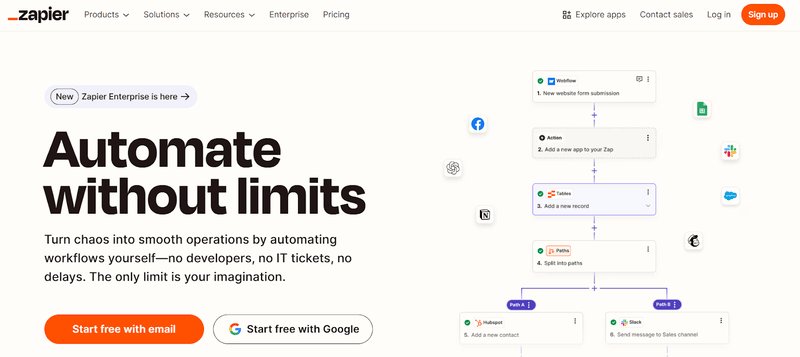
Zapier is an AI-powered workflow automation tool that connects different apps to eliminate mundane tasks. You can create "Zaps" to automate workflows between software applications like Gmail, Slack, and Trello.
It supports thousands of integrations, making automation accessible to businesses of all sizes.
Benefits -
- Connects apps and automates tasks without coding.
- Uses AI to detect patterns and optimize workflows.
- Allows you to describe workflows in natural language.
- Identifies and fixes automation issues proactively.
Make
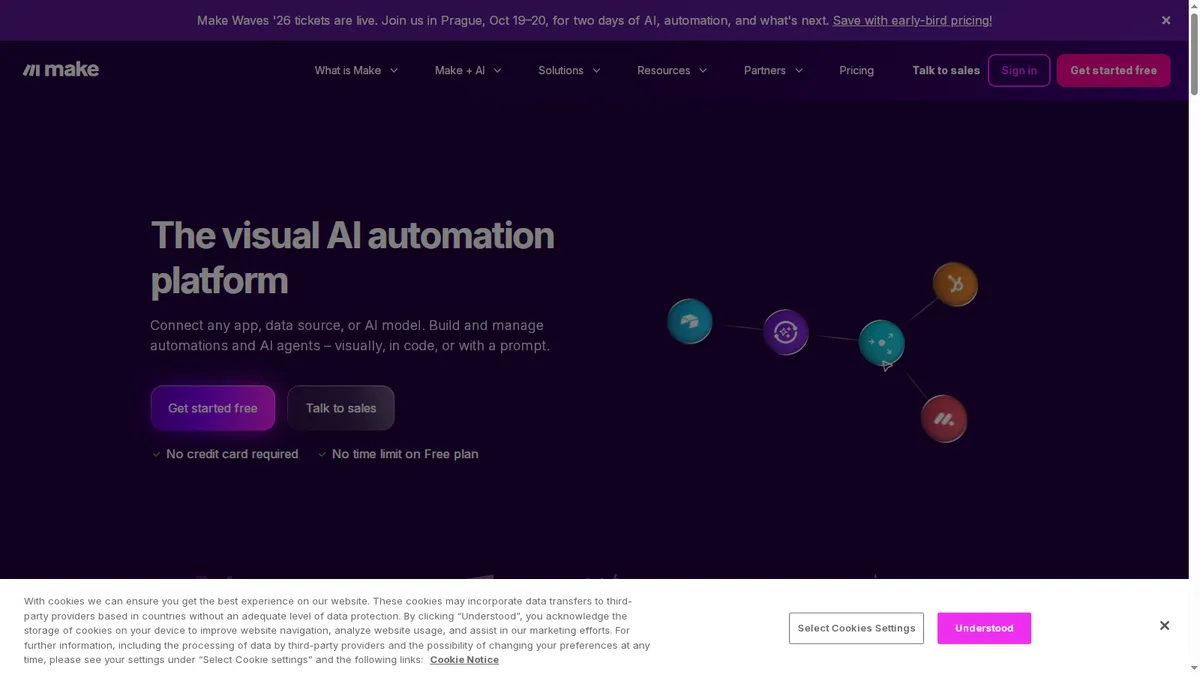
Make (formerly Integromat) is a visual, no-code workflow automation platform where you build multi-step scenarios by connecting apps on a drag-and-drop canvas. Its AI features let you draft and configure automations from plain-language prompts, so complex branching workflows are accessible without code.
It connects thousands of apps and supports routers, filters, and error handling for production-grade automations across sales, marketing, and operations.
Benefits -
- Builds multi-step workflows visually on a drag-and-drop canvas without code.
- Uses AI to draft and configure scenarios from natural-language descriptions.
- Connects thousands of apps with routers, filters, and conditional logic.
- Handles errors and retries for reliable, production-grade automations.
Moveworks
Moveworks is an AI-powered automation platform that resolves IT, HR, and other workplace support tasks autonomously.
It uses natural language understanding to resolve employee requests and also integrates with multiple business applications.
Benefits -
- Automates ticket resolution and answers employee queries.
- Understands natural language and provides instant responses.
- Works with tools like Slack, Microsoft Teams, and ServiceNow.
- Improves responses based on user interactions.
Thunderbit
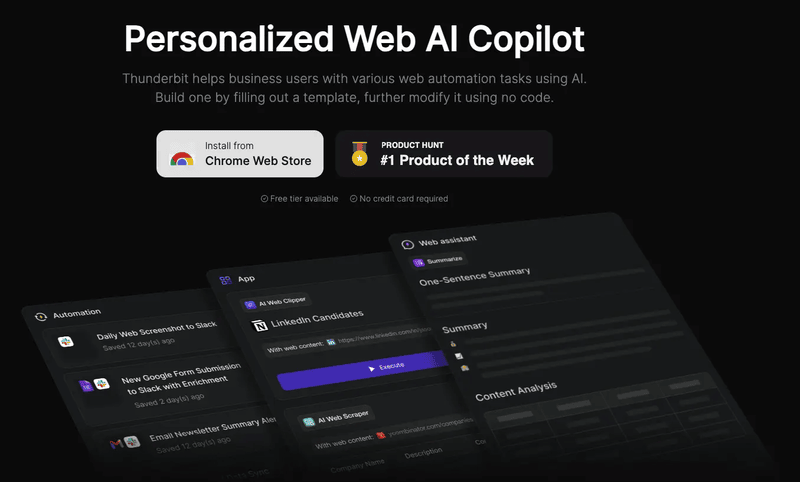
Thunderbit is an AI tool for automation that focuses on drag-and-drop functionality. It automates complex processes like lead generation, email responses, and task scheduling without writing a single line of code.
This no-code platform is flexible and easy to use, ideal for those who want to use AI to improve operational efficiency and workflows.
Benefits -
- Empowers non-technical users with its intuitive drag-and-drop interface to create complex workflows in minutes.
- Analyzes data from multiple systems, triggers actions based on predefined rules, and optimizes intricate workflows to enhance overall productivity.
Software Testing Automation
Test suites are where automation decays fastest, because every UI change breaks selectors that a human then has to repair. The three tools below author and maintain those tests themselves. For a deeper look at this category on its own, see our roundup of AI testing tools.
KaneAI by TestMu AI
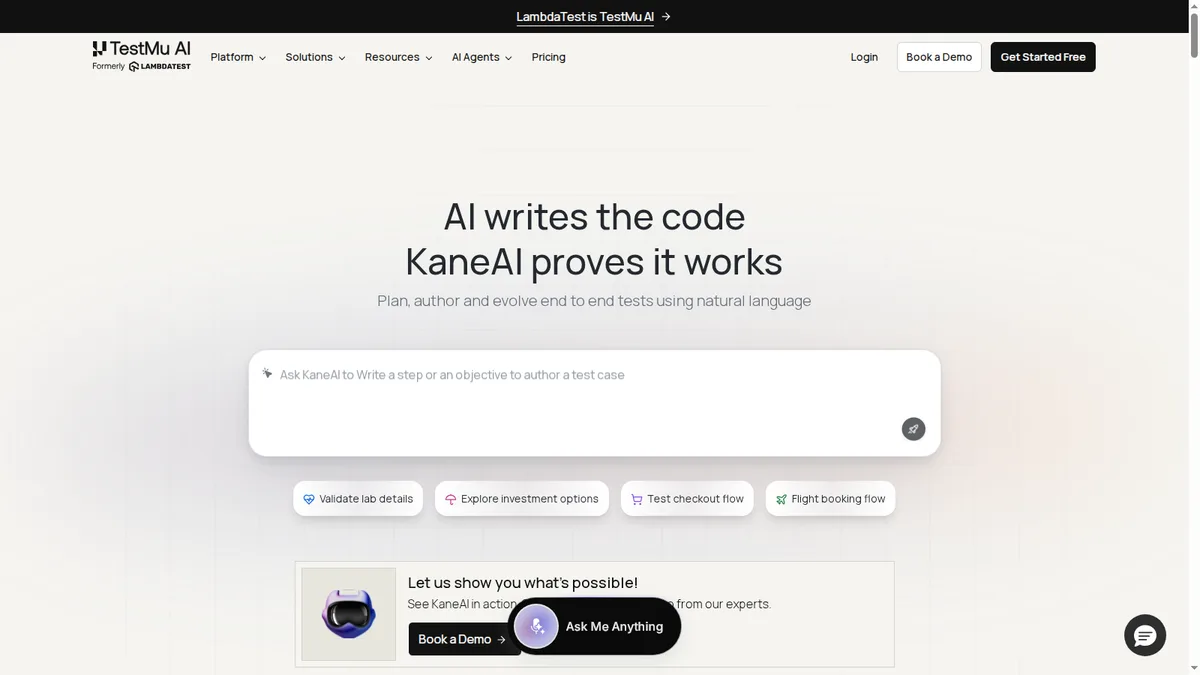
KaneAI by TestMu AI is a GenAI-native test agent that lets you create, debug, and evolve tests using natural language. It generates test steps from high-level objectives, converts them across frameworks, and fixes failures during execution, so quality keeps pace with the rest of your automated workflows.
Benefits -
- Creates and evolves tests from plain-language instructions.
- Generates and automates test steps from high-level objectives.
- Converts tests across programming languages and frameworks.
- Detects and fixes bugs during test execution.
The getting started with KaneAI guide walks through authoring a first test from a plain-language objective.
Testers.ai
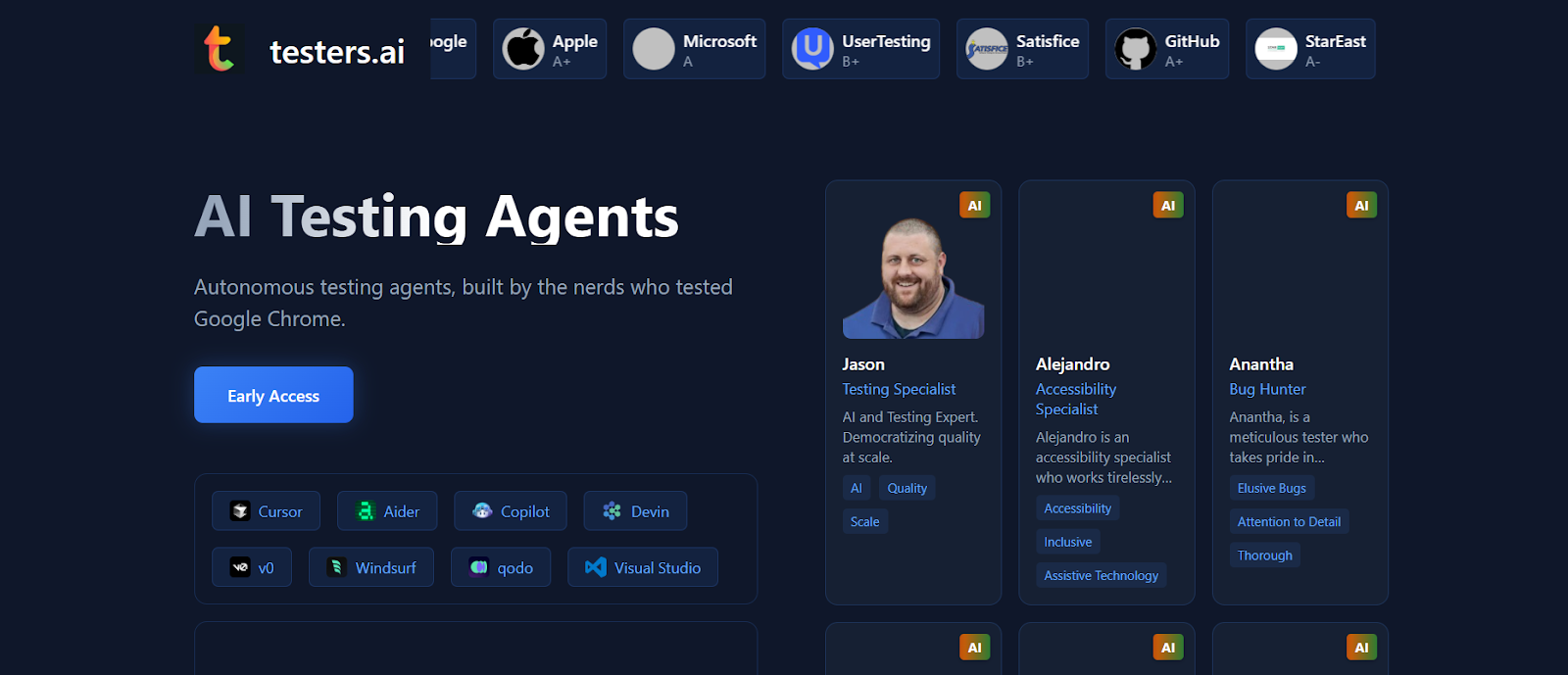
Testers.ai is an AI-driven testing platform that runs autonomous testing agents against your application. Its agents integrate with AI coding environments like Cursor and GitHub Copilot, so tests run as part of an AI-assisted development workflow.
Benefits -
- Runs autonomous agents that surface UI, content, and accessibility issues.
- Integrates with AI coding tools like Cursor and GitHub Copilot.
- Verifies content accuracy and accessibility compliance automatically.
- Uncovers hidden issues to improve overall test coverage.
Opkey
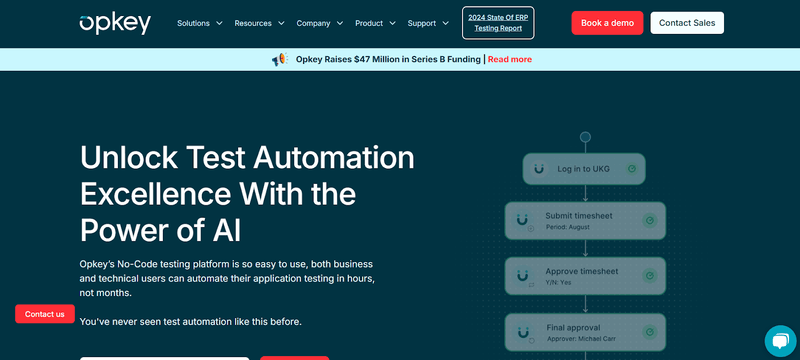
Opkey is a no-code, AI-powered test automation platform for ERP and packaged enterprise apps. It uses AI-driven test discovery, a large pre-built test library, and self-healing scripts to keep automated tests running as applications change.
Benefits -
- Discovers existing tests and coverage gaps from process logs with ML.
- Creates tests through a no-code interface and a GenAI chatbot.
- Self-heals scripts when the application UI changes.
- Ships a large library of pre-built tests for enterprise systems.
Since its licensing is priced for enterprise ERP rollouts, smaller teams often shortlist Opkey alternatives instead.

Content & Data Automation
Promptitude.io
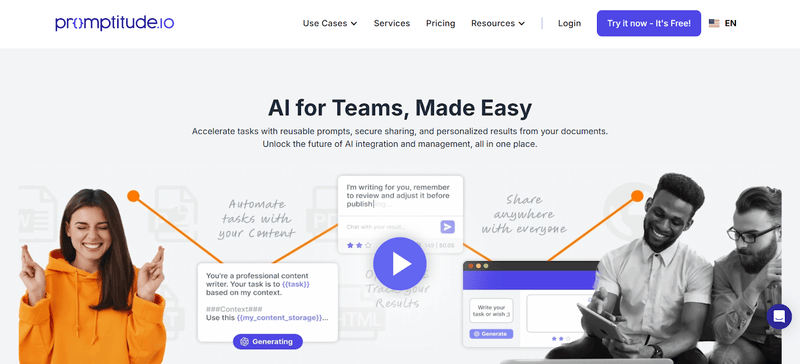
Promptitude.io is a no-code platform for building AI-driven processes across content generation, customer support, and data handling.
Benefits -
- Automates the generation of content and optimizes keywords within documents, which speeds up producing SEO-friendly material at scale.
- Uses AI models to process and analyze large volumes of data in documents, significantly reducing the time spent on manual analysis while enhancing accuracy.
- Builds custom automation workflows with ease using the built-in prompt library and AI assistant, eliminating the need for coding and adapting to specific user requirements.
Data Squirrel
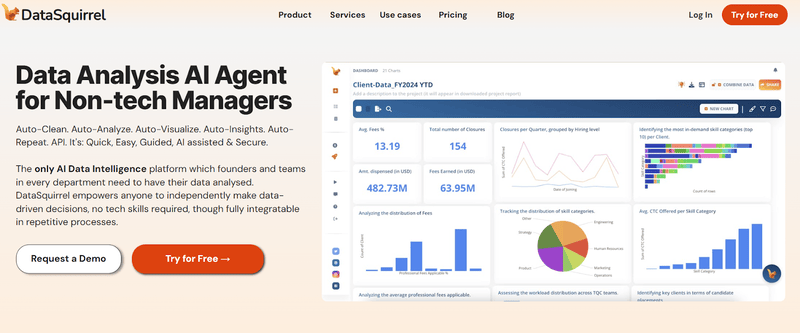
Data Squirrel is an AI automation tool that transforms data analysis. It uses automated processes, such as data cleaning, visualization, and trend identification, to uncover insights without requiring advanced technical skills.
Its AI-driven automation helps reduce manual efforts, enhance decision-making and ensure accuracy.
Benefits -
- Uses AI to automatically detect and correct inconsistencies, errors, and missing values in datasets.
- Enhances datasets by adding missing data points and contextual information using predictive AI models.
- Formats dates, currency, numerical fields, and text entries, allowing for smooth data merging, categorization, and rule-based transformations without manual intervention.
- Identifies patterns, trends, and anomalies within datasets through advanced AI algorithms.
Productivity Assistants
Microsoft Copilot

Microsoft Copilot is an AI-powered assistant integrated into Microsoft 365 applications to boost your productivity by automating routine tasks and providing intelligent suggestions.
It leverages advanced language models to assist with content creation, data analysis, and workflow automation within familiar Microsoft tools like Word, Excel, and Outlook.
Benefits -
- Assists in drafting emails, reports, and presentations by generating relevant content based on prompts.
- Simplifies complex data analysis in Excel by offering insights, trends, and data visualizations.
- Provides concise summaries of meetings and action items within Outlook, ensuring effective follow-ups.
- Integrates across Microsoft 365 applications, offering a unified AI experience.
Notion AI
Notion AI enhances the popular productivity app Notion by adding AI-powered writing and task management features. It assists with content creation, summarization, and idea generation.
It can automate repetitive tasks, improve document organization, and provide smart suggestions.
Benefits -
- Helps write, summarize, and improve text.
- Suggests and organizes tasks based on context.
- Enhances knowledge retrieval within workspaces.
- Improves clarity and structure of documents.
Taskade
Taskade uses AI to combine project management, task collaboration, and automation. It helps you organize and execute your workflows more effectively.
This platform uses AI features like task prioritization, natural language input, and real-time suggestions to ensure you stay on track with what matters most. It bridges the gap between productivity and AI-driven automation.
Benefits -
- Comes with AI agents to assist with generating content ideas, automating task reminders, and managing workflows. Useful for brainstorming, drafting documents, and handling daily tasks.
- Uses AI-powered mind maps to visualize workflows and structure complex plans, such as content marketing strategies, with ease and clarity.
- Provides AI-driven features like assigning tasks, tracking deadlines, and ensuring direct collaboration to keep large-scale projects on schedule.
Grammarly
Grammarly is an AI-driven writing assistant that enhances content clarity, tone, and correctness. It provides real-time grammar, spelling, and style suggestions to improve communication. With AI-powered tone analysis, it ensures messages are appropriate for different audiences.
Benefits -
- Enhances grammar, clarity, and conciseness.
- Adapts writing to different audiences and contexts.
- Provides rewriting, summarization, and idea suggestions.
- Works across emails, documents, and web browsers.
Meetings, Scheduling & Email
Fireflies.ai
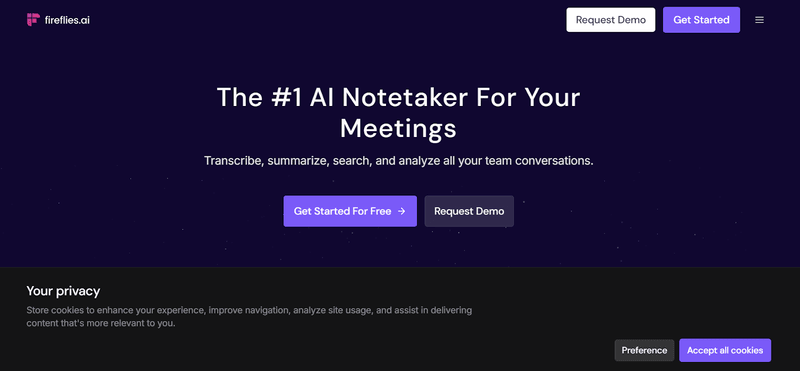
Fireflies.ai is an AI-powered meeting assistant that records, transcribes, and analyzes conversations. It helps you capture insights from meetings without manual note-taking.
The tool integrates with video conferencing platforms like Zoom and Microsoft Teams. With AI-driven search and summarization, you can quickly find key points from discussions.
Benefits -
- Converts voice conversations into searchable text.
- Highlights key points from meetings automatically.
- Differentiates speakers for clear conversation tracking.
- Connects with Zoom, Google Meet, and Microsoft Teams.
Otter.ai
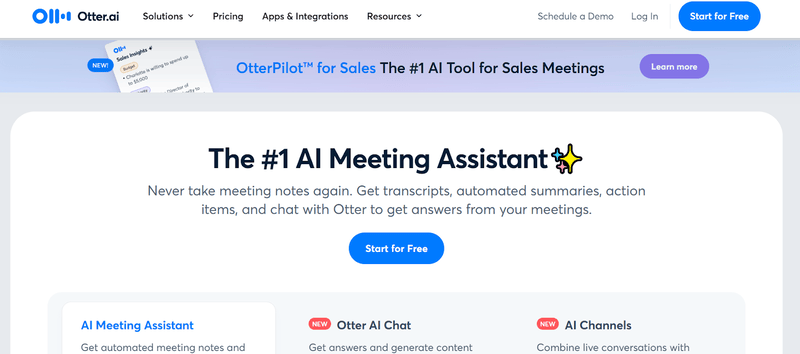
Otter.ai is an AI-powered voice transcription tool for meetings, interviews, and lectures. It helps you transcribe spoken words in real-time, capture and organize information, and summarize key points.
You can also integrate Otter.ai with tools like Zoom, Google Meet, and Dropbox.
Benefits -
- Captures real-time meeting notes with high accuracy.
- Extracts key points and action items from conversations.
- Identifies different speakers automatically.
- Works with Zoom, Google Meet, and Microsoft Teams.
Reclaim AI
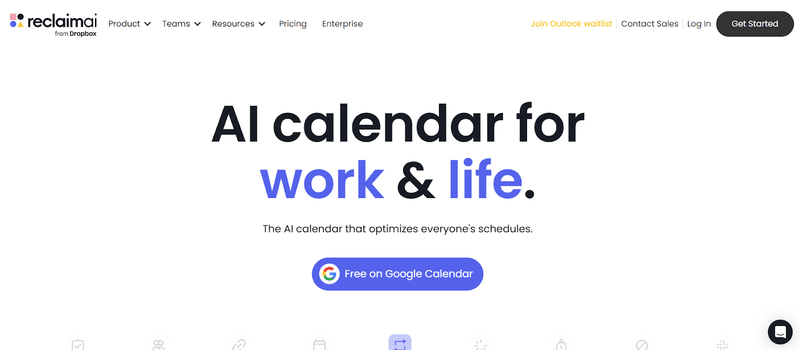
Reclaim AI is an intelligent scheduling assistant that helps manage time efficiently. It automatically blocks time for deep work, meetings, and personal tasks based on priorities.
It integrates with Google Calendar to provide real-time scheduling assistance.
Benefits -
- Optimizes meetings, tasks, and focus time.
- Automatically adjusts schedules based on priorities.
- Reserves time for deep work and personal events.
- Provides analytics on team productivity and workload.
Superhuman
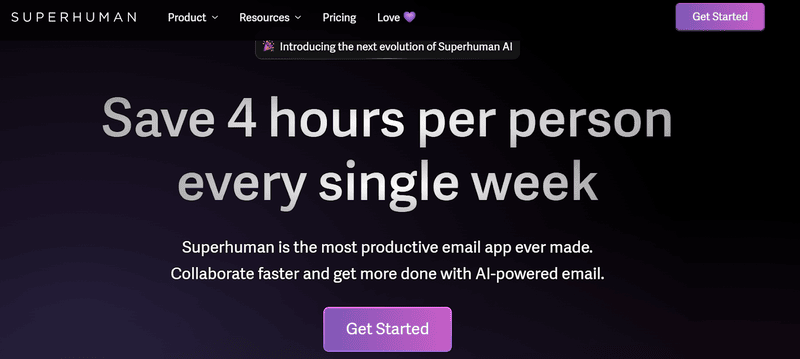
Superhuman is an AI-powered email productivity tool that enhances email speed and efficiency. It provides AI-driven email triage, scheduling, and writing assistance.
You can use shortcuts and automation to process your emails faster. Superhuman also offers smart reminders and follow-up suggestions to ensure that nothing is missed.
Benefits -
- Prioritizes important emails and declutters the inbox.
- Suggests quick replies and follow-ups.
- Enables lightning-fast email navigation.
- Helps draft and refine emails efficiently.
Conclusion
AI workflow automation tools take repetitive, multi-app work off your plate by routing data, triggering actions, and adapting when something changes. The right pick depends on your stack and who owns automation: Zapier and Make for broad app coverage, Moveworks for enterprise IT and HR support, and the AI productivity assistants for individual work.
Start with one high-frequency workflow, automate it end to end, then expand from there.
If your workflows also include software testing, the testing tools above, led by KaneAI by TestMu AI, bring the same natural-language automation to authoring and running web, mobile, and API tests.
You can also explore how AI tools for developers speed up coding workflows and boost productivity.

Note: Automate your software testing workflows with AI. Try TestMu AI free
Author

Zikra Mohammadi
Blogs: 23


Zikra brings 5+ years of hands-on expertise in AI, web development, and software testing to her role as a technical content strategist. Certified in AI, manual, and automation testing, she breaks down complex ideas into step-by-step guides, tutorials, and reference docs, helping teams unlock the full power of AI-driven, codeless automation on web and mobile.
Reviewer

Sirajuddin Khan
Reviewer
Sirajuddin Khan is Vice President of Product Management at TestMu AI (formerly LambdaTest), where he drives the company's agentic AI product strategy, building a suite of autonomous agents that includes Agentic Browsers and Agentic Visual Testing and shifting the unit of work from test execution to autonomous outcomes. One of the company's earliest product leaders, he has owned the roadmap for the high-performance execution cloud and grew the cross-browser testing products from early adoption to market leadership. He brings over a decade of experience across SaaS, B2B, and eCommerce, with earlier product roles at Wydr and ShopClues, where his catalog and search work cut delivery SLAs and lifted seller activity. Sirajuddin holds an MBA in Information Technology from Sikkim Manipal University and a B.Tech in Computer Science Engineering from Maharshi Dayanand University.


AI Workflow Automation Tools FAQs
Did you find this page helpful?
More Related Blogs
TestMu AI forEnterprise
Get access to solutions built on Enterprise
grade security, privacy, & compliance
- Advanced access controls
- Advanced data retention rules
- Advanced Local Testing
- Premium Support options
- Early access to beta features
- Private Slack Channel
- Unlimited Manual Accessibility DevTools Tests