

Power Your Software Testing with AI Agents and Cloud
The Native AI-Agentic Cloud Platform to Supercharge Quality Engineering. Test Intelligently and Ship Faster.


- TestMu AI (Formerly LambdaTest)
- /
- Learning Hub
- /
- Agentic AI Frameworks: How to Choose, Build, and Test AI Agents
Agentic AI Frameworks: How to Choose, Build, and Test AI Agents
A practical guide to agentic AI frameworks: what they are, a comparison of 7 leading options, how to pick one, a working code example, and how to test the agents you build.
Last Updated on:
AI agents have moved from demos to production. The LangChain State of AI Agents Report found that 51% of respondents already run agents in production, rising to 63% at mid-sized companies. The thing doing the heavy lifting underneath is the agentic framework.
An agentic framework turns a language model from a text generator into something that plans, calls tools, remembers context, and acts toward a goal. This guide explains what these frameworks do, compares the 7 leading options by what they are actually good at, shows a working example, and covers the part most roundups skip: how to test the agents you build. TestMu AI sits in that last step, where non-deterministic agents have to be validated before they reach users.
Overview
To build reliable autonomous systems, developers should choose LangGraph for complex, stateful workflows or CrewAI for role-based multi-agent collaboration. These frameworks allow large language models to plan, use tools, and act autonomously without requiring developers to write orchestration loops from scratch.
Leading Agentic AI Frameworks
- Best for complex workflows: LangGraph - models agents as a stateful graph of nodes and edges to provide explicit cycles, conditional branching, and human-in-the-loop pauses.
- Best for role-playing teams: CrewAI - organizes collaborative, role-playing agents with defined roles, goals, and backstories to help developers quickly build multi-agent prototypes.
- Best for conversational systems: AutoGen - models agents as chat participants for exploratory multi-agent systems and features a low-code prototyping interface called AutoGen Studio.
- Best for lightweight setups: OpenAI Agents SDK - provides a minimal, highly readable framework built around core primitives like agents, handoffs, guardrails, and sessions.
- Best for data-heavy agents: LlamaIndex - uses an event-driven workflow model optimized for deep retrieval-augmented generation and reasoning over your own documents.
- Best for enterprise integration: Semantic Kernel - embeds agents into existing applications with plugins and multi-language support for .NET, Python, and Java environments.
- Best for Google Cloud: Google ADK - offers a code-first toolkit optimized for Gemini with built-in evaluation and deployment to the Vertex AI Agent Engine.
- Best for full-stack management: Agno - provides a multi-modal platform to build, run, and manage a fleet of agents with built-in memory and tools.
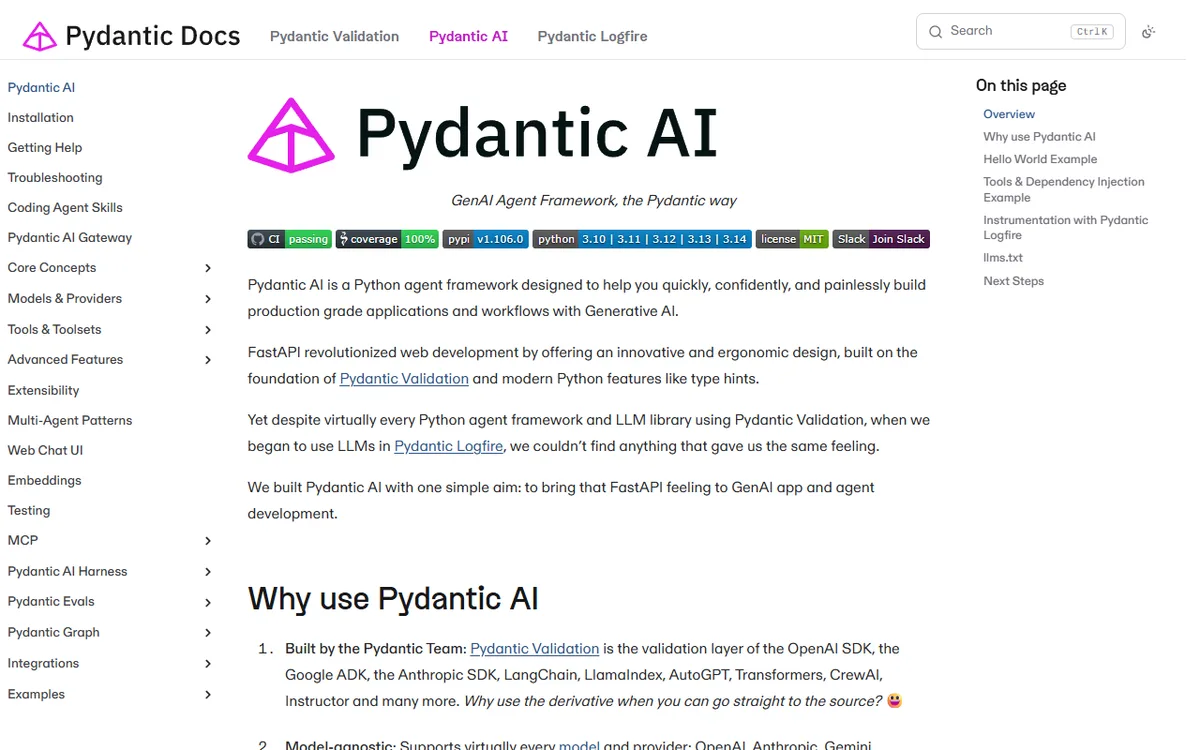
- Best for structured outputs: Pydantic AI - delivers type-safe, model-agnostic agents that parse model responses into validated Pydantic models to reduce downstream errors.
How to Choose a Framework
- Best for framework selection: Architectural alignment - requires matching the framework to your specific architecture, considering single-agent versus multi-agent needs, code-first versus low-code preferences, programming language, and cloud environment.
How to Test AI Agents
- Best for agent testing: TestMu AI - validates non-deterministic agents built on any framework across thousands of scenarios using synthetic users and standardized scoring.
What Are Agentic AI Frameworks?
An agentic AI framework is a toolkit that lets a large language model plan multi-step tasks, call external tools and APIs, hold memory across steps, and act with autonomy toward a goal. It supplies the orchestration loop, state management, and tool integration so you do not rebuild that plumbing for every project.
The distinction worth holding onto is autonomy. A traditional LLM app follows a fixed script: prompt in, answer out. An agent decides what to do next based on the result of the last step, looping through plan, act, and observe until the goal is met. The framework is what makes that loop reliable instead of a tangle of custom code.
- Workflow: Predefined steps the developer wires up; predictable, but rigid.
- Agent: The model chooses the steps at run time using tools and memory; flexible, but harder to predict and test.
If you are new to the concept, our AI agents learning hub covers the fundamentals, and the MCP and AI agents guide explains how agents connect to external tools through a standard protocol.
Core Components of an Agentic Framework
Most frameworks differ in syntax and philosophy but assemble the same building blocks. Knowing them makes any framework easier to learn and easier to compare.
- Planning and reasoning: The model breaks a goal into steps and decides the order, often using patterns like ReAct (reason then act).
- Tool and API use: The agent calls functions, search, databases, or external APIs to act on the world instead of only describing it.
- Memory and state: Short-term context for the current task and long-term memory across sessions, so the agent does not forget mid-task.
- Orchestration: The control flow that runs the loop, handles retries, and routes between steps or between multiple agents.
- Multi-agent coordination: The ability to split work across specialized agents that hand off or collaborate on a task.
- Guardrails and observability: Input and output checks, plus tracing, so you can see and constrain what the agent did.
AI Agents vs. Agentic AI: Key Differences
An AI agent is an individual program that executes a specific, narrow task, such as parsing an email or querying a database. Agentic AI is the broader system that coordinates multiple such agents toward a goal.
The distinction matters when you design. A single agent follows a bounded instruction and returns a result. Agentic AI plans a multi-step workflow, delegates subtasks to agents, evaluates their output, and adapts the plan when a step fails or the goal shifts.
In practice, the frameworks in this guide sit on the agentic side: they exist to compose, orchestrate, and supervise agents rather than to be one. Knowing which layer you are building at tells you whether you need a single tool-using agent or a full coordination system.
| Dimension | AI Agent | Agentic AI |
|---|---|---|
| Autonomy | Acts within a single, bounded task | Operates autonomously across a whole workflow |
| Functional scope | One narrow capability or tool | Coordinates many agents and capabilities |
| Adaptability | Fixed behavior for its task | Re-plans and adjusts as conditions change |
| Planning | Little to none; executes a step | Decomposes goals into ordered multi-step plans |
| Human dependence | Often invoked per task by a human or caller | Runs end to end with minimal intervention |
Types of AI Agents
AI agents fall into a small taxonomy by how much they perceive, remember, and reason. The categories below range from stateless reflexes to systems of collaborating agents, and most agentic frameworks let you build across several of them.
- Reactive (simple reflex) agents: Map the current input straight to an action, with no memory of past state.
- Model-based agents: Keep an internal model of the world to act on state they cannot directly observe.
- Goal-based and utility-based agents: Choose actions that reach a goal, weighing options by a utility score.
- Learning agents: Improve their behavior over time from feedback and experience.
- Multi-agent systems: Multiple agents coordinate, delegate, or compete to solve one larger problem.
Whichever type you ship, an agentic system behaves non-deterministically, so validate it with behavior testing across thousands of scenarios before it reaches users.
9 Leading Agentic AI Frameworks
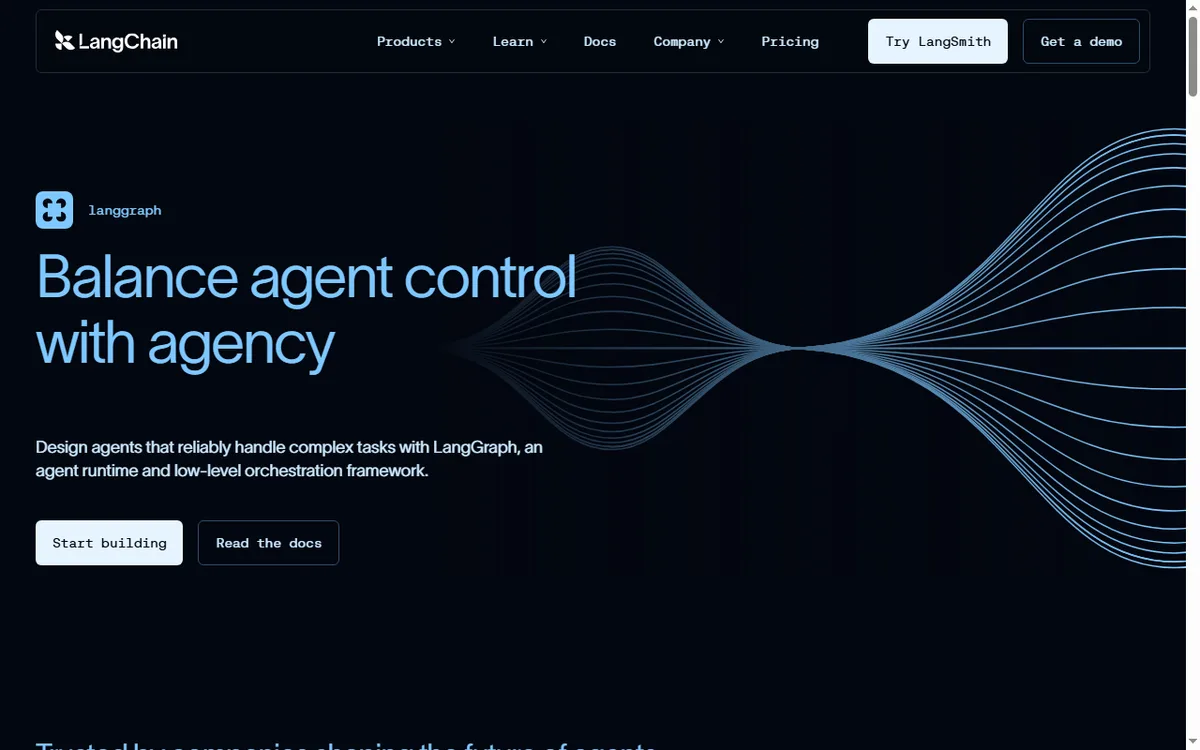
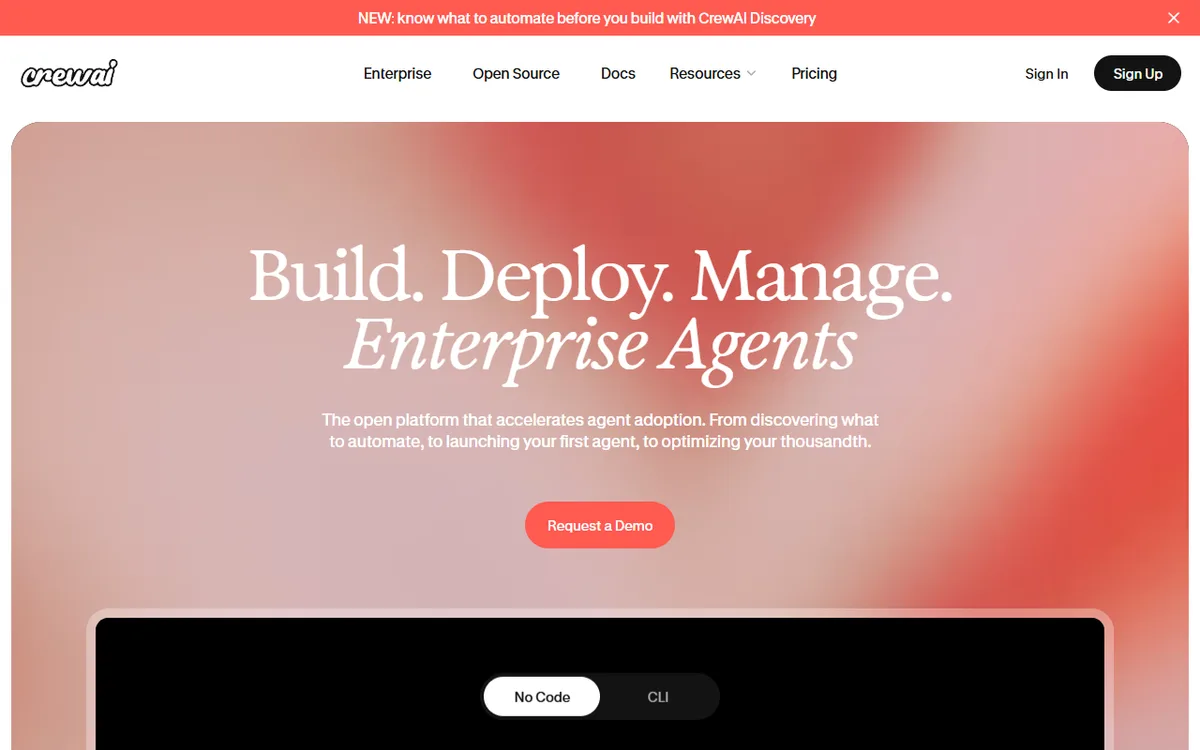
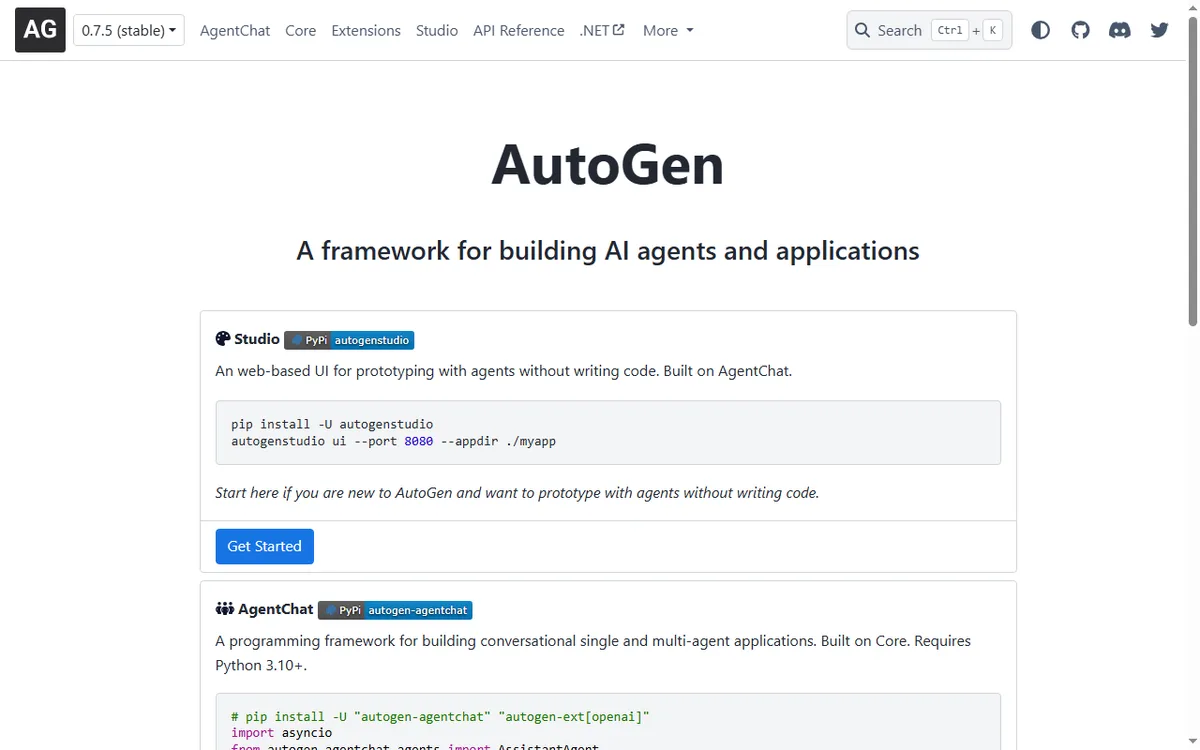
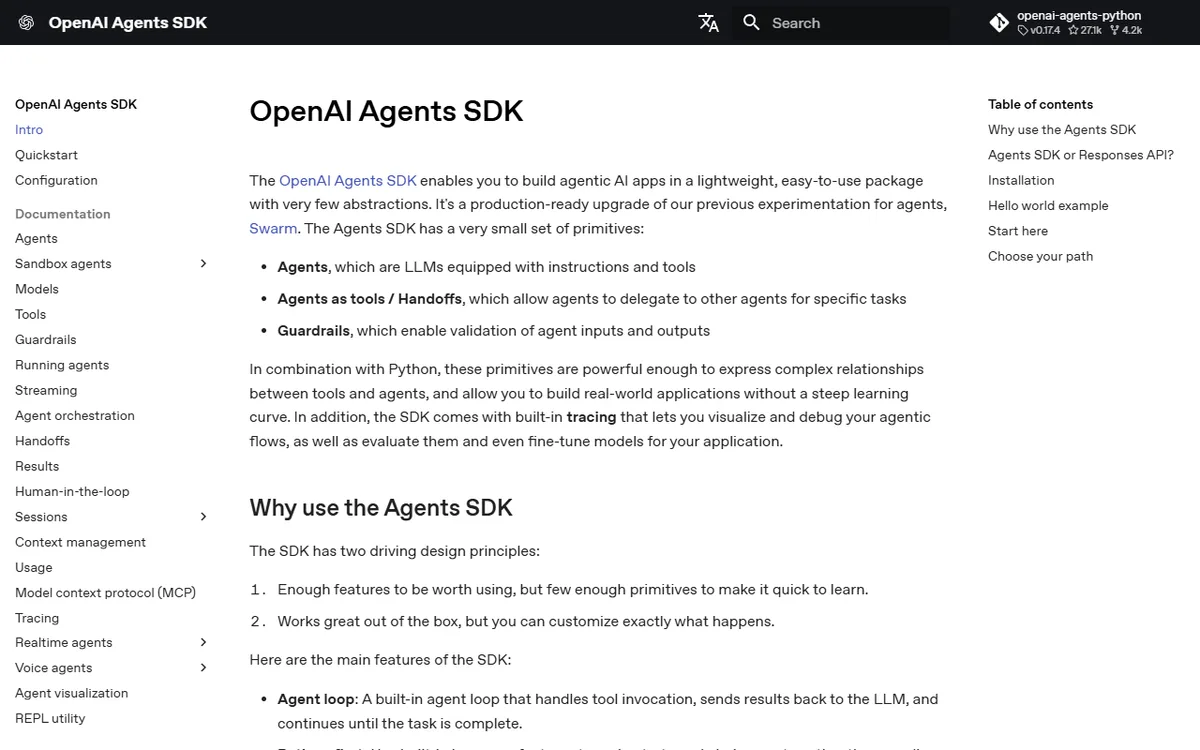
The nine frameworks below lead the space by adoption and community size. GitHub star counts, shown as of June 2026, are a rough proxy for momentum, not a quality ranking. Match the framework to the job: the screenshots and profiles below show what each one is actually built for.
| Framework | Best for | Architecture | GitHub stars |
|---|---|---|---|
| LangGraph | Complex, stateful, multi-step workflows | Graph of nodes and edges | 34.3k |
| CrewAI | Role-based multi-agent teams | Crews of role-playing agents | 53.2k |
| AutoGen | Conversational multi-agent systems | Agents as chat participants | 58.8k |
| OpenAI Agents SDK | Lightweight, OpenAI-centric agents | Minimal agents with handoffs | 27.1k |
| LlamaIndex | Data and document-heavy agents | Workflows over indexed data | 50.1k |
| Semantic Kernel | Enterprise, multi-language apps | Plugins and planners | 28.1k |
| Google ADK | Production deployment on Google Cloud | Code-first, model-agnostic | 20.0k |
| Agno | Full-stack, multi-modal agent platforms | Agent runtime and fleet management | 40.6k |
| Pydantic AI | Type-safe agents with structured output | Pydantic-validated, model-agnostic | 17.7k |
1. LangGraph
LangGraph (34.3k GitHub stars) models an agent as a graph of nodes connected by edges, with a shared state object flowing between them. That structure is its core advantage: it gives you explicit cycles, conditional branching, and human-in-the-loop pauses that simpler chains cannot express.
It ships the plumbing production agents need, including checkpointing so a run can pause and resume, state persistence across sessions, streaming of intermediate steps, and time-travel debugging to replay a decision. As the agentic layer of the LangChain ecosystem, it inherits a large set of model and tool integrations and supports both Python and JavaScript.
- Best for: Complex, stateful, long-running workflows where you need control over every branch.
- Trade-off: Lower-level than role-based frameworks, so there is more to wire up before the first agent runs.
2. CrewAI
CrewAI (53.2k stars) organizes work into "crews" of role-playing agents. You give each agent a role, a goal, and a backstory, such as a researcher, a writer, and a reviewer, and they collaborate to finish a task. That role abstraction is intuitive, which is why teams new to agents reach a working multi-agent prototype quickly.
It supports sequential and hierarchical processes, where a manager agent delegates to others, and a separate Flows feature adds event-driven, deterministic control when you need it. CrewAI is a standalone Python framework built independent of LangChain, with its own tools and memory layer. Once a crew is running, see our guide to CrewAI testing for the guardrails, event-bus assertions, and scoring hooks the framework ships.
- Best for: Multi-agent teams and quick prototypes where role-based collaboration maps to the problem.
- Trade-off: Less granular control over execution than a graph-based framework like LangGraph.
3. Microsoft AutoGen
AutoGen (58.8k stars), Microsoft's programming framework for agentic AI, models agents as participants in a conversation. Agents message each other, and patterns like a two-agent chat or a group chat with a manager emerge from that messaging, which makes it a natural fit for research-style and exploratory multi-agent systems.
Its architecture is layered into Core, AgentChat, and Extensions, and it ships AutoGen Studio, a low-code interface for prototyping agent teams without writing code. It supports Python and .NET. The trade-off is that the API has changed significantly across major versions, so pin your version and check the docs for the release you use. If you already run AutoGen, our guide to AutoGen testing covers its current maintenance status and how to build a suite that survives a migration.
- Best for: Conversational multi-agent systems, research, and rapid prototyping with AutoGen Studio.
- Trade-off: API churn between versions; confirm which release a tutorial targets.
4. OpenAI Agents SDK
The OpenAI Agents SDK (27.1k stars) is a deliberately lightweight framework built around a few primitives: agents, handoffs to pass control between agents, guardrails to validate input and output, sessions for memory, and built-in tracing. The small surface area is the point, since you can read the whole API in an afternoon.
It is the production-oriented successor to OpenAI's earlier Swarm experiment and, while provider-agnostic, it is designed first for OpenAI models. It supports Python and JavaScript. Choose it when you want minimal abstraction over a strong default stack rather than a batteries-included platform.
- Best for: Lightweight, OpenAI-centric agents where readability and a small footprint matter.
- Trade-off: Fewer built-in features than larger frameworks, so you add more yourself at scale.
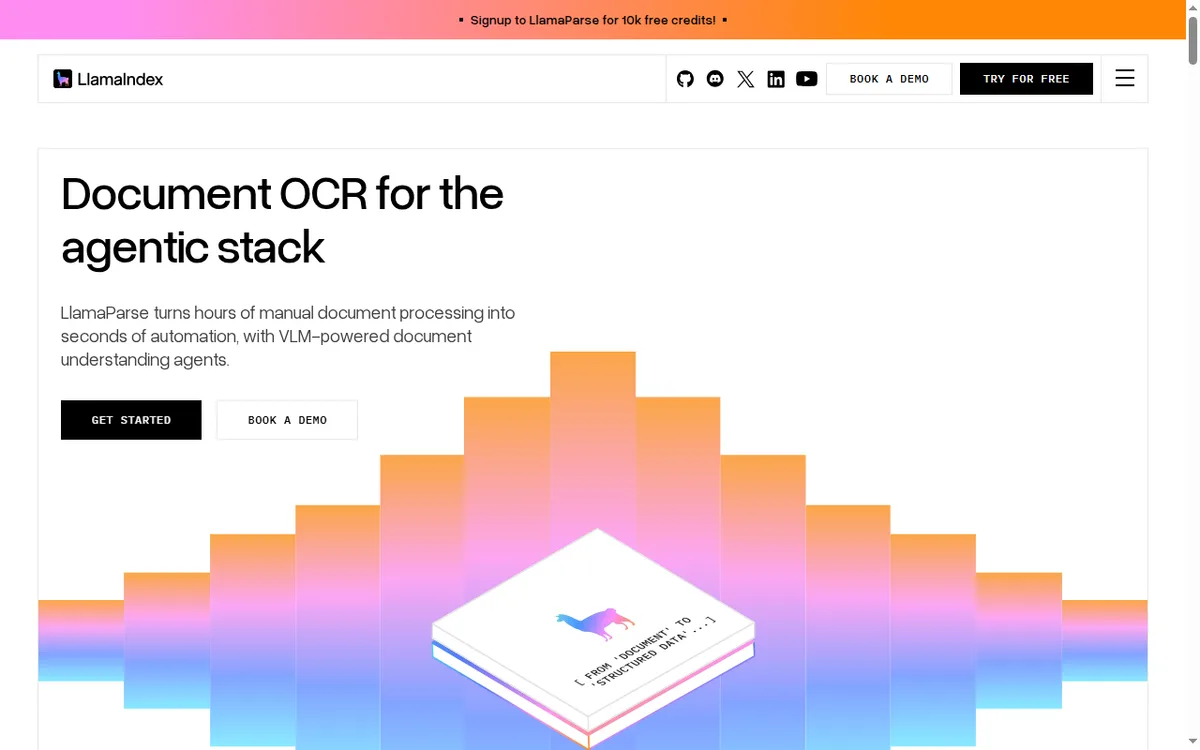
5. LlamaIndex
LlamaIndex (50.1k stars) grew from a leading data and document framework into agent Workflows, an event-driven model where steps emit and react to events. Its roots show in its strengths: deep retrieval-augmented generation, document parsing through LlamaParse, and a large library of data connectors.
That data-first design makes it the strongest fit when an agent's value comes from reasoning over your own documents, databases, and knowledge bases rather than from open-ended tool use. It supports Python and TypeScript. The agent layer is newer than the mature indexing tooling underneath it.
- Best for: Data and document-heavy agents, RAG pipelines, and knowledge-base assistants.
- Trade-off: Agent Workflows are less battle-tested than its core retrieval features.
6. Microsoft Semantic Kernel
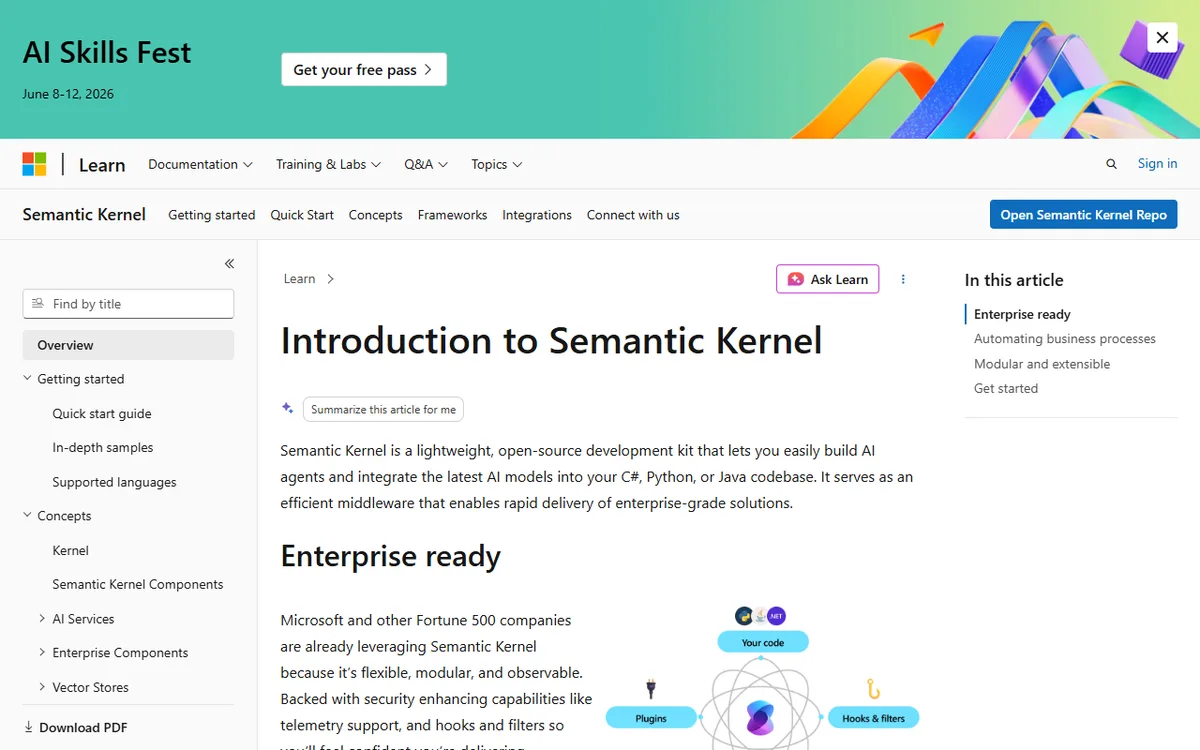
Semantic Kernel (28.1k stars) is Microsoft's enterprise SDK for weaving LLMs into existing applications. Its model centers on plugins, reusable skills the agent can call, and connectors to models and data, so you extend an app rather than build a standalone agent from scratch.
Its defining strength is genuine multi-language support across .NET, Python, and Java, which matters in enterprises where the application stack is not Python. That, plus a focus on stability and backward compatibility, makes it a common pick for embedding agents into production business software.
- Best for: Enterprise apps, especially .NET or Java shops embedding agents into existing software.
- Trade-off: Heavier and more enterprise-oriented than a minimal Python-first framework.
7. Google ADK
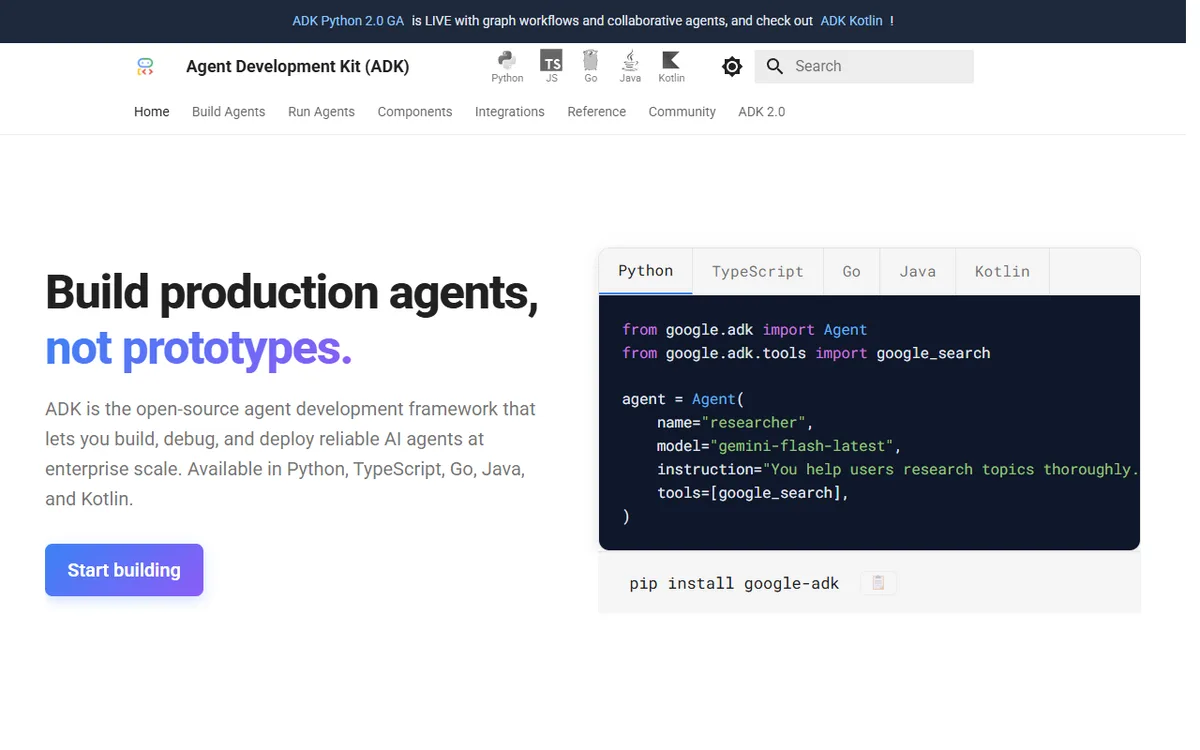
Google's Agent Development Kit (20.0k stars) is a code-first toolkit whose own description names the full lifecycle: building, evaluating, and deploying agents. That built-in evaluation is unusual and valuable, since most frameworks leave testing entirely to you.
It is model-agnostic but optimized for Gemini, supports a rich tool ecosystem and bidirectional streaming for voice and video agents, and deploys to the Vertex AI Agent Engine for managed production hosting. Primarily Python with growing Java support. It is newer than the others here, and its smoothest path leans toward Google Cloud.
- Best for: Production deployment on Google Cloud, with evaluation and streaming built in.
- Trade-off: Younger ecosystem, and the easiest deployment path favors Vertex AI.
8. Agno
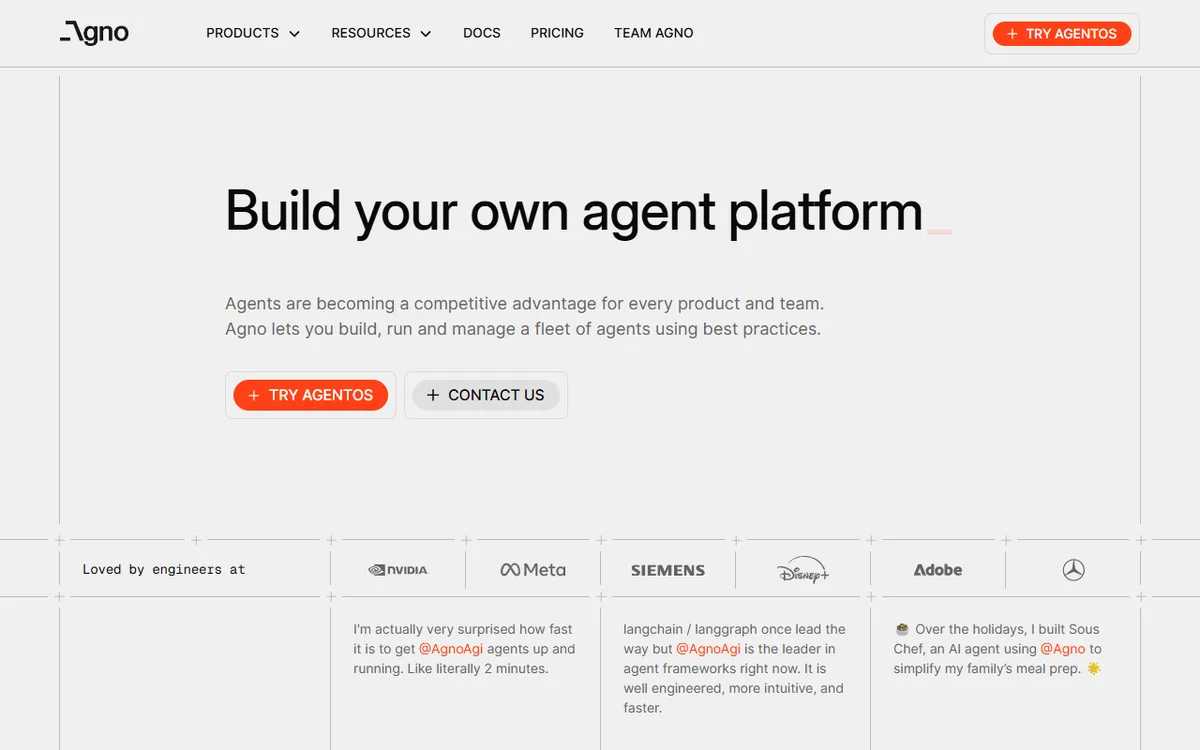
Agno (40.6k stars, formerly Phidata before the 2025 rename) positions itself as a platform to build, run, and manage a fleet of agents, not just a single-agent library. It bundles memory, knowledge, and tools with a runtime, so the same framework covers development and operation.
It is multi-modal out of the box, handling text, image, audio, and video, and supports multi-agent teams along with a runtime layer for serving agents in production. It is Python-first and model-agnostic. Choose it when you want one framework to own the full lifecycle rather than stitching together build-time and run-time tools.
- Best for: Multi-modal agents and teams that want build, run, and manage in one platform.
- Trade-off: Broader platform scope means more concepts than a focused library.
9. Pydantic AI
Pydantic AI (17.7k stars) brings the Pydantic philosophy to agents: structured, validated outputs. The model's responses are parsed into typed Pydantic models, so your agent returns checked data instead of free-form text, which directly reduces a whole class of downstream errors.
Built by the team behind Pydantic, it is model-agnostic and adds dependency injection, streaming, and first-class observability through Logfire. That type-safety focus makes it the most testing-friendly framework here, since validated outputs are far easier to assert on. It is Python-only with a smaller, newer community.
- Best for: Reliability-focused agents that must return structured, validated data.
- Trade-off: Newer and smaller ecosystem than LangGraph or CrewAI.

Note: The hardest part of agentic frameworks is not building the agent, it is trusting it in production. TestMu AI tests agents built with any framework across thousands of scenarios for hallucination, bias, and task completion. Start testing your agent free.
How to Choose the Right Agentic Framework
There is no single best framework, only the best fit for your constraints. Run your project through these questions and the field narrows quickly.
- Single-agent or multi-agent? One agent with tools points to LangGraph or the OpenAI Agents SDK; a team of collaborating agents points to CrewAI or AutoGen.
- Control or speed? Choose LangGraph when you need explicit control over every branch; choose CrewAI when you want a working multi-agent prototype fast.
- Language and stack: Python has the widest support; for .NET or Java enterprise apps, Semantic Kernel fits best; for Google Cloud, Google ADK.
- Data-centric? If retrieval over your own documents is the core, LlamaIndex is built for that workload.
- Deployment target: Check for built-in state persistence, tracing, and evaluation, since those decide how painful production will be.
Whatever you pick, budget for evaluation from day one. A framework that is easy to prototype in but hard to test will cost you later, which is why the deployment and evaluation criteria matter as much as the developer experience. For a deeper, LLM-specific roundup with orchestration models, licenses, and GitHub data, see our guide to the 9 best LLM agent frameworks.
Building a Minimal Agent: A LangGraph Example
To make the abstraction concrete, here is a minimal LangGraph agent that runs a plan, act, and review loop. The nodes are plain Python functions here so the mechanics are clear without an LLM call, but in a real agent each node would invoke the model.
from typing import TypedDict
from langgraph.graph import StateGraph, START, END

class State(TypedDict):
    task: str
    steps: list
    result: str

def plan(state):        # the agent decomposes the goal
    return {"steps": ["research", "draft", "self_check"]}

def act(state):         # the agent executes each step
    log = [f"executed:{s}" for s in state["steps"]]
    return {"result": " -> ".join(log)}

def review(state):      # the agent checks its own work
    ok = "self_check" in state["steps"]
    return {"result": state["result"] + f" | review={'approved' if ok else 'rejected'}"}

graph = StateGraph(State)
graph.add_node("plan", plan)
graph.add_node("act", act)
graph.add_node("review", review)
graph.add_edge(START, "plan")
graph.add_edge("plan", "act")
graph.add_edge("act", "review")
graph.add_edge("review", END)
app = graph.compile()

print(app.invoke({"task": "summarize release notes", "steps": [], "result": ""}))
Running this with LangGraph 1.2.4 on Python 3.14 produces the real output below. The state flows from node to node, and the agent ends with an approved result, which is the plan, act, observe loop in miniature:
{'task': 'summarize release notes',
 'steps': ['research', 'draft', 'self_check'],
 'result': 'executed:research -> executed:draft -> executed:self_check | review=approved'}
Swap the function bodies for model calls and tools, and this same graph becomes a working agent. The framework handled the state passing and control flow; you only described the steps.
Why Testing Agentic Systems Is Different
Traditional software is deterministic: the same input gives the same output, so you assert on exact values. Agents break that assumption. The same prompt can produce different reasoning paths, tool calls, and wording on each run, which is exactly why most framework roundups stop before this step.
- Non-determinism: You cannot assert one fixed output, so you evaluate behavior across many runs and scenarios instead.
- Hallucination: The agent can state confident, wrong information that a string match will never catch.
- Tool and handoff errors: The agent may pick the wrong tool, pass bad arguments, or loop, none of which a unit test on the final string sees.
- Multi-turn drift: Quality can degrade over a long conversation as context fills, so single-turn tests miss real failures.
This is why AI agent evaluation uses scenario coverage and scored metrics rather than pass/fail assertions. You are measuring whether the agent behaves well across a distribution of inputs, not whether it returned one expected value.

How to Test Agents Built With Any Framework
Whichever framework you choose, the agent it produces needs the same kind of validation. TestMu AI's Agent Testing platform is built for this: it uses AI testing agents to test your AI agent across thousands of scenarios, scoring behavior instead of asserting a single output. It works the same whether the agent is built with LangGraph, CrewAI, AutoGen, or anything else.
- Scenario coverage: Generate thousands of test conversations across diverse personas, inputs, and edge cases that manual testing cannot reach.
- Standardized metrics: Score each run for hallucination, bias and toxicity, completeness, context awareness, and task completion.
- Multi-modal: Validate chat, voice, and phone agents, including voice agents that run over real-world noise and accents.
- CI/CD gating: Run the suite on every change so a behavior regression fails the pipeline before it reaches users.
Many agents built with these frameworks browse the web, clicking through real applications to get work done. Running and testing those browser-using agents at scale needs real browsers running in parallel, which is what TestMu AI Browser Cloud for AI agents provides: hundreds of parallel sessions of real Chrome with full session transparency. The framework screenshots in this guide were themselves captured by running browser sessions in parallel.
For test authoring beyond agents, KaneAI acts as an AI QA agent for the product around them, turning natural language into end-to-end tests that it also runs and self-heals when the UI shifts. To set up your first run, the TestMu AI documentation walks through agent creation, scenario generation, and evaluation step by step. For the QA-specific view, see the AI testing agents hub and the agentic testing guide.
See KaneAI, TestMu AI's end-to-end testing agent, in this two-minute overview:
Conclusion
Start by matching one framework to one real use case: LangGraph or the OpenAI Agents SDK for a single tool-using agent, CrewAI or AutoGen for a multi-agent team, and LlamaIndex, Semantic Kernel, or Google ADK when data, enterprise stack, or cloud dictates the choice. Build the smallest agent that solves the problem before scaling it.
Then make evaluation part of the build, not an afterthought. Put your agent through TestMu AI's Agent Testing platform, follow the testing your first AI agent guide, and gate releases on behavior scores. The framework gets your agent working; disciplined testing is what keeps it working in front of real users.
Author

Anubhav Singhmaar
Blogs: 34

Anubhav Singhmaar is an AI Product Manager at TestMu AI driving Kane CLI, the command-line tool that brings browser automation to the terminal, turning natural-language flows into runs in a real Chrome browser that return pass or fail with shareable proof. He owns the roadmap and prioritization and works with engineering to ship developer-facing features. Before TestMu AI, he spent over four years at Sprinklr owning enterprise voice AI across APAC and EMEA. A mechanical engineer turned product manager, he grounds guidance in real QA workflows.


Frequently asked questions
Did you find this page helpful?
More Related Blogs
TestMu AI forEnterprise
Get access to solutions built on Enterprise
grade security, privacy, & compliance
- Advanced access controls
- Advanced data retention rules
- Advanced Local Testing
- Premium Support options
- Early access to beta features
- Private Slack Channel
- Unlimited Manual Accessibility DevTools Tests