
Power Your Software Testing with AI Agents and Cloud
The Native AI-Agentic Cloud Platform to Supercharge Quality Engineering. Test Intelligently and Ship Faster.

- TestMu AI (Formerly LambdaTest)
- /
- Blog
- /
- How to Test APIs Without Code
How to Test APIs Without Code (2026 Guide)
Test REST and SOAP APIs, status codes, payload shape, and chained UI-to-API assertions in plain English. No scripts, no Selenium, no code.
Published on:
APIs often fail silently, such as a checkout endpoint returning a 200 with an empty body or a token refresh throwing 401s after a deploy, since nothing shows a red error on screen. KaneAI catches this without code, describing the request and response in plain English while chaining authentication, resource creation, and cleanup into one test.
Why APIs are hard to test
A single endpoint looks like one call, but real coverage has to touch every response it can return and every way it can go wrong:
- Status codes and error paths, where a 200 with a broken body, a 500 on a bad payload, and a 401 on an expired token each need their own assertion
- Payload shape and types, where nested JSON, required fields, correct data types, and arrays that must not come back empty all have to be checked
- Authentication, where bearer tokens, API keys, and OAuth flows have to be set up and tokens that expire mid-run have to be refreshed
- Chained requests, where you create a resource, capture the returned id, then read, update, and delete it in the right order
- Contract drift, where a backend rename or a new required field can break every client without changing a single pixel of the UI
- REST and SOAP side by side, where a legacy SOAP service and a modern REST API often live in the same product and both need coverage
And that is one endpoint. Real coverage means every method on every resource, valid and malformed inputs, and the UI flows that quietly depend on those responses to render.
The old way: brittle request scripts
Here is what verifying a single create-an-order endpoint looks like in a typical Python and requests setup:
import requests

resp = requests.post(
    "https://api.yourapp.com/v1/orders",
    headers={"Authorization": f"Bearer {token}"},
    json={"sku": "SKU-123", "quantity": 2},
    timeout=10,
)
assert resp.status_code == 201, f"Expected 201, got {resp.status_code}"
body = resp.json()
assert "id" in body, "Response is missing the order id"
assert body["status"] == "confirmed", f"Unexpected status: {body['status']}"
assert isinstance(body["items"], list) and body["items"], "Empty items array"
That is a whole script for one endpoint, and it is fragile. The day the backend renames a field, changes a status code, or nests the response one level deeper, the assertions fail. Maintenance like this is the dominant cost of a large API suite: engineers spend a large share of every sprint re-pointing field paths and re-wiring requests instead of adding new coverage. It also still requires someone on the team who writes Python or JavaScript, and authentication, pagination, and chained calls only raise that bar. It is the core tradeoff behind code-based vs. codeless test automation.
If you are a manual QA engineer, a PM, or a founder without a dedicated automation engineer, the code wall means APIs get spot-checked by hand in a REST client, slowly and inconsistently, and almost never on every release.
The no-code way: write the test the way you would explain it
With KaneAI, you write the same test in plain English:
- Send a POST request to api.yourapp.com/v1/orders with a valid bearer token
- Use the body sku SKU-123 and quantity 2
- Verify the response status is 201 Created
- Verify the response body includes an order id
- Verify the status field reads confirmed
- Verify the items array is present and not empty
That is the entire test. KaneAI reads each step, sends the request, and checks the response the way a human tester would, by understanding what you asked for rather than matching a rigid JSON path. Because the assertions are written in plain English, a renamed or reordered field does not break them, and when the response drifts, KaneAI re-anchors the step and shows you the change, which significantly reduces maintenance. In one connected run it validates REST and SOAP responses right alongside the UI, asserts on the shape of a payload in plain language, and chains a UI action to an API check, for example placing an order in the browser and then confirming the orders endpoint returns it.


The API scenarios that actually break
Once the happy path works, real coverage is just more English. Here are the API scenarios worth adding, each takes about two minutes to write:
Authentication and expired tokens
- Call a protected endpoint with no token and verify a 401 is returned
- Call it again with an expired token and verify the same rejection, not a 500
- Refresh the token, retry the call, and verify a 200 with the expected body
Malformed and missing fields
- Send a create request with a required field missing and verify a 422 with a clear error message
- Send a wrong data type, such as a string where a number is expected, and verify it is rejected
- Verify no partial record was created when the request was invalid
Chained create, read, update, delete
- Create a resource and capture the returned id
- Read it back and verify the fields match what you sent
- Update one field, then delete the resource, and verify a follow-up read returns a 404
UI action verified through the API
- Place an order in the browser and complete the flow to the confirmation screen
- Call the orders endpoint and verify the new order appears with the correct total
- Verify the UI and the API agree on status, quantity, and price
Run every one of these across Chrome, Safari, Firefox, and real mobile devices from the same plain-English steps, so an API that behaves on desktop cannot quietly fail the mobile app that calls it.
Putting it on autopilot
API tests are most valuable when they run without you:
- Schedule the suite nightly, so a contract change merged on Friday cannot silently break your clients over the weekend
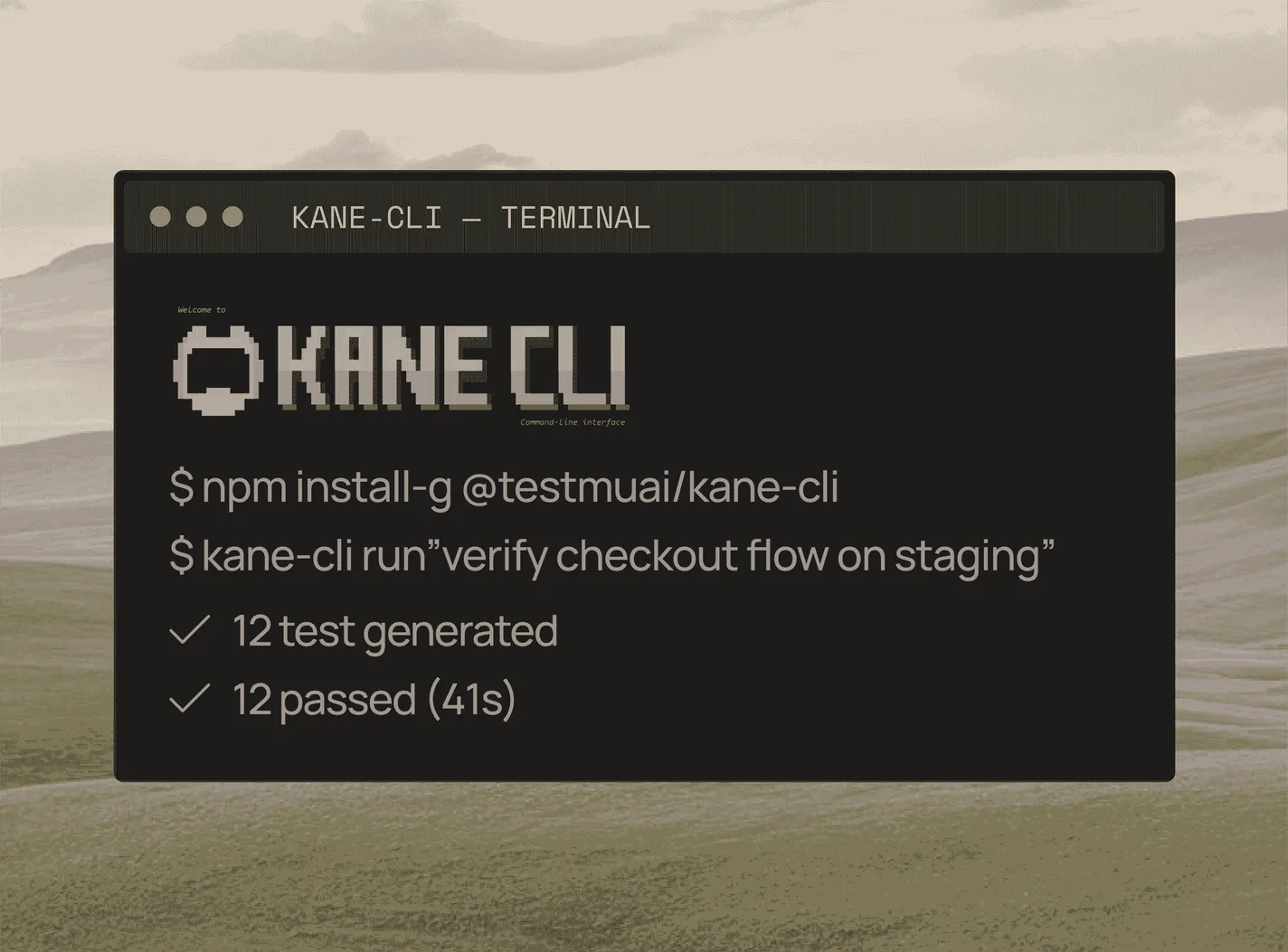
- Trigger on deploy via CI, where Kane CLI runs the same tests from your pipeline and returns a clean pass or fail with exit codes
- Alert on failure in Slack, with a full replay of exactly what the AI saw when the check failed: the request, the response, and the reason in plain English
When a test fails, you do not get a stack-trace exception at line 47. You get a plain-English reason for the exact step that failed. Anyone on the team can read it, and anyone can fix the test, because the test is just English.
Try it on your own API in 10 minutes
- Sign up for KaneAI free, with no credit card
- Point it at your API base URL and paste a token
- Write your first API test in plain English, or let KaneAI suggest one from an endpoint
- Run it and watch your endpoints get checked end to end
Your APIs are the contract every client depends on, too important to spot-check by hand and too fast-moving for brittle scripts. Test them in the language you already speak. Once your endpoints are covered, see how to run smoke tests without code to catch a broken deploy in minutes, and how to add visual regression so the screens those endpoints feed stay correct too.

Note: Test your APIs without writing a line of code. Start with KaneAI free.
Author

Shravan Mahajan
Blogs: 11

Shravan Mahajan is a Software Engineer at TestMu AI building Kane CLI, the command-line tool that runs browser automation from the terminal, describing flows in natural language that execute in a real Chrome browser and return pass or fail with shareable proof. He has an experience of 6 years in the Technical industry. His top skills are JavaScript, React.js, and full-stack development. At Fractal he built automated data pipelines with T-SQL, SSIS, Python, and Azure. He is also a Microsoft Certified Azure Data Engineer Associate.
Reviewer

Saniya Gazala
Reviewer
Saniya Gazala is a Product Marketing Manager and Community Evangelist at TestMu AI with 2+ years of experience in software QA, manual testing, and automation adoption. She holds a B.Tech in Computer Science Engineering. At TestMu AI, she leads content strategy, community growth, and test automation initiatives, having managed a 5-member team and contributed to certification programs using Selenium, Cypress, Playwright, Appium, and KaneAI. Saniya has authored 15+ articles on QA and holds certifications in Automation Testing, Six Sigma Yellow Belt, Microsoft Power BI, and multiple automation tools. She also crafted hands-on problem statements for Appium and Espresso. Her work blends detailed execution with a strategic focus on impact, learning, and long-term community value.


API Testing FAQs
Did you find this page helpful?
More Related Blogs

TestMu AI forEnterprise
Get access to solutions built on Enterprise
grade security, privacy, & compliance
- Advanced access controls
- Advanced data retention rules
- Advanced Local Testing
- Premium Support options
- Early access to beta features
- Private Slack Channel
- Unlimited Manual Accessibility DevTools Tests