

Power Your Software Testing with AI Agents and Cloud
The Native AI-Agentic Cloud Platform to Supercharge Quality Engineering. Test Intelligently and Ship Faster.


- TestMu AI (Formerly LambdaTest)
- /
- Blog
- /
- Top 13 Open-Source AI Testing Tools in September 2026
Top 13 Open-Source AI Testing Tools in September 2026
Compare 13 open-source AI testing tools, from EvoMaster and Schemathesis to PITest and Atheris, plus agentic browser tools and LLM evaluation frameworks.
Last Updated on:
Open-source AI testing tools offer flexibility, transparency, and adaptability for diverse engineering needs, helping teams customize frameworks, accelerate innovation, and maintain high quality without commercial lock-in.
TL;DR
Open-source AI testing tools split two ways: tools that use AI to test software, and tools that test AI systems themselves. For generating API and system tests, EvoMaster and Schemathesis are the strongest picks in this list. Four of the thirteen ship without a license file, which is the first thing to check before commercial use.
- Best for benchmarking code AI models: CodeXGLUE - a benchmark suite for evaluating models that read and generate code. License: MIT.
- Best for Java unit test generation: AutoTestGen - generates and improves Java unit tests using large language models.
- Best for LLM-driven test creation: AI Testing Agent - an agent that calls language models to generate tests automatically. License: none published on GitHub.
- Best for Android app testing: Stoat - combines evolutionary strategies with machine learning to explore Android apps. License: none published on GitHub.
- Best for Java GUI regression: ReTest - automates GUI regression testing for Java by combining machine learning with recorded application state.
- Best for mutation testing: PITest - measures whether your Java tests would actually catch a deliberate code change. License: Apache-2.0.
- Best for system-level test generation: EvoMaster - generates system-level cases automatically for enterprise and web applications. License: LGPL-3.0.
- Best for API schema testing: Schemathesis - drives REST and GraphQL testing from the API schema itself. License: MIT.
- Best for API learning research: DeepAPI - a research project shipping Theano and PyTorch implementations rather than a production tool.
- Best for image-based GUI automation: SikuliX - drives interfaces by what is on screen rather than by selectors, originating at MIT. License: MIT.
- Best for Python fuzzing: Atheris - a coverage-guided fuzzing engine for Python with native extension support. License: Apache-2.0.
- Best for automated penetration testing: DeepExploit - uses reinforcement learning to probe open ports and services. License: none published on GitHub.
- Best for performance bottleneck analysis: DeepPerf - applies deep learning to performance testing and bottleneck detection. License: none published on GitHub.
What Do You Need to Run These at Scale?
Every tool here runs on infrastructure you supply, and none of them provides the browsers, devices, or parallelism the runs need. That layer is where a cloud grid such as TestMu AI fits alongside them rather than replacing them.
Which Open-Source AI Testing Tools Are Worth Knowing?
The open-source AI testing tools worth knowing are CodeXGLUE, AutoTestGen, AI Testing Agent, Stoat, ReTest, PITest, EvoMaster, Schemathesis, DeepAPI, SikuliX, Atheris, DeepExploit, and DeepPerf.
The AI testing tools below are fully open-source: free to download, inspect, and extend.
One clarification before the list: "AI testing tools" can mean two different things. There are tools that use AI to test software, and tools that test AI systems themselves. The 13 tools here focus on the first; a dedicated section later covers open-source tools for testing AI and LLM systems.
The table below previews six of the most notable options by focus area, primary language, and license, with data pulled from each project's GitHub repository. All 13 tools are covered in detail underneath, each with a note on how the relevant developer community on Reddit tends to view it.
| Tool | Best for | Language | License |
|---|---|---|---|
| CodeXGLUE | Benchmarking code AI models | Multiple | MIT |
| EvoMaster | API and system test generation | Kotlin | LGPL-3.0 |
| Schemathesis | OpenAPI and GraphQL testing | Python | MIT |
| PITest | Java mutation testing | Java | Apache-2.0 |
| Atheris | Python fuzzing | Python | Apache-2.0 |
| SikuliX | Image-based GUI automation | Java | MIT |
One caveat worth checking before adoption: AI Testing Agent, Stoat, DeepExploit, and DeepPerf ship without a license file on GitHub, which legally limits how you can reuse them in commercial projects even though the code is public. Several are also research projects rather than actively maintained products, so confirm recent commit activity before building a workflow on them. Ask the same upkeep question of the tests themselves: a QA agent authors and runs your regression flows from natural language, then self-heals the steps a UI change breaks, with your testers approving each heal before it lands.
What Are the Top 13 Open-Source AI Testing Tools?
The 13 tools below cover code intelligence, test generation, Android and visual testing, mutation testing, API testing, fuzzing, and security and performance testing.
1. CodeXGLUE
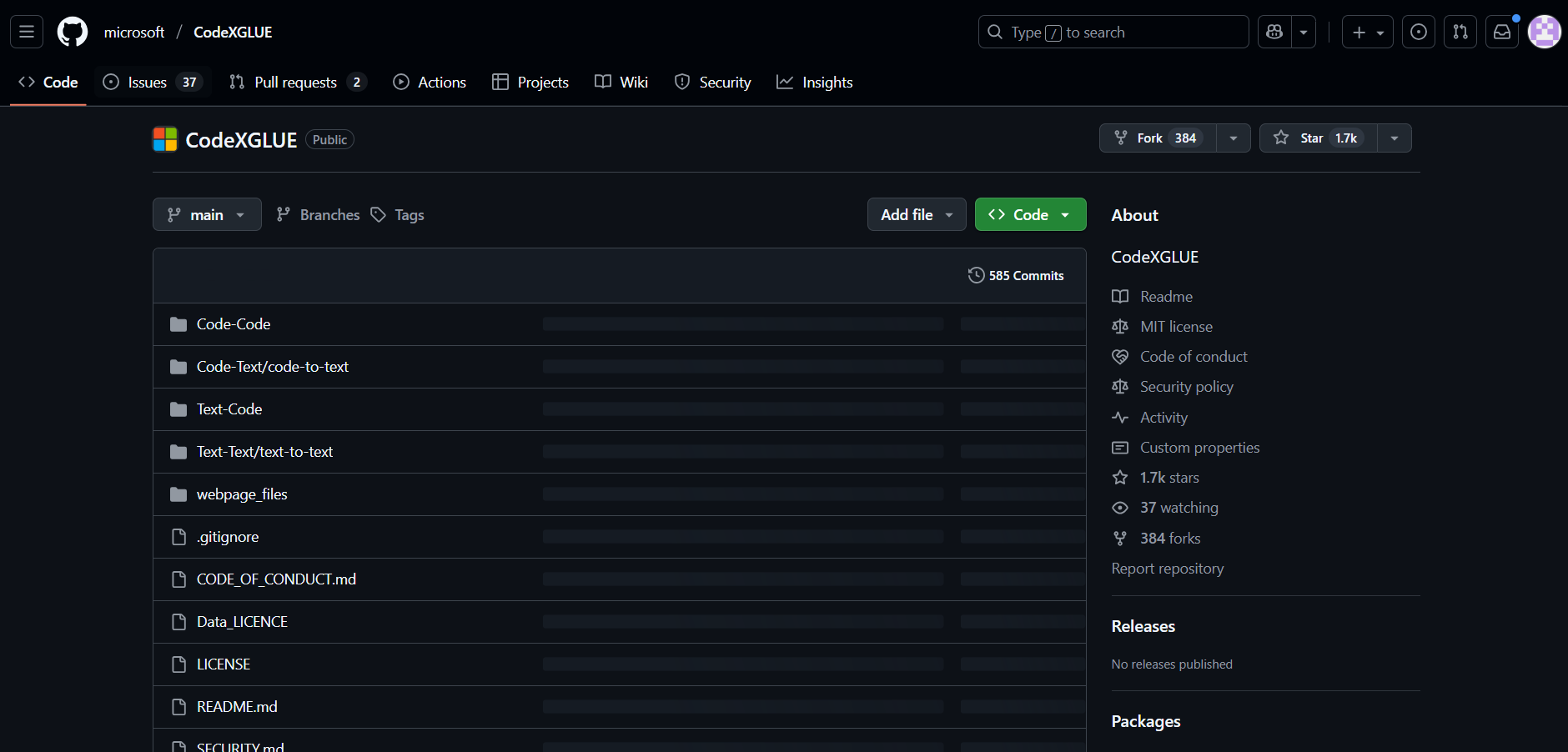
CodeXGLUE (Code Execution and Language Understanding Evaluation) is an open-source AI testing tool and benchmark suite designed to evaluate the performance of AI models on a variety of code-related tasks.
It includes 14 datasets across 10 tasks covering scenarios like code-code, code-text, and text-code transformations. Baseline models such as CodeBERT, CodeGPT, and Encoder-Decoder architectures are provided to help researchers get started.
Key features:
- Model Submission: Allows developers and researchers to submit models for public evaluation via a leaderboard.
- Standardized Benchmarks: Supports tasks like code search, completion, and translation for smarter software tools.
- Challenge Coverage: Includes text-to-code generation, documentation translation, code summarization, clone detection, and defect identification.

2. AutoTestGen
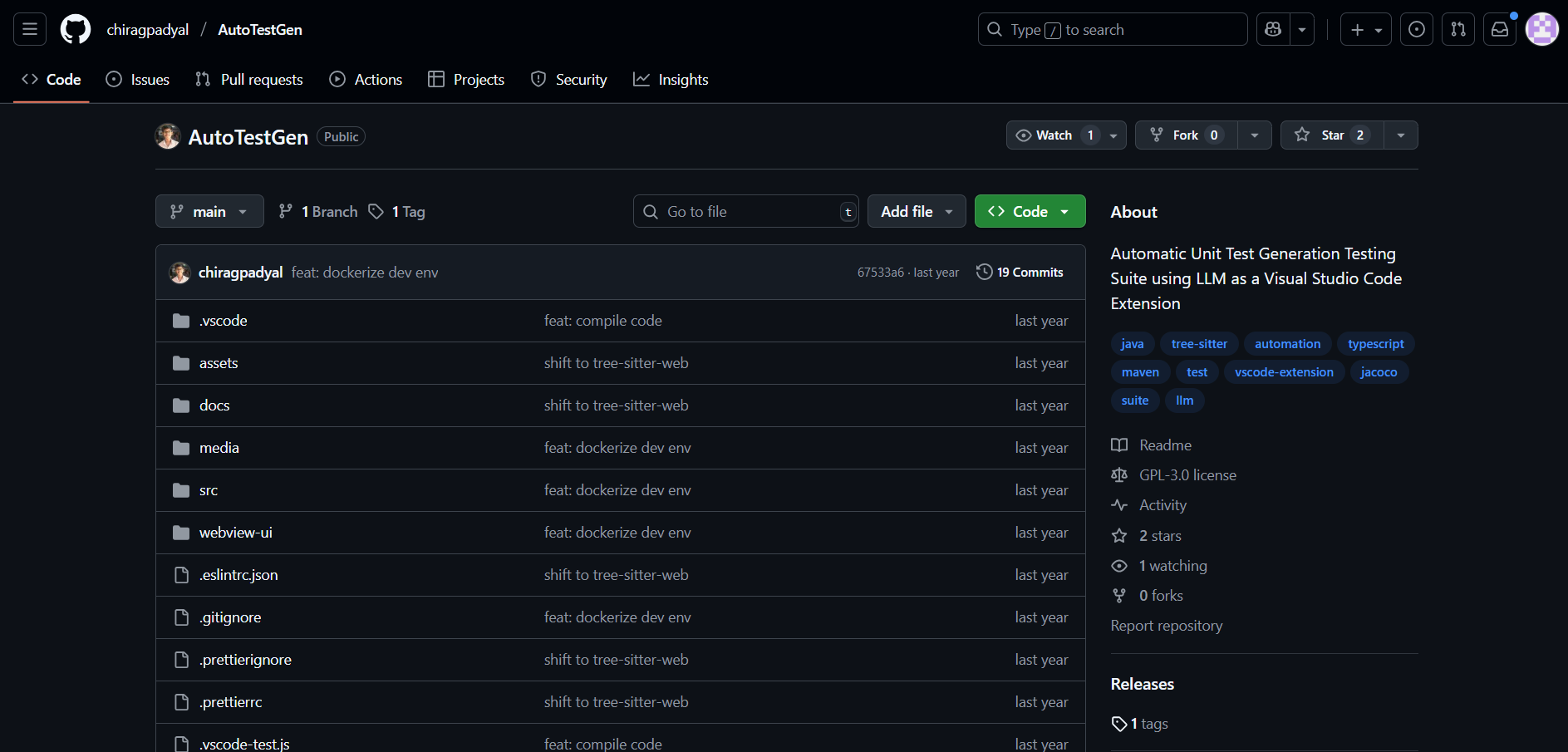
AutoTestGen is an open-source tool designed to automatically generate and improve Java unit tests using Large Language Models (LLMs). It functions as a Visual Studio Code extension, aiming to enhance developer productivity by automating the creation of unit tests.
Key features:
- Unit Test Generation: Utilizes LLMs to create unit tests for Java code.
- VS Code Extension: Operates within Visual Studio Code for seamless workflow integration.
- Open Source License: Licensed under GPL-3.0, promoting community contributions and transparency.
3. AI Testing Agent
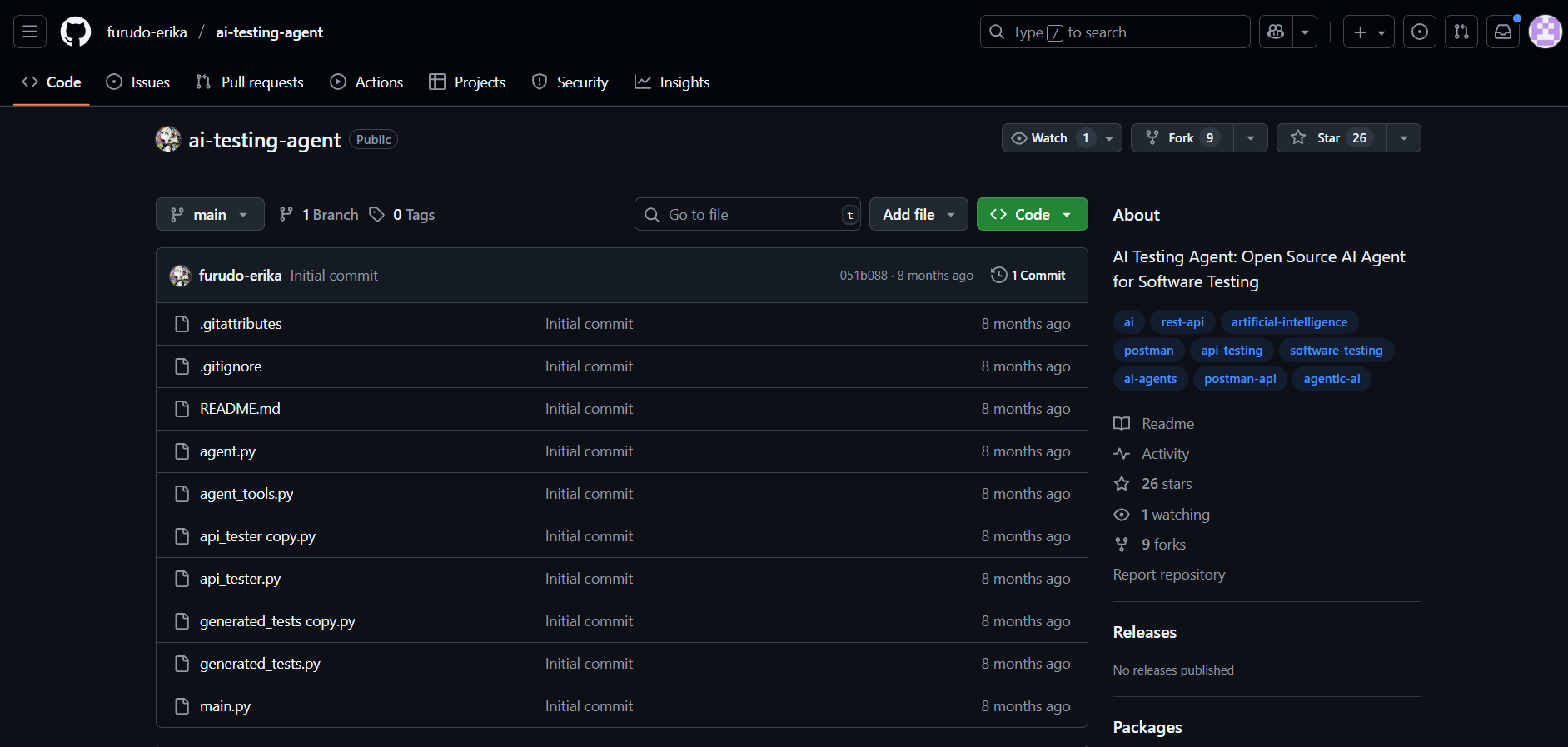
AI Testing Agent is an open-source AI agent designed for software testing. It interacts with Large Language Models to automatically generate test plans and Python test code for APIs, execute the tests, and refine them based on user feedback.
Key features:
- Test Plan Creation: Generates comprehensive API test plans using AI.
- Script Generation: Creates Python pytest scripts based on test plans.
- Test Execution: Runs generated tests and reports results.
- Iterative Feedback: Allows user feedback to refine test suites.
- Customization Support: Enables tailored testing of API endpoints and prompts.
4. Stoat
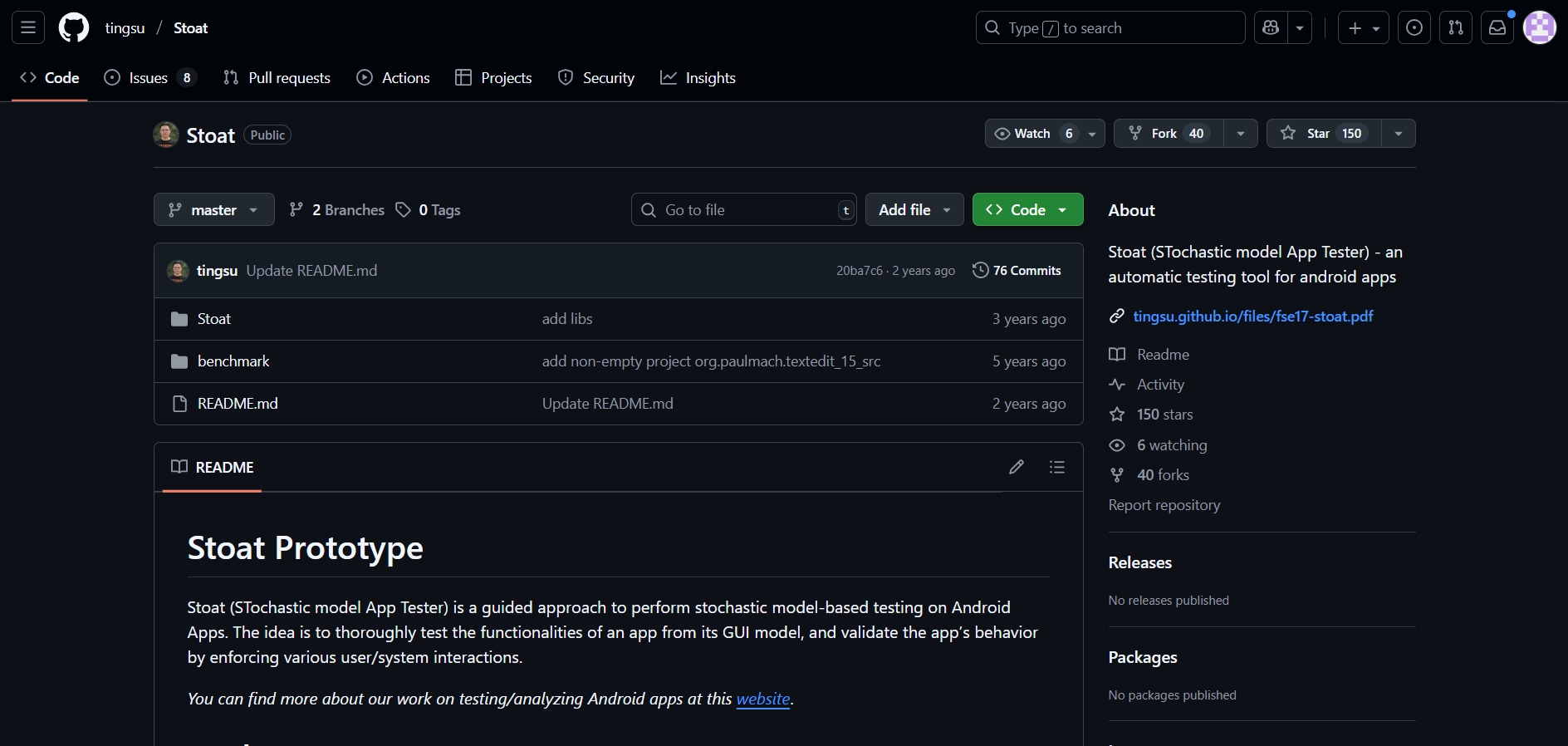
Stoat (STochastic model App Tester) is an open-source AI testing tool for Android apps that integrates evolutionary strategies and machine learning to generate effective and diverse test cases. It uses statistical models to improve coverage and bug discovery.
Key features:
- GUI Modeling: Builds GUI models dynamically during app execution.
- Event Generation: Uses probabilistic models to create diverse event sequences.
- Crash Detection: Identifies and logs crashes and ANRs.
- Android Support: Supports Android apps via instrumentation.
- Open Source: Available on GitHub with research support.
5. ReTest
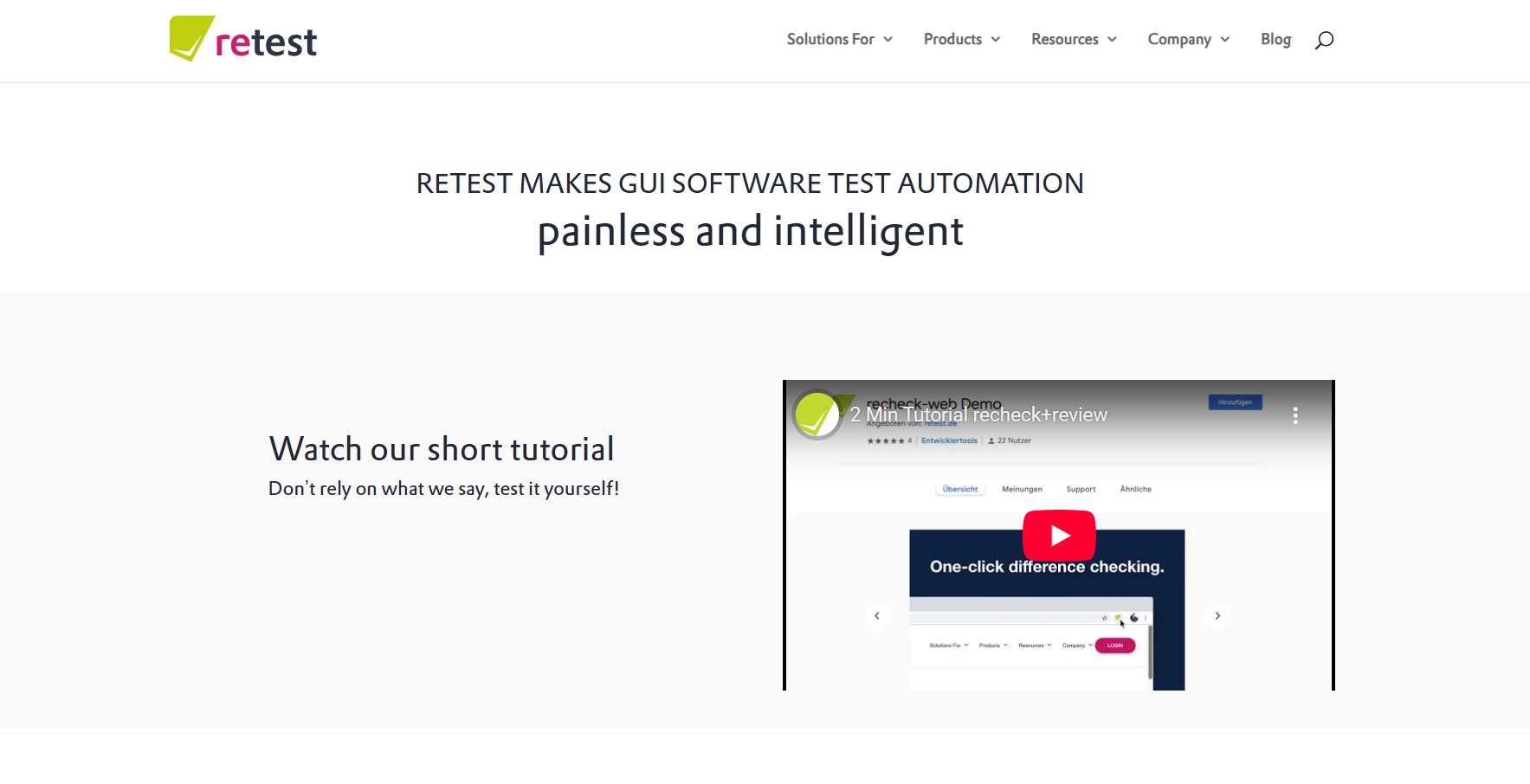
ReTest is an open-source AI testing tool for automating GUI-based regression testing in Java applications. It combines machine learning and evolutionary computing to optimize test coverage and generate relevant, human-like test scenarios. By enhancing traditional monkey testing with neural networks trained on existing data, ReTest bridges the gap between automated and manual testing.
Key features:
- Input Generation: Combines random input with difference testing to find unexpected GUI behaviors.
- Golden Master Testing: Detects functional and visual changes between software versions.
- Test Optimization: Uses genetic algorithms to maximize code coverage.
- Action Prioritization: Employs neural networks to prioritize GUI actions, mimicking human behavior.
- Test Automation: Automatically generates robust, maintainable tests.
- Components: Includes recheck for automation and review for managing test differences.

Note: Run the tests these open-source tools generate across 3,000+ browser and OS combinations and 10,000+ real devices with TestMu AI. Try TestMu AI now!
6. PITest
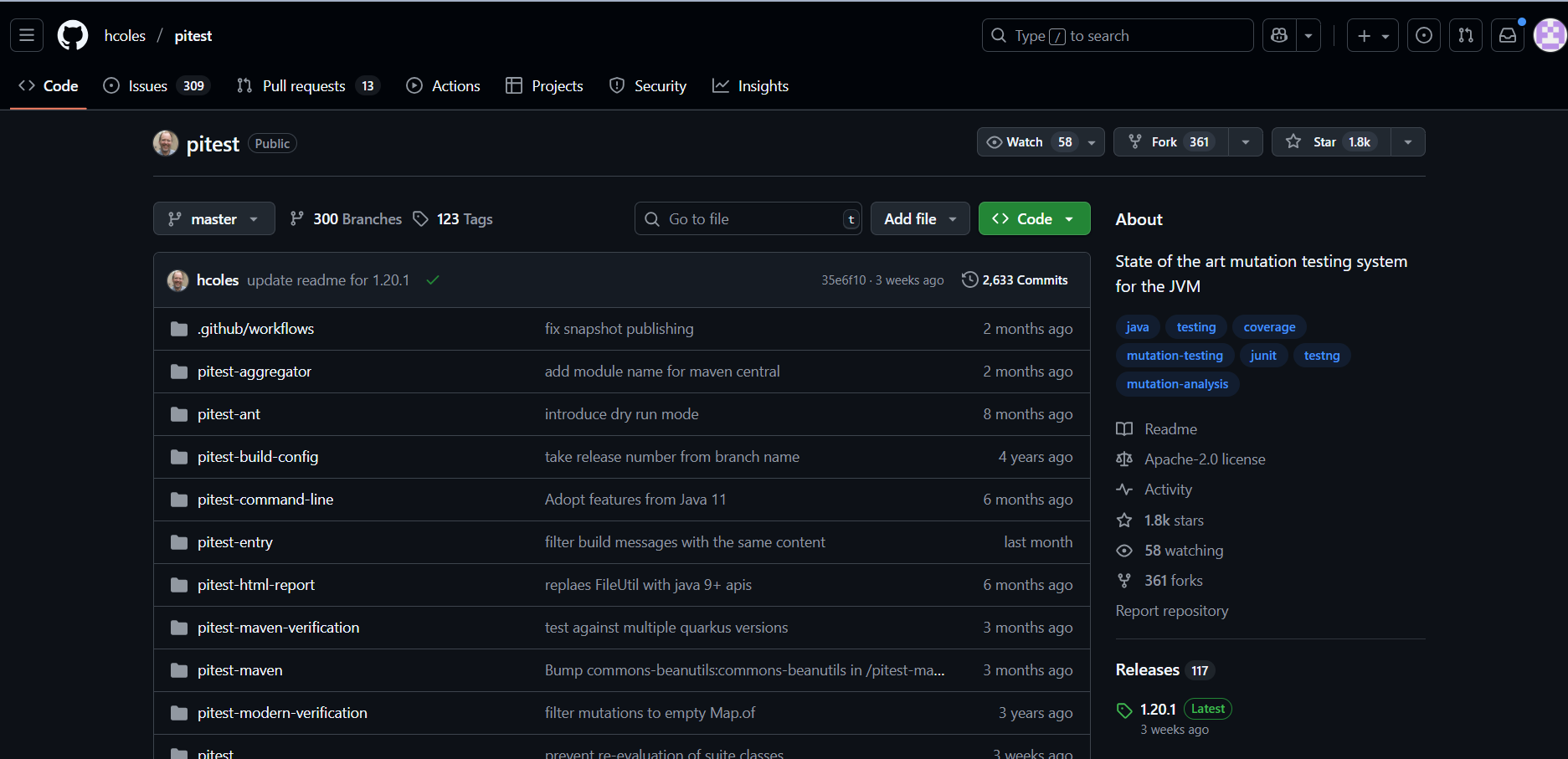
PITest is a world-class mutation testing system that offers comprehensive test coverage for Java with the help of AI-powered heuristics. This highly integrable and scalable open-source AI testing tool meets the needs of real-world development teams instead of just catering to mostly academic research.
Key features:
- Mutation Testing: Introduces code mutations to identify test suite weaknesses.
- Detailed Reports: Provides clear reports combining mutation and line coverage.
- Build Tool Integration: Easy to use with Maven and Gradle.
- Extensibility: Supports extensions and plugins for additional languages and customization.
7. EvoMaster
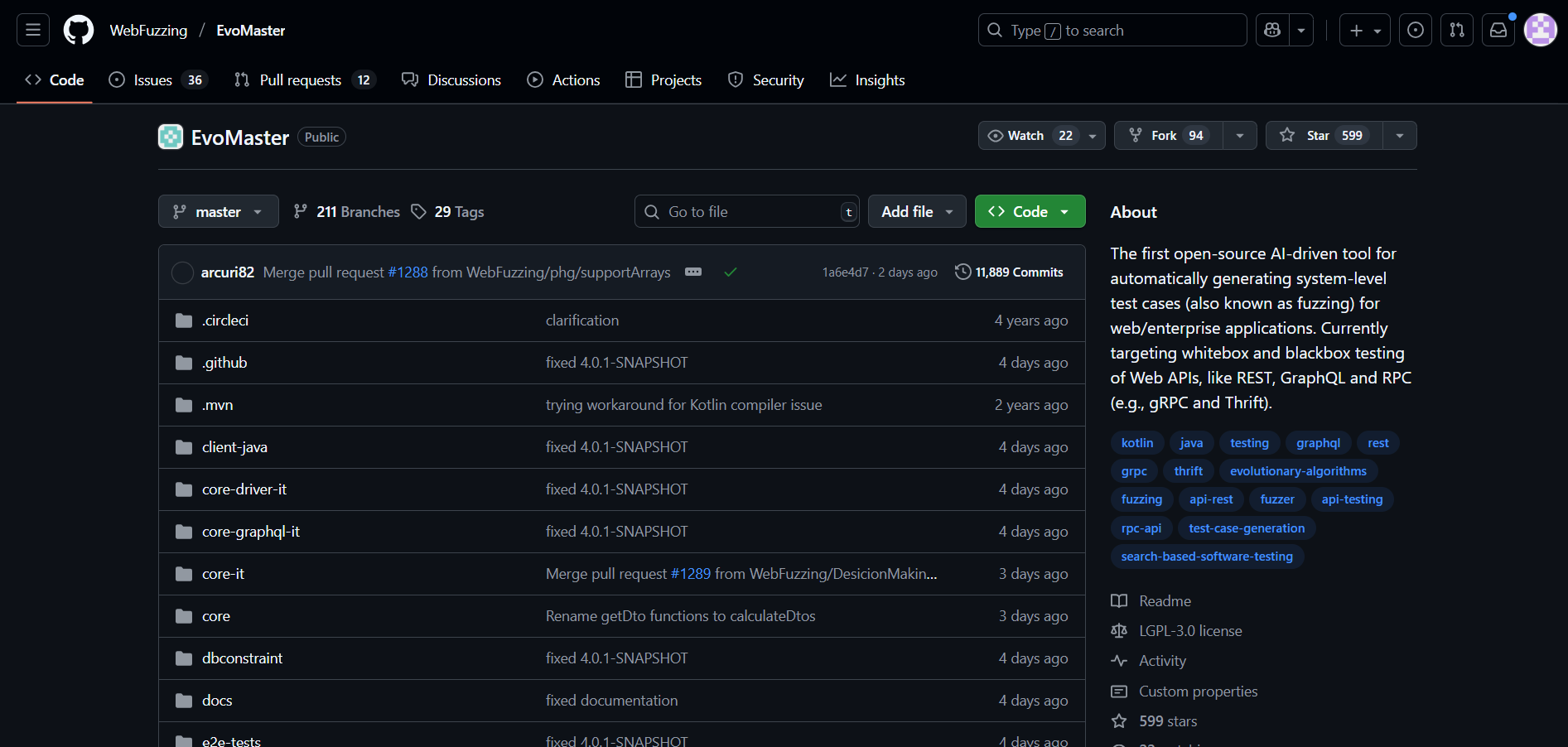
EvoMaster is an open-source AI testing tool that generates system-level test cases automatically for enterprise and web applications. It fuzzes RPC, GraphQL, and REST APIs to enhance test coverage by uncovering vulnerabilities while improving the reliability of software by automating test case generation and API fuzzing. At the same time, it greatly reduces the effort required for manual testing.
Key features:
- SQL Support: Handles authentication and SQL for database analysis.
- API Security Testing: Facilitates testing using authentication mechanisms.
- CI/CD Integration: Available as GitHub Action and Docker container.
- Multi-language Output: Generates test cases in JavaScript, Kotlin, JUnit, and Python.
- Testing Techniques: Uses bytecode analysis for white-box and black-box testing of JVM-based APIs.
8. Schemathesis
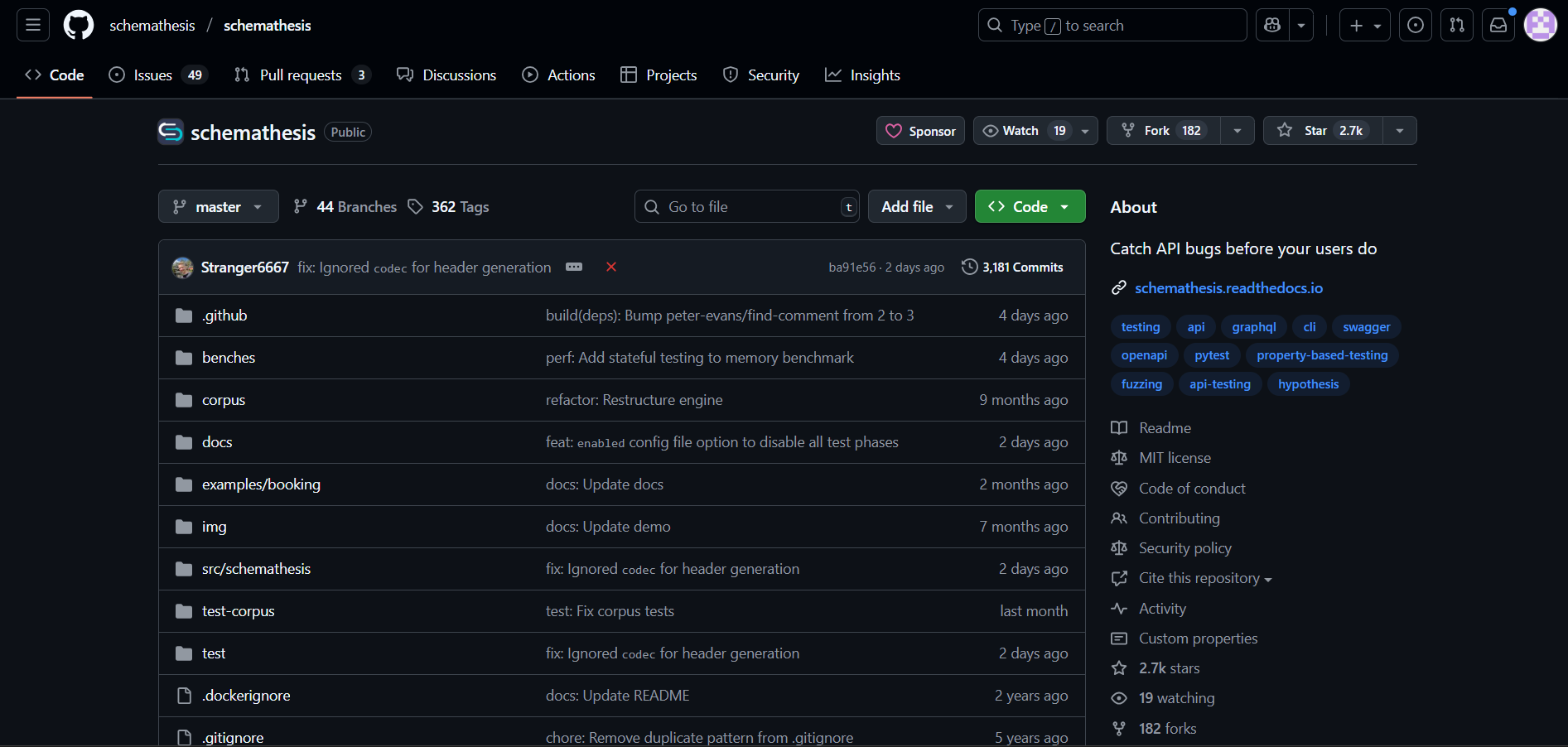
Schemathesis is one of the leading open-source AI testing tools for GraphQL and REST APIs. It leverages blueprints in the form of API specs to generate test cases while it tests for general properties like responses that stick to the API spec.
That’s how a test suite is able to broaden the capabilities of a testing suite to detect vulnerabilities and other issues. According to its GitHub repository, projects such as WordPress (Openverse), Spotify (Backstage), and Red Hat use it to test their open-source APIs.
Key features:
- Extensions & Customization: Provides Python extensions and configuration options.
- Debugging Support: Uses cURL commands for failing test cases.
- CI/CD Compatibility: Integrates with existing workflows, OpenAPI, and GraphQL.
- Test Case Generation: Automatically generates tests based on the API schema.
9. DeepAPI
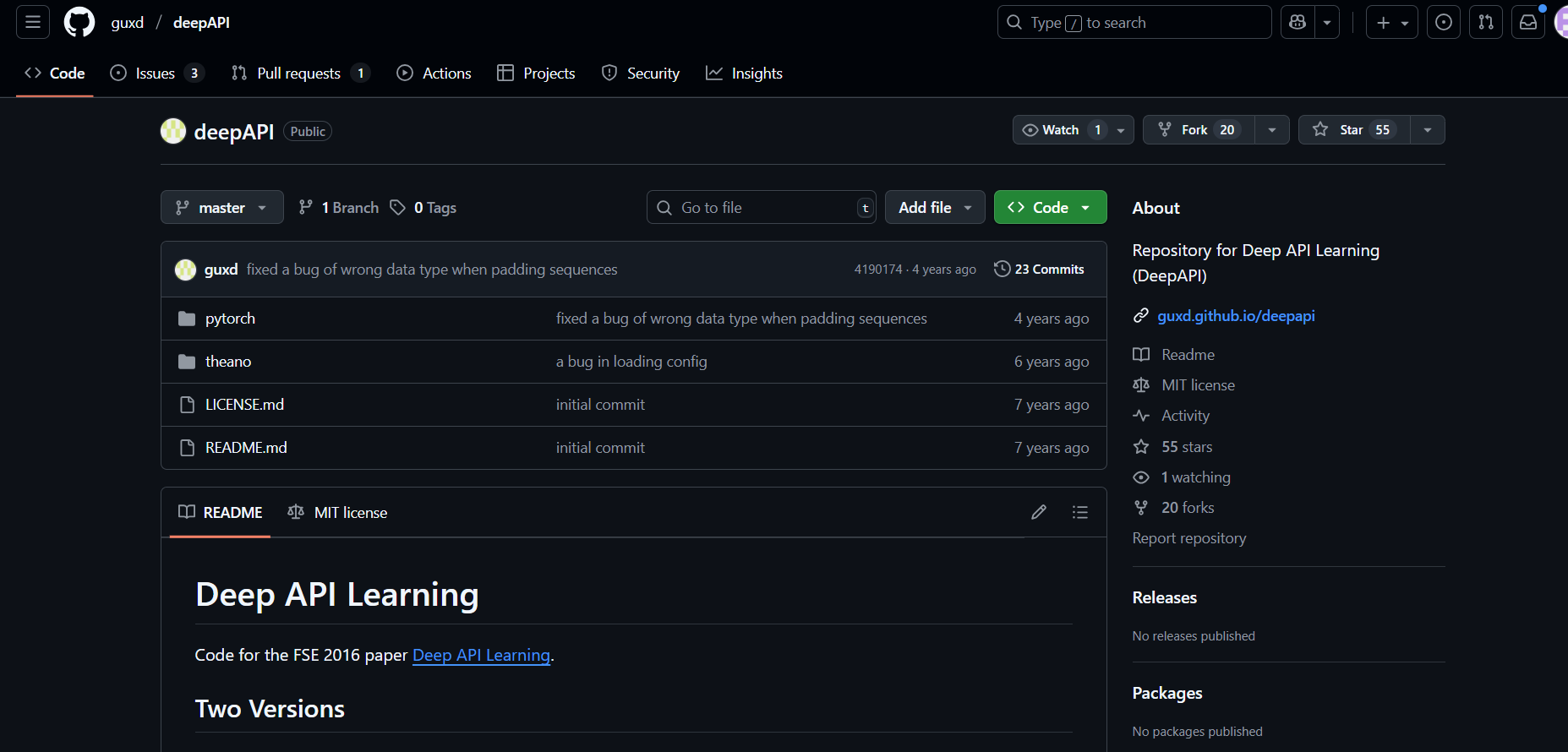
DeepAPI (Deep API Learning) is an open-source research project with two implementations, Theano and PyTorch. The former contains code to run tests, whereas the latter is a repository with added features. Developers can use it to improve API reliability, performance, and security with anomaly detection, indicating problems such as security loopholes, unprecedented behavior, and incorrect responses.
Key features:
- Anomaly Detection: Uses ML algorithms to monitor API performance in real-time.
- API Support: Covers REST and GraphQL API products.
- Visualization: Provides a clear anomaly presentation for easier response.
- Customizable Strategies: Allows tailoring of test generation and algorithms to user needs.
10. SikuliX
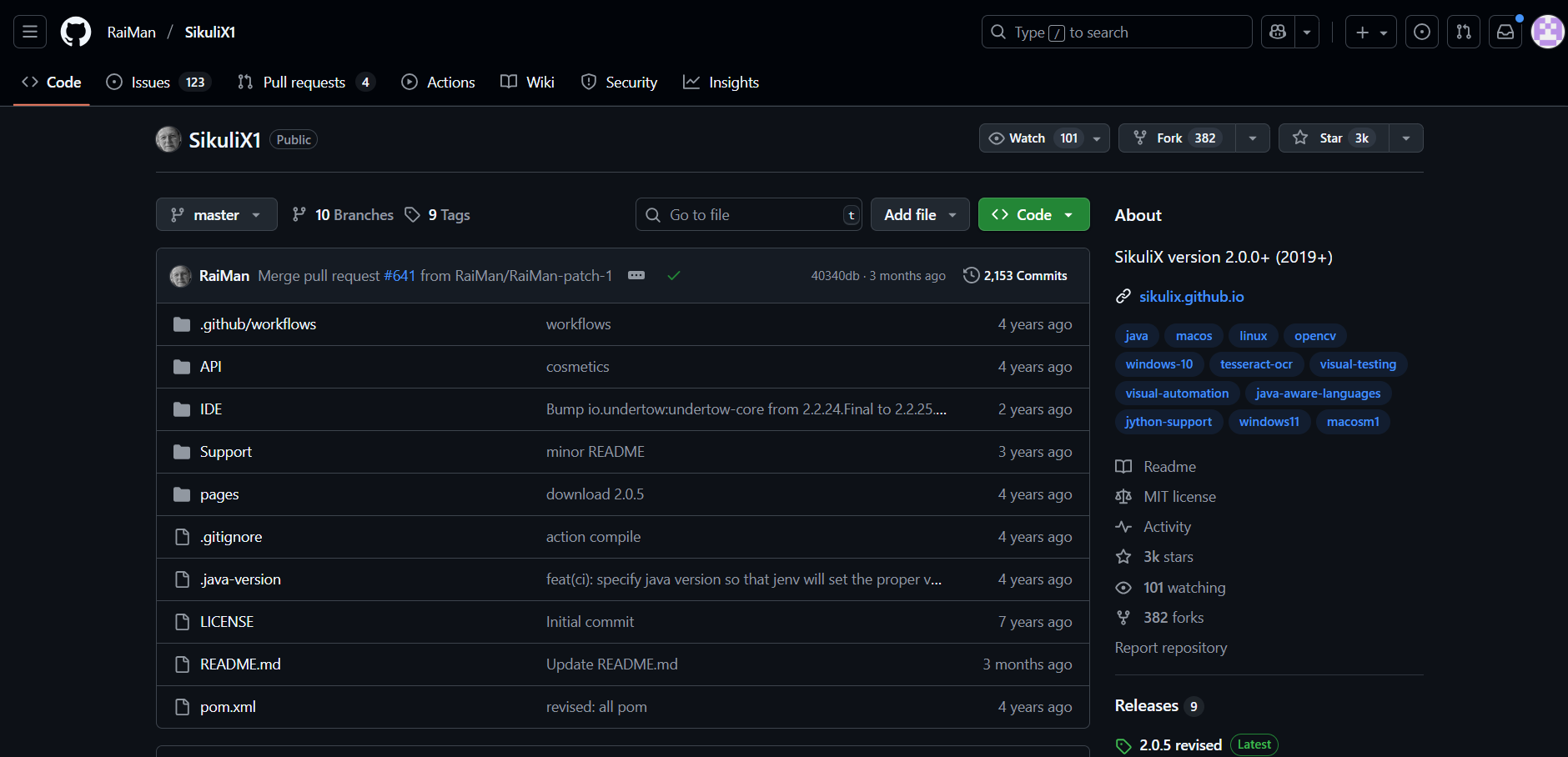
SikuliX is one of the most powerful open-source AI testing tools for UI automation. It started in 2009 at the UI Design group at MIT as an open-source research project. As long as you have a 64-bit Java installation, version 8 or higher, you can download SikuliX and leverage the power of its image recognition for interacting with GUIs.
It detects and manipulates various on-screen elements based on different visual patterns to enable automation. It’s ideal for testing applications that don’t necessarily have a traditional automation interface, such as DOM access or API.
Key features:
- Tool Integration: Easily integrates with RPA framework, RPM, and Selenium.
- OCR-Based Recognition: Enables dynamic reading and interaction with text.
- Script Automation: Supports Java and Python scripting.
- Cross-Platform Support: Compatible with Linux, Windows, and Mac OS.
11. Atheris
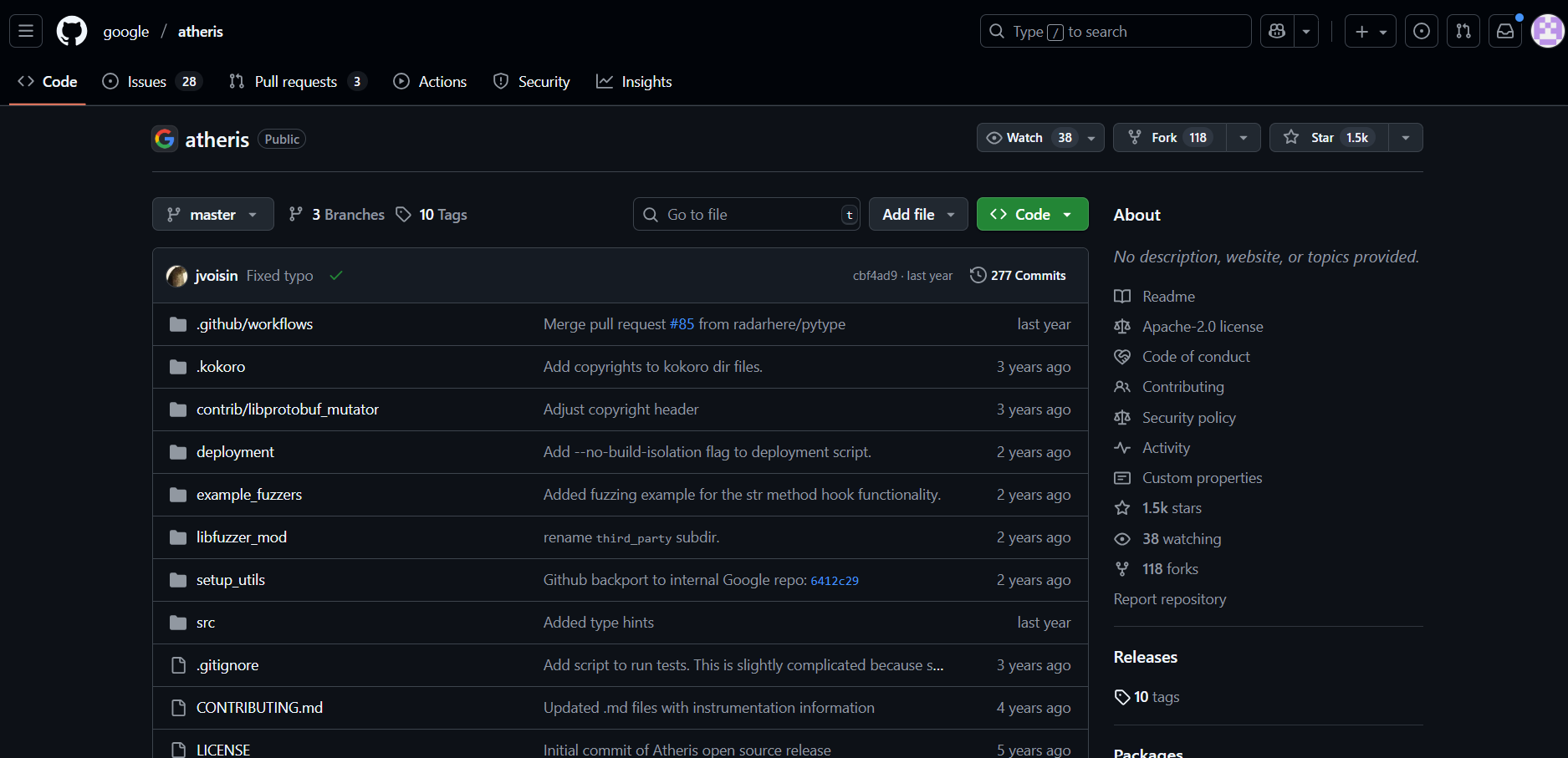
Atheris is a coverage-guided fuzzing engine for Python applications. This open-source AI-enhanced testing tool offers support for native extensions for CPython, along with facilitating Python code fuzzing. You can use it combined with Undefined Behavior Sanitizer or Address Sanitizer if you want to catch some extra bugs.
The tool will try different inputs to a program repeatedly while keeping a close eye on its execution, trying to uncover interesting paths. One of the best Atheris uses, if you already have a way to express correct or incorrect behaviors, is that you can also use it on pure Python code.
Key features:
- AI-Enhanced Fuzzing: Explores code paths using intelligent mutation strategies.
- Coverage-Guided Testing: Dynamically adjusts test inputs based on execution paths.
- Language Support: Works with C/C++ extensions and pure Python.
- Google Backed: Developed and maintained by Google for robustness.
12. DeepExploit
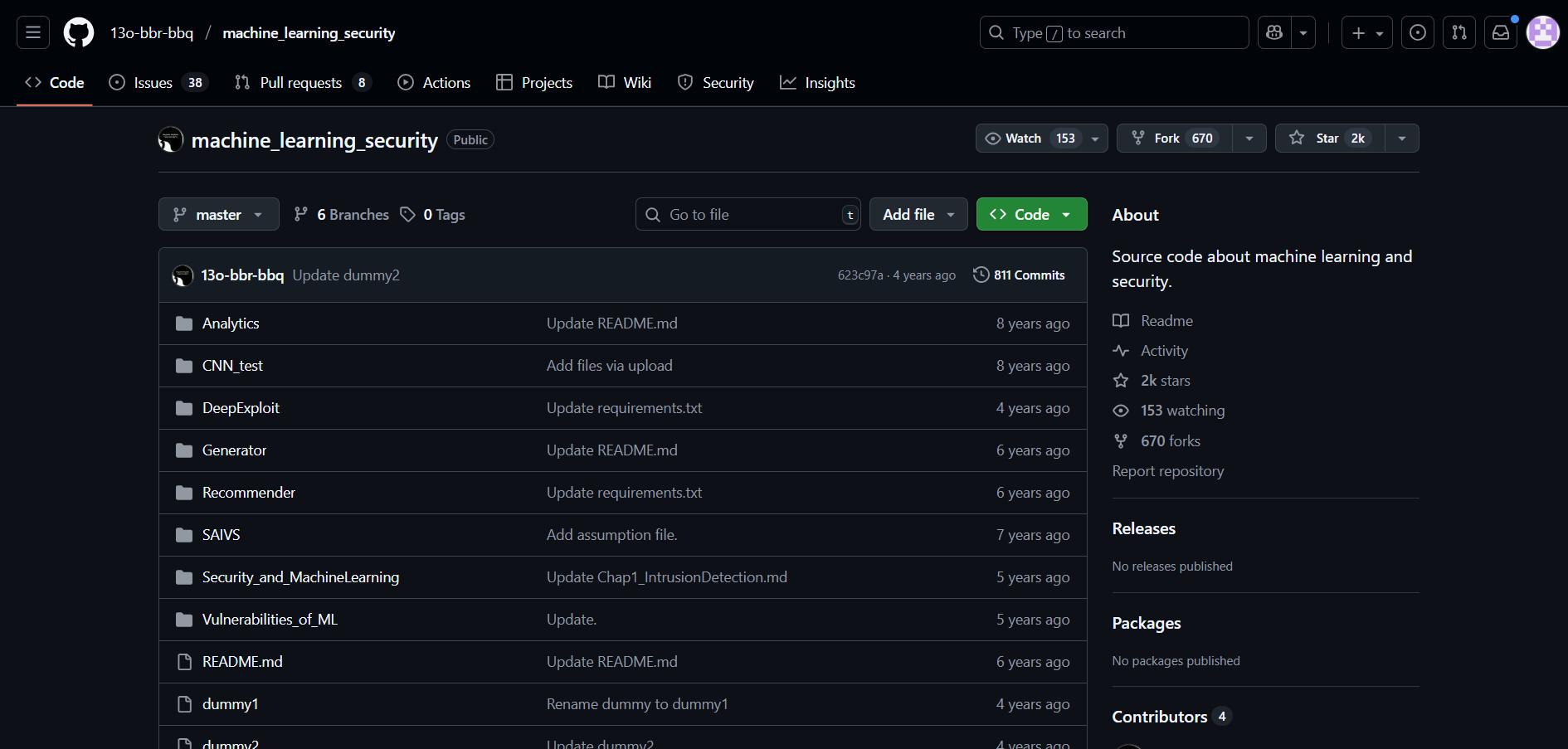
DeepExploit is a fully automated open-source AI testing tool that uses reinforcement learning to identify every single open port status on the target server and facilitates execution of the exploit at a pinpoint.
As more and more penetration testers make use of this tool, DeepExploit continues to learn exploitation with the help of deep reinforcement learning and improves the accuracy of tests. It adjusts the attack strategy dynamically on the basis of scan results, which leads to the tool becoming highly effective and adaptive for any type of security assessment.
Key features:
- Self-Learning Engine: Continuously improves exploitation strategies over time.
- Metasploit Integration: Enhances exploit capabilities with the Metasploit framework.
- Automation: Fully automates exploitation, vulnerability scanning, and outcome analysis.
- AI-Powered Decisions: Uses deep reinforcement learning to select and launch optimal exploits.
13. DeepPerf
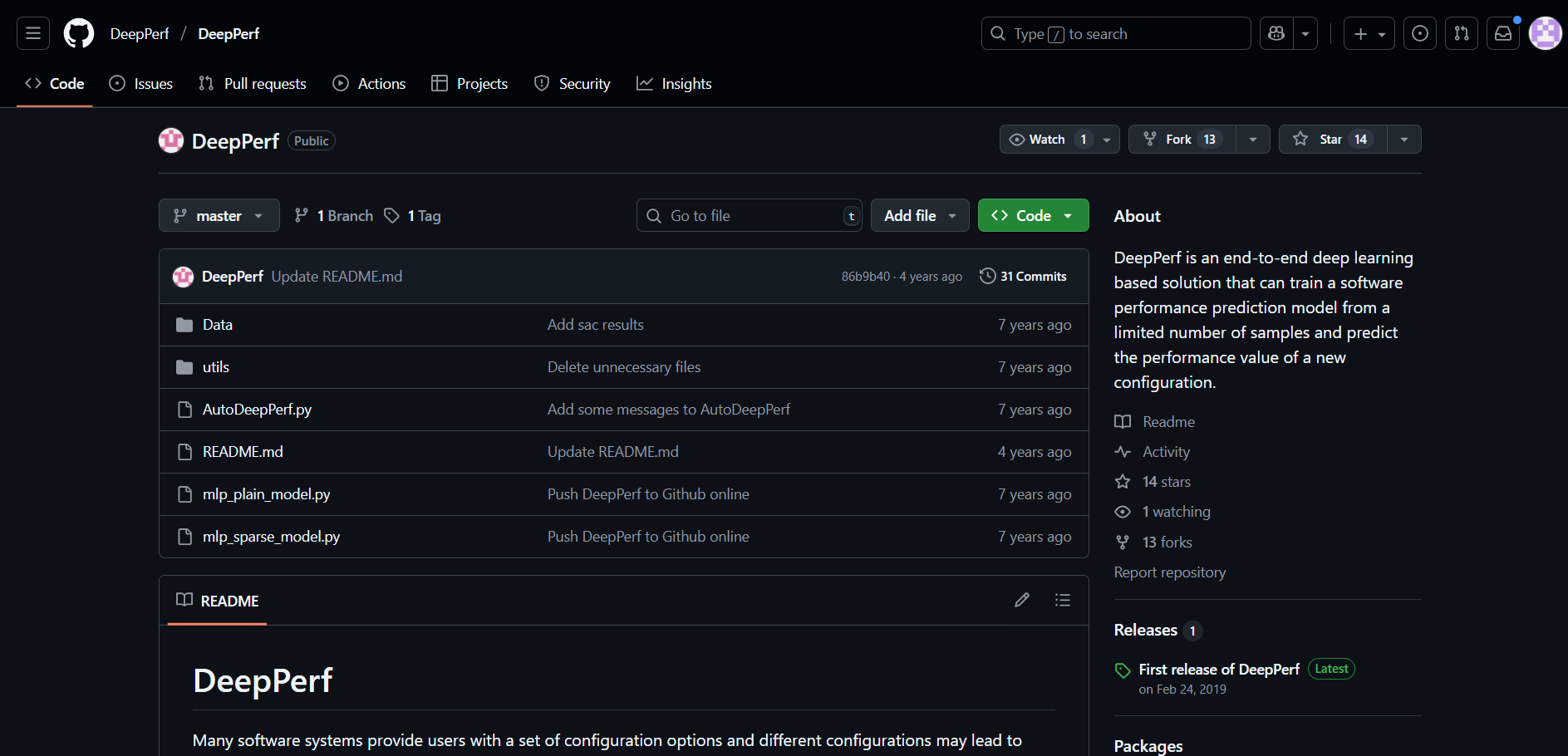
DeepPerf is an open-source AI testing tool designed for performance testing and bottleneck analysis. It leverages deep learning techniques to predict system performance under different configurations, reducing the need for exhaustive testing. By analyzing performance-related data from various configurations, DeepPerf helps make informed decisions on optimal configurations, ultimately lowering testing costs.
Key features:
- Performance Prediction: Uses deep learning to forecast performance under various configurations.
- Parameter Optimization: Enhances accuracy by tuning neural network parameters early.
- Pre-Deployment Evaluation: Assesses system performance based on configuration changes.
- Sample Efficiency: Predicts behavior with minimal samples, reducing exhaustive testing and costs.
The tools above are complete open-source AI testing tools, each covering a specific slice of the QA lifecycle, from API validation to performance prediction. To see how they sit within the wider category, see our broader guide on AI in software testing.

Why Do Open-Source AI Testing Tools Matter in Modern QA?
Open-source AI testing tools matter because teams can inspect, extend, and self-host them, avoid license costs and vendor lock-in, and apply AI test generation to their own code.
The approach of the Quality Assurance team has transformed with the advancement of AI. The demand for advanced testing methodologies grew as AI systems became integral to industries like autonomous technology, retail, finance, and healthcare.
Open-source AI testing tools have become essential in modern QA, offering innovative solutions to the challenges these AI systems pose. They improve testing efficiency and support scalability, reliability, and compliance for organizations handling AI-powered applications.
- Cost reduction: Provide a cost-effective alternative to proprietary solutions by eliminating licensing fees while offering sophisticated testing capabilities.
- Increased accessibility: Allow easy customization without extra costs, making advanced QA accessible to more users and driving industry innovation.
- Support for ethical AI deployment: Test for transparency, fairness, bias, and compliance, reducing legal and reputational risks.
- Innovation and collaboration: Foster community collaboration with AI experts, testers, and developers through platforms like GitHub, accelerating advanced testing and development.
- High flexibility and scalability: Offer flexible, modular architectures supporting cross-platform testing and easy integration into pipelines.
- Reliability and accuracy: Validate ML models, simulate real-world scenarios, identify edge cases, and stress-test AI models to mitigate risks.
Which Agentic Open-Source AI Testing Tools Should You Watch?
The agentic open-source testing tools to watch are Browser Use, Skyvern, Stagehand, Midscene, and Shortest, which let an LLM drive a real browser from plain-language instructions.
Most of the 13 tools above predate the current wave of LLM-driven testing. Since 2025, a newer class of open-source projects has taken off: agentic tools that drive a real browser, identify elements by vision or intent instead of selectors, and let you describe a test in plain English. They are worth tracking even though many are young and fast-moving.
| Tool | What it does | Language | License |
|---|---|---|---|
| Browser Use | Gives LLM agents full control of a real browser to drive and validate web flows from natural-language instructions. See a Browser Use alternative. | Python | MIT |
| Skyvern | Combines LLM agents with computer vision to automate browser workflows without XPaths or hardcoded selectors. See a Skyvern alternative. | Python | AGPL-3.0 |
| Stagehand | Adds AI primitives (act, extract, observe) on top of Playwright and resolves actions at runtime, so steps survive UI redesigns. | TypeScript | MIT |
| Midscene | Vision-driven UI automation across web, Android, and iOS from one API, with Playwright and Puppeteer integrations. See a Midscene alternative. | TypeScript | MIT |
| Shortest | Lets you write end-to-end tests in plain English and have an AI execute them. | TypeScript | MIT |
These projects move quickly and change APIs often, so pin a version before you depend on one. They also pair well with a managed grid: drive the agent or author the test locally, then run the resulting Selenium, Playwright, or Cypress suite across real browsers on TestMu AI's test automation cloud.
Which Open-Source Tools Test AI and LLM Systems?
The main open-source tools for testing AI and LLM systems are promptfoo, DeepEval, Giskard, Ragas, and LangTest, which score model outputs for accuracy, safety, and bias.
Every tool so far uses AI to test software. A separate and fast-growing category does the opposite: it tests the AI itself. These open-source tools evaluate large language models, RAG pipelines, and AI agents for accuracy, hallucination, bias, and safety. If you ship features built on language models, they belong in your QA stack alongside the testing tools above.
| Tool | What it does | Language | License |
|---|---|---|---|
| promptfoo | Tests prompts, agents, and RAG pipelines, with red-teaming and vulnerability scanning for LLM apps. | TypeScript | MIT |
| DeepEval | A unit-testing framework for LLM outputs ("Pytest for LLMs") with metrics for relevance, hallucination, and correctness. | Python | Apache-2.0 |
| Giskard | Scans ML models and LLM agents for bias, hallucinations, and security vulnerabilities. | Python | Apache-2.0 |
| Ragas | Metrics-based evaluation for retrieval-augmented generation (RAG) pipelines. | Python | Apache-2.0 |
| LangTest | Tests language models for robustness, bias, and fairness across many test types. | Python | Apache-2.0 |
These open-source evaluators run inside your own pipeline. When you need to validate conversational agents at production scale, TestMu AI's Agent Testing deploys autonomous testing agents that score chat, voice, and phone agents on hallucination, bias, completeness, and context awareness, both before and after deployment.
How To Choose the Right Open-Source AI Testing Tool?
Selecting the appropriate open-source AI testing tool is one of the most critical decisions an organization can make. It significantly influences the effectiveness, efficiency, and quality of the testing process.
Each tool serves specific requirements, so the choice must align with unique project needs, long-term goals, and team expertise.
- Define unique testing objectives: Outline goals for functional, performance, data validation, and AI model testing.
- Evaluate tool compatibility: Ensure integration with your tech stack, CI/CD pipelines, frameworks, languages, OS, and cloud environments.
- Assess tool features: Identify critical capabilities like AI automation, self-healing, data processing, customizability, dashboards, scalability, and insights.
- Consider learning curve and expertise: Check if the tool is beginner-friendly, team skills, training needs, and available documentation and community support.
- Evaluate maintenance and community support: Look for active development, updates, large communities, forums, and support hubs.
- Consider resource and budget constraints: Balance tool value with costs related to cloud, hardware, customization, and training.
- Use a pilot project: Run a trial to test performance and compatibility, gather feedback, and resolve issues before full deployment.
- Seek case studies and peer recommendations: Review case studies and feedback from similar organizations to validate your choice.
If open-source coverage falls short or your team wants to skip writing and maintaining test code by hand, a GenAI-native testing agent like KaneAI from TestMu AI authors end-to-end tests from plain-English prompts, self-heals them when the UI changes, and exports to Selenium, Playwright, Cypress, or Appium so your team keeps its existing framework.
Where Should You Start With Open-Source AI Testing Tools?
Pick one open-source AI testing tool for your biggest gap first, such as EvoMaster or Schemathesis for APIs, Atheris for Python fuzzing, or PITest for test quality.
Start by matching one tool to your most pressing gap: Schemathesis or EvoMaster for API coverage, Atheris for Python fuzzing, or PITest to measure how good your existing Java suite really is. Use the table above to check each tool's license and maintenance status before you build a workflow on it.
When an open-source tool generates the tests but you need to run them across real browsers and devices, or you want an AI agent to author them in the first place, pair it with TestMu AI. The KaneAI documentation walks through generating your first test from a plain-English prompt and exporting it to your framework. If you are comparing autonomous browser agents head-to-head, see how a deterministic CLI agent measures up in Kane CLI vs Skyvern.
Author

Saniya Gazala
Blogs: 44


Saniya Gazala is a Product Marketing Manager and Community Evangelist at TestMu AI with 2+ years of experience in software QA, manual testing, and automation adoption. She holds a B.Tech in Computer Science Engineering. At TestMu AI, she leads content strategy, community growth, and test automation initiatives, having managed a 5-member team and contributed to certification programs using Selenium, Cypress, Playwright, Appium, and KaneAI. Saniya has authored 15+ articles on QA and holds certifications in Automation Testing, Six Sigma Yellow Belt, Microsoft Power BI, and multiple automation tools. She also crafted hands-on problem statements for Appium and Espresso. Her work blends detailed execution with a strategic focus on impact, learning, and long-term community value.
Reviewer

Sirajuddin Khan
Reviewer
Sirajuddin Khan is Vice President of Product Management at TestMu AI (formerly LambdaTest), where he drives the company's agentic AI product strategy, building a suite of autonomous agents that includes Agentic Browsers and Agentic Visual Testing and shifting the unit of work from test execution to autonomous outcomes. One of the company's earliest product leaders, he has owned the roadmap for the high-performance execution cloud and grew the cross-browser testing products from early adoption to market leadership. He brings over a decade of experience across SaaS, B2B, and eCommerce, with earlier product roles at Wydr and ShopClues, where his catalog and search work cut delivery SLAs and lifted seller activity. Sirajuddin holds an MBA in Information Technology from Sikkim Manipal University and a B.Tech in Computer Science Engineering from Maharshi Dayanand University.
On This Page
- Which Open-Source AI Testing Tools Are Worth Knowing?
- What Are the Top 13 Open-Source AI Testing Tools?
- Why Do Open-Source AI Testing Tools Matter in Modern QA?
- Which Agentic Open-Source AI Testing Tools Should You Watch?
- Which Open-Source Tools Test AI and LLM Systems?
- How To Choose the Right Open-Source AI Testing Tool?
- Where Should You Start With Open-Source AI Testing Tools?
Open-Source AI Testing Tools FAQs
Did you find this page helpful?
More Related Blogs
TestMu AI forEnterprise
Get access to solutions built on Enterprise
grade security, privacy, & compliance
- Advanced access controls
- Advanced data retention rules
- Advanced Local Testing
- Premium Support options
- Early access to beta features
- Private Slack Channel
- Unlimited Manual Accessibility DevTools Tests