

Power Your Software Testing with AI Agents and Cloud
The Native AI-Agentic Cloud Platform to Supercharge Quality Engineering. Test Intelligently and Ship Faster.


- TestMu AI (Formerly LambdaTest)
- /
- Blog
- /
- How to Test a Microservice Architecture Application
How to Test a Microservice Architecture Application
Learn effective techniques to test microservice architecture applications. From unit testing to integration and end-to-end scenarios, ensure robustness and scalability.
Last Updated on:
On This Page
Testing a microservice architecture application means validating each independently deployable service on its own, then the scalability, functionality, and user interface of the integrated system together. Each service keeps its own database, so a failure a monolith would catch at compile time can only surface once two services actually talk to each other over the network. This guide covers scalability testing, functionality testing, end-to-end testing, user interface testing, and how AI agents now test microservice APIs.
Key Takeaways
- A microservice architecture splits an application into small, independently deployable services, each with its own database.
- Scalability testing checks whether a microservice replicates under load and whether the replicas can still complete a task together.
- Functionality testing validates each microservice's own data source and feature set on its own, before the system is checked as a whole.
- ReadyAPI, SmartBear's rebrand of SoapUI Pro and LoadUI Pro, is an enterprise API testing tool used to run test cases across microservice endpoints.
- End-to-end testing of a microservice application should run last, after scalability, functionality, and user interface checks are already complete.
- An AI coding agent can generate contract tests for a microservice directly from its OpenAPI or Swagger specification.
Understanding How Does It Work
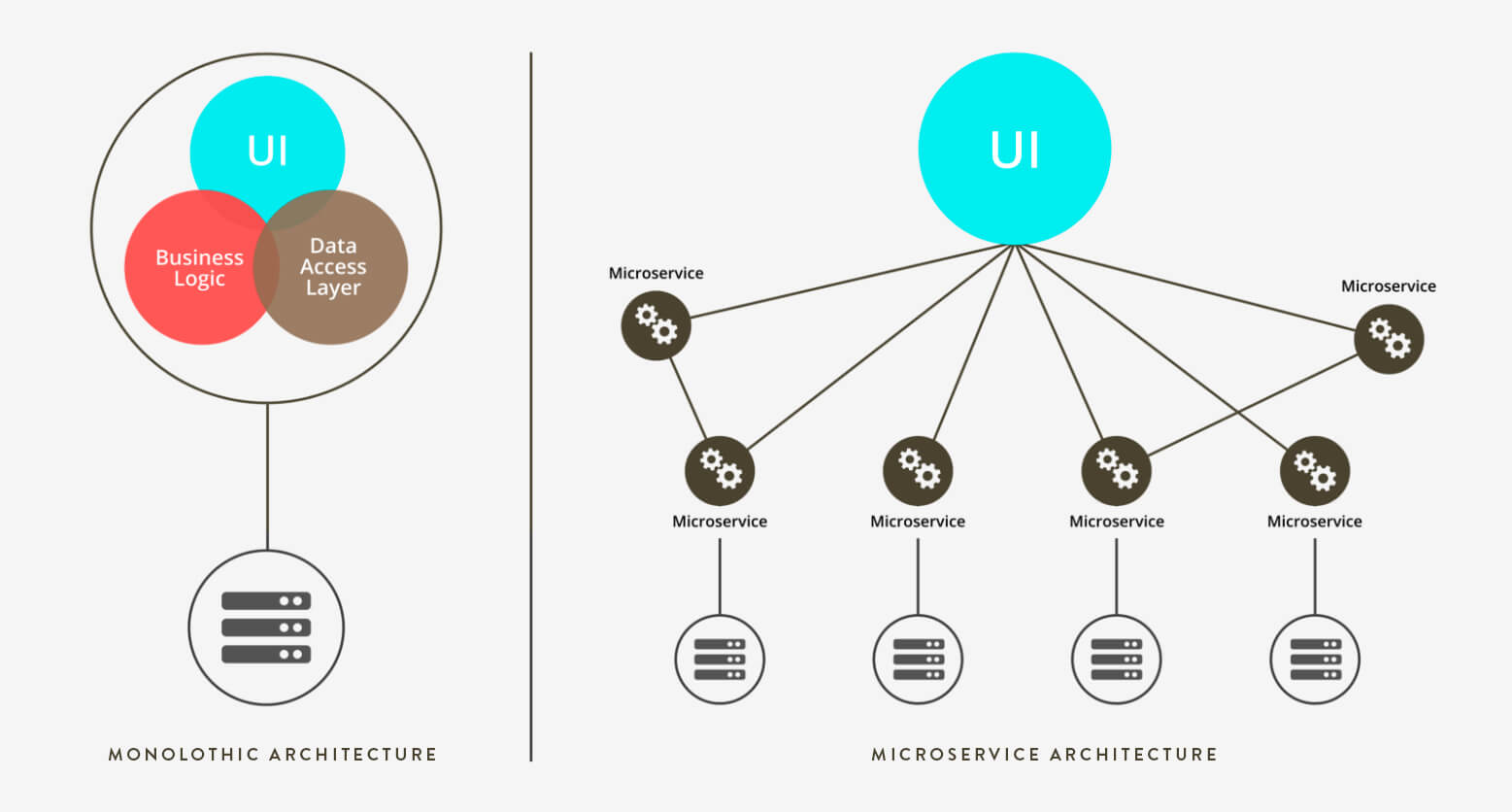
There are usually 2 ways of developing an application. The most commonly used type is
Monolithic Application
A single application is consisted within one process in Monolithic Applications. Microsoft word is a very common example. A group of classes are used while developing these applications that depends on each other. When a change is made in one class, it will impact the others. Hence, any minor change in the application will result in rebuilding and deployment of the entire application.
Microservices
The other type is Microservices, a collection of focused and small services which, on execution develops a complete application. A single responsibility of the application which you are developing is represented by an instance of a microservice.
Monolithic Application
Microservices
Before testing a microservice application, a developer needs to perform the following strategies
- Ensure the code branch is correct.
- Pull the latest code from repository.
- Ensure dependencies are all updated.
- Rerun if there is any database migration.
- Start the service.
Challenges Behind Testing Microservices
From the beginning, extra precautions are required for testing microservices, like managing multiple repositories, each having their own database. While testing, challenges may get deeper.
Opportunity
Since different teams manage their own microservices, getting an opportunity when all microservices are available for testing is difficult
Fragmented testing
Microservices are developed to run solo or with other loosely connected services. Testers not only need to test the entire application, but also each individual component.
Knowledge
Before writing the test cases, the tester should have a strong knowledge of each service.
However, advantages of microservices are too great to let go because of simple testing challenges. Let’s discuss certain strategies a tester must undertake before testing microservices
You can also refer to our blog on Testing Challenges related to Microservice Architecture for detailed information.

Scalability Testing
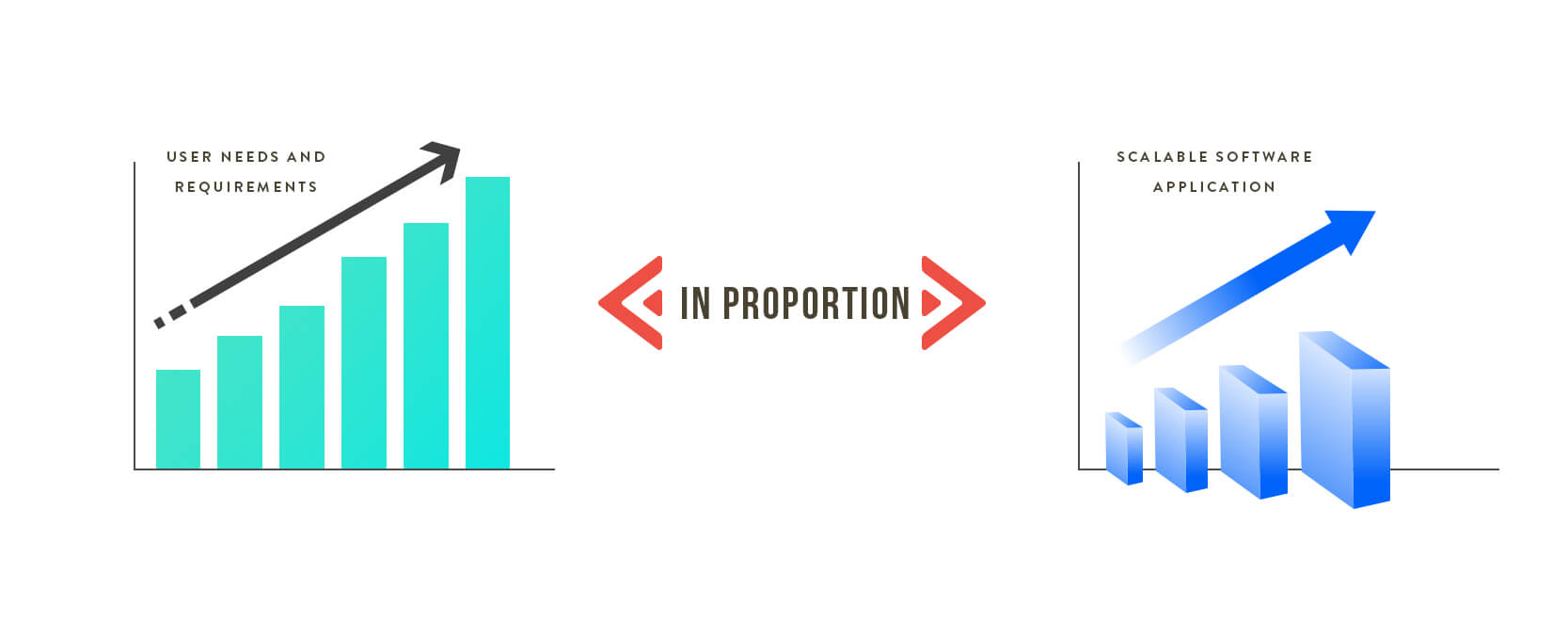
In order to check whether the microservice is independent and agile, testing scenarios should be executed to check whether it is scalable or not, the focus of scalability testing. Testers need to ensure whether
- With increase in load, the microservice replicates effectively to balance the load.
- To check whether replicated microservices can collectively accomplish a task.
For example, let’s say an application like Accuweather is developed using microservices. It constantly gets updated with changing weather. It renders the image of the current weather from one microservice and the recorded temperature from another. When the widget is rendered multiple times, because of complications in caching, an older image may get rendered. Proper automation testing tools like ReadyAPI (formerly LoadUI Pro) can run test case scenarios at any granular level and with a single click, scalability of the app can be tested.
Functionality Testing
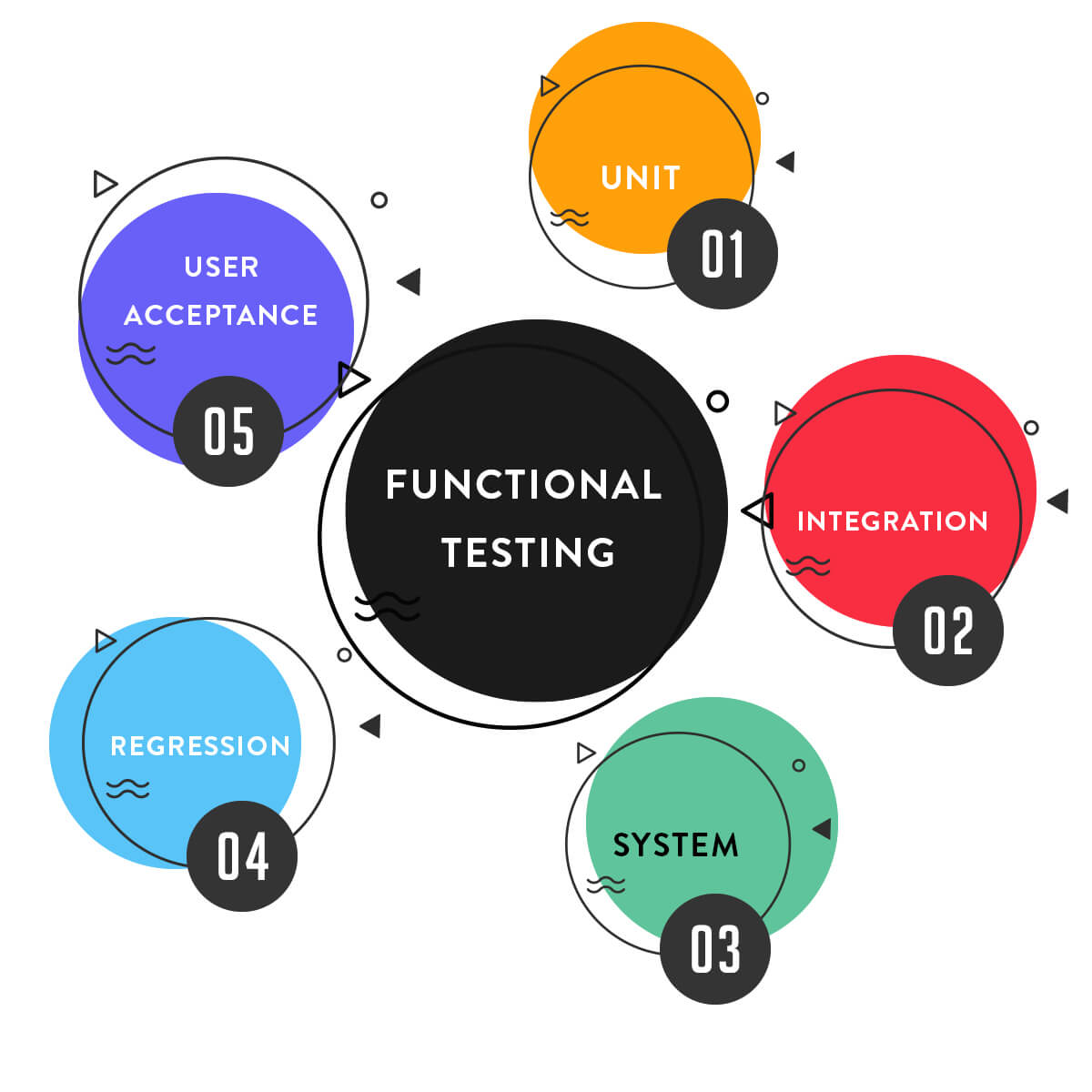
Apart from individual implementation of features, a microservice has its own data source. Not only that, it also encapsulates a domain. As a result, individual testing is required to ensure whether it can implement the feature it was designed for. If implementation is done in a container, it becomes easier to pull and test the functionality of an individual microservice.
Enterprise grade automation tools like ReadyAPI (SmartBear's rebrand of SoapUI Pro) or any other API testing tool, gives you the ability to test all probable scenarios like looping over different test cases or microservice endpoints with different data sets.

How Do AI Agents Test Microservice APIs Now?
AI coding agents can read a microservice's OpenAPI or Swagger spec, generate contract and negative-path tests for each endpoint, and flag a breaking change between two service versions without a tester writing every test case by hand.
- Spec-driven test generation: an agent reads a service's OpenAPI or Swagger definition and drafts request and response test cases for every endpoint and status code.
- Consumer-driven contract checks: paired with a contract testing tool like Pact, an agent can verify a consumer service's expectations still match a provider's real response before either team deploys.
- Log-driven regression cases: an agent can turn a production request log into a regression test, replaying real traffic instead of only synthetic examples.
- Service-health triage: given access to a service's health endpoint or metrics, an agent can trace which downstream microservice broke a failing end-to-end test instead of a tester tracing it by hand across repositories.
These agents still run inside the same scalability, functionality, and end-to-end checks covered in this guide; they change who writes the test cases, not what needs testing.
End to End Testing
As mentioned earlier, end to end testing is a critical procedure for testing microservices, since tester needs to test each and every individual component to ensure that the integrated application serves the goal it was meant for. A proper strategy for end to end testing is to limit the number of times test cases are executed. A healthy balance between end to end along with other testing strategies will filter out even smallest issues. In a large application, end to end testing will take more time and chances are there to get it wrong. Hence, it should be left for the end when all other testing procedures are completed.
User Interface Testing
It is probably the highest order, since it allows the tester to understand how the application will behave when used by an end user.
While dealing with UI testing, instead of relying only on automation tools, tester should also think from the perspective of a user and figure out how the application feels and behave. All the interfaces, third party and internal services along with databases should work perfectly in a well-coordinated manner to produce the result that is expected.
Apart from the above-mentioned strategies, other strategies that can be undertaken for microservice testing are
- Documentation first
- Stack in the box
- AWS Testing
- Shared testing instances
- Stubbed service
Testing microservices may not be a piece of cake and a lot of additional work and research may be needed since the technology is new in the industry. However, the extra effort is worth the benefits.

Author

Arnab Roy Chowdhury
Blogs: 70


Arnab Roy Chowdhury is a community contributor with 10+ years of experience working across software development, web UI engineering, and technical content writing. Currently a Senior Consultant at Capgemini, he has hands-on experience in building and maintaining cross-browser compatible web interfaces using HTML5 and modern frontend practices. Arnab has also contributed as a freelance web developer and writer, combining practical development expertise with clear technical documentation. He holds a Bachelor’s degree in Computer Engineering.


Microservice Architecture Testing FAQs
Did you find this page helpful?
More Related Blogs
TestMu AI forEnterprise
Get access to solutions built on Enterprise
grade security, privacy, & compliance
- Advanced access controls
- Advanced data retention rules
- Advanced Local Testing
- Premium Support options
- Early access to beta features
- Private Slack Channel
- Unlimited Manual Accessibility DevTools Tests