
Test chat, voice, and video
AI agents before launch
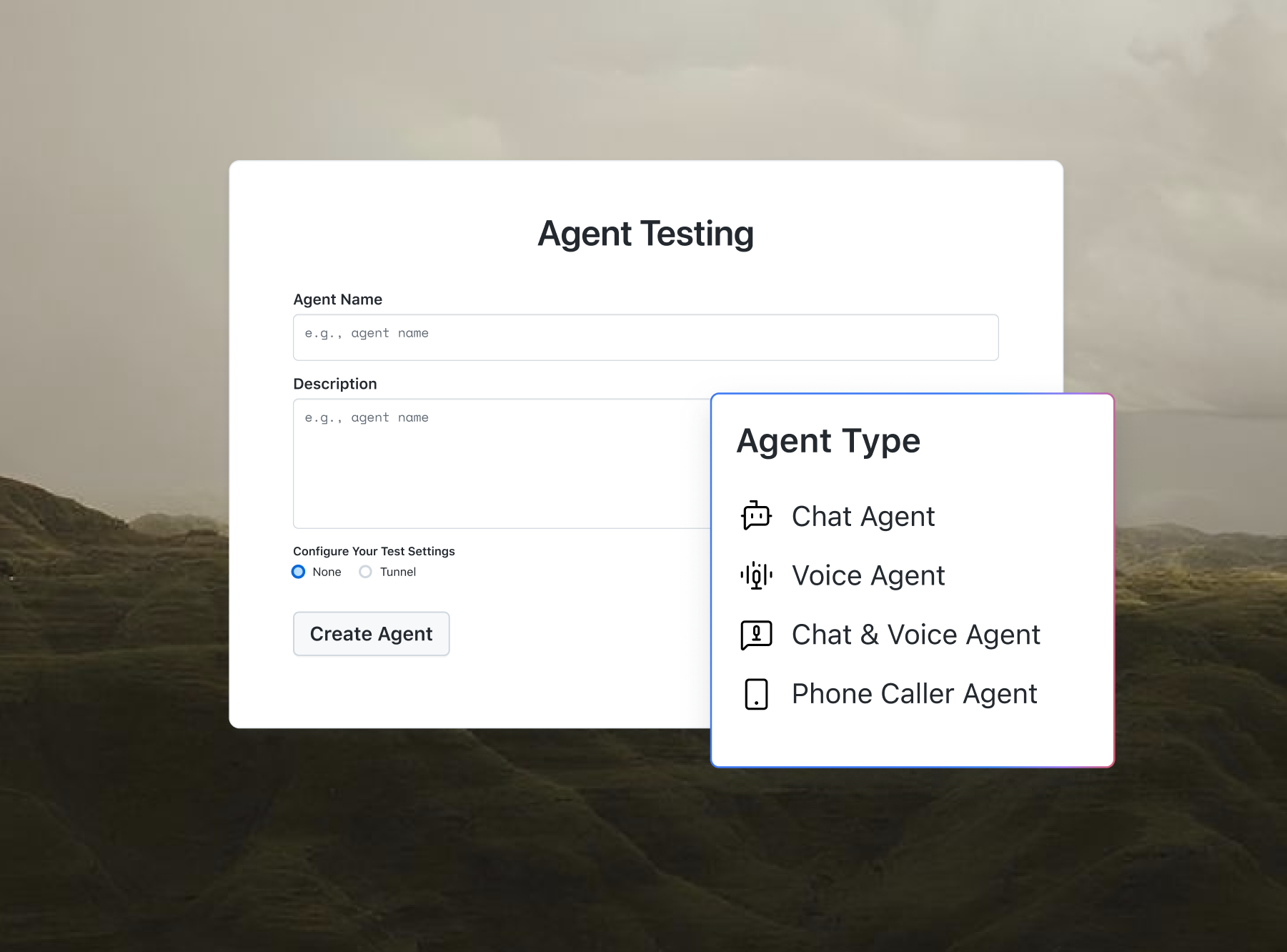
Agent Testing questions your chatbot or voice agent and scores each reply for hallucination and bias.

Free AI Agent Use Case Finder Online
Identify, score, and rank high-payoff AI use cases tailored to your business, data readiness, and risk profile. This tool is built and maintained by TestMu AI (formerly LambdaTest).
Categories

Ship AI Agents With Confidence
See how it performs before real users do.



Business Profile & Opportunity Parameters

What is the AI Agent Use Case Finder?
The AI Agent Use Case Finder is a free, browser-based tool that scores and ranks AI agent use cases for your business. It reads your industry, department, data readiness, and risk tolerance, then matches them against 35 structured use cases to return a prioritized shortlist, an Effort vs Impact matrix, and an implementation stack for each pick.
All scoring runs locally in your browser, so no business data leaves your device. Unlike static use-case lists, this tool ranks opportunities for your exact context, helping engineering and operations leaders prioritize automation before building agents or adopting Kane AI.
Why Evaluating AI Agent Use Cases Matters
Most AI projects stall on feasibility, not ideas. Scoring use cases by value, effort, and risk before you build protects budget and aligns with the risk practices in the NIST AI Risk Management Framework. Evaluation matters because it:
- Cuts failure risk: You deploy agents only where they show measurable efficiency, not across every workflow at once.
- Protects ROI: Ranking by payoff keeps engineering hours on quick wins before long-horizon bets.
- Surfaces risk early: High-risk tasks are flagged for human-in-the-loop review before anything ships.
- Exposes data gaps: Checking data readiness reveals integration and API work before you write code.
How to Find and Prioritize AI Use Cases Online
The finder prioritizes use cases in four steps:
- Enter your business profile: Pick your industry, department, team size, and current AI maturity.
- Choose up to three bottlenecks: For example, QA delivery delays or slow customer support response times.
- Set data and risk profile: Mark whether your data is centralized or scattered, plus your risk tolerance.
- Review and export: Read the 2x2 Effort vs Impact matrix and ranked shortlist, then export JSON, CSV, or Markdown.
Key Features of the AI Agent Use Case Finder
Key capabilities:
- Deterministic fit scoring: Rule-based scoring evaluates your business parameters against 35 structured AI agent use cases.
- 2x2 Effort vs Impact matrix: Plots your top picks into quick wins, strategic bets, low priority, and reconsider.
- Multi-format export: Download the shortlist as JSON or CSV, or copy a Markdown summary.
- Client-side only: All scoring runs in JavaScript in your browser, so no inputs are uploaded.
- Shareable results link: Your inputs encode into a URL so teammates open the same scored report.
AI Agent Use Cases by Department
The finder covers use cases across every major department:
- Customer Support & Success: Auto-screen tasks for ticket triage, draft response generators, and automated customer sentiment tracking.
- Product, Engineering & QA: Prioritize autonomous test script generation, logs anomaly detection, and database query optimization.
- Finance & Operations: Identify opportunities for invoice OCR extraction, expense policy auditing, and contract risk pre-screening.
- Sales & Marketing: Triage options for inbound lead enrichment, personalized outbound copywriting, and content repurposing.
Once you shortlist use cases, plan the rollout. Compare staffing against automation with the Hire Employee vs AI Agent Cost Calculator, then pick the agent with the AI Agent Finder or map a build with the No-Code AI Agent Stack Selector. For QA use cases, TestMu AI runs autonomous testing with Kane AI across 10,000+ real devices and 3000+ browsers in the cloud.
Frequently Asked Questions (FAQs)

How do I identify the right AI use cases for my business?
Start from bottlenecks, not tools. List the repetitive, high-frequency tasks that slow a team down, confirm the data for each task is accessible, then score candidates by payoff, effort, and risk. This finder automates that method across 35 use cases and returns a ranked shortlist matched to your industry, department, and data readiness.
How do I prioritize which AI agent use case to build first?
Rank candidates by payoff against effort, then filter by risk. A high-payoff, low-effort task with ready data is the safest first project because it proves value quickly. The finder highlights these as Quick Wins and marks one Start Here pick, so you avoid spending engineering time on a high-effort bet too early.
How does the fit scoring engine work?
The engine uses deterministic rules, not a black-box model. It adds points for department fit, pain-point overlap, task frequency, and centralized data, then subtracts points for high-risk tasks when your risk tolerance is low. Each of the 35 use cases receives a 10 to 99 fit score, and the shortlist is ranked highest first.
How does the 2x2 Effort vs Impact Matrix classify opportunities?
The matrix plots your top use cases across four quadrants: Quick Wins (low effort, high payoff), Strategic Bets (high effort, high payoff), Low Priority (low effort, low payoff), and Reconsider (high effort, low payoff). Begin with Quick Wins to prove value fast, then move to Strategic Bets once your first agent is live.
What is agentic AI?
Agentic AI describes systems that plan and act toward a goal, not just answer a prompt. An AI agent can call tools, query data, and complete multi-step tasks such as triaging a ticket or generating a test, often with a human approving key actions. The use cases this finder scores are all agentic workflows.
How are AI agents different from chatbots, RPA, and generative AI?
A chatbot answers questions, RPA repeats fixed scripted steps, and generative AI produces content on request. An AI agent combines these: it reasons over context, chooses actions, calls tools or APIs, and completes a task end to end. That autonomy is why agents fit workflows like ticket triage, code review, and invoice processing.
What is the role of human oversight in AI agent deployment?
Human oversight is a control point for high-risk work such as financial reconciliation, contract review, or patient records. The finder discounts high-risk use cases when your risk tolerance is low and recommends a human-in-the-loop step. You can pressure-test any pick with the AI Agent Risk Scorer before you build.
How do I know if my data is ready for AI agents?
Data is ready when it is accessible through APIs, a cloud database, or connected tools like a CRM or Jira. Scattered spreadsheets, PDFs, or restricted offline records add integration work first. The finder factors your data readiness into each score, ranking low-data-dependency use cases higher when your data is not yet centralized.
Can non-technical teams implement these AI agent use cases?
Yes for many of them. Low-effort use cases such as ticket triage, lead enrichment, or content repurposing can run on no-code platforms. High-effort use cases like legacy code migration or financial reconciliation need engineers. The finder reads your technical capacity and lowers the score of builds your team cannot realistically ship.
How do you test AI agents before deploying them?
Test agents like software: run them against real inputs in a staging environment, check outputs for accuracy and safe actions, and add regression tests so behavior does not drift. TestMu AI's Kane AI authors and self-heals these test flows across 10,000+ real devices and 3000+ browsers, so agent-driven features stay reliable.
How do I calculate the ROI of an AI agent?
Estimate ROI by comparing the fully loaded cost of the automation against the hours saved, errors reduced, and speed gained, then track payback over time. For a detailed model, use the AI Agent ROI Calculator, which projects payback period and net value for a specific use case.
Is my business data shared with external servers?
No. The AI Agent Use Case Finder runs entirely in your browser. All inputs, scoring, and exports are processed locally in JavaScript, and nothing is sent to a server or database. Your answers are saved only in your own browser storage so you can return to them, and resetting the form clears them.
Can I export the scored shortlist?
Yes. After scoring, download the report as a JSON file or a CSV spreadsheet, or copy a Markdown summary to your clipboard. You can also generate a shareable link that encodes your inputs into the URL, so a teammate opens the exact same ranked shortlist and Effort vs Impact matrix.
How does TestMu AI support AI automation?
TestMu AI helps software and QA teams run autonomous testing with Kane AI, an agentic test assistant that plans tests, authors scripts, and self-heals broken automation. It executes across 10,000+ real devices and 3000+ browsers in the cloud, so teams can validate AI-driven features at scale.
Did you find this page helpful?
More Tools
TestMu AI forEnterprise
Get access to solutions built on Enterprise
grade security, privacy, & compliance
- Advanced access controls
- Advanced data retention rules
- Advanced Local Testing
- Premium Support options
- Early access to beta features
- Private Slack Channel
- Unlimited Manual Accessibility DevTools Tests