
Power Your Software Testing with AI Agents and Cloud
The Native AI-Agentic Cloud Platform to Supercharge Quality Engineering. Test Intelligently and Ship Faster.

- TestMu AI (Formerly LambdaTest)
- /
- Blog
- /
- How to Test Single Page Applications Without Code
How to Test Single Page Applications Without Code (2026 Guide)
Test single page applications end to end, client-side routing, async loaders, re-rendered views, and stale state, in plain English. No Selenium, no code.
Published on:
Single page applications are tested without code by writing steps like clicking the Dashboard link and confirming its heading loads once the route finishes rendering, in plain English for KaneAI to run. It waits for a spinner to clear using vision instead of a fixed timeout, and re-anchors elements after every re-render so stale data never slips through.
Why single-page applications (SPAs) are hard to test
A single page application looks simple to click through, but real coverage has to survive everything the framework does under the hood:
- Client-side routing, where the URL changes but the page never reloads, so a test that waits for a fresh document load waits forever
- Asynchronous state, where data arrives after the view renders, so the content you want to assert on does not exist yet when the step runs
- Loading and skeleton states, where a spinner or placeholder sits in place of the real element and a naive selector matches the placeholder instead
- Re-rendering, where the framework tears down and rebuilds the DOM on every state change, so an element captured a moment ago is already stale
- Component reuse, where the same button or list item shows up in many views, so a selector that was unique on one screen matches several on the next
- Persisted state, where data cached from a previous route leaks into the current one and a test passes only because the value happened to already be there
And that is one view. Real coverage means every route transition, every empty and error state, and every browser your customers actually run.
The old way: brittle SPA scripts
Here is what verifying a single client-side route change looks like in a typical Selenium setup:
const { Builder, By, until } = require("selenium-webdriver");
const driver = await new Builder().forBrowser("chrome").build();
await driver.get("https://yourapp.com/");
await driver.findElement(By.css("nav a[href='/dashboard']")).click();
// no full page reload fires, so wait for the client-side view to mount
await driver.wait(until.elementLocated(By.css(".dashboard-view")), 10000);
// data loads after the view renders, so wait for the spinner to clear
const spinner = By.css(".dashboard-view .spinner");
await driver.wait(async () => (await driver.findElements(spinner)).length === 0, 10000);
const heading = await driver.findElement(By.css(".dashboard-view h1")).getText();
if (!heading.includes("Dashboard")) throw new Error("Expected the Dashboard view, got: " + heading);
Eleven lines, and most of them exist only to fight the framework: wait for the view to mount, wait for the spinner to clear, re-find the element because the last reference went stale. Maintenance like this is the dominant cost of a large automation suite, and on a fast-moving SPA the churn is worse, because engineers spend a large share of every sprint re-pointing selectors that a re-render quietly invalidated instead of writing new coverage. It also assumes someone on the team writes JavaScript or Python in the first place, which the async timing only makes harder. It is the core tradeoff behind code-based vs. codeless test automation.
If you are a manual QA engineer, a PM, or a founder without a dedicated automation engineer, the code wall means your SPA usually gets tested by hand, one route at a time, and never on the slow connection where the async bugs actually surface.
The no-code way: write the test the way you would explain it
With KaneAI, you write the same test in plain English:
- Go to yourapp.com and open the home view
- Click the Dashboard link in the navigation
- Wait for the dashboard view to finish loading
- Verify the dashboard heading reads Dashboard
- Verify the account summary shows real data, not a placeholder
That is the entire test. KaneAI reads each step and drives your live app the way a person would, so a client-side route change is just a click, not a special case. It does not wait for a hard navigation that never comes; it watches the view the way you do and waits for the loader to clear using vision rather than a hardcoded timeout. Because it finds elements by intent and context instead of brittle CSS paths, it re-anchors every step across re-rendered views, so a component that gets torn down and rebuilt does not break the test. When a route or a component is renamed, KaneAI adapts and flags the change for review, which significantly reduces maintenance.
The single-page applications (SPAs) scenarios that actually break
Once the happy path works, real coverage is just more English. Here are the SPA scenarios worth adding, each takes about two minutes to write:
Route transition with no reload
- Click a link that changes the URL without reloading the page
- Verify the new view renders and the old view is gone
- Verify the browser back button returns to the previous view with its state intact
Async data that arrives late
- Open a view that fetches its data after it first renders
- Wait for the loader or skeleton to clear
- Verify the real content replaces the placeholder and no skeleton text remains
Stale state between routes
- Open the detail view for one item, then navigate to a different item
- Verify the view shows the second item, not data left over from the first
- Verify a hard refresh on the second route still shows the correct item
Slow network and error states
- Throttle the connection and open a data-heavy view
- Verify a loading state appears and then resolves into real content
- Verify a failed request shows an error message and a retry, not a blank screen
Run all of them across Chrome, Safari, Firefox, and real mobile devices from the same plain-English steps, with no per-browser rewrites.
Putting it on autopilot
SPA tests are most valuable when they run without you:
- Schedule the suite nightly, so a Friday deploy cannot ship a route that renders blank over the weekend
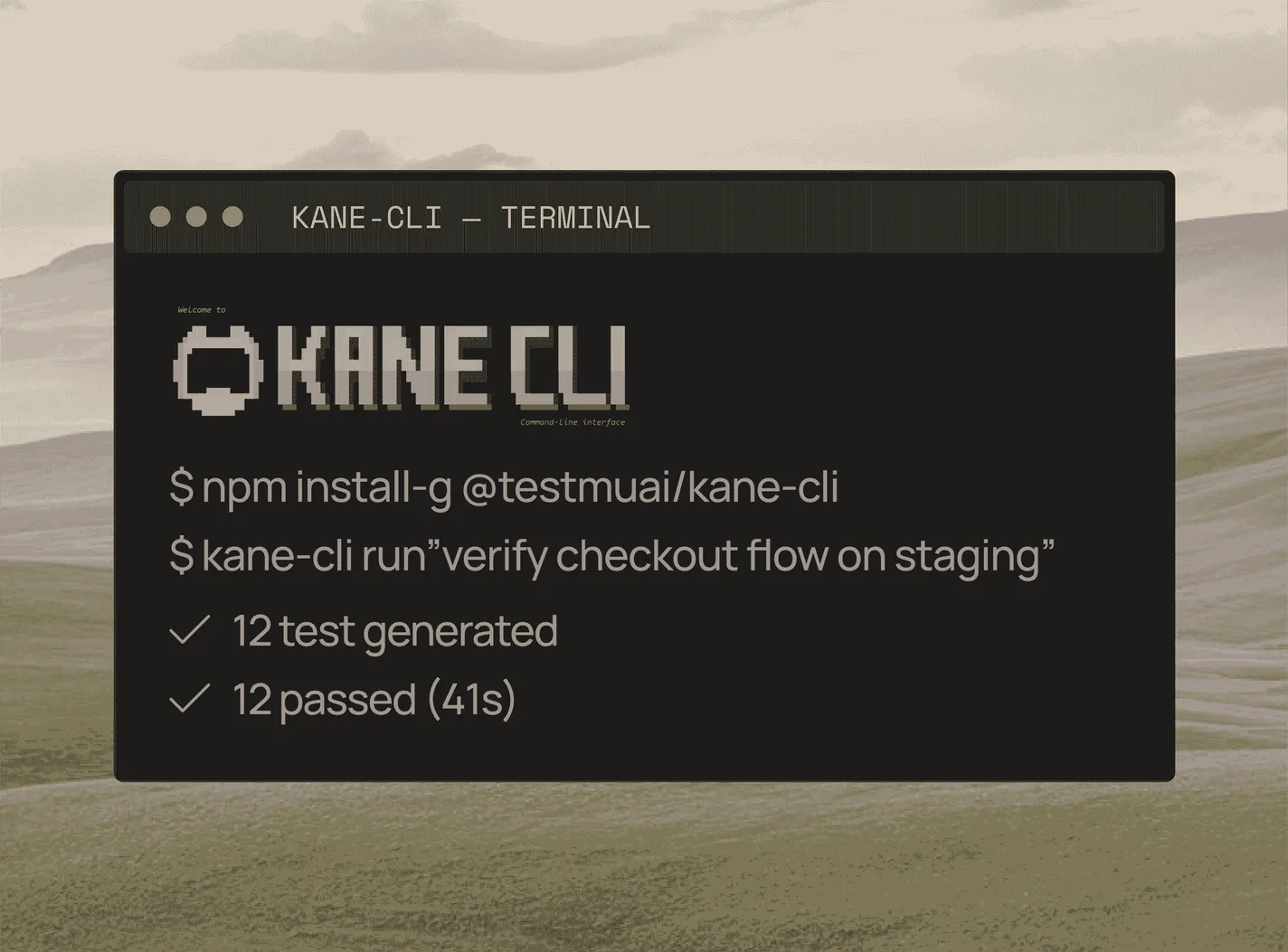
- Trigger on deploy via CI, where Kane CLI runs the same tests from your pipeline and pauses for an OTP or CAPTCHA instead of failing
- Alert on failure in Slack, with a full replay of exactly what the AI saw when the step failed: screenshots, video, and the reason in plain English
When a test fails, you do not get a stale-element exception buried in a stack trace. You get a plain-English reason for the exact step that failed. Anyone on the team can read it, and anyone can fix the test, because the test is just English.
Try it on your own SPA in 10 minutes
- Sign up for KaneAI free, with no credit card
- Paste your app URL
- Write your first test in plain English, describing one route change, or let KaneAI suggest one from your site
- Run it and watch your single page application get tested end to end
Your SPA is too dynamic to test by hand and too fragile for selector-bound scripts. Test it in the language you already speak. Once your web views are covered, read how to test mobile apps without code and how to test progressive web apps (PWAs) without code, the two surfaces your SPA users reach next.

Note: Test your single page application without writing a line of code. Start with KaneAI free.
Author

Reshu Rathi
Blogs: 6


Reshu Rathi is a skilled content and marketing professional with expertise in content marketing for SaaS, tech, AI, and startup growth. She crafts strategies that drive engagement and growth, leveraging deep industry knowledge. Reshu excels in simplifying complex topics to create impactful, audience-focused content.
Reviewer

Salman Khan
Reviewer
Salman is a Test Automation Evangelist and Community Contributor at TestMu AI, with over 6 years of hands-on experience in software testing and automation. He has completed his Master of Technology in Computer Science and Engineering, demonstrating strong technical expertise in software development, testing, AI agents and LLMs. He is certified in KaneAI, Automation Testing, Selenium, Cypress, Playwright, and Appium, with deep experience in CI/CD pipelines, cross-browser testing, AI in testing, and mobile automation. Salman works closely with engineering teams to convert complex testing concepts into actionable, developer-first content. Salman has authored 120+ technical tutorials, guides, and documentation on test automation, web development, and related domains, making him a strong voice in the QA and testing community.


SPA Testing FAQs
Did you find this page helpful?
More Related Blogs

TestMu AI forEnterprise
Get access to solutions built on Enterprise
grade security, privacy, & compliance
- Advanced access controls
- Advanced data retention rules
- Advanced Local Testing
- Premium Support options
- Early access to beta features
- Private Slack Channel
- Unlimited Manual Accessibility DevTools Tests