
Power Your Software Testing with AI Agents and Cloud
The Native AI-Agentic Cloud Platform to Supercharge Quality Engineering. Test Intelligently and Ship Faster.

- TestMu AI (Formerly LambdaTest)
- /
- Blog
- /
- How to Test Forms Without Code
How to Test Forms Without Code (2026 Guide)
Test every field, validation rule, conditional field, file upload, and error state on your forms in plain English. No Selenium, no Playwright, no code.
Last Updated on:
Forms can be tested without code by describing each check in plain English to KaneAI, such as verify the email field shows a valid-email error, instead of scripting a CSS selector for a hidden error span. The same approach covers conditional fields that appear after a selection and multi-step forms that must survive a page refresh.
Why forms are hard to test
A form looks like a few boxes and a button, but real coverage has to touch every rule and every way each one can fail:
- Field-level validation, where every input has its own rules for required, format, length, and range, and each must show the right message on the right field and block submission until it is fixed
- Conditional and dependent fields, where picking a country reveals a state dropdown, or choosing a business account adds a tax-ID field that did not exist a moment ago
- File uploads, where the form has to accept the right types and sizes, reject the wrong ones, and show progress and error states without losing the rest of the entered data
- Error and success handling, where a failed submit must preserve everything the user typed and a successful one must clear the form and confirm what happened
- Input masking and formatting, where phone numbers, cards, dates, and currency reformat as you type and still submit a clean value
- Multi-step and long forms, where progress has to survive a back button, a refresh, and a half-finished draft
And that is one form. Real coverage means testing empty submissions, partial submissions, paste versus type, browser autofill, and every browser and device your visitors actually use.
The old way: brittle form scripts
Here is what checking two validation rules, that an invalid email and a too-short phone number each raise the right error, looks like in a typical Selenium setup:
const { Builder, By, until } = require("selenium-webdriver");
const assert = require("assert");
const driver = await new Builder().forBrowser("chrome").build();
await driver.get("https://yourapp.com/signup");
await driver.findElement(By.id("email")).sendKeys("not-an-email");
await driver.findElement(By.id("phone")).sendKeys("123");
await driver.findElement(By.css("button[type='submit']")).click();
const emailErr = await driver.wait(until.elementLocated(By.css("#email + .error")), 5000);
assert.strictEqual(await emailErr.getText(), "Enter a valid email address");
const phoneErr = await driver.findElement(By.css("#phone + .error")).getText();
assert.ok(phoneErr.includes("at least 10 digits"), "Unexpected phone error: " + phoneErr);
Eleven lines to cover two of the dozen rules on one form. And it is fragile. The moment a developer renames the email field, changes the error container from a sibling span to a tooltip, or reorders the inputs, the assertions fail. Maintenance like this is the dominant cost of a large automation suite: engineers spend a large share of every sprint re-pointing selectors and rewriting assertions instead of adding new coverage. And this approach still needs someone on the team who writes JavaScript or Python in the first place, which conditional fields and file uploads only make harder. It is the core tradeoff behind code-based vs. codeless test automation.
If you are a manual QA engineer, a PM, or a founder without a dedicated automation engineer, the code wall means forms usually get tested by hand, one field at a time, and only on the browser that happens to be open.
The no-code way: describe the form the way a user fills it
With KaneAI, you write the same test the way you would describe filling the form to a colleague:
- Go to yourapp.com and open the signup form
- Enter not-an-email in the email field and 123 in the phone field
- Click Submit
- Verify the email field shows a valid-email error
- Verify the phone field shows a must-be-at-least-10-digits error
- Now enter a valid email and phone number, then click Submit
- Verify the form clears and a confirmation message appears
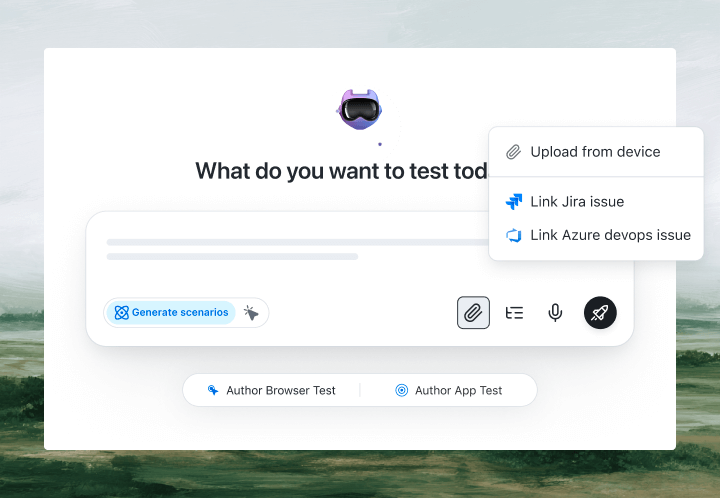
That is the whole test. KaneAI reads each step, finds the right field on your live form the way a person would, by understanding the labels and layout rather than matching brittle CSS selectors, and executes it. It asserts error states in natural language, so verify the email field shows a valid-email error is the test, not a selector for a hidden span. It handles conditional fields that appear after a selection, drives a file upload through its accepted and rejected states, and makes smart assertions on required fields without you naming a single element. When a developer renames a field or restyles the error message, the test re-anchors the step and flags the change for you to review, which significantly reduces maintenance.

The form scenarios that actually break
Once the happy path works, real coverage is just more English. Here are the form scenarios worth adding, each takes about two minutes to write:
Required-field validation
- Submit the form with every field left empty
- Verify each required field shows its own error and the form does not submit
- Fill the fields correctly and verify the errors clear as you go
Conditional fields
- Select Business as the account type
- Verify a tax-ID field appears and is now required
- Switch back to Personal and verify the tax-ID field disappears and no longer blocks submission
File upload
- Upload a 20 MB PDF to a field that only accepts images under 5 MB
- Verify a clear size-and-type error appears and the rest of the form keeps its values
- Upload a valid image and verify the preview and a successful attach state
Input masking and paste
- Paste a phone number with spaces and dashes into the phone field
- Verify it reformats to the expected mask and submits a clean value
- Repeat with a credit-card field and a date field
Run every one of these across Chrome, Safari, Firefox, and real mobile devices from the same plain-English steps, with no per-browser rewrites.
Putting it on autopilot
Form tests earn their keep when they run without anyone remembering to start them:
- Schedule the suite nightly, so a validation rule that broke in yesterday's deploy is caught before your first visitor hits it
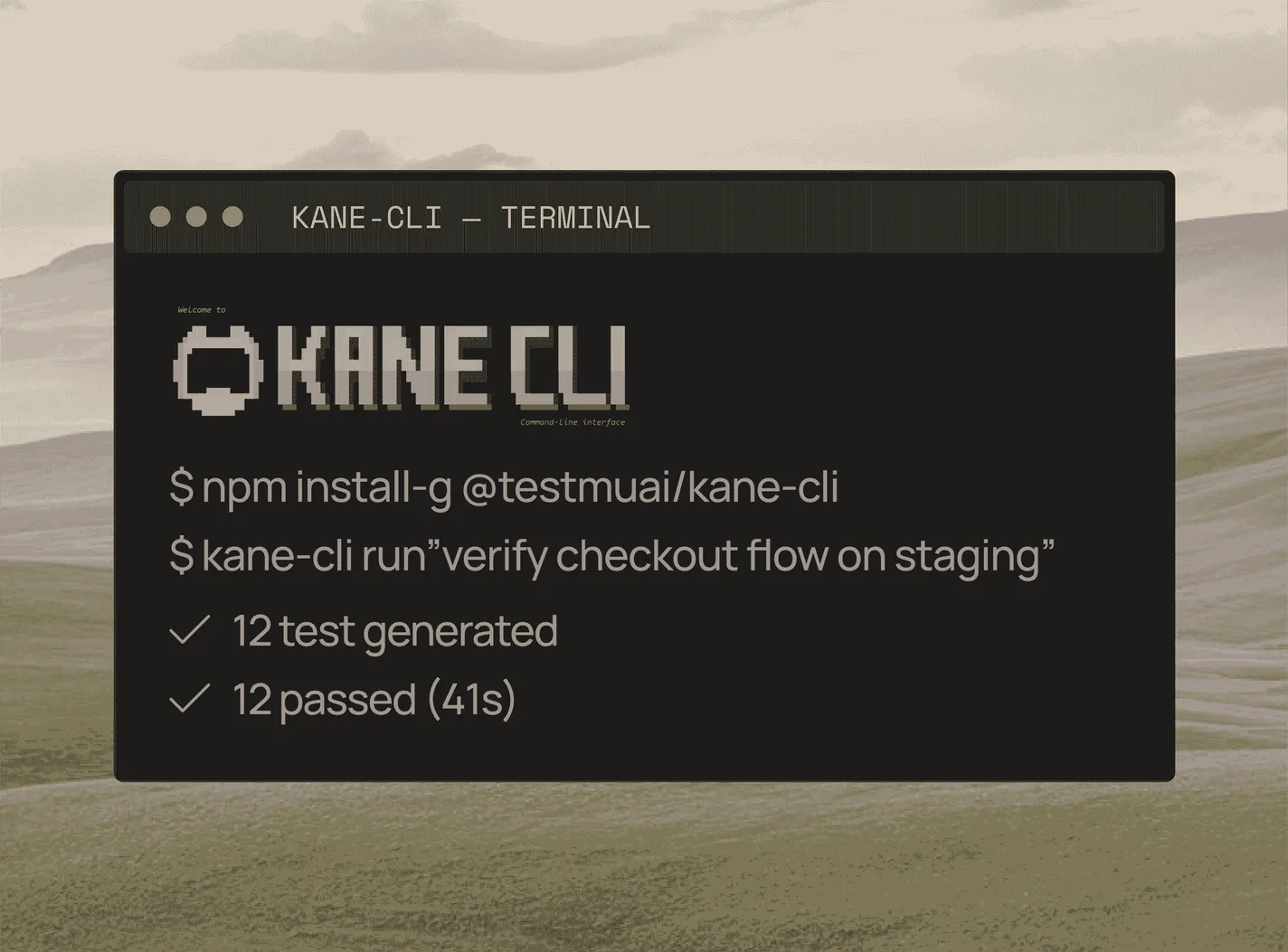
- Trigger on deploy via CI, where Kane CLI runs the same tests from your pipeline and pauses for an OTP or CAPTCHA instead of failing outright
- Alert on failure in Slack, with a full replay of exactly what the AI saw when the step failed: screenshots, video, and the reason in plain English
When a form test fails, you do not get a NoSuchElementException at line 47. You get a plain-English reason for the exact step that failed. Anyone on the team can read that, and anyone can fix the test, because the test is just English.
Try it on your own form in 10 minutes
- Sign up for KaneAI free, with no credit card
- Paste the URL of a form on your site
- Write your first form test in plain English, or let KaneAI suggest one from the fields it sees
- Run it and watch every field, error, and success state get checked end to end
Your forms are where visitors become customers, so they are too important to test by hand and too dynamic for brittle scripts. Test them in the language you already speak. Once your forms are covered, read how to test payment gateways without code and how to test search functionality without code to cover the steps your users reach next.
Functional coverage is only half the job. See our guide on testing forms and error handling for accessibility compliance to confirm the same fields and error states also work for screen reader and keyboard-only users.

Note: Test every field on your form without writing a line of code. Start with KaneAI free.
Author

Isha Vyas
Blogs: 8

Isha Vyas is a Lead Member of Technical Staff at TestMu AI, building the frontend of the quality engineering platform. She works across React.js, responsive web design, and jQuery to ship and maintain the platform's user-facing web interfaces. She brings nearly seven years of frontend engineering experience at the company, with earlier work as a Software Developer at Mantra Labs. Isha holds a B.Tech in Computer Science from Swami Keshwanand Institute of Technology, Management and Gramothan, Jaipur.
Reviewer

Himanshu Sheth
Reviewer
Himanshu Sheth is the Director of Marketing (Technical Content) at TestMu AI, with over 8 years of hands-on experience in Selenium, Cypress, and other test automation frameworks. He has authored more than 130 technical blogs for TestMu AI, covering software testing, automation strategy, and CI/CD. At TestMu AI, he leads the technical content efforts across blogs, YouTube, and social media, while closely collaborating with contributors to enhance content quality and product feedback loops. He has done his graduation with a B.E. in Computer Engineering from Mumbai University. Before TestMu AI, Himanshu led engineering teams in embedded software domains at companies like Samsung Research, Motorola, and NXP Semiconductors. He is a core member of DZone and has been a speaker at several unconferences focused on technical writing and software quality.


Form Testing FAQs
Did you find this page helpful?
More Related Blogs

TestMu AI forEnterprise
Get access to solutions built on Enterprise
grade security, privacy, & compliance
- Advanced access controls
- Advanced data retention rules
- Advanced Local Testing
- Premium Support options
- Early access to beta features
- Private Slack Channel
- Unlimited Manual Accessibility DevTools Tests