
Power Your Software Testing with AI Agents and Cloud
The Native AI-Agentic Cloud Platform to Supercharge Quality Engineering. Test Intelligently and Ship Faster.

- TestMu AI (Formerly LambdaTest)
- /
- Blog
- /
- How to Test a Booking Flow Without Code
How to Test a Booking Flow Without Code (2026 Guide)
Test your entire booking flow, date pickers, slot availability, double-booking, payment hand-off, and confirmation emails, in plain English. No code.
Published on:
A booking flow test has to catch a calendar that will not advance, a slot two guests grab at once, and a payment hand-off that drops the reservation, all without writing code. KaneAI runs these checks as plain-English steps against your live site, catching double-booking and payment failures a scripted Playwright test often misses.
Why booking flows are hard to test
A booking form looks like a calendar and a button, but real coverage has to touch every path through the reservation and every way it can fail:
- Date and time pickers render as custom calendar widgets, so the available days and open slots change on every load and cannot be hard-coded
- Availability is live, so a slot shown as open can be claimed by someone else a second before your test clicks it
- Double-booking and concurrency mean two guests reaching for the same slot must never both succeed, and only one reservation can win
- Timezones and date rollover matter, so an 11:30 PM slot booked in one region must not land on the wrong day for a guest in another
- Payment hand-off sends the flow to a provider like Stripe and has to return with the slot still held and the booking confirmed
- Confirmation and email have to agree, so the reference on screen must match the confirmation email and the calendar invite the guest receives
And that is one booking type. Real coverage means testing single and group reservations, new guests vs. returning ones, mobile vs. desktop, and every browser your customers actually book from.
The old way: brittle booking scripts
Here is what verifying a pick-a-date, choose-a-slot, and check-the-confirmation scenario looks like in a typical Playwright setup:
const { chromium } = require("playwright");

const browser = await chromium.launch();
const page = await browser.newPage();
await page.goto("https://yourapp.com/book");
await page.click(".calendar-day[data-available='true']");
await page.click(".slot-list >> text=10:30 AM");
await page.click("button.continue");
await page.fill("#guest-name", "Test User");
await page.click("button[type='submit']");
await page.waitForSelector(".booking-confirmation");
const ref = await page.textContent(".confirmation-ref");
if (!ref || !/^BK-\d+/.test(ref)) {
  throw new Error(`No booking reference found, got: ${ref}`);
}
Even a short script like this is fragile. The moment a developer swaps the calendar library, renames the slot list, or changes how a booking reference is formatted, the test breaks. Maintenance like this is the dominant cost of a large automation suite: engineers spend a large share of every sprint re-pointing selectors instead of writing new coverage. And this approach still requires someone on the team who writes JavaScript or Python in the first place, which live availability and payment redirects only make harder. It is the core tradeoff behind code-based vs. codeless test automation.
If you are a manual QA engineer, a PM, or a founder without a dedicated automation engineer, the code wall means the booking flow usually gets tested by hand, slowly, inconsistently, and never at 2 a.m. before a release.
The no-code way: write the test the way you would explain it
With KaneAI, you write the same test in plain English:
- Go to yourapp.com and open the booking page
- Pick the next available date on the calendar
- Select the 10:30 AM slot
- Enter the guest name Test User and continue
- Complete the booking
- Verify a confirmation appears with a booking reference
That is the entire test. KaneAI reads each step, finds the calendar and the slot on your live site the way a human tester would, by understanding the page rather than matching brittle CSS selectors, and executes the flow. When your developer redesigns the picker or reformats the reference, the test adapts instead of breaking. It handles the parts that make booking hard: date and slot pickers, availability and double-booking edge cases, the payment hand-off to a provider and back, and the confirmation and email assertions across the full path, all inside one connected test.
The booking flow scenarios that actually break
Once the happy path works, real coverage is just more English. Here are the booking scenarios worth adding, each takes about two minutes to write:
Double-booking the same slot
- Open the same date and slot in two sessions at once
- Complete the booking in the first session
- Verify the second session is blocked and offered the next available slot instead
No availability left
- Choose a date that is fully booked
- Verify no open slots are shown and a waitlist or next-date prompt appears
- Verify the continue button stays disabled until a valid slot is selected
Payment fails mid-booking
- Select a date and slot and proceed to the payment provider
- Decline the test card at the payment step
- Verify the slot is released and the booking is not confirmed
Reschedule and cancel
- Open an existing booking and move it to a new date and slot
- Verify the old slot frees up and a new confirmation is issued
- Cancel the booking and verify the slot returns to availability
Run all of them across Chrome, Safari, Firefox, and real mobile devices from the same plain-English steps, with no per-browser rewrites.
Putting it on autopilot
Booking tests are most valuable when they run without you:
- Schedule the suite nightly, so a slot that silently stops booking is caught before your customers hit it in the morning
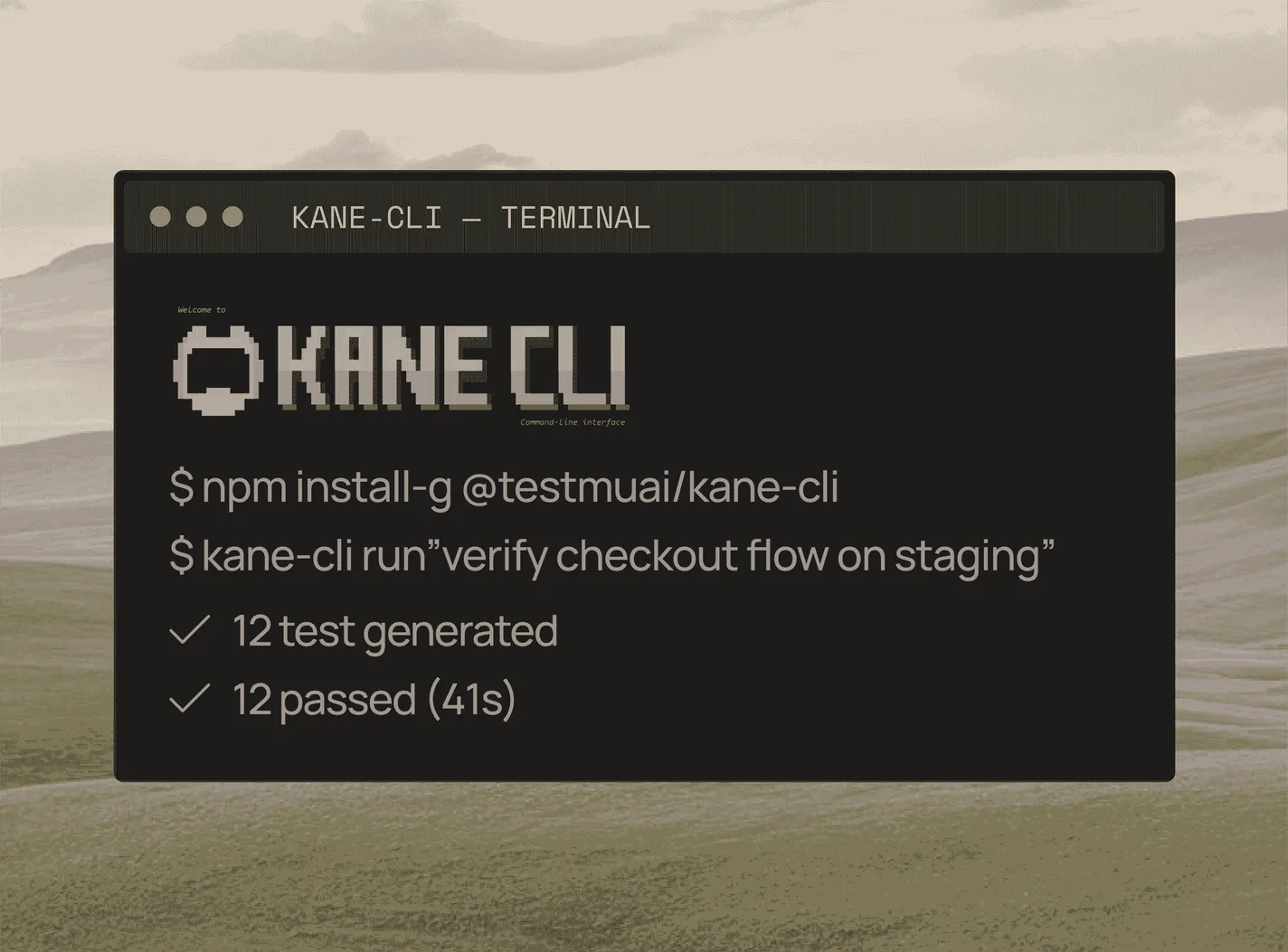
- Trigger on deploy via CI, where Kane CLI runs the same tests from your pipeline and pauses for an OTP or CAPTCHA instead of failing
- Alert on failure in Slack, with a full replay of exactly what the AI saw when the step failed: screenshots, video, and the reason in plain English
When a test fails, you do not get a stack-trace exception at line 47. You get a plain-English reason for the exact step that failed. Anyone on the team can read it, and anyone can fix the test, because the test is just English.
Try it on your own booking flow in 10 minutes
- Sign up for KaneAI free, with no credit card
- Paste your app URL
- Write your first booking test in plain English, or let KaneAI suggest one from your site
- Run it and watch your booking flow get tested end to end
Your booking flow is too important to test by hand and too dynamic for brittle scripts. Test it in the language you already speak. Once reservations are covered, read how to test file uploads without code and how to test subscription flows without code to cover the next paths your users reach.

Note: Test your booking flow without writing a line of code. Start with KaneAI free.
Author

Harshit Paul
Blogs: 95


Harshit Paul is Director of Product Marketing at TestMu AI, with over 8 years of experience in product and growth marketing for developer and QA tools, leading the Agentic AI in Quality Engineering space. He has authored 80+ technical articles for TestMu AI on software testing and automation, and hosted webinars on Selenium, automation testing, browser compatibility, DevOps, and continuous testing. He has led go-to-market and technical marketing initiatives across software testing products, contributing to SEO, content strategy, and developer marketing. He began his career as a certified Salesforce developer at Wipro Technologies, where he worked for 2 years before moving into marketing. Harshit holds a degree in computer programming from Vivekananda Institute of Professional Studies.
Reviewer

Shahzeb Hoda
Reviewer
Shahzeb Hoda is the Associate Director of Marketing and a Community Contributor at TestMu AI, leading strategic initiatives in developer marketing, content, and community growth. With 10+ years of experience in quality engineering, software testing, automation testing, and e-learning, he has authored and reviewed 70+ technical articles on software testing and automation. Shahzeb holds an M.Tech in Computer Science from BIT, Mesra, and is certified in Selenium, Cypress, Playwright, Appium, and KaneAI. He brings deep expertise in CI/CD pipeline automation, cross-browser testing, AI-driven testing practices, and framework documentation. On LinkedIn, he is followed by 3,700+ engineers, developers, DevOps professionals, tech leaders, and enthusiasts.


Booking Flow Testing FAQs
Did you find this page helpful?
More Related Blogs

TestMu AI forEnterprise
Get access to solutions built on Enterprise
grade security, privacy, & compliance
- Advanced access controls
- Advanced data retention rules
- Advanced Local Testing
- Premium Support options
- Early access to beta features
- Private Slack Channel
- Unlimited Manual Accessibility DevTools Tests