

Next-Gen App & Browser Testing Cloud
Trusted by 2 Mn+ QAs & Devs to accelerate their release cycles


Top Cross Browser Testing Trends [2022]
Learn about some of the top cross browser testing trends that organizations are implementing in 2022, and how they are shaping the development and testing communities.

Swastika Yadav
December 24, 2025
With the rapid evolution in technology and a massive increase of businesses going online after the Covid-19 outbreak, web applications have become more important for organizations. For any organization to grow, the web application interface must be smooth, user-friendly, and cross browser compatible with various Internet browsers.
For this purpose, it is required to focus on to bring a shift in web development trends and consider it more of a necessity than just an addition to the product life cycle process.
Back in time, software testing was just about finding errors in a product to improve product quality. But today, in 2022, with the wide range of browsers and browser versions available, the range of software testing has broadened. To experience the transformation and provide users with a better experience while surfing on different browsers, it becomes essential to overcome the cross browser testing challenges on priority.
In this article, we will discuss a few of the top cross browser testing trends for 2022, which will help you choose the right cross browser testing approach.
However, before diving into the cross browser testing trends, let’s understand cross browser compatibility.
Cross Browser Compatibility
For understanding cross browser compatibility, let’s consider a situation in which you’ve started a small online business, and it grows with time. In the beginning, you didn’t think about the layout and view of your website in every browser. Still, as the traffic grows, you get to hear about its inconsistency and instability on different browsers, which can be a significant obstacle for you at the user experience level for your business.

Austin Siewert
CEO, Vercel
Discovered @TestMu AI yesterday. Best browser testing tool I've found for my use case. Great pricing model for the limited testing I do 👏
2M+ Devs and QAs rely on TestMu AI
Deliver immersive digital experiences with Next-Generation Mobile Apps and Cross Browser Testing Cloud

Also read: 10 ways to avoid cross browser compatibility issues
Let’s say that your web app performs well across Chrome and Mozilla Firefox. Still, it doesn’t look attractive, opens with the wrong indentation, and works inappropriately across other browsers like Opera, Apple Safari, Microsoft Edge, etc. What happens if someone uses a different online browser to access your site? There’s a good chance you’ll lose a potential customer due to a poor user experience, which is something you don’t want to happen.
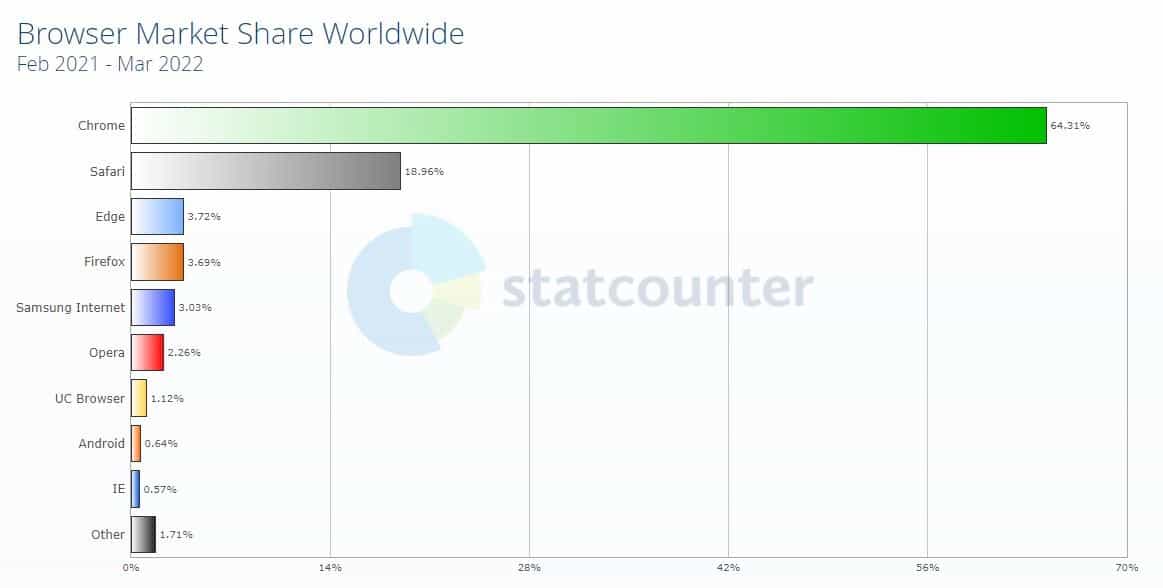
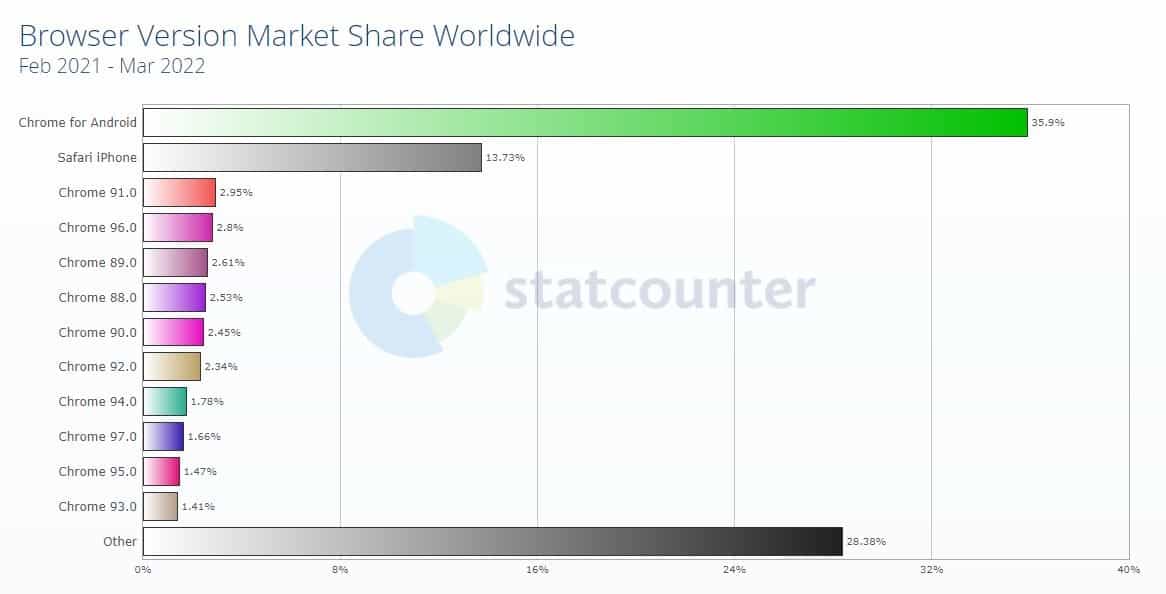
As you can see from the above image, every browser has a significant market share worldwide; hence, it cannot be ignored and must be considered in your cross browser testing strategy. The same applies to browser versions, as the market is fragmented. Hence, considering browser versions is equally important while creating your browser list to perform cross browser testing.
When this can be a problem for even a small business of yours, in this case, imagine what role it can play in heavy and high traffic web applications. Therefore, cross browser testing is always required to check the website’s browser compatibility across all the required browsers, for which a cross browser compatibility testing tool can be used. In addition, most companies accept testing as an early activity in the software development life cycle, which wasn’t the case earlier.
Traditional methods of cross-browser compatibility testing are also available. Even so, they’ll take a lot of time, resources, effort, and money because you’ll have to test your web app across a variety of browsers on computers and mobile devices.
Also read: Here is how you setup perfect cross browser testing environment
Organizations with low resources and budgets face multiple cross browser testing challenges. It demands a robust system to test new features and essential business processes to help reshape the application to get the required results. Thus, the better solution to tackle the problem will be to choose a cross browser testing tool for browser compatibility testing.
TestMu AI’s LT Browser is a next-gen browser to build, test & debug mobile websites. Try it now, for free!

Want to deepen your knowledge? Check our cross browser testing With cypress tutorial.
Top Cross Browser Testing Trends for 2022
The cross browser testing industry is constantly evolving, driven by shifts in user behavior and the launch of new device types and browsers. At the beginning of 2022, we are here after a careful analysis of the market trend and the latest prioritized technologies. These technologies have begun to emerge as software testing trends, and they have the greatest potential to grow at a considerable rate by 2022. Let’s see the cross browser testing trends and why they are essential this year.
1. Cloud-Based Cross Browser Testing
Cloud testing makes use of a third-party service provider’s cloud computing capabilities to test software applications. This can apply to cloud resource testing, such as architecture or cloud-native software as a service offering, as well as the use of cloud technologies as part of a quality assurance plan. It benefits from low cost, high scalability, and easy availability. It allows web and mobile testing in a variety of scenarios and on numerous machines without having to construct your own infrastructure.
Needless to say, the rising popularity of cloud testing has given rise to a slew of cloud-based testing tools in the market. Cloud-based tools can access an array of browsers and devices so that we can execute tests across all required systems.
Organizations can benefit from cloud testing in a variety of ways. This can provide availability, optimal performance, and protection of data while minimizing downtime of the underlying infrastructure or platform for enterprises testing cloud resources.
Currently, there are hundreds of devices on the market, each with its own resolution and browser, making the setup of such a large testing infrastructure prohibitively expensive. As a result, most businesses and individuals are turning to cloud-based cross browser testing platforms.
As per Statista, the Cloud applications market size worldwide is expected to reach 168.6 billion U.S. dollars by 2025.

In 2022, we will see an increasing demand for the use of cloud frameworks. There are multiple products and platforms you can look over for cross browser testing. AI-native testing platforms like TestMu AI provides an online browser farm of 5000+ browsers and OS combinations to users already installed and ready to be used on their infrastructure.

Here are some of the features of cloud-based cross browser testing tools:
- Infrastructure and maintenanceA cloud-based solution saves infrastructure setup and maintenance costs. The expense of setting up and maintaining infrastructure is reduced with a cloud-based solution.
- Cost-effectivenessCloud-based solutions are an excellent way to avoid unnecessary expenditures. We only pay for the time and features we utilize on the cloud as it is scalable.
- Availability and collaborationAny device with a network connection can access the resources. Physical location has no bearing on QA testing operations. This, combined with built-in collaboration capabilities, can make real-time collaboration easier for testing teams.
- ScalabilityIn today’s world, testing requirements are dynamic, and the test environment should reflect this. Consider the following scenario: there is a video-streaming service that is only available for laptops and computers. As a result, it has been cross-browser tested on these devices, operating systems, and browsers.
The website eventually becomes a market success. Consequently, the organization has decided to make it available on mobile and smart TV as well. As a result, the test environment may be scaled up by adding additional device, OS, and browser combinations.
Cloud-based tools make it simple to integrate new devices and platforms. Simply select your options and begin the testing. In cloud testing, when the environment required decreases, the devices can be unsubscribed from the plan.
It’s advantageous to utilize a cloud-based cross browser testing platform or application, such as TestMu AI, to meet the infrastructural needs in both scenarios — scaling up or scaling down. Since they assist in achieving it with only a few clicks and in a matter of seconds.
- Faster testingWhen thousands of devices are involved, cross-browser testing might take a long time. But when cross-browser testing is moved to the cloud, these thousands of devices become available 24 hours a day, seven days a week.
When cross-browser testing is automated, the test execution can be set up to run in parallel, 24/7. This allows you to complete the test coverage in a fraction of the time.
- Simplified disaster recoveryDisaster Recovery efforts for data backup and recovery are less intensive than traditional methods.
2. AI-Powered Cross Browser Automation Testing
Cross-platform testing is the practice of testing across browsers, OS, and gadgets to confirm that the software works correctly. Cross browser testing involves web applications that may need to be compatible with multiple browsers, devices, and platforms. The prevalence and rising acceptance of AI and machine learning (ML) have given QA professionals, notably those in charge of cross-browser testing, new capabilities.
Automation testing is any method that allows you to execute your tests without the need for human interaction. Manual testing has been used in the past. A person goes through a series of steps to see if things are working as they are expected. An automated test, on the other hand, is created once and then run whenever you need it.
By increasing people’s skills and capacities to interpret real-time data, AI and ML help enterprises minimize testing gaps. Furthermore, if scalability and software quality are top requirements, AI/ML are beneficial technologies.
Transitioning to automation reduces testing time while also reducing the risk of errors. Furthermore, intelligent automation, such as AI/ML, can deliver significant business benefits such as revenue generation, execution speed, accuracy, compliance, and cost savings.
Also read: How To Move From Manual Testing To Automation?
Watch this webinar to learn about enterprise-wide actionable strategies, the dos and don’ts of automation testing and DevOps tooling that will help you improve the release and test velocity.
AI can assist in the creation of test scripts, the improvement of test analysis, and the removal of the requirement for routine maintenance. QA experts may eliminate human error and reduce the time and effort required to test a scenario by incorporating AI into cross platform testing. Developers have been automating unit testing for a long time. That is tests that determine whether a function is functioning appropriately. These enable automated testing of modules or entire applications.
These frameworks enable a test script to interact with your UI and simulate user actions. For example, they enable you to locate and click a particular button. Alternatively, find a text entry box and correctly fill it out. They also allow you to double-check that the test was accurately completed.
Automation testing aims to reduce the amount of time and effort required for recurring tasks such as regression testing. Even writing the test cases and scripts, however, necessitates manual work. How can we eliminate even a smidgeon of human effort, given that clients currently want faster delivery? Artificial intelligence’s most recent and potent concept comes with a solution.
There are some factors to consider when deciding whether a test can be automated. Here are the most important ones:
- Improved accuracyWhen manually testing software, even the most experienced testers might make mistakes. However, automated testing can save the day. AI can help testers create more effective test automation strategies and test scripts, and uncover new ways to provide the best possible user experience. By boosting accuracy and speed, technology can make testing easier.
- Faster test creationArtificial intelligence can help test recorders perform better. Intelligent test recorders are capable of producing superior test scripts in a much less amount of time. Software testing AI tools can aid in the recording of user sessions and the identification of missing tests in a path. Such tools can add a test to the test library if none is identified.
- Faster time to marketManually running tests is time-consuming and inconvenient, especially when a development team frequently changes the software source code. AI can conduct and redo automated tests faster and at a lower cost, allowing apps to be released sooner.
The most significant benefit provided by AI-powered technologies is the ease of maintenance. They are more capable of healing. These tools continuously scan the code for changes or patterns. When they discover a change in the application, the tool automatically updates the test script. Machine learning and artificial intelligence are used by tools like TestMu AI to authorize, execute, and maintain automated tests.
Looking at their acceptance, they are going to be highly popular automation testing trends in 2022. You won’t have to worry about maintaining or altering your scripts in the future, even if your application grows to thousands of test cases. You can delegate the task to AI.
3. Automated And Codeless Cross Browser Testing
Cross browser testing has the key benefit of giving a tester more test coverage, which can assist avoid cross browser compatibility concerns. However, the drawback of cross browser testing is that it necessitates the creation of distinct scripts for each browser and the testing of each combination independently.
This test procedure is time-consuming since it involves ensuring that an application works across multiple access points and a variety of device and browser types. This can be expensive and difficult to do, and here is where automated and codeless cross browser testing tools come into play. It is possible to make cross-browser and cross-device testing more efficient, and one method is to use a no-code tool to automate the process.
By reducing the amount of time spent on coding in manual testing, codeless automation frees time for both testers and developers to focus on product development and innovation to help accelerate testing in the SDLC.
Selenium is the most widely used technology for automated web application testing. Its popularity will continue to grow because:
- It is open-source and free to use.
- Multiple browsers and OS systems are supported.
- Multiple languages are supported, including C#, Python, Java, Perl, PHP, and Ruby.
- The IDE includes tools for debugging, recording, and editing test cases.
However, in 2022, Selenium will undergo a transformation due to the growing use of AI and machine learning. Machine learning and artificial intelligence (AI) both attempt to provide alternatives to monotonous and error-prone tasks. These automation tools are powered by Selenium and AI and provide codeless automation testing support.
With the latest automation testing trends, testers can now automatically generate a self-healing Selenium code. As I previously stated, AI-powered tools can simply detect and modify a modification in the application’s script. With these tools, testers will no longer have to worry about test case maintenance.
TestMu AI is the world’s most powerful automated testing tool. It gives you a cloud Selenium Grid to conduct your automated cross browser testing on more than 5000 browsers, operating systems, and their combinations.

Note: Want to make your life of testing easy and fuss-free while debugging? Try LT Debug Chrome extension!
4. Cross Browser Testing on Real Devices
Cross browser testing can now be done on real devices, completely eliminating the need for an internal device library, efficiently testing for more than two devices simultaneously, and reducing operational costs by accessing a cloud of devices always available for testing.
Additionally, responsive testing of websites and performance vitals like load testing on real environments can also be done using cross browser testing tools on real devices.
If you want to work smart and save time & money, you can use the TestMu AI cross browser testing platform. Cross browser testing platforms (or tools) like TestMu AI offer an online device farm consisting of 3000+ real devices running on real operating systems to perform automation testing and real-time cross browser testing of your product effortlessly.
Here’s a short glimpse of the TestMu AI real device cloud offering real device testing:
You can also Subscribe to the TestMu AI YouTube Channel and stay updated with the latest tutorials around automated browser testing, Selenium testing, CI/CD, and more.
There are a few factors to consider while working on these tools for real devices. Here are the most important ones:
- For 100 % accuracy, test on thousands of genuine devices.
- Ease of integration with testing frameworks like Selenium, Cypress, Playwright, Puppeteer, Appium, etc.
- Get a flexible distributed system to securely scale your remote automated cross browser testing efforts.
With the growing number of web and mobile devices of different resolutions and OS behavior, seeing the latest trends in automation testing, tools like TestMu AI will be more prevalent in 2022.
Playwright is an open-source, cross-browser automation framework that provides e2e testing without the need for any third-party tools. Learn what it is, how to install it, and how we can execute tests using Playwright.
Get ready for 2022
Cross browser testing is necessary for validating every web application performance on every type of browser. Choosing the right tool plays a crucial role for a company to deliver a product with the optimum quality only with – a proper strategy to utilize manual and automation wherever required. Efficient testing helps organizations significantly reduce product delivery time and accelerate progress. It also assists the development and testing teams in improving software quality by providing comprehensive error reports.
Automation testing solutions can help large organizations and fast-growing start-ups ensure that their business operations run smoothly, cut operational costs, and improve customer experience.
Without a doubt, automation testing is the way of the future for software testing. Adopting the most recent trends will be a successful strategy for firms to acquire a competitive advantage in the marketplace. Lastly, there is a possibility of a rise in codeless testing technologies for superior test automation.
Note: If you want Learn about how to test your website on older browser versions for smooth performance. Check out this blog.



Frequently asked questions
Did you find this page helpful?
More Related Hubs
TestMu AI forEnterprise
Get access to solutions built on Enterprise
grade security, privacy, & compliance
- Advanced access controls
- Advanced data retention rules
- Advanced Local Testing
- Premium Support options
- Early access to beta features
- Private Slack Channel
- Unlimited Manual Accessibility DevTools Tests