
AI Agent Assurance for Your Agent Deployments
Agent Assurance Tests How Your Agent Actually Behaves across Workflows, Tools, and Actions to Catch Failures and Vulnerabilities.
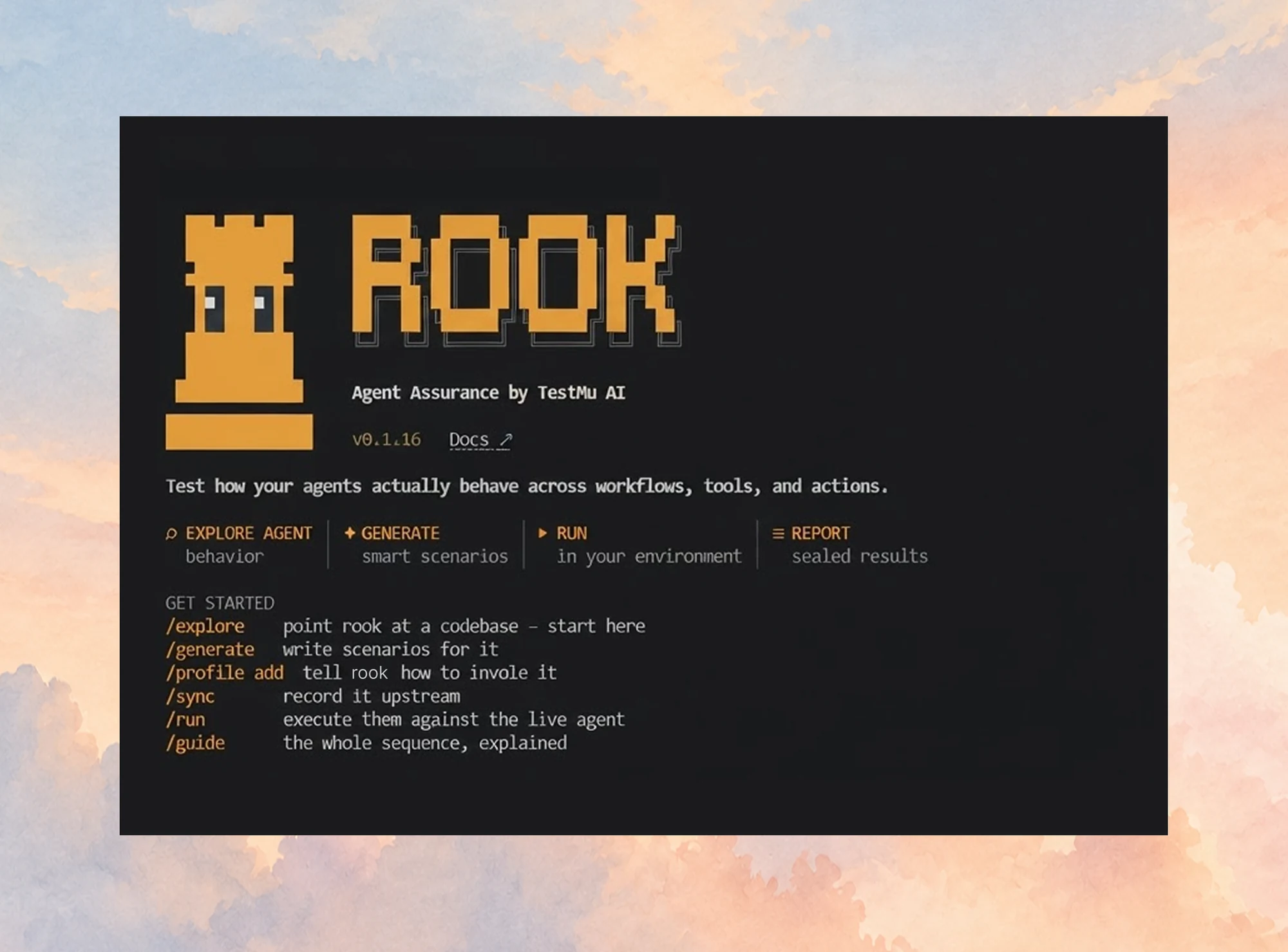
npm install -g @testmuai/rook@latest
ISO 42001: Controls, Checklist and Certification Guide
ISO 42001 is the AI management system standard. See its 38 Annex A controls, a certification checklist and audit timeline, and the test evidence AI agents need.
Published on:
OVERVIEW
A SaaS company selling an AI support agent to a bank receives the bank's vendor questionnaire, and one line cannot be answered with its SOC 2 report: is your AI management system certified to ISO/IEC 42001? ISO and IEC published that standard on December 18, 2023, as a 51-page first edition, according to its IEC Webstore listing, and a yes takes a running management system, a Statement of Applicability covering 38 Annex A controls and an audit by a certification body.
This guide summarizes the standard for planning, from the IEC Webstore listing and the standard's published preview, NIST, the EU, BSI and two certification bodies. It is not legal or audit advice and does not replace the purchased text of ISO/IEC 42001:2023.
Overview
ISO/IEC 42001 is the international standard for an AI management system (AIMS): the policies, roles, risk and impact assessments, controls and audits an organization uses to develop, provide or use AI responsibly. Published in December 2023, it lists 38 reference controls in Annex A, and accredited certification bodies can certify an organization against it.
How Many Controls Are in ISO 42001 Annex A?
- Annex A objectives: Annex A of ISO/IEC 42001 lists 38 reference controls under nine objectives, from A.2 Policies related to AI to A.10 Third-party and customer relationships. The largest objective is A.6 AI system life cycle, with nine controls.
- Statement of Applicability: An ISO/IEC 42001 Statement of Applicability records which of the 38 Annex A controls an organization applies and the reason for each exclusion, and certification auditors review it at Stage 1.
Who Issues ISO 42001 Certification?
- Certification bodies: An ISO/IEC 42001 certificate comes from a third-party certification body after a Stage 1 and a Stage 2 audit. ISO/IEC 42006:2025 sets additional requirements for the bodies that audit and certify AI management systems.
- Certificate validity: An ISO/IEC 42001 certificate is valid for three years, with surveillance audits in between and a recertification audit to renew it.
Does ISO 42001 Certification Mean EU AI Act Compliance?
- EU AI Act compliance: No. An ISO/IEC 42001 certificate is not EU AI Act compliance. Commission Implementing Decision (EU) 2026/2274 lists EN 18286:2026, on quality management systems for AI providers, as a harmonised standard, and ISO/IEC 42001 is not on that list.
Does ISO 42001 Require AI Red Teaming?
- AI red teaming: No Annex A control title names AI red teaming. Control A.6.2.4, AI system verification and validation, calls for evidence that an AI system was tested, and adversarial runs are one source of that evidence. TestMu AI's Agent Assurance produces per-criterion test evidence for AI agents and certifies nothing.
What Is ISO 42001?
ISO/IEC 42001:2023, usually shortened to ISO 42001, is the international standard for an artificial intelligence management system (AIMS). The joint ISO and IEC subcommittee on AI, ISO/IEC JTC 1/SC 42, prepared it, and its scope clause says it "specifies the requirements and provides guidance for establishing, implementing, maintaining and continually improving an AI (artificial intelligence) management system within the context of an organization."
The same clause makes it applicable to any organization, whatever its size, type and nature, that provides or uses products or services built on AI systems, so a startup shipping an agent and a bank deploying a vendor's chatbot can both certify against it. The structure below comes from the preview of the standard's opening pages that VDE Verlag publishes.
| Part | Title in the standard | Status |
|---|---|---|
| Clauses 4 to 10 | Context of the organization, Leadership, Planning, Support, Operation, Performance evaluation, Improvement | Requirements |
| Annex A | Reference control objectives and controls | Normative |
| Annex B | Implementation guidance for AI controls | Normative |
| Annex C | Potential AI-related organizational objectives and risk sources | Informative |
| Annex D | Use of the AI management system across domains or sectors | Informative |
Clauses 1 to 3 set the scope, the one normative reference (ISO/IEC 22989:2022, on AI concepts and terminology) and the definitions. The standard follows the harmonized structure of ISO management system standards, "identical clause numbers, clause titles, text and common terms and core definitions" in its introduction's words, which is why its clauses 4 to 10 line up with those of ISO/IEC 27001.
It has a European edition as well: BSI's catalog lists BS EN ISO/IEC 42001:2026, published March 31, 2026, and states that there are "no technical differences" between it and the 2023 text.
Who Needs ISO 42001 Certification?
No one is required to hold it: ISO/IEC 42001 is a voluntary standard, and each organization decides whether to adopt it and whether to seek a certificate. The ones that do are usually answering someone else's question:
- AI vendors in enterprise deals - a buyer's security or procurement review asks how the vendor governs AI, and a certificate from an accredited body is one recognized answer to that question.
- Companies with an ISO/IEC 27001 system - the shared clause structure lets them extend document control, internal audit and management review to AI instead of building a second system.
- Buyers reviewing AI suppliers - Annex A has a control for each side of the relationship, A.10.3 Suppliers and A.10.4 Customers, so a buyer can ask a supplier how it applies them.
- Teams preparing for AI regulation - an AIMS keeps in one place the risk assessments, impact assessments and test records a regulator may ask about, though, as covered below, a certificate is not compliance with the EU AI Act.
A certificate covers the organization's AI management system, not any single model or product, so it shows how AI risk is managed rather than how a given agent behaves. Buyers weighing a vendor's AI usually look at both, which is the ground the guide to AI trust covers.
What Are the ISO 42001 Requirements in Clauses 4 to 10?
Clauses 4 to 10 hold the requirements a certification audit checks. The subclause titles below are from the standard's table of contents; the evidence column lists records auditors commonly review, not text from the standard.
| Clause | Subclauses | Typical evidence |
|---|---|---|
| 4 Context of the organization | Understanding the organization and its context; needs of interested parties; scope of the AI management system; the AI management system | Scope statement, inventory of AI systems in scope |
| 5 Leadership | Leadership and commitment; AI policy; roles, responsibilities and authorities | Approved AI policy, assigned owners |
| 6 Planning | AI risk assessment (6.1.2); AI risk treatment (6.1.3); AI system impact assessment (6.1.4); AI objectives; planning of changes | Risk register, treatment plan, Statement of Applicability, impact assessments |
| 7 Support | Resources; competence; awareness; communication; documented information | Training records, document control |
| 8 Operation | Operational planning and control; AI risk assessment; AI risk treatment; AI system impact assessment | Change records, test reports, release approvals |
| 9 Performance evaluation | Monitoring, measurement, analysis and evaluation; internal audit; management review | Metrics, internal audit report, review minutes |
| 10 Improvement | Continual improvement; nonconformity and corrective action | Corrective action log |
Clause 6.1.3, AI risk treatment, is where Annex A comes in: you choose the controls your risk treatment needs, compare them with Annex A so that none is overlooked, and record in a Statement of Applicability (SoA) which controls apply and why any are excluded. LRQA's client information note on ISO/IEC 42001 audits lists the SoA among the documents its Stage 1 auditor reviews, and says its audit report names the SoA version reviewed.
What Are the 38 ISO 42001 Annex A Controls?
Annex A lists 38 controls under nine objectives, A.2 to A.10, with control numbers starting at .2 inside each objective. The titles below follow NIST's crosswalk from the AI RMF to ISO/IEC 42001, which was drafted against the final draft of the standard, so check them against your purchased copy before they go into an SoA.
| Objective | Controls |
|---|---|
| A.2 Policies related to AI (3) | A.2.2 AI policy; A.2.3 Alignment with other organizational policies; A.2.4 Review of the AI policy |
| A.3 Internal organization (2) | A.3.2 AI roles and responsibilities; A.3.3 Reporting of concerns |
| A.4 Resources for AI systems (5) | A.4.2 Resource documentation; A.4.3 Data resources; A.4.4 Tooling resources; A.4.5 System and computing resources; A.4.6 Human resources |
| A.5 Assessing impacts of AI systems (4) | A.5.2 AI system impact assessment process; A.5.3 Documentation of AI system impact assessments; A.5.4 Assessing AI system impact on individuals and groups of individuals; A.5.5 Assessing societal impacts of AI systems |
| A.6 AI system life cycle (9) | A.6.1.2 Objectives for responsible development of AI system; A.6.1.3 Processes for responsible design and development of AI systems; A.6.2.2 AI system requirements and specification; A.6.2.3 Documentation of AI system design and development; A.6.2.4 AI system verification and validation; A.6.2.5 AI system deployment; A.6.2.6 AI system operation and monitoring; A.6.2.7 AI system technical documentation; A.6.2.8 AI system recording of event logs |
| A.7 Data for AI systems (5) | A.7.2 Data for development and enhancement of AI system; A.7.3 Acquisition of data; A.7.4 Quality of data for AI systems; A.7.5 Data provenance; A.7.6 Data preparation |
| A.8 Information for interested parties (4) | A.8.2 System documentation and information for users; A.8.3 External reporting; A.8.4 Communication of incidents; A.8.5 Information for interested parties |
| A.9 Use of AI systems (3) | A.9.2 Processes for responsible use of AI systems; A.9.3 Objectives for responsible use of AI system; A.9.4 Intended use of the AI system |
| A.10 Third-party and customer relationships (3) | A.10.2 Allocating responsibilities; A.10.3 Suppliers; A.10.4 Customers |
Annex B gives implementation guidance for each control under the matching number, B.2.2 for A.2.2 and so on, and is the part to read before you decide whether a control applies to your AI systems.
How Do You Build a Statement of Applicability Starter File?
A short Node.js script turns the 38 controls into a CSV with one row per control and empty columns for whether it applies and why, and marks the 10 controls that the evidence map in the next section pairs with agent test runs. It ran on November 20, 2026, under Node.js 25.5.0 on Windows:
import { writeFileSync } from "node:fs";

// Annex A controls of ISO/IEC 42001, titles as NIST's
// AI RMF to ISO/IEC 42001 crosswalk lists them
const annexA = [
  ["A.2", "AI policy"],
  ["A.2", "Alignment with other organizational policies"],
  ["A.2", "Review of the AI policy"],
  ["A.3", "AI roles and responsibilities"],
  ["A.3", "Reporting of concerns"],
  ["A.4", "Resource documentation"],
  ["A.4", "Data resources"],
  ["A.4", "Tooling resources"],
  ["A.4", "System and computing resources"],
  ["A.4", "Human resources"],
  ["A.5", "AI system impact assessment process"],
  ["A.5", "Documentation of AI system impact assessments"],
  ["A.5", "Assessing AI system impact on individuals and groups of individuals"],
  ["A.5", "Assessing societal impacts of AI systems"],
  ["A.6.1", "Objectives for responsible development of AI system"],
  ["A.6.1", "Processes for responsible design and development of AI systems"],
  ["A.6.2", "AI system requirements and specification"],
  ["A.6.2", "Documentation of AI system design and development"],
  ["A.6.2", "AI system verification and validation"],
  ["A.6.2", "AI system deployment"],
  ["A.6.2", "AI system operation and monitoring"],
  ["A.6.2", "AI system technical documentation"],
  ["A.6.2", "AI system recording of event logs"],
  ["A.7", "Data for development and enhancement of AI system"],
  ["A.7", "Acquisition of data"],
  ["A.7", "Quality of data for AI systems"],
  ["A.7", "Data provenance"],
  ["A.7", "Data preparation"],
  ["A.8", "System documentation and information for users"],
  ["A.8", "External reporting"],
  ["A.8", "Communication of incidents"],
  ["A.8", "Information for interested parties"],
  ["A.9", "Processes for responsible use of AI systems"],
  ["A.9", "Objectives for responsible use of AI system"],
  ["A.9", "Intended use of the AI system"],
  ["A.10", "Allocating responsibilities"],
  ["A.10", "Suppliers"],
  ["A.10", "Customers"],
];

// Controls this guide's evidence map pairs with agent tests
const testEvidence = new Set([
  "A.5.4", "A.6.2.2", "A.6.2.4", "A.6.2.5", "A.6.2.6",
  "A.6.2.8", "A.7.4", "A.8.4", "A.9.4", "A.10.3",
]);

// Number controls from .2 within each group, as Annex A does
const seen = {};
const rows = annexA.map(([group, title]) => {
  seen[group] = (seen[group] || 1) + 1;
  return { id: `${group}.${seen[group]}`, title };
});

const perObjective = {};
for (const r of rows) {
  const obj = r.id.split(".").slice(0, 2).join(".");
  perObjective[obj] = (perObjective[obj] || 0) + 1;
}

const q = (s) => `"${s.replace(/"/g, '""')}"`;
const csv = ["control,title,applies,justification,evidence"];
for (const r of rows) {
  const ev = testEvidence.has(r.id) ? "agent test run" : "";
  csv.push([r.id, q(r.title), "", "", ev].join(","));
}
writeFileSync("soa-starter.csv", csv.join("\n") + "\n");

console.log("Annex A controls per objective");
for (const [obj, n] of Object.entries(perObjective)) {
  console.log(`  ${obj.padEnd(5)} ${String(n).padStart(2)}`);
}
console.log(`Total controls: ${rows.length}`);
const paired = rows.filter((r) => testEvidence.has(r.id));
console.log(`Paired with agent test evidence: ${paired.length}`);
for (let i = 0; i < paired.length; i += 5) {
  console.log("  " + paired.slice(i, i + 5).map((r) => r.id).join(" "));
}
console.log(`Wrote soa-starter.csv: ${csv.length - 1} rows`);
Saved as soa-starter.mjs and run with node soa-starter.mjs, it printed:
Annex A controls per objective
  A.2    3
  A.3    2
  A.4    5
  A.5    4
  A.6    9
  A.7    5
  A.8    4
  A.9    3
  A.10   3
Total controls: 38
Paired with agent test evidence: 10
  A.5.4 A.6.2.2 A.6.2.4 A.6.2.5 A.6.2.6
  A.6.2.8 A.7.4 A.8.4 A.9.4 A.10.3
Wrote soa-starter.csv: 38 rows
Open the CSV in a spreadsheet, fill the applies and justification columns from your risk treatment, and replace each "agent test run" cell with the run ID or report that holds the evidence.
What Evidence Do ISO 42001 Auditors Expect for AI Agents?
Auditors sample records to see controls working, not only written down. LRQA's note says its Stage 2 audit includes "functional testing" of the documentation requirements, controls, committees, risk assessment processes, reporting processes and complaint handling the standard lists.
For an AI agent, several Annex A controls can only be shown working with records of what the agent did when it was tested. The map below is this guide's suggestion for those controls: the standard does not prescribe it, and your auditor decides what evidence is enough.
| Control | What an auditor may ask | Test evidence to file | Pass criterion you set |
|---|---|---|---|
| A.6.2.2 Requirements and specification | Were acceptance criteria written before the build? | Scenarios generated from the PRD or policy documents, each with acceptance criteria, versioned with the requirements | Every requirement maps to at least one scenario |
| A.6.2.4 Verification and validation | Was this release tested against its requirements? | A functional and adversarial run on each release candidate, with a verdict per criterion | No failed critical criterion; unverified criteria listed, not dropped |
| A.6.2.5 Deployment | Who approved the release, on what evidence? | The release gate's decision, tied to the run's ID | The release is blocked when the gate fails |
| A.6.2.6 Operation and monitoring | Would you notice a change in behavior after release? | Reruns of the same suite with run-over-run results, kept beside production monitoring | A newly failing scenario opens a ticket |
| A.6.2.8 Recording of event logs | Can you rebuild what the agent did? | A test criterion that every tool call made in the run appears in the agent's own log | No tool call from the run is missing from the log |
| A.5.4 Impact on individuals and groups | Do outcomes differ across groups of users? | The same scenarios run with personas that vary language, region and intent | No material gap in outcomes between personas |
| A.7.4 Quality of data | Is the knowledge base the agent answers from accurate? | Checks of answers against the source documents | Unsupported claims stay below the threshold you set |
| A.8.4 Communication of incidents | Would the right people hear about an AI incident? | A drill that feeds a failing test transcript through the incident process | The named owners are told within your target time |
| A.9.4 Intended use | Does the agent stay inside its intended use? | Out-of-scope and misuse scenarios | No out-of-scope action is executed |
| A.10.3 Suppliers | How do you check third-party models and tools? | The same suite rerun when a model or vendor version changes | No regression on critical criteria |
Keep the judging independent of the agent under test, so an agent's report that it issued a refund is checked against the refund record rather than taken as proof. List every criterion a test could not verify, too, with the evidence that would settle it, instead of leaving it out of the file.
- Event logs - the records that let a reviewer rebuild one run step by step are covered in AI agent tracing.
- Behavior after release - production checks that sit beside the reruns are covered in AI agent monitoring.
- Answers against sources - the check behind the A.7.4 row is explained in the guide to groundedness.
- Incident deadlines - who must be told, and when, is covered in AI incident reporting.
- Release decisions - the guide to AI agent validation has a table of the changes that should send an agent back through the A.6.2.4 tests.
How Do You Get ISO 42001 Certification?
Certification is a third-party audit of your AIMS by a certification body. ISO/IEC 42006:2025, published July 7, 2025, adds requirements to ISO/IEC 17021-1, the general standard for bodies that certify management systems, for bodies that audit and certify AI management systems. A typical path to an ISO 42001 certificate runs in nine steps:
- Scope the AIMS - list the AI systems, products, sites and teams it covers, and your role for each system, such as provider or user (clauses 4.1 and 4.3).
- Set the AI policy and owners - top management approves the AI policy (5.2) and assigns roles and authorities (5.3).
- Assess risks and impacts - run the AI risk assessment (6.1.2) and the AI system impact assessment (6.1.4), covering individuals, groups and society.
- Treat risks and write the SoA - choose controls, compare them with Annex A and justify every exclusion (6.1.3).
- Implement controls and collect evidence - including test runs for A.6.2.4 and monitoring records for A.6.2.6, kept for each release.
- Hold an internal audit and a management review - LRQA's Stage 2 audit confirms that at least one of each, covering the scope, has taken place (9.2, 9.3).
- Choose a certification body - ask whether it is accredited for ISO/IEC 42001 and how it applies ISO/IEC 42006. An optional gap analysis, which LRQA offers, finds weak areas before the formal audit.
- Pass Stage 1 and Stage 2 - per LRQA, Stage 1 reviews your documents, scope, risk process and selected controls and plans Stage 2, which confirms that your policies and procedures are effectively put into practice and that the management system meets the standard.
- Keep it running - surveillance audits check that the AIMS is maintained and improving, and a recertification audit renews the certificate on a three-year cycle.
A certification audit of an AI management system is one kind of AI audit; bias audits and compliance audits of single systems run against their own criteria.
How Long Does ISO 42001 Certification Take?
The audits take days; most of the calendar goes on building the AIMS and running it long enough to have an internal audit and a management review on file. Schellman, an accredited certification body, gives these durations in its ISO 42001 guide, last updated June 16, 2026:
| Stage | Typical effort (Schellman) |
|---|---|
| Stage 1 audit | 1 to 2 days |
| Gap before Stage 2 | Typically 4 to 12 weeks, and no more than six months |
| Stage 2 audit | 3 to 9+ days |
| Surveillance audit | Annual, 2 to 5+ days depending on the personnel in scope, about one third of the initial audit time |
| Certificate validity | Three years |
LRQA's note describes a Stage 1 visit that usually lasts two days, surveillance visits that normally take place every six months and certificate renewal every three years, so ask your certification body for its own schedule. Neither page lists prices; audit fees generally follow the number of audit days, which depend on:
- Scope - the number of AI systems, products and sites inside the AIMS.
- People in scope - Schellman ties the length of surveillance audits to the number of personnel in scope.
- Existing management systems - an ISO/IEC 27001 system already supplies document control, internal audit and management review.
- Readiness - issues found at Stage 1 delay Stage 2, and a gap analysis surfaces them earlier.
- Evidence - controls such as A.6.2.4 need records from real test runs, which take release cycles to build up.
What Is on an ISO 42001 Checklist?
This ISO 42001 checklist follows the clauses and adds the Annex A controls an AI agent team most often needs evidence for. Each line is a record an auditor can ask to see:
- AIMS scope - a scope statement that names every AI system and agent in production or pilot, and your role for each (4.1, 4.3).
- AI policy - approved by top management (5.2, A.2.2) and reviewed on a set schedule (A.2.4).
- Owners and concerns - a named owner for each AI system (A.3.2) and a channel for reporting concerns (A.3.3).
- Resource register - the data, tooling, computing and people each system relies on (A.4.2 to A.4.6).
- Risk register - likelihood, impact and treatment for each AI risk (6.1.2, 6.1.3).
- Impact assessments - for individuals, groups and society (6.1.4, A.5.2 to A.5.5).
- Statement of Applicability - all 38 Annex A controls, each marked as applied or excluded with a reason.
- Data records - provenance, quality criteria and preparation steps for the data used to build or improve each system (A.7.2 to A.7.6).
- Test evidence - a filed record for each evidence-map control above, for the current release.
- Incident communication - a documented route for telling users and interested parties about AI incidents (A.8.4).
- Internal audit and management review - at least one of each completed, with findings closed (9.2, 9.3, 10.2).
- Certification body - its accreditation for ISO/IEC 42001 confirmed before you sign.
How Does ISO 42001 Compare With ISO 27001 and the NIST AI RMF?
ISO/IEC 42001 and ISO/IEC 27001 are management system standards that accredited bodies certify against, while the NIST AI Risk Management Framework carries no certificate. Many teams use all three:
| Aspect | ISO/IEC 42001 | ISO/IEC 27001 | NIST AI RMF 1.0 |
|---|---|---|---|
| What it covers | An AI management system across the AI system life cycle | An information security management system | Managing the risks of AI systems |
| Certificate | Yes, from certification bodies, with ISO/IEC 42006 setting extra requirements for them | Yes, from certification bodies | No; NIST says the framework is "intended to be voluntary" |
| Structure | Clauses 4 to 10, plus 38 controls in Annex A | Clauses 4 to 10, plus information security controls in Annex A | Four functions, GOVERN, MAP, MEASURE and MANAGE, split into categories and subcategories |
| Where agent test evidence fits | A.6.2.4 verification and validation, A.6.2.6 operation and monitoring | Security testing among its information security controls | The MEASURE function, which says AI systems "should be tested before their deployment and regularly while in operation" |
Both quotes in the NIST column are from NIST AI 100-1, the framework itself. The shared clause structure lets an organization certified to ISO/IEC 27001 run one management system with AI added, and teams that report against the NIST AI RMF can trace their records to ISO/IEC 42001 through the NIST crosswalk cited above, so one set of test runs can serve both.
Does ISO 42001 Certification Mean EU AI Act Compliance?
No. ISO/IEC 42001 is voluntary, and the AI Act's obligations are law. Under Article 40 of the AI Act, high-risk AI systems that conform to harmonised standards whose references are published in the EU's Official Journal are presumed to meet the requirements those standards cover.
Commission Implementing Decision (EU) 2026/2274 of October 12, 2026, published in the Official Journal on October 14, lists one such standard, EN 18286:2026, on quality management systems for providers of AI systems, including post-market monitoring processes. ISO/IEC 42001 is not on that list, so a team selling high-risk AI in the EU should map its AIMS against EN 18286 rather than rely on a 42001 certificate. What Article 9 asks providers to test is covered in EU AI Act conformity testing.
How Can Agent Assurance Produce Test Evidence for ISO 42001?
For the test records behind controls such as A.6.2.4, TestMu AI's Agent Assurance tests AI agents that take actions, such as a support agent that issues refunds, before each release. What it produces is evidence for your SoA working file and your auditor: Agent Assurance maps to no ISO/IEC 42001 control, and whether a control is met is for your auditor to decide.
- Scenarios from your documents - Rook CLI, its command-line client, reads the agent's code, PRD or policy documents and generates functional and adversarial scenarios, each with acceptance criteria, that you can version next to your A.6.2.2 requirements.
- Verdicts from what the run did - each criterion gets Pass, Fail or Unable to Verify from observed evidence: quoted output, the tool calls and state changes the profile's hooks report, or a read-only check through a tool you approve. Model judges decide some criteria, and the agent's own account of an action never counts as proof.
- Gaps kept apart - Unable to Verify never enters the pass rate, and the report names each verification gap with the profile field or tool that would close it, so the file shows what nobody could check.
- Attack references - adversarial scenarios carry references to the OWASP Top 10 for LLM Applications (2025), the OWASP Top 10 for Agentic Applications (2026) and MITRE ATLAS, as security coverage rather than compliance; the OWASP lists are explained in the guide to LLM security.
- Run files and CI gates - every run is stored as plain files in your project, and
rook report --jsongives the verdict totals a release gate reads. An exit code of 0 alone does not mean the scenarios passed, so gate on the report, as the Agent Assurance CI/CD docs show. - Run-over-run results - rerunning the same suite on each release shows the pass-rate change and the scenarios that newly fail or were fixed, one input to A.6.2.6 beside your production monitoring; Agent Assurance does not watch production traffic.
Conversational agents go through TestMu AI's Agent Testing, which tests chat, voice, phone, video and image agents, and its Go-Live assessment rolls chat, voice and phone results into a Green, Yellow or Red readiness verdict. Its AI red teaming runs adversarial scenario suites aligned with the OWASP Top 10 for LLM applications, such as prompt injection, jailbreak, data exfiltration and PII leakage.
The agent's writes during a test are real and are not rolled back, so run tests against staging with synthetic data, and redact personal data and credentials from run files before an auditor sees them. The Agent Assurance results and evidence docs show what each run file records.
Agent Assurance is generally available on self-serve plans. Per the Rook CLI installation guide, a new organization can start a 14-day free trial with 4,000 credits, and the pricing page lists the Agent Assurance plans. Install Rook CLI from npm:
npm install -g @testmuai/rook@latest- Node.js 20 for npm - Rook CLI installs on macOS and Linux, and 64-bit Windows through npm or WSL; the npm route needs Node.js 20 or newer.
- Homebrew -
brew install lambdatest/rook/rookinstalls it on macOS and Linux and needs no Node.

Where Should You Start With ISO 42001?
Start with the scope: list every AI system and agent you build, sell or use, name an owner for each, and run the SoA starter script so the 38 controls sit next to that list. Then take the agent closest to an enterprise deal through the evidence map one release at a time, and hold the internal audit early enough that Stage 2 finds one on file.
If the rules behind your AIMS still need writing, the guide to building an AI governance framework turns the EU AI Act, ISO/IEC 42001 and the NIST AI RMF into owners, risk tiers and tested controls. To produce the test evidence, install Rook CLI with the npm command above and point it at a staging copy of that agent; for an Enterprise plan, Book a Demo.

Note: This article was researched and drafted with AI assistance, then reviewed, fact-checked, and published by Sirajuddin Khan, Vice President of Product Management at TestMu AI, whose listed expertise includes agentic AI and GenAI product strategy. Vipul Verma, Group Senior Vice President of Engineering at TestMu AI, reviewed it for technical accuracy. Every statistic, link, and product claim was verified against primary sources: the IEC Webstore listings and the standard's published preview, NIST, the EU's Official Journal and AI Act Service Desk, BSI, the certification bodies LRQA and Schellman, and TestMu AI's product documentation. Read our editorial process and AI use policy for details.
Author

Sirajuddin Khan
Blogs: 10

Sirajuddin Khan is Vice President of Product Management at TestMu AI, where he drives the company's agentic AI product strategy, building a suite of autonomous agents that includes Agentic Browsers and Agentic Visual Testing and shifting the unit of work from test execution to autonomous outcomes. One of the company's earliest product leaders, he has owned the roadmap for the high-performance execution cloud and grew the cross-browser testing products from early adoption to market leadership. He brings over a decade of experience across SaaS, B2B, and eCommerce, with earlier product roles at Wydr and ShopClues, where his catalog and search work cut delivery SLAs and lifted seller activity. Sirajuddin holds an MBA in Information Technology from Sikkim Manipal University and a B.Tech in Computer Science Engineering from Maharshi Dayanand University.
Reviewer

Vipul Verma
Reviewer
Vipul Verma is Group Senior Vice President of Engineering at TestMu AI, where he heads the entire engineering organization that builds KaneAI, HyperExecute, and the broader testing cloud. He brings 15+ years architecting, securing, and scaling large enterprise applications across multiple sites. Before TestMu AI he was India Head at LogicHub, where he built the India R&D site from the first employee to a 30-plus engineering team, and Principal Software Engineer at Sumo Logic, where he was the first engineer in the India office and shipped search-performance and pricing-model initiatives. Earlier he worked on trading platforms at Portware and D. E. Shaw. Vipul holds a B.Tech in Computer Science from IIT Kharagpur.


ISO 42001 FAQs
Did you find this page helpful?
More Related Learning Hubs

TestMu AI forEnterprise
Get access to solutions built on Enterprise
grade security, privacy, & compliance
- Advanced access controls
- Advanced data retention rules
- Advanced Local Testing
- Premium Support options
- Early access to beta features
- Private Slack Channel
- Unlimited Manual Accessibility DevTools Tests