

Power Your Software Testing with AI Agents and Cloud
The Native AI-Agentic Cloud Platform to Supercharge Quality Engineering. Test Intelligently and Ship Faster.


- TestMu AI (Formerly LambdaTest)
- /
- Blog
- /
- Testing a Data Science Model [Testμ 2023]
Testing a Data Science Model [Testμ 2023]
Dive into Laveena Ramchandani's session on testing data science models. Learn strategies, challenges, and best practices for model quality and accuracy.
Last Updated on:
Testing a data science model means verifying that the statistical algorithms and machine learning techniques behind it turn historical data into reliable predictions, not lucky guesses. At Testμ 2023, Easyjet test manager Laveena Ramchandani broke this down by data type, from structured and semi-structured records to raw unstructured data, and by the systematic process test teams should follow.
Throughout the session, the speaker covered a variety of essential topics, including:
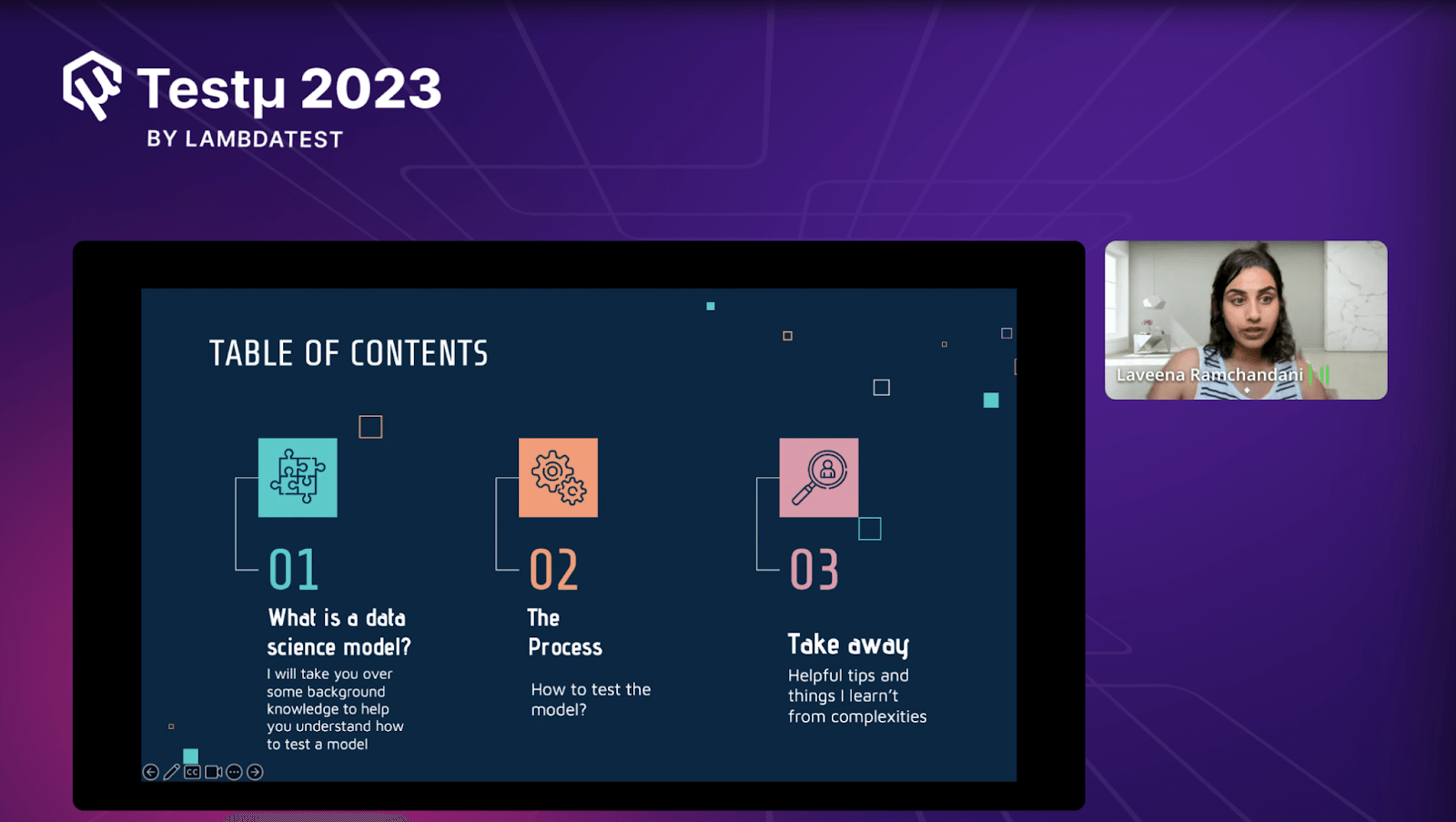
Understanding Data Science Models
The speaker clearly explained what data science models are and their role in predicting outcomes based on historical data. She emphasized the importance of using statistical algorithms and machine learning techniques to reveal hidden patterns.

Types of Data
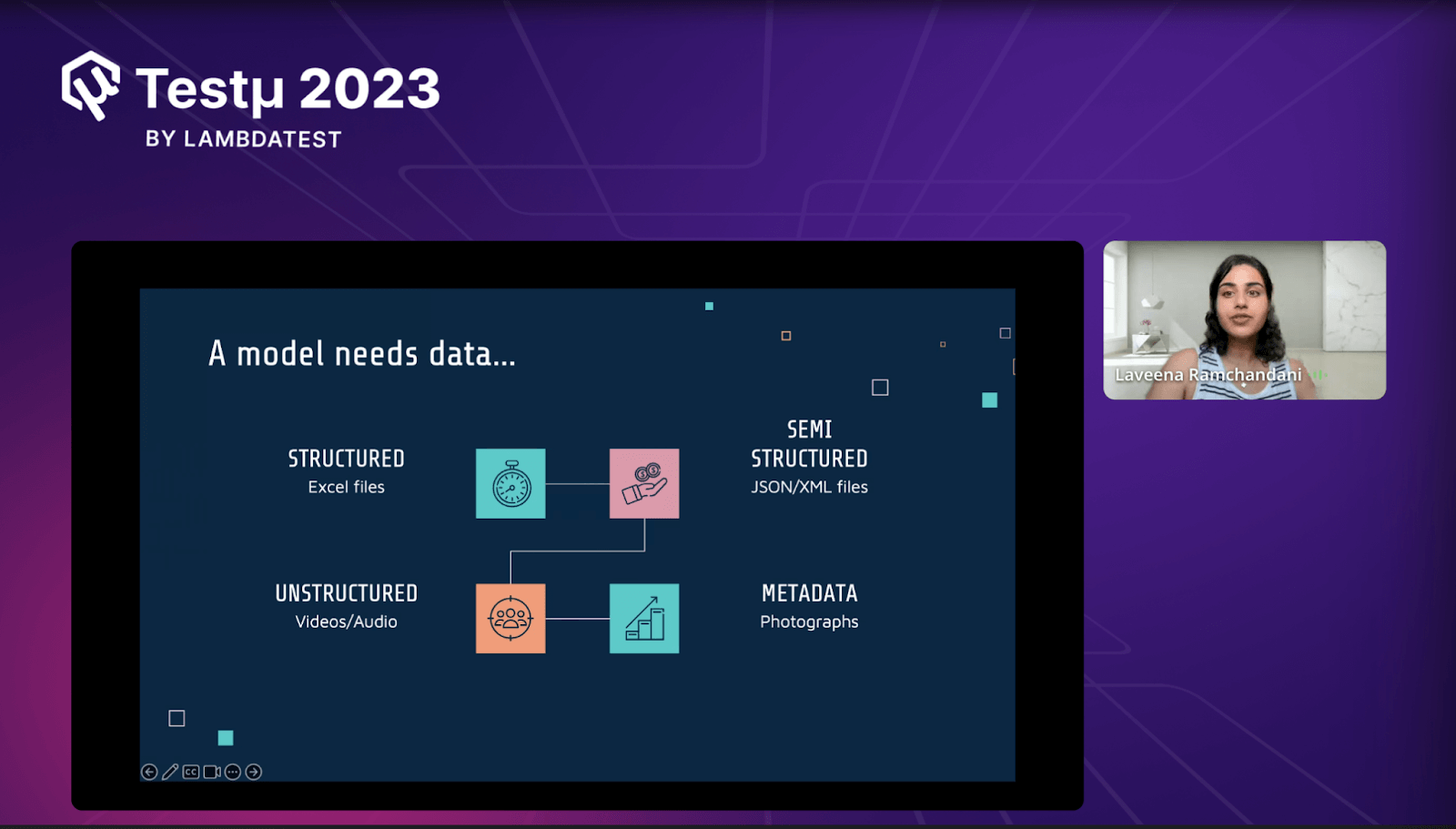
The speaker introduced the different data types that can be used in data science models, ranging from structured and semi-structured data to unstructured data and metadata.
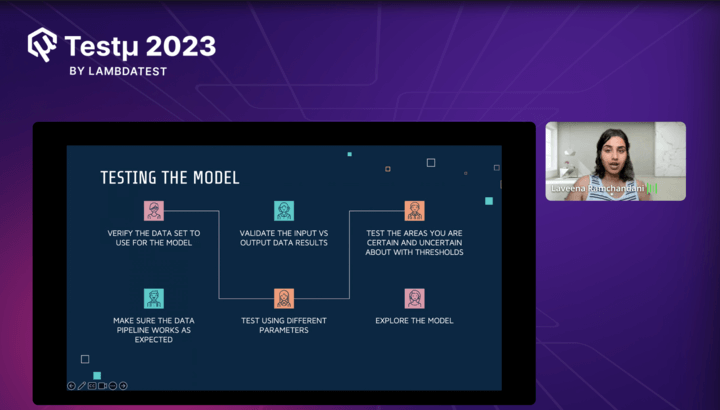
Testing Process
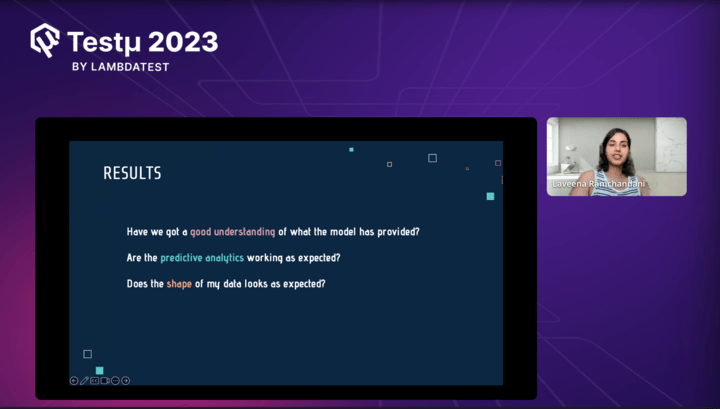
The speaker shared a systematic approach to testing data science models, from understanding requirements and design to implementation, testing, and post-run analysis. She stressed the importance of collaboration between testers, data scientists, and business analysts throughout the process.
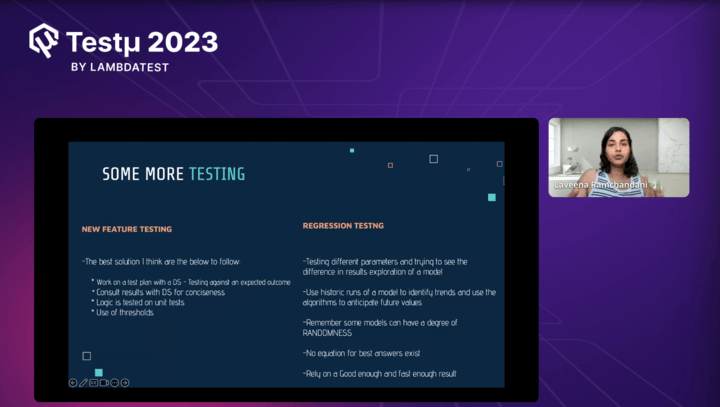
Regression Testing and New Features
The session discussed the significance of regression testing for data science models. The speaker emphasized comparing results from different runs to identify anomalies and assess the model’s performance over time. She also discussed the importance of testing new features and the need to work closely with data scientists to understand and validate the logic behind these features.
Handling Complexities
The speaker addressed potential complexities and challenges, such as handling large volumes of data and dealing with stochastic outcomes. She encouraged collaboration with data engineers to ensure accurate analysis and testing of complex data sets.
Automation
While acknowledging that full automation of data science model testing is not achievable due to the unique nature of these models, The speaker suggested automating aspects such as result comparisons and threshold validations. However, she emphasized the need for human expertise and intuition in assessing model outcomes.
Data Privacy and GDPR
The speaker reminded us of the importance of respecting data privacy regulations, especially when dealing with client data. She recommended anonymizing or creating a golden test data set for testing purposes while ensuring compliance with data protection policies.
Best Practices and Tips
The session concluded with the speaker sharing valuable best practices, including effective communication and collaboration, reliance on precision and thresholds, and continuous learning about data science models’ statistical and mathematical aspects.
In essence, The speaker’s session provided a comprehensive guide for testers venturing into the realm of data science models. Her insights shed light on the intricacies and challenges of testing these models while offering practical tips for achieving quality and accuracy. This session is a valuable resource for testers, developers, data scientists, and anyone interested in ensuring the reliability and effectiveness of data science models in real-world applications.
Time for a Q&A session!
Q: How can we manage analyzing a large volume of data efficiently, especially in a fast-paced environment?
Speaker: In a fast-paced setting, quickly assess data by sampling examples from each file to create a golden set. For extensive datasets, collaborate with a data engineer embedded in the team to analyze and understand the data. Sharing assumptions or ambiguities with the data engineer helps address complexities effectively.
Q: How about dealing with massive volumes of data for testing?
Speaker: When faced with substantial datasets, consider working alongside a data engineer. Collaborate to select crucial test scenarios, edge cases, and bug scenarios to create an internal test dataset mirroring client data. This eliminates the need for large client data volumes while covering essential testing scenarios.
Q: What are the objectives and expected outcomes of introducing a new feature, particularly involving a data science model?
Speaker: Before testing, align on the new feature’s nature – whether a new algorithm or an enhancement. Anticipate how this change influences model behavior and results. Use the “Three Amigos” session to address uncertainties and collaboratively create a preliminary test plan. This ensures clear communication among developers, business analysts, and testers.
For more information & queries, visit TestMu AI Community
Author

TestMu AI
Blogs: 291


TestMu AI is World's First Full Stack AI Agentic Quality Engineering platform that empowers teams to test intelligently, smarter, and ship faster. Built for scale, it offers a full-stack testing cloud with 10K+ real devices and 3,000+ browsers. With AI-native test management, MCP servers, and agent-based automation, TestMu AI supports Selenium, Appium, Playwright, and all major frameworks. AI Agents like HyperExecute and KaneAI bring the power of AI and cloud into your software testing workflow, enabling seamless automation testing with 120+ integrations. TestMu AI Agents accelerate your testing throughout the entire SDLC, from test planning and authoring to automation, infrastructure, execution, RCA, and reporting.


Did you find this page helpful?
More Related Blogs
TestMu AI forEnterprise
Get access to solutions built on Enterprise
grade security, privacy, & compliance
- Advanced access controls
- Advanced data retention rules
- Advanced Local Testing
- Premium Support options
- Early access to beta features
- Private Slack Channel
- Unlimited Manual Accessibility DevTools Tests