
Power Your Software Testing with AI Agents and Cloud
The Native AI-Agentic Cloud Platform to Supercharge Quality Engineering. Test Intelligently and Ship Faster.

- TestMu AI (Formerly LambdaTest)
- /
- Blog
- /
- Kimi K3.1 Pro: Benchmarks, API Changes, and Open Weights
Kimi K3.1 Pro: Benchmarks, API Changes, and Open Weights
Kimi K3.1 Pro is Moonshot AI's open-weight 3T-class model with a 1M-token context. See its benchmarks, where it trails, the API changes, and what to retest.
Published on:
Kimi K3.1 Pro scores 65.7% on Terminal-Bench 4.0, a benchmark of coding agents working on resource-constrained terminal tasks, against 66.4% for Claude Opus 5.5 and 58.2% for GPT-6 Astra in Moonshot AI's K3.1 Pro launch post. Moonshot calls it its most capable 3T-class open-weight model to date.
The same launch table shows the rows Kimi K3.1 Pro loses, and its API fixes the sampling settings many test suites depend on. Both decide what you retest before you move a coding agent or a chat product onto it.
TL;DR
Kimi K3.1 Pro is Moonshot AI's open-weight 3T-class model for coding and agentic work, a post-trained version of Kimi K3 with a 1-million-token context window. It exists to match or approach the strongest proprietary models on long-horizon coding and agent tasks, and it is live on Kimi.ai, Kimi Work, Kimi Code and the Kimi API.
- Open weights: Is Kimi K3.1 Pro open source? It is open-weight, and Moonshot says the full weights will be released by November 4, 2026. The launch post does not state a license for them; Kimi K3 shipped under a custom Kimi K3 License.
- Terminal-Bench 4.0: Kimi K3.1 Pro scores 65.7 against 66.4 for Claude Opus 5.5 and 58.2 for GPT-6 Astra. Moonshot ran K3.1 Pro's agentic coding benchmarks in the Claude Code harness at max reasoning effort.
- Claude Opus 5.5: Does Kimi K3.1 Pro beat Claude Opus 5.5 overall? No. K3.1 Pro has the top score on 16 of the 47 rows in Moonshot's own table, and it trails Claude Opus 5.5 on ProgramBench, 31.5 against 65.0.
- Thinking mode: Can you turn off thinking in Kimi K3.1 Pro? No. Thinking is always on, reasoning_effort accepts low, high or max, and temperature and top_p are fixed at 1.0 and 0.95.
- Kimi K2 retirement: Can you still use Kimi K2.6? Yes, if your account already exists. Newly registered users lose access to the K2 series on October 31, 2026, and Moonshot plans to retire all K2 series models by the end of December 2026.
- Highspeed variant: kimi-k3.1-pro-highspeed offers the same intelligence as kimi-k3.1-pro at 2-3x the speed, for more responsive interactions.
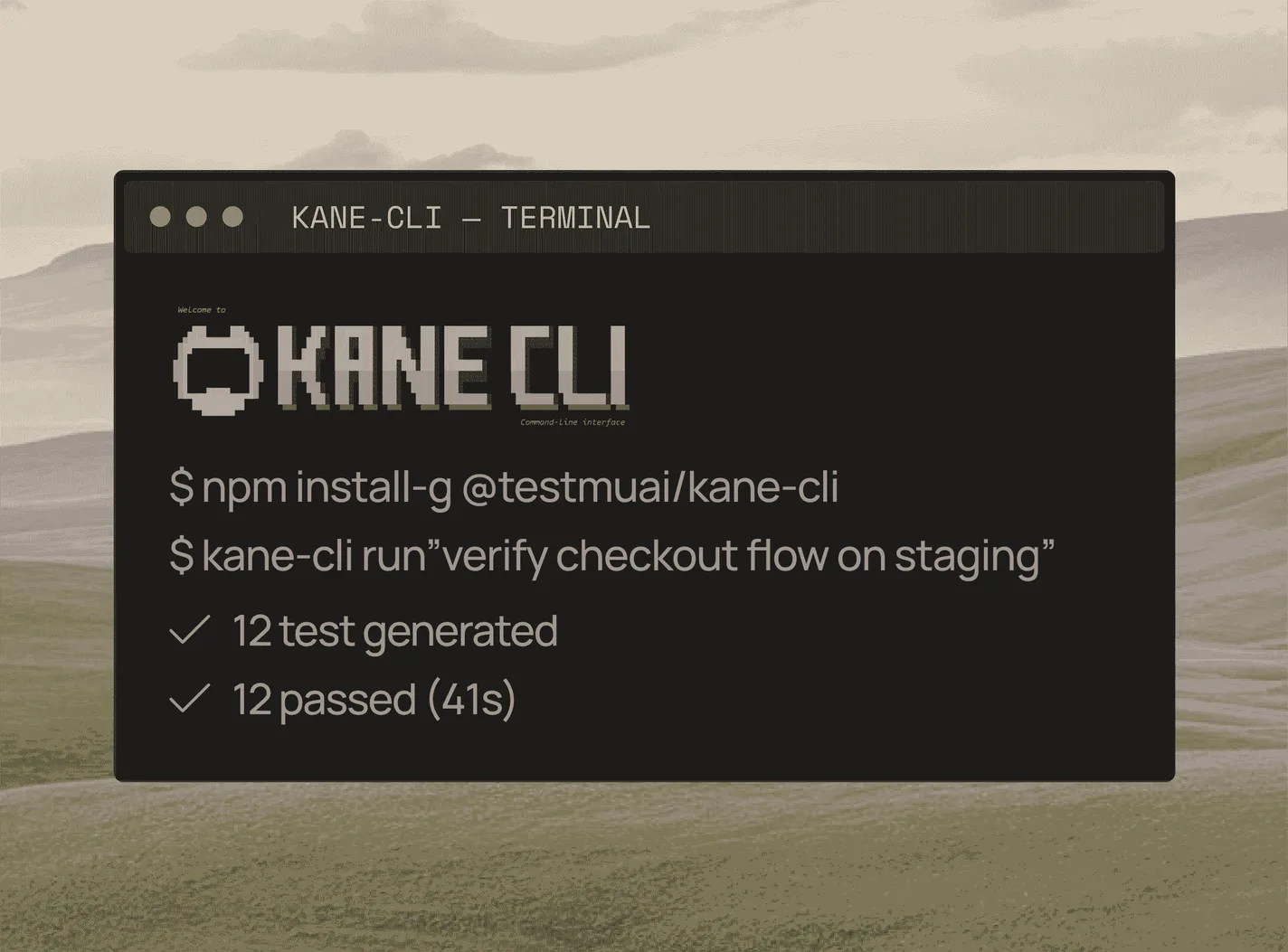
- Rendered-UI checks: TestMu AI's Kane CLI opens the page a K3.1 Pro coding agent builds in a real Chrome browser and returns an evidence-backed pass or fail that the agent can read before it reports the task done.
What Is Kimi K3.1 Pro?
Kimi K3.1 Pro is the first model in Moonshot AI's K3.1 series and a post-trained version of Kimi K3, so it keeps K3's architecture.
The Kimi K3 post describes K3 as a 2.8 trillion-parameter model built on Kimi Delta Attention and Attention Residuals that activates 16 of its 896 experts, with native vision and a 1-million-token context window.
Moonshot credits the new model to a much larger post-training run: joint reinforcement learning across hundreds of downstream domains, with the RL framework, long-context inference, sandbox infrastructure and rollout scheduling reworked so each increment of RL compute returns stable gains.
Kimi's models page lists kimi-k3.1-pro and kimi-k3.1-pro-highspeed as the API model IDs for the new K3.1 series:
- kimi-k3.1-pro - The flagship model, with native visual understanding, a 1M-token context window, and improvements in coding, 3D creation and financial research.
- kimi-k3.1-pro-highspeed - The high-speed variant, which Kimi describes as the same intelligence at about 2-3x the speed.
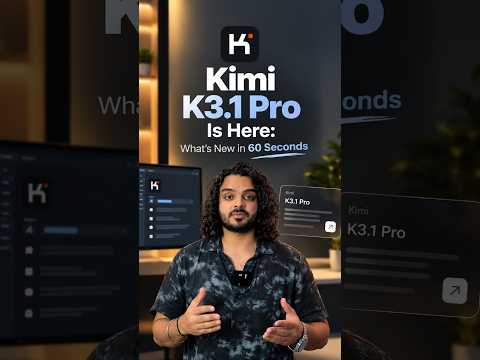
TestMu AI's short video covers what changed in K3.1 Pro, how it scores against GPT-6 Astra and Claude Opus 5.5, where to use it today, and how to check that AI-written code works:
New Capabilities in Kimi K3.1 Pro
The launch post reports gains across coding, 3D creation, financial research and other agentic work, from full-project builds to CAD scripts and finance research that has to hold up to a fact check.
Coding and 3D Creation
K3.1 Pro works across game engines such as Unity, Unreal Engine and Godot, combining them with web search and 3D generation. Moonshot says its front-end pages, interactive Three.js scenes and 3D assets show stronger composition, typography and animation, and every coding showcase in the post was built end to end by the model.
In one internal long-horizon coding test, K3.1 Pro built a human walking simulator with training and evaluation pipelines on top of human-atlas, an open-source anatomical model:
- Scope - 167 missions and 420 independent reviews, with the model analyzing results, diagnosing problems and refining the walking controller between runs.
- Result - The simulated human went from collapsing within seconds to walking with alternating strides for 11.2 seconds.
- Debugging - When reward shaping stopped improving arm motion, the model ran open-loop probes of the simulator, found and fixed 36 errors in its shoulder-muscle moment-arm calculations, and then retrained the controller.
For 3D work, K3.1 Pro writes and runs scripts for Blender and CAD software directly, without MCP connectors. Moonshot also launched 3D Make on kimi.ai and the Kimi app, where you preview and edit the models it creates and download them ready for 3D printing.

Note: K3.1 Pro's showcase apps are games, Three.js scenes and front-end pages. TestMu AI's Kane CLI checks a running page like these in real Chrome and seals per-step screenshots, network logs and console output into one evidence pack you can review. Create a free TestMu AI account
Finance and Factual Accuracy
Moonshot says financial analysis and investment research demand a high degree of factual accuracy, and it made targeted improvements there. It reports these results against Kimi K3 on its internal finance and accuracy tests:
- Financial modeling - 57.6 against 50.4 for K3, a 7.2-point gain on formula linkage, financial logic and final workbook quality.
- Financial research - 70.4 against 58.8, an 11.6-point gain on producing auditable research under evidence and cutoff constraints.
- Business operation - About 4.2x K3's score on long-horizon management and decision-making in a simulated business.
- Hallucination rate - On Kimi Hallu Bench Hard, the claim-level hallucination rate fell from 23.4% for K3 to 8.3%. Moonshot notes the prompts are built to provoke errors, so these are not everyday error rates.
- OfficeQA Pro v2 - 64.4, the top score in Moonshot's table, on fiscal analysis over real financial documents supplied only as page images.
Kimi K3.1 Pro Benchmarks
Every score below comes from Moonshot's launch table. K3.1 Pro ran at max reasoning effort, temperature 1.0 and top-p 0.95, in the Claude Code harness for the agentic coding rows, and Moonshot labels the proprietary models' results as max effort with fallback. The best score in each row is in bold.
| Coding benchmark | K3.1 Pro | Opus 5.5 | GPT-6 Astra | Fable 5.1 | DeepSeek V4.1 Flash | GLM-5.3 |
|---|---|---|---|---|---|---|
| Terminal-Bench 4.0 | 65.7 | 66.4 | 58.2 | 57.9 | 42.3 | 41.8 |
| SWE-Marathon v1.1 | 51.7 | 46.3 | 42.5 | 45.6 | 40.0 | 42.5 |
| DeepSWE v1.1 | 75.5 | 74.2 | 74.1 | 67.4 | 77.0 | 66.9 |
| ProgramBench (binary score) | 31.5 | 65.0 | 50.0 | 53.5 | 29.1 | 19.0 |
| Terminal-Bench-Science 0.1 | 38.1 | 63.3 | 68.1 | 40.0 | 15.7 | 8.1 |
| PostTrainBench v1.2 | 36.5 | 43.8 | 41.9 | 44.6 | 30.5 | 34.5 |
| Kimi Code Bench 3.0 Long-horizon (internal) | 61.2 | 58.5 | 66.5 | 58.8 | 51.5 | 45.5 |
| BenchCAD with tools | 92.7 | 96.2 | 95.9 | 92.6 | 81.6 | Not reported |
On Terminal-Bench 4.0, K3.1 Pro finishes 0.7 points behind Claude Opus 5.5. The cost chart in the same post, built from tbench.ai data, places K3.1 Pro at max effort at a little over a third of Opus 5.5's average cost per task for a similar Terminal-Bench 4.0 score. On DeepSWE v1.1, the top score of 77.0 belongs to DeepSeek V4.1 Flash.
Agentic and Knowledge-Work Benchmarks
Outside coding, K3.1 Pro's strongest rows are web research and document-heavy agent tasks. GDPval-AA is an Elo score, so its numbers sit on a different scale from the others.
| Agentic benchmark | K3.1 Pro | Opus 5.5 | GPT-6 Astra | Fable 5.1 | DeepSeek V4.1 Flash | GLM-5.3 |
|---|---|---|---|---|---|---|
| BrowseComp | 92.1 | 90.8 | 91.5 | Not reported | Not reported | Not reported |
| HLE-Full with tools | 70.0 | 67.7 | 57.2 | 65.6 | 58.8 | 62.5 |
| OfficeQA Pro v2 | 64.4 | 62.2 | 54.4 | 54.5 | 40.4 | 31.1 |
| AutomationBench-AA | 73.3 | 69.5 | 68.5 | 59.4 | 66.6 | 62.2 |
| Agents' Last Exam (all tasks) | 43.2 | 42.6 | 41.8 | Not reported | 37.7 | 26.2 |
| GDPval-AA v2.1 (Elo) | 1846 | 1866 | 1573 | 1754 | 1746 | 1650 |
| OSWorld V2.1 | 79.6 | 81.8 | 75.8 | 80.7 | 69.3 | Not reported |
| APEX-Agents | 67.2 | 73.5 | 64.7 | 68.6 | 63.4 | 56.6 |
| GPQA-Diamond | 94.2 | 93.9 | 96.1 | 93.7 | 92.2 | 91.7 |
Benchmarks Where K3.1 Pro Trails
Across all 47 rows in Moonshot's table, K3.1 Pro has the top score on 16. These are the rows to rerun on your own workload before you switch:
- ProgramBench - 31.5 against 65.0 for Claude Opus 5.5. Moonshot reports a binary score, which counts a task only when its ProgramBench score reaches 95%.
- Terminal-Bench-Science 0.1 - 38.1 against 68.1 for GPT-6 Astra and 63.3 for Claude Opus 5.5.
- HLE without tools - 51.1 on HLE-Full and 39.4 on HLE-Diamond, behind Claude Opus 5.5 (59.8 and 60.9) and GPT-6 Astra (53.6 and 65.8).
- PostTrainBench v1.2 - 36.5, below all three proprietary models in the table.
- Kimi Code Bench 3.0 Long-horizon - 61.2 against 66.5 for GPT-6 Astra on Moonshot's own long-horizon coding test.
- Kimi Hallu Bench Hard with tools - 8.3, the second-lowest hallucination rate, behind GPT-6 Astra at 5.5.
K3.1 Pro's agentic coding rows ran in the Claude Code harness at max effort, so a run in Kimi Code or at the low effort setting can land somewhere else. Benchmark the harness and effort level you will ship.
Cybersecurity Controls in the Open Weights
Moonshot found that K3.1 Pro's vulnerability research ability rose steadily as post-training scaled, and traced it to cyber content in the general mid-training corpus and cyber tasks in the RL environment mix. For the open-weight release, it removed cyber-related data from both stages and kept the general coding tasks the model needs.
It measured the effect on xdev-bench-hard, an in-house set of exploit tasks, most of which reproduce recently disclosed vulnerabilities in the Linux kernel, Node.js, JavaScriptCore, Exim and VirGL, scored at pass@3:
- Without the controls - A checkpoint from the same pipeline, with no data removal, solved 90.5% of problems.
- Released K3.1 Pro - Solved 81.0%, up from 33.3% for Kimi K3.
- Public exploit benchmarks - 74.7 on ExploitBench and 20.7 on ExploitGym, behind GPT-6 Astra (100 and 42.4) and Claude Opus 5.5 (91.0 and 34.5).
Moonshot states that K3.1 Pro's cyber capability remains behind frontier proprietary models that have been publicly available for at least three months. Its stated reason for releasing the weights is defensive: teams that run the model on infrastructure they control can audit the code they maintain, including legacy systems that rarely get a dedicated security review.
How to Access Kimi K3.1 Pro
K3.1 Pro rolled out across the Kimi product family on launch day:
- Kimi app and kimi.ai - Update the Kimi mobile app on iOS, Android or HarmonyOS, or use it on the web.
- Kimi Work - The desktop app, version 3.1.0 or later, on Windows and Apple silicon Macs.
- Kimi Code - Run Kimi Code and select Kimi K3.1 Pro with the /model command.
- Kimi API - Select kimi-k3.1-pro or kimi-k3.1-pro-highspeed on the Kimi API Platform. Zero Data Retention is available for API customers.
- Kimi Enterprise - Administrators enable K3.1 Pro for their organization; access is off by default at launch.
- Open weights - Moonshot says the full model weights will be released by November 4, 2026.
The K3.1 Pro quickstart calls the model through the OpenAI Python SDK pointed at Moonshot's endpoint, and the model unlocks on an API account after its first top-up:
import os
from openai import OpenAI

client = OpenAI(
    api_key=os.environ["MOONSHOT_API_KEY"],
    base_url="https://api.moonshot.ai/v1",
)

completion = client.chat.completions.create(
    model="kimi-k3.1-pro",
    reasoning_effort="high",
    messages=[{"role": "user", "content": "Write a pytest test for a function that parses ISO 8601 dates."}],
)
print(completion.choices[0].message.content)
To use the model from Claude Code instead, Kimi's Claude Code guide sets ANTHROPIC_BASE_URL to Moonshot's Anthropic-compatible endpoint, and its configuration check sends a kimi-k3.1-pro request to that endpoint.
API Behavior That Affects Your Tests
The limits section of the quickstart changes how a test suite should treat the model:
- Thinking is always on - K3.1 Pro cannot skip its reasoning. reasoning_effort takes low, high or max, and max is the default, so pin the level your product ships with in every test.
- Sampling is fixed - temperature 1.0, top_p 0.95, n 1 and zero presence and frequency penalties are fixed, and the docs say to omit them. A test that sets temperature to 0 to get a repeatable answer gets no repeatability here.
- Output budget - max_completion_tokens defaults to 131,072 and can go up to 1,048,576. Set it explicitly so test runs and production use the same budget.
- Full assistant messages - Multi-turn conversations and tool calls must send back the complete assistant message unchanged, not only its content. Add a multi-turn tool scenario that checks your client does this.
- Structured output - json_schema with strict set to true constrains message.content. Parse that field, not reasoning_content.
- Vision input - Public image URLs are not supported. Send images as base64 or as an uploaded file ID, with content as an array of objects rather than a serialized string.
- Web search - Moonshot's official web search tool is being updated and is not recommended for production workflows yet, so an agent that searches needs its own tool for now.
Kimi K2 Retirement and Migration
Kimi's models page sets the deadline for teams still on the K2 series. From October 31, 2026, K2 models are no longer available to newly registered users, and Moonshot plans to retire all K2 series models by the end of December 2026.
Moving from kimi-k2.6 or kimi-k2.7-code changes more than the model name:
- Context window - Both K2 models list a 256K context. K3.1 Pro takes 1M tokens, which changes how much history an agent carries before it compacts.
- Thinking mode - kimi-k2.6 supports a non-thinking mode, and K3.1 Pro has none. Prompts that skipped reasoning on K2.6 now reason first, so retime any test with a latency threshold.
- Effort default - K3.1 Pro runs at max effort unless told otherwise. Set the same effort level on both models before you compare their results.
The gates in LLM regression testing cover which checks to keep when the model under an agent changes.
How to Test Code and Agents Built on Kimi K3.1 Pro
Moonshot's benchmark scores come from strict task-specific tests that your own project does not have by default. The code an agent writes still needs a check of what renders, and a chat agent moved onto K3.1 Pro still needs its own scenarios rerun.
Verifying AI-Written Code in a Real Browser
I work on the computer-vision side of TestMu AI's testing agents, and a rendered 3D scene is the clearest case of output a unit test cannot see: the build can pass while the canvas stays blank. Kane CLI runs a plain-English objective in a real Chrome browser and returns a pass or fail that a coding agent can read inside its own loop:
npm install -g @testmuai/kane-cli
npx @testmuai/kane-cli-skill
kane-cli run "Open http://localhost:5173, drag the 3D product viewer to rotate it, and verify the product model stays visible and the Add to Cart button is enabled" --agent --headless
The skill installer covers Claude Code, Codex CLI and Gemini CLI. Kimi Code is not on that list, so point it at the Kane CLI AGENTS.md instruction file, as the guide to Kane CLI with AI coding agents recommends for builders outside that list. With --agent, each run streams one JSON event per line and ends with a run_end event that holds the status, a summary and the session paths.
Retesting Chat Agents After the Switch
Moonshot's hallucination figures come from its own adversarial prompts, not from your knowledge base or your users. TestMu AI's Agent Testing generates test scenarios from your agent's own documents and scores every reply on nine quality dimensions, so a chat agent moved from K2.6 to K3.1 Pro gets a before-and-after comparison on the conversations it handles.
- Hallucination Detection - Flags statements the agent's knowledge base or conversation context does not support, the failure Kimi Hallu Bench measures at the model level.
- Context Awareness - Checks that the agent keeps and uses details from earlier turns, which matters more once the agent can carry up to 1M tokens of history.
- Production-readiness verdict - Each run ends in Green, Yellow or Red, so the model switch gets a go or no-go call instead of a folder of transcripts.
Getting Started With Kimi K3.1 Pro
Replay one workload you run today on kimi-k3.1-pro, at the reasoning effort you plan to ship and with the sampling parameters removed from the request, and compare the results with your current model. Teams on K2.6 or K2.7 Code should finish that comparison before Moonshot retires the K2 series in December.
For a chat agent, the guide to testing your first AI agent shows how to connect it to Agent Testing and run that comparison as a scored suite.
Author

Chaitanya Sharma
Blogs: 22

Chaitanya Sharma is an AI Product Manager at TestMu AI, where he builds agentic AI capabilities focused on computer vision and multi-modality, moving testing beyond static script execution toward autonomous, agent-driven workflows. Before TestMu AI he shipped 135+ features at Sprinklr for a no-code community and website builder used by Fortune 500 enterprises including Dell, Samsung, and Polestar. At Policybazaar he led the zero-to-one launch of a digital lending and insurance marketplace embedded in Bahrain's dominant payments app, building a risk-intelligence engine that compressed loan-approval times by 80%. He explored machine learning and NLP through research at the University of Cambridge, and holds a B.Tech from Delhi Technological University.
Reviewer

Sirajuddin Khan
Reviewer
Sirajuddin Khan is Vice President of Product Management at TestMu AI, where he drives the company's agentic AI product strategy, building a suite of autonomous agents that includes Agentic Browsers and Agentic Visual Testing and shifting the unit of work from test execution to autonomous outcomes. One of the company's earliest product leaders, he has owned the roadmap for the high-performance execution cloud and grew the cross-browser testing products from early adoption to market leadership. He brings over a decade of experience across SaaS, B2B, and eCommerce, with earlier product roles at Wydr and ShopClues, where his catalog and search work cut delivery SLAs and lifted seller activity. Sirajuddin holds an MBA in Information Technology from Sikkim Manipal University and a B.Tech in Computer Science Engineering from Maharshi Dayanand University.


Kimi K3.1 Pro FAQs
Did you find this page helpful?
More Related Blogs

TestMu AI forEnterprise
Get access to solutions built on Enterprise
grade security, privacy, & compliance
- Advanced access controls
- Advanced data retention rules
- Advanced Local Testing
- Premium Support options
- Early access to beta features
- Private Slack Channel
- Unlimited Manual Accessibility DevTools Tests