

Next-Gen App & Browser Testing Cloud
Trusted by 2 Mn+ QAs & Devs to accelerate their release cycles


DevOps vs CI/CD: Key Differences
Explore the distinctions and collaboration of DevOps vs. CI/CD in software development. Uncover their synergies and optimize your delivery pipeline.

Vijay Kaushik
January 11, 2026
DevOps vs CI/CD represents two closely related yet distinct practices in modern software development. DevOps focuses on improving collaboration between development and operations teams to streamline the entire software lifecycle. CI/CD, on the other hand, emphasizes automation in building, testing, and deploying code.
While DevOps provides the culture and process alignment, CI/CD delivers the technical foundation for continuous software delivery. Understanding their differences helps you choose the right approach to improve speed, quality, and reliability in your development workflow.
Overview
What Is DevOps?
CI/CD stands for Continuous Integration and Continuous Delivery or Deployment. It automates code integration, testing, and deployment, ensuring every change is validated and quickly released. The approach enhances speed, consistency, and reliability in software delivery.
What Is CI/CD?
Continuous Delivery (CD) extends CI by ensuring that the software is always in a deployable state. It automates the release process so updates can be delivered to staging or production environments quickly and safely with minimal manual effort.
What Are the Core Differences Between DevOps vs CI/CD?
DevOps and CI/CD are closely related but serve different purposes: one emphasizes culture and collaboration, the other focuses on automation. Both together optimize software development and delivery.
- Scope: DevOps focuses on cultural collaboration across development and operations teams, while CI/CD targets automation of software delivery pipelines.
- Focus: DevOps enhances communication, teamwork, and delivery efficiency; CI/CD emphasizes streamlined automation for integration, testing, and continuous deployment.
- Cultural Impact: DevOps requires a mindset transformation and shared accountability among teams, whereas CI/CD primarily concentrates on automation and workflow optimization.
- Goal: DevOps aims for faster, reliable releases through collaboration; CI/CD ensures automated, consistent builds, integrations, and deployments without manual intervention.
- Flexibility: DevOps adopts diverse tools and adaptable methods; CI/CD utilizes structured pipelines and predefined frameworks for predictable automated delivery.
Can an Organization Implement CI/CD Without Adopting DevOps?
Technically yes, but it’s not ideal. CI/CD without DevOps often results in isolated automation lacking cultural alignment and communication between teams. DevOps principles like shared responsibility and continuous feedback make CI/CD implementation more effective and sustainable.
What is DevOps?
DevOps is an idea or philosophy centered around shipping products with high velocity while ensuring at highest quality by employing standard operating practices and tools.
DevOps comprises the terms “Development” and “Operations”. DevOps enables development and operations teams to sync during the software development lifecycle(SDLC) and deliver products to end users quickly and without compromising quality.
DevOps represents a shift in the IT culture mindset. It builds on Agile and Lean practices, focusing on gradual development and swift software delivery. The key to success is creating a culture emphasizing responsibility, better teamwork, empathy, and shared ownership of business results.
Adopting DevOps is not just about using the various tools for the development and operations phases (as shown in the images), but also about getting the right synchronization between teams to work efficiently, resulting in better iterations of feature deliveries. At its core, DevOps is about minimizing waste and creating scalable, durable systems.
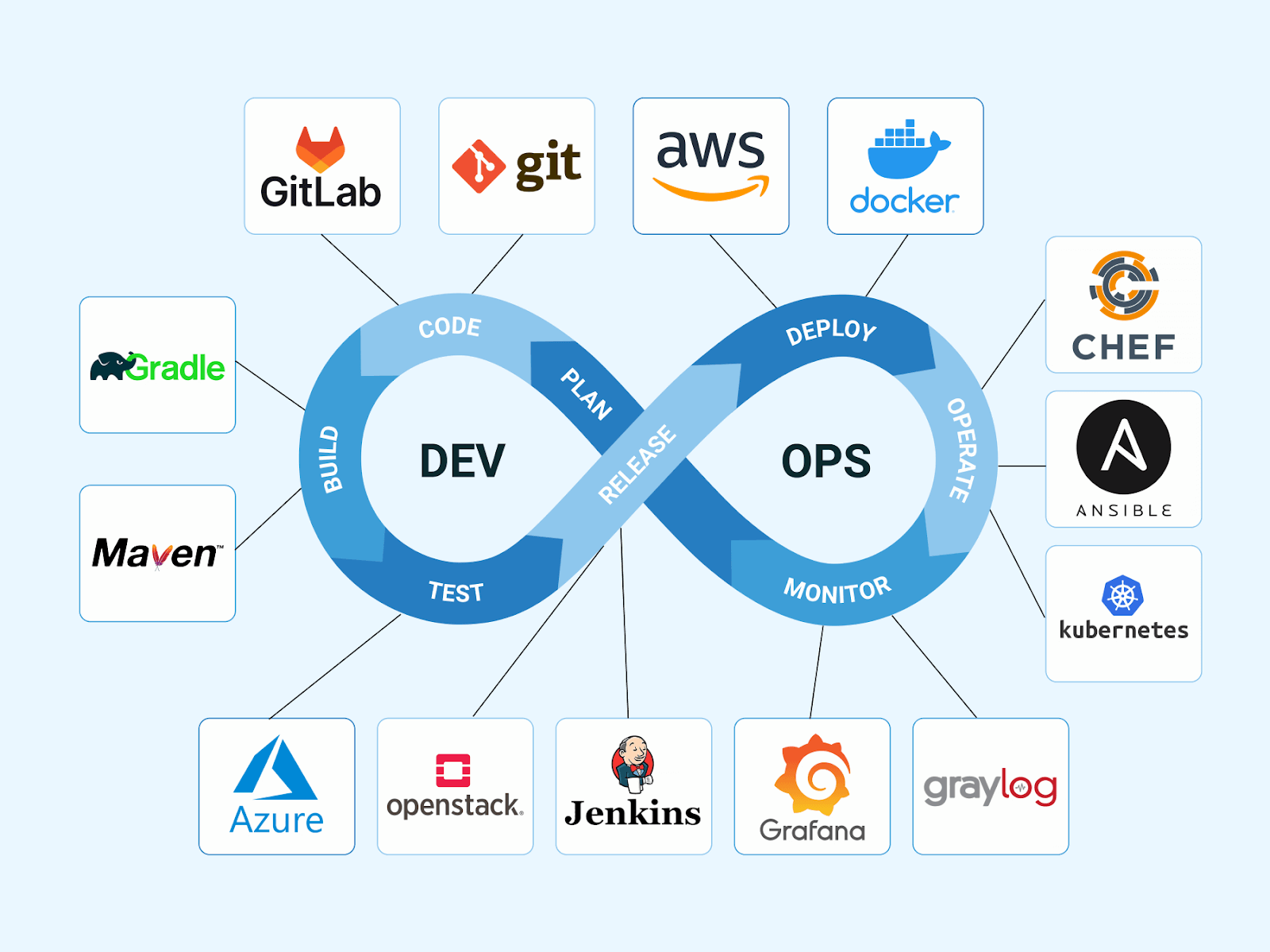
The path to DevOps includes several essential principles and practices as follows:
- Collaboration: DevOps fosters collaboration between cross-functional teams, including developers, testers, system administrators, and more. This collaborative approach ensures that everyone collaborates and shares responsibilities, leading to a harmonious development process.
- Automation: Automation is the cornerstone of DevOps. It involves using tools and scripts to automate repetitive tasks, such as code testing, configuration management, and deployment. Automation reduces human error and speeds up processes, making development and operations more efficient.
- Continuous Integration (CI): CI is a practice that involves continuously integrating code changes into a shared repository. The primary goal is to ensure that new code is tested and validated as soon as it’s committed, preventing integration issues and improving code quality.
- Continuous Delivery and Deployment (CD): CD ensures that the code is always deployable, making it ready for manual deployment when needed. Continuous Deployment (CD) goes a step further by automatically deploying code to production when it passes all tests.
- Monitoring and Feedback: DevOps places a strong emphasis on monitoring the performance of software and gathering feedback from users. Monitoring helps in identifying issues, tracking performance, and improving software reliability. User feedback is invaluable for enhancing software features and functionality.
Discover the power of DevOps Automation. Simplify workflows, deploy faster, and boost efficiency.
Improve the performance and reliability of your software with cutting-edge solutions. Stay ahead of the curve by checking DevOps monitoring tools now!
Benefits of DevOps
The following are the benefits of DevOps:
- Faster Delivery: DevOps accelerates the software development and deployment process, reducing the time it takes to go from writing code to deploying it in production.
- Reliability: Continuous monitoring and automation testing improve software reliability, reducing the likelihood of errors and outages.
- Efficiency: Automation reduces manual effort, saving time and resources and making the development and delivery processes more efficient.
- Collaboration: DevOps fosters collaboration among cross-functional teams, leading to better products and services through shared responsibilities and insights.
Challenges in DevOps Adoption
While DevOps offers numerous advantages, it also brings a few challenges, as follows:
- Cultural Change: DevOps often necessitates a cultural shift within organizations. It requires teams to change the way they work and collaborate. Encouraging and sustaining a cultural shift is a crucial but often challenging aspect of DevOps.
- Tool Selection: Choosing the right DevOps tools for your environment can be complex. The vast array of available tools requires careful evaluation to determine the best fit for your organization’s needs.
- Monitoring Complexity: Managing the monitoring of complex systems can be challenging. It involves collecting, analyzing, and acting upon a vast amount of data, which can be overwhelming without the right tools and strategies.
What is CI/CD?
CI/CD, short for Continuous Integration and Continuous Delivery, is a set of principles and practices to ensure the reliable and efficient delivery of frequent code changes as part of the software development process. It involves continuous automation and monitoring of the entire application lifecycle, from integration to testing to seamless delivery of the final product with the help of relevant CI/CD Tools.
Implementing CI/CD practices is often called the CI/CD pipeline. Organizations must minimize the efforts throughout the software development and deployment processes by automating the repeated tasks in the Software Development Lifecycle (SDLC). Continuous Integration pipeline focuses on code building, integration, and testing, while Continuous Delivery pipelines streamline effective production deployment.
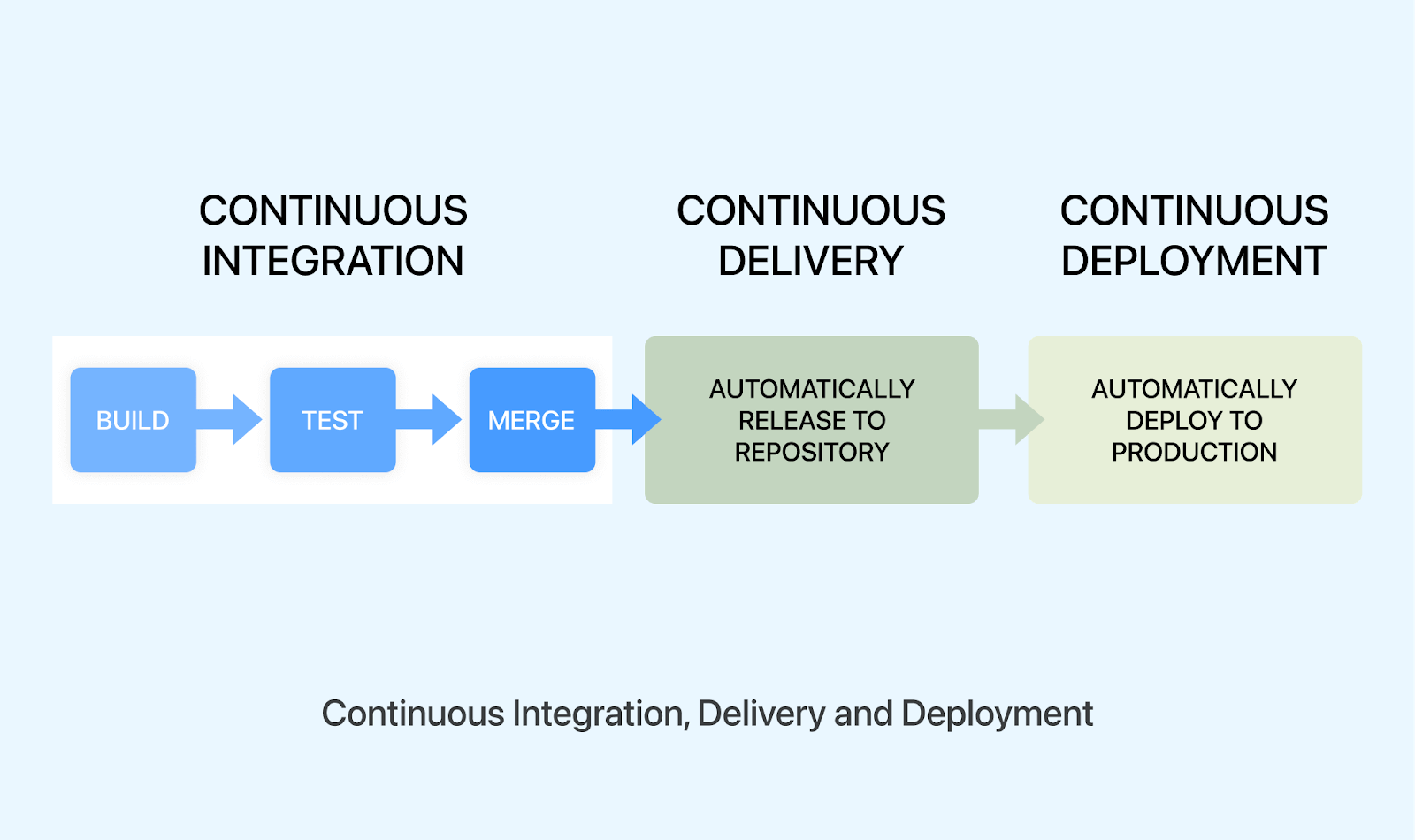
Continuous Integration (CI) involves continuously integrating code changes into a shared repository. It is a core practice in CI/CD, ensuring that code is continuously integrated and tested. The primary goal is to catch and rectify errors early in development.
Continuous Delivery (CD) focuses on automating the delivery process, ensuring that code is always in a deployable state. This means the code remains in a state that is ready for manual deployment when needed, enabling one-click application deployment. Continuous Delivery offers flexibility in setting release intervals, such as daily, weekly, or according to business needs. Releasing software in this interactive fashion facilitates troubleshooting in case of issues or any production incidents.
Discover how CI/CD Testing can make your software delivery process seamless and error-free.
Is Continuous Deployment different from Continuous Delivery?
Yes, both are different however, they are used interchangeably. Continuous Delivery and Continuous Deployment are closely related but different.
Continuous Deployment goes one step ahead of Continuous Delivery. While Continuous Delivery ensures that code will remain in a deployable state, Continuous Deployment is the idea of automatically deploying the code into the production environment. Under this approach, any change that successfully navigates through all stages of your production pipeline is automatically rolled out to the customers. Human involvement is minimal, and only a failed test will halt the deployment of a new change to the production environment.
Benefits of CI/CD
Following are the few benefits that CI/CD brings to an Organisation:
- Quick Feedback: CI/CD provides rapid feedback by continuously testing and validating code changes. This enables the early detection of issues, reducing the cost and complexity of bug fixes.
- Consistency: Automated processes in CI/CD ensure that code is consistently tested, validated, and deployed. This reduces variations and errors across different environments.
- Reduced Risk: Automated deployments in CI/CD pipelines reduce the risk of human error during the release process, enhancing the reliability and stability of software.
- Faster Releases: CI/CD accelerates the delivery of new features, bug fixes, and updates, allowing organizations to respond rapidly to user needs and market changes.
Challenges in CI/CD Implementation
CI/CD brings many advantages, but it has challenges. Organizations may face challenges as follows:
- Integration Complexity: Integrating CI/CD into an existing workflow can be challenging. This often requires organizations to reconfigure their existing processes and tools to align with the CI/CD pipeline, which can be complex and resource-intensive.
- Testing Complexity: Writing effective automated tests can be time-consuming. Developing a robust set of tests to ensure code quality is a critical but often challenging aspect of CI/CD, as it requires ongoing maintenance and optimization.
- Security Concerns: Security is critical in CI/CD pipelines. Ensuring code and data security throughout the automation process is essential to safeguard against vulnerabilities and data breaches.
If you are preparing for an interview you can learn more through CI/CD Interview Questions.
Key Differences Between DevOps and CI/CD
The following table deep dives into the differences between DevOps and CI/CD based on the listed aspects:
| Aspect | DevOps | CI/CD |
|---|---|---|
| Scope | DevOps encompasses cultural transformation, team collaboration, and technical changes to streamline software building, testing, and release. | CI/CD specializes in automating the software delivery pipeline of DevOps, focusing on continuous integration, testing, and deployment |
| Focus | DevOps focuses on a holistic approach, emphasizing collaboration, culture, automation, monitoring, and feedback to drive software development and reduce downtime of the software/service downtime. | CI/CD has a narrower focus on the automation of integration, testing, and deployment processes, aiming to optimize software delivery without focusing on the monitoring or post-deployment aspects. |
| Culture | DevOps promotes cultural shifts, encouraging teams to collaborate and share responsibilities, fostering a holistic approach. | CI/CD, while still valuing collaboration, emphasizes automation and efficiency in the development process. |
| Goals | DevOps aims for faster development cycles, higher software quality, and improved collaboration across teams and departments. | CI/CD's primary goal is the rapid, reliable, and automated delivery of software, focusing on streamlining the deployment pipeline. |
| Flexibility | DevOps is adaptable and open to various tools and practices, allowing organizations to choose solutions that best fit their unique needs. | CI/CD prescribes specific proven practices and specialized tools for automation, providing less flexibility but ensuring standardized workflows. |
TestMu AI is a test orchestration and execution platform for accelerating testing and release pipelines. At the core of TestMu AI’s offerings is a vast real device cloud, hosting over 3000 real browsers and devices and providing a robust environment for cross-browser testing. Furthermore, TestMu AI boasts a reliable and highly scalable cloud Selenium grid that will enable you to test automation across real browsers and devices seamlessly.
Moreover, TestMu AI integrates with leading CI/CD tools, streamlining testing processes for Quality Assurance (QA) professionals and developers alike. This synergy ensures an efficient and effective testing protocol throughout the development lifecycle.

The Synergy Between DevOps and CI/CD
DevOps and CI/CD are not mutually exclusive. CI/CD is often considered a vital component of the broader DevOps philosophy. Here’s how CI/CD integrates into DevOps and the benefits they bring in:
- Streamlined Delivery: CI/CD provides the automation and reliability required for DevOps’ continuous integration and delivery goals. It ensures that code changes are seamlessly integrated and rapidly deployed.
- Improved Collaboration: CI/CD encourages cross-functional teams to work together efficiently, aligning with DevOps’ emphasis on collaboration. Automation and shared responsibility are key elements in both methodologies.
- Feedback Loop: The quick feedback provided by CI/CD aligns with DevOps’ focus on monitoring and feedback. User feedback is valuable in both contexts, driving continuous improvement.
- Enhanced Automation: CI/CD augments DevOps’ automation capabilities by focusing on the software delivery pipeline. This ensures that code integration and deployment are automated and reliable.
- Efficiency: Integrating CI/CD into DevOps optimizes the entire software development lifecycle, from code changes to deployment. This streamlining results in greater efficiency and reduced manual intervention.
- Risk Reduction: By automating the deployment process, CI/CD reduces the risk of human error, ensuring that code is consistently and reliably deployed to production.
- Faster Delivery: The synergy between DevOps and CI/CD accelerates the delivery of new features and bug fixes, allowing organizations to be more responsive to user needs and market demands.
Looking Forward: Future Trends in DevOps and CI/CD
The world of technology and DevOps and CI/CD are ever-evolving. Here are some future trends to watch out for:
- AI and Machine Learning Integration: Integrating AI and machine learning in DevOps and CI/CD will lead to smarter, more autonomous systems capable of making data-driven decisions.
- Serverless Computing: The adoption of serverless computing will change how software is deployed and managed, offering greater flexibility and scalability.
- Security-First Approach: As security concerns continue to rise, a security-first approach will be embedded in DevOps and CI/CD pipelines, proactively addressing vulnerabilities and security threats.
Read more on the following CI/CD blogs to enhance your understanding further:
Conclusion
DevOps and CI/CD, pivotal methodologies in modern software development, have profound differences and remarkable synergies. DevOps, which advocates cultural change and collaboration, accelerates development, improves software quality, and fosters teamwork. On the other hand, CI/CD, the automation specialist, ensures fast and reliable software delivery with standardized workflows.
This dynamic interaction drives the software landscape and provides efficiency and reliability. DevOps and CI/CD are leading the way, enabling companies to compete in a constantly evolving digital environment. With more emphasis on security and the integration of AI in the future, there is much to look forward to.


Frequently asked questions
Did you find this page helpful?
More Related Hubs
TestMu AI forEnterprise
Get access to solutions built on Enterprise
grade security, privacy, & compliance
- Advanced access controls
- Advanced data retention rules
- Advanced Local Testing
- Premium Support options
- Early access to beta features
- Private Slack Channel
- Unlimited Manual Accessibility DevTools Tests