
A smarter Selenium alternative without the selectors
Selenium means WebDriver code, brittle CSS and XPath selectors, and Page Object Models to maintain. Kane CLI takes a plain-English objective, drives a real Chrome browser, self-heals on UI changes, and returns a verified pass or fail. Free to install.
or read the documentation
Why teams move from Selenium to Kane CLI
Selenium is the most established browser automation framework, but its operational cost is real: selector decay, flaky waits, Page Object Models that rot, and a Grid to keep running. Most suites carry a long tail of tests that pass only most of the time.
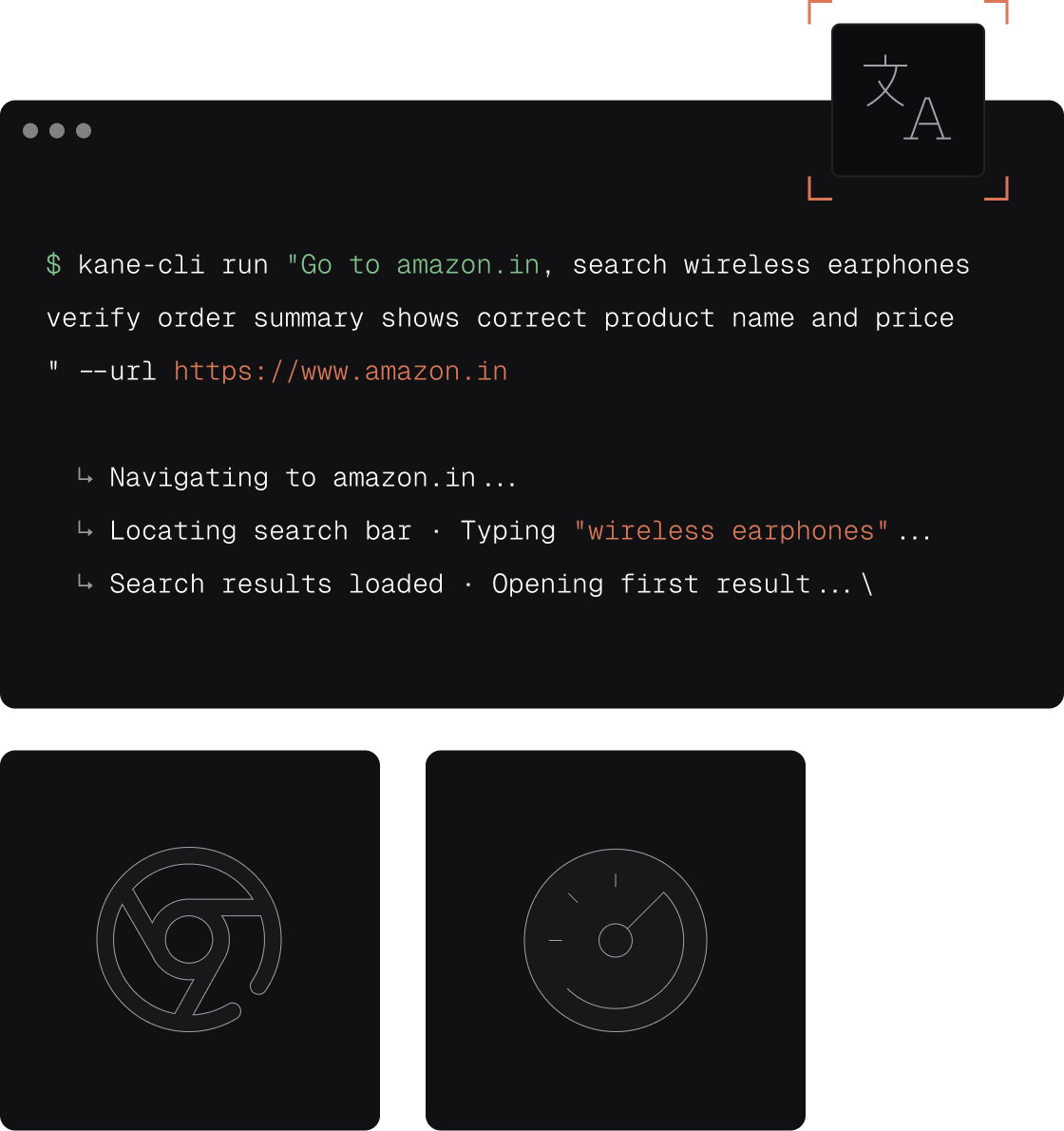
Kane CLI anchors to what the user sees, not to a selector. You give it intent, it drives a real Chrome browser, adapts when the UI shifts, asserts the result, and reports a verified pass or fail with video evidence.
Migration is re-description, not rewriting. Move your flakiest tests first, and export any validated flow to native Playwright with one command when you want the code.
Kane CLI vs Selenium
The same browsers, without the selector and Grid maintenance tax.
| Capability | Kane CLI (TestMu AI) | Selenium |
|---|---|---|
| Authoring model | Plain-English objectives, no code | Multi-language code on WebDriver |
| Element targeting | Natural-language intent, no selectors | CSS / XPath selectors you maintain |
| Resilience when the UI changes | Autoheals and retries up to 50 steps | |
| Verified pass or fail | Built-in assertions, returns pass or fail | You write every assertion in code |
| Waiting strategy | Vision-based, waits on the rendered screen | Explicit and implicit waits you tune |
| Browser coverage | Chrome local, cross-browser and OS on the cloud | Cross-browser via a Grid you run |
| Agent-native output | --agent emits structured NDJSON | |
| Evidence and reporting | Video, step trace, shareable links, dashboard | Third-party reporters you wire up |
| Page Object Model upkeep | None, intent is the contract | POM hierarchies you maintain |
| Native Playwright export | One command to export Playwright code | n/a |
What you get with Kane CLI
Everything Selenium leaves to your code and your Grid, handled by the tool.

Intent instead of selectors
Where Selenium needs WebDriver bindings plus a CSS or XPath path for every element, Kane CLI takes one plain-English objective, plans the steps, and locates targets by what the user sees.

No selector decay
A renamed class or restructured DOM breaks a Selenium locator. Kane CLI reads the rendered screen, so it adapts and pushes through up to 50 steps when the UI shifts instead of going red.

Assertions without the boilerplate
Selenium leaves every check to your own code. Kane CLI verifies each step out of the box, not just the final screen, and pinpoints exactly where a journey failed.

Agent-native output
Selenium emits language-specific logs you parse yourself. The --agent flag streams structured NDJSON your AI coding agent reads directly, with screenshots on failure.

Run anywhere, no Grid
Skip the Selenium Grid and driver matrix. Run from your terminal, in CI, or inside an agent; local Chrome is free and one flag scales to cross-browser cloud runs.

Keep maintainable code
Unlike a frozen Selenium script, any validated flow exports to native Playwright you can modify and own, so authoring in natural language never locks you in.
Build up confidence locally
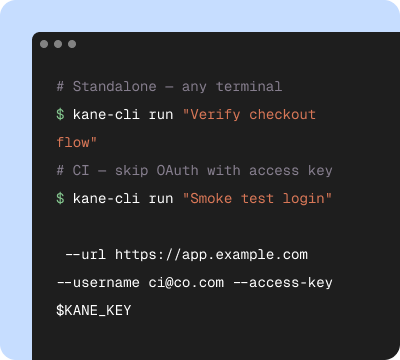
Start in your terminal
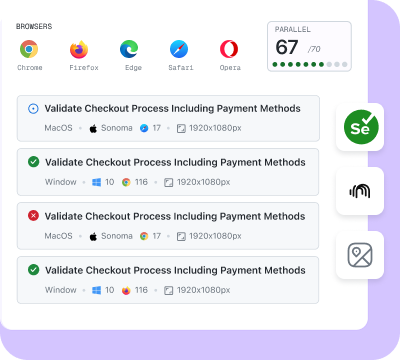
Validate on the cloud
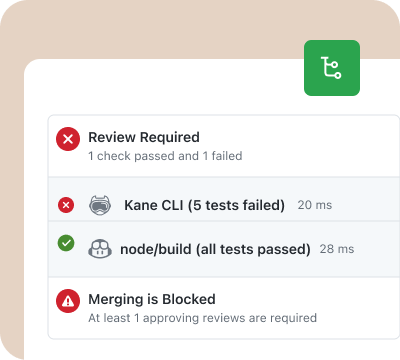
Release with confidence
Built for agents and humans, on one engine
Kane CLI and KaneAI share the same automation engine and dashboard.
Retire the selector backlog
A Selenium suite accumulates locator fixes every time the frontend ships. Kane CLI binds to user-facing intent, so the tickets that come from CSS and XPath decay simply stop arriving.
No more Page Object Model rot
Selenium teams build and refactor POM layers and a Grid as the app grows. Kane CLI makes the plain-English objective the contract, so there is no abstraction tier or Grid to keep in sync.
Flake becomes a verified result
Instead of a Selenium test that passes most of the time, every Kane CLI run reads the rendered screen, returns a clear pass or fail, and leaves a video and replay link to share.
Replace Selenium in three steps
Install
Run npm install -g @testmuai/kane-cli, then sign in with your TestMu AI account. There are no language bindings, no WebDriver downloads, and no Grid to stand up.
Re-describe your flow
Take a brittle Selenium test and state its goal in plain English instead of selectors and waits. Start with the cases that flake most and run them from the terminal or your agent.
Run and verify
Each step is checked against the rendered screen, the run returns a clear pass or fail with a shareable video, and you can export the validated flow to Playwright when you want code.
Get Started With Kane CLI
🎉 Launch offer: Bonus credits for the first 3 months on paid plans
Choose the right plan for you
Local test authoring via CLI
Auto-heal & vision
View test cases on UI
Test Manager

Free
$0
/month
200 Credits
Resets in every
30 days

Starter
$19
/month
2000 Credits
Launch: 4,000 Credits (+100%)
Bonus for first 3 months

Pro
$99
/month
10,000 Credits
Launch: 15,000 Credits (+50%)
Bonus for first 3 months

Enterprise
Get access to solutions built on Enterprise-Grade Security, Privacy, and Compliances.
Need more credits?
Got a bigger use case in mind?
Let’s talk
Choose the right plan for you
Free
$0
/month
200 Credits
Resets in every
30 days
Starter
$19
/month
2000 Credits
Launch: 4,000 Credits (+100%)
Bonus for first 3 months
Pro
$99
/month
10,000 Credits
Launch: 15,000 Credits (+50%)
Bonus for first 3 months
Enterprise
Get access to solutions built on Enterprise-Grade Security, Privacy, and Compliances.
Need more credits?
Got a bigger use case in mind?
Let’s talk
Get the technical rundown

Documentation
Everything you need to install, configure, and run Kane CLI in under 2 minutes.
Frequently asked questions
With Selenium you write WebDriver bindings in Java, Python, JavaScript or another language, hand-tune CSS and XPath selectors, manage explicit and implicit waits, and structure Page Object Models. Kane CLI replaces all of that scaffolding with a plain-English objective: it reads the rendered screen, locates elements by user-facing intent rather than selectors, and reports a verified pass or fail with video evidence.
Yes. The recurring tax on a Selenium suite is selector decay, waits that need constant tuning, and a long tail of tests that go red whenever a class name or DOM path shifts. Kane CLI binds to what the user sees instead of the markup, adapts and retries up to 50 steps when the UI changes, and drops the Page Object Model layer Selenium teams maintain by hand.
You re-describe rather than re-code. A Selenium line such as driver.findElement(By.xpath("//div[@id='submit-btn']")).click() becomes "click the Submit button." Start with the tests that flake on selector changes, run Kane CLI alongside the Selenium suite for a sprint, then retire the WebDriver versions once the natural-language runs stay green.
Yes. Any validated flow exports to native Python Playwright with one command, so unlike a fixed Selenium script you author in natural language first and still walk away with maintainable automation code when you want it.
Yes. Sign in with your TestMu AI credentials, pass --headless and --timeout, and gate the pipeline on the exit code: 0 on pass, 1 on fail, 2 on setup or auth errors, and 3 on timeout. There is no Selenium Grid or browser-driver matrix to provision and keep patched.
The CLI is free to install and use, with no per-language driver setup like Selenium needs. Local Chrome runs are free; cross-browser runs on the TestMu AI cloud are billed against your TestMu AI plan. Start on the free tier and run end to end without a credit card.
Teach your agent the right skills
Point your AI coding agent at the Kane CLI guide and it will install, authenticate, and run verified browser flows on its own.
 Point your agent to: testmuai.com/kane-cli/agents.md