
A smarter Playwright alternative for AI agents
Playwright is great code-first automation, but you still maintain locators and code every assertion. Kane CLI takes a plain-English objective, drives a real Chrome browser, self-heals on UI changes, and returns a verified pass or fail, then exports to Playwright when you want the code. Free to install.
or read the documentation
Why teams pair Kane CLI with Playwright
Playwright solved a lot: auto-waiting locators, cross-browser engines, and a strong trace viewer. What it does not solve is selector maintenance and the assertions, reporting, and fixtures you still write and keep current.
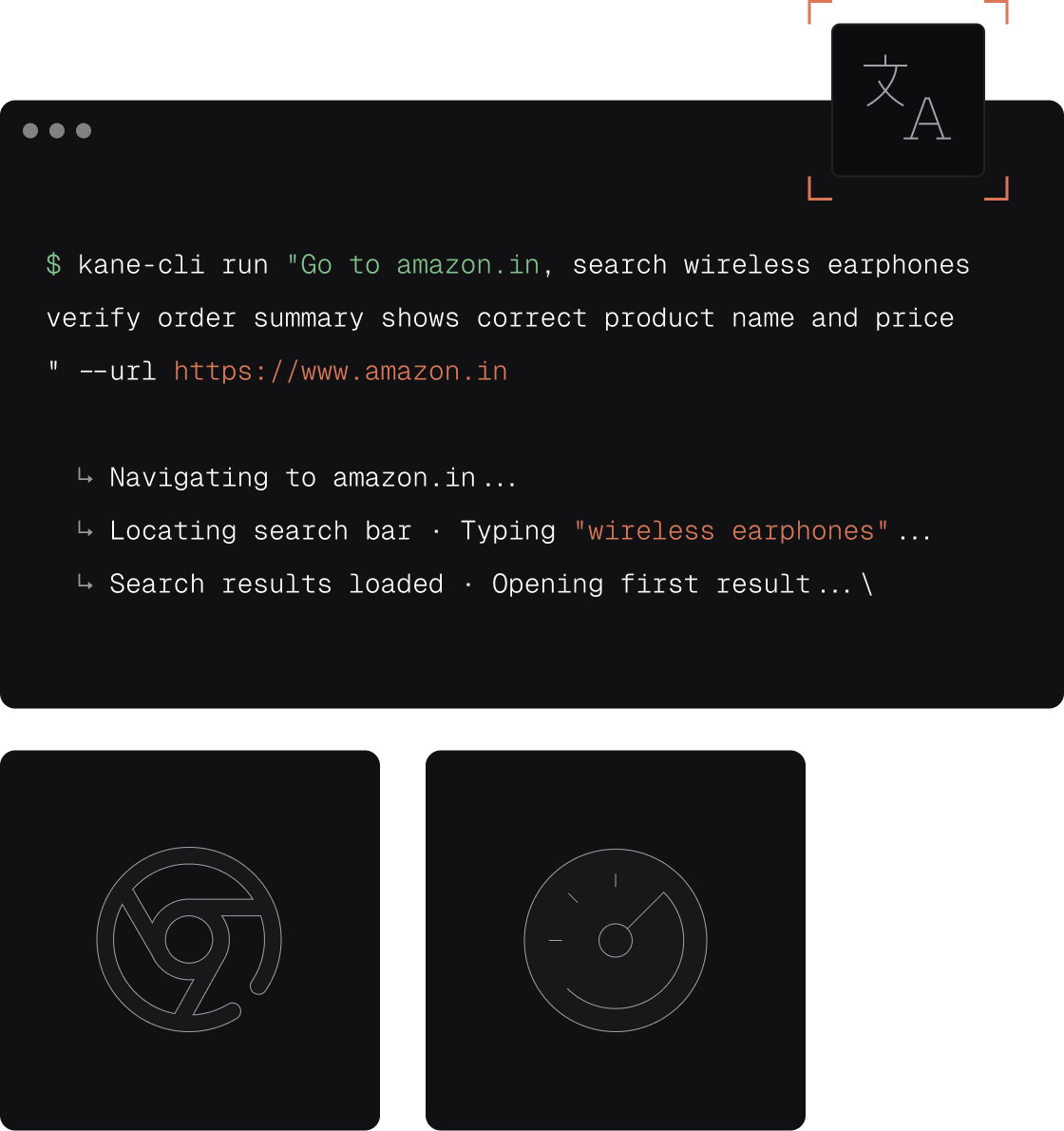
Kane CLI moves that work into the tool. You give it intent, it drives a real Chrome browser, adapts when the UI shifts, asserts the result, and reports a verified pass or fail with video evidence.
It is not either-or. Author new and high-churn flows in natural language, then export any validated flow to native Playwright with one command, so your team keeps full ownership of the code.
Kane CLI vs Playwright
The same browser engines, a very different contract with you and your agent.
| Capability | Kane CLI (TestMu AI) | Playwright |
|---|---|---|
| Authoring model | Plain-English objectives, no code | Multi-language code (TS, Python, Java, .NET) |
| Element targeting | Natural-language intent, no selectors | Locators and selectors you maintain |
| Resilience when the UI changes | Autoheals and retries up to 50 steps | |
| Verified pass or fail | Built-in assertions, returns pass or fail | You write assertions with expect() |
| Waiting strategy | Vision-based, waits on the rendered screen | Built-in auto-wait on locators |
| Browser coverage | Chrome local, cross-browser and OS on the cloud | Chromium, Firefox, WebKit you run |
| Agent-native output | --agent emits structured NDJSON | |
| Evidence and reporting | Video, step trace, shareable links, dashboard | Trace viewer and HTML report you configure |
| Test Manager sync | Every run syncs automatically | |
| Relationship to Playwright | Exports validated flows to Playwright | Is the framework |
What you get with Kane CLI
Everything Playwright leaves to your code, handled by the tool.

Intent instead of locators
Playwright has you author page.getByRole and CSS locators by hand. Kane CLI takes the journey as plain English and resolves targets by intent, so there are no selectors to write or keep current.

Self-heals where locators break
Playwright auto-waits, but a renamed class or moved button still fails the test. Kane CLI adapts to the changed UI and pushes through up to 50 steps until the journey is verified.

Assertions are built in
In Playwright you write every expect() and own the report. Kane CLI checks each step on its own and returns a verified pass or fail, pinpointing where the flow broke.

Agent-native output
Playwright leaves machine-readable results to your reporter config. Kane CLI ships an --agent flag that emits structured NDJSON, with a failure screenshot, for any AI coding agent to parse.

Same browsers, no runner to manage
Playwright gives you Chromium, Firefox, and WebKit that you provision and run. Kane CLI runs Chrome locally for free and scales to cross-browser and cross-OS on the cloud with one flag.

Exports to Playwright you own
Not a lock-in. Promote any validated Kane CLI flow to native Python Playwright via the public testmu library, then edit and maintain the code like any other test.
Build up confidence locally
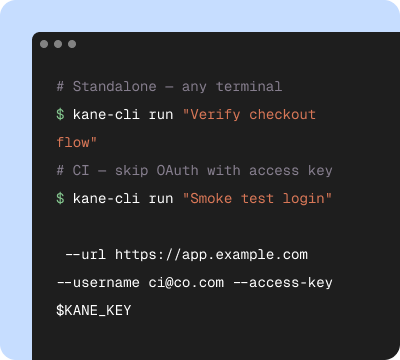
Start in your terminal
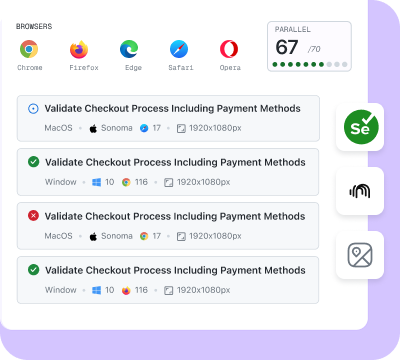
Validate on the cloud
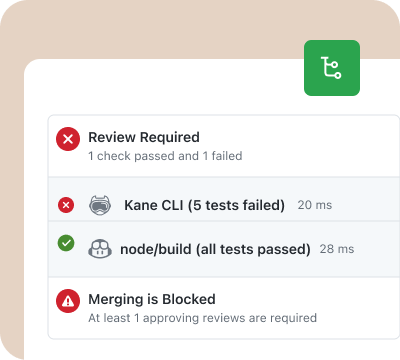
Release with confidence
Built for agents and humans, on one engine
Kane CLI and KaneAI share the same automation engine and dashboard.
Pairs with your Playwright suite
Keep your existing Playwright tests where they make sense. Point Kane CLI at new and fast-changing flows in plain English, and run both side by side from the same terminal.
Exports straight to Playwright
When a natural-language flow is validated, ship it as native Python Playwright with one command. You get a maintainable test built on the public testmu library, not a black box.
One verified contract for both
Whether an engineer writes Playwright code or Kane CLI runs an objective, every run lands a verified pass or fail with video in the same dashboard, so the team reads one source of truth.
Try Kane CLI alongside Playwright in three steps
Install
Run npm install -g @testmuai/kane-cli, then sign in with your TestMu AI account. Unlike a Playwright project, there is nothing to scaffold, no fixtures, and no config.
Describe the flow
State the journey as a plain-English objective. Where Playwright wants locators, fixtures, and expect() calls, Kane CLI just needs your intent.
Run, then export
Kane CLI runs the objective against a real browser and reports a verified pass or fail with video. Happy with it? Export the same flow to native Playwright with one command.
Get Started With Kane CLI
🎉 Launch offer: Bonus credits for the first 3 months on paid plans
Choose the right plan for you
Local test authoring via CLI
Auto-heal & vision
View test cases on UI
Test Manager

Free
$0
/month
200 Credits
Resets in every
30 days

Starter
$19
/month
2000 Credits
Launch: 4,000 Credits (+100%)
Bonus for first 3 months

Pro
$99
/month
10,000 Credits
Launch: 15,000 Credits (+50%)
Bonus for first 3 months

Enterprise
Get access to solutions built on Enterprise-Grade Security, Privacy, and Compliances.
Need more credits?
Got a bigger use case in mind?
Let’s talk
Choose the right plan for you
Free
$0
/month
200 Credits
Resets in every
30 days
Starter
$19
/month
2000 Credits
Launch: 4,000 Credits (+100%)
Bonus for first 3 months
Pro
$99
/month
10,000 Credits
Launch: 15,000 Credits (+50%)
Bonus for first 3 months
Enterprise
Get access to solutions built on Enterprise-Grade Security, Privacy, and Compliances.
Need more credits?
Got a bigger use case in mind?
Let’s talk
Get the technical rundown

Documentation
Everything you need to install, configure, and run Kane CLI in under 2 minutes.
Frequently asked questions
Playwright is an excellent code-first automation framework with auto-waiting locators and cross-browser support. You still write tests, maintain locators, and code your own assertions and reporting. Kane CLI takes a plain-English objective instead, drives a real Chrome browser, self-heals when the UI changes, verifies each step, and returns a pass or fail with video evidence.
It depends on the job. Playwright is great when you want to own code and need primitives like network interception. Kane CLI is the better fit for new flows where selector maintenance dominates, and for AI coding agents that need to verify their own work. Many teams run both: Kane CLI for new and high-churn flows, Playwright for the rest.
Yes, and it is one command. Once a plain-English flow passes, Kane CLI emits native Python Playwright built on the public testmu library, so the intent-driven steps and self-healing carry into code you can read and maintain. You author in natural language and walk away with a real Playwright test whenever you want it.
Yes. Where Playwright leaves machine-readable output to your reporter setup, Kane CLI ships an --agent flag that emits structured NDJSON on every run, so an AI coding agent can parse the result, read a screenshot on failure, and decide what to do next. Point your agent at the published Kane CLI guide and it installs, authenticates, and drives the browser on its own.
Yes. Like a Playwright job, you authenticate with your TestMu AI credentials and pass --headless and --timeout, then gate the pipeline on the exit code: 0 on pass, 1 on fail, 2 on setup or auth errors, and 3 on timeout. The same binary runs headed locally and headless in any runner.
Yes, the CLI is free to install and use, with no Playwright project or paid runner to stand up first. Local Chrome runs are free; cross-browser cloud runs on the TestMu AI grid are billed against your TestMu AI plan. Start on the free tier and run end to end without a credit card.
Teach your agent the right skills
Point your AI coding agent at the Kane CLI guide and it will install, authenticate, and run verified browser flows on its own.
 Point your agent to: testmuai.com/kane-cli/agents.md