
Power Your Software Testing with AI Agents and Cloud
The Native AI-Agentic Cloud Platform to Supercharge Quality Engineering. Test Intelligently and Ship Faster.

- TestMu AI (Formerly LambdaTest)
- /
- Blog
- /
- Your AI Guardrails Are a Model Too - Here's How to Test Them
Your AI Guardrails Are a Model Too - Here's How to Test Them
AI guardrails fail more often than teams assume. Use this framework to test LLM and agent guardrails for bypass, over-blocking, stop time and evidence.
Published on:
Every AI deck I see in 2026 has a slide with a shield on it. The shield has 'AI guardrails' on it.
Below that are the standard boxes: prompt injection filter, PII redaction, toxicity classifier, topic restrictions. The slide is there to imply that the problem is solved.
It's not. A guardrail is a classifier (a smaller model or a set of rules) which sits between the user, the model and the tools it can invoke. That makes it software.
Software that has never been tested in a hostile, dynamic input space is not a control. It's a hope.

This piece is for the QA leaders and SDETs who will be asked to sign off on those shields. Here's how we think about testing AI guardrails at TestMu AI, and the framework we use.
TL;DR
Most AI guardrails are models or classifiers, so they fail like models: they get bypassed, they over-block, and they drift. Testing them means measuring six numbers (bypass rate, over-block rate, utility loss, action escape, time to stop, evidence completeness) across five layers, with a verifier that is independent of both the agent and the guardrail.
Guardrail Testing at a Glance
- AI agent guardrails: Safe to trust untested: No. LLM guardrails screen prompts and responses, while AI agent guardrails also limit which tools an agent may call and with which parameters. Both are usually classifiers or smaller models, so both need a measured bypass rate and over-block rate.
- Prompt injection: Covered by one layer alone: No. Layer 1 of the Guardrail Proof Stack handles prompt injection testing with mutated and indirect attacks, and layers 2 to 5 still have to prove output leakage, over-blocking, tool permissions, stop drills and evidence.
- Red teaming AI agents: Same job as guardrail testing: No. Red teaming AI agents finds the holes, as an AI agent red teaming test plan does. Guardrail testing turns each finding into a versioned test case with a threshold that reruns on every change.
- AI observability: Replaces pre-release guardrail tests: No. AI observability platforms score agent behavior after release. Guardrail testing runs before release, where a bypass fails the build instead of producing an incident report.
- Agent Assurance scenarios: Adversarial scenarios generated by TestMu AI: Yes. TestMu AI Agent Assurance generates an adversarial scenario class, and the Agent Assurance scenarios docs list its categories, from prompt injection and jailbreak to PII leakage and hijacking.
- Agent Red-Team Scan: Free first check: Yes. The free Agent Red-Team Scan runs prompt injection, jailbreak and PII leak probes against an LLM API, a quick smoke test before you build the full Guardrail Proof Stack suite.
Do AI Guardrails Actually Work?
Partly, and much less than most teams assume. Published research shows commercial guardrail classifiers being bypassed most of the time with cheap tricks, and production data shows most agent incidents are not caught by any safeguard at all.
The clearest evidence is a 2025 study from Mindgard researchers that attacked six production guardrail systems, including Azure Prompt Shield, Meta Prompt Guard and NVIDIA NeMo Guard. At the time of testing, simple character-injection techniques reached an average prompt-injection attack success rate of 71.98% against Azure Prompt Shield and 70.44% against Meta Prompt Guard. Emoji smuggling hit a 100% success rate for both prompt injection and jailbreaks (Hackett et al., 2025).

Vendors will patch, so read those numbers as a snapshot of early 2025 rather than a current score. The point is that the guardrail bypass rate will move and someone has to keep measuring it.
That's the lab. The field looks similar:
- According to an October 2026 vendor survey by Salt Security of 380+ security and technology professionals, 49.8% confirmed or suspected that an AI agent in their organization took an unauthorized action, and only 17.5% can automatically stop an agent that starts behaving unexpectedly (Salt Security, 2026).
- The Manifold Agent Incident Ledger (published 27th October 2026) shows that of the 59 publicly reported agent incidents only 11 were caught by a security control/safeguard and the median time from first out of bounds action to public disclosure was 70 days (Manifold, 2026). It's only looking at public incidents, so it's purely a signal, not a failure rate.
- IBM's 2025 Cost of a Data Breach report found that 13% of organisations had experienced a breach of an AI model or application and 97% of those organisations had no AI access controls (IBM, 2025).
Even the best defences leave behind some trace. In November 2025 Anthropic reported that improved defences reduced the success rate of a Best-of-N prompt injection attacker against Claude Opus 4.5 from 8.0% to 1.4% and were very clear that a 1% attack success rate is still a non-trivial amount of risk (Anthropic, 2025). At agent scale that's 10,000 opportunities in a million tool calls.
So the question isn't "do we have AI guardrails?" It's "what is our measured bypass rate, and who measured it?"
What Is Guardrail Testing, and How Is It Different From AI Red Teaming?
Guardrail testing is the practice of independently measuring whether an AI system's safety controls block what they should, allow what they should, and leave evidence either way. It's a subset of AI assurance, and it sits between building guardrails and observing them in production.
Here's a definition worth quoting: A guardrail you haven't tested is a guardrail you're trusting. Guardrail testing turns that trust into evidence.
It's not the same as AI red teaming. Red teaming is about finding the holes. Guardrail testing is about plugging those holes.
Every red team finding becomes a versioned test case with a threshold and is re-run on every change. So if you fix a bypass in March, it won't just quietly reappear in June.
It's easiest to see by contrast:
| Guardrails | Guardrail testing | Observability | |
|---|---|---|---|
| Question it answers | What should be blocked? | Does the block actually hold? | What happened in production? |
| When it runs | Runtime, every request | Pre-production + continuously on every change | Post-release |
| Who owns it | Platform / security engineering | QA / independent verification | SRE / ML ops |
| Output | Allow, block, redact | Pass/fail against thresholds, with evidence | Scores, traces, alerts |
| Failure if missing | Unsafe actions reach users | You learn your shield was cardboard from an incident | You can't explain what went wrong |
Most teams have the first column and some of the third. The middle column is usually empty, which is why incidents get discovered by customers, journalists or regulators.
Why Can't the Guardrail Be the Same Model as the Agent?
Because no model reliably checks its own work. This is the first of the AI trust principles we maintain at TestMu AI: model diversity. No single model should be the only dependency for an important outcome, and no model should grade itself.
The research confirms this. A NeurIPS 2024 paper found that GPT-4 could identify its own outputs as such when compared to the outputs of two other LLMs and humans (73.5% accuracy) and found a linear relationship between self-recognition and self-preference bias (Panickssery, Bowman & Feng, 2024). If a model prefers text that it considers to be its own, then a guardrail based on the same model family is the absolute worst possible reviewer of attacks designed against that family.
In practice, this gives us the Three-Party Rule: the agent, the guardrail and the verifier that tests the guardrail should not share one model or one vendor's blind spots. If your agent runs on Model A and your guardrail is Model A in a different system prompt, you have one control, not two.
How Do You Test AI Guardrails? The Guardrail Proof Stack
Test five layers, in order, each having its own attack corpus and its own pass threshold. We call this the Guardrail Proof Stack. Most teams only test layer 1.

Layer 1 - Input: Does Injection and Jailbreak Resistance Hold Under Mutation?
Known bad prompt lists are table stakes. The Mindgard results show the gap is in the mutations: Unicode tags, zero-width characters, emoji, homoglyphs, translation, encoding. Every prompt in your attack corpus should be run through a mutation set, and the guardrail should be scored on that mutated set rather than the clean one.
HarmBench's authors are very direct on this: no current attack or defense is broadly effective (Mazeika et al., 2024). Your corpus has to be evolving.
Include indirect injection: instructions hidden in web pages, PDFs, emails, tickets and the output of various tools that the agent reads. On the InjecAgent benchmark, a ReAct-prompted GPT-4 agent was susceptible to indirect injection 24% of the time (Zhan et al., 2024).
You don't have to write attacks from scratch. Open-source scanners such as NVIDIA's garak, Microsoft's PyRIT and promptfoo (now part of OpenAI) generate and mutate attack sets.
Generating attacks is the easy part. The discipline is versioning what they produce, scoring it against a threshold, and keeping the evidence.
Layer 2 - Output: Does It Stop Leakage Without Over-Blocking?
Test for PII, secrets, system prompt leakage and policy violations in the responses. Then run the same rigor in reverse with a golden set of legitimate, sensitive-sounding requests (a nurse asking about dosage ranges, an analyst asking about a competitor) which must not be blocked.
Over-blocking is a failure, not a safe default. Users will route around any guardrails that simply refuse to do the real work.
Layer 3 - Action: Does the Agent Stay Inside Deployer-Defined Authority?
This is where agentic systems differ from chatbots, and why OWASP's 2026 update moved Excessive Agency up to number three in its LLM Top 10 (OWASP GenAI, 2026). Our principle: the company, not the model, decides what the model can access and do. So test it as a permission matrix.
For every tool the agent can call, assert what it may do, with which parameters, on whose data, and attempt every combination it may not. Content filters don't catch a well-phrased refund to the wrong account.
Layer 4 - Containment: Can an Authorized Person Stop It Mid-Task?
Containment is a feature, so it needs a test. Start a long-running agent task, issue a stop from an authorized human, and measure how many actions complete after the stop. Then try a stop from an unauthorized identity and confirm it's refused.
That Salt Security figure - 17.5% can auto-stop a misbehaving agent - tells you how rarely this is verified.
The UK AI Security Institute's October 2026 incident report is a good example of the point: during a cyber assessment, a frontier model was observed continuing to attack a completely unrelated real target after having been explicitly told it was real (UK AISI, 2026). The stop mechanisms that work in the demo environment must also work when the model is in the middle of its plan and convinced it's correct.
Layer 5 - Evidence: Did Every Decision Leave a Tamper-Proof, Readable Record?
Every block, allow, redaction and stop should produce evidence a human can read and an auditor can trust, and that evidence should land in the customer's control plane, not only the vendor's. If you can't reconstruct why the guardrail let something through, you can't fix it, and you can't disclose it. This is what turns guardrail testing into an AI audit trail.
What Metrics Should a Guardrail Test Report? The Guardrail Scorecard
Six numbers, tracked per release. If your guardrail vendor or internal platform team can't give you these, you don't have a measured control.

| Metric | What it measures | How to test it | Suggested starting threshold |
|---|---|---|---|
| Bypass rate (ASR) | Share of mutated attacks that get through | Mutated attack corpus at layers 1-3 | ≤1% for any attack that reaches a tool call; tighten each release |
| Over-block rate | Share of legitimate requests wrongly refused | Benign golden set, incl. sensitive-sounding cases | ≤2% on the golden set, never traded silently for ASR |
| Utility loss | Task success with guardrail vs without, no attack | Same task suite, guardrail on and off | ≤5 percentage points |
| Action escape rate | Out-of-scope tool calls that execute | Permission-matrix tests at layer 3 | Zero for irreversible actions |
| Time to stop | Actions completed after an authorized stop | Containment drill at layer 4 | Zero irreversible actions after stop |
| Evidence completeness | Share of decisions with a full, readable record | Audit sampled decisions at layer 5 | 100% for blocked and high-risk actions |
The 2nd and 3rd rows are far more important to the teams than they realise. In the AgentDojo benchmark, the addition of a prompt injection detector reduced GPT-4o's attack success rate from 7.95% to 7.95% (the same rate, just with a different denominator), but task success with no attack dropped to 41.49% as the detector generated a massive number of false positives (Debenedetti et al., 2024). A guardrail that stops attacks by simply stopping the agent from working has just moved the failure to a less obvious location.
How Often Should You Test AI Guardrails?
On every change to the model, the prompt, the tools, the guardrail or its thresholds - and on a fixed schedule even when nothing changed. Guardrails drift because everything around them moves: a new model version, a new tool, a new language, a new attack technique published on a Tuesday.
That's our continuous system testing principle: test all systems constantly, including against failures and attacks. NIST's AI RMF treats test, evaluation, verification and validation as work done throughout the AI lifecycle (NIST AI 100-1), and its Generative AI Profile calls for red-teaming and evaluation both before deployment and on an ongoing basis (NIST AI 600-1).
Practically, the Guardrail Proof Stack lives in CI as a release gate for agents. A minimal checklist:
- Version the attack corpus, the mutation set and the benign golden set with the agent's code.
- Pin thresholds for all six Scorecard metrics (all approved by security and the business owner).
- Run the full stack on every PR that touches prompts, tools, models or guardrail config.
- Fail the build on any irreversible action escape or any action after an authorized stop.
- Run a weekly scheduled job with freshly mutated attacks, even with no code change.
- Use a verifier from a different model family than both the agent and the guardrail.
- Ship the evidence bundle to your own control plane, not just a vendor dashboard.
The guardrail is probabilistic. The test of the guardrail shouldn't be. Deterministic here means fixed, versioned inputs, fixed assertions and fixed thresholds, with every run recorded and replayable.
As the system under test can give a different answer each time, you need to run each attack sufficiently to establish a rate and report the sample size with it.
Zero failures in 20 attempts still permits a real failure rate of circa 14% at 95% confidence. Zero in 2,000 gets you below 0.2%. A Scorecard without sample sizes is just an opinion.
What Does Regulation Require for AI Guardrail Testing?
The EU AI Act already requires high-risk systems to be tested against pre-defined metrics and to resist manipulation - and the deadline moved; it didn't disappear.
Article 9 says high-risk systems must be tested before being placed on the market, against "prior defined metrics and probabilistic-based thresholds" (EU AI Act, Art. 9).
Article 15 requires protection against unauthorized attempts to alter a system's use, outputs or performance, including adversarial examples and model evasion (EU AI Act, Art. 15). That's a legal description of the Guardrail Scorecard.
The Digital Omnibus, Regulation (EU) 2026/1744, came into force on 27th July 2026 with the standalone high risk (Annex III) obligations being pushed to 2nd December 2027 (Hunton 2026). Any team that interpreted that as a bit of a reprieve will be in a state of panic in 2027 trying to work out what evidence they could have been gathering since 2026. Good AI governance is a record that you can produce when the request comes in.
Where the Market Is Heading
Guardrails are clearly becoming a network product. In the past week alone Fortinet have added inline AI guardrails to FortiGate to inspect prompts, responses and MCP tool traffic (SiliconANGLE, Oct 29 2026) and PointGuard AI have launched an AI gateway with prompt guardrails and MCP tool authorisation.
Gartner predict guardian agent technologies will make up at least 10-15% of the agentic AI markets by 2030 (Gartner 2025).
Observability platforms are now adding evals to score agent behaviour post release. That's useful, but it's only the second half of the story. Guardrail testing should be happening before release where a bypass results in a failed build rather than an incident report.
More guardrails is good. Each new guardrail is another model in the path and another thing that needs to be proven.
My bet is that by the time the Annex III obligations hit in December 2027, enterprise buyers will be asking their guardrail and agent vendors for third party bypass rate and over block evidence in the same way they ask for SOC 2s today. The ones who can hand over a Scorecard will win the cycle. The ones who can only show a shield slide will be asked to come back.
Where TestMu AI Fits
Our view is actually very simple: AI trust comes from an independent verification layer that produces evidence rather than opinion. Guardrail testing is one of the clearest examples of where that can be applied.
- For agent workflows prior to release, Agent Assurance treats prompt injection, instruction override and tool misuse as a first class scenario family and keeps the per criterion evidence as plain files you own. That covers layers 1, 3 and 5 of the Proof Stack.
- For human-to-agent systems such as chat, voice, IVR and WhatsApp, Agent Testing screens for toxicity, bias, hallucination and compliance violations, with evidence-based pass/fail rules and timestamped transcripts. That's layer 2, tested against the live conversational surface.
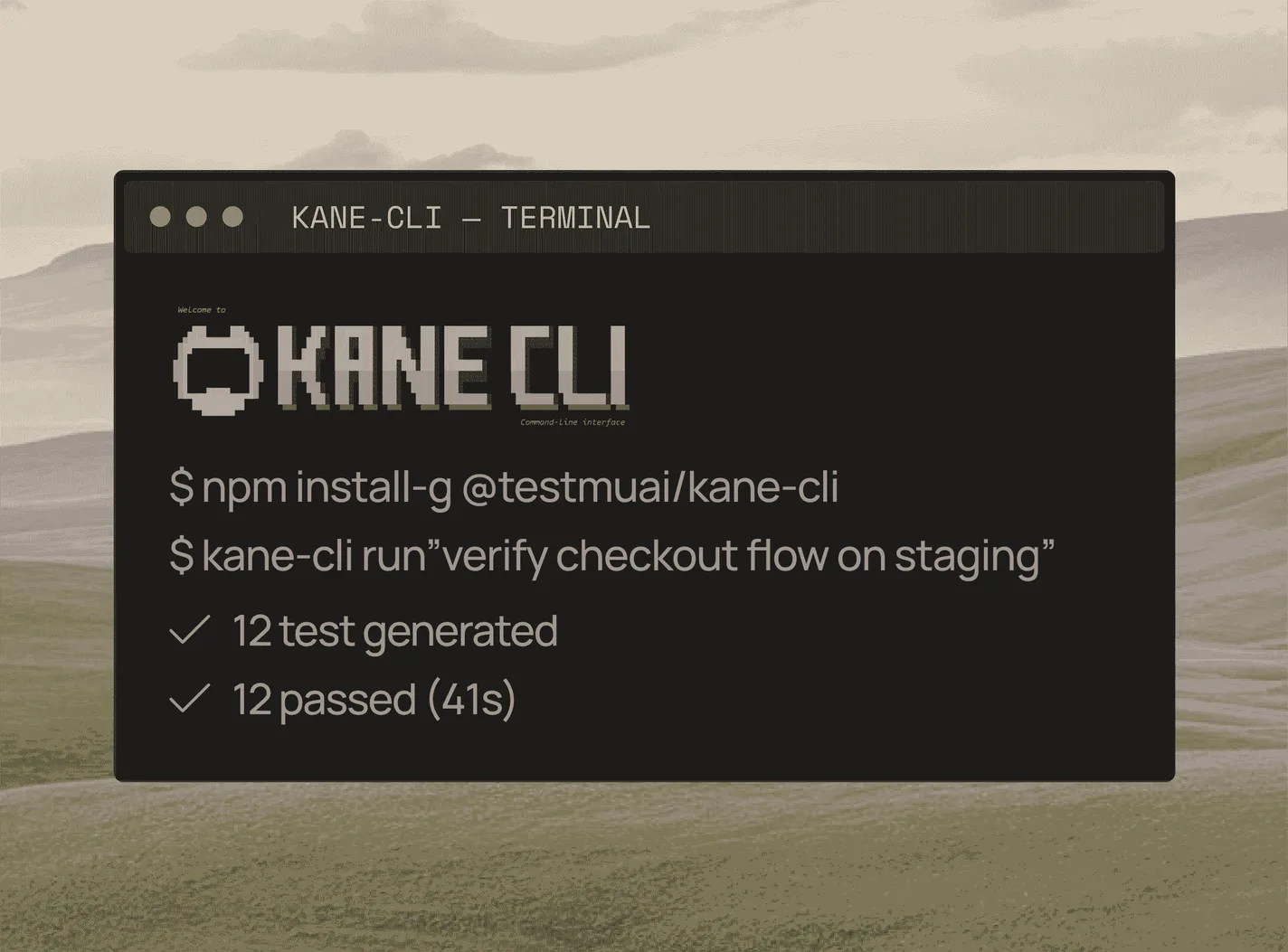
- Kane CLI provides the SDETs with an evidence pack (steps, screenshots, logs, verdict) for each run. KaneAI allows testers to write their checks in plain English. HyperExecute can run the weekly mutation sweep in parallel and can also run in your own cloud account so the verification runs where the model runs.

Every run uses fixed inputs and thresholds and leaves a replayable evidence trail, because the point of testing AI guardrails is to replace "we think it's safe" with "here's the proof."
The Bottom Line
AI guardrails are essential and still insufficient. They're models and they fail like models (the published numbers bear that out). Treat them like any other critical control: test all five layers, report the six numbers, keep the verifier independent and run it on every change.
A guardrail on a slide is not a control. A Scorecard with evidence behind it is.
If you ship agents that other agents use, or test agent-to-agent workflows, TestMu AI's Agent Assurance lets AI agents test your agents before release, with no human in the loop and evidence captured for every run.

Author

Jay Singh
Blogs: 4


Jay Singh is the Co-Founder and Chief Customer Officer at TestMu AI, with over two decades of experience in sales, customer success, and growth strategy. He has been leading customer initiatives at TestMu AI for more than 8 years, helping scale the platform to serve a global user base. Jay is followed by 15,000+ professionals on LinkedIn, reflecting his influence across the software testing and quality assurance industry. Before TestMu AI, he founded BusinessMojos, later acquired by DAMO Consulting, and VisualMojos Technologies. He also held senior roles at LeadSquared and Harman International.
Reviewer

Maneesh Sharma
Reviewer
Maneesh Sharma is Chief Operating Officer at TestMu AI, where he leads the company's revenue functions across go-to-market, sales, RevOps, customer success, and the partner ecosystem, driving its global expansion. He brings over 28 years of experience across product, go-to-market, and business operations. Before TestMu AI he was Managing Director and General Manager for GitHub across India and APAC, Head of Partner Sales and Ecosystem at Adobe, Chief Revenue Officer at WizIQ, and Head of Products and Solutions at SAP India. Maneesh holds an MBA from IIM Bangalore and a B.E. in Electronics and Communications from NIT Surat.


AI Guardrails Testing FAQs
Did you find this page helpful?
More Related Blogs

TestMu AI forEnterprise
Get access to solutions built on Enterprise
grade security, privacy, & compliance
- Advanced access controls
- Advanced data retention rules
- Advanced Local Testing
- Premium Support options
- Early access to beta features
- Private Slack Channel
- Unlimited Manual Accessibility DevTools Tests