

Next-Gen App & Browser Testing Cloud
Trusted by 2 Mn+ QAs & Devs to accelerate their release cycles


Best Mobile App Testing Frameworks for Android and iOS [2026]
Read this blog to learn about some of the best mobile app testing frameworks that help you deploy faster and ensure the quality of the application is remarkable

Harish Rajora
February 7, 2026
Mobile app testing framework helps automate the testing of your native apps. It reduces test execution time and identifies bugs before the app goes live. Once a mobile application is developed, it is moved ahead to the testing phase, where it is decided whether the application is fit to be delivered to the people or needs more work.
In this blog we will learn the best mobile app testing frameworks for 2026, the list of frameworks mentioned in this blog will help mobile app developers take better decision to build mobile apps in more effect way.
Different mobile app testing frameworks offer different features and may confuse the app tester in choosing the best one according to the situation. To resolve this, we have crafted this post that brings out all the mobile app testing frameworks, popular features, and other relevant information.
Types of Mobile App Testing Frameworks
Mobile app testing frameworks come in three strict divisions:
- Strictly Android testing framework.
- Strictly iOS testing Automation framework.
- Cross platform testing framework (for both Android latest version and latest iOS version).
We have divided this post into three sections and arranged all the mobile app testing frameworks accordingly.
Android Test Automation Frameworks
The following section highlights the most popular mobile app testing frameworks available only for Android applications.
In this blog, we will discuss some of the best Android test automation frameworks, such as Espresso, Selendroid, and MonkeyRunner.
Espresso

Espresso is a Google-made Android testing framework and has been a popular choice due to its high performance. Espresso believes in creating very simple and straightforward tests without worrying about the application’s infrastructure. Furthermore, it is open-source, which gives the developers the power to customize the framework.
Key Features of Espresso
- Google promotes Espresso as a quick-to-learn Android testing framework.
- Espresso is comparatively faster in test execution.
- Espresso is a highly stable Android test automation framework as it can detect when the main thread is idle and run the UI tests at an appropriate time to prevent load on the system.
- If you are using Android Studio to develop Android applications, Espresso could be the best choice for you as it is easy and quick to integrate.
- Espresso is based on JUnit, a very popular testing language. Therefore, app testers can quickly pick the APIs when opting for this framework.
Selendroid
Selendroid is an Android test automation framework based on Selenium. Selendroid uses Selenium 2.0 for writing test scripts for Android apps. Currently, Selendroid is only an Android test automation framework, although they plan to extend it to iOS applications soon. Selendroid recommends using the iOS driver with the Webdriver for testing the iOS applications, which is just a workaround.
Key Features of Selendroid
- Selendroid can be used with Android emulator online, real devices, and Selenium Grid for selenium android testing and selenium for iOS testing.
- Selendroid uses Selenium which is hugely popular among app testers, and they can start right away with the Android test automation framework without investing time in learning.
- Selendroid comes with advanced user interaction support APIs for faster testing. These may include human interaction such as swipe and drag and drop.
- The Android testing framework comes with the support of the JSON Wire protocol.
- Selendroid comes with an advanced inspector that can detect the UI elements quickly.
MonkeyRunner
The MonkeyRunner mobile app testing framework is an Android test automation framework designed to control the Android applications outside the Android code. Monekyrunner uses the Jython language, which implements the Python programming language using Java language. These popular languages make it extremely easy for the app testers to develop the tests. The tool is designed to test the Android based applications at the functional or framework level or for running the unit tests. Although, the developers of the framework define the tool to be used in any way the app testers or the developers want.
Key Features of MonkeyRunner
- MonkeyRunner can be attached to more than one Android emulator or real device simultaneously. Through this single connection, you can run multiple test cases (or test suites) on all of them per your program/sequence, etc.
- MonkeyRunner can provide you with a complete start-to-end test script for an Android application. The app tester can take multiple output screenshots whenever he feels through the test scripts.
- The most popular feature of MonkeyRunner is its ability to compare multiple screenshots for correctness. The app tester can compare the present screenshot (the one taken from the current test run) and the screenshot, which is correct.
- MonkeyRunner mobile app testing is a set of API toolkits, and hence it can be customized up to any level as the developer wants. Now test with free APK emulator online!!!
Also read – Testing mobile applications using real device cloud

Note: Perform Android and iOS app testing on real device cloud. Try TestMu AI today!
iOS Testing Frameworks
The following mobile app testing frameworks are available exclusively for iOS mobile applications.
XCTest
XCTest is considered the primary and most popular iOS automation testing framework when you have to test an iOS mobile application. The iOS testing framework uses instance methods and creates a friendly environment for the iOS app developers. XCTest uses Objective-C and Swift programming languages for testing and is compatible with XCode 5.0+.
Key features of XCTest
- The XCTest is a powerful iOS testing framework and can be used for unit testing, mobile performance testing, and UI testing.
- The languages used for writing the test cases are similar to development, and therefore the developers and app testers can start testing right away.
- XCTest gives good control over continuous integration facilities.
- XCTest also allows the user interface recording and enhancement.
OCMock
Another open-source mobile app testing framework designed for iOS applications is the OCMock. As the name suggests, OCMock focuses on the testing done through mock objects. OC here refers to the Objective-C language. OCMock provides three types of mocks – partial, dynamic, and stubs. The details of using each of them can be found on the official page of OCMock.
Key Features of OCMock
- OCMock is an iOS test automation framework that provides deep and detailed documentation with many examples for the testers.
- The framework uses Objective-C language, which is used in iOS development also. Therefore, it becomes very easy to learn and create suites in OCMock.
- OCMock is open-source and, therefore, is free to use, is actively developed, and has established a very active community.
- The latest version of OCMock (OCMock 3.0) has included modern syntax that uses macros. This benefits from separating method calls and mock setup and provides a better error reporting mechanism.
KIF
KIF is an iOS test automation framework used for testing iOS mobile applications. The framework builds the tests using the XCTest targets, and therefore it becomes easier for people already familiar with XCTest to create instant tests. Since KIF is used for UI testing, app testers and developers often add it to the user interface testing target. However, the official documentation advises developers and app testers not to do that as KIF works from the unit test target and should be added to it only.
Key Features of KIF
- KIF uses Objective-C language just like OCMock, and the ease of learning is well appreciated.
- KIF mobile app testing framework can be integrated directly in XCode, and there is no need to install any additional libraries, etc.
- The framework uses tap events for testing, similar to a user’s action giving this framework an additional benefit over others.
Detox
Detox is an iOS test automation framework for end-to-end testing. They focus on eliminating flakiness, a major issue in mobile app testing frameworks.
Key Features of Detox
- Detox writes test cases in Javascript, which is an extremely popular language among developers all around the globe.
- Detox tests the mobile application after running it on the simulator/emulator, which resembles a real user-like testing behavior.
- The framework brings advanced monitoring techniques into the environment.
- Detox can run end-to-end tests integrating with CI tools such as Travis very smoothly.
- Detox is open-source, and hence the community is very active.
- The framework is test runner independent until you are using Javascript test runners.
To get started with mobile app testing follow this guide on mobile app testing on emulators and simulators
Frameworks for iOS And Android
Appium
Appium website
If you are in the testing field, there is a high chance you have already heard of Appium. Appium has been in test automation for the last 8.5 years, and its popularity has only increased since.
This mobile app testing framework is highly versatile and officially states that it aims to automate any mobile app in any language in any framework. Therefore, it is one of the most recommended frameworks by app testers.
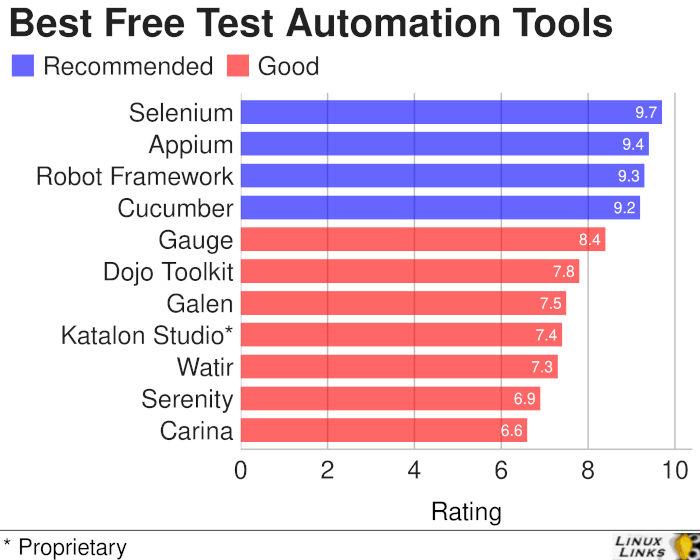
Key Features of Appium
- Appium supports almost every programming language and every framework. So the app tester need not learn a new framework or language and can start testing right away.
- Appium mobile app testing framework facilitates reusability of the code by using the same APIs for multiple platforms.
- The framework has an extremely large and active community that can help you with every problem in no time.
- Appium works with real devices, emulators and simulators as well.
- Appium does not let you compile the application in the Appium environment because of the issues it creates later on after shipping in a different environment. Hence, Appium runs its test on the same development framework and language to give confidence around the application development.
- The framework can be integrated with CI/CD tools very easily.
Run your free mobile tests on Appium grid.
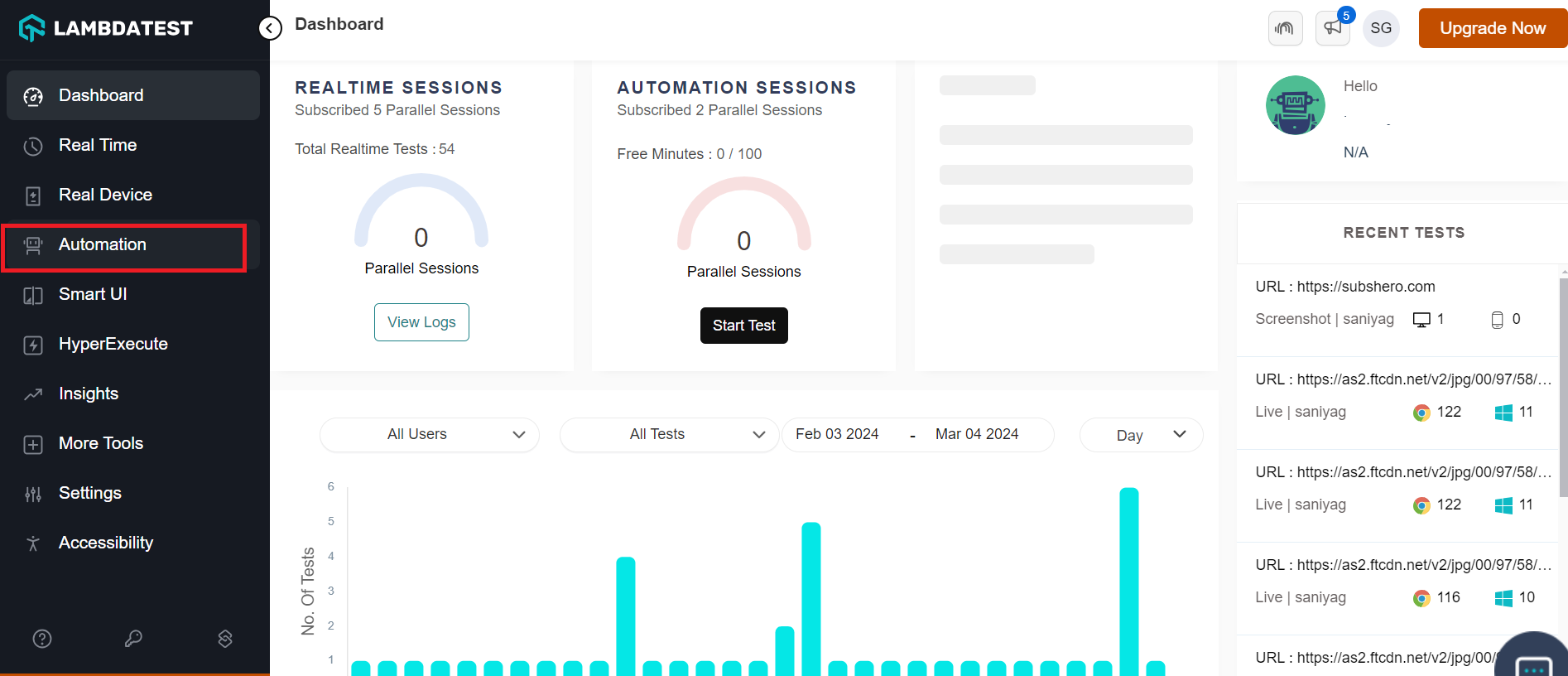
TestMu AI automation screen
TestMu AI is a cloud based mobile app testing platform. TestMu AI offers a reliable, scalable, secure Appium test execution cloud that helps app testers accelerate their release cycles. You can test using emulators, simulators, and real device cloud. In addition, you can access any device you need directly from your desktop browser. Up your game with free Android automation testing via Appium.
TestMu AI
Here’s a short glimpse of TestMu AI mobile app testing features:
Subscribe to the TestMu AI YouTube Channel and stay updated with the latest tutorials around Selenium testing, Cypress testing, Appium testing,XCUITest testing, and more.
Key Features of TestMu AI
- TestMu AI is an AI-native test orchestration and execution platform that lets you run manual and automated tests at scale with over 3000+ real devices cloud, browsers and OS combinations.
- The platform provides unique features such as geolocation testing, localization testing, app test automation etc., that are not available on many other platforms.
- TestMu AI provides a lot of integrations for the app testers to enhance the platform’s functionality and provide a one-stop solution to app testers.
- The platform is easy to learn and is faster to launch the applications on their virtual testing platform and real device cloud.
- Run tests in parallel on Appium mobile device cloud at scale. Run tests at scale across multiple devices at a time and reduce your overall test execution time by more than 10X.
What’s your favorite tool?
Mobile app testing frameworks are on the rise today due to their software development and delivery needs. While there are many more mobile app testing frameworks, we focused on the top four in each category and gave insights about them. But a framework is good as long as people like us prefer it in our day-to-day testing scenarios. Let us know your personal favorite mobile app testing framework and the reason you prefer them above all else. Please mention your answers and suggestions in the comment section below.
I hope this post helps you decide your mobile app testing framework if you are new in testing or helps you recalibrate your existing choices. Till then, happy mobile testing!
To further strengthen your expertise in mobile app development and mobile testing, be sure to check out our comprehensive guide on top asked mobile testing interview questions. This resource will equip you with the knowledge needed to excel in this dynamic field.


Frequently asked questions
Did you find this page helpful?
More Related Hubs
TestMu AI forEnterprise
Get access to solutions built on Enterprise
grade security, privacy, & compliance
- Advanced access controls
- Advanced data retention rules
- Advanced Local Testing
- Premium Support options
- Early access to beta features
- Private Slack Channel
- Unlimited Manual Accessibility DevTools Tests