

Next-Gen App & Browser Testing Cloud
Trusted by 2 Mn+ QAs & Devs to accelerate their release cycles


On This Page
- About TestMu AI XP Series Webinar & Speaker
- Decoding Shift Left: QA’s Early Advantage
- Implementing Shift Left: Pro Tips for Agile Efficiency
- Quality Driven Development (QDD): Redefining Excellence
- Cross-Functional Team Challenges: A Deep Dive
- Automated Testing Explained: Efficiency and Beyond
- Feedback Loops: Balancing Agility with Precision
- Q&A Session
- Closing Remarks: Hope It Sparked Ideas!

- Home
- /
- Blog
- /
- Webinar: Shift-Left: Accelerating Quality Assurance in Agile Environments [Experience (XP) Series]
Webinar: Shift-Left: Accelerating Quality Assurance in Agile Environments [Experience (XP) Series]
Discover the power of Shift-Left and Quality Driven Development (QDD) in Agile. Unveil early testing secrets and reshape your approach to software quality.

Yash Bansal
December 19, 2025
Agile methodologies guide teams to deliver high-quality products efficiently and quickly in the ever-changing software industry. As the demand for rapid innovation increases, QA in the Agile process becomes pivotal. Therefore, by implementing the shift-left concept, quality assurance tasks are moved earlier in the development lifecycle, challenging traditional testing timelines.
Quality-Driven Development (QDD) is a guiding beacon for improving testing practices in the shift-left revolution. It is a transformative concept, changing how teams or organizations view the connection between quality and development. It’s a mindset that highlights collaboration, proactive testing and shared responsibility for software quality within the development team.
Tune in to our XP webinar featuring Steve, who unravels the intricacies of shift-left and QDD, where he shares practical strategies and real-world experiences, offering a deep dive into how methodologies accelerate quality assurance in Agile environments.
In this blog, we’ll embark on a journey through the dynamic realm of shift-left, exploring how it accelerates the QA process and fosters a culture of continuous improvement in Agile environments. So, without any further ado, let’s dive deep in.
About TestMu AI XP Series Webinar & Speaker
TestMu AI Experience (XP) Series includes recorded webinars/podcasts and fireside chats featuring renowned industry experts and business leaders in the testing & QA ecosystem. In this XP Series webinar, we had a distinguished speaker, Steve Caprara, Director of QA at Plexus Worldwide.
With nearly two decades of experience in the Information Technology domain, Steve has worn multiple hats, from hands-on testing to shaping automation frameworks. His trailblazing work includes the concept of quality-driven development (QDD), where he has seamlessly woven quality into the fabric of software development, influencing how organizations approach building top-notch software.

Decoding Shift Left: QA’s Early Advantage
In the context of QA, Steve presents the idea of “shift-left” and discusses how it affects organizations at various phases. Steve stressed the difficulties seasoned businesses and startups encounter while implementing this strategy. Steve uses an illustration of the complex decision-making required in software development to reflect on how organizations often concentrate on the final product without exploring the nuances of its development.
Steve agrees with the widespread belief that “if it ain’t broke, don’t fix it.” Still, he also emphasizes the need for a shift-left mindset, especially in organizations where quality assurance is frequently an afterthought. While acknowledging QA’s importance in identifying issues before they affect customers, he also highlights the possible block it may cause in the development cycle.
Implementing Shift Left: Pro Tips for Agile Efficiency
Steve delves into the shift-left approach’s implementation, providing insights into the challenges and changes required in traditional organizational structures. He describes the commonly used waterfall approach and the practice of throwing development work over the wall to QA, referring to it as a data-driven development cycle.
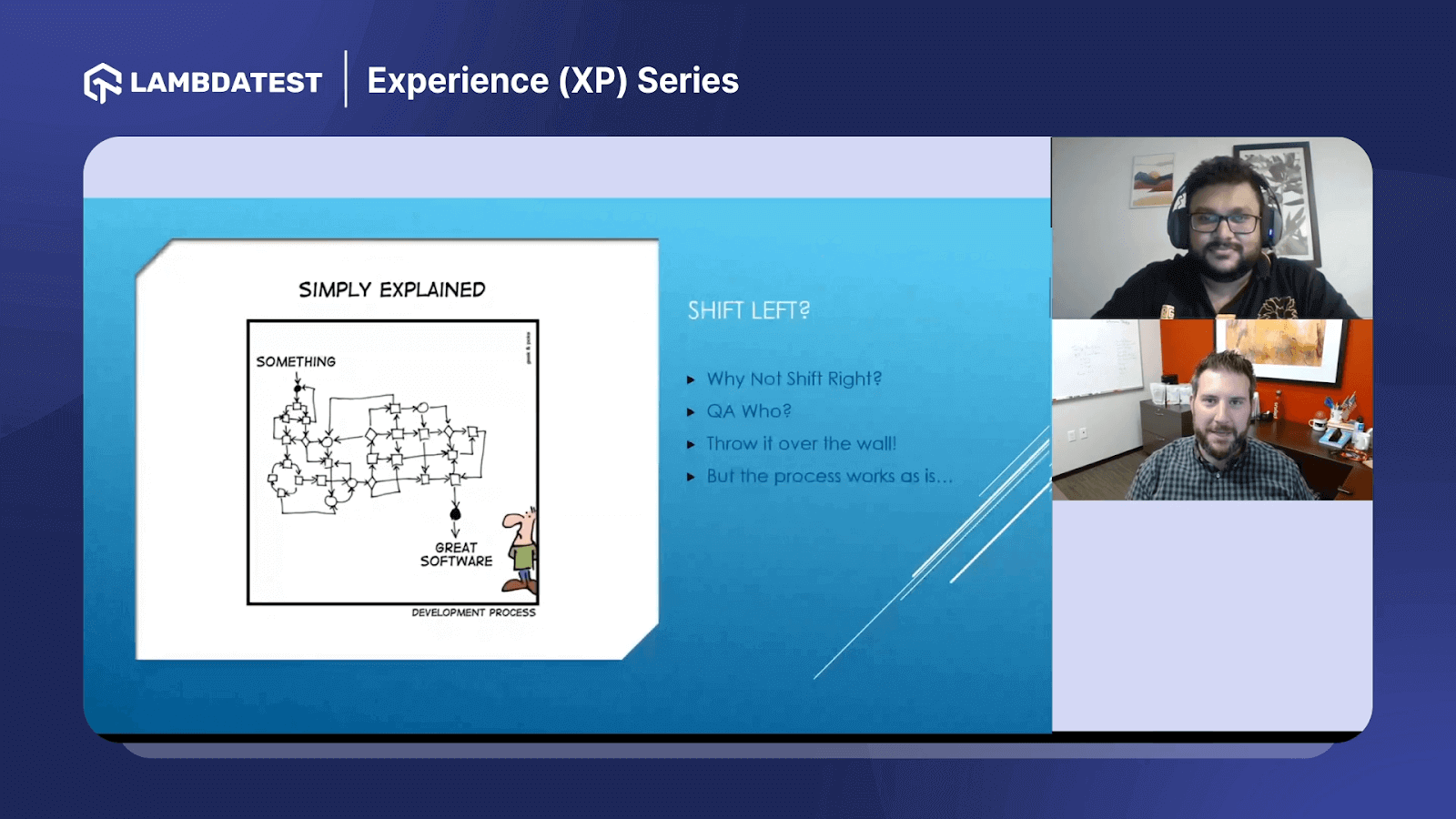
Steve emphasizes the situation in which QA is tasked with testing code and frequently has to return it with errors, bugs, and defects. He recognizes the need to change this mindset and discusses the difficulties of moving from siloed structures to cross-functional teams. He emphasizes the fear of change and the importance of leaders explaining the “why” behind the shift and promoting skill development in multiple areas.
Cross-Functional Team Challenges: A Deep Dive
Steve discusses the difficulties in creating cross-functional teams, talking about anxiety, resistance, and challenges that come with dismantling silos and switching from solo efforts to cooperative team efforts. Steve emphasizes that the team must take on challenges instead of depending on the person.
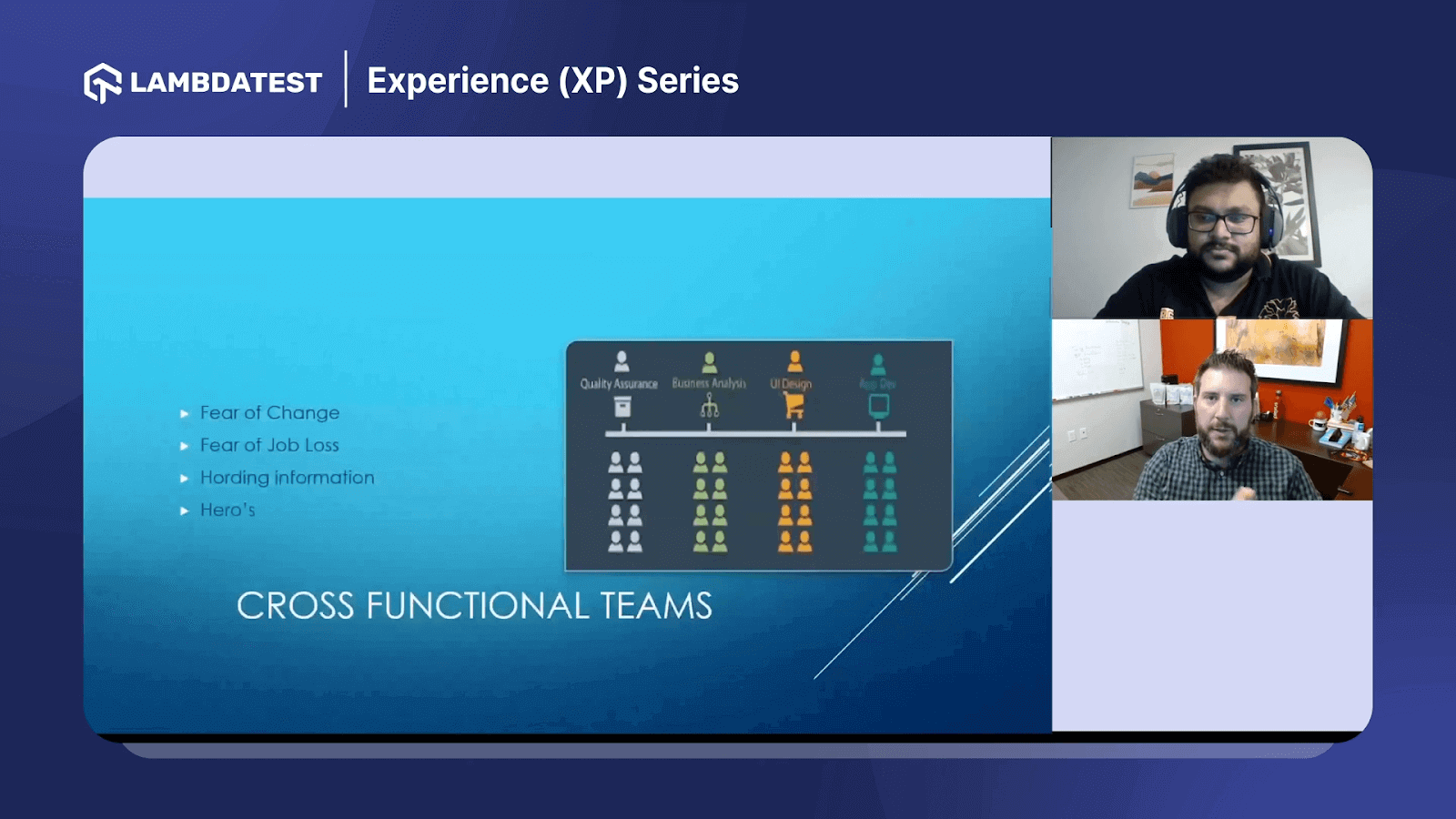
Steve promotes a paradigm that fosters a mindset of collective achievement by showing how team success leads to opportunities for individual growth. He also highlights a famous book, “The Phoenix Project,” as an essential source demonstrating how cross-functional teams affect DevOps procedures and organizational success.
Quality Driven Development (QDD): Redefining Excellence
Quality-Driven Development (QDD) is a paradigm-shifting approach that sets itself apart from well-established methodologies such as Behavior-Driven Development (BDD) and Test-Driven Development (TDD) as it covers the organization’s entire testing approach, in contrast to these practices.
Steve highlighted that when it comes to shift-left, there are many benefits to starting the development cycle with quality, which minimizes hot fixing in production, speeds up releases, lowers code churn, and eases release issues.
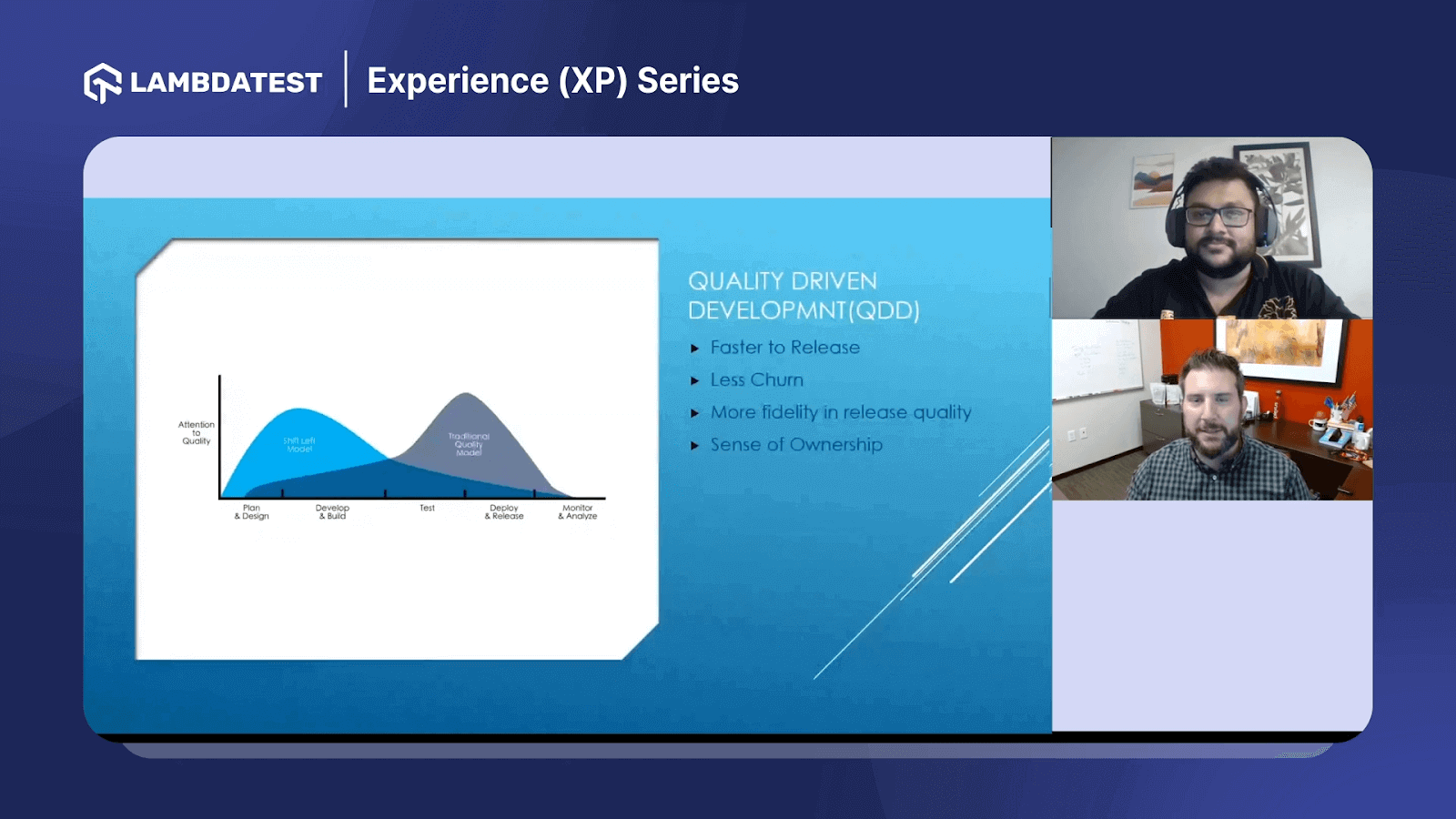
Although the initial pace may be slower, the upfront investment in quality pays off in the long run regarding speed, leverage, agility, and release quality fidelity. This is a great place to apply Dr. Stephen R. Covey’s “Beginning with the end in mind” principle, which emphasizes the importance of producing high-quality deliverables from the very beginning of the project.
To make QDD effective, businesses must communicate with upper management regularly. Since the success of QDD depends on breaking down silos and considering QA as an essential component of the development team rather than as a stand-alone organization, therefore, QDD strategy encourages teams to work together, be self-assured, and have a shared sense of ownership.
Automated Testing Explained: Efficiency and Beyond
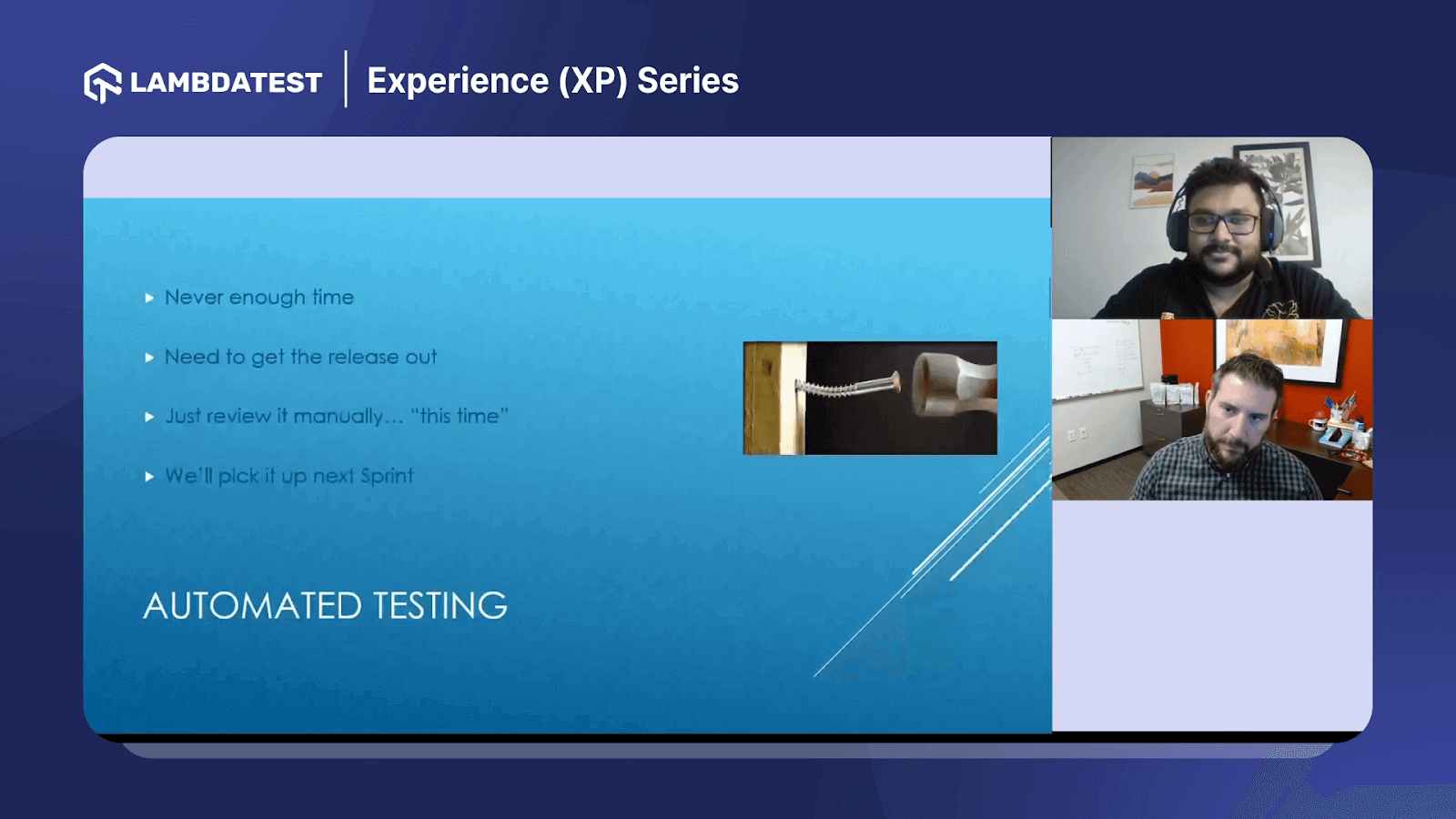
Steve highlighted the difficulties and myths surrounding automated testing in the shift-left methodology by highlighting the drawbacks of a daily release cycle, releases, and hotfixes. However, the need for infrastructure, pipelines, and DevOps is essential to implement shift-left effectively, coordinating for release structures. Therefore, extensive testing is required, and the team has to opt in between automated and manual testing.
Feedback Loops: Balancing Agility with Precision
Steve emphasizes the importance of moving testing to the left of the development cycle to improve feedback loops and guarantee better code quality. He draws attention to the problems with delayed bug detection that arise when testing is postponed and how this affects developers. Therefore, QA participation is crucial in providing developers with prompt feedback upon bug discovery and prioritizing bug prevention.
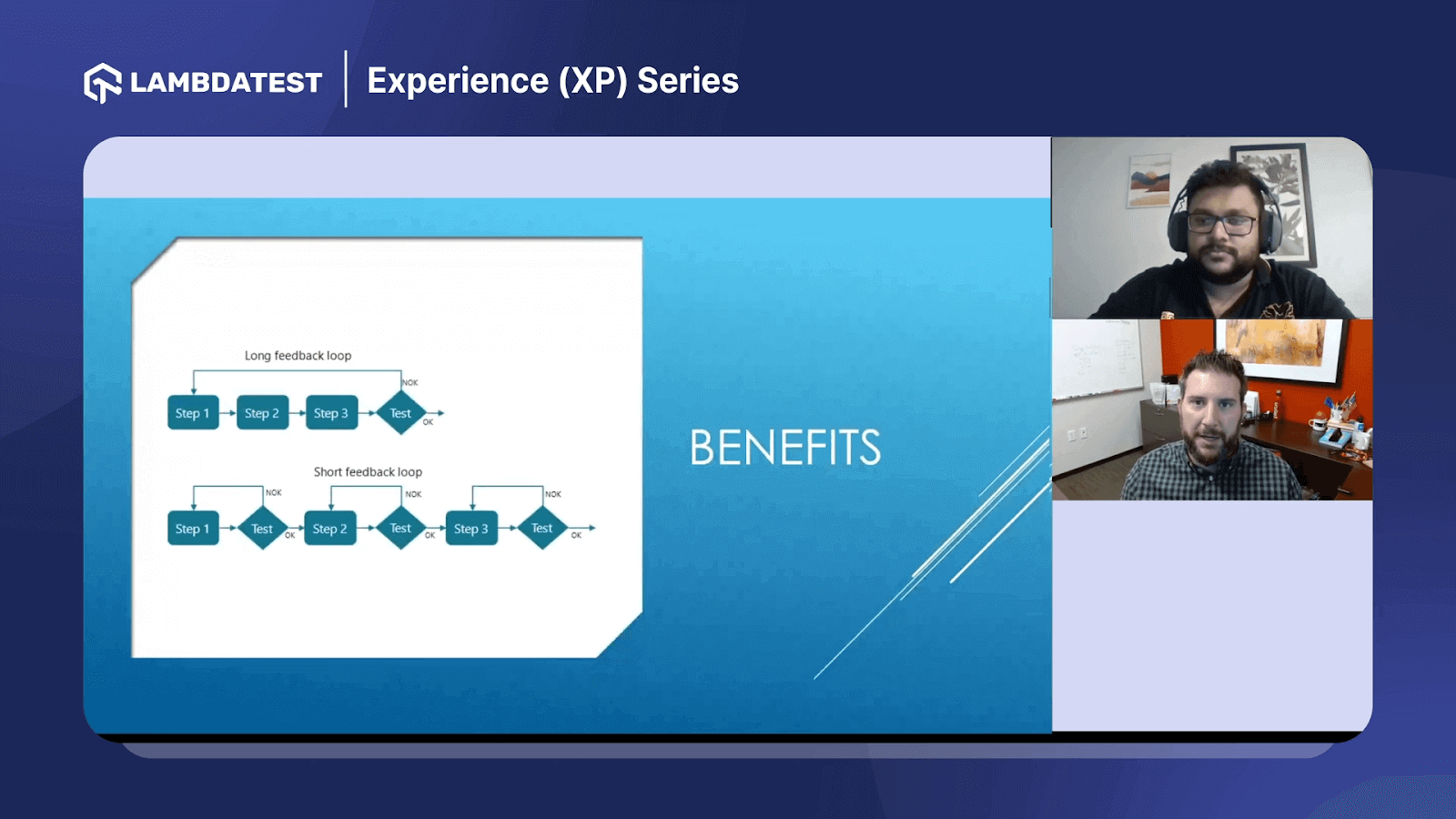
Steve suggested incorporating developers in testing to use automation testing frameworks and support parallel testing alongside manual testing. Based on his experience, he recommends establishing a collaborative, cross-functional setting where developers can contribute tests. Applying shift-left theory, he argues that dynamic testing through APIs is preferable to static as it allows thorough validations. Therefore, adopting a shift-left approach not only improves the overall development cycle but also helps in accelerating testing and consistency.
Q&A Session
Q: According to you, when is an ideal time for teams to initiate a shift-left approach in their automation journey?
Steve: YESTERDAY!! 😆 According to me, the perfect time to shift left in automation is futile. Many organizations struggle to find the right moment, but there’s always a new project or roadblock. Inception is the ideal time to foster a mindset shift. Despite pushback, taking the initial step is crucial for lasting change. It may be gradual, but achieving 1% improvement daily leads to significant progress.
For those new to automation, start with tools like Selenium IDE or TestMu AI for cross-browser testing. Initiate small steps, record successes, and propose a POC to leadership for a dedicated time. Act now takes small initiatives that yield substantial improvements. Don’t wait for the perfect moment; start your automation journey now.
Q: What role do manual testers play in shift-left, and how can they contribute beyond automation to ensure comprehensive testing and quality?
Steve: Manual testers should prioritize developing their automation skills for career growth, acknowledging its importance but not as the sole path. Despite transitioning a manual team to automation, manual testers remain indispensable. They bring a unique perspective to the testing lifecycle, excelling in identifying nuanced issues and unforeseen boundary conditions. Their distinct thinking adds value, as showcased by a tester finding a potential release blocker through an unconventional scenario. The jest around skilled manual testers at an organization reflects their recognized contributions.
While automated team members focus on integration issues and regression breaks, adept manual testers excel in uncovering functional boundary conditions. Manual testers should embrace their role, demonstrating their ability to think differently and surpass expectations. Their exceptional findings showcase their vital role in testing, proving their unique approach in the evolving automation landscape.
Closing Remarks: Hope It Sparked Ideas!
As we fall curtains on this journey of shift-left and QDD, we give our special thanks to Steve for sharing his invaluable perspectives. We hope this webinar has been a food for thought in implementing shift-left methodologies in your development and testing cycle.
But this adventure with us hasn’t paused yet; we’ll continue with more such exciting journeys, so stay tuned with us for upcoming episodes of our TestMu AI Experience (XP) Series webinars! Until then, keep innovating and testing till more revelations for you!
#TestMu AIYourApps❤️


Did you find this page helpful?
More Related Hubs
TestMu AI forEnterprise
Get access to solutions built on Enterprise
grade security, privacy, & compliance
- Advanced access controls
- Advanced data retention rules
- Advanced Local Testing
- Premium Support options
- Early access to beta features
- Private Slack Channel
- Unlimited Manual Accessibility DevTools Tests