• Home
  • /
  • Blog
  • /
  • Top 9 Sauce Labs Alternatives in 2026
Cloud TestingAutomation Testing

Top 9 Sauce Labs Alternatives in 2026

Explore the top 9 Sauce Labs alternatives in 2026. Compare cloud testing platforms and open-source frameworks by features, pricing, and real device support.

Author

Swapnil Biswas

April 9, 2026

The cloud testing market is valued at $1.99 billion in 2026 and projected to reach $2.74 billion by 2031, according to Mordor Intelligence. As teams scale test automation across browsers, devices, and CI/CD pipelines, the platform they choose directly impacts release velocity and test reliability.

Sauce Labs is a well-known cloud testing provider, but rising costs, limited real device coverage, and setup complexity push many QA teams to evaluate alternatives. Platforms like TestMu AI now offer wider device coverage at lower cost, while open-source frameworks like Playwright provide zero-license options. This guide covers 9 Sauce Labs alternatives so you can pick the right fit for your team's budget, stack, and scale.

Overview

What Are the Best Sauce Labs Alternatives?

The top alternatives fall into two categories: managed cloud platforms and open-source/self-hosted tools.

  • TestMu AI: Largest real device cloud (10,000+ devices), AI-powered test authoring, fastest execution via HyperExecute.
  • TestingBot: Budget-friendly cloud testing starting at ~€20/month with 5,200+ browser and device combinations.
  • AWS Device Farm: Pay-per-minute model ($0.17/min) with native AWS ecosystem integration.

When Should You Choose Open Source?

If your team has DevOps capacity and wants zero licensing costs, Selenium Grid 4, Playwright, and Cypress give you full control over your test infrastructure.

Why Teams Switch from Sauce Labs

Sauce Labs holds a 4.3 out of 5 rating on G2 across 178 reviews, but several recurring pain points drive teams to look elsewhere:

  • High cost at scale: Sauce Labs pricing starts at $39/month for live testing and $149/month for virtual cloud automation. Teams running thousands of tests per day often find the bill climbs faster than expected.
  • Limited real device inventory: Compared to platforms offering 10,000+ physical devices, Sauce Labs' real device catalog is smaller, which can be a blocker for teams testing across fragmented Android ecosystems.
  • Setup complexity: Configuring tunnels, capabilities, and environment variables requires upfront investment. Teams with lean QA resources report a steep onboarding curve.
  • Slower test execution: Queue wait times and cold-start delays on virtual machines reduce the speed advantage of parallel execution, especially during peak hours.
  • Limited result retention: Test artifacts such as logs, screenshots, and videos are retained for a limited period, making historical debugging harder for long release cycles.

For context, Sauce Labs Virtual Cloud costs $149/month (annual) for a single parallel session. Scaling to 5 parallel sessions on that tier multiplies the cost significantly. Alternatives like TestMu AI offer a free tier and paid plans from $15/month with broader device access, and open-source tools like Selenium Grid carry zero licensing cost.

Top 9 Sauce Labs Alternatives in 2026

This list includes four managed cloud platforms and five open-source or self-hosted options. Each entry covers what the tool does best, pricing, and who it fits.

1. TestMu AI (Formerly LambdaTest)

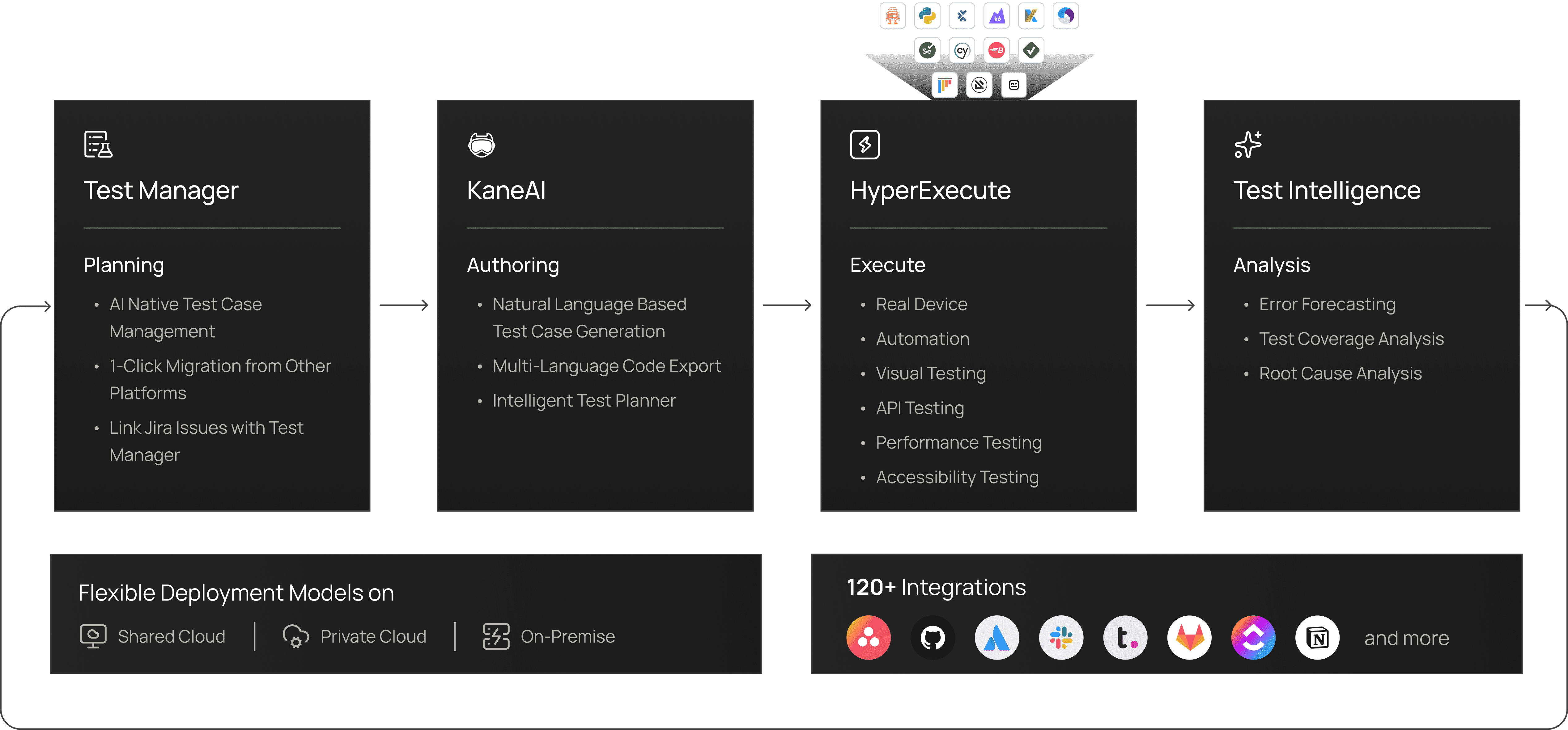
TestMu AI is an AI-native test automation platform that gives teams access to 10,000+ real Android and iOS devices, 3,000+ browser-OS combinations, and an orchestration engine called HyperExecute that runs tests up to 70% faster than traditional cloud grids.

KaneAI, its AI test agent, lets QA engineers author and maintain tests using natural language instead of writing scripts from scratch. Teams already using Selenium, Playwright, Cypress, or Appium can migrate existing suites by updating the hub URL and capabilities.

  • Best for: Teams that need the widest real device cloud, AI-powered testing, and fast parallel execution.
  • Pricing: Free tier available. Paid plans start at $15/month (billed annually). Enterprise pricing on request.
  • Key differentiator: HyperExecute splits test suites into micro-tasks across a distributed grid, eliminating the queue wait times common on Sauce Labs.
  • Frameworks supported: Selenium, Playwright, Cypress, Appium, Espresso, XCUITest, Puppeteer, and more.

A basic Selenium test on the TestMu AI cloud grid:

const webdriver = require("selenium-webdriver");

const capabilities = {
  browserName: "chrome",
  browserVersion: "latest",
  "LT:Options": {
    platformName: "Windows 11",
    build: "Sauce Labs Migration",
    name: "Homepage Test",
    w3c: true
  }
};

(async () => {
  const driver = new webdriver.Builder()
    .usingServer("https://hub.lambdatest.com/wd/hub")
    .withCapabilities(capabilities)
    .build();

  await driver.get("https://www.testmuai.com/selenium-playground/");
  const title = await driver.getTitle();
  console.log("Page title:", title);
  await driver.quit();
})();

2. TestingBot

TestingBot is a budget-friendly cloud testing platform with 5,200+ browser and device combinations across 15+ geographic locations. It supports Selenium, Appium, Cypress, and Playwright out of the box.

  • Best for: Small to mid-size teams that need cross-browser cloud testing without enterprise pricing.
  • Pricing: Live testing from €20/month (annual). Automated Pro (unlimited) from €90/month (annual). Pay-as-you-go from €60 per 1,000 minutes.
  • Key differentiator: Network throttling simulation (3G, 4G, offline) across all plans, plus testing from 15+ geographic locations.
  • Limitation: Smaller device lab compared to TestMu AI. No AI-powered test authoring or smart orchestration engine.
Note

Note: Looking for the widest real device coverage? TestMu AI offers 10,000+ real devices with AI-powered test authoring. Start free trial!

3. AWS Device Farm

AWS Device Farm is Amazon's managed device testing service, offering 2,500+ real Android and iOS devices with native integration into the AWS ecosystem. Its pay-per-minute pricing model suits teams with unpredictable test volumes.

  • Best for: Teams already on AWS that want mobile device testing without managing hardware.
  • Pricing: $0.17 per device minute (pay-as-you-go). Unmetered plans from $250/month per device slot. 1,000 free device minutes for new accounts.
  • Key differentiator: Deep integration with CodePipeline, CodeBuild, and S3 for CI/CD workflows. Private dedicated devices from $200/month.
  • Limitation: Desktop browser testing is secondary ($0.005/instance minute). No built-in visual regression testing. Limited to Appium, Espresso, and XCTest for mobile automation.

4. Aerokube Moon

Aerokube Moon is a Kubernetes-native browser automation platform that runs Selenium, Playwright, Cypress, and Puppeteer tests inside your own cluster. It is completely stateless, meaning it can be replicated across data centers with sessions surviving replica failures.

  • Best for: DevOps teams that want cloud-scale browser testing on their own Kubernetes infrastructure with full data sovereignty.
  • Pricing: Free tier with 4 parallel sessions. Paid tier at $5 per parallel session per month.
  • Key differentiator: Auto-scales with Kubernetes. One Moon replica consumes only 0.5 CPU and 512 MB RAM, making it resource-efficient.
  • Limitation: Requires a running Kubernetes or OpenShift cluster. No managed option; your team handles infrastructure.

5. Selenium Grid 4

Selenium Grid 4 is the open-source standard for distributed browser test execution. It uses the W3C WebDriver protocol and lets you run tests in parallel across multiple machines with zero licensing costs.

  • Best for: Teams that want complete control over their test infrastructure and have DevOps capacity to manage servers.
  • Pricing: Completely free. Costs are limited to your own server and infrastructure expenses.
  • Key differentiator: Full W3C compliance. The same WebDriver scripts that run on Sauce Labs work on Grid 4 with zero code changes.
  • Limitation: You manage browser installations, driver updates, scaling, and monitoring. No built-in device lab for mobile testing.
...

6. Playwright

Playwright is Microsoft's open-source browser automation framework with 85,800+ GitHub stars. It supports Chromium, Firefox, and WebKit out of the box, making it a strong choice for teams that want fast, reliable cross-browser tests without a cloud dependency.

Playwright runs tests in parallel by default, handles auto-waiting for elements, and includes a built-in trace viewer for debugging failures visually. Teams can run Playwright locally for speed, then scale to cloud platforms like TestMu AI when they need real device or cross-browser coverage at scale.

  • Best for: Teams that want modern, fast end-to-end testing with built-in auto-wait, tracing, and parallelism.
  • Pricing: Free and open source. Run locally or scale via cloud platforms like TestMu AI.
  • Key differentiator: Native support for multiple browser contexts, network interception, and API testing in the same framework. Trace viewer provides visual debugging of failed tests.
  • Limitation: No built-in cloud infrastructure for real device testing. For real device coverage, pair with a cloud platform.

7. Cypress

Cypress is a JavaScript-based end-to-end testing framework rated 4.7/5 on G2 across 106 reviews. Its unique architecture runs tests inside the browser, giving it direct access to the DOM and network layer for faster, more deterministic tests.

  • Best for: Frontend teams working with React, Vue, or Angular that prioritize developer experience and fast feedback loops.
  • Pricing: Open-source test runner is free. Cypress Cloud Team plan starts at $67/month (billed annually) with 120,000 test results per year.
  • Key differentiator: Time-travel debugging lets you hover over each command to see exactly what happened at that step. Automatic waiting eliminates flaky tests caused by timing issues.
  • Limitation: Chromium-family and Firefox only (no WebKit/Safari). No native mobile device testing. Multi-tab and multi-origin workflows require workarounds.
Note

Note: Run Cypress, Playwright, and Selenium tests on 10,000+ real devices with TestMu AI. Try free!

8. TestCafe

TestCafe is an open-source framework with approximately 9,900 GitHub stars that takes a fundamentally different approach: it injects test scripts into the browser via a proxy instead of using WebDriver. This eliminates driver installation and version compatibility issues entirely.

Setup requires a single npm install testcafe command with no additional binaries or drivers. Tests are written in JavaScript or TypeScript, and the framework handles element waiting automatically.

  • Best for: Teams that want near-instant setup with no browser driver management overhead.
  • Pricing: Free and open source. TestCafe Studio (commercial IDE with record-and-playback) is available as a paid option.
  • Key differentiator: No WebDriver dependency. Automatic wait handling and dialog dismissal reduce flaky tests. Supports Chrome, Firefox, Safari, Edge, and Opera.
  • Limitation: Smaller community and ecosystem compared to Playwright and Cypress. The proxy-based approach can interfere with certain CSP-strict applications.

9. WebdriverIO

WebdriverIO (v9) is an OpenJS Foundation project used by Google, Netflix, and Microsoft. It supports both WebDriver and WebDriver BiDi protocols and integrates natively with Appium for mobile testing on real devices, smart TVs, and IoT hardware.

Version 9 introduced first-class support for WebDriver BiDi, enabling real-time browser event streaming without polling. Its component testing feature lets you test React, Vue, and Svelte components in a real browser without a full application build.

  • Best for: Full-stack QA teams that need a single framework for web, mobile, and component testing with an extensive plugin ecosystem.
  • Pricing: Free and open source. Active Discord community with 8,000+ members for support.
  • Key differentiator: Built-in component testing for React, Vue, Svelte, Lit, and Solid. Auto-wait functionality reduces flaky tests. Extensive plugin ecosystem for custom integrations.
  • Limitation: Configuration can be complex for beginners. No built-in cloud infrastructure; pair with TestMu AI or another cloud platform for real device coverage.

All 9 Sauce Labs Alternatives at a Glance

Compare all nine tools side by side across pricing, device coverage, and category.

ToolTypeStarting PriceReal DevicesBest For
TestMu AICloudFree / $15/mo10,000+Widest coverage + AI test authoring
TestingBotCloud~€20/mo5,200+ combosBudget-friendly cloud testing
AWS Device FarmCloud$0.17/min2,500+AWS-native teams
Aerokube MoonSelf-hostedFree (4 sessions)None (browser only)Kubernetes-native scaling
Selenium Grid 4Self-hostedFreeNoneFull infra control, zero license cost
PlaywrightFrameworkFreeNone (pair with cloud)Modern cross-browser E2E
CypressFrameworkFree (Cloud: $67/mo)None (pair with cloud)Frontend-first dev experience
TestCafeFrameworkFreeNoneZero WebDriver setup
WebdriverIOFrameworkFreeVia AppiumFull-stack web + mobile + component

Cloud vs Self-Hosted: Quick Comparison

The nine alternatives above fall into two camps. Use this table to decide which model fits your team.

CriteriaCloud PlatformsSelf-Hosted / Open Source
Setup timeMinutes. Sign up, get credentials, run tests.Hours to days. Provision servers, install browsers, configure Grid or Kubernetes.
Cost modelMonthly subscription or per-minute billing. Predictable but can scale up with usage.Zero licensing. Infrastructure costs only (servers, compute, storage).
Real device accessThousands of physical devices managed by the provider (TestMu AI: 10,000+).Must purchase and connect your own devices, or skip real device testing.
MaintenanceProvider handles browser updates, OS patches, and device refresh cycles.Your team handles all updates, scaling, and monitoring.
Data controlTests run on provider infrastructure. Check SOC2/GDPR compliance.Full data sovereignty. Tests never leave your network.
Best forTeams that want speed and coverage without DevOps overhead.Teams with strict compliance needs or existing Kubernetes infrastructure.

Many teams use a hybrid approach: run unit and integration tests locally with Playwright or Cypress, then run cross-browser and real device tests on a cloud platform like TestMu AI. This keeps CI feedback fast (local tests complete in seconds) while catching device-specific bugs across real hardware. According to Mordor Intelligence, the cloud testing market is growing at a 6.56% CAGR through 2031, driven largely by this hybrid model where teams combine local open-source runners with cloud device coverage.

How to Migrate from Sauce Labs

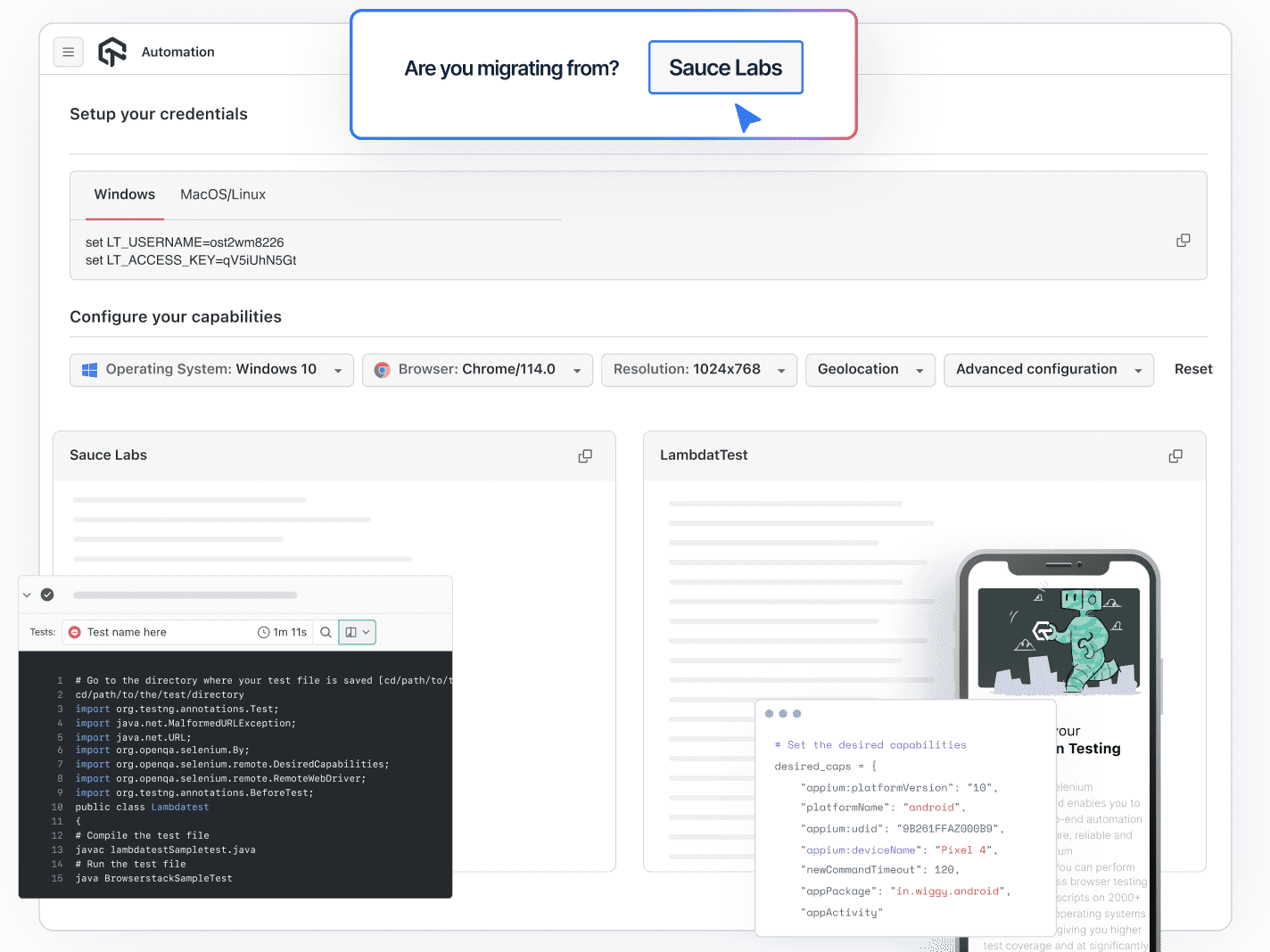
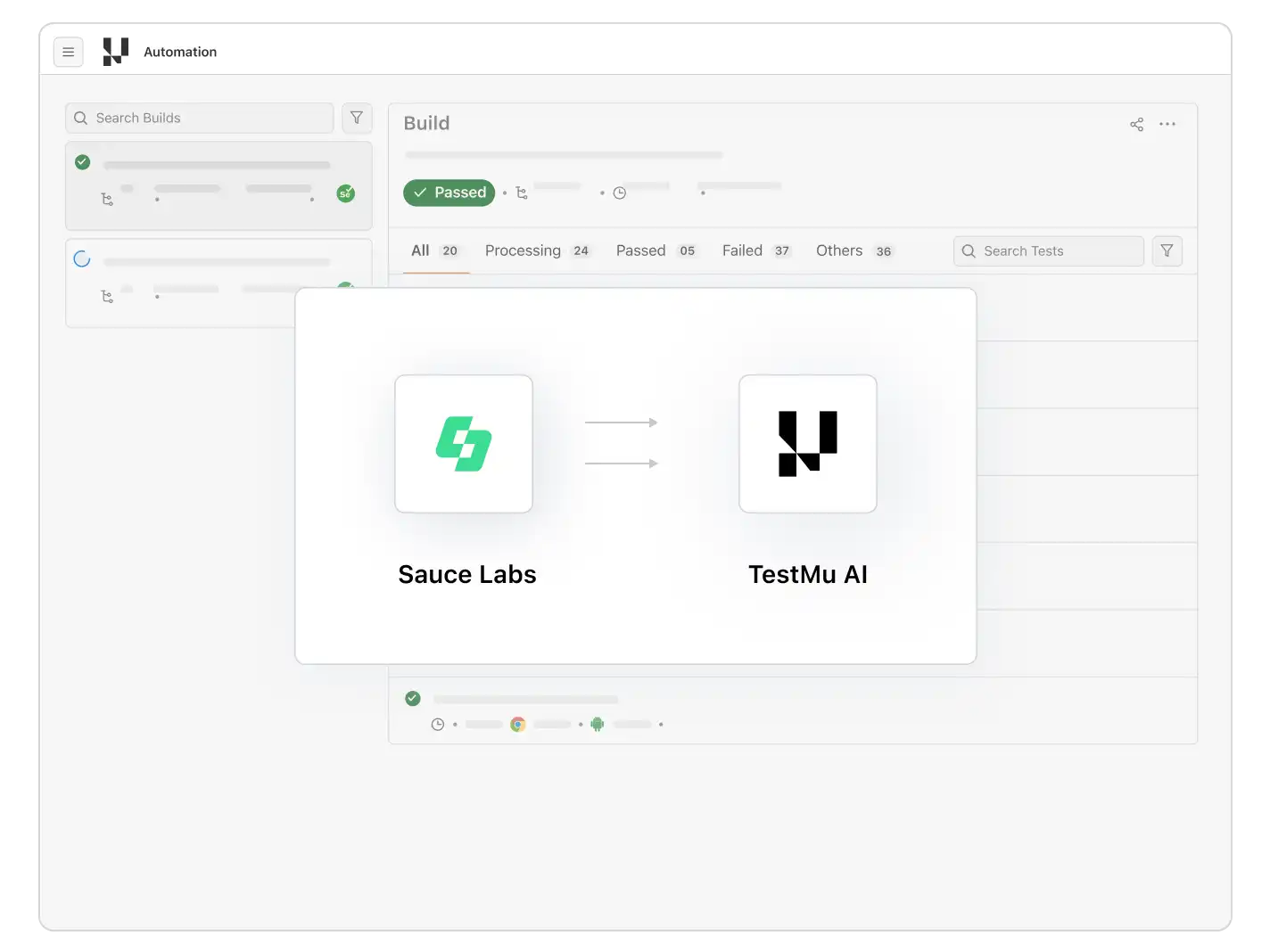
Most Sauce Labs alternatives use the same WebDriver and Appium protocols, which means migration is a config change, not a rewrite. TestMu AI provides a dedicated Sauce Labs to TestMu AI migration guide with step-by-step instructions for Selenium 3 and 4. The core process takes three steps:

  • Update the hub URL. Replace the Sauce Labs remote server with the TestMu AI endpoint.
  • Swap the capabilities. Replace sauce:options with LT:Options and add your TestMu AI credentials.
  • Run and verify. Execute your suite and compare results. The same assertions, locators, and test logic work without changes.

Before (Sauce Labs):

const driver = new webdriver.Builder()
  .usingServer("https://ondemand.us-west-1.saucelabs.com/wd/hub")
  .withCapabilities({
    browserName: "chrome",
    platformName: "Windows 11",
    "sauce:options": {
      username: "SAUCE_USERNAME",
      accessKey: "SAUCE_ACCESS_KEY",
      build: "My Build"
    }
  })
  .build();

After (TestMu AI):

const driver = new webdriver.Builder()
  .usingServer("https://hub.lambdatest.com/wd/hub")
  .withCapabilities({
    browserName: "chrome",
    browserVersion: "latest",
    "LT:Options": {
      username: process.env.LT_USERNAME,
      accessKey: process.env.LT_ACCESS_KEY,
      platformName: "Windows 11",
      build: "My Build",
      name: "Migrated Test",
      w3c: true
    }
  })
  .build();

The test logic, assertions, and page interactions stay identical. Only the connection config changes.

What about Playwright and Cypress? These frameworks support the same migration pattern. Update the grid endpoint in your Playwright config or Cypress project settings to point to TestMu AI, and your existing tests run on 10,000+ real devices without code changes. For framework-specific migration details, see the HyperExecute documentation or the Appium alternatives guide for mobile test migration.

How to Choose the Right Sauce Labs Alternative

Match the tool to your constraints. Use this decision framework:

  • Need the widest real device coverage: TestMu AI (10,000+ devices) is the clear choice. No other platform matches the device count and framework breadth.
  • Budget under $100/month: TestingBot gives you managed cloud testing from ~€20/month. AWS Device Farm's pay-per-minute model keeps costs proportional to usage.
  • Already on AWS: AWS Device Farm integrates natively with CodePipeline and S3. No separate vendor relationship needed.
  • Must keep tests on-premise: Aerokube Moon (Kubernetes) or Selenium Grid 4 (bare metal) give you full data sovereignty with zero external dependencies.
  • Frontend-first team: Cypress for React/Vue apps with a tight developer feedback loop. Playwright for broader browser coverage including WebKit.
  • Full-stack testing needs: WebdriverIO covers web, mobile, and component testing in one framework.
  • Zero driver management: TestCafe's proxy-based architecture eliminates WebDriver compatibility headaches entirely.
...

Conclusion

Start by identifying your biggest pain point with Sauce Labs: is it cost, device coverage, speed, or control? That single constraint will narrow the list to two or three options.

For most teams, TestMu AI is the most direct upgrade: same protocol support, wider device coverage, faster execution with HyperExecute, and AI-powered test authoring via KaneAI. Check the HyperExecute getting started guide to run your first migrated test suite in under 10 minutes.

If budget is the priority, TestingBot and AWS Device Farm deliver managed cloud testing at a fraction of the cost. For teams with DevOps capacity, open-source options like Selenium Grid 4 and Playwright give you zero-license testing with full infrastructure control. TestMu AI also offers 300+ free online tools for developers and testers, from JSON validators to hash generators.

Author

Swapnil Biswas is a Product Marketing Manager at TestMu AI, leading product marketing for KaneAI and HyperExecute while orchestrating GTM campaigns and product launches. With 5+ years of experience in product marketing and growth strategy, he specializes in AI, SEO, and content marketing. Certified in Selenium, Cypress, Playwright, Appium, KaneAI, and Automation Testing, Swapnil brings hands-on expertise across web and mobile automation. He has authored 20+ technical blogs and 10+ high-ranking articles on CI/CD, API testing, and defect management, enabling 70K+ testers to improve automation maturity. His work earned him multiple awards, including Top Performer, Value of Agility, and Wall of Fame. Swapnil holds a PG Certificate in Digital Marketing & Growth Strategy from IIM Visakhapatnam and a BBA in Marketing from Amity University.

Open in ChatGPT Icon

Open in ChatGPT

Open in Claude Icon

Open in Claude

Open in Perplexity Icon

Open in Perplexity

Open in Grok Icon

Open in Grok

Open in Gemini AI Icon

Open in Gemini AI

Copied to Clipboard!
...

3000+ Browsers. One Platform.

See exactly how your site performs everywhere.

Try it freeArrowArrow
...

Write Tests in Plain English with KaneAI

Create, debug, and evolve tests using natural language.

Try for freeArrowArrow

Frequently asked questions

Did you find this page helpful?

More Related Hubs

TestMu AI forEnterprise

Get access to solutions built on Enterprise
grade security, privacy, & compliance

  • Advanced access controls
  • Advanced data retention rules
  • Advanced Local Testing
  • Premium Support options
  • Early access to beta features
  • Private Slack Channel
  • Unlimited Manual Accessibility DevTools Tests