

Power Your Software Testing with AI Agents and Cloud
The Native AI-Agentic Cloud Platform to Supercharge Quality Engineering. Test Intelligently and Ship Faster.


- TestMu AI (Formerly LambdaTest)
- /
- Blog
- /
- 9 Best Mainframe Testing Tools for 2026
9 Best Mainframe Testing Tools for 2026
A practical comparison of the best mainframe testing tools for COBOL, JCL, CICS, and DB2, from unit testing and terminal automation to test data and CI/CD.
Last Updated on:
The best mainframe testing tools validate COBOL, JCL, CICS, and DB2 workloads on IBM Z, and the strongest for 2026 are IBM Test Accelerator for Z, BMC AMI DevX Total Test, and the open-source Galasa framework.
In BMC's 20th Annual Mainframe Survey of more than 1,000 practitioners, 97% held a positive view of the platform and 72% reported growth in general-purpose capacity.[1]
This guide covers what mainframe testing tools are, how to choose one, the 9 tools QA teams use most, how they fit into CI/CD, and the common challenges teams hit.
Key Takeaways
To test mainframe applications, use IBM Test Accelerator for Z for virtualized unit and integration testing, or the open-source Galasa framework for end-to-end integration testing across z/OS and distributed systems. Selecting the right tool depends on whether you are validating code-level COBOL logic or screen-level terminal flows.
- Best for isolated developer testing: IBM Test Accelerator for Z virtualizes calls to CICS, DB2, and other subsystems, allowing z/OS developer teams to run isolated unit and integration tests in seconds without waiting for shared environments.
- Best for pipeline-integrated testing: BMC AMI DevX Total Test automates unit, functional, and regression testing for COBOL, PL/I, and Assembler on z/OS, integrating directly with DevOps tools like Jenkins to gate deployments.
- Best for open-source integration testing: Galasa is a vendor-neutral, open-source framework that provisions environments, creates test data, and runs end-to-end integration tests across both z/OS and distributed systems using remote terminal execution.
- Best for COBOL unit testing: IBM Z Open Unit Test provides automated unit testing with record and playback of test data, enabling COBOL developers to run unit tests inside an IBM Developer for z/OS workflow.
- Best for dependency analysis: IBM Application Discovery and Delivery Intelligence visualizes z/OS applications, data, and jobs to map code dependencies and analyze the impact of changes before regression testing begins.
- Best for test data masking: Broadcom Test Data Manager generates, subsets, and masks DB2 and IMS data directly on the mainframe, ensuring compliance by obfuscating sensitive fields without moving data off-host.
- Best for agentless terminal automation: T-Plan Robotic Automation uses an image-based, agentless approach to automate 3270 green-screen testing, making it ideal for locked-down banking and insurance systems that forbid new software installations.
- Best for cross-application terminal testing: Worksoft Certify automates 3270 and 5250 terminal testing by importing screen maps to navigate and assert, making tests highly resilient to layout shifts across connected enterprise applications.
- Best for free batch unit testing: COBOL Check is an open-source, emeritus-status framework that allows developers to run fine-grained unit tests and practice test-driven development on batch COBOL programs at no cost.
- Best for unified test management: TestMu AI integrates mainframe pipeline results from tools like Jenkins with manual 3270 session outcomes, providing a single dashboard for unified coverage and requirement traceability.
- Running heavy test suites directly on the mainframe increases MIPS billing, so teams should consider tools that virtualize execution or run off-host to control costs.
What Are Mainframe Testing Tools?
Mainframe testing tools are software that validates COBOL and PL/I programs, JCL batch jobs, CICS online transactions, and DB2 or IMS data on IBM Z systems. They cover unit, functional, integration, and regression testing, and modern tools run those tests from a pipeline rather than from a 3270 green screen.
The reason these tools stay a separate category is that a mainframe application is three test surfaces stacked together, and each breaks in a different way. Batch jobs process files and update databases in bulk, so a defect shows up as a wrong record count or an abend code, not a red UI element. CICS online transactions run through 3270 screens, so a defect shows up as a bad field validation or a failed commit.
DB2 and IMS hold the data both layers touch, so a change to a copybook can pass a screen test and still corrupt a downstream file. A generic web-UI automation tool sees none of this, which is why mainframe teams reach for tools built for the platform. For the underlying concepts and process, the guide on mainframe testing covers the types and workflow in depth.
How Do You Choose a Mainframe Testing Tool?
Choose a mainframe testing tool by the layer you test, the data you touch, and the pipeline you run in. Code-level tools test COBOL and PL/I directly and need programming knowledge, screen-level tools drive 3270 terminals and need less, and both must handle test data masking and CI/CD triggering to fit a modern release.
Five criteria decide the fit, and the trade-offs are real.
- Test layer: the first criterion, because a code-level unit test isolates one program, while a terminal test covers an end-to-end business flow, and few tools do both well.
- Test data: the second gate, because a suite that reads production DB2 records needs masking before it runs, and that step often lives in a separate tool.
- MIPS cost: the third, because running a large suite on the mainframe consumes billed capacity, so tools that virtualize execution or run off-host save money at scale.
- Skills: the fourth, since screen-level tools open testing to functional QA while code-level tools assume COBOL fluency.
- CI/CD: the fifth, covered by the guide on automation testing in CI/CD pipeline, because a tool that cannot be triggered from Jenkins or GitHub Actions keeps the mainframe outside the release train.
What Are the Best Mainframe Testing Tools?
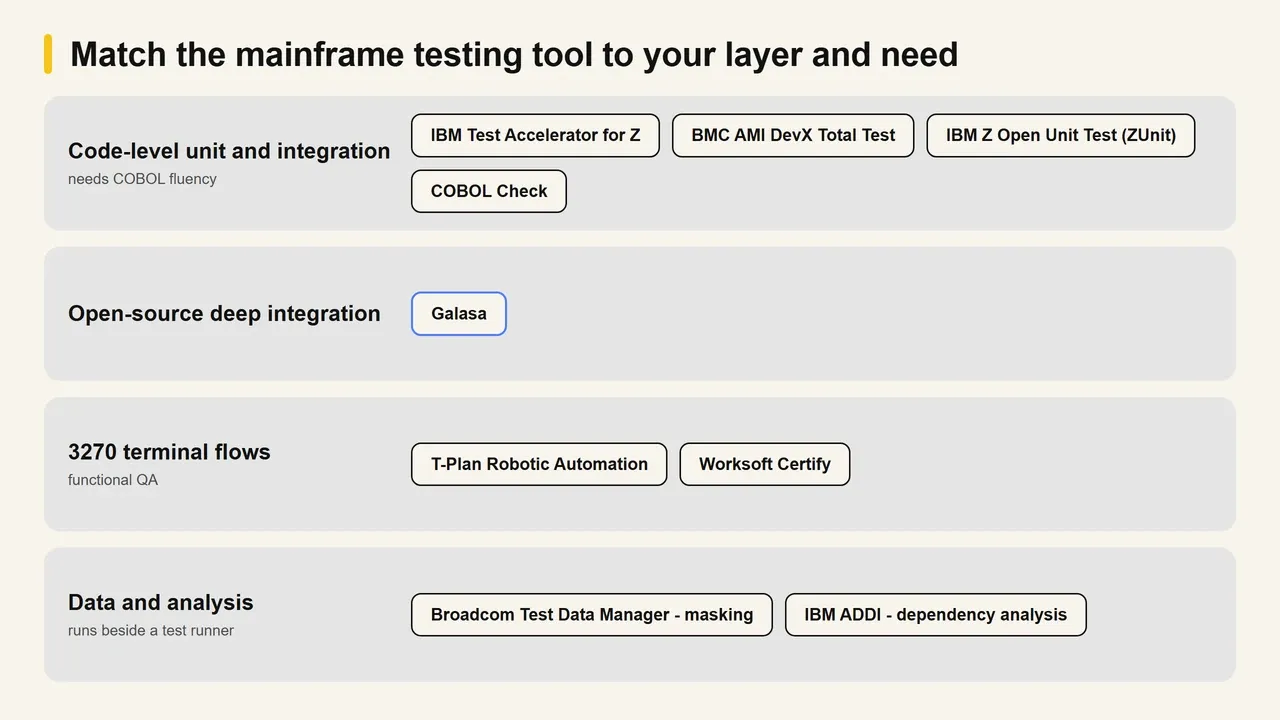
The best mainframe testing tools split into four jobs: code-level unit and integration testing, terminal automation, dependency analysis, and test data. The 9 tools below are grouped by that job so you can pick for the layer you actually test, rather than by a single ranked score. None of them replaces the others outright, and most mature teams run two or three together.
1. IBM Test Accelerator for Z
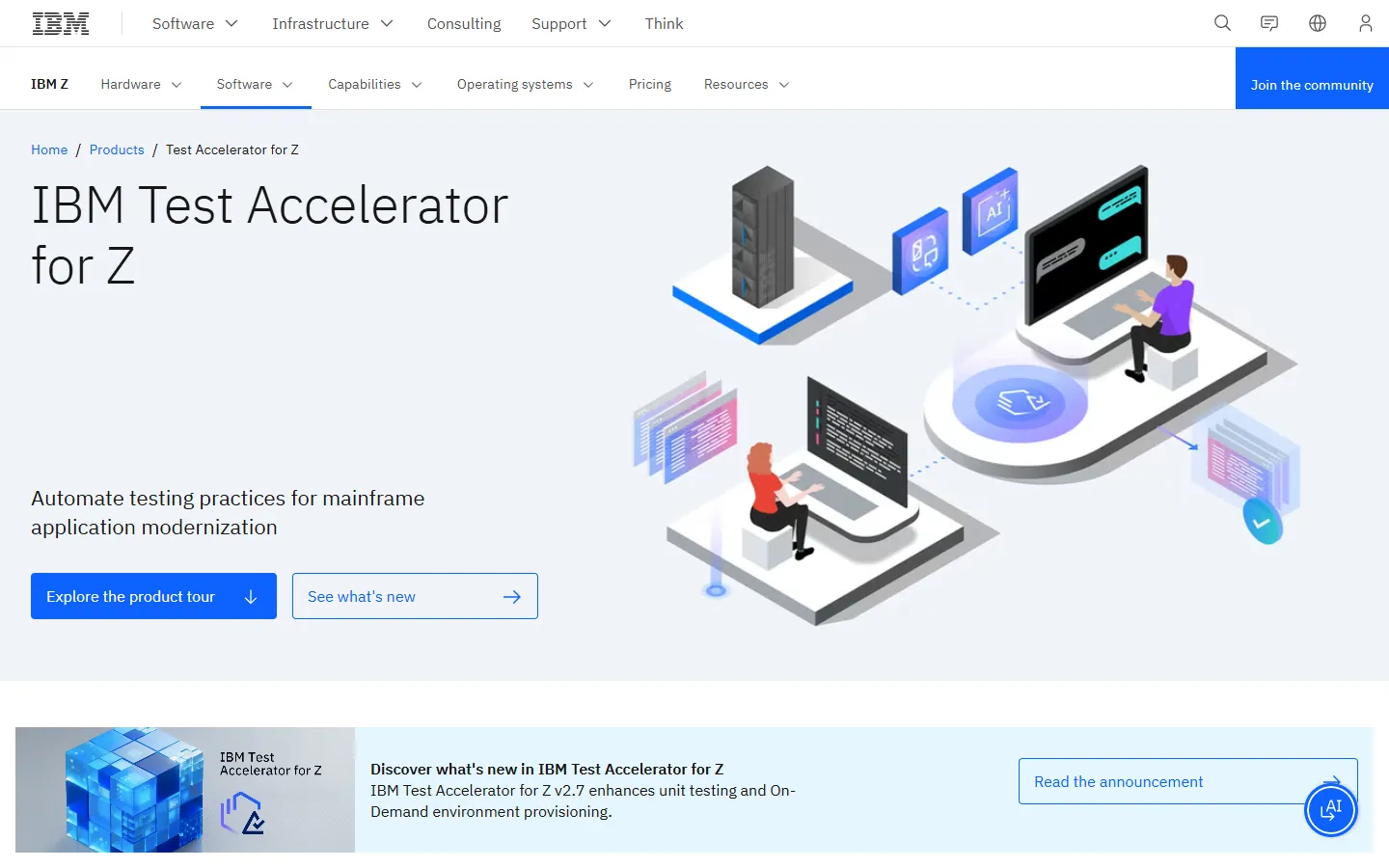
IBM Test Accelerator for Z, formerly the IBM Z Virtual Test Platform, is a test automation and generation framework for z/OS developers and testers that shifts full integration testing earlier in the cycle using a record-and-playback model.[3]
Its core mechanism is virtualization: it records a program's calls to CICS, DB2, DL/I, IMS, and VSAM files, then replays them so the test runs in isolation without the original subsystems or data. That is the specific detail that makes mainframe unit testing practical, because a developer can validate a code change in seconds instead of waiting for a shared environment to free up.
- Best for: z/OS developer teams that want isolated unit and integration tests and on-demand test environments.
- Watch for: It assumes COBOL and z/OS fluency, so it is a developer tool, not a functional-QA tool.
2. BMC AMI DevX Total Test
BMC AMI DevX Total Test, formerly Compuware Topaz for Total Test, automates unit, functional, system, integration, and regression testing for COBOL, PL/I, and Assembler on z/OS.[4]
A virtualized test isolates a program by virtualizing external calls and data access, so a developer can run it safely right after a code change without risking production data. It integrates into DevOps toolchains including Jenkins and SonarQube, so a build can trigger the mainframe tests and gate the deploy on the result.
- Best for: Teams that want one tool spanning unit through regression testing with a pipeline gate.
- Watch for: It is a commercial suite tied to the BMC AMI DevX workbench, so it fits teams already in that ecosystem.
3. Galasa
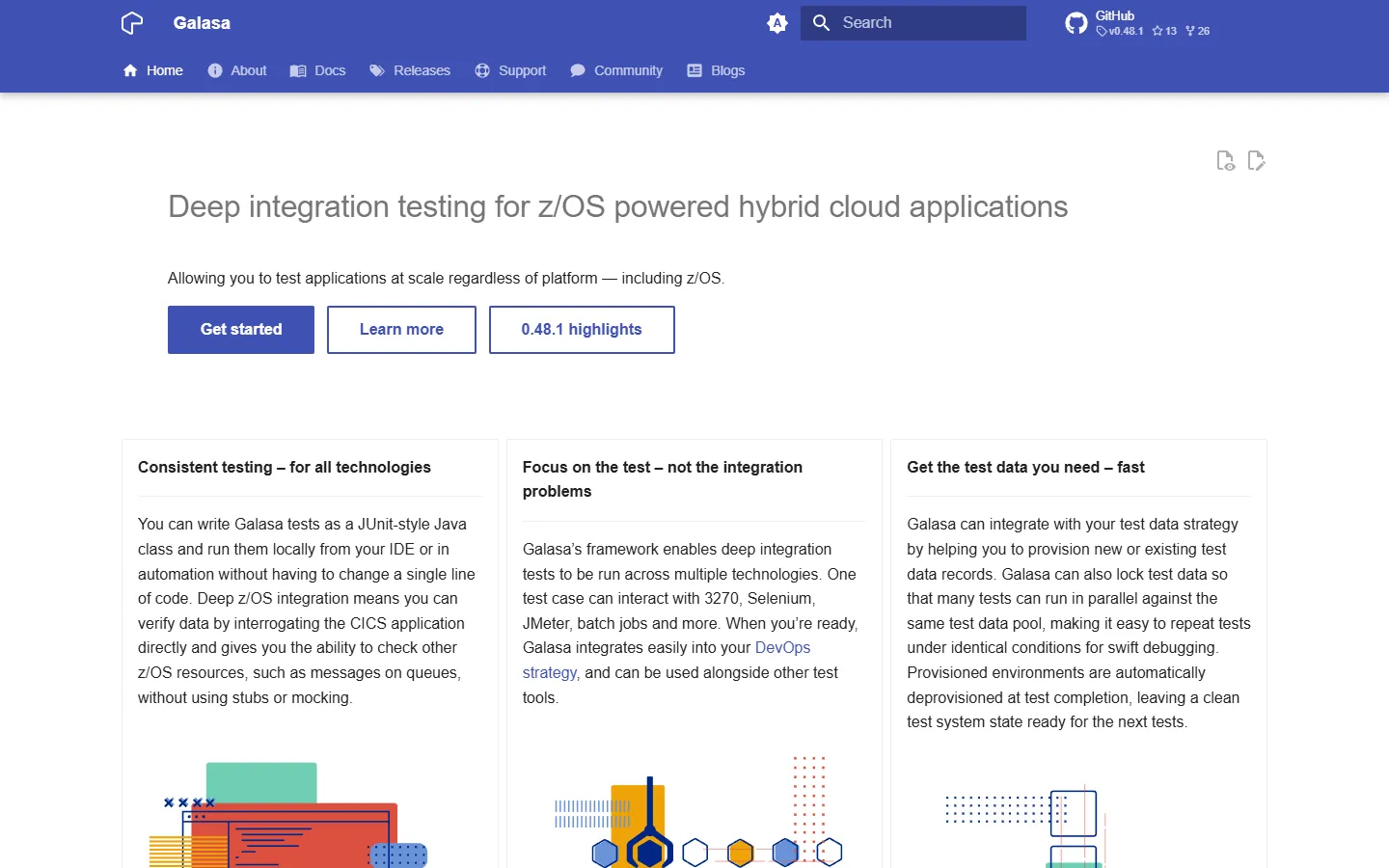
Galasa is an open-source deep integration test framework maintained by the Open Mainframe Project under the Linux Foundation.[2] The framework initializes the test environment, creates valid test data, runs the test, and validates the output, and a single test can drive z/OS, distributed, and open-source tools in one run.
The design choice that matters is remote execution through a terminal emulator rather than native on-mainframe execution, which fits how newer developers work and lets teams reuse the same input data files and expected screen results they have run for years. Tests run locally for debugging or on a server in automation mode.
- Best for: Teams that want a vendor-neutral, no-license framework for end-to-end integration tests across z/OS and distributed systems.
- Watch for: As open source, it needs in-house setup and Java skills rather than a support contract out of the box.
4. IBM Z Open Unit Test
IBM Z Open Unit Test, often called ZUnit, supports automated unit testing for batch and CICS COBOL programs with record and playback of test data at execution time. The practical value is that a developer can record, modify, and replay the data a program reads, then run those unit tests as part of a build or as a batch job.
That closes a long-standing gap: until COBOL unit frameworks existed, test isolation on shared mainframe code was hard, and many developers skipped documented unit tests entirely. ZUnit brings the record-run-assert loop that other languages have had for years to batch and online COBOL.
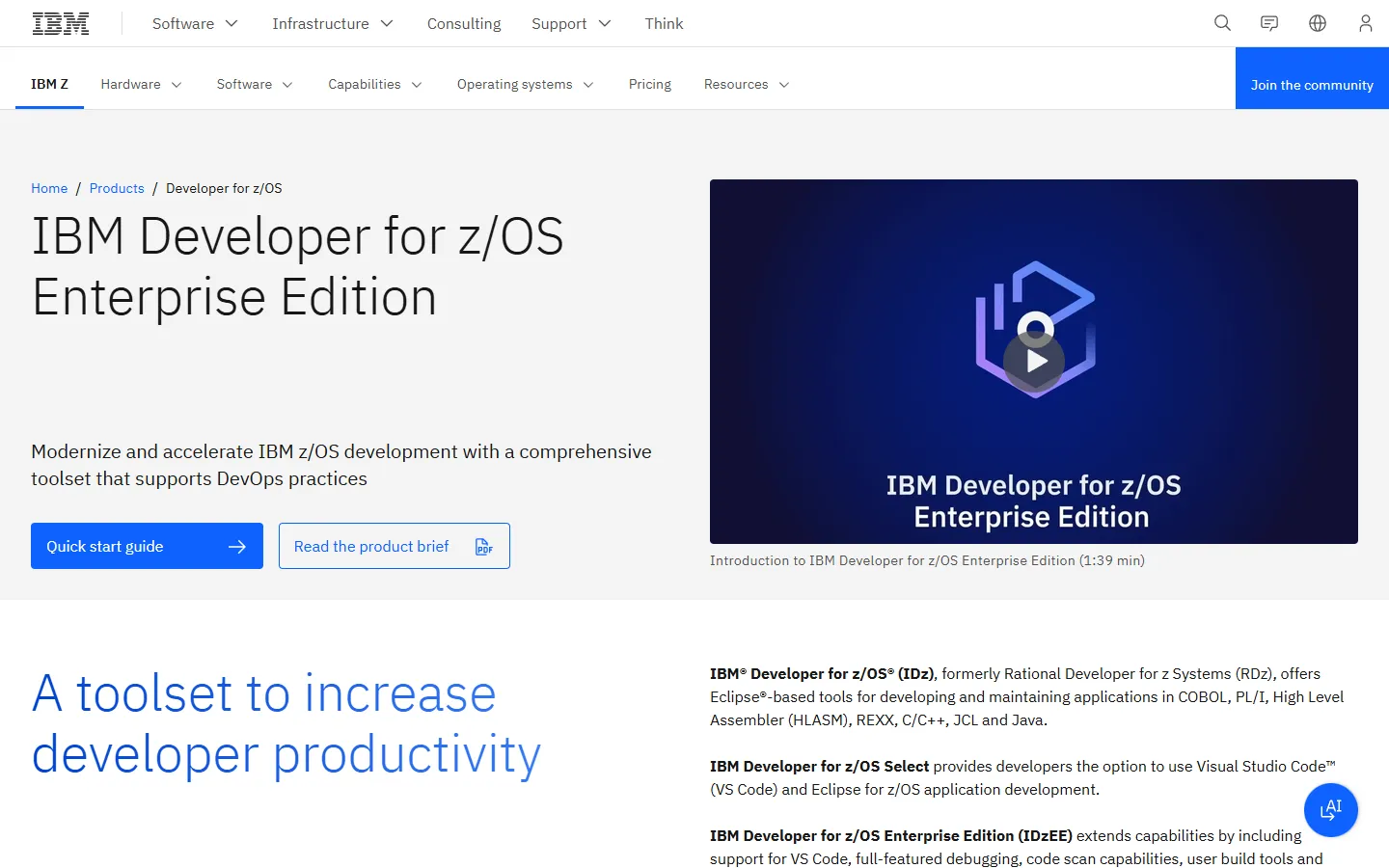
- Best for: COBOL developers who want unit tests inside an IBM Developer for z/OS workflow.
- Watch for: It targets unit-level tests, so pair it with an integration tool for end-to-end coverage.
5. IBM Application Discovery and Delivery Intelligence
IBM Application Discovery and Delivery Intelligence, or ADDI, visualizes z/OS applications, data, and jobs so teams can uncover dependencies and scope changes with confidence.[5] ADDI is not a test runner, it is the analysis step that makes testing safe, because it maps which programs, copybooks, and JCL a change touches before a single test is written.
On the r/mainframe thread on analyzing a large mainframe program, ADDI is the tool practitioners point to first for exactly this dependency and data-flow question. Knowing the blast radius up front is what stops a "small" COBOL fix from silently breaking a downstream batch job.
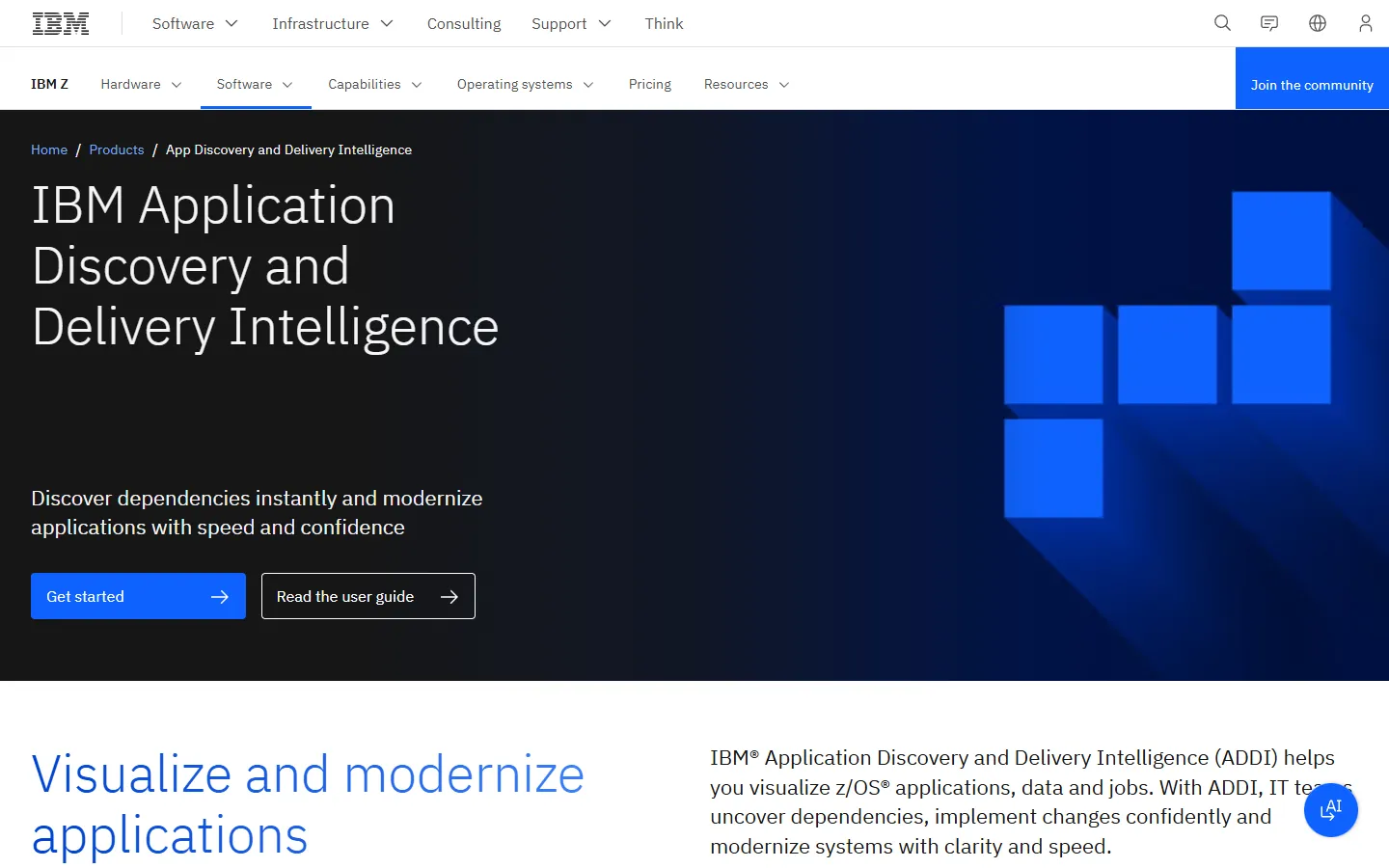
- Best for: Teams inheriting large, poorly documented codebases who need impact analysis before regression testing.
- Watch for: It informs the test plan rather than executing tests, so it complements a runner rather than replacing one.
6. Broadcom Test Data Manager
Broadcom Test Data Manager for the mainframe generates, subsets, and masks test data on the mainframe itself.[6] Its native masking engines obfuscate sensitive fields, and the masking runs on the mainframe so data never moves to an external environment to be de-identified.
That location detail matters: moving DB2 records off-host to mask them is itself a compliance and cost problem, so in-place masking removes a step that trips up many test-data pipelines. Automated data profiling detects what sensitive information exists and how it relates across files. For the concepts behind building good sets, the guide on test data is a useful primer.
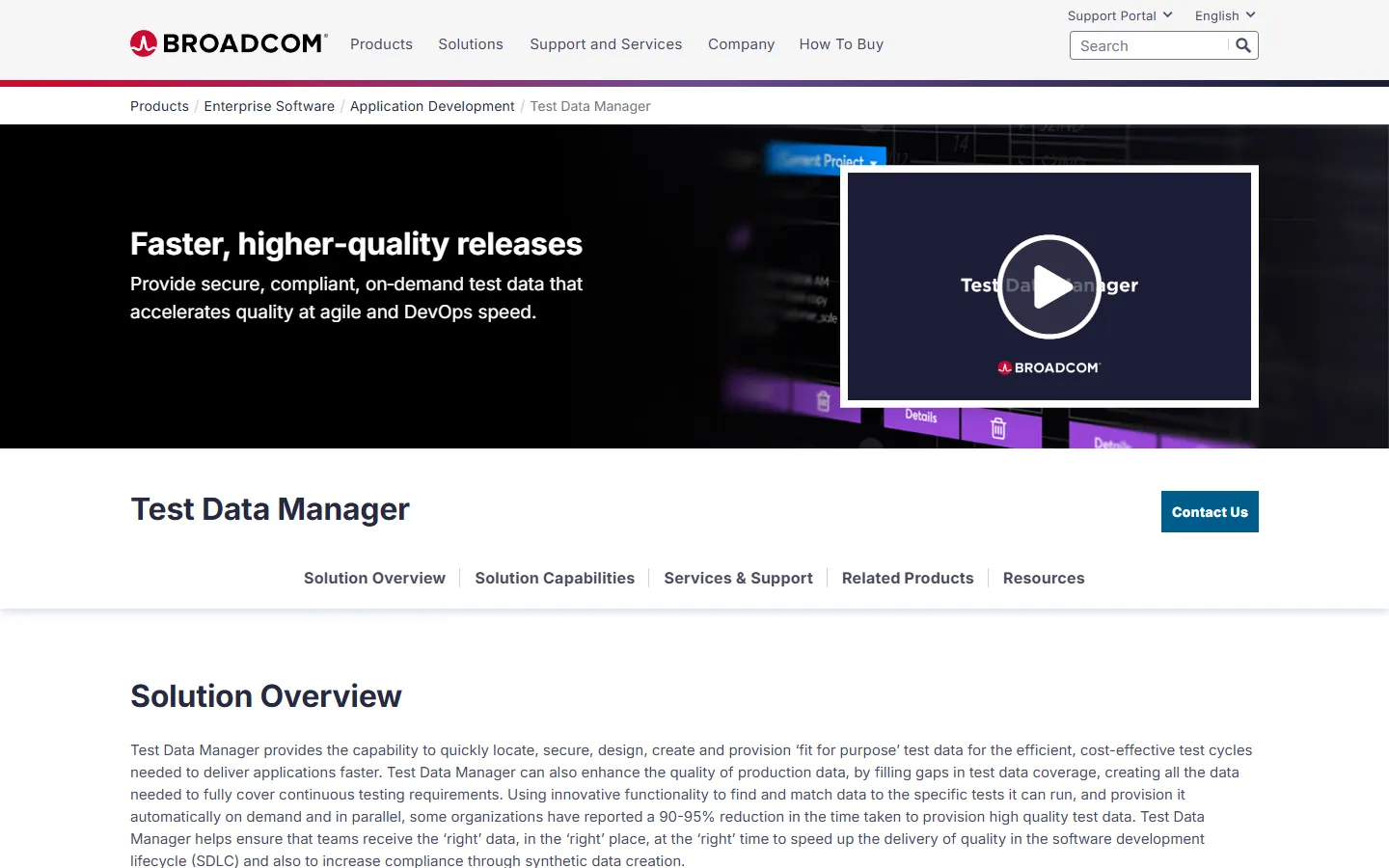
- Best for: Regulated teams that must mask DB2 and IMS data before any test suite reads it.
- Watch for: It handles test data, not execution, so it sits beside a testing tool, not in place of one.
7. T-Plan Robotic Automation
T-Plan Robotic Automation provides non-invasive, screen-level automation for mainframe systems and executes testing at screen level without installing agents.[7] Its image-based approach drives the 3270 green screen the way a user would, so it validates end-to-end business flows across host and connected systems without changing certified code.
The agentless design is the differentiator: because nothing is installed on the mainframe, T-Plan can test locked-down or certified systems that forbid new software, which is common in banking and insurance environments. It runs in parallel across multiple mainframe environments for scale.
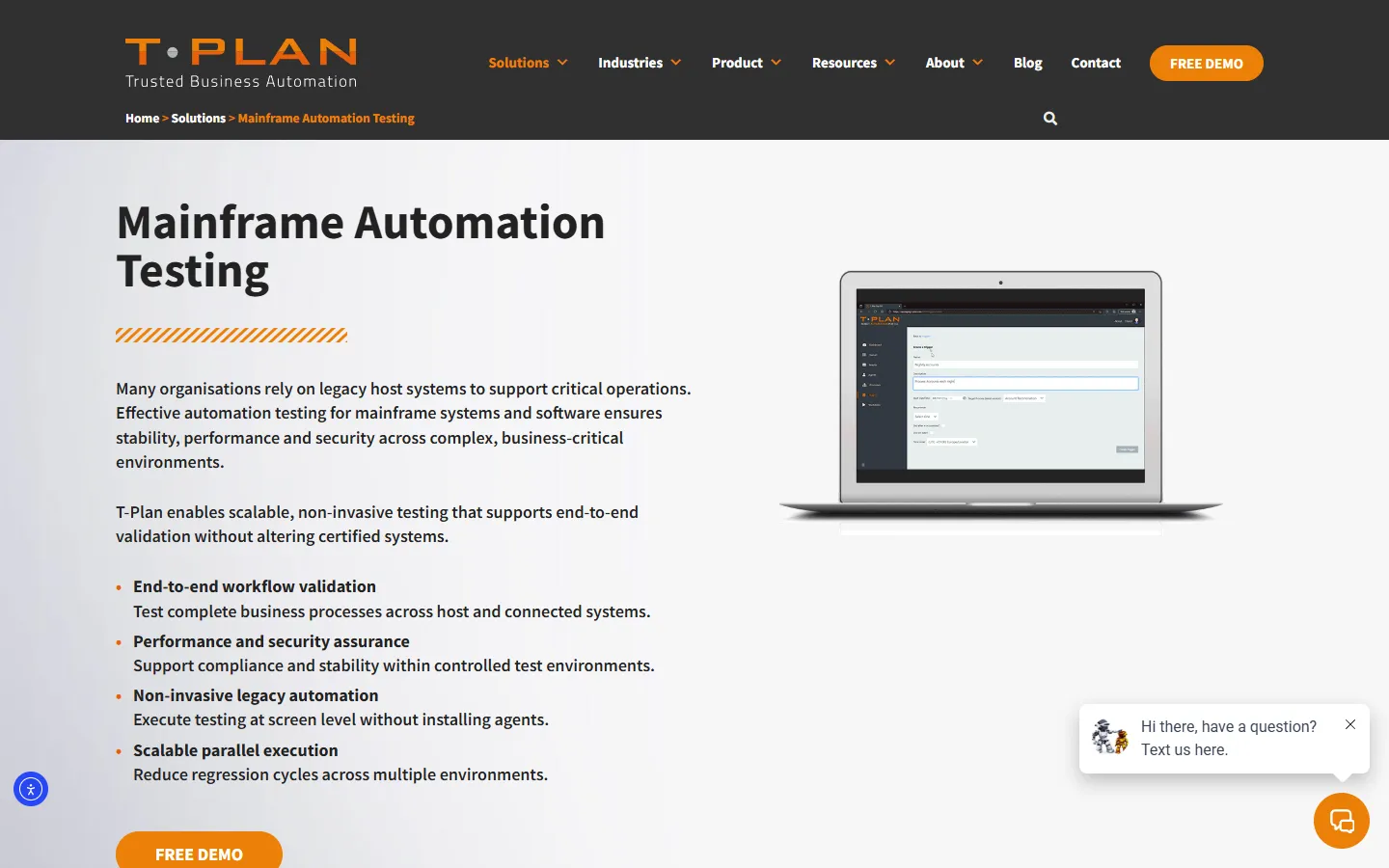
- Best for: Functional QA validating end-to-end 3270 flows on systems that cannot accept installed agents.
- Watch for: Image-based automation needs stable screen layouts, so heavy screen redesigns require test maintenance.
8. Worksoft Certify
Worksoft Certify automates 3270 and 5250 terminal testing and imports screen maps directly from formats such as CICS/BMS. Rather than matching pixels, it stores the objects and properties on each screen in an application map and uses that map to navigate and assert, which makes tests more resilient when a field moves.
That object-level model is the trade-off against pure image automation: it survives layout shifts better but needs the screen maps imported and maintained. Certify suits teams running broad functional and regression coverage across green-screen and connected enterprise applications.
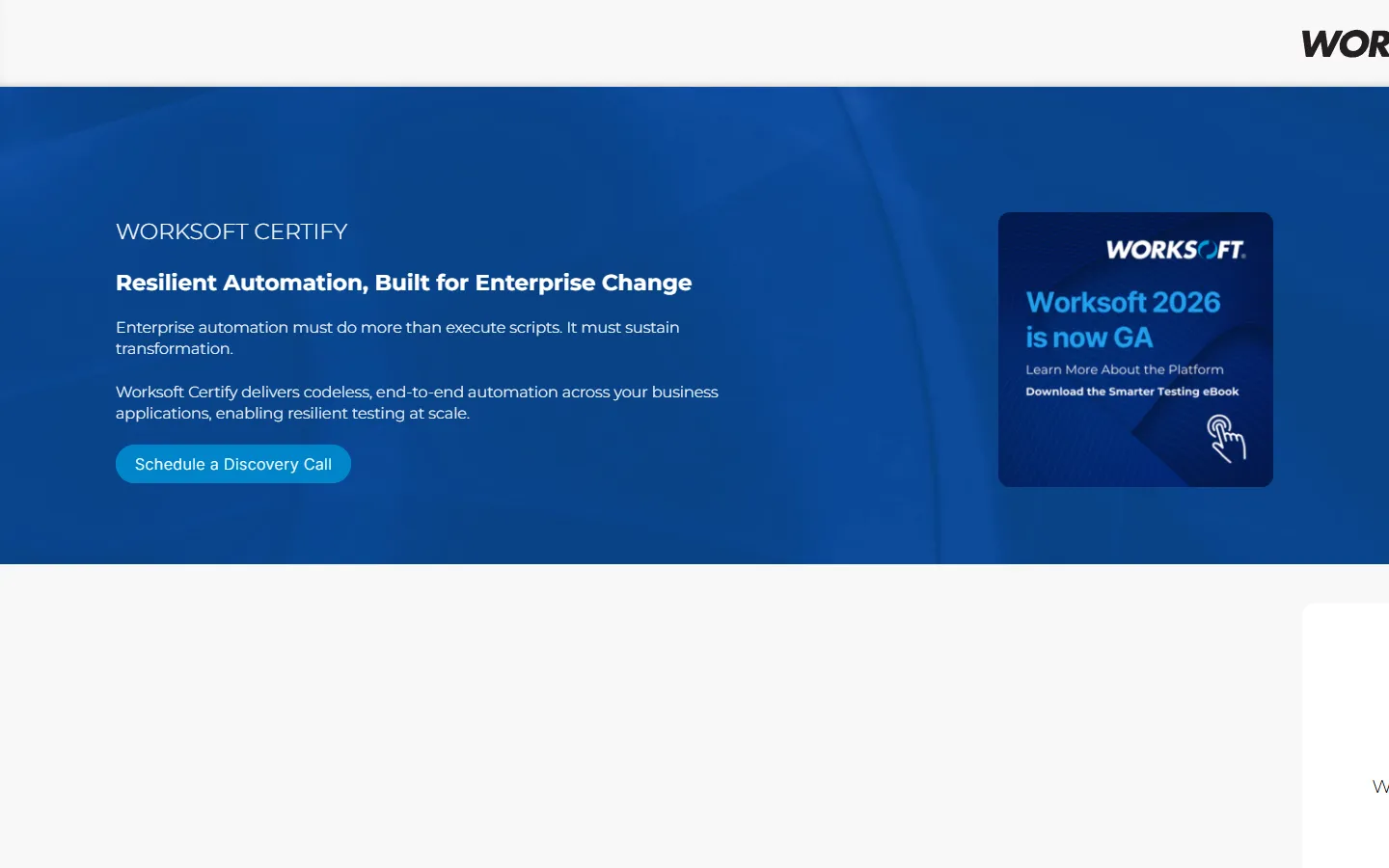
- Best for: Enterprises automating cross-application flows that include 3270 and 5250 terminals.
- Watch for: Screen-map maintenance is real work, so budget time to keep application maps current.
9. COBOL Check
COBOL Check is an open-source unit testing framework from the Open Mainframe Project that provides fine-grained unit testing for COBOL at the same level of detail as frameworks for Python, Ruby, C#, and Java.[8] It lets a developer assert on internal program logic without a full run, which brings test-driven development to batch COBOL.
The project is now in emeritus status, so treat it as a proven pattern and reference implementation rather than an actively expanding product. For teams that want a free entry point into COBOL unit testing before buying a commercial suite, it remains a useful starting point.
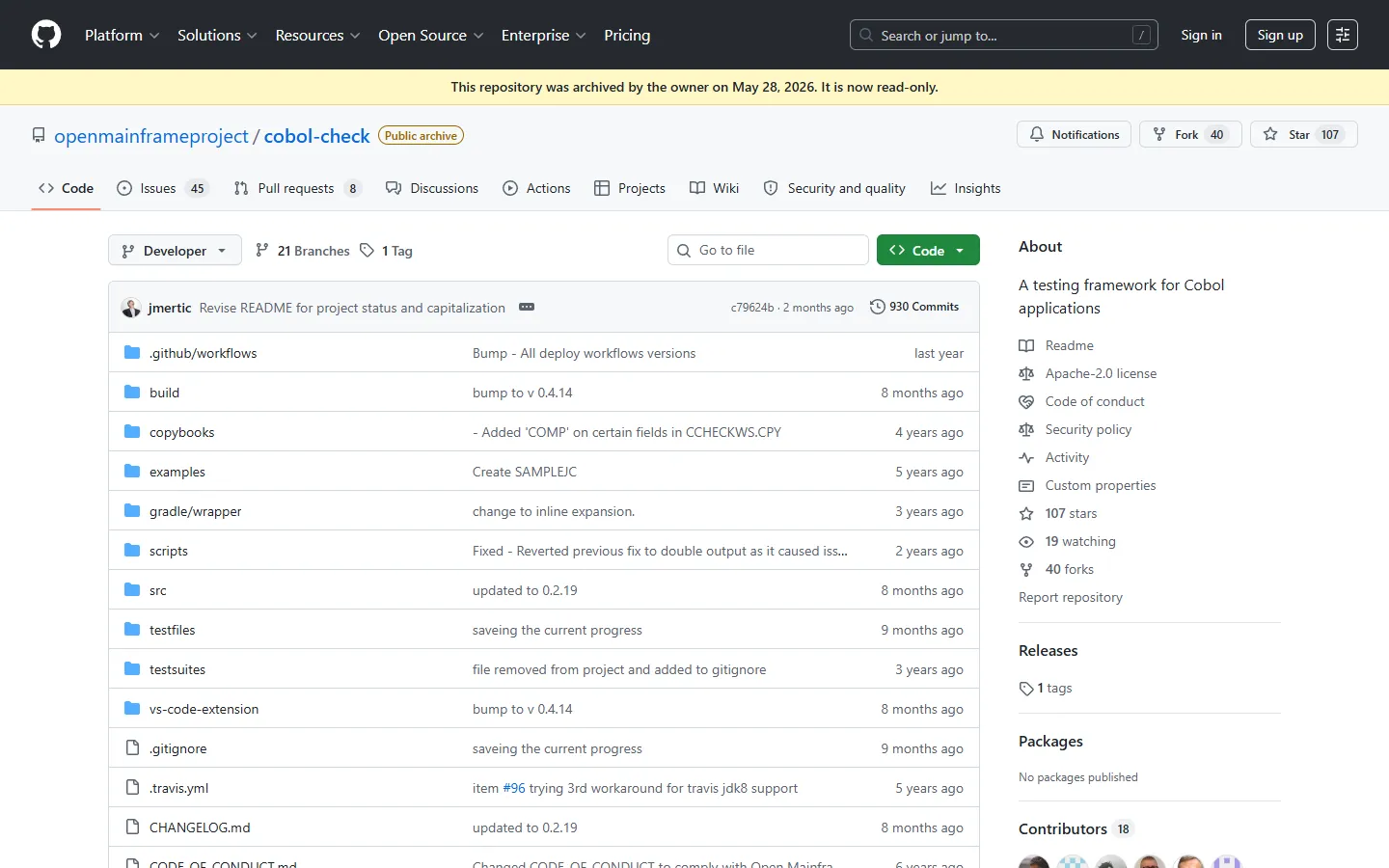
- Best for: Developers experimenting with COBOL unit testing and TDD on batch programs at no cost.
- Watch for: Emeritus status means limited active development, so validate it against your compiler before relying on it.

How Do Mainframe Testing Tools Fit Into CI/CD?
Mainframe testing tools fit into CI/CD when their tests can be triggered from a pipeline and their results flow into one release view. IBM Test Accelerator for Z, BMC AMI DevX Total Test, and Galasa all expose test runs to Jenkins, GitHub Actions, and GitLab CI, so a mainframe suite runs on each commit rather than in a separate manual cycle.
The shift practitioners describe is toward a git-based, IDE-driven workflow. In the r/mainframe thread on analyzing a large mainframe program, one recommendation is to use the Explorer for Endevor extension in VS Code alongside a coding assistant, and another notes that all programs are now uploaded to git so modern coding agents can work on them.
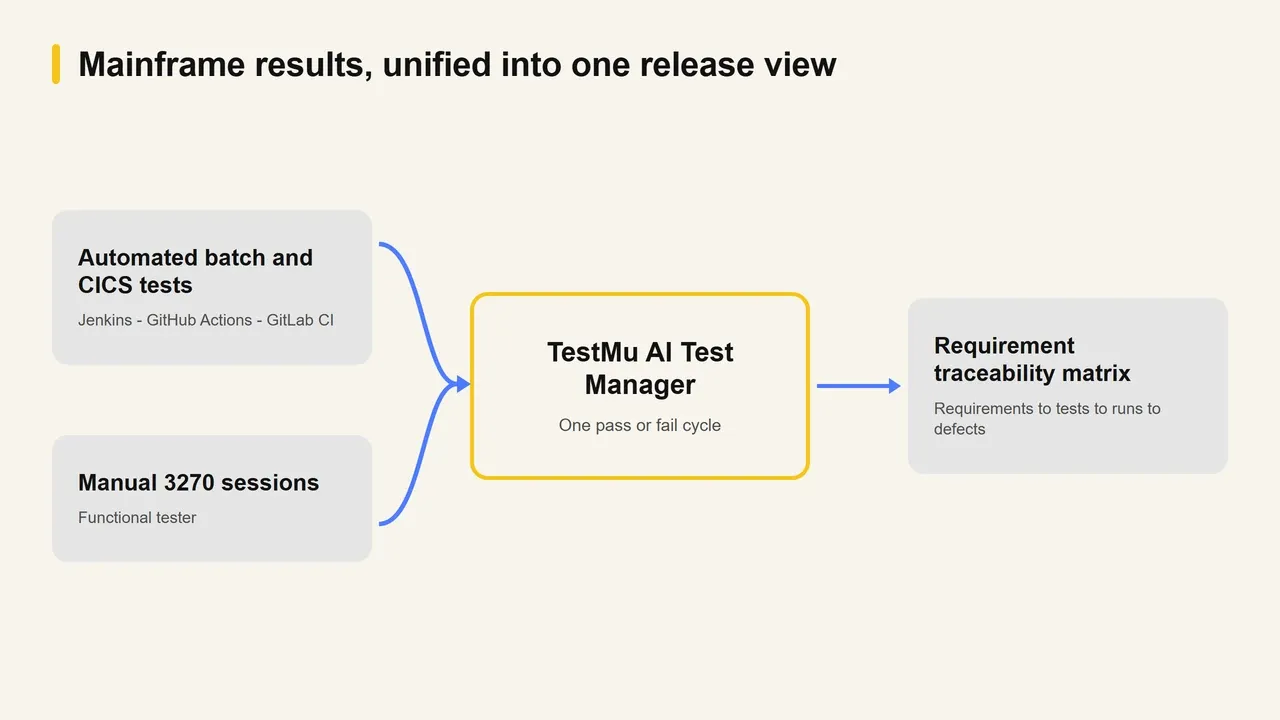
That changes where tests live: source and tests move into the same repository the pipeline reads, so a mainframe commit can be gated the same way a Java commit is. The remaining gap is reporting, because a pipeline can run a batch COBOL suite and a manual 3270 session in the same release but leave their results in two places.
A mainframe QA team often runs automated batch and CICS tests in a pipeline while a functional tester validates screens by hand, and the two result sets never meet in one dashboard, so no one can answer "is this release covered?" without stitching logs together.
TestMu AI's test management platform closes that gap by pulling automated results into the same cycles as manual runs. Relevant capabilities:
- CI/CD result ingestion: Connect Jenkins, GitHub Actions, GitLab CI, CircleCI, and Bitbucket Pipelines to pull automated test results directly into active cycles, so each mainframe pipeline run maps back to its test cases.
- Unified manual and automated view: Manual 3270 session outcomes and automated batch results land in the same cycle dashboard, giving a QA lead one pass or fail view for total coverage.
- Requirement traceability: A single matrix connects requirements to tests, runs, and defects, so uncovered requirements are visible before a release instead of after.
You can explore the test run creation and management documentation to see how cycles pull in automated results.

Note: Unify manual and automated mainframe test results in one pass or fail view with TestMu AI. Try free!
What Are the Common Challenges in Mainframe Test Automation?
The common challenges in mainframe test automation are scarce skills, provisioning and masking realistic test data, contention on shared environments, slow feedback from long batch runtimes, and weak traceability between requirements, tests, and defects. Each one shapes which tool a team can actually adopt.
Test data and environment contention are the two that quietly break automation projects. A batch suite that reads live DB2 records cannot run until the data is masked, and a shared LPAR that ten testers share cannot give a clean baseline on demand, which is exactly why the record-and-playback virtualization in IBM Test Accelerator for Z and BMC AMI DevX Total Test matters: it removes the dependency on a live environment.
In my experience running COBOL regression on a shared test LPAR, overnight batch windows were the real bottleneck, because a suite queued behind production jobs would not return results until the next morning, and moving those unit tests to a virtualized run cut the feedback loop from hours to minutes.
The skills gap is the other constraint, and it is why the tool split between code-level and screen-level matters so much. A team without deep COBOL bench strength leans toward screen-level tools that a functional tester can run, while a team with strong developers can adopt unit frameworks and shift left. The guide on automated regression testing covers how to build a stable regression layer once these constraints are handled.

In the Reddit thread "Tools to analyze a large Mainframe program" on r/mainframe, practitioners recommend IBM ADDI and BMC Code Explain for understanding dependencies and data flow in COBOL, JCL, and DB2 code, and several point to the Explorer for Endevor extension in VS Code with a coding assistant, reflecting a shift toward git-based, IDE-driven mainframe work.
Conclusion
Start by mapping your target layer: pick IBM Test Accelerator for Z or BMC AMI DevX Total Test for isolated COBOL unit and integration tests, Galasa for a vendor-neutral open-source path, and T-Plan or Worksoft Certify for 3270 terminal flows, then add Broadcom Test Data Manager or ADDI where data and analysis are the bottleneck.
The pattern across BMC's survey is clear: with 97% holding a positive view of the platform and GenAI already used with the mainframe by 65% of respondents, mainframe testing is modernizing, not fading.
Once your tools run in a pipeline, connect their results with TestMu AI's HyperExecute and Test Manager so manual and automated outcomes report as one release-readiness view. Follow the create projects guide to set up your first unified cycle.
Citations
- [1] 20th Annual BMC Mainframe Survey Reveals Confidence, Generational Shift in Views on Mainframe Development - BMC Software (September 2025)
- [2] Galasa - Open Mainframe Project, The Linux Foundation (2026)
- [3] IBM Test Accelerator for Z (formerly IBM Z Virtual Test Platform) - IBM (2026)
- [4] BMC AMI DevX Total Test: Mainframe Automated Testing - BMC Software (2026)
- [5] IBM Application Discovery and Delivery Intelligence - IBM (2026)
- [6] The Broadcom Approach to Test Data Management for the Mainframe - Broadcom Academy (2026)
- [7] Mainframe Automation Testing Tools - T-Plan (2026)
- [8] COBOL Check: Unit testing framework for COBOL - Open Mainframe Project on GitHub (2026)
Author

Prince Dewani
Blogs: 30

Prince Dewani is a Community Contributor at TestMu AI specializing in AI agents, software testing, QA, and SEO. He is certified in Selenium, Cypress, Playwright, Appium, Automation Testing, and KaneAI, and presented academic research on AI agents at PBCON-01. At TestMu AI, he has also carried out extensive cross-browser research on the support of modern web technologies such as WebGPU, WebAssembly, WebXR, WebGL2 and other web technologies, validating their compatibility and feature parity across major browsers and rendering engines through rigorous hands-on testing. Prince has hands-on experience building AI agent workflows using Anthropic Claude, Google Antigravity, n8n, LangChain, and other agentic frameworks, and works regularly with MCP and A2A protocols. He shares his work with 5,500+ QA engineers, developers, DevOps experts, tech leaders, and AI agent practitioners on LinkedIn.
Reviewer

Himanshu Sheth
Reviewer
Himanshu Sheth is the Director of Marketing (Technical Content) at TestMu AI, with over 8 years of hands-on experience in Selenium, Cypress, and other test automation frameworks. He has authored more than 130 technical blogs for TestMu AI, covering software testing, automation strategy, and CI/CD. At TestMu AI, he leads the technical content efforts across blogs, YouTube, and social media, while closely collaborating with contributors to enhance content quality and product feedback loops. He has done his graduation with a B.E. in Computer Engineering from Mumbai University. Before TestMu AI, Himanshu led engineering teams in embedded software domains at companies like Samsung Research, Motorola, and NXP Semiconductors. He is a core member of DZone and has been a speaker at several unconferences focused on technical writing and software quality.


Mainframe Testing Tools FAQs
Did you find this page helpful?
More Related Blogs
TestMu AI forEnterprise
Get access to solutions built on Enterprise
grade security, privacy, & compliance
- Advanced access controls
- Advanced data retention rules
- Advanced Local Testing
- Premium Support options
- Early access to beta features
- Private Slack Channel
- Unlimited Manual Accessibility DevTools Tests