

Next-Gen App & Browser Testing Cloud
Trusted by 2 Mn+ QAs & Devs to accelerate their release cycles


- Home
- /
- Learning Hub
- /
- Test Case Templates with Examples (Download Free Excel & PDF)
Test Case Templates with Examples (Download Free Excel & PDF)
Test case templates in software testing are standardized formats help teams to document, organize execute test cases. Get 27+ test case templates in Excel & PDF.

Yash Bansal
January 8, 2026
A test case template in software testing is a standardized document that outlines the conditions, steps, and expected outcomes to verify a specific functionality or feature for any app or website.
Modern software development requires adaptability, with testing no longer just a phase that follows development. Intelligent test case templates that evolve alongside your project ensure a more effective testing strategy, driving quality, speed, and business value.
Overview
Test case templates provide a consistent structure that eliminates ambiguity, ensuring all necessary information is captured clearly and efficiently.
Without a standardized format, test cases can vary in detail and clarity, leading to confusion, missed steps, and ineffective testing.
Why Use Test Case Template in Software Testing :
- Standardization: Ensures consistent format for all test cases.
- Comprehensive Coverage: Helps address all scenarios, including edge cases and negative tests.
- Time-Saving: Provides a ready-made framework for faster test creation.
- Tracking: Streamlines the tracking and reporting of test results.
Test Case Template Components:
- Test Case ID: Unique identifier for easy reference.
- Test Case Title/Description: Brief summary of the test’s objective.
- Preconditions: Setup required before execution.
- Test Steps:Sequential actions to perform.
- Expected Result: The anticipated outcome if the system works correctly.
- Actual Result:Observed outcome after execution.
What is a Test Case Template?
Test Case Templates are frameworks that guide testers in writing clear and consistent test cases. Test case templates provide a standardized approach and prompt testers to consider prerequisites, expected results, and negative cases, ensuring improved coverage.Manual Test Case Template
This leads to better test coverage, more accurate tracking, and easier management of test cases. Without guidance, testers may overlook critical edge cases or scenarios.
By using templates, teams can track progress more effectively, identify test results quickly, and ensure critical scenarios are not overlooked, ultimately improving overall testing efficiency and software quality.
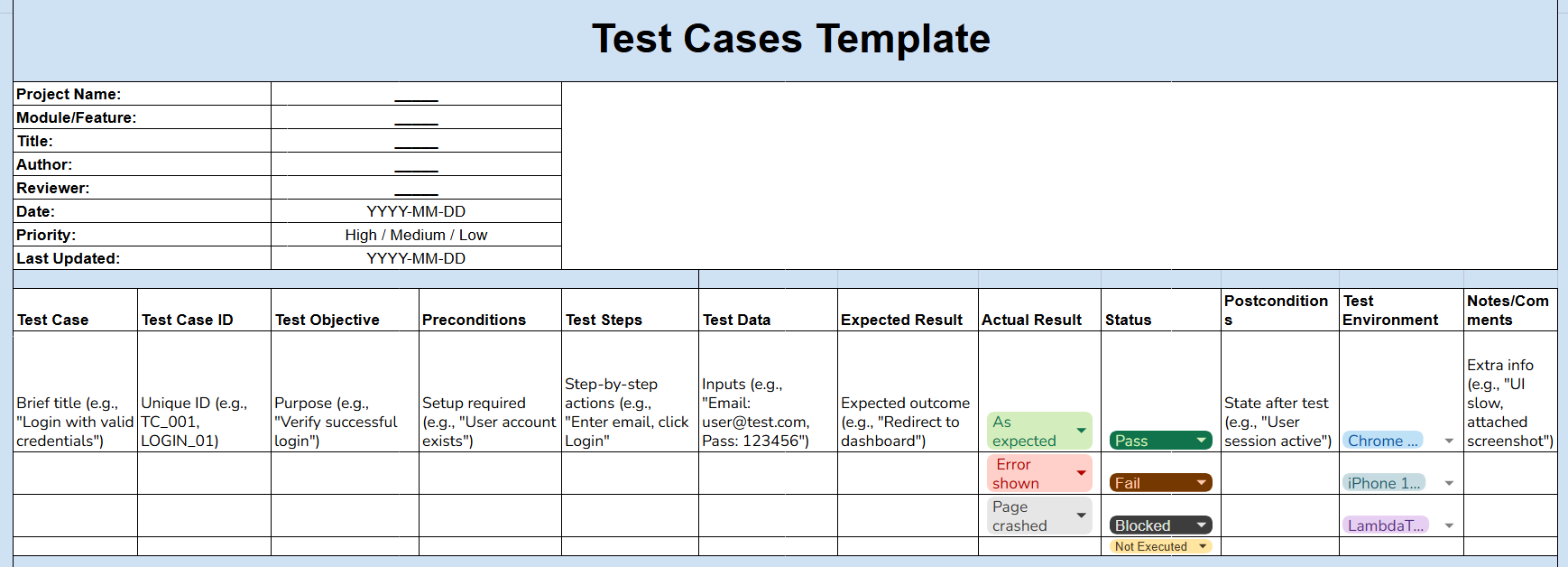

Free Test Case Template
Note: We’ve compiled a test case template format for you, feel free to comment on it. Check it out now!
Test Case Template Example
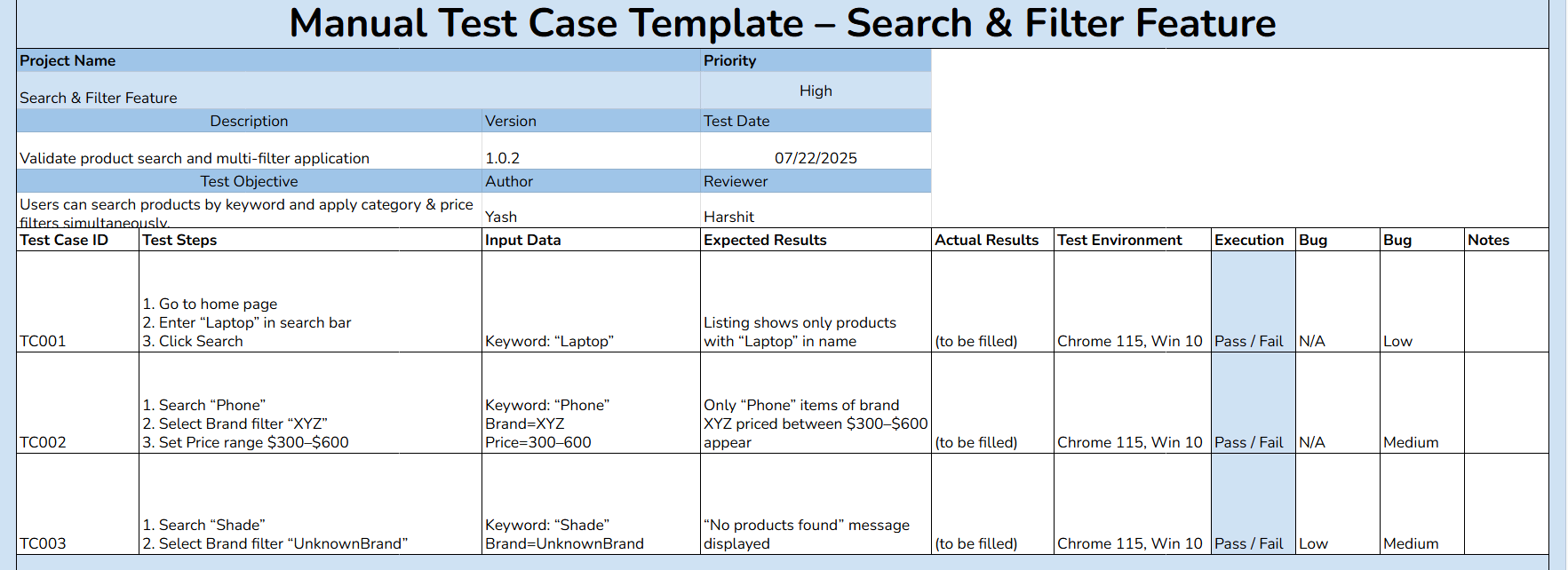
Here are sample test case and templates for manual UI (“Search & Filter”), automated UI (“Cart Checkout”), and API (“User Profile Service”), each with clear steps, inputs, and expected outcomes:
Manual Test Case Template – Search & Filter Feature
Test Case ID: TC001
Title:Verify keyword search and multi‑filter functionality
Description:
- Preconditions: User logged in; product catalog populated
- Input Data: Keyword: “Laptop”
- Test Steps:
- Go to home page
- Enter “Laptop” in search bar
- Click Search
- Expected Results: Listing shows only products with “Laptop” in name
Note: Organize, execute, and track your test cases with AI‑native Test Manager, all in one unified platform. Try TestMu AI Test Manager Now!
Automated UI Test Case Template – Cart Checkout Flow
Test Case ID: TC004
Title:Automated end‑to‑end checkout with valid data
Description:
- Preconditions: Authenticated session; cart has items
- Input Data: Valid user session; real credit‑card test data
- Test Steps:
- Navigate to /cart
- Click Proceed to Checkout
- Fill billing & shipping details
- Click Place Order
- Expected Results: Order confirmation page displays Order ID and “Thank you” message

API Test Case Template – User Profile Service
Test Case ID: TC007
Title:Validate User Profile CRUD endpoints
Description:
- Preconditions: API server running; valid auth token
- Input Data: id=12345; Auth token
- Test Steps:
- Send GET /api/v1/users/{id}
- Expected Results: HTTP 200; Response body contains user fields (id, name, email, roles)

Test Case Template Library: Download 27 Free Templates
We've compiled various test case templates designed specifically for a wide range of domains and use cases:
Framework Specific Test Case Templates:


Industry-Specific Test Case Templates:


Website Builder Testing Templates:


Platform-Specific Test Case Templates:


Mobile Application Testing Templates:


CI/CD Test Case Templates:


General Test Case Templates:


Learn how to write effective test cases to optimize your testing process with actionable insights and best practices.
Why Use a Test Case Template?
Test case templates are not just for writing tests; they help build a testing culture that's organized, efficient, and data-driven. By implementing templates effectively, you ensure:
- Reduced Inconsistency and Ambiguity: Standardized templates ensure consistent structure, reducing confusion and ensuring all necessary information is captured clearly.
- Time-Saving: Templates provide a ready-made framework, which speeds up test case creation and reduces repetitive work.
- Thorough Test Coverage: Templates help testers address all test scenarios, including edge cases and negative tests, ensuring nothing important is overlooked.
- Easier Tracking and Reporting: Templates with fields like Test Case ID, Status, and Requirement Traceability streamline test execution tracking and test reporting.
- Faster Onboarding: Templates serve as training tools, making it easier for new testers to understand and maintain consistency in test writing.
- Facilitates Automation: Well-structured manual test cases serve as a foundation for automation scripts, enabling smoother transitions to automated testing frameworks.
- Improved Collaboration: Share test cases and results with your team and integrate with Jira for seamless collaboration within the platform, ensuring everyone stays aligned.

Test Case Template Components
- Test Case ID: A unique identifier for each test case to make it easy to reference and track.
- Test Case Title/Description: A brief title or description summarizing the objective of the test case.
- Test Objective: A short statement describing the purpose or goal of the test case (e.g., what functionality it is verifying).
- Preconditions: The conditions or setup required before executing the test (e.g., user logged in, database in a specific state).
- Test Steps: A detailed, sequential list of actions that need to be performed during the test. Each step should be clear and specific.
- Test Data: Specific input values or datasets that are required for the test case execution (e.g., username, password, or product ID).
- Expected Result: The anticipated outcome of each test step or the entire test case. It specifies what should happen if the system works correctly.
- Actual Result: The actual outcome observed after executing the test case. It is compared with the expected result to determine if the test passes or fails.
- Status (Pass/Fail): Indicates whether the test case passed or failed based on the comparison of the expected and actual results.
- Postconditions: Any conditions that should be true after the test is executed (e.g., the system should be in a clean state).
- Priority: The importance of the test case, typically categorized as high, medium, or low, depending on its relevance to business or system functionality.
- Test Environment: Specifies the environment in which the test will run, such as the operating system, browser version, or hardware configuration.
- Notes/Comments: Additional details, observations, or special instructions relevant to the test case (e.g., known issues, limitations).
Standards‑Based Template Structure (IEEE & ISO)
A well-structured test case template should align your QA practices with globally recognized software testing standards. Following industry benchmarks like IEEE 829 and ISO/IEC/IEEE 29119-3 ensures your templates are consistent, traceable, and suitable for enterprise-grade projects.
- IEEE 829‑2008 introduced the original Test Case Specification, defining fields like ID, title, preconditions, steps, expected/actual results, and status.
- ISO/IEC/IEEE 29119-3:2021 modernizes IEEE 829, providing formal templates that include linked requirements, input data, environment details, post‑conditions, version history, and reviewer sign‑off.
Why Standards-Based Test Case Templates Matter:
Adopting a standards‑driven test case template creates a unified framework that ensures every test is executed consistently and linked directly to its requirements. This approach not only simplifies audit and compliance processes but also boosts reviewer efficiency and stakeholder confidence.
Create and Manage Test Cases Using TestMu AI
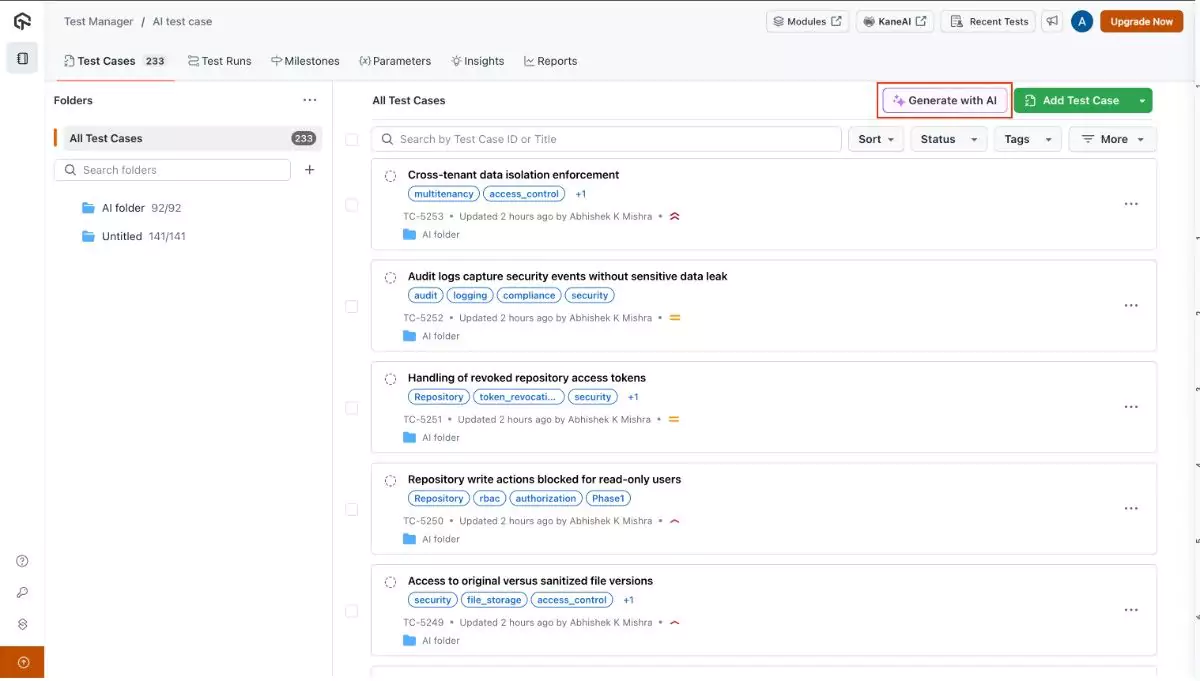
With TestMu AI AI-native Test Manager, you can eliminate the hassle of managing test cases through fragmented tools like Excel or scattered documentation.
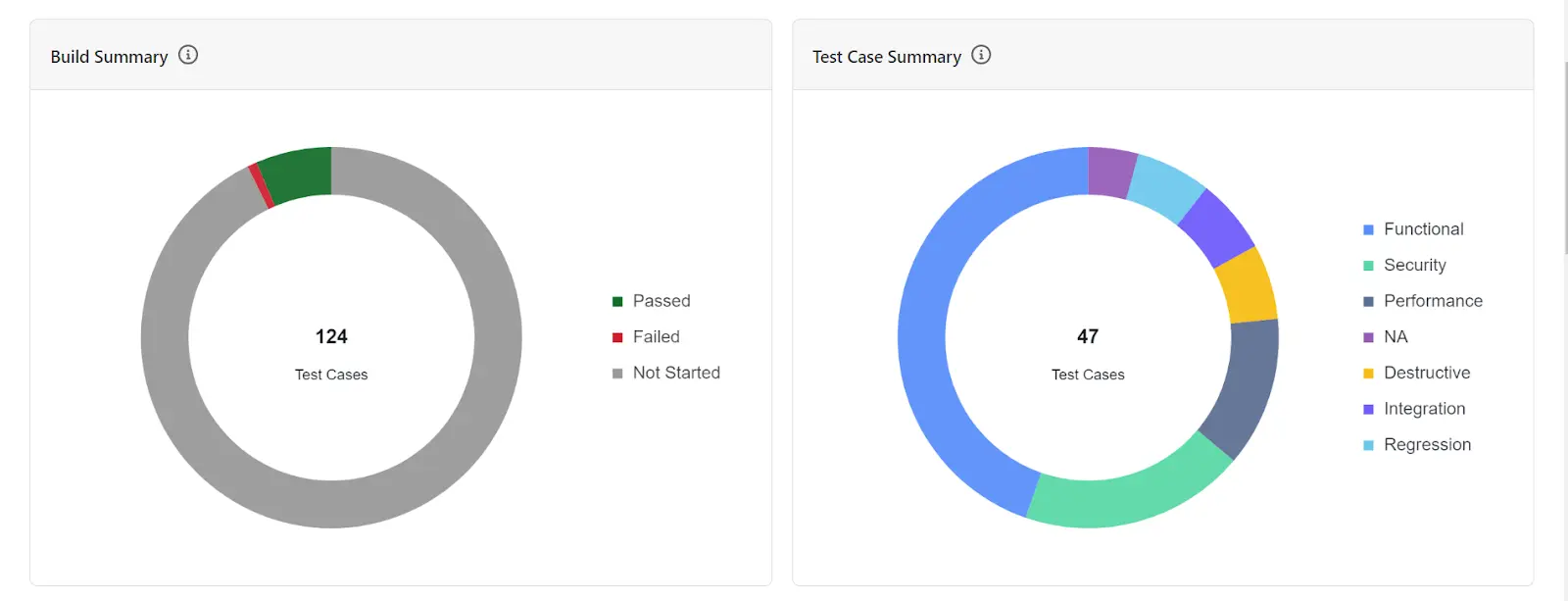
By centralizing all your test case templates and execution results in one powerful platform, it simplifies Test Management and facilitates easier monitoring.
- Organize and Define Test Case Details: Save all your test cases in one central folder and organize them using structured test templates. Clearly outline each test case with detailed steps, expected results, and preconditions to maintain consistency and clarity.
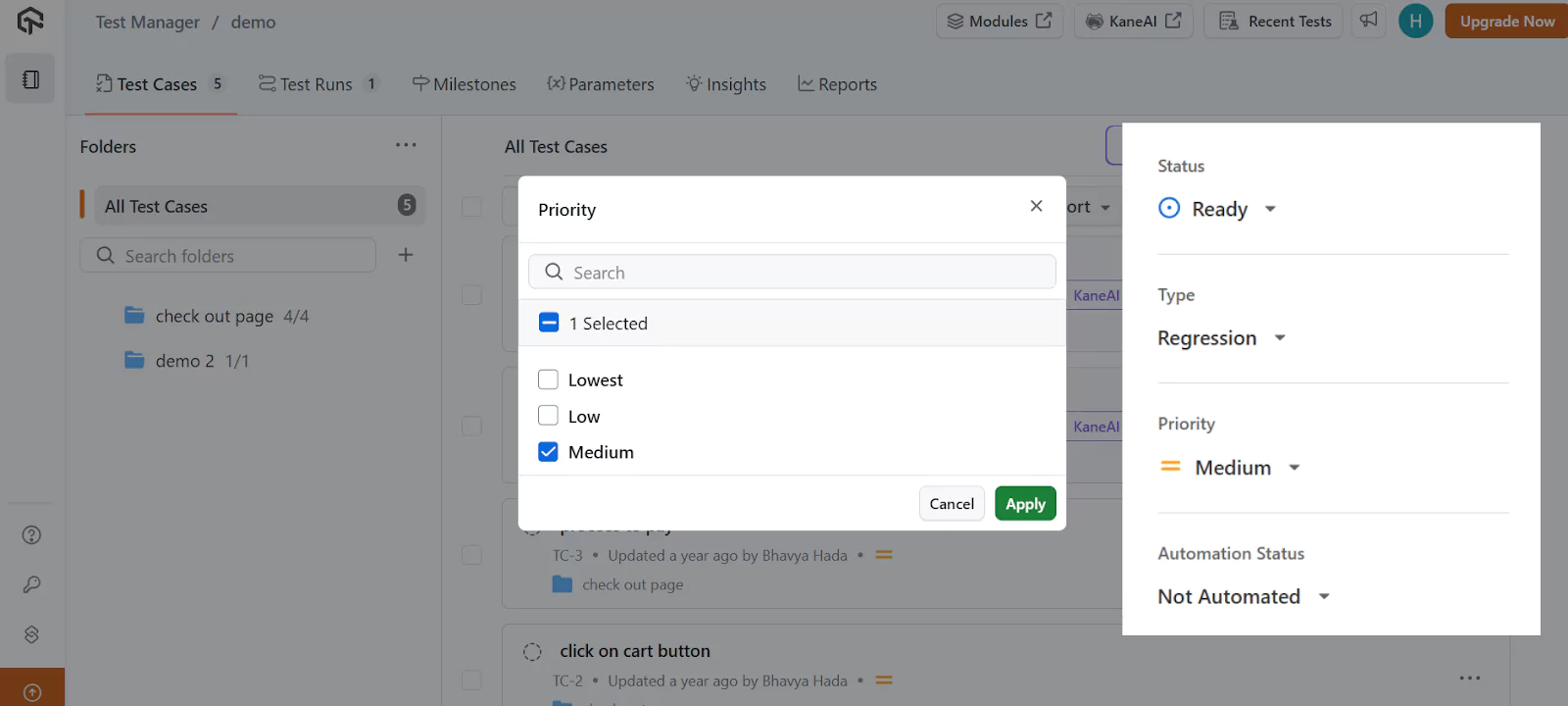
- Set Priority and Status: Choose the priority (e.g., Low, Medium, High) and set the status of the test case (e.g., New, In Progress, Completed) to track progress effectively.
- Organize with Test Suites: Assign each test case to a relevant test suite (e.g., Smoke, Regression, Functional) to categorize and group related test cases for better organization.
- Track Test Execution: LambdaTest Test Manager integrates with your testing environments, allowing you to track the status of each test case during execution. Quickly update with actual results and mark the test case as Pass, Fail, or In Progress.
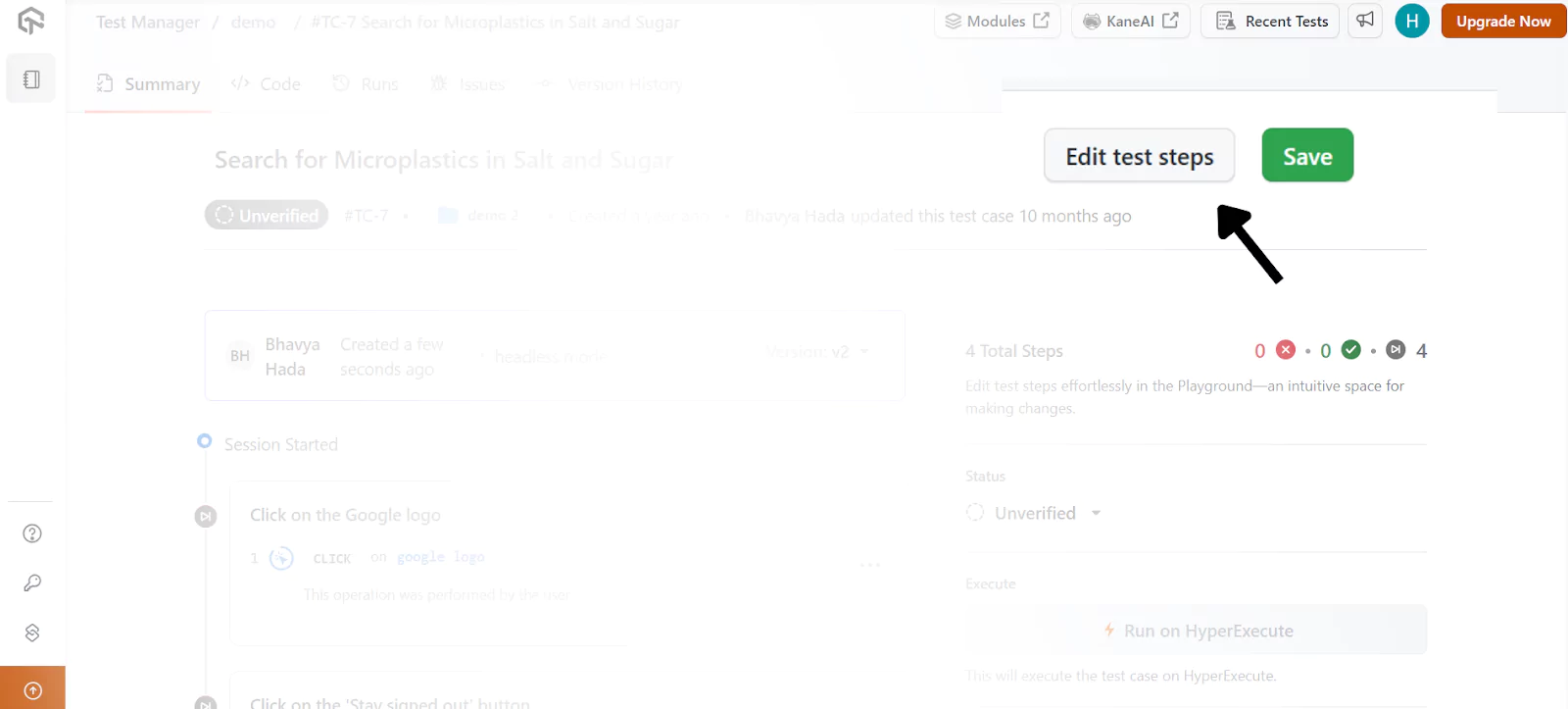
- Edit Test Cases: To modify a test case, go to the Test Manager dashboard, select the test case to edit, and update the test steps, expected results, or add any additional details. Save the changes and update the test case status.
- Collaborate and Share: Share test cases and results with your team for seamless collaboration within the platform to ensure everyone is aligned.
Best Practices for Evolving and Enhancing Test Case Templates
Traditional test case templates are often too rigid for agile, fast-paced development cycles. To create more valuable and adaptable templates, incorporate these best practices:
- Expand Test Coverage and Complexity: Treat test case templates as dynamic documents that grow with the project. Include sections like core testing areas, edge case tests, and exploratory testing for comprehensive coverage.
- Dynamic Data Management: Incorporate real-time data links (e.g., database, API responses) into your test case templates, enabling data-driven testing and repeatability.
- Automate Where Possible: Integrate automation tools (Selenium, Cypress, Playwright) into your templates to automate repetitive steps while leaving room for manual validation. Include test scripts and post-test automation links.
- Test Traceability: Add a traceability matrix to link test cases with requirements and business objectives, enhancing agility and transparency.
- Risk-Based Testing: Prioritize high-risk areas by adding a Risk Factor field (Low, Medium, High) in your templates. This helps allocate resources more effectively to the most critical tests.
- Link to Business KPIs: Connect test cases to business KPIs (e.g., transaction success rate, cart abandonment) to demonstrate how testing impacts business outcomes.
- Version Control for Test Cases: Implement version control to track changes in test cases, making it easier to maintain and adapt them over time as software features evolve.
- Agile Test Case Evolution: In Agile, testing is continuous, so test case templates should evolve with each sprint. Add a “Sprint Iteration” field to track test cases across Agile cycles and ensure alignment with new features.
These best practices will help you evolve your test case templates into powerful tools that align with modern software testing needs.
Conclusion
Writing test cases from scratch for every feature or release wastes valuable time and effort. Templates provide a ready-made framework that accelerates test case creation and reduces duplication of work.
Overall, test case templates in software testing are a QA cheat code, simplifying testing workflows, reducing errors, and improving test coverage and collaboration across teams.
References
- IEEE 829‑2008: https://standards.ieee.org/ieee/829/3787/
- ISO/IEC/IEEE 29119-3:2021: https://www.iso.org/standard/79429.html


Frequently asked questions
Did you find this page helpful?
More Related Hubs
TestMu AI forEnterprise
Get access to solutions built on Enterprise
grade security, privacy, & compliance
- Advanced access controls
- Advanced data retention rules
- Advanced Local Testing
- Premium Support options
- Early access to beta features
- Private Slack Channel
- Unlimited Manual Accessibility DevTools Tests