
Power Your Software Testing with AI Agents and Cloud
The Native AI-Agentic Cloud Platform to Supercharge Quality Engineering. Test Intelligently and Ship Faster.

- TestMu AI (Formerly LambdaTest)
- /
- Blog
- /
- Salesforce Testing Costs $150K+ a Year, Find Your Number
Salesforce Testing Costs $150K+ a Year, Find Your Number
Salesforce test maintenance can cost $150K+ a year. Use our ROI calculator to see your real number and how to cut it by 50%.
Last Updated on:
Most Salesforce QA teams know test maintenance is expensive. Very few have actually run the numbers, and even fewer have used a Salesforce testing ROI calculator to find out exactly what it's costing them.
That gap is where budget conversations go wrong. A team of three engineers spending 40% of their time on test maintenance does not feel like a cost problem. It feels like a workload problem. The distinction matters because workload problems get managed. Cost problems get solved.
Overview
Why Does Salesforce Test Maintenance Cost More Than Teams Expect?
Salesforce ships three mandatory platform updates a year, and most orgs stack weekly or bi-weekly internal releases on top across Sales Cloud, Service Cloud, and CPQ. Any of these can invalidate working tests without a single line of your own code changing, which turns maintenance into a repeating tax rather than a one-time project. Teams leaning on generic web-automation tools shoulder even more of that cost, because those tools were never designed for how Salesforce renders its components.
What Hidden Costs Does the Calculation Leave Out?
- Unbuilt coverage - Every hour spent repairing a broken locator is an hour not spent writing new tests, so untested flows and edge cases quietly pile up across the year.
- Escaped defects - As repair backlogs grow, teams trim their test runs to hit sprint deadlines, letting bugs slip into revenue, portal, and compliance-critical paths where remediation costs far more.
- Team churn - Repetitive selector debugging is the work engineers enjoy least, and a heavy maintenance load drives attrition, with each departure costing a sizable share of that engineer's annual salary to replace.
Which Factors Push Salesforce Maintenance Above Other Platforms?
- Dynamic component IDs - Lightning assigns fresh IDs as components reload, so locators built on them fail even when nothing about the functionality changed.
- Mandatory seasonal releases - The three annual updates cannot be deferred, reach every org at once, and routinely rework the DOM of standard components.
- Deep org customization - Custom objects, flows, LWC components, AppExchange packages, and validation logic each introduce another surface that has to be tested and kept working.
How Do Salesforce-Native Tools Stack Up on Maintenance Cost?
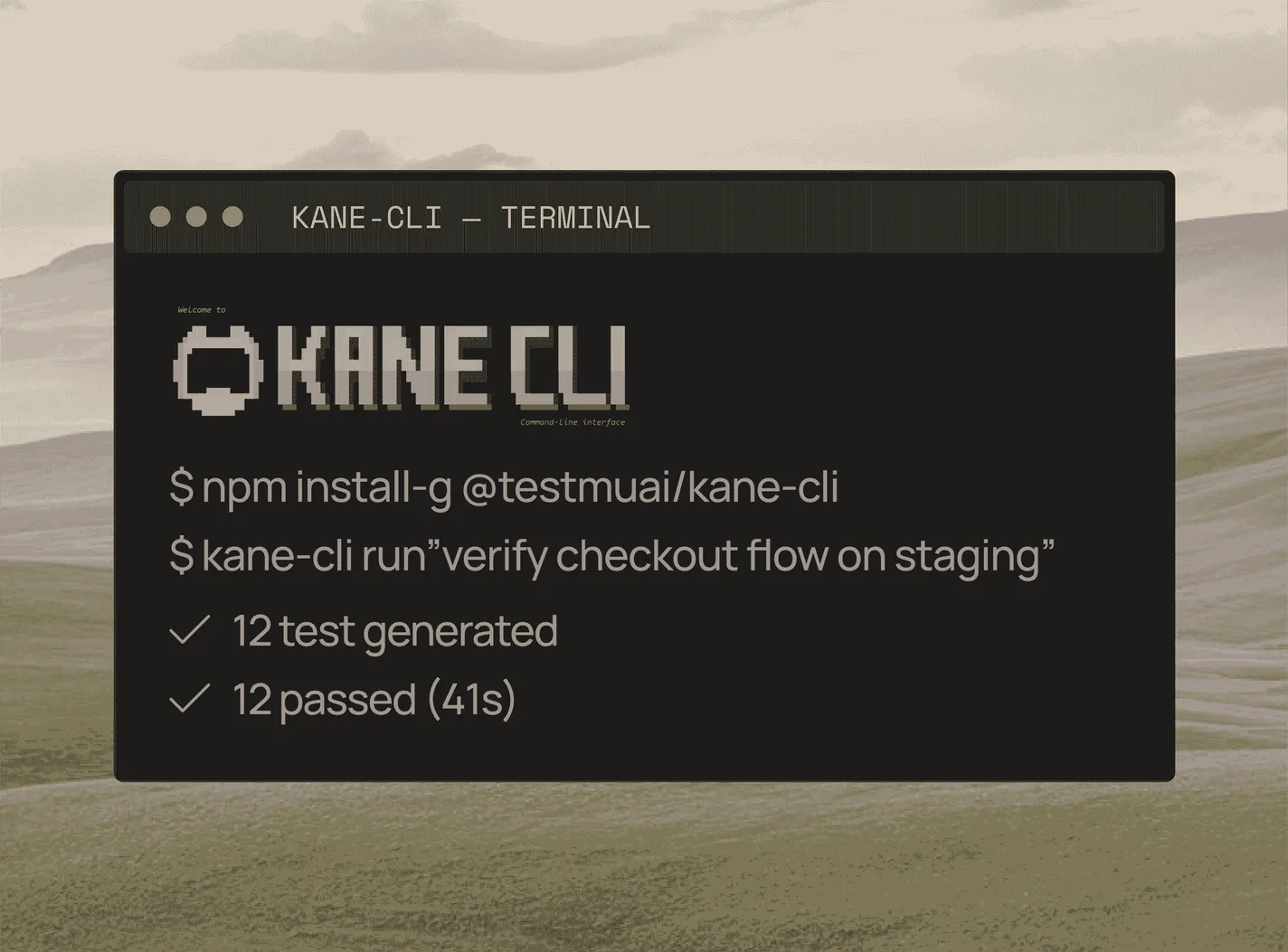
The difference comes down to two factors: how effectively a platform heals broken locators and how much setup it requires. Provar uses its NitroX locator technology and a metadata-driven model to reduce breakage compared to plain Selenium scripts, though locators often still require a manual refresh after each release. KaneAI, the agentic end-to-end testing platform from TestMu AI, takes a different approach. It carries a workflow through the full cycle, deciding the steps a Salesforce flow needs, authoring them, running them against a live org, and repairing locators automatically when a release breaks them, which removes most hands-on maintenance. This is particularly valuable for Salesforce Service Cloud testing, where frequent UI updates and complex workflows can quickly increase maintenance effort.
What Is Salesforce Test Maintenance?
Salesforce test maintenance is the recurring work of keeping automated tests functional as the platform and your org change around them. It covers repairing locators that break after a seasonal release, updating tests when flows or page layouts are reconfigured, refreshing test data after a sandbox refresh, and triaging failures to separate real defects from environmental noise. It is ongoing operational cost, not a one-time project task.
Is Salesforce Test Automation Worth the Cost?
Yes for most teams, with one condition: the return depends on maintenance staying low. Automation delivers a strong first-year return when it replaces manual regression, but it turns negative once maintenance consumes more time than it saves, which is generally when more than 30 percent of failures need manual investigation. Self-healing locators and Salesforce-native element identification are what keep the equation positive over multiple release cycles.
Does Salesforce Provide a Free Test Automation Tool?
Salesforce provides free testing capabilities for code, not for end-to-end UI automation. Apex unit tests, Jest through the Lightning Testing Service for Lightning Web Components, Flow tests, and the open source UTAM project all ship at no cost. None of them automate a full user journey across the browser, so teams add a separate automation platform, or an open source framework such as Selenium, for that layer.
Why Does Salesforce Test Maintenance Cost More Than You Think?
Salesforce's three mandatory seasonal releases, dynamic Lightning component IDs, and deep org customization break automated tests every cycle, making maintenance a recurring cost.
Salesforce releases three major platform updates every year: Spring, Summer, and Winter. Each one touches flows, page layouts, LWC components, and validation rules in ways that break existing automated tests regardless of whether your application code changed.
On top of that, most Salesforce orgs run weekly or bi-weekly internal releases. Sales Cloud, Service Cloud, Experience Cloud, and CPQ each have their own customization layers. A flow change in CPQ that affects a quote approval process can cascade into five test failures across unrelated regression suites. That cascade is why Salesforce CPQ testing has to cover pricing rules, discount governance, and downstream billing validation together rather than one rule at a time.
The result is that Salesforce test maintenance is not a one-time cost. Provar's own breakdown of the real cost of Salesforce maintenance lands on the same conclusion: it is a recurring tax on every release cycle. Teams pay it whether they acknowledge it or not. The only question is whether they are paying in engineer hours, escaped defects, or both.
Teams running Salesforce testing tools built for generic web automation carry this cost at a higher rate than teams using Salesforce-native platforms. Generic automation testing frameworks were not designed for Salesforce's dynamic component model, which means more locator breakage, more manual repair, and more sprint time lost per release cycle.
What a 3-Engineer Team Loses Per Year: The Calculation
Here is the math for a common scenario: a Salesforce QA team of three engineers, each spending 40% of their working time on maintaining existing automated tests rather than building new coverage or finding new defects.
- Establish the baseline salary cost - According to ZipRecruiter's Salesforce QA salary data, the average Salesforce QA engineer in the United States earns $98,862 per year.
3 engineers x $98,862 = $296,586 total annual salary cost$296,586 x 40% = $118,634 spent annually on test maintenance aloneThat is $118,634 per year going directly into keeping existing tests green. Not into new test coverage, not into exploratory testing, not into improving quality signal.
$118,634 x 1.30 = $154,224 true annual cost of test maintenance150 test cases x 45 minutes x 3 releases = 337.5 engineer-hours per year
on release-driven maintenance aloneAt a loaded hourly rate of $71 (based on the $98,862 average salary across 2,080 working hours, with 30% overhead):
337.5 hours x $71 = $23,962 in release-driven maintenance costs annuallyThis sits on top of the day-to-day maintenance cost from internal releases, flow changes, and org customizations.

Note: Achieve near-zero Salesforce test maintenance with KaneAI Book a KaneAI Demo.
Calculate Your Team's Exact Number
The figures above use benchmark data. Your team's actual cost depends on your engineer count, salary level, maintenance percentage, test suite size, and release cadence.
Use the Salesforce Testing ROI Calculator to get your specific number in under two minutes. Input your team size, average salary, and current maintenance percentage, and the calculator returns your annual maintenance cost, your cost per release cycle, and the projected savings from reducing maintenance by 50% or more.
What Drives Salesforce Test Maintenance Higher Than Other Platforms
Three structural factors: dynamic Lightning component IDs that break on reload, three mandatory seasonal releases, and deep org customization that adds new test surfaces with every change.
Salesforce maintenance costs more than equivalent maintenance on a generic web application for three structural reasons.
Dynamic Component IDs
Salesforce generates dynamic IDs for many Lightning components. Locators built on these IDs break every time the page or component is reloaded in a different context, even when nothing functionally has changed.
Standard Selenium-style selectors that work fine on stable HTML break constantly in Salesforce orgs. Teams running test automation for Salesforce on top of a generic automation testing platform built for web apps encounter this problem on every release cycle.
Three Platform Releases Per Year
Most SaaS platforms release on a schedule teams can plan around. Salesforce's seasonal releases are mandatory, affect every org simultaneously, and routinely modify the DOM structure of standard components. Teams have no control over when this happens or which tests it affects.
Org Customization Depth
Enterprise Salesforce orgs are heavily customized: custom objects, custom flows, custom LWC components, AppExchange packages, and custom validation logic. Every customization layer adds a surface that needs to be tested and maintained. Unlike a greenfield web app, Salesforce orgs accumulate complexity over years of implementation, and test suites accumulate technical debt at the same rate.
How Do Salesforce-Native Tools Compare on Maintenance Cost?
Not all Salesforce testing tools reduce maintenance the same way. The two highest-cost drivers, locator healing and setup time, vary significantly between platforms.
Provar, one of the most established Salesforce-native testing tools, addresses the dynamic ID problem through its NitroX locator technology and metadata-driven approach. This reduces breakage compared to generic Selenium scripts, but locator refresh after each Salesforce release still requires manual intervention in many cases.
KaneAI is the agentic end-to-end testing platform built by TestMu AI (formerly LambdaTest), a full-stack Agentic AI Quality Engineering platform designed for end-to-end software testing.
The distinction matters for maintenance cost. KaneAI does not hand back a script and leave the rest to you. It decides which steps a Salesforce workflow requires, authors them from a natural language description, executes them against a live org, reads the result, and repairs locators that a release has broken before the next run. Because that loop closes without an engineer in it, the post-release repair hours that drive most Salesforce maintenance budgets largely disappear rather than being reduced by a manual metadata refresh.
TestMu AI combines AI agents for test planning, authoring, execution, and analysis with cloud infrastructure for testing web, mobile, and enterprise applications across real devices, real browsers, and custom real-world environments. As a core capability of the platform, KaneAI helps teams automate the entire quality engineering lifecycle from a single solution.
What Does Reducing Maintenance by 50% Actually Look Like?
Switching to Salesforce-native locators and self-healing test infrastructure takes a team from 40% maintenance time to 20% within two to three quarters, recovering most of the cost.
The $154,224 annual maintenance cost from the example above does not require a complete rebuild to reduce. A 50% reduction, getting from 40% maintenance time to 20%, is achievable in most orgs within two to three quarters by addressing the two highest-cost drivers.
Salesforce-Native Locator Strategies
The best Salesforce test automation tools use stable, semantic locators tied to Salesforce component APIs rather than dynamic DOM IDs. A locator that references a Lightning input component by its label and field API name survives platform releases and org changes far better than an XPath built on a generated ID.
Switching locator strategies across an existing test suite takes initial investment but pays back in maintenance reduction within the first major release cycle.
Self-Healing Test Infrastructure
Modern AI Salesforce testing platforms apply AI for software testing to detect when a locator breaks, identify the updated element using semantic fallbacks, and repair the test without engineer intervention.
This AI automation recovers the maintenance hours that previously disappeared into post-release locator repair, freeing QA time for new coverage and making AI for QA testing a direct lever on your maintenance percentage.
For teams with 150+ test cases and three platform releases per year, this is the single highest-ROI improvement available.
Applied together, these two changes reduce the 337.5 annual maintenance hours in the example above to under 170, saving approximately $12,000 per year in release-driven maintenance costs alone, before accounting for day-to-day repair reduction.
Building the Business Case
The numbers above give you what you need to make the business case for investment in Salesforce test automation tooling.
The structure is straightforward.
- Current state cost - Document your team's current maintenance percentage, engineer count, and average salary. Pull the figures from wherever your tests already live, whether that is a spreadsheet or dedicated test management software, and use the calculator to produce a defensible annual cost figure.
- Projected savings. Model a 40 to 60% reduction in maintenance time as a conservative planning assumption. Apply that reduction to your current cost figure to produce a projected annual saving.
- Payback period - Divide the tooling investment by the projected annual savings to estimate the payback period. According to Flosum's insights on ROI on automated compliance for Salesforce teams, most mid-sized Salesforce QA teams using a Salesforce testing platform achieve payback within four to eight months. This also aligns with TEI studies highlighting sub-six-month ROI timelines for Salesforce automation initiatives.
- Opportunity cost framing - Add the value of coverage that gets built with recovered engineer hours. If 20% of each engineer's time moves from maintenance to new test development, quantify that in tests added, defect detection rate improvement, and sprint velocity.
The business case is not "we want better tooling." It is "we are spending $154,224 per year on work that does not improve quality, and here is how we recover most of that cost within six months."
That is the conversation that moves the budget.
Conclusion
Salesforce test maintenance is a measurable, recurring cost, not a workload quirk. For a typical three-engineer team, it runs past $150,000 a year, before counting the coverage never built and the defects that escape.
The good news: the biggest drivers, dynamic IDs and seasonal releases, are exactly what Salesforce-native locators and self-healing infrastructure are built to absorb, taking a team from 40% maintenance time to 20% within a few quarters. Run your own figures through the Salesforce Testing ROI Calculator, and you will have the one number that moves a budget.
Citations
Author

Saniya Gazala
Blogs: 44


Saniya Gazala is a Product Marketing Manager and Community Evangelist at TestMu AI with 2+ years of experience in software QA, manual testing, and automation adoption. She holds a B.Tech in Computer Science Engineering. At TestMu AI, she leads content strategy, community growth, and test automation initiatives, having managed a 5-member team and contributed to certification programs using Selenium, Cypress, Playwright, Appium, and KaneAI. Saniya has authored 15+ articles on QA and holds certifications in Automation Testing, Six Sigma Yellow Belt, Microsoft Power BI, and multiple automation tools. She also crafted hands-on problem statements for Appium and Espresso. Her work blends detailed execution with a strategic focus on impact, learning, and long-term community value.
Reviewer

Shahzeb Hoda
Reviewer
Shahzeb Hoda is the Associate Director of Marketing and a Community Contributor at TestMu AI, leading strategic initiatives in developer marketing, content, and community growth. With 10+ years of experience in quality engineering, software testing, automation testing, and e-learning, he has authored and reviewed 70+ technical articles on software testing and automation. Shahzeb holds an M.Tech in Computer Science from BIT, Mesra, and is certified in Selenium, Cypress, Playwright, Appium, and KaneAI. He brings deep expertise in CI/CD pipeline automation, cross-browser testing, AI-driven testing practices, and framework documentation. On LinkedIn, he is followed by 3,700+ engineers, developers, DevOps professionals, tech leaders, and enthusiasts.
Frequently asked questions
Did you find this page helpful?
More Related Blogs
TestMu AI forEnterprise
Get access to solutions built on Enterprise
grade security, privacy, & compliance
- Advanced access controls
- Advanced data retention rules
- Advanced Local Testing
- Premium Support options
- Early access to beta features
- Private Slack Channel
- Unlimited Manual Accessibility DevTools Tests