

Next-Gen App & Browser Testing Cloud
Trusted by 2 Mn+ QAs & Devs to accelerate their release cycles


Top 17 DevOps AI Tools [2026]
Explore the top 17 DevOps AI tools that automate tasks, streamline workflows, and enhance collaboration for efficient software development and testing.

Chandrika Deb
March 25, 2026
AI has quietly become part of how most DevOps teams work. It shows up in the IDE suggesting code, in the pipeline flagging risky builds, in monitoring tools correlating alerts, and in security scanners catching vulnerabilities before code ships. The number of tools in this space has grown rapidly, and so has the quality. in this article, we’ll explore the top DevOps AI tools that are transforming software development and testing.
Overview
AI testing tools for DevOps automate complex tasks, streamline testing workflows, and integrate directly into DevOps processes, helping teams deliver higher-quality software with fewer defects and less operational risk.
Top AI Testing Tools for DevOps:
- TestMu AI KaneAI: A GenAI-native testing agent that simplifies test creation, debugging, and management using natural language, enabling faster DevOps workflows with automated issue identification and environment adjustments.
- GitHub Copilot: An AI-powered code generation tool that enhances CI/CD workflows by suggesting code snippets and functions in real-time, reducing manual effort and improving code quality.
- AWS CodeGuru: An AI-driven tool that automates code reviews, performance optimization, and security vulnerability detection, delivering actionable recommendations to enhance code quality.
- Datadog: A cloud monitoring platform that uses AI to detect performance anomalies, identify infrastructure issues, and predict problems before they impact users, improving system reliability.
- New Relic: An AI-powered observability platform that analyzes telemetry data to detect performance bottlenecks and ensure smooth application delivery in DevOps workflows.
- Sysdig: An AI DevOps tool that monitors containerized environments, detects anomalies, and delivers security insights for proactive issue resolution and improved application stability.
- Harness: An AI-powered software delivery platform that automates CI/CD pipelines, deployment verification, and cloud cost management, using ML to flag risky releases and trigger automatic rollbacks.
- Jenkins X: A cloud-native CI/CD platform that predicts failures, automates rollbacks, and optimizes resource allocation to improve build efficiency and reduce downtime.
- CircleCI: A CI/CD tool that uses machine learning for job scheduling and resource allocation, accelerating pipeline execution and improving software delivery speed.
- Azure DevOps: An AI-integrated DevOps suite that optimizes test automation, streamlines build processes, and predicts deployment success for more reliable software delivery.
- Snyk: An AI-powered security tool that scans codebases for vulnerabilities in real time, providing actionable fix advice to mitigate security risks early in the development cycle.
- Splunk: An AI platform for predictive analytics, anomaly detection, and incident correlation that turns machine-generated data into actionable DevOps insights.
- PagerDuty: An AI-powered incident management platform that detects and resolves incidents efficiently, reducing alert fatigue and improving real-time issue resolution accuracy.
- CloudHealth: An AI-powered cloud cost optimization tool that recommends resource utilization improvements, helping DevOps teams manage cloud spending efficiently.
- Dynatrace: An AI monitoring solution that detects anomalies and delivers root cause analysis across large datasets, enabling rapid issue resolution and proactive performance optimization.
Why Use AI Tools in DevOps?
AI tools are crucial in DevOps for automating repetitive tasks, enhancing decision-making with predictive insights, and improving team collaboration. These tools help teams deliver software faster, with fewer defects, and higher reliability by reducing manual errors and optimizing workflows.
Why AI in DevOps?
Modern software delivery has too many moving parts for manual oversight to keep up. A single deployment touches CI pipelines, container orchestration, security scanning, and production monitoring. AI tools handle the repeatable work across these layers. Teams that apply the right tool at the right stage ship faster and recover from incidents more quickly.
Below are some of the reasons why AI is beneficial for DevOps:
- Automation: By automating the process, you can manage the repetitive tasks, allowing teams to focus on strategic, high-value work across the development and testing process.
- Predictive Insights: AI analyzes and helps forecast potential system issues before they impact performance, reducing downtime and risks.
- Smart Resource Management: AI optimizes infrastructure usage by analyzing performance metrics and workload patterns, enabling cost-effective scaling.
- Data-Driven Decisions: Advanced AI analytics provide actionable insights, helping DevOps teams work faster, help them inform decisions, and quickly adapt to market changes.
- Enhanced Collaboration: AI bridges communication gaps between development and operations teams by offering transparent, data-backed recommendations and streamlining workflows.
AI integrates intelligent solutions into DevOps workflows, helping teams proactively prevent system failures, reduce manual effort, and enhance efficiency. This allows teams to focus on strategic innovation.
DevOps AI tools allow teams to auto-prioritize alerts, suggest solutions, and execute resolution playbooks, significantly reducing the time it takes to recover from software bugs. This not only accelerates workflow speed but also supports Agile processes and advances innovative practices.
Top DevOps AI Tools
Below are some of the most popular and widely used DevOps AI tools for developers and testers streamline workflows by automating processes and enhancing team collaboration. This list will help developers and testers choose the right tool that meets the project requirements.
TestMu AI (Formerly LambdaTest)
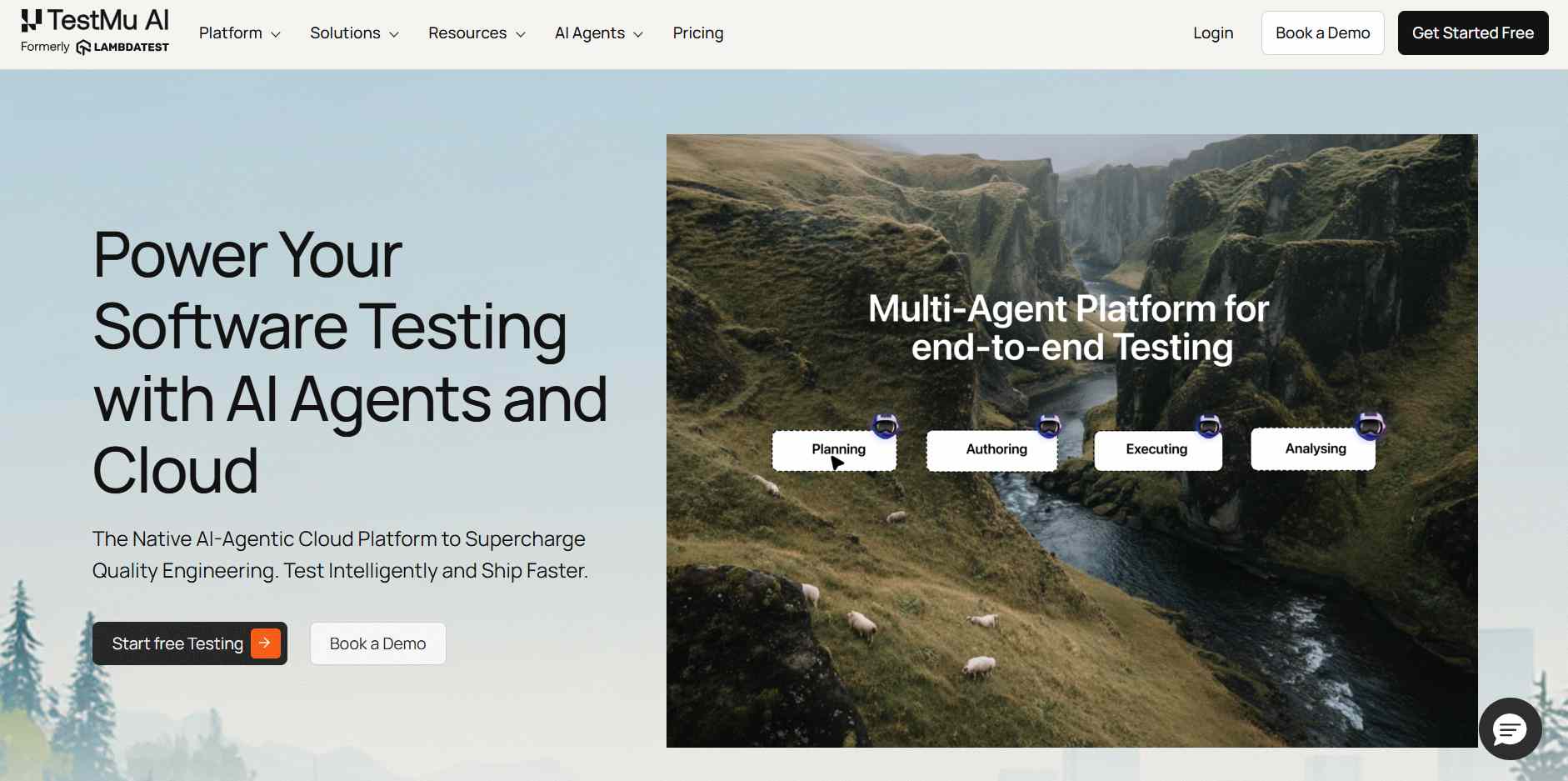
TestMu AI is a full-stack agentic AI quality engineering platform that brings testing into the DevOps pipeline as a first-class citizen. It covers the entire testing lifecycle through AI agents that plan, author, execute, debug, and analyze tests. At its core sits KaneAI, a GenAI-native testing agent that lets teams create and evolve end-to-end tests using natural language, converting Jira tickets, GitHub PRs, and plain English into executable test cases across web, mobile, API, and database layers.
On the execution side, HyperExecute accelerates test runs by up to 70% through Just-in-Time infrastructure and smart test distribution, with native integrations for Jenkins, GitHub Actions, GitLab CI, CircleCI, and Azure DevOps.
Key Features of TestMu AI DevOps AI tool:
- It automatically identifies why tests failed, classifies errors by impact, and prioritizes fixes, so DevOps teams debug pipeline failures in minutes instead of hours.
- It tracks failure history, recognizes patterns in flaky tests, and flags unreliable tests before they erode CI/CD signal quality. Teams can mute known flaky tests to keep pipelines moving.
- AI-Native Test Analytics surface patterns in test data to improve automation efficiency and reduce failure rates over time.
- It enables real-time collaboration across QA teams on test creation, execution, and results.
- It offers AI-powered test execution that allows you to run manual and automation tests across 3000+ real browsers and devices, ensuring comprehensive test coverage.
With the rise of AI in testing, its crucial to stay competitive by upskilling or polishing your skillsets. The KaneAI Certification proves your hands-on AI testing skills and positions you as a future-ready, high-value QA professional.
GitHub Copilot
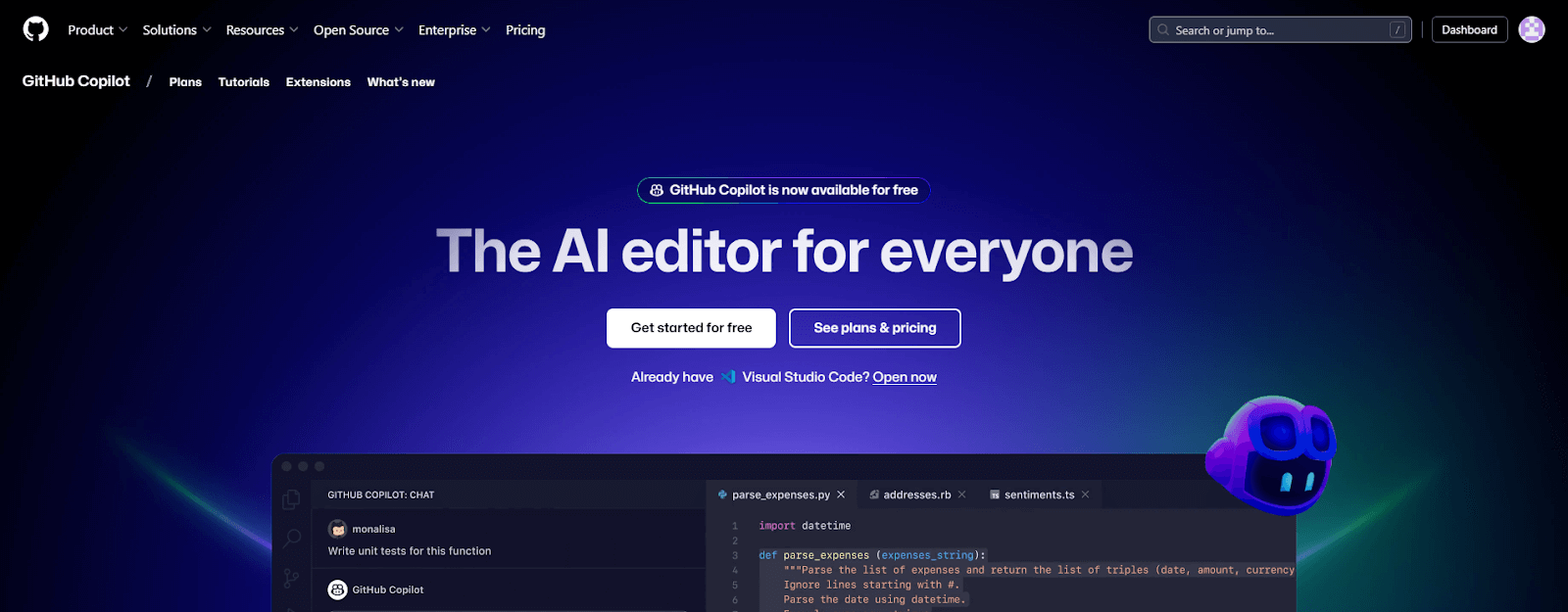
GitHub Copilot, an AI-powered code generation tool, enhances aspects of CI/CD workflows. As one of the most popular DevOps AI tools, it indirectly reduces developer effort by improving efficiency and code quality. This tool provides intelligent suggestions, helps accelerate development cycles and enables teams to deliver reliable software.
Key Features of GitHub Copilot DevOps AI tool:
- It suggests code snippets and entire functions in real-time, streamlining development and reducing manual coding efforts.
- It assists in various programming languages, enabling DevOps teams to work across diverse codebases without extensive language-specific expertise.
- It seamlessly integrates with popular IDEs like Visual Studio Code, enhancing existing workflows without requiring additional tools.
- It also integrates with Azure DevOps CI/CD pipelines, assisting in managing operations and providing insights into workloads, thereby enhancing functionality.

Note: Optimize your DevOps workflow by integrating GitHub Copilot for a seamless release cycle. Try TestMu AI Today!
AWS CodeGuru
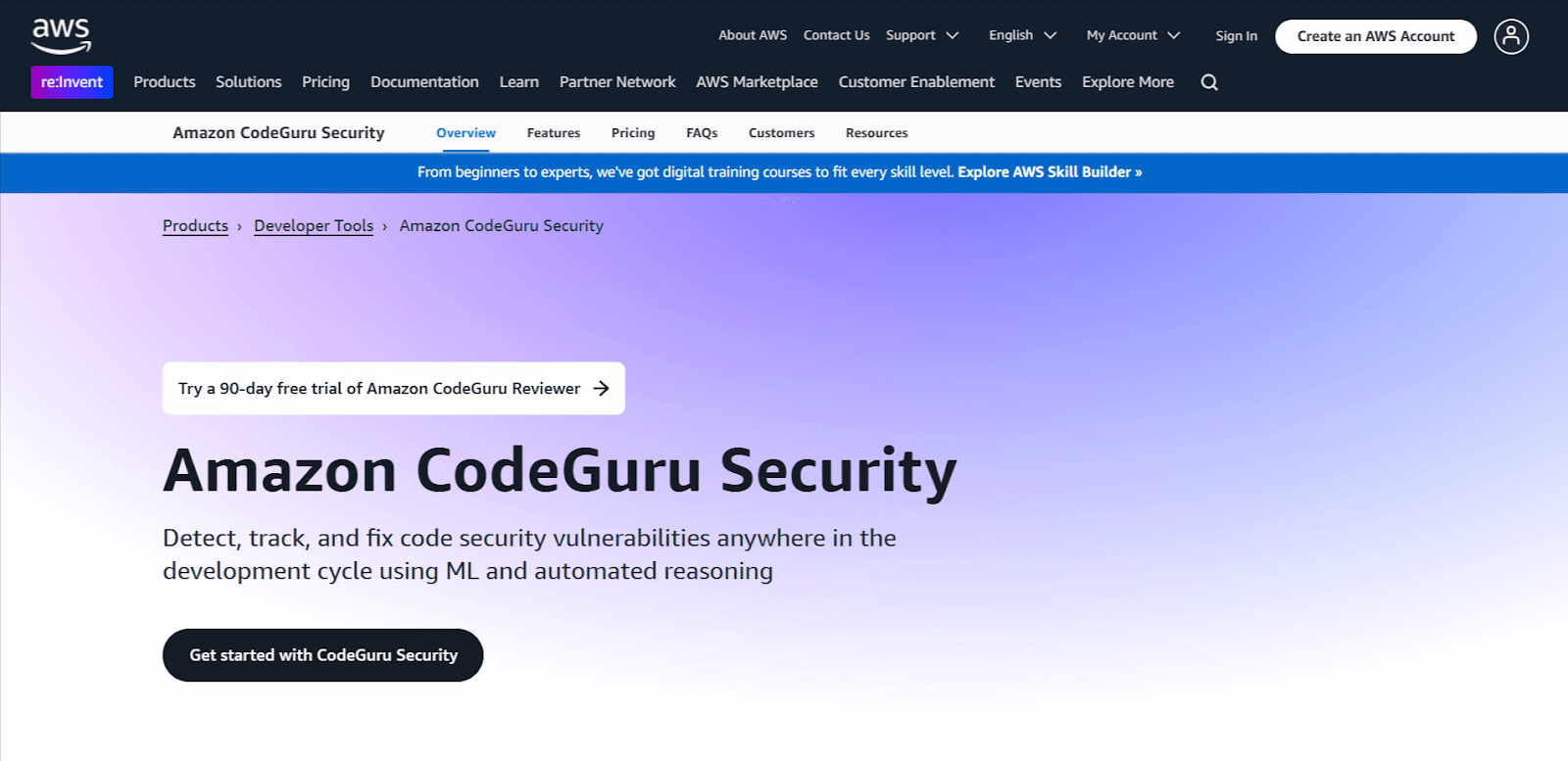
AWS CodeGuru is an AI-driven development tool that transforms how DevOps teams address code quality, performance, and security. This DevOps AI tool leverages advanced machine learning techniques to deliver comprehensive code analysis through its two core features: CodeGuru Reviewer for automated code reviews and CodeGuru Profiler for performance optimization.
Key Features of AWS CodeGuru DevOps AI tool:
- It analyzes code to identify defects, deviations from best practices, and potential security vulnerabilities, providing actionable recommendations to improve code quality.
- It continuously monitors applications in production to detect performance bottlenecks, high CPU utilization, and memory inefficiencies, offering insights to enhance application performance and reduce costs.
- It scans codebases to detect vulnerabilities, such as those listed in the OWASP Top Ten and CWE Top 25, and provides recommendations for remediation, enhancing the security posture of applications.
- It integrates seamlessly with existing development tools and CI/CD pipelines, enabling continuous code analysis and performance monitoring without disrupting established workflows.
Datadog
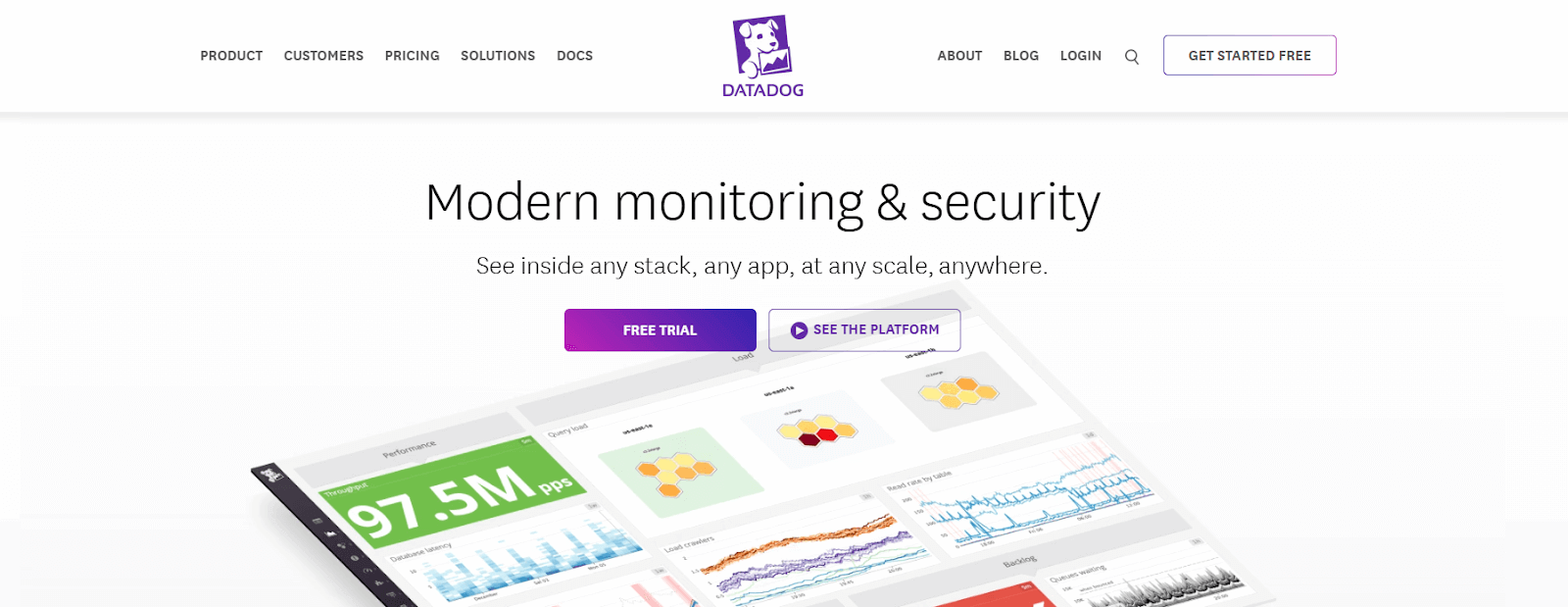
Datadog is a cloud monitoring platform that transforms application management through intelligent analytics. This DevOps AI tool uses machine learning to metrics, logs, and traces, data, and it enables DevOps teams to detect performance anomalies, identify infrastructure issues, and proactively recognize potential problems before they impact users.
Key Features of Datadog DevOps AI tool:
- Its DevOps copilot assists in investigating and responding to incidents more efficiently across the Datadog platform.
- AI accelerates investigations by automatically correlating telemetry and surfacing outliers, anomalies, and root causes of issues across the tech stack.
- It provides monitoring solutions by using machine learning, enabling teams to easily detect outliers in their application and infrastructure performance.
New Relic
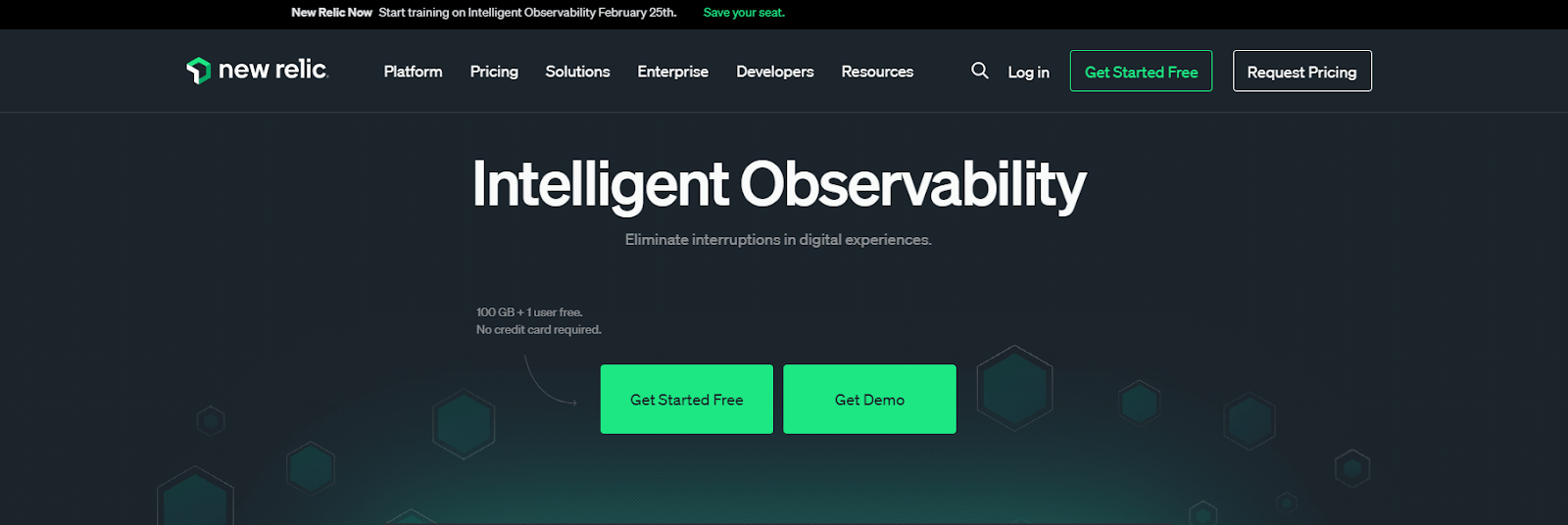
New Relic is an observability platform offering real-time insights into how applications are performing based on user experience. By using this DevOps AI tool, collecting and analyzing telemetry data becomes easy, and DevOps teams can easily identify performance bottlenecks in their applications and track health metrics.
Key Features of New Relic DevOps AI tool:
- Its AIOps capabilities utilize machine learning to automatically detect anomalies, correlate related incidents, and reduce alert noise, enabling teams to focus on critical issues.
- It provides tools to quickly identify the root causes of issues, integrating data from various sources to offer comprehensive insights and expedite resolution.
- It offers end-to-end visibility into AI-powered applications, allowing teams to monitor performance, ensure quality responses, and manage costs effectively.
- It leverages large language models, enabling users to interact with their observability data using everyday language, making it accessible to a broader range of team members.
- It integrates with tools like GitHub Copilot, facilitating seamless workflows and enhancing the efficiency of development and operations teams.
Sysdig
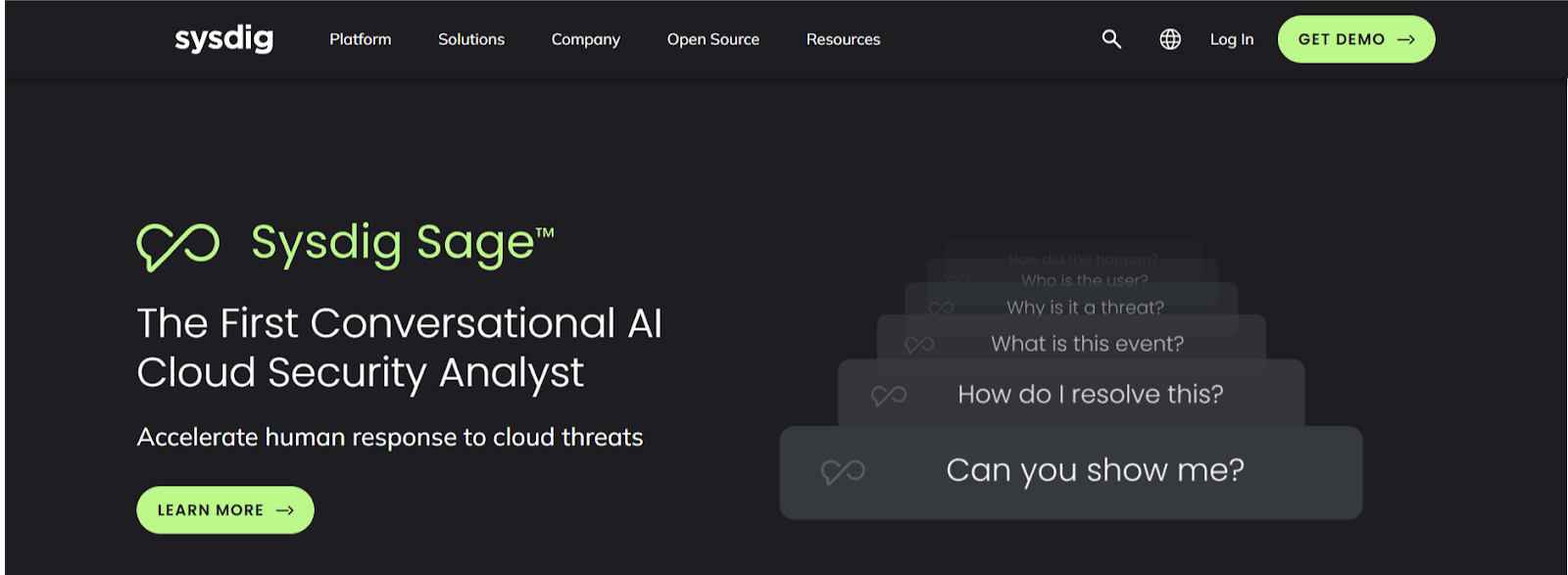
Sysdig is an innovative DevOps AI tool that leverages AI and machine learning to enhance DevOps operations across containerized environments. It works through multiple integrated mechanisms to provide comprehensive monitoring and security by providing runtime threat detection through continuous monitoring, automated vulnerability scanning of operating systems, applications, and libraries, resource optimization through intelligent allocation process and runtime analysis and detailed forensic timeline.
Key Features of Sysdig DevOps AI tool:
- It accelerates human response to cloud threats through multi-step reasoning and contextual awareness. It assists security, development, and DevOps teams in collaboratively addressing security challenges more efficiently.
- It leverages machine learning to detect and analyze patterns, anomalies, and potential security threats within the software stack. This enables proactive identification and resolution of issues, ensuring application stability and security.
- It automatically identifies unusual behaviors and potential threats within cloud and Kubernetes environments, allowing DevOps engineers to address issues before they impact operations.
- It utilizes AI-driven insights to analyze the behavior and performance of containers, microservices, and infrastructure components.
Harness
Harness is an AI-powered software delivery platform that automates CI/CD pipelines, deployment verification, and cloud cost management. It uses machine learning to analyse deployment history, flag risky releases before they reach production, and automatically roll back when failure signals are detected.
Key features of Harness DevOps AI tool:
- It uses AI to verify deployments in real time, comparing pre- and post-deployment metrics to detect regressions automatically.
- It analyses historical pipeline data to predict which builds are likely to fail, allowing teams to intervene before failures reach downstream stages.
- It provides AI-driven cloud cost optimisation by identifying underutilised resources and recommending rightsizing actions across AWS, GCP, and Azure.
- It supports feature flag management with automated rollout controls, enabling gradual releases with built-in rollback triggers.
- It integrates with Jenkins, GitHub Actions, GitLab CI, Jira, and Slack, fitting into existing DevOps workflows without requiring pipeline rewrites.
Jenkins X
Jenkins X is a cloud-native automation platform that enhances Continuous Integration and Continuous Delivery by integrating with popular open-source projects like Kubernetes, Tekton, Kuberhealthy, Grafana, Jenkins, and Nexus. This DevOps AI tool uses Infrastructure as Code through Terraform for cloud resource management, implements GitOps for version control and cluster state management, and utilizes secure secret management through providers like Vault or cloud-hosted solutions.
Key Features of Jenkins X DevOps AI tool:
- It analyzes past build data to predict potential failures before they occur, allowing engineers to address issues proactively.
- Its decision-making helps in automating rollbacks in case of deployment failures, minimizing downtime.
- It optimizes resource allocation during the build process, reducing costs and improving efficiency.
Subscribe to the TestMu AI YouTube channel and get more videos on DevOps, AIOps, and more.
CircleCI
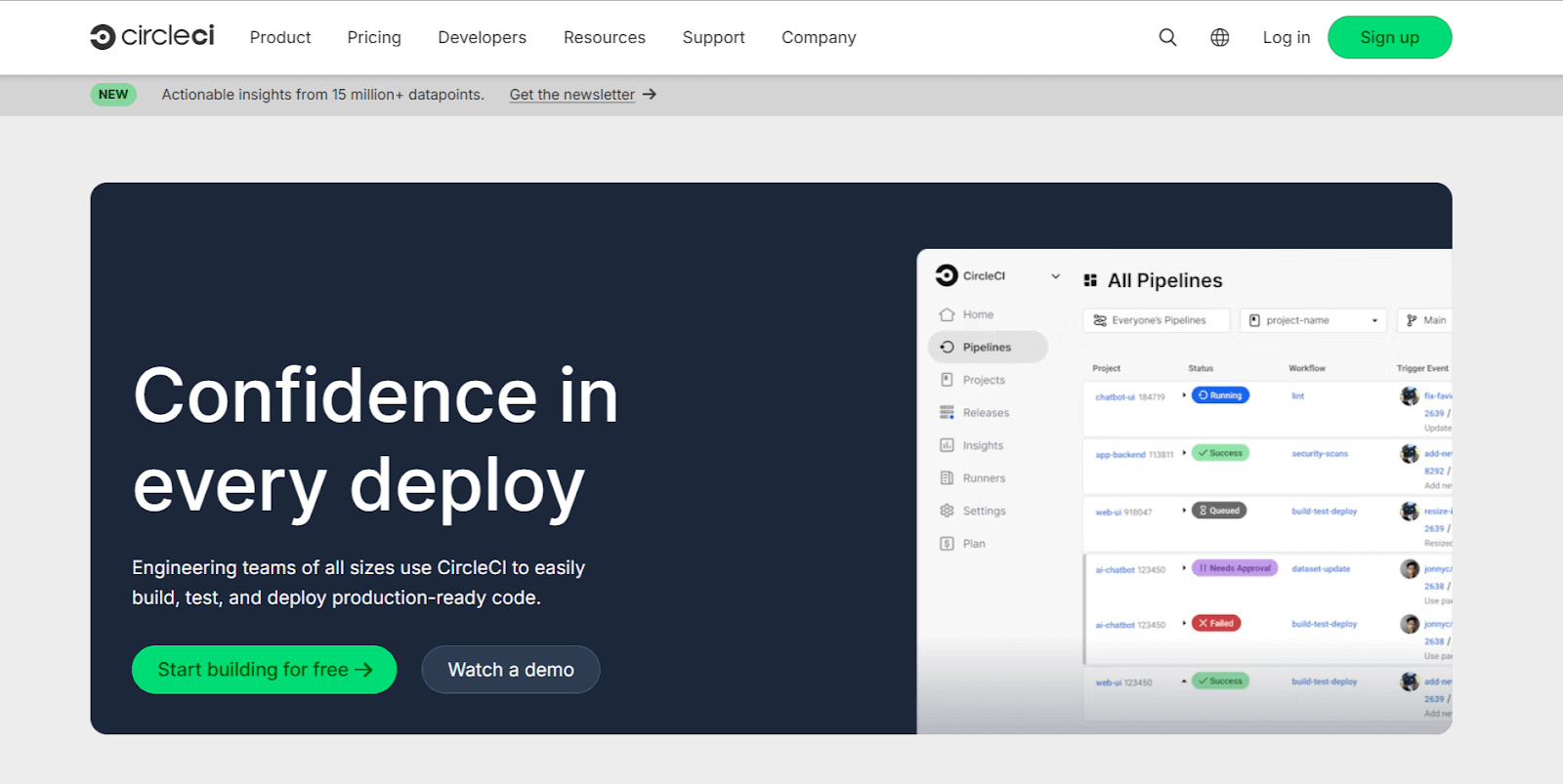
CircleCI is a leading cloud-based platform for CI/CD that automates the software development process, enabling teams to build, test, and deploy applications with efficiency and precision. By integrating seamlessly with popular version control systems like GitHub, GitLab and Bitbucket, CircleCI enhances collaboration and accelerates development cycles.
This DevOps AI tool uses machine learning algorithms for job scheduling and resource allocation, ensuring faster pipeline execution, while its robust feature set and intuitive interface make it a top choice for DevOps teams aiming to improve software quality and delivery speed.
Key Features of CircleCI DevOps AI tool:
- It enables parallel processing of tasks, such as building and testing, to reduce build times and speed up deployments.
- It offers strong Docker integration, allowing teams to containerize applications for consistent environments across development, testing, and production stages.
- It provides highly configurable pipelines for defining complex workflows, managing dependencies between jobs, and streamlining delivery processes across staging and production environments.
Azure DevOps
Azure DevOps is a comprehensive set of tools and services provided by Microsoft. It is one of the most used DevOps AI tools when integrated with Azure’s AI and machine learning services. This integration enhances CI/CD processes, test automation, and infrastructure management.
Key Features of Azure DevOps AI tool:
- It automatically generates and runs test cases based on code changes, improving test coverage and reducing manual effort.
- It optimizes build processes by identifying bottlenecks and recommending improvements.
- It analyzes past deployments to predict the success of future deployments, reducing the risk of failures.
Snyk
Snyk is one of the most powerful DevOps AI tools that provides end-to-end security scanning capabilities across the development lifecycle, as it focuses on automatically scanning the codebases for vulnerabilities in open-source libraries and dependencies, enabling early detection and remediation of potential security issues. Performing security scans on container images, ensuring applications remain secure throughout the containerization process and offering Cloud Security Posture Management (CSPM) to identify and fix misconfigurations and security gaps in cloud infrastructure.
Key Features of Snyk DevOps AI tool:
- It performs SAST in real time as developers write code, surfacing vulnerabilities immediately for faster remediation.
- It scans source code, open-source libraries, container infrastructure, and IaC for vulnerabilities from a single platform.
- It delivers fix advice directly inside development tools, so security issues get resolved without disrupting the workflow.
- It continuously monitors for new threats and alerts teams as vulnerabilities emerge, keeping applications secure post-deployment.
- It aggregates context from security and observability tools to give teams a unified view of application risk.
Splunk
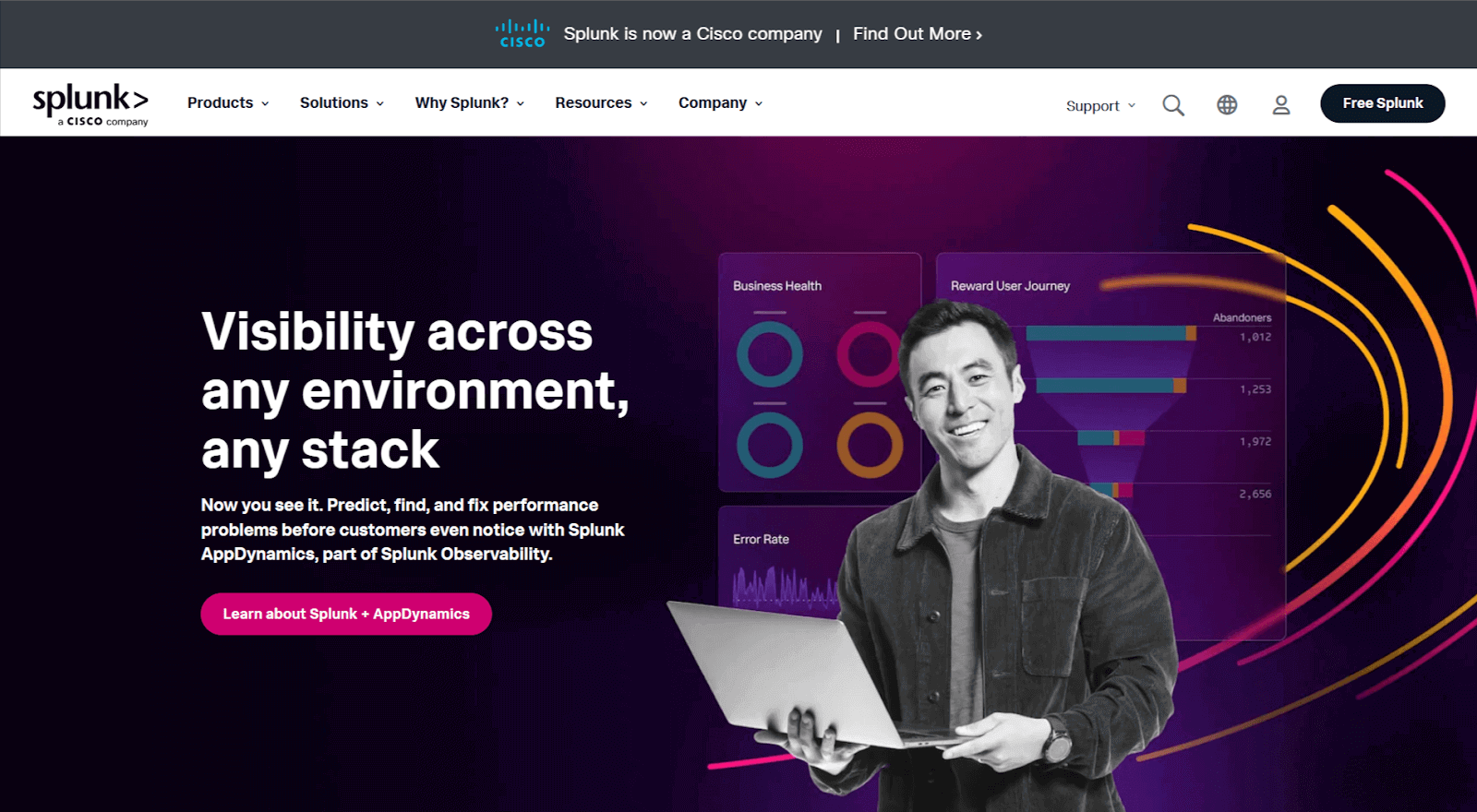
Splunk is an emerging game-changing platform in the data-driven world of DevOps, which takes massive amounts of machine-generated data and turns it into meaningful insights. Advanced machine learning capabilities enable Splunk to go beyond the traditional log analysis, offering organizations a powerful DevOps AI tool for proactive monitoring, security, and operational intelligence.
Key Features Splunk DevOps AI tool:
- It provides guided workflows and smart assistants for users to create custom machine learning models designed for specific DevOps use cases, enhancing data analysis and decision-making processes.
- It utilizes AI to offer predictive analytics, alert noise reduction, anomaly detection, adaptive thresholding, and incident correlation, providing a comprehensive AIOps solution for monitoring and maintaining IT service health.
- It uses generative AI to provide a chat experience that helps users author and learn Splunk Processing Language (SPL) by interacting in plain English, offering query suggestions, explanations, and detailed breakdowns.
PagerDuty
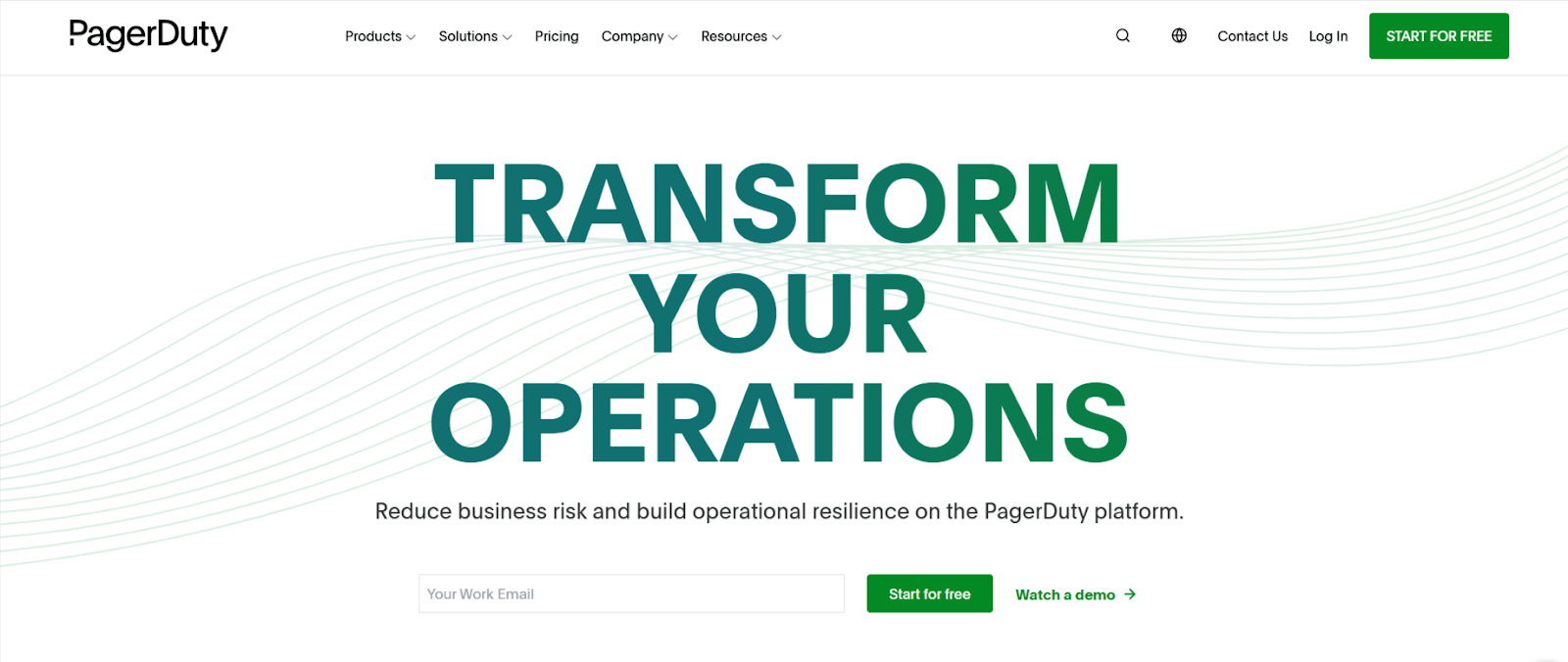
PagerDuty is a leading incident management platform that provides robust solutions to DevOps teams for detecting, responding to, and resolving production incidents efficiently. This tool allows organizations to minimize downtime by providing real-time monitoring and automated response systems.
They launched their DevOps AI tool, PagerDuty AIOps, in 2023 which incorporates artificial intelligence and automation into the capabilities. It helps reduce noise in the incident management process, improving defect triage efficiency and response accuracy and allows teams to automate repetitive tasks in the incident response workflow.
Key Features of PagerDuty DevOps AI tool:
- It automatically detects and routes incidents to qualified team members based on expertise and availability for rapid response to critical issues.
- It uses an ML-based approach to limit alert fatigue by grouping associated alerts and prioritizing relevant issues, so teams need to focus on what counts the most.
- It ensures that scheduling and escalation policies are automated, thereby ensuring continuous coverage to address incidents in a structured response chain.
CloudHealth
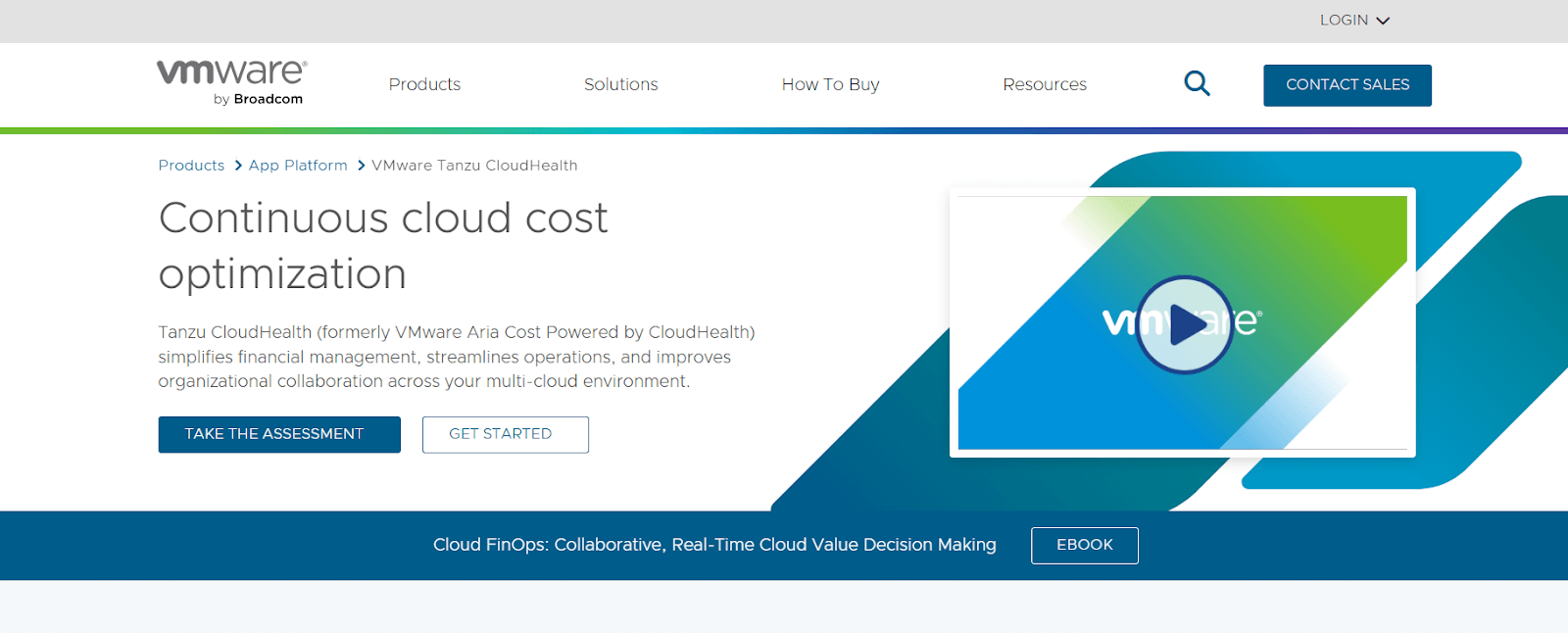
CloudHealth by VMWare leverages AI to optimize the cloud cost. It analyzes cloud resource usage to provide intelligent recommendations, including rightsizing suggestions for workload-appropriate instance types and reserved instance opportunities for predictable workloads, driving significant cost saving. It also offers comprehensive resource management through automated tagging, categorization, and scaling recommendations based on usage patterns. The platform streamlines compliance management through automated reporting and monitoring.
Key Features of CloudHealth DevOps AI tool:
- It utilizes AI to provide rightsizing recommendations across CPU, memory, disk, and network resources, ensuring efficient resource utilization and cost savings.
- It Offers AI-driven insights for optimizing workloads and automating processes, enhancing operational efficiency and performance.
- It provides detailed cost analysis and recommendations for Kubernetes clusters, assisting in right-sizing node pools and underlying infrastructure for optimal performance.
- It improves cloud compliance and security posture with full visibility into misconfigurations based on predefined rules and custom policies, prioritizing issues based on risk scores and automating remediation.
Dynatrace
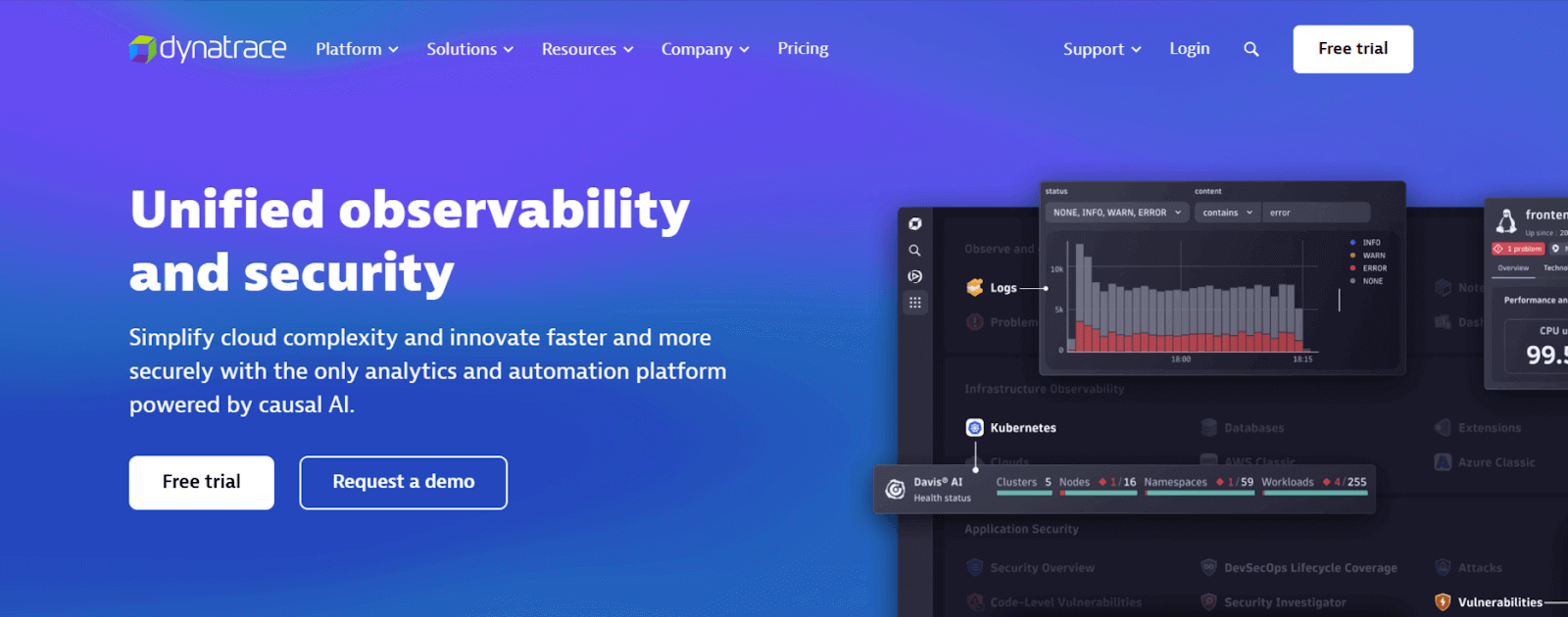
Dynatrace delivers comprehensive monitoring through Davis AI and DevOps AI tool that uses an intelligent engine that processes billions of dependencies in milliseconds to detect anomalies and perform root cause analysis. This tool helps track system metrics such as CPU performance, response times, and network traffic across the entire technology stack, from infrastructure to end-user interactions. It enables automated anomaly detection and root cause analysis, thus helping teams quickly identify issues before they affect users.
Key Features of Dynatrace DevOps AI tool:
- It continuously analyzes vast data to detect anomalies, perform root cause analysis, and provide precise answers, enabling rapid issue resolution and proactive performance optimization.
- It automatically identifies the root cause of performance issues, reducing the time spent on troubleshooting.
- It forecasts potential issues, allowing teams to address them proactively before they impact operations.
- It autonomously identifies unusual patterns or behaviors across the entire technology stack, facilitating early detection of potential problems.
- It continuously monitors cloud environments, detecting and resolving issues without human intervention.
Ansible
Ansible provides streamlined automation for IT orchestration and configuration management through its declarative language. Teams can efficiently define and execute automation tasks, ensuring consistent environment management. This tool provides simplicity and effectiveness making it a valuable tool for managing complex IT infrastructures at scale.
By integrating AI, this DevOps AI tool transforms from a simple automation platform into an intelligent system capable of making real-time decisions and adapting to complex infrastructure needs.

Key Features of Ansible DevOps AI tool:
- Its intelligent algorithms dynamically adjust configurations based on the infrastructure state.
- It automates the detection and correction of system issues.
- Its predictive resource scaling analysis of usage patterns to optimize performance and resource allocation.
BigPanda
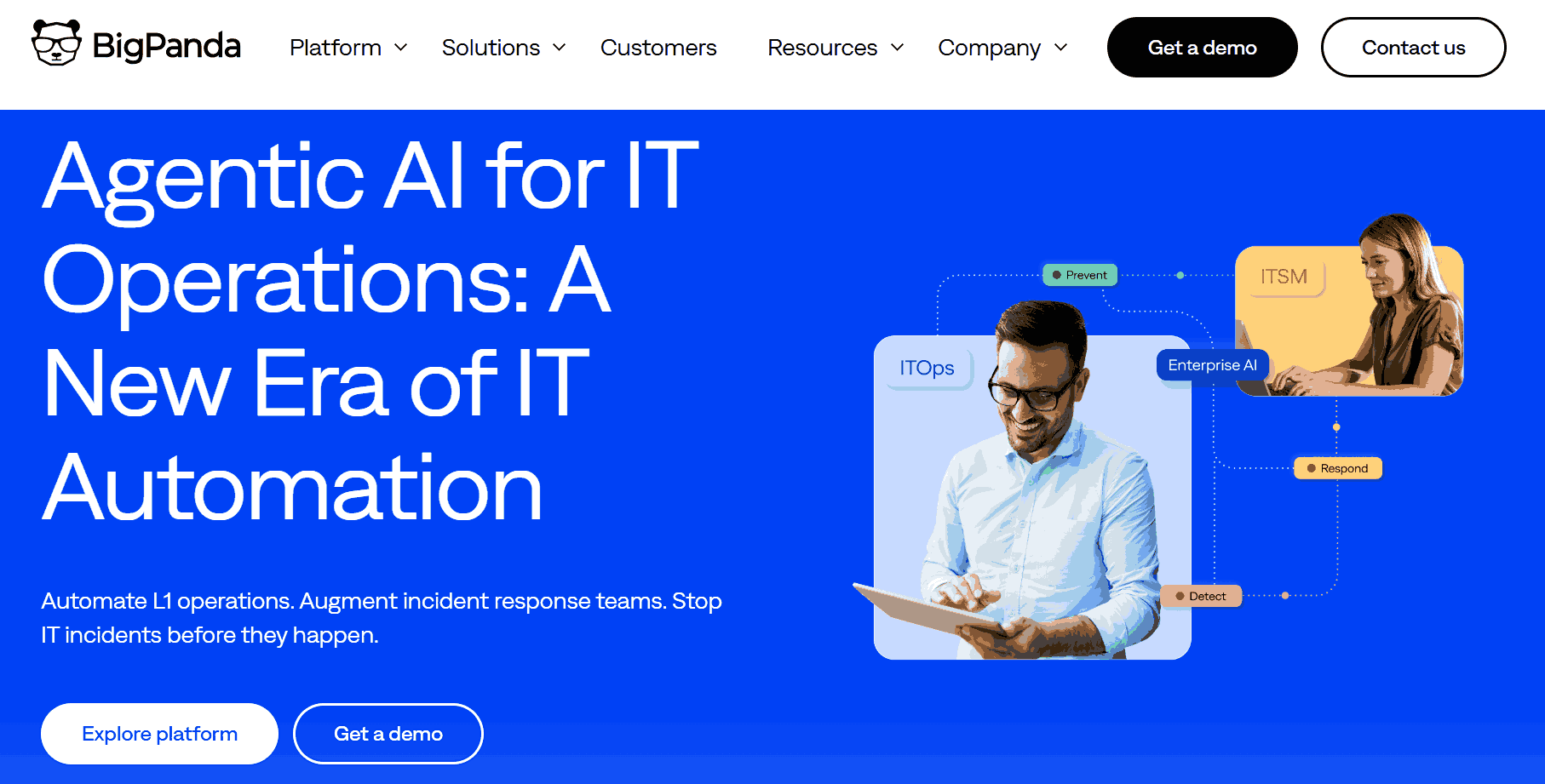
BigPanda is an AIOps platform that applies machine learning to correlate alerts, events, and incidents across the entire technology stack. Where traditional monitoring tools generate thousands of individual alerts, BigPanda groups related signals into unified incidents, surfacing the root cause rather than the symptom. This significantly reduces alert fatigue and shortens the time from detection to resolution for DevOps and SRE teams.
Key features of BigPanda DevOps AI tool:
- It uses ML-based event correlation to group thousands of alerts into a small number of actionable incidents, eliminating noise from monitoring tools across the stack.
- It automatically identifies the root cause of incidents by mapping relationships between services, infrastructure components, and recent change events.
- It integrates with observability tools, ITSM platforms, and communication channels including ServiceNow, Jira, Slack, and PagerDuty for end-to-end incident workflows.
- It uses unified analytics across monitoring sources to identify recurring failure patterns and surface improvement recommendations over time.
Key Considerations for Choosing the Right DevOps AI Tools
Selecting the right DevOps AI tool can be the difference between transformative efficiency and technological frustration. The process requires a holistic approach that goes beyond surface-level features, demanding a strategic evaluation of your organization’s unique needs and potential for growth.
The key is to select tools that align with your specific organizational needs and existing technology stack.
Scalability
The ideal DevOps AI tool should scale with your existing infrastructure, handling increasing complexity without performance degradation. As your organisation grows, the tool should adapt accordingly, offering flexible resource allocation and the ability to manage more sophisticated workflows over time.
Integration Capabilities
Your DevOps AI tool needs to fit into your existing technology landscape without requiring a rebuild of your current workflows. This means deep, seamless integration with:
- Continuous Integration/Continuous Deployment (CI/CD) pipelines
- Cloud platforms
- Source code management systems
- Monitoring and logging infrastructure
Teams can also boost their productivity by using various DevOps automation tools that enable them to focus on innovation and continuous improvements in delivering high-quality software applications.
Team Adoption
Technical capabilities mean nothing if your team can’t effectively use the DevOps AI tools conveniently. Teams must be able to adapt to new technologies to keep enhancing the development and testing process.
Consider:
- Intuitive interfaces
- Comprehensive documentation
- Training resources
- Community support
- Alignment with your team’s current skill set
The right DevOps AI tool depends on your project's specific requirements. AI works best as a complement to human judgment, reducing risks and surfacing insights that might otherwise be missed, rather than replacing the decision-making that engineers are best placed to handle. Successful integration comes down to choosing tools that fit naturally into existing systems and that teams are willing to trust and use consistently.
As AI continues to shape DevOps practices, many teams are leveraging AIOps to enhance system reliability and automate complex operations. Learn more about the key benefits of AIOps and how it’s redefining modern IT operations.
Conclusion
As you move forward, AI is no longer an optional add-on but a necessary part of effective DevOps strategies. The right combination of AI tools can dramatically improve efficiency, reduce operational risks, and accelerate innovation.
However, challenges such as data quality, integration complexity, performance strain, security risks, and high costs, need to be overcome for successful implementation. High-quality data through consistent logging and centralized pipelines, choosing compatible tools to reduce integration complexity, and utilizing cloud-based solutions to optimize resources can help overcome these obstacles.
Additionally, prioritizing AI tools with robust security features and regulatory compliance safeguards sensitive data while evaluating ROI ensures cost-effectiveness. With strategic planning and the right tools, organizations can unlock AI’s full potential to transform their DevOps processes.
Curious about how AI in software testing works in real scenarios? Explore our complete guide.
Citations
- AI and DevOps in Information Technology and Its Future in the United States: https://www.researchgate.net/publication/357033152_AI_and_DevOps_in_Information-_Technology_and_Its_Future_in_the_United_States
- Integrating AI into DevOps pipelines: https://ijsra.net/sites/default/files/IJSRA-2024-1838.pdf


Frequently asked questions
Did you find this page helpful?
More Related Hubs
TestMu AI forEnterprise
Get access to solutions built on Enterprise
grade security, privacy, & compliance
- Advanced access controls
- Advanced data retention rules
- Advanced Local Testing
- Premium Support options
- Early access to beta features
- Private Slack Channel
- Unlimited Manual Accessibility DevTools Tests