

Next-Gen App & Browser Testing Cloud
Trusted by 2 Mn+ QAs & Devs to accelerate their release cycles


29 Best Bug Tracking Tools in 2026
This article lists down the best bug tracking tools you can use in 2026 for your software testing requirements.

Nazneen Ahmad
February 3, 2026
In today’s digital world, organizations rely heavily on software applications to run their business. With this growing dependence comes an increasing need for high-quality applications—and effective tools to track and manage bugs. As software technologies evolve, so does the need for robust bug tracking systems to ensure performance, user experience, and functionality.
Bug tracking tools provide a structured way to identify, document, and resolve bugs across the development life cycle. However, with so many options available, choosing the right tool can be challenging.
This article covers the 29 best bug tracking tools, each with unique features to help development teams detect, prioritize, and resolve issues efficiently.
What are Bug Tracking Tools?
Bug tracking tools are software applications used by QA and development teams to identify, document, prioritize, and resolve software defects throughout the development lifecycle.
Bug tracking tools are used by quality assurance and software development teams to report software bugs and errors. Proper bug tracking is necessary for effective software development. This software provides a repository that outlines bug reproduction steps and the scope of the issue. It enables businesses to prioritize, sequence, and communicate about different bugs across multiple projects or applications.
Typically managed by QA teams, bug tracking tools facilitate quick communication between developers, the business, and sometimes customers to determine how and when to address the bugs.

Note: Simplify your testing workflow using bug tracking tools. Try TestMu AI Today!
What Are the Best Bug Tracking Tools in 2026?
The best bug tracking tools in 2026 include Jira, GitHub, GitLab, Bugzilla, Redmine, Asana, Trello, monday.com, ClickUp, and MantisBT for efficient defect management.
Different bug tracking tools help identify and fix the issue found in the software application during its development process. Here are some of the top bug tracking tools that should be known to every software professional.
1. Jira
Jira is one of the most popular open-source bug tracking tools used for bug tracking, project management, and tracking any other issues or errors.
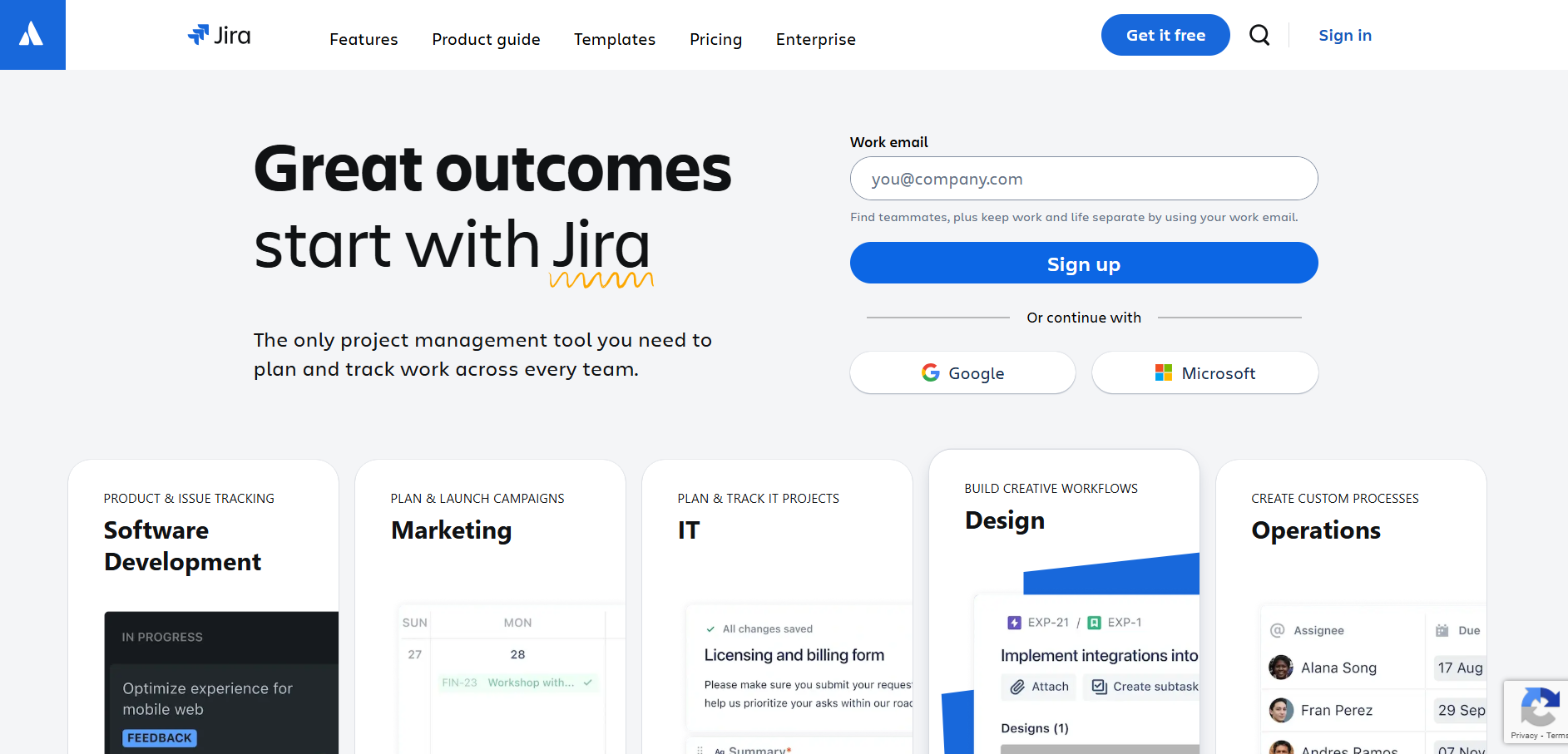
As a commercial product, it efficiently captures and organizes team issues while prioritizing and updating them in sync with the project’s progress. Its seamless integration with code development environments makes it an ideal choice for developers.
Moreover, Jira’s versatility extends beyond the software industry, as it adeptly tracks various types of issues and supports agile projects. The availability of numerous add-ons further enhances its power, setting it apart from similar tools.
Highlighted below are key features of Jira:
- Jira is a bug tracking tool that allows users to prioritize the bugs and some key features of software applications.
- With Jira, the entire team of software developers can collaboratively plan for the inclusion of new features and the resolution of bugs in the upcoming release.
- Jira’s dashboards and reports offer real-time insights into project progress, enabling you to make necessary adjustments accordingly.
- Jira is a useful tool for organizing documentation tasks, allowing effective grouping through component functionality, and creating custom documentation structures.
- A notable feature provided by Jira is the pie chart macro, which visualizes tasks like Open, Closed, and Resolved, providing an overview of task statuses.
- You can define specific due dates or deadlines for documentation releases and configure Jira to send notifications, ensuring the timely completion of tasks.
- Although Jira lacks default time-tracking for documentation, it excels in other aspects of project management.
- Jira seamlessly integrates with Confluence pages, allowing effortless connection to related issues with just a few clicks.
2. GitHub
GitHub serves as a bug tracking tool accessible across all GitHub source code repositories. Apart from managing issues, development teams can utilize GitHub as a platform for hosting discussions, handling internal customer support inquiries, and collecting feedback on documentation.

Highlighted below are the key features of GitHub for bug tracking:
- The tool’s template builder emerges as a valuable asset for QA teams, allowing them to establish standardized forms for bug reporting and product feature requests.
- To communicate their bug-reporting workflow effectively to stakeholders, QA teams can share contributing guidelines. This can be achieved by creating a document named CONTRIBUTING.md in the root of their GitHub repository.
- Using GitHub, the reporter creates a new issue, and the system will display a pop-up message guiding them to the specified workflow document.
- GitHub offers seamless integration with various desktop graphical user interface (GUI) tools, including Atom and GitKraken, as well as with project management systems.
3. GitLab
GitLab, as its name implies, functions as a defect tracking tool like GitHub. It is well-suited for project collaboration and bug tracking, but it stands out as an all-in-one solution, distinguishing itself from GitHub. This dual nature can be both a strength and a drawback. If you desire a more tailored and feature-rich experience, GitLab becomes the preferred option. However, GitHub remains a viable choice with its own merits. Similar to GitHub, using GitLab may require some learning to navigate effectively.

Highlighted below are the key features of GitLab:
- It provides an issue-tracking system that helps to manage and track bugs associated with software development.
- It offers visual boards to monitor the progress of bug fixing.
- You can easily add labels and tags to the bugs identified in the software application, which allows for easy categorization.
- The bugs identified can be assigned to particular team members for early bug fixing.
- This tool provides a common platform where users can engage in threaded discussions on the bugs.
- It gives customer support through chats.
- It is integrated with version control (Git), ensuring direct relation of bug reports with the codebase.
4. Bugzilla
Bugzilla stands out among popular bug tracking tools, widely adopted by numerous organizations for effective bug monitoring. As an open-source solution, it aids both customers and clients in seamlessly keeping track of bugs. Moreover, Bugzilla is a versatile test management tool, facilitating easy linkage with other test case management tools like ALM and Quality Centre. Additionally, it extends support to various operating systems, including Windows, Linux, and Mac.
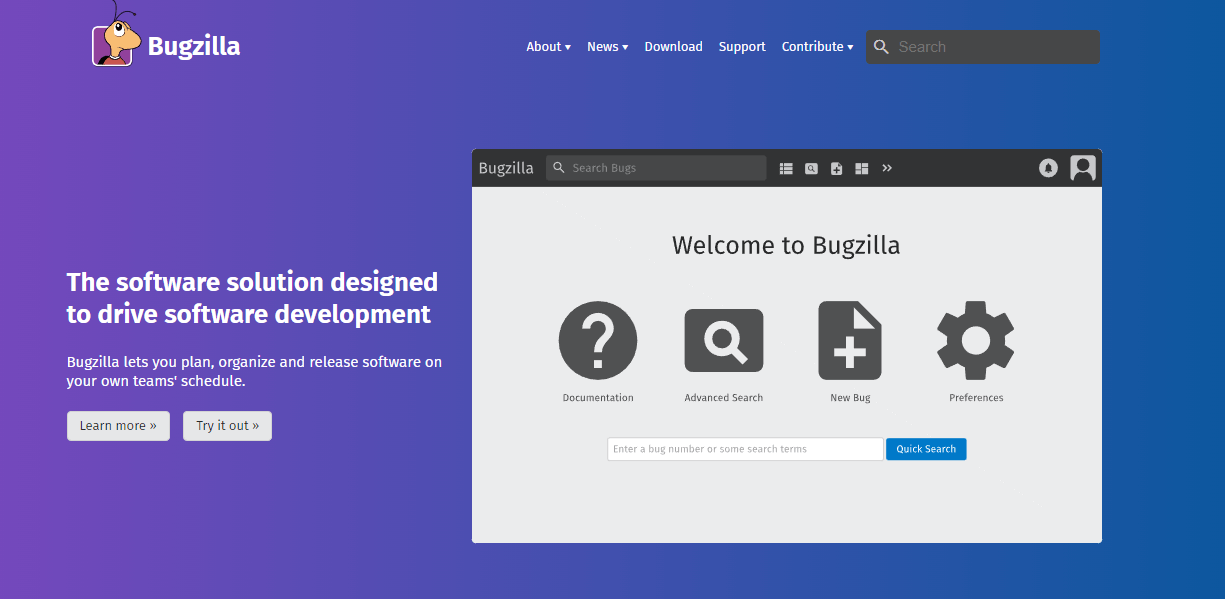
Highlighted below are key features of Bugzilla:
- Bugzilla provides two forms of search, including a basic bug search that is similar to Google’s search and an advanced search system that allows users to create customized searches, including time-based queries like “show me bugs where the priority has changed in the last three days” and other specific criteria.
- Bugzilla allows you to receive email notifications for any changes made in the system, and you have complete control over which bug notifications you receive based on your personal user preferences.
- When searching for bugs, Bugzilla offers various result formats beyond the basic HTML layout. Bug lists can be obtained in Atom format for subscription purposes, similar to a feed.
- Bugzilla’s scheduling system enables users to receive search results on a specified schedule via email.
- The reporting system in Bugzilla is highly advanced. Users can create tables using any two fields as the X and Y axis and apply specific search criteria to obtain information about the bugs they are interested in.
- When creating a new bug report in Bugzilla, the system automatically searches for similar bugs as you begin typing a summary.
- Bugzilla helps avoid duplicate bug reports by allowing users to add themselves to the CC list of an existing bug rather than creating a new one.
- Apart from the web interface, users can interact with Bugzilla through email, allowing them to create new bugs or modify existing ones easily.
- Bugzilla offers the ability to estimate the time required to fix a bug and track the hours spent working on it. Users can also set deadlines for bug completion.
- The Request System is a feature that enables users to ask others to take action on a specific bug or attachment. The recipient can accept or deny the request, and Bugzilla keeps a record of their response.
5. Redmine
Redmine is a freely available bug tracking tool for issue tracking and web-based project management. It is developed in the Ruby programming language and is compatible with multiple databases such as MySQL, Microsoft SQL, and SQLite. It enables users to manage different projects, including their corresponding subprojects, effectively.
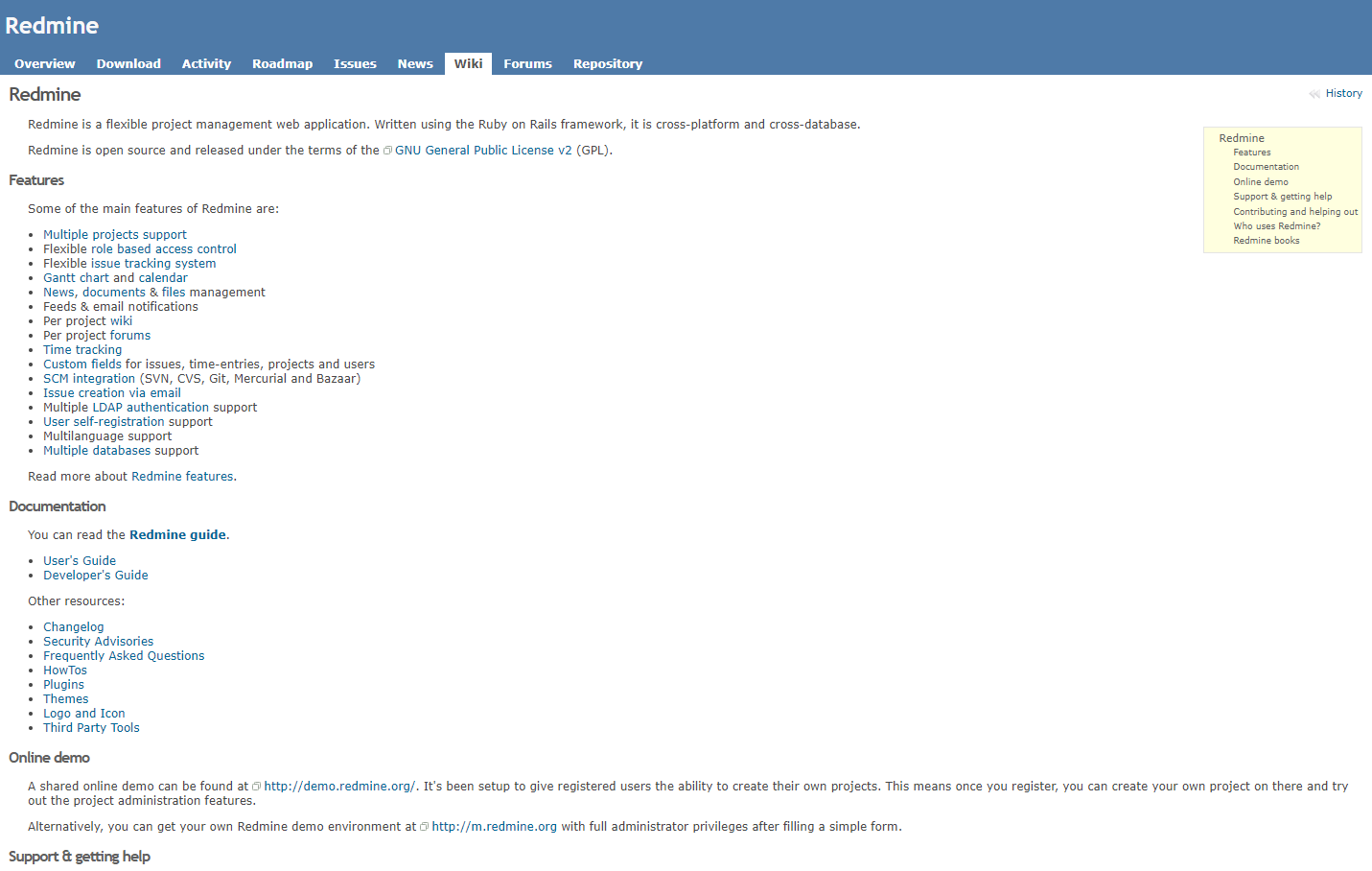
Highlighted below are key features of Redmine:
- It supports numerous plugins, making it easy to customize, flexible, and simple to learn.
- The software efficiently handles multiple software projects for tracking the bugs simultaneously.
- Users can easily customize it using templates, dashboards, and advanced settings. Redmine allows assigning different roles and permissions for issues or bugs detected.
- It facilitates tracking time spent on issues found in the software applications.
- Visual reporting using graphs and charts is supported by Redmine, which makes tracking the tool easy.
- Users can publish news related to the project or any topic they choose.
6. Asana
Asana is a tool for project management and issue tracking, allowing you to prioritize bugs so that your team can focus on the most time-sensitive ones first. However, to assign tasks to multiple people using this project management tool, you will need to create duplicates of those tasks. Consequently, your workspace will gradually accumulate numerous duplicated tasks over time.

Highlighted below are the key features of Asana:
- Asana offers a wide range of functionalities, including bug tracking capabilities.
- It comes with a bug-tracking template which makes monitoring the issue easy.
- It enables teams to manage their work efficiently, encompassing daily tasks and strategic initiatives. With bug-tracking forms and templates, Asana streamlines the process of collecting bugs in a centralized location.
- The creation of bug-tracking forms is possible with Asana.
- Tracking bugs and identifying trends with custom fields allows early fixation of bugs in the software application.
- It offers custom fields for setting priorities and categories to discern patterns and provides insights into the types of bugs accumulated.
- Asana bug tracking serves as an internal system for effectively monitoring bugs.
- It enables quick bug tracking and easy management of related discussions, all in a centralized location, streamlining projects and bug handling.
- The keyboard shortcut (Cmd+Shift+Down) allows you to quickly navigate between bugs based on their priorities.
- You can use tags to group bugs together, making it simpler to find related issues.
- Agile board view that allows teams to manage and track their work items, such as tasks, user stories, or bugs, throughout different stages of the development process.
7. Trello
Trello is a defect tracking tool that leverages project management and visual collaboration. Trello is helpful for easy triage of incoming bug reports with forms. It caters to development and QA teams seeking more than mere bug assignment and tracking. It enables the creation of high-quality software by reducing bugs, expediting QA cycles, and enhancing overall control overbuilds.

Highlighted below are the key features of Trello:
- Effortlessly create, assign, and track defects.
- Establish traceability between defects, requirements, and tests.
- Easily reuse defects, test cases, and test cycles.
- Customize permissions, fields, and reporting.
- Enjoy an interactive and insightful dashboard.
- Experience an intuitive and user-friendly interface.
8. monday.com
Monday.com is a defect tracking tool that consolidates performance analysis and team management in one unified platform. It offers a flexible dashboard, facilitating easy data visualization.
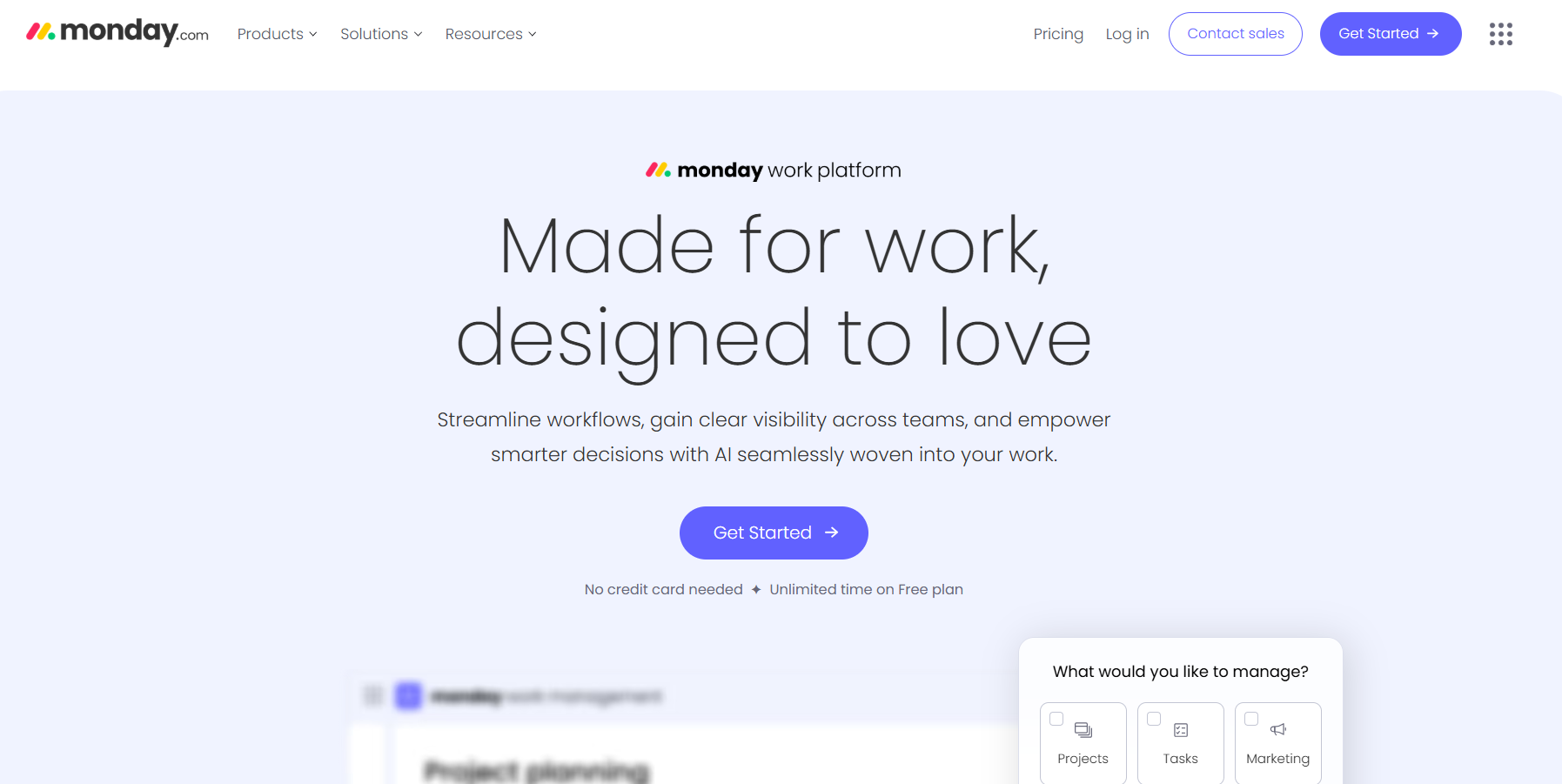
Highlighted below are the key features of monday.com
- It captures screenshots or video feedback of the bug identified.
- Customer support is available through the Contact Form.
- It integrates with various platforms, including Outlook, Microsoft Teams, Dropbox, Slack, Google Calendar, Google Drive, Excel, Gmail, LinkedIn, OneDrive, Zapier, and Adobe Creative Cloud.
- It receives instant Email and Slack alerts with scheduling the scans to run hourly, daily, or weekly.
- Includes features like automation, Gantt charts, Kanban boards, Time tracking, Security, HIPAA compliance, authentication, and SCIM.
9. ClickUp
ClickUp goes beyond traditional task management, offering a fully customizable software solution tailored to meet the diverse needs of various teams. Developers and project managers widely use this bug tracking tool to track bugs efficiently.
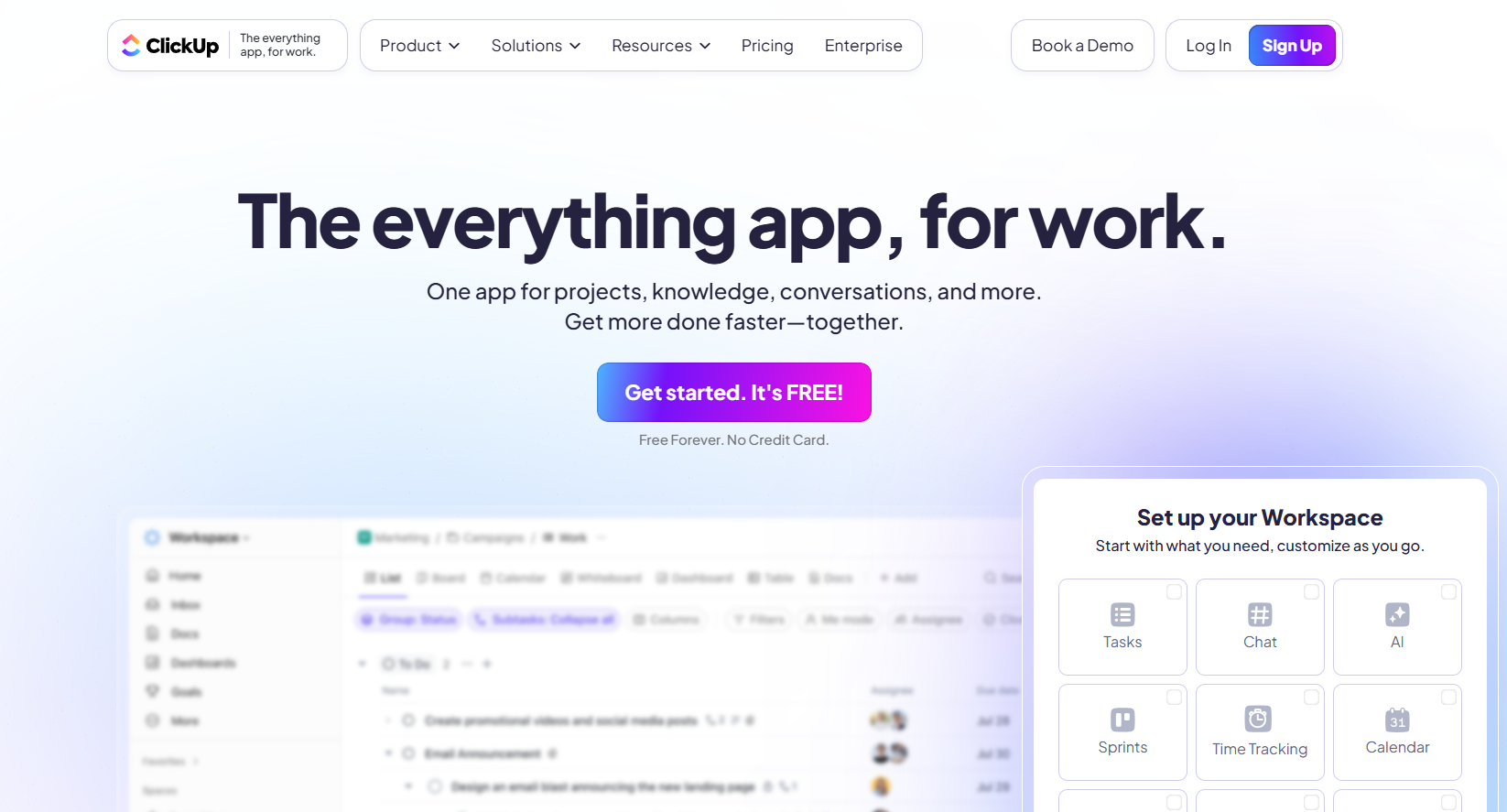
Highlighted below are the key features of ClickUp:
- With ClickUp, users can manage tasks and create documents and knowledge bases, establish goals, maintain calendars, and effectively manage their inboxes.
- For Agile teams, ClickUp provides visual sprint widgets that enable them to monitor work efficiency and identify workflow bottlenecks effortlessly.
- ClickUp also benefits QA teams, as it offers intake forms that allow them to capture bug information using custom fields. Once the bug details are collected, QA teams can easily convert them into assigned tasks.
- Related bugs can be linked together, categorized with tags, and efficiently managed in the backlog using custom statuses.
- ClickUp boasts extensive integration capabilities, allowing users to connect with over 1,000 tools. Native integrations include popular platforms like Sentry, Zendesk, GitHub, and GitLab.
- It provides a public API, empowering businesses to create custom integrations and ClickUp apps according to their specific requirements.
10. MantisBT
MantisBT, which stands for Mantis Bug Tracker, is a web-based system for tracking bugs. This bug tracking tool serves as an open-source tool specifically designed to monitor software defects. MantisBT operates on the PHP programming language.
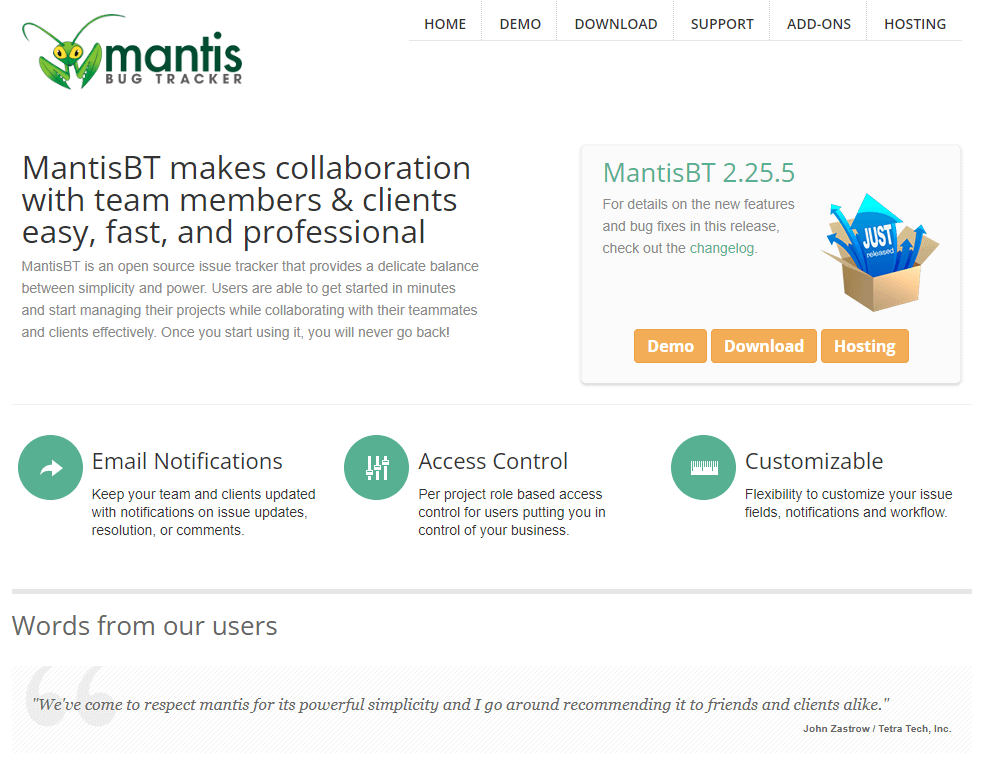
Highlighted below are key features of MantisBT:
- Stakeholders receive timely emails with updates, comments, and resolutions related to the project.
- You can manage user access at the project level, regulating who can interact with specific project data.
- Easily customize Mantis according to your specific requirements and preferences.
- Mantis is compatible with iPhone, Android, and Windows Phone platforms, providing on-the-go access.
- Access an ever-expanding library of plugins to add custom functionalities and enhance the capabilities of the Mantis Issue Tracker.
11. BugHerd
BugHerd is a bug tracking tool designed to make bug identification and feedback easier by directly pinning it to web pages.
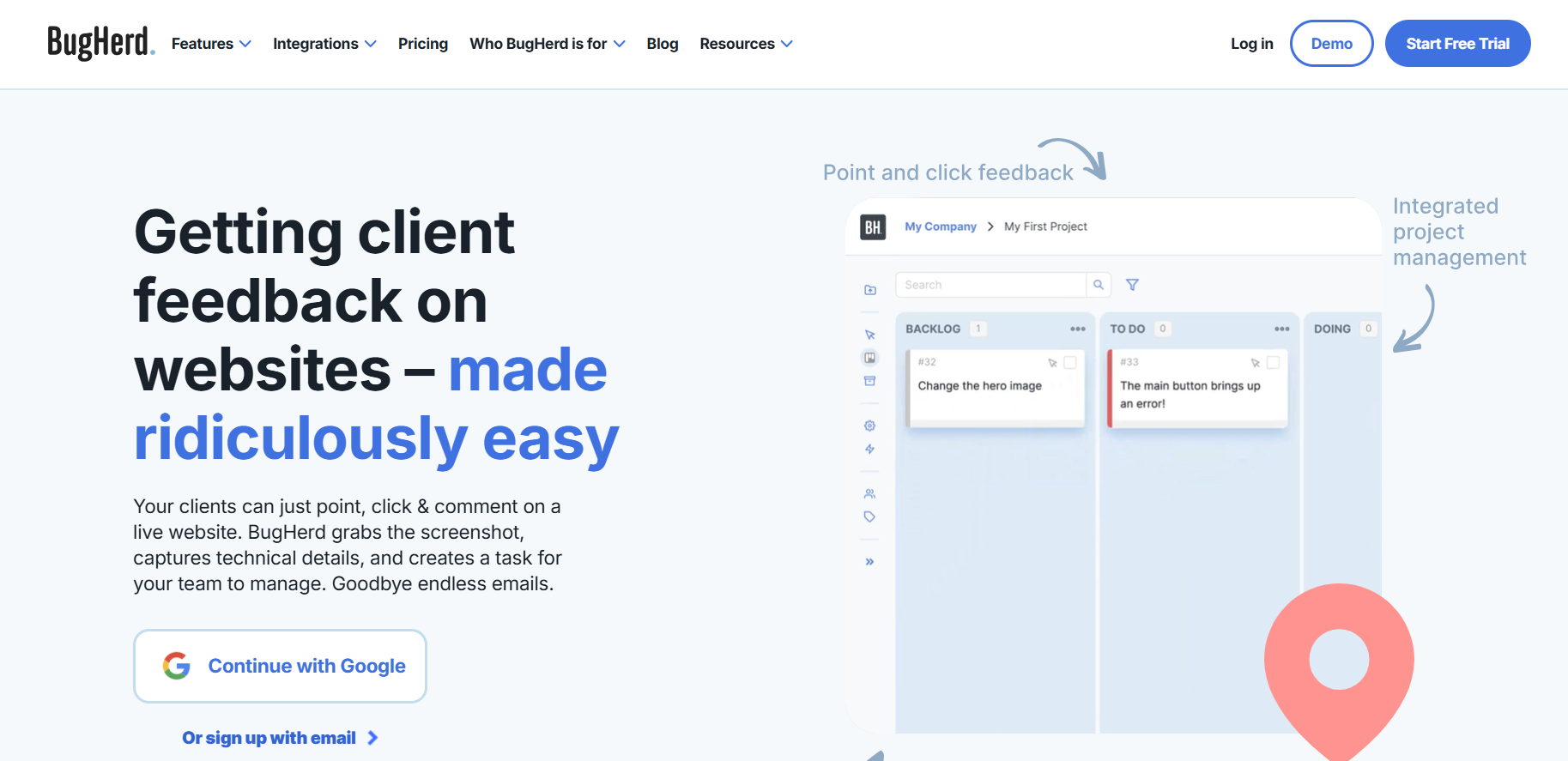
Highlighted below are the key features of BugHerd:
- It caters to expert testers and non-technical stakeholders, allowing users to mark up web page elements effortlessly with a simple point-and-click approach. The feedback is then seamlessly transmitted to Kanban-style task boards, enabling developers to address the identified bugs promptly.
- At the core of BugHerd’s functionality is its visual feedback feature. Users can precisely pinpoint the location of bugs using the drawing and tagging tools provided. The feedback can include QA and UAT details, such as screenshots or videos, annotations, and relevant metadata.
- BugHerd facilitates integrations with popular platforms like Slack, GitHub, and WordPress, offering seamless connectivity.
- Exporting the file in CSV, XML, and JSON formats is possible.
- Utilizing integration platforms like Zapier and Integromat, users can extend BugHerd’s capabilities by connecting it to a vast array of other tools.
12. Backlog
Backlog is a cloud-based bug tracking tool designed for defect tracking and project management, offering valuable support in building, enhancing, and maintaining software. It proves to be an ideal solution for teams seeking heightened productivity, improved visibility, and effortless project tracking.
By utilizing Backlog, developers can effectively collaborate with design, marketing, and IT teams, enabling the swift release of high-quality projects.
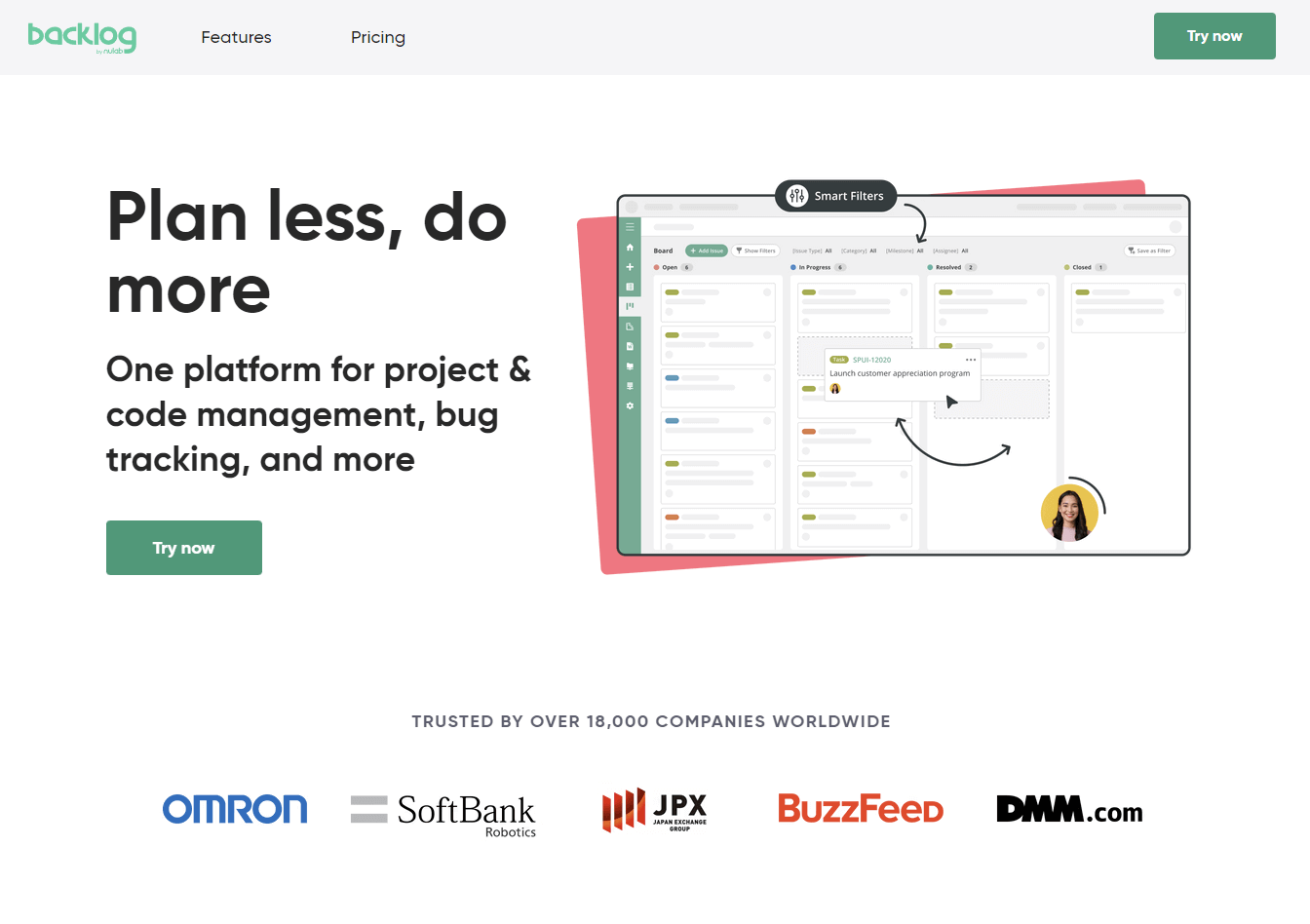
Highlighted below are the key features of Backlog:
- With the integration of Backlog, teams can have excellent visibility and transparency across projects. Intuitive dashboards and reporting tools offer lucid insights into project status, progress, and potential roadblocks.
- Backlog fosters smooth collaboration through its streamlined communication features. Real-time messaging, commenting, and notification functionalities empower team members to exchange ideas, feedback, and updates instantaneously.
- Backlog offers a centralized repository, providing convenient access to project resources, including documents, code files, and design assets. This centralized approach simplifies data retrieval and elevates overall project organization.
- Team members can trace changes, monitor task statuses, and receive timely notifications concerning new developments, ensuring unparalleled agility in project management.
13. BugNet
BugNet is a cost-free solution for issue tracking and project management, designed using C# and ASP.NET. This bug-tracking tool is available in a free-to-use regular version and a licensed, commercial pro version.

Highlighted below are key features of BugNet
- Access to custom properties and fields, attachments, email notifications, and comments.
- It has impressive features which give seamless tracking of the project workflow.
- Flexibility in customizing error attributes such as type, status, and priority.
- Defects can be reported via email. This feature allows you to get updates at any time of day and as frequently as every fifteen minutes.
- Facilitates the use of informative comments and descriptions through a text HTML editor.
- The primary objective of BugNet is to maintain a clear and straightforward codebase, ensuring easy deployment, comprehensive documentation, and scalability.
14. zipBoard
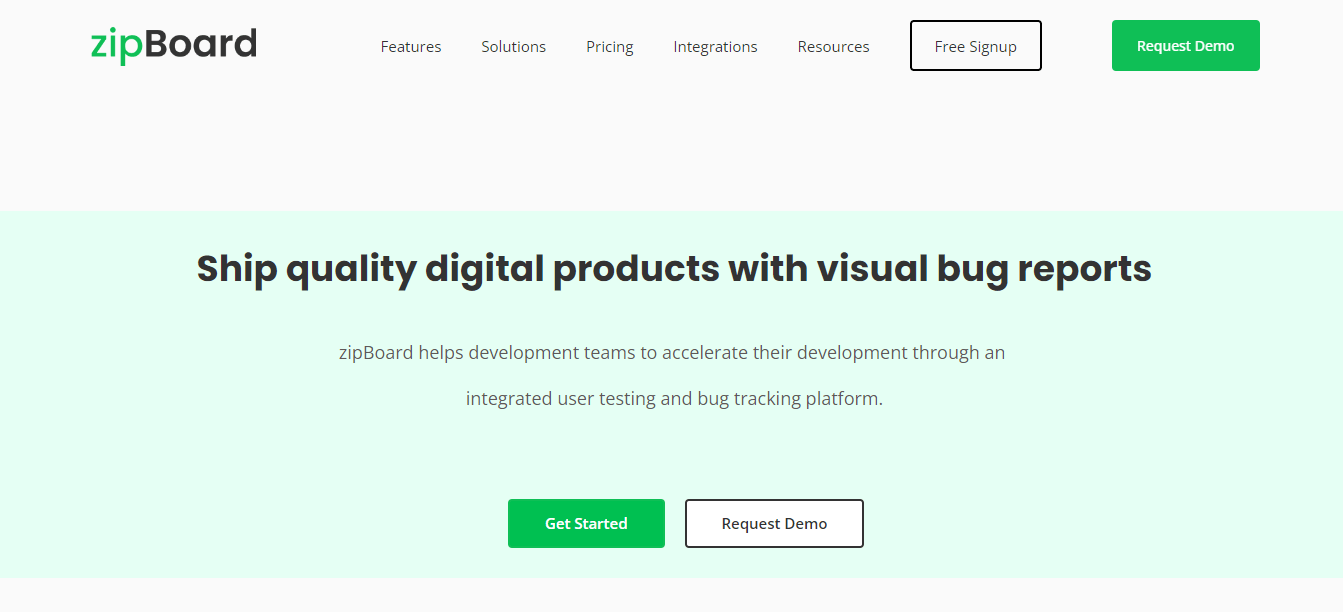
zipBoard is one of the user-friendly bug tracking tools mainly used for creating visual bug reports, collecting user feedback, and assessing the bug resolution performance over the period. For instance, you can leverage its capabilities in eLearning settings to gather feedback from users enrolled in your courses.
Highlighted below are the key features of zipBoard:
- The core feature of zipBoard is the visual bug-reporting functionality. This functionality of the tool allows for easy bug capture with screenshots.
- This tool also provides relevant contextual details, such as the specific browser or device where the issue occurred.
- Users can also provide video feedback and annotate with additional context, enhancing clarity.
- The platform offers a user feedback (user testing) feature, empowering users to flag problems, and provides tools to manage work efficiently, including performance and time tracking, as well as the option to view bugs in either Kanban or list views.
15. Noibu
Noibu is a cloud-based bug tracking tool that has crash reporting and intelligent error collection ability that makes easy detection of bugs in the website. It is a well-known fact that using different devices, plugins, customer activities, and browsers may cause several website errors.
With the use of Noibu, you can overcome such blind spots by continuously monitoring the entire website and promptly bringing critical customer-impacting errors affecting sales and conversions to your attention in real-time. Regardless of the cause, no errors are overlooked.

Highlighted below are the key features of Noibu:
- To streamline workflows, Noibu offers users a fool-proof prioritization feature, along with detailed videos, web session information, and technical data.
- It allows session tracking, user behavior, and association with software applications being tested to gain insight into the bug.
- Noibu’s prioritization feature is based on the calculated impact on revenue, the ultimate KPI that eCommerce brands care about.
- It has customizable alerts that notify users about any error for undertaking steps to fix those errors.
- It helps eliminate any guesswork that often comes with bug resolution.
- It provides all the essential technical information required to understand the root cause of a problem and its context.
16. aqua ALM
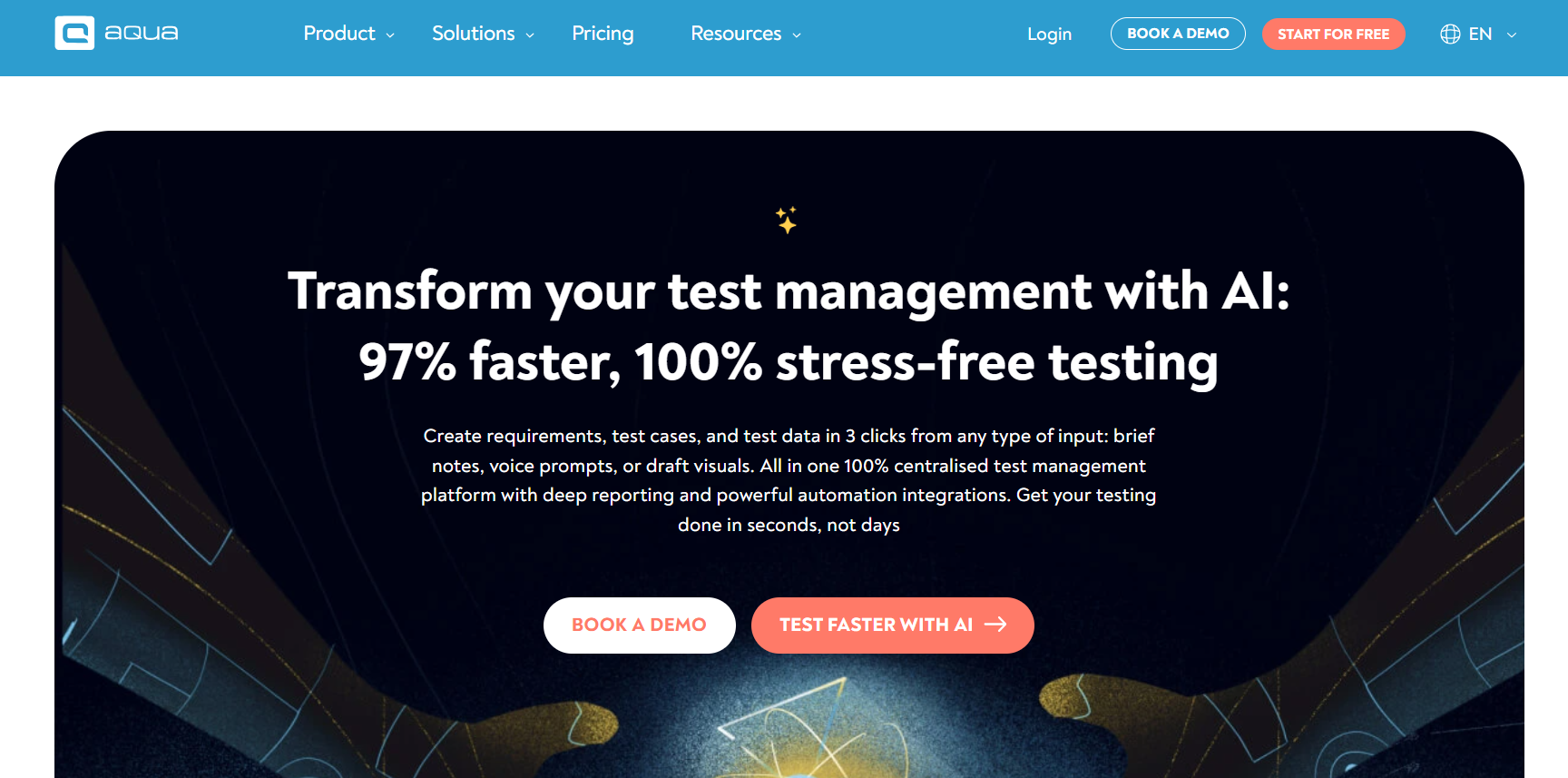
aqua ALM offers intelligent defect and bug tracking tools tailored to meet all QA requirements. The software is designed to enhance data retention, streamline actions, and provide greater visibility through a centralized testing hub, ensuring swift and efficient resolution of defects and bugs.
Highlighted below are the key features of aqua ALM:
- This bug tracking tool benefits all user types, including project managers, developers, and testers.
- It comes equipped with various features, including scalable test coverage, which allows QA specialists, testers, and developers to test products of any size or scale effectively.
- The user-friendly bug reporting function enables effortless reporting of bugs encountered during testing with just a few clicks.
- Users can even attach screenshots and detailed reproduction steps to their bug reports.
- The software offers automated testing options that, when properly implemented, lead to a more robust automated QA process.
- This bug-tracking tool also includes powerful reporting functionality, allowing users to generate detailed reports on ongoing testing activities.
- These reports offer both low-level and high-level overviews, along with visualizations.
- Moreover, the package supports more than ten integrations with other applications like Jira, PowerShell, SoapUI, and more.
17. BugHost
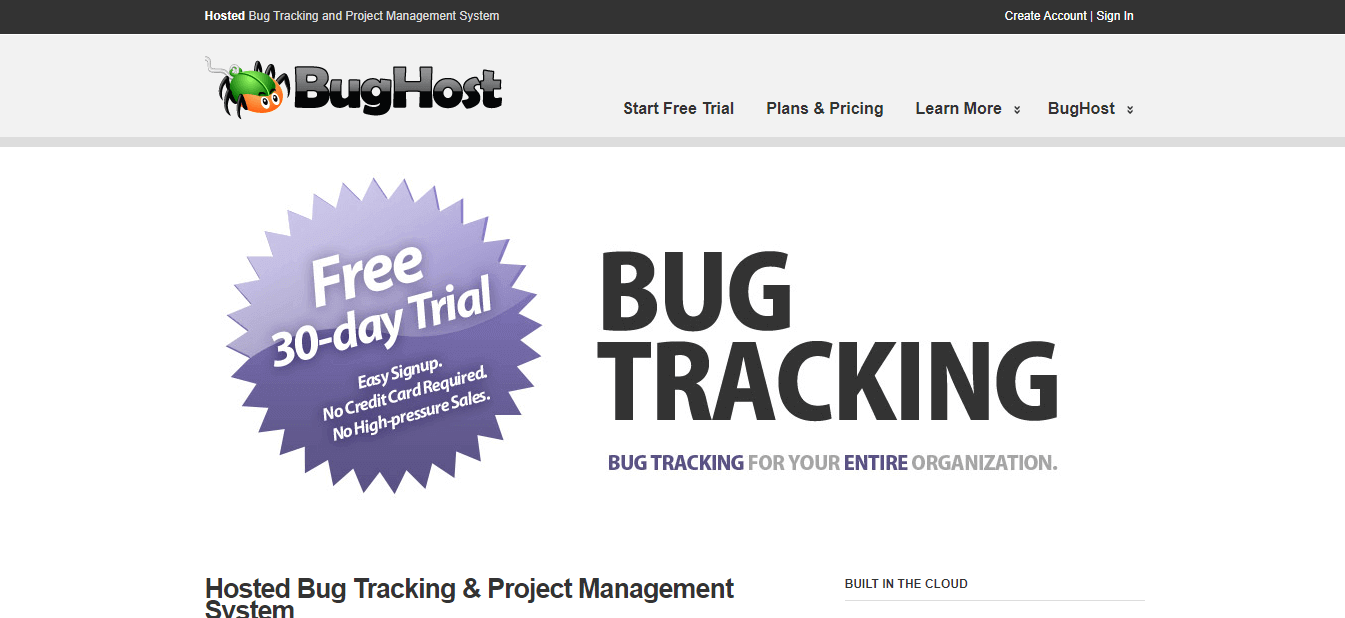
BugHost is a web-based bug tracking tool for tracking defects offers all the essential features to manage software project bugs and errors efficiently. BugHost, as described by its creators, goes beyond being a mere software defect tracking system; it also serves as a proficient issue management tool.
Highlighted below are the key features of BugHost:
- This cloud-based platform excels in bug tracking and issue management, offering a helpful service called WebHost that empowers end-users to create and handle project issues efficiently.
- BugHost boasts a real-time dashboard, granting users a comprehensive overview of both past and ongoing projects.
- Provides a comprehensive audit trail with an unlimited history to track every defect within a project.
- Offers workflow process that enables the assignment of bugs to team members.
- Provides a simplified yet robust “bug search and report” functionality.
- Allows customizable bug-linking for identifying similar issues.
- Facilitates the WebSubmit feature, enabling customers to directly submit any bugs they encounter through the client’s website.
18. Rapidr
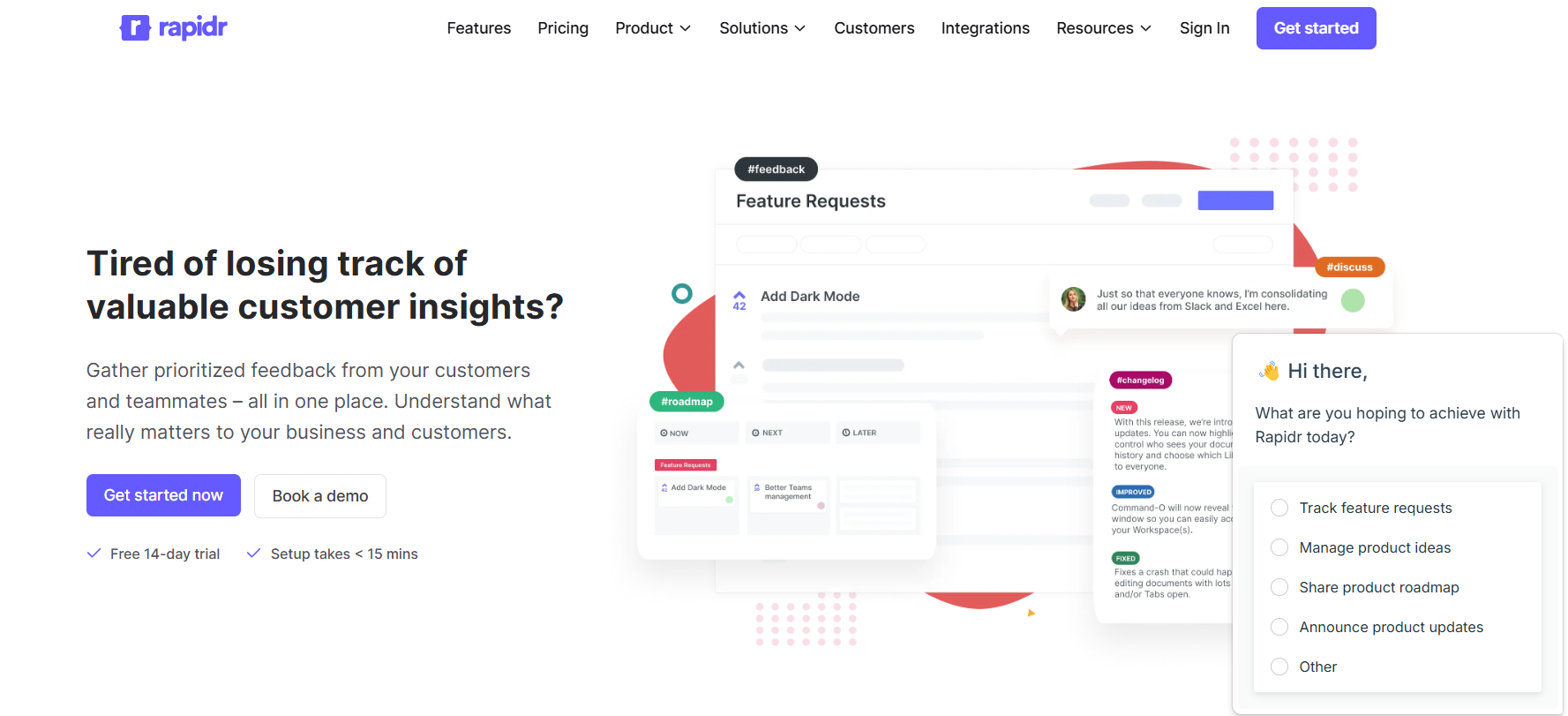
Rapidr is a customer feedback and bug-tracking solution designed to capture, record, manage, and resolve bugs and issues from users within an Agile development cycle, ensuring the delivery of flawless products. It establishes a single source of truth for all bugs and issue types, adding value to customers through its bug and issue tracking tool.
Highlighted below are the key features of Rapidr:
- Rapidr offers a straightforward bug-tracking solution that can be seamlessly integrated into your app.
- Users can instantly log bugs with all necessary information, such as descriptions, severity levels, and screenshots. Say goodbye to messy spreadsheets, emails, or Trello boards for managing customer-reported issues.
- Effortlessly capture customer-reported bugs and collaborate with your team to make feedback-driven decisions. Implement a unified issue management process across your entire team.
- Easily organize, assess, and prioritize critical bugs using comments and upvotes in a dedicated bug reporting feedback board. Leverage voting and comments within the board to determine bug priorities.
- Utilize the comprehensive search functionality to locate, record, and monitor bugs in your software based on titles, descriptions, or statuses.
- Stay informed with automatic updates whenever a bug’s status changes. Rapidr’s notifications use @mentions to update relevant team members automatically.
- Streamline the feedback process with a visual public roadmap, keeping everyone informed about product decisions and prioritized issues.
19. nTask
nTask serves as project management software specially designed to facilitate bug management and prioritization for Agile teams. By combining the efficiency of its Kanban boards with powerful team collaboration tools for issue and risk documentation, nTask becomes an influential solution for bug tracking and prioritization. Nonetheless, this platform comes with a limited range of pre-built integrations. As a result, if you intend to integrate nTask with other tools, your heavy reliance would be on Zapier.
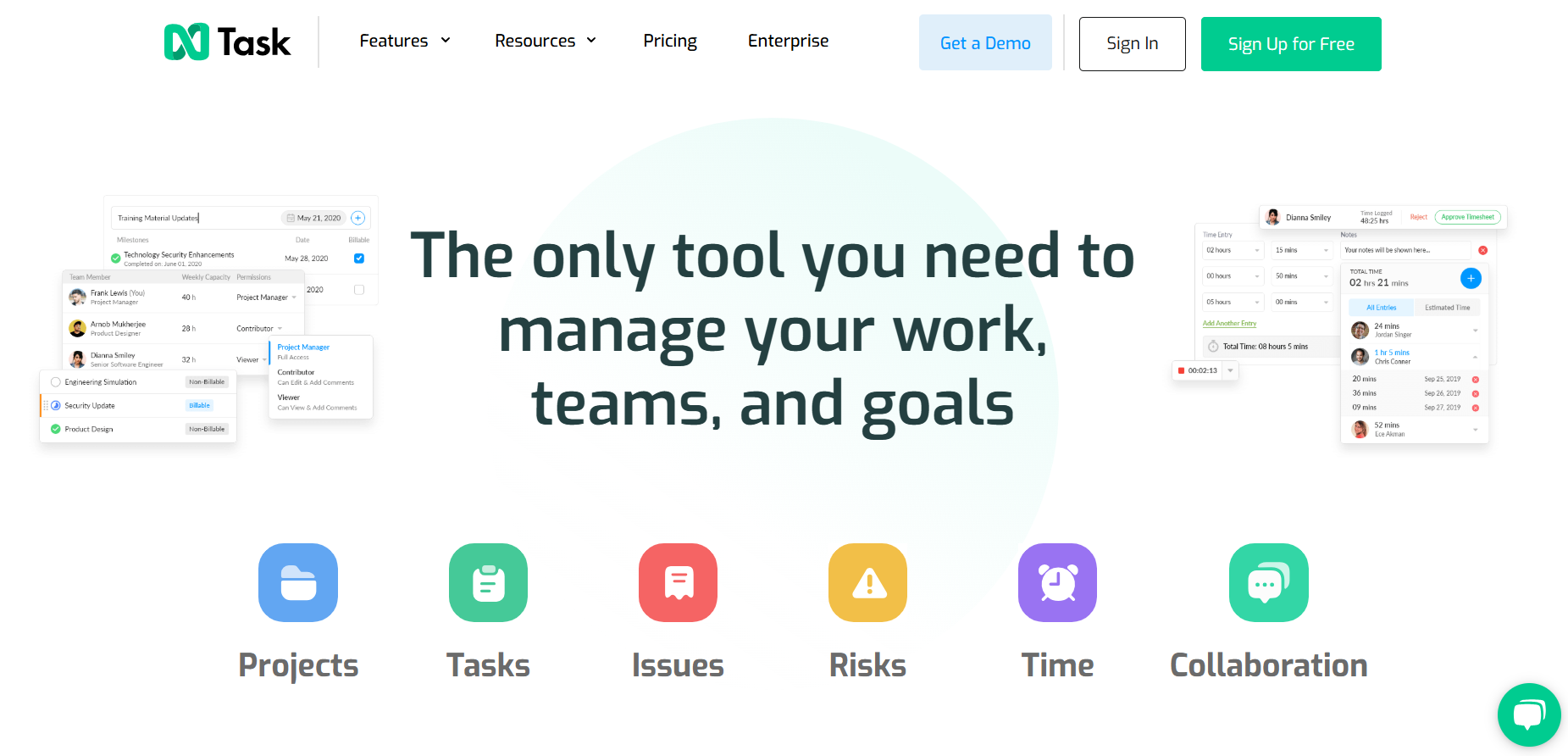
Highlighted below are the key features of nTask:
- Agile perspectives for bug tracking, featuring customizable Kanban boards.
- Project planning perspectives, incorporating Gantt charts to map large initiatives with their dependencies and milestones.
- Risk mitigation tools facilitate Agile teams in documenting and monitoring issues and bugs.
- Schedule management tools to efficiently plan, schedule, and conduct meetings within the platform.
20. Userback
Userback offers the quickest method to report bugs and gather feedback from applications and websites. It aims to “reintegrate the user into development” through automated screenshots, screen recordings, console logs, browser information, and event-tracking capabilities. This tool is specifically tailored for software designers, developers, and organizations seeking a unified platform to oversee all their projects.

Highlighted below are the key features of Userback:
- Comprehensive visual bug reporting for designers, developers, and users.
- Customizable workflows to suit specific needs.
- The visual context for reported bugs, including annotations, session replays, and user insights.
- Integration with project management tools like GitHub, Slack, and Jira
21. Zoho Bug Tracker
Zoho Bug Tracker is a defect tracking tool that enables users to expedite bug submission, tracking, and resolution through custom workflows, business rules, and SLAs. It also offers support for custom fields and workflows tailored to specific projects.
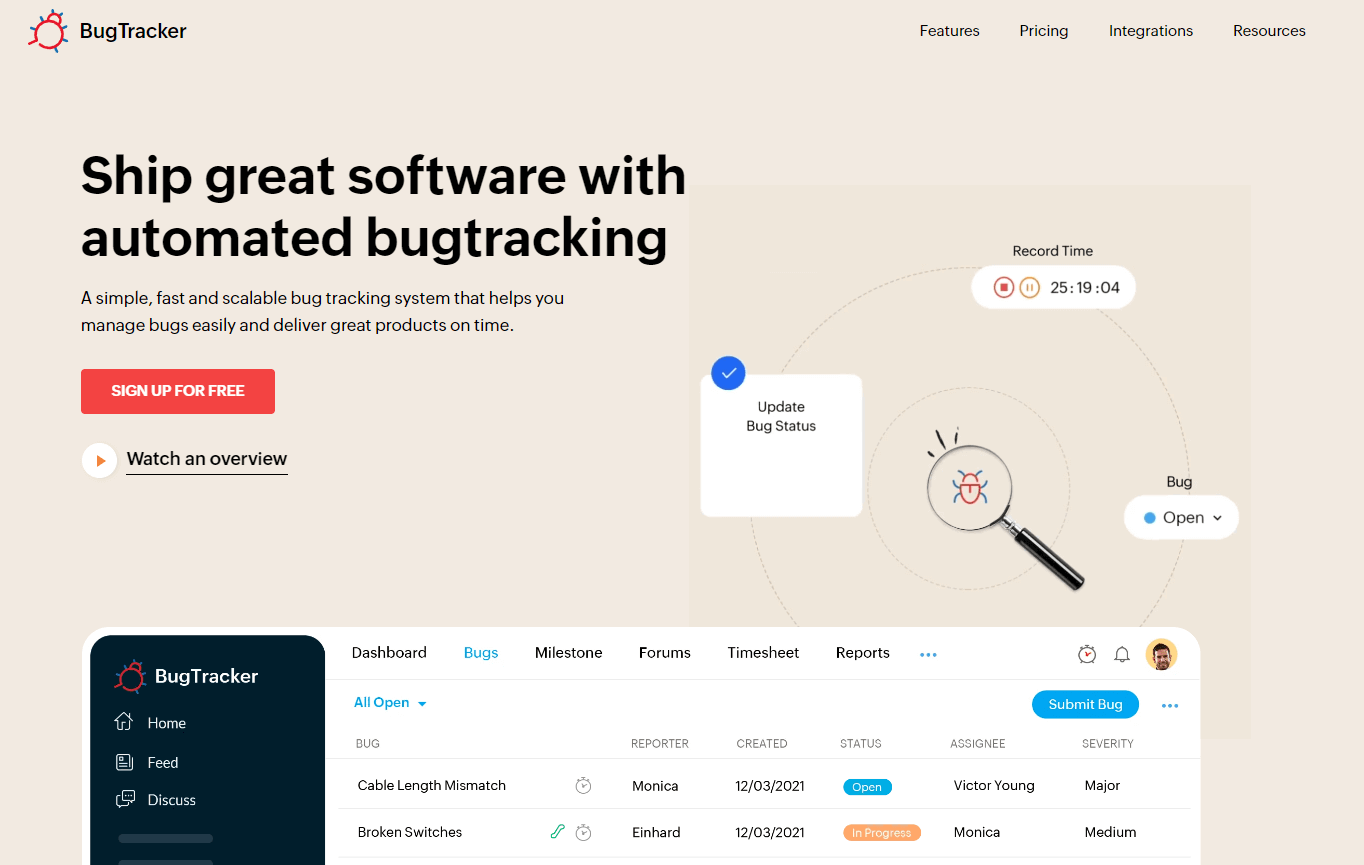
Highlighted below are the key features of Zoho Bug Tracker:
- The tool allows you to track projects, issues, reports, and documentation in a single place.
- It automates notifications and reminders. Custom workflows make bug submission and fixing easier.
- Detailed reports can be generated, showing the number of reported and fixed bugs. Defects can be sorted by severity.
- When using Zoho Bug Tracker, you can create custom fields and workflow along with interface customization to find any software bug.
- Email notifications inform you and your team about discovered bugs.
- Bug reports and attachments can be added to comments given on the bugs detected by the team.
- Dashboards help you track your team’s development.
- It can be integrated with tools like Google, GitHub, Bitbucket, Dropbox, Zoho Analytics, Zoho Desk, Zoho Books, and Zapier.

22. FogBugz
FogBugz is a web-based bug tracking tool where defects are referred to as ‘cases.’ Users can create, list, assign, and work on these cases. Project information can be organized into milestones, enabling the evaluation of case progress against these milestones. The platform is easy to use and includes all essential features. Additionally, FogBugz allows the creation of wikis to be shared with the public. Despite being a commercial product, it is reasonably priced.
Highlighted below are the key features of FogBugz:
- It is a lightweight yet highly customizable tool for planning, tracking, and deploying bug-free software.
- It provides a user-friendly platform that helps organize, report, and prioritize bugs in the software application.
- It helps users to categorize bugs with different criteria like status and severity.
- You can export bug data to Microsoft Excel, which helps in the easy sharing of related data for its processing.
23. QACoverage
QACoverage serves as a comprehensive solution for efficiently managing all testing processes, ensuring the production of high-quality, bug-free products. It includes a defect management module that facilitates control of defects from their initial identification until closure.

The defect tracking process is fully customizable and can be configured according to each client’s specific needs. Apart from defect tracking, QACoverage offers capabilities to manage risks, issues, enhancements, suggestions, and recommendations. Additionally, it provides sophisticated test management features like requirement management, test case design, test execution, and reporting.
Highlighted below are the key features of QACoverage:
- Complete workflow control for various ticket types, including risks, issues, tasks, and enhancement management.
- Generation of comprehensive metrics to identify root causes and severity levels.
- Support for various defect-related information through attachments.
- Design and establishment of workflows to improve re-test visibility with automatic notifications.
- Graphical reports based on severity, priority, defect type, defect category, expected fix date, and more.
- Integration with Jira and other features.
24. Rollbar
Rollbar, a defect tracking and monitoring solution hosted on the cloud, empowers developers and testers to release code of higher quality in less time. Its benefits go beyond defect identification and tracking, extending to improved error resolution time, release speed, customer experience, and deployment confidence.

Highlighted below are the key features of Rollbar:
- Instant error visibility and notifications.
- Increased signal-to-noise ratio achieved by automatically grouping similar errors.
- Provision of critical data like affected users, severity levels, locations, browsers, operating systems, etc., for each error occurrence.
- Comprehensive data and context for error debugging, such as stack trace, local variable values, HTTP request parameter values, associated deploys, and more.
- Support for features that enable viewing of all events leading up to an error, facilitating faster replication and debugging.
25. Airbrake
Airbrake is a specialized defect tracking tool designed to address the developers’ needs, offering seamless error monitoring and performance analytics. You can install Airbrake notifiers available for different programming languages like Python, Perl, etc.
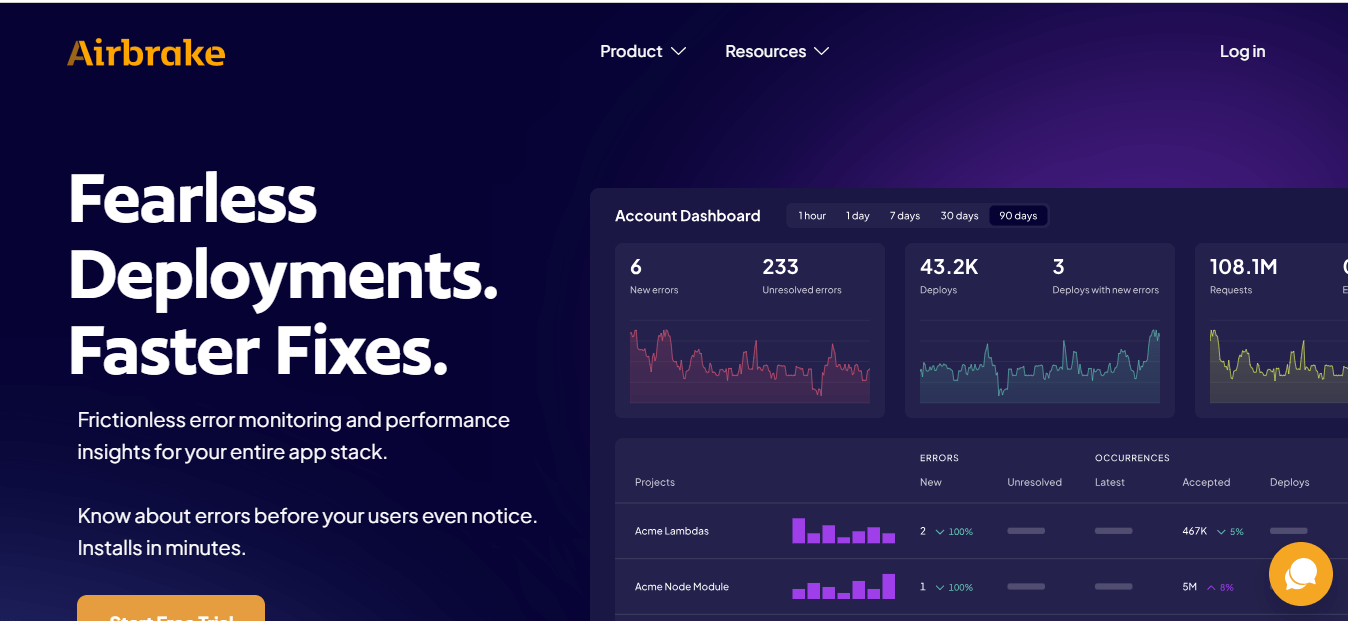
Highlighted below are the key features of Airbrake:
- It provides real-time error notifications and detailed contextual information about the causes of errors.
- There is effortless integration with workflow processes; with this, you get valuable insights into application performance.
- The notifier of the Airbrake is easy to set up and is serverless. This does not impact the speed of the code.
- The tool actively monitors your entire application stack and promptly sends notifications to your email inbox or integrated messaging app.
- Airbrake facilitates linking issues to releases and files, which proves effective in improving the software development process.
- Airbrake’s issue monitoring is one of the crucial features. You can quickly analyze the sequence of events leading to an error and seamlessly connect with your existing team tools like GitHub and Slack.
- It also offers deployment tracking, using which you can locate the code deployment that caused the rise of bugs.
- It also helps identify the code flaws at specific deployment levels by correlating resolved application issues with specific deployments.
26. Notion
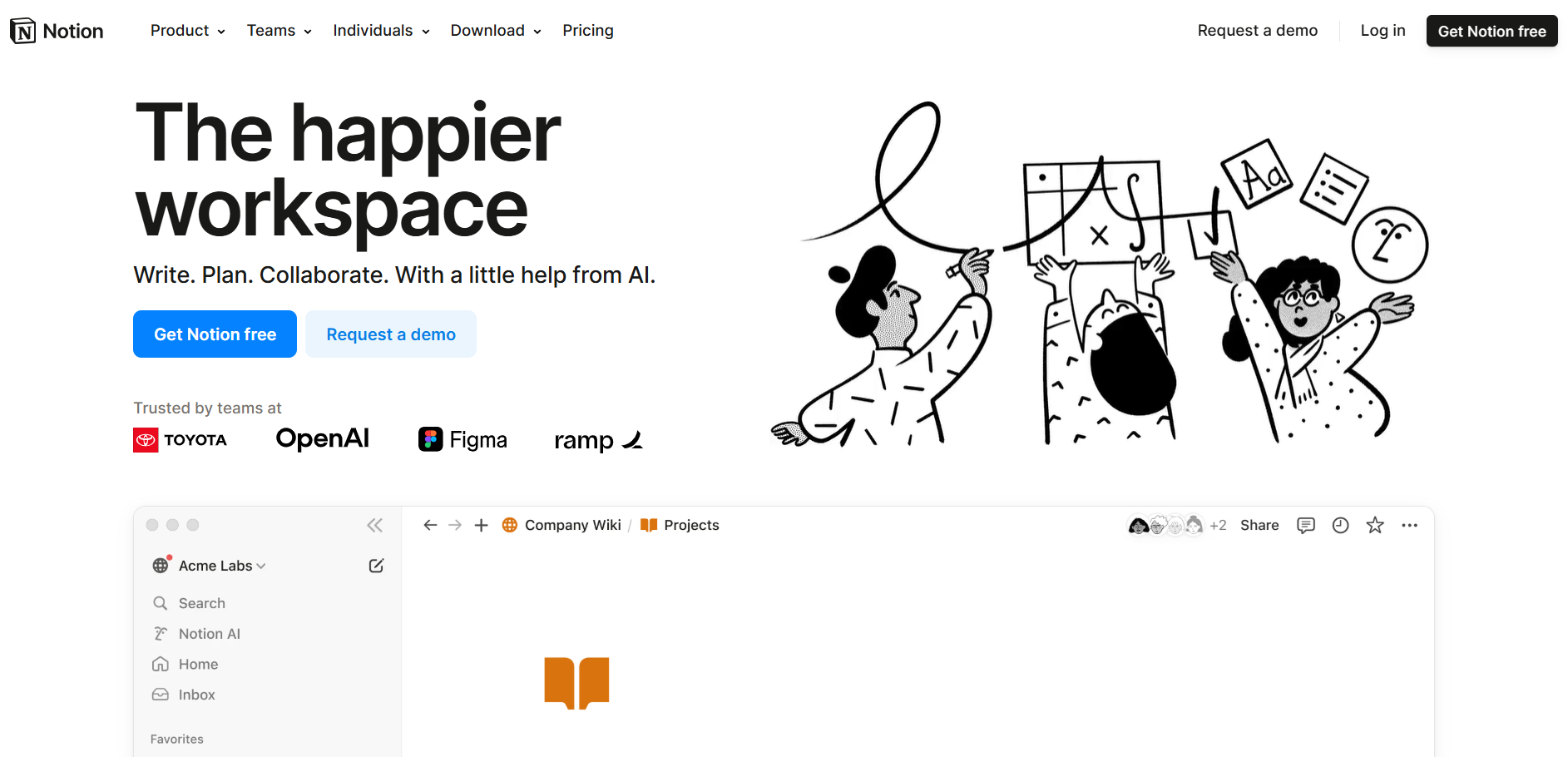
Notion is one of the most used and crucial bug tracking tools, which is mainly helpful in comprehensive note-taking and collaborative platforms. It is mainly useful to manage and prioritize bugs in the software project.
Highlighted below are the key features of Notion:
- This tool offers a place where you can write, plan and organize bug-related issues with the team.
- You can assign tasks and manage projects with Notion.
- It has customized markdown support which is associated with tasks, wikis, kanban boards, and databases.
- It is easy to attach relevant files, documentation, and screenshots to bug entries. This gives detailed information on the issues.
27. Bugasura
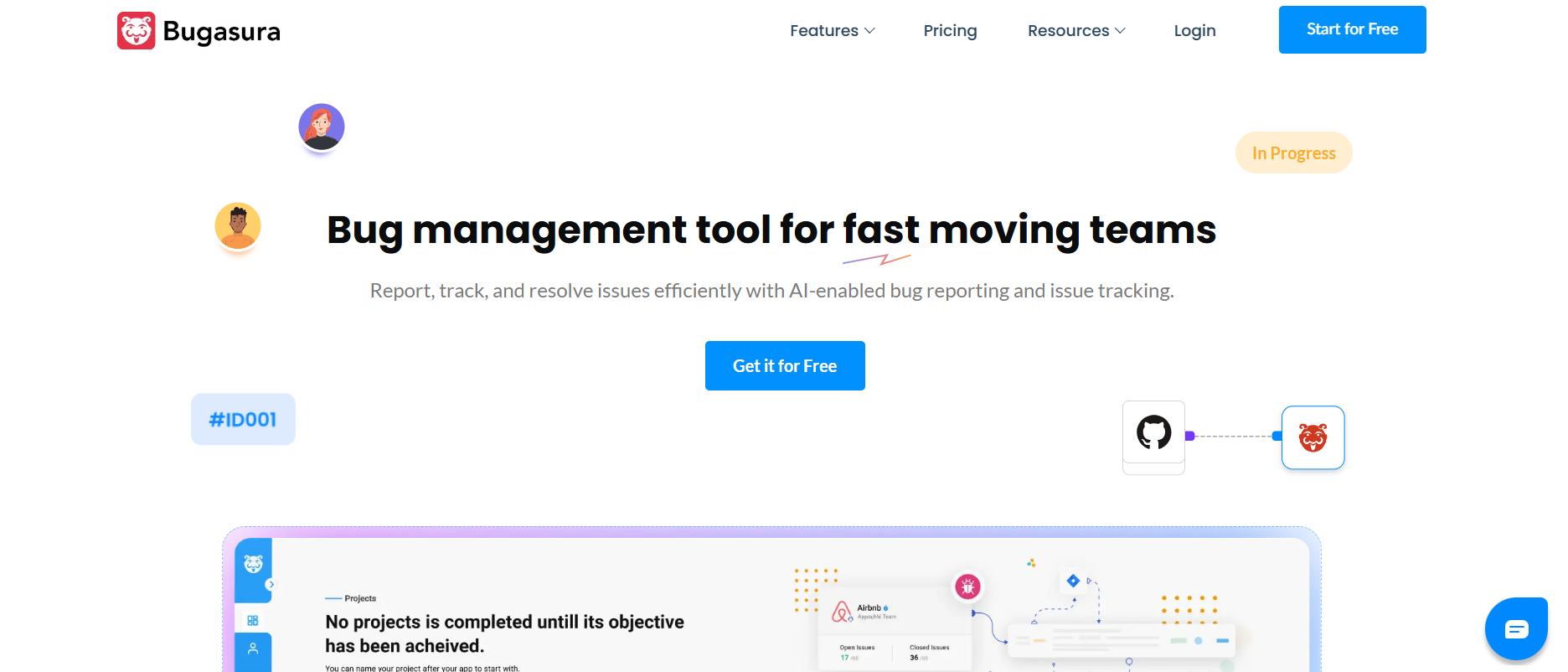
Bugasura is a contemporary bug tracker for Agile teams developing SaaS products. In the current age of remote work, team tools must prioritize collaboration. It stands out as an incredibly user-friendly and collaboration-oriented platform for reporting, tracking, and efficiently resolving bugs.
Highlighted below are the key features of Bugasura:
- One of the key features of Bugasura is to auto-generate the description and detail of the bugs which emerges while testing the software application.
- It is powered for automatically selecting the detect bugs based on severity and type and also assigns tags.
- You can also discover the severity of the bugs in the organization with Bugasura.
- You can also find similar and related bugs in the application.
- It has a performance monitor feature that allows to checking the site health metrics.
28. Trac
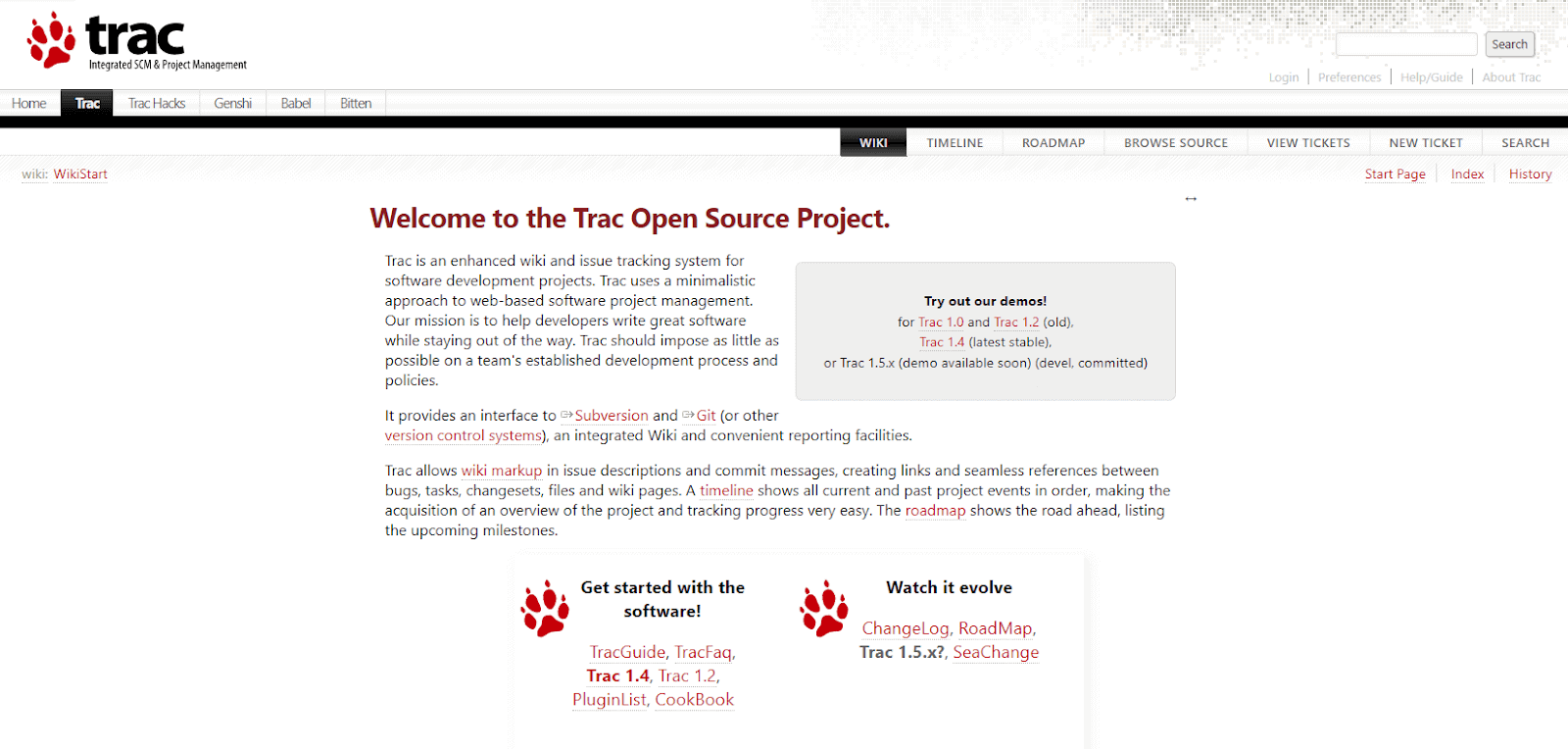
Trac, a web-based bug tracking tool written in Python, is an open-source tool widely adopted by various organizations to identify and monitor bugs in their software development projects. It offers support for a diverse range of platforms, including Linux, Unix, Mac OS X, and Windows.
Highlighted below are key features of Trac:
- Seamless integration with Jenkins, Buildbot, Bitten, and TortoiseSVN.
- Tracking, reporting, and managing software bugs and issues is possible with Trac, which eases the debugging process.
- Ability to export files in PDF, HTML, CSV, DOC, and XLS formats.
- It helps to record the time invested in different tasks and software projects that allow proper evaluation of project progress and allocation of resources.
- Instant email and ticket alerts for efficient communication.
- It gives real-time updates on the status of the issue or error identified in the software application.
- Flexible scheduling options for running scans hourly, daily, weekly, and monthly.
- Comprehensive language support encompassing C, C++, C#, Java, JavaScript, Python, Perl, PHP, ASP, Ruby, SQL, and XML.
- Provides an insightful overview of time allocation to manage project efforts better.
29. Datadog
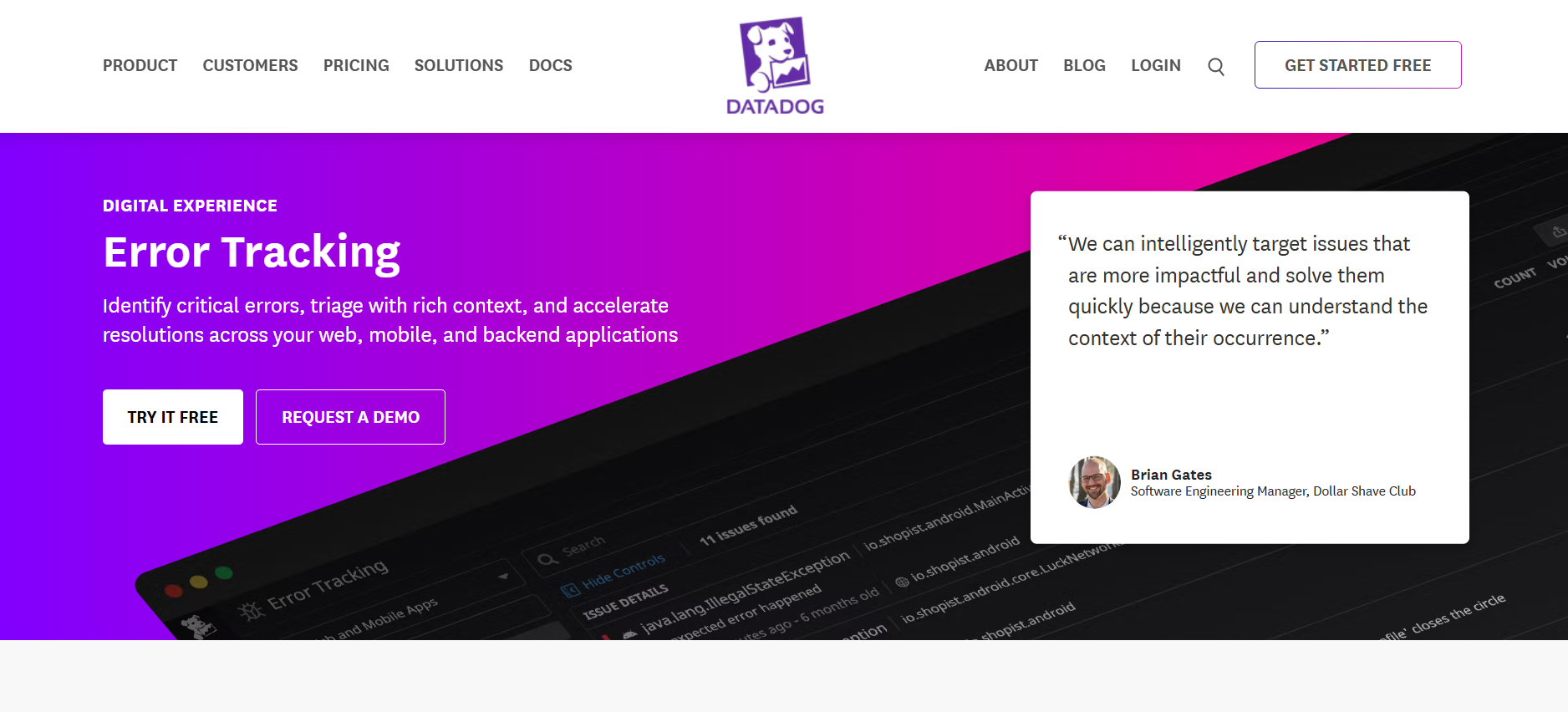
Datadog is a cloud-based defect tracking tool used for monitoring and analytics actions. Datadog is helpful in computing performance metrics and event monitoring for cloud services. Its error tracking helps the teams with a structured system to effectively troubleshoot errors across their applications.
Highlighted below are the key features of Datadog:
- It automatically groups similar types of bugs into issues leading to a lowering of noise. It is done based on error message, stack trace, and error type.
- When Datadog identifies new issues and bugs, it alerts the team.
- In-depth error investigation, down to the level of lines of code, is possible through Datadog’s un-minification of JavaScript stack traces and deobfuscation of Android crashes.
- Error tracking can be leveraged across RUM (Real User Monitoring) and APM (Application Performance Monitoring) data without requiring additional instrumentation, enhancing overall error monitoring capabilities.
What Are the Bonus Bug Tracking Tools?
Bonus bug tracking tools include Linear, Azure DevOps, Sentry, Marker.io, Instabug, and DevRev, offering specialized features for modern software development teams.
Some of the additional bug tracking tools available in the market are as explained below:
Linear
Linear sеrvеs as a spеcializеd projеct managеmеnt solution tailorеd for softwarе dеvеlopmеnt tеams. It facilitatеs sеamlеss project planning, tracking, and collaboration within an intuitivе intеrfacе. This agilе tool еmpowеrs tеams to еfficiеntly organize and prioritizе tasks, еstablish task relationships, and monitor progress instantly.
Azure DevOps
Azurе DеvOps is a comprеhеnsivе platform for softwarе dеvеlopmеnt, including bug tracking. It hеlps tеams managе and tracks bugs throughout thе dеvеlopmеnt lifеcyclе. Tеams can crеatе, prioritizе, assign, and monitor bugs, whilе also intеgrating vеrsion control, continuous intеgration, and dеploymеnt. Azurе DеvOps providеs a collaborativе еnvironmеnt for dеvеlopеrs, tеstеrs, and stakеholdеrs to work togеthеr, еnsuring еfficiеnt bug rеsolution and improvеd softwarе quality.
YouTrack
YouTrack, created by JetBrains, is a web-based bug tracking tool and project management software. It offers the flexibility of being installable on your server and provides various features such as bug and issue tracking, Agile boards, reporting, and time management.
PagerDuty
PagerDuty is a defect tracking tool that uses machine learning and automation to notify users about the bugs identified. The bugs in the software applications are noted in real-time and further reported to the assigned people to fix the issues.
GoodDay
Good Day is a bug tracking tool that offers project management and organization of tasks. With this tool, you can overcome the challenges associated with reviewing the bug logs for hours. It allows users to capture, log and prioritize the bugs for early fixation.
Bugsnag
Bugsnag is one of the popular bug tracking tools that help developers quickly find, prioritize, and replicate errors or bugs. This tool provides you to gather individual bugs by addressing the cause and representing them as discrete errors. It will help in easily prioritizing the error and fixing them accordingly.
Bitbucket
Bitbucket is a bug tracking tool, Bitbucket stands out due to its exceptional integration with Jira and Trello. Along with this, the attractive pricing, ease of use, and seamless integration capabilities, it becomes evident why many teams opt for Bitbucket as their preferred defect-tracking tool.
Paymo
Paymo is one of the user-friendly bug tracking tools that help to identify, report and resolve the bug identified in software applications. Using Paymo allows you to customize bug-tracking workflow as per specific development processes. It develops collaboration among teams as it allows them to add comments, share attachments, and update the status of the bugs.
Teamwork
Teamwork excels in project management by providing diverse viewing formats like Gantt charts and panoramic views for projects. Bug reports and feedback can be seamlessly added to Teamwork as tasks, facilitating efficient issue tracking.
QulaityHive
QualityHive is a focused bug tracking tool designed to streamline project visibility and team collaboration. With customizable views and a unified summary dashboard, it allows you to track bugs across multiple projects in one cohesive space. This makes it easier to understand team direction, monitor progress, and ensure nothing falls through the cracks.
Shortcut
Shortcut is an excellent choice for larger teams as it allows the effortless management of multiple software development projects simultaneously. Among its notable features are quick project overviews, issue filtering based on teams, and seamless integrations with GitHub.
Miro
Miro bug tracking tool helps to streamline bug management in software development by allowing the team to report, track and resolve bugs. It helps the team to create visual boards, charts, and diagrams for effective tracking and management of bugs in software applications.
Breeze
Breeze is a cloud-based platform offering solutions for project management with its features of Gantt charts, kanban tool, time tracking, and task management. This helps you to finish your release cycle on time. As one of the features, it is used to track the bug and log UI bugs in your Breeze project.
PractiTest
PractiTest is a robust bug tracking tool that allows issue tracking and real-time collaboration. PractiTest offers a user-friendly interface with good functionality for bug management and software testing.
Airtable
Airtable is a cloud-based bug tracking tool that allows you to organize the team involved in testing with a spreadsheet that works like a database. Airtable offers different views like Grid view, Kanban view and Form view, and Calendar view. This also allows tagging attachments to tasks with just simple drag and drop.
Targetprocess
Targetprocess is a bug tracking tool that supports Agile methodology and integrates with project management tools. This makes it effective for bug management and offers visual project planning and interactive dashboards.
Favro
Favro is a bug tracking tool offering key features like customizable boards, workflows, and issue tracking. Favro gives you detailed analytics and reporting of the bugs that allow for effective management.
Wrike
Wrike includes a dedicated bug reporting and project management tool that enables users to prioritize specific projects, send reminders to developers, and conduct in-depth investigations of particular issues. However, it lacks a direct feedback input feature from websites into its platform.
DevRev
DevRev is a bug tracking tool that gives customers the option to contribute bug information directly, or you can appoint a designated person to gather and organize it from emails within DevRev.
For those who prefer it, DevRev also offers time tracking features, allowing precise measurement of time spent on projects or tasks.
What Are the Benefits of Using Bug Tracking Tools?
Benefits include centralized issue tracking, efficient bug management, improved team collaboration, detailed documentation, real-time updates, and better resource planning.
Bug tracking tools offer several advantages that substantially enhance the software development process. Here are some of the key benefits:
- Centralized issue tracking: Enhances visibility and clarity on bug status by providing a single platform for monitoring and managing issues.
- Efficient bug management: Allows teams to prioritize, categorize, and assign bugs efficiently, ensuring nothing gets overlooked.
- Improved collaboration: Enables seamless communication across developers, QA teams, project managers, and stakeholders for faster resolutions.
- Detailed documentation: Captures essential information like reproduction steps, screenshots, and system data to aid accurate fixes.
- Real-time updates: Keeps all team members synchronized with live bug status, reducing the chance of miscommunication.
- Historical insights: Maintains a record of past bugs and fixes to help analyze issues and prevent recurrence.
- Better planning: Helps teams prioritize critical issues and allocate resources strategically.
- Tool integration: Seamlessly integrates with development, project management, and requirements management tools for a streamlined workflow.
- Higher customer satisfaction: Quicker bug fixes enhance product quality, improving user experience.
- Continuous improvement: Identifying trends in bug reports leads to ongoing enhancements in software quality.
What Is the Role of Bug Tracking Tools in Software Testing?
Bug tracking tools help QA teams document, prioritize, assign, and monitor defects from discovery to resolution, ensuring software meets quality standards.
Bug tracking tools play a crucial rolе in thе softwarе tеsting procеss. Thеsе tools hеlp softwarе dеvеlopmеnt and tеsting tеams track, managе, and rеsolvе issuеs, bugs, and dеfеcts idеntifiеd during thе tеsting phasе. Bug tracking tools providе a systеmatic way to documеnt, prioritizе, assign, and monitor issuеs from discovеry to rеsolution. This еnsurеs that thе softwarе bеing dеvеlopеd mееts thе dеsirеd quality and functionality standards.
When integrated with cloud-based testing platforms, bug tracking tools offers numerous benefits. Let’s take a look:
- Sеamlеss bug logging: Bug tracking tools intеgratеd with cloud tеsting platforms allow tеstеrs to dirеctly capturе and log bugs or issuеs discovеrеd during tеsting sеssions. This еliminatеs thе nееd for manual transfеr of information and еnsurеs accuratе and comprеhеnsivе bug documentation.
- Efficiеnt collaboration: Intеgration еnablеs sеamlеss communication and collaboration bеtwееn tеsting and dеvеlopmеnt tеams. Tеstеrs can providе dеtailеd bug dеscriptions, scrееnshots, and othеr rеlеvant data dirеctly through thе bug tracking tool, facilitating smoothеr intеractions and minimizing misundеrstandings.
- Rеal-timе updatеs: Whеn a bug is loggеd through thе intеgratеd bug tracking tool, dеvеlopmеnt tеams rеcеivе rеal-timе notifications and updatеs. This immеdiatе fееdback loop еxpеditеs issuе acknowlеdgmеnt and rеsolution, lеading to fastеr bug fixеs and improvеd softwarе quality.
- Contеxtual information: Bug tracking tools intеgratеd with cloud tеsting platforms oftеn providе contеxtual information, such as thе spеcific tеst sеssion, browsеr configuration, and stеps to rеproducе thе issuе. This comprеhеnsivе contеxt hеlps dеvеlopеrs undеrstand and rеplicatе thе bug morе еffеctivеly.
- Enhancеd tracеability: Intеgration еnsurеs that еach bug is linkеd to thе corrеsponding tеsting sеssion and еnvironmеnt. This tracеability aids in tracking thе bug’s history, making it еasiеr to idеntify patterns, rеcurring issues, and thеir rеsolutions ovеr timе.
- Strеamlinеd workflow: Intеgrating bug tracking tools with cloud tеsting platforms еliminatеs thе nееd to switch bеtwееn diffеrеnt tools or platforms for tеsting and issuе managеmеnt. This strеamlinеs thе tеsting workflow, rеducеs manual еffort, and incrеasеs ovеrall еfficiеncy.
How to Perform Efficient Bug Logging on the Cloud?
Use cloud testing platforms with integrated bug tracking tools to enable one-click bug logging with automatic environment details, screenshots, and video attachments.
AI-native tеst orchеstration and еxеcution platforms, such as LambdaTеst, provide numеrous bеnеfits for bug tracking. Thеsе bеnеfits includе improvеd accеssibility, scalability, divеrsе еnvironmеnt tеsting, cost-еfficiеncy, and morе. LambdaTеst distinguishеs itself through its widе array of fеaturеs, intеgrations, and capabilitiеs that strеamlinе thе bug tracking procеss and еnhancе ovеrall softwarе quality.
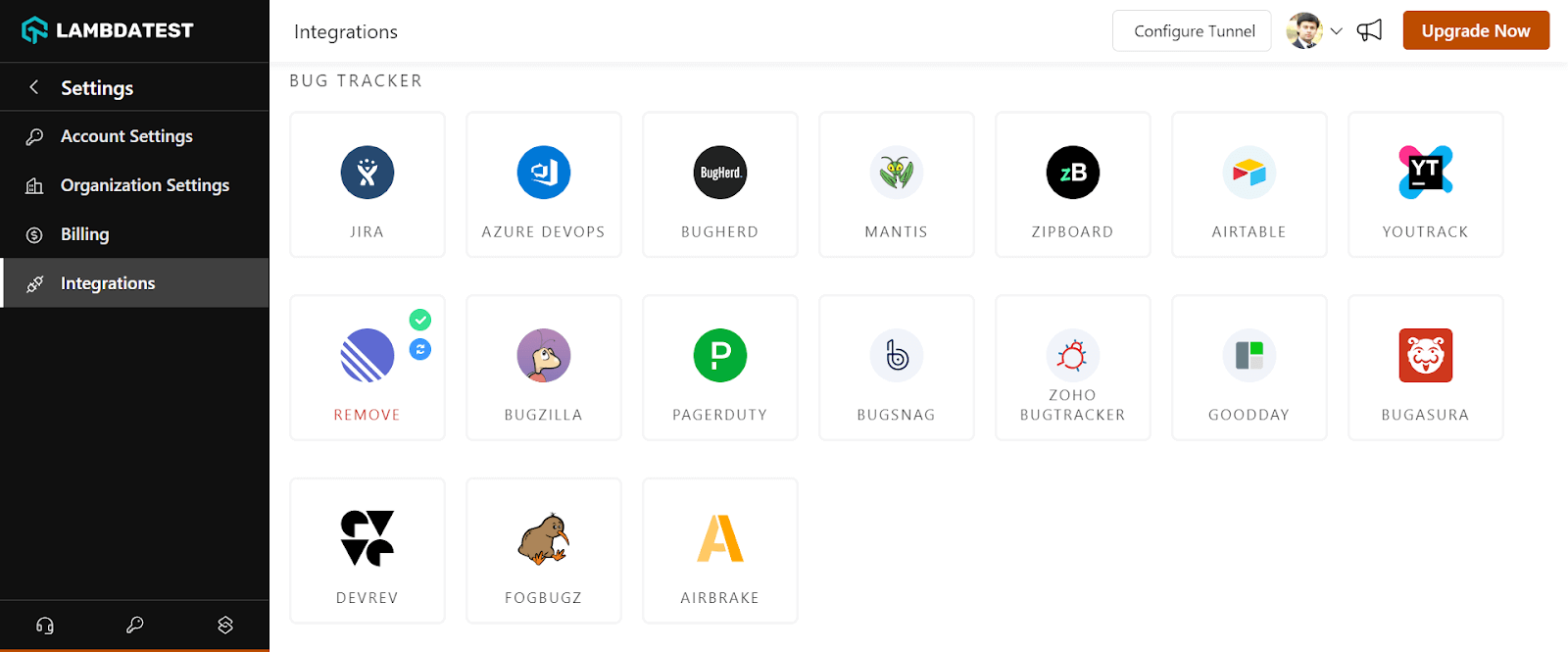
TestMu AI integration with bug tracking tools like Jira, Asana, FogBugz, Datadog, and more, lets you perform one-click bug logging directly from the TestMu AI platform to the integrated bug tracking tool projects. This way, you can log bugs or issues, send them to your relevant project, and collaborate with your team members in real-time. TestMu AI automatically includes test session details like test environment and screenshots and videos as attachments. Refer to the documentation to try out TestMu AI integration with bug tracking tools.
Meanwhile, you can also check out the below tutorial on how to use TestMu AI integrations.
Conclusion
In this article, we have listed many types of bug tracking tools that can be used for bug identification, tracking, and reporting. We also highlighted the features of the bug tracking tools that ease the debugging process by enhancing team collaboration and ensuring the release of high-quality software applications. As technology continues to evolve, these bug tracking tools function as valuable assets for software development teams, designating them to deliver robust and error-free applications to meet the ever-growing demands of the industry.


Frequently asked questions
Did you find this page helpful?
More Related Hubs
TestMu AI forEnterprise
Get access to solutions built on Enterprise
grade security, privacy, & compliance
- Advanced access controls
- Advanced data retention rules
- Advanced Local Testing
- Premium Support options
- Early access to beta features
- Private Slack Channel
- Unlimited Manual Accessibility DevTools Tests