
Power Your Software Testing with AI Agents and Cloud
The Native AI-Agentic Cloud Platform to Supercharge Quality Engineering. Test Intelligently and Ship Faster.

- TestMu AI (Formerly LambdaTest)
- /
- Blog
- /
- Top 12 Python Web Development Frameworks in 2026
12 Top Python Web Development Frameworks In 2026
Compare the top 12 Python web development frameworks in 2026, from Django, Flask, and FastAPI to Tornado and Dash, and learn how to pick the right one.
Last Updated on:
On This Page
- What Are Web Frameworks?
- What Are the Advantages of Using Python Web Frameworks?
- What Are the Top 12 Python Web Development Frameworks in 2026?
- What Factors Should You Consider When Choosing a Python Web Framework?
- How Is AI Changing Python Web Development Frameworks?
- Which Python Web Framework Should You Choose?
A Python web framework is a pre-built toolkit of tools, libraries, and standardized rules that simplifies web development. The most widely used are Django (batteries-included, with a built-in ORM, auth, and templating), Flask (lightweight and modular), and FastAPI (async, type-hinted, auto-documented APIs), followed by Pyramid, Falcon, Tornado, and Bottle.
What Are Web Frameworks?
Web frameworks are software toolkits that simplify building web applications by providing standardized methods for tasks like database management, URL routing, and session handling.
A web framework is a type of software framework that assists in building web applications, including web services, resources, and APIs. It provides developers with standardized methods to simplify web development tasks, automating common activities such as database management and session handling.
To get real-world insights into Python web frameworks, look at user rating references that glimpse the developer community’s experiences and preferences. This will allow one to gauge their popularity and satisfaction levels within the development community.
What Are the Advantages of Using Python Web Frameworks?
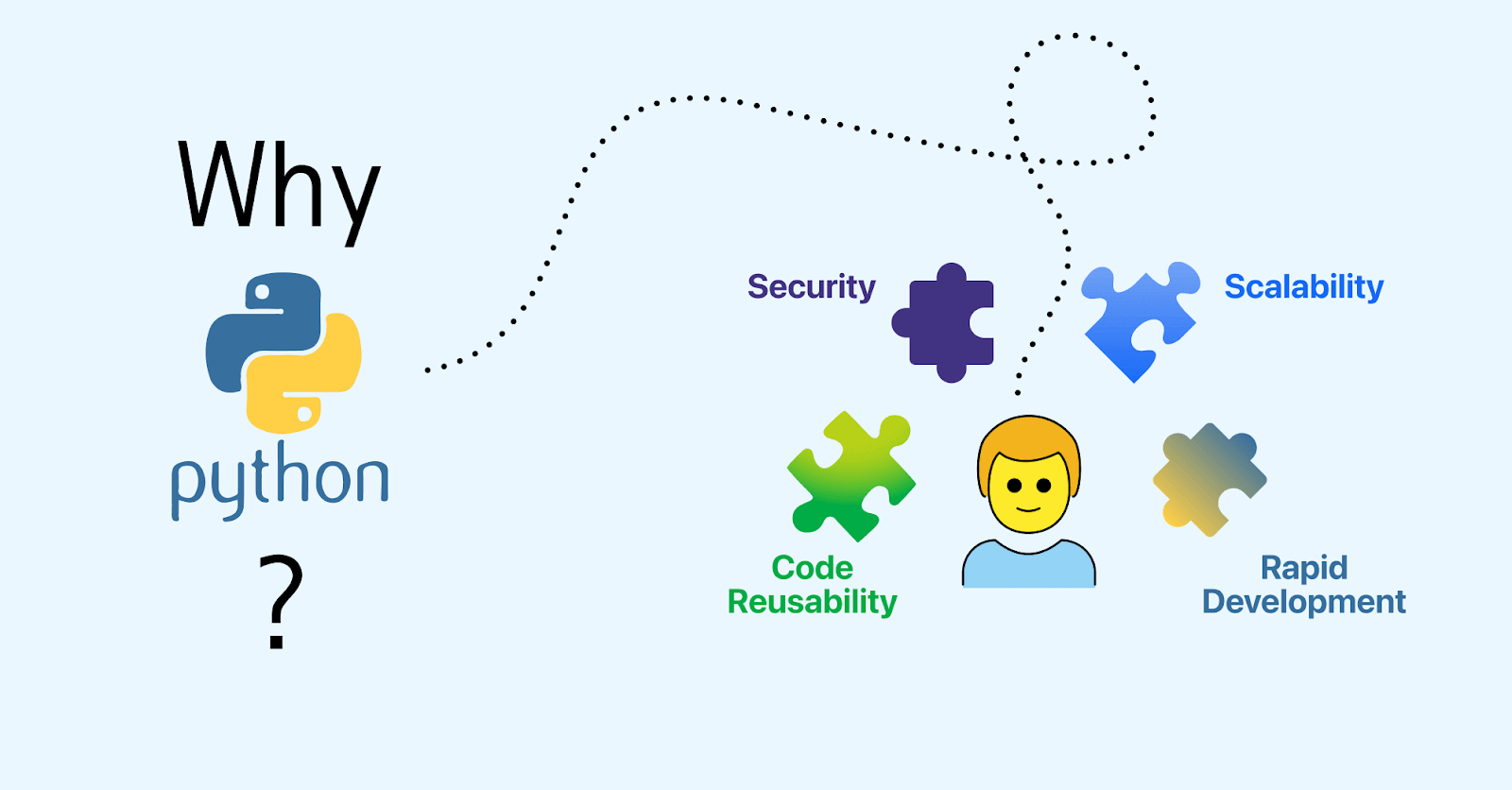
Python web frameworks offer code reusability, built-in security features, scalability support, and rapid development capabilities with modular components and established best practices.
Python web frameworks offer several key advantages that make them a popular choice among developers.
- Code Reusability
Python web frameworks promote code reusability by offering a structured, modular approach to web development. Developers can build reusable components such as templates, authentication systems, and middleware, and easily reuse them across different parts of a web application.
- Security
Python web frameworks often include built-in security features and follow established best practices to minimize common web vulnerabilities such as SQL injection and cross-site scripting (XSS). They guide developers toward secure coding standards, making it easier to build safe and reliable web applications.
- Scalability
Python web frameworks allow web applications to grow in functionality and handle increased traffic. They offer support for modular design and integration with various databases and caching mechanisms, thus making it feasible to scale applications as needed.
- Rapid Development
Python web frameworks are known for their rapid development capabilities. They provide built-in features like URL routing, form handling, and database integration, allowing developers to build web applications quickly and efficiently.
.
Python offers a range of frameworks for different development needs. Explore the top Python frameworks to look for in 2026.

Note: Elevate your Automation testing of Web Applications built with Python frameworks with TestMu AI's AI-orchestrated cloud. Test smarter; Try TestMu AI Today!
What Are the Top 12 Python Web Development Frameworks in 2026?
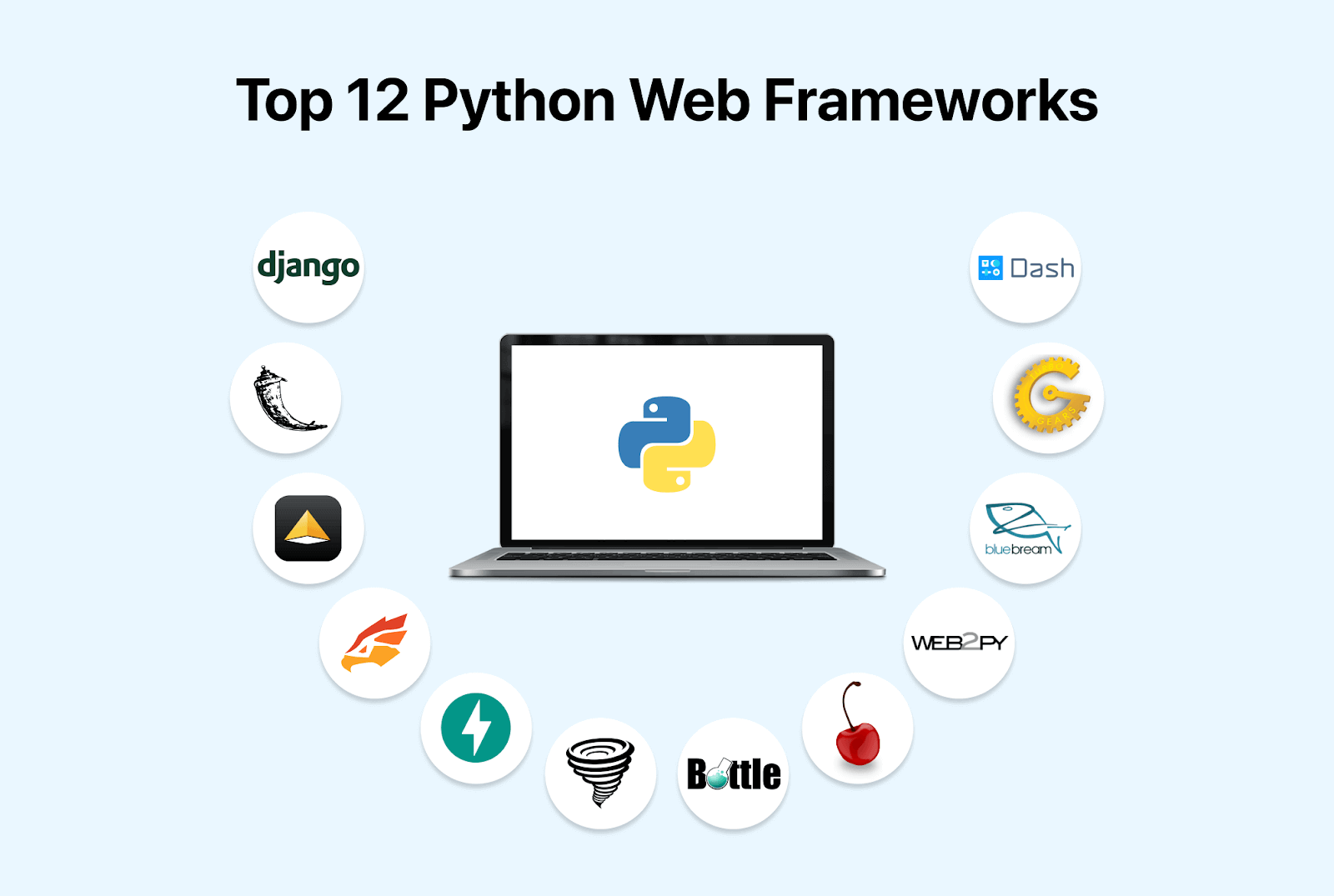
The top 12 Python frameworks include Django, Flask, Pyramid, Falcon, FastAPI, Tornado, Bottle, CherryPy, Web2py, BlueBream, TurboGears, and Dash for diverse web development needs.
Let's look at the top Python web frameworks, each offering a distinct set of features and advantages for building web applications efficiently.
Django
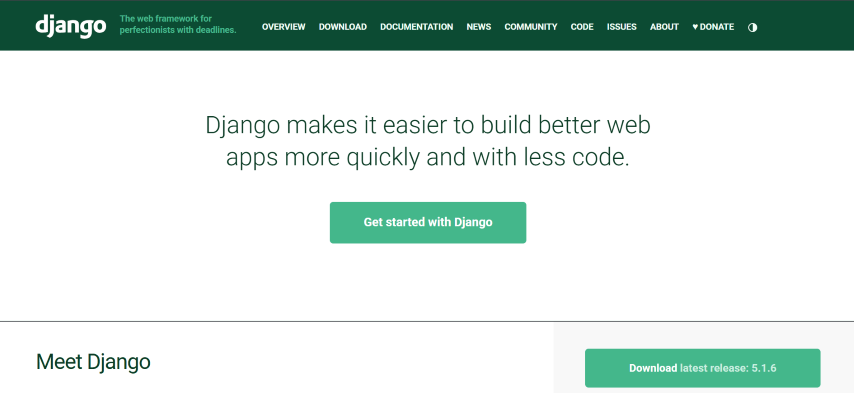
Django is a robust, high-level Python web framework renowned for its full-stack capabilities. It comes packed with features that streamline web development, making it a popular choice among developers.
Key Features:
- Django offers an integrated toolkit including ORM for database management, authentication, URL routing, and templating.
- It prioritizes security, with built-in protections against common web vulnerabilities, helping developers create secure applications.
- Django’s scalability and flexibility make it suitable for both small projects and large, data-intensive applications.
Strengths:
- Django’s “batteries-included” philosophy provides developers with pre-built modules, saving time and effort during development.
- It encourages the DRY (Don’t Repeat Yourself) principle, enhancing code maintainability and reducing redundancy.
- Django’s active community and extensive documentation ensure continuous support and resources for developers.
Prominent Websites/Applications Built with Django:
- Instagram: The world-famous photo-sharing platform relies on Django’s scalability to handle millions of daily uploads.
- Pinterest: Pinterest’s image-centric platform utilizes Django’s flexibility for content management and user interaction.
- The Washington Post: This leading news publication utilizes Django to manage content efficiently and provide a seamless reading experience.
Flask
Flask, a popular Python web framework, is celebrated for its lightweight and modular design, making it an excellent choice for developers seeking simplicity and flexibility in web development.
Key Features:
- Flask’s minimalistic core allows developers to choose and integrate specific components as needed, promoting a clean and uncluttered codebase.
- Flask encourages a microservices architecture, allowing developers to create small, self-contained modules that can be easily combined.
Strengths:
- Flask’s simplicity and minimalism make it an accessible framework for beginners and an efficient tool for experienced developers.
- Its flexibility enables developers to mold web applications precisely to their needs, fostering creativity and innovation.
- Flask’s small footprint and low learning curve contribute to rapid development and quick project deployment.
Prominent Websites/Applications Built with Flask:
- Pinterest (Partially): Pinterest utilizes Flask for some of its microservices, taking advantage of Flask’s modularity and ease of use.
- LinkedIn (Learning Platform): LinkedIn’s learning platform leverages Flask for its lightweight and flexible framework.
Pyramid
Pyramid is a Python web framework celebrated for its exceptional flexibility and versatility. Pyramid’s unique design empowers developers to craft web applications tailored precisely to their project requirements.
 Key Features:
- Pyramid embraces the philosophy of being a “pay-only-for-what-you-use” framework, allowing developers to add components as needed, avoiding unnecessary complexity.
- It offers robust features for handling routing, authentication and templating while allowing developers to choose their preferred tools and libraries.
- Pyramid follows the CoC principle, which provides sensible defaults for common tasks but allows developers to override these defaults when necessary.
- Pyramid encourages the Single Responsibility Principle, where each component or module should have a single, well-defined responsibility.
Strengths:
- Pyramid’s flexibility is its standout feature, making it an ideal choice for projects with unique requirements or those evolving.
- It excels in scenarios where developers prioritize simplicity, scalability, and maintainability.
Prominent Websites/Applications Built with FastAPI:
- Dropbox: Originally used Pyramid for its web application.
- Mozilla’s Support Platform: Relied on Pyramid for user support interactions.
- Reddit: Influenced by Pyramid’s design principles in its early development.
Falcon
Falcon is a high-performance Python web framework for building lightning-fast and efficient web APIs. It’s celebrated for its minimalist architecture, making it an exceptional choice for developers who prioritize speed, efficiency, and scalability in their projects.
Key Features:
- Minimalist Architecture: Falcon’s core framework is exceptionally lightweight, offering only the essential components for web API development. This streamlined approach translates into efficient code execution and minimal overhead.
- High Performance: Renowned for its exceptional speed and low resource consumption, Falcon is one of the fastest Python web frameworks available. It excels in scenarios where rapid response times and high concurrency are paramount.
- Middleware Support: Falcon provides robust middleware support, empowering developers to integrate custom processing logic into their APIs effortlessly. This flexibility ensures adaptability to a wide range of project requirements.
Strengths:
- Speed Demon: Falcon’s minimalist design and laser-like focus on performance make it the go-to choice when speed is of the essence. It’s particularly well-suited for real-time applications, high-traffic APIs, and microservices.
- Resource Efficiency: Thanks to its lightweight footprint, Falcon is a resource-efficient framework, ensuring optimal utilization of system resources even under heavy workloads.
Prominent Websites/Applications Built with Falcon:
- OpenAI GPT-3 Playground: OpenAI’s GPT-3 Playground leverages Falcon for its API, showcasing its prowess in handling real-time language processing requests.
- SurveyMonkey: SurveyMonkey harnesses Falcon for its survey platform’s API, benefiting from the framework’s exceptional speed and efficiency, crucial for delivering responsive and scalable survey experiences.
FastAPI
FastAPI is a cutting-edge Python web framework known for its exceptional speed and asynchronous capabilities. It’s gaining popularity in web development due to its performance and automatic API document generation, thus making it ideal for building modern web applications and APIs.
Key Features:
- Async and Await Support: FastAPI fully embraces asynchronous programming, allowing developers to write efficient, non-blocking code. This makes it well-suited for handling concurrent operations and I/O-bound tasks.
- Automatic Documentation: One of FastAPI’s standout features is its automatic generation of interactive documentation using the OpenAPI standard. This means that as you define your API endpoints and data models, FastAPI generates documentation that developers can interact with, making API exploration and testing a breeze.
- Type Hints: FastAPI leverages Python’s type hinting system to provide auto-completion and type validation, enhancing code quality and readability.
- Dependency Injection: FastAPI simplifies the management of dependencies, making injecting components like database connections or authentication systems into your application’s endpoints easy.
Strengths:
- High Performance: Designed for speed, FastAPI efficiently handles numerous concurrent requests, thus making it suitable for real-time applications.
- Rapid Development: It follows a minimalist approach, allowing for quick development and prototyping of ideas.
Prominent Websites/Applications Built with FastAPI:
- Uber Engineering: Uses FastAPI for real-time data processing and communication.
- Microsoft Azure Functions: Integrates FastAPI for serverless API development.
- Turing.com: Manages its global developer community efficiently with FastAPI.
Tornado
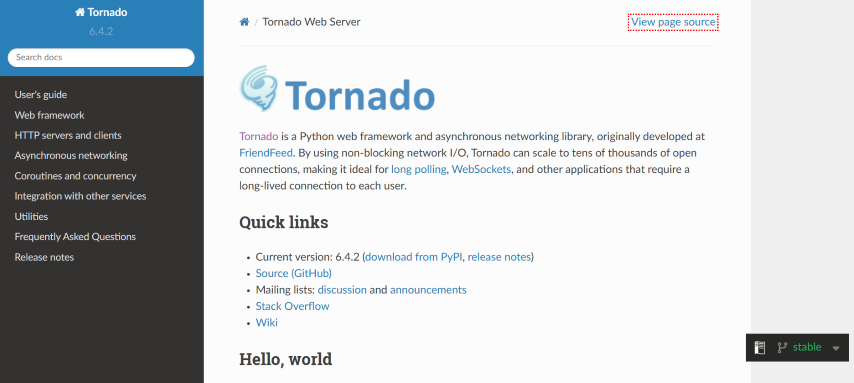
Tornado is a Python web framework known for its asynchronous capabilities and high performance. Its key feature is non-blocking network I/O, which allows it to handle thousands of simultaneous connections efficiently.
This makes it well-suited for applications that need high concurrency, such as real-time web services, chat applications, and streaming platforms. It also includes a powerful web templating engine for creating dynamic web content.
Key Features:
- Asynchronous Support: Tornado fully embraces asynchronous programming, thus making it ideal for handling multiple simultaneous connections and real-time data processing.
- WebSockets: It provides built-in support for WebSockets, thus enabling real-time communication between clients and servers.
- Non-blocking I/O: Tornado’s non-blocking I/O handling ensures that the server can handle numerous concurrent requests efficiently.
Strengths:
- Real-time Applications: Tornado excels in building real-time applications, such as chat applications, live dashboards, and online gaming platforms.
- High Concurrency: Its asynchronous architecture allows it to handle many simultaneous connections, making it suitable for high-traffic applications.
Bottle
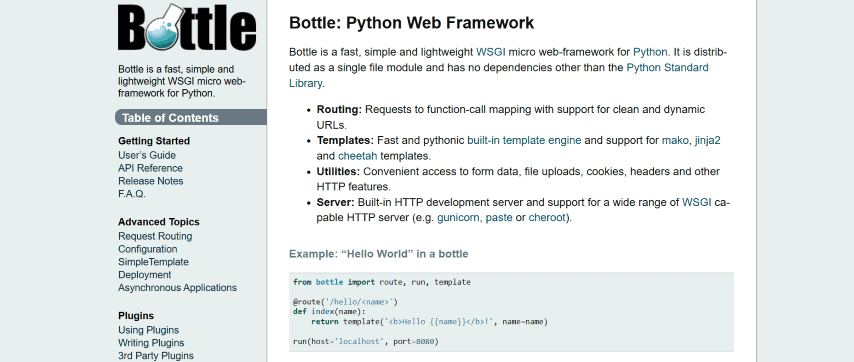
Bottle is a lightweight and minimalist Python web framework designed for simplicity and ease of use. It focuses on keeping the core framework small while allowing developers to add specific components as needed.
Key Features:
- Minimalistic Core: Bottle’s core framework is minimal, offering only the essential features. This minimalist approach promotes a clean and uncluttered codebase.
- Single-File Apps: It’s common to build small web applications with Bottle using a single Python file, making creating and deploying simple apps easy.
- Microservices Support: Bottle is suitable for microservices architectures, allowing developers to create small, self-contained, easily combined modules.
Strengths:
- Simplicity: Bottle is known for its simplicity and low learning curve, making it an accessible choice for beginners and experienced developers.
- Rapid Development: The small footprint of Bottle and its minimalist design contribute to rapid development and quick project deployment.
CherryPy
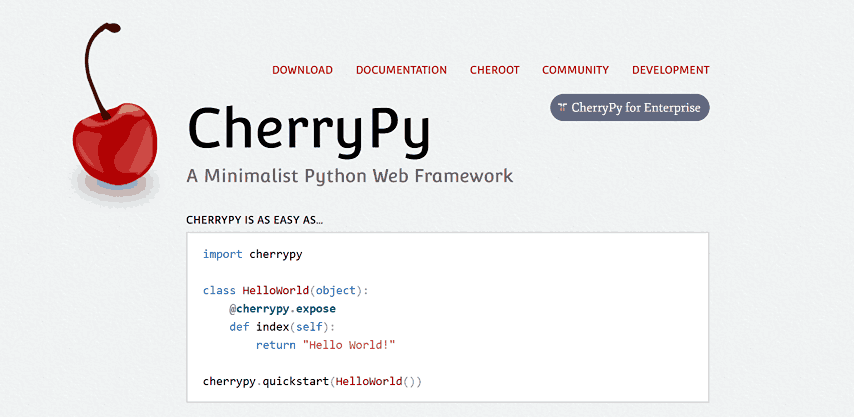
CherryPy is a versatile and minimalistic Python web framework focusing on simplicity and flexibility. It allows developers to build web applications with minimal configuration.
Key Features:
- Minimalistic Design: CherryPy’s core framework is lightweight and minimal, providing only the essential components for web development.
- Object-Oriented: It follows an object-oriented approach, making it easy to structure web applications using Python classes and methods.
- HTTP Server: CherryPy includes a built-in HTTP server, simplifying the deployment process and eliminating the need for external server software.
Strengths:
- Simplicity: CherryPy’s minimalist design and Pythonic syntax contribute to a low learning curve, making it accessible to developers of all levels.
- Flexibility: Developers can structure their web applications as they see fit, allowing creativity and customization.
- Rapid Development: The simplicity of CherryPy enables rapid development and quick project prototyping.
Prominent Websites/Applications Built with CherryPy:
- CherryMusic: CherryMusic is an open-source music streaming server that uses CherryPy for its web interface. The framework’s simplicity aligns well with the project’s lightweight and efficient design.
There are various programming language framework to help you in web development to learn more above the best programming languages for web development follow the guide and get valuable insights and make informed decisions.
Web2py
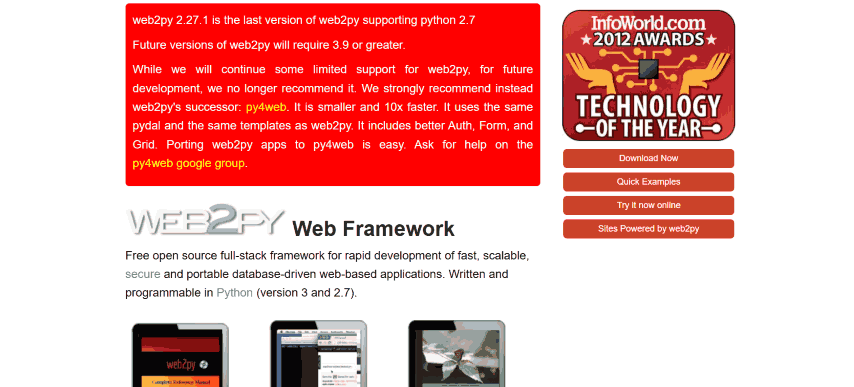
Web2py is a user-friendly Python web framework that simplifies web app development. With an integrated environment, cross-platform compatibility, and robust security, it’s a top choice for building scalable web applications.
Key Features:
- Integrated Environment: Web2py offers an all-inclusive development environment with a built-in web-based IDE, error tracking, and a powerful admin interface, streamlining development.
- Cross-Platform Compatibility: Compatible with various OS and web servers, ensuring deployment flexibility.
- Security First: Prioritizes security with built-in protection against common web vulnerabilities like XSS, CSRF, and injections.
Strengths:
- Ease of Use: User-friendly for developers of all levels, simplifying rapid prototyping and efficient development.
- Community and Support: Boasts a strong, supportive community with resources, tutorials, and a vibrant forum, ensuring continuous assistance.
Prominent Websites/Applications Built with Web2Py:
- MOOC Platforms: Trusted by several Massive Open Online Course platforms for its scalability and simplicity.
- Academic Research: Adopted by academic institutions for research platforms due to its integrated environment and security features.
BlueBream
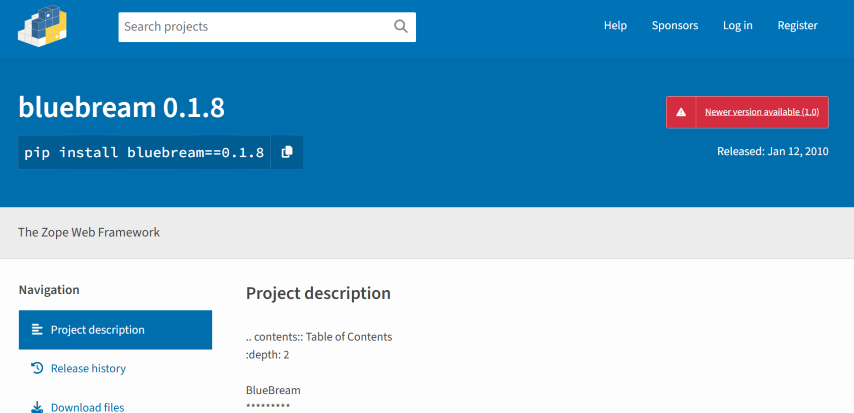
BlueBream is a Python web framework renowned for its modular and component-based approach to web application development. With a strong emphasis on object-oriented programming, it offers a rich library of pre-built components.
This makes BlueBream an excellent choice for building efficient and maintainable web applications that can scale effectively.
If you’re preparing for interviews and want to brush up on key concepts, check out our comprehensive list of OOPs interview questions to enhance your understanding and confidence.
Derived from the Zope framework, BlueBream brings reliability and versatility to web development, making it a trusted platform for both short-term and long-term projects.
 Key Features:
- Component-Based Architecture: BlueBream employs a component-based architecture, facilitating the creation of reusable and modular components that enhance code maintainability.
- Object-Oriented Development: The framework promotes an object-oriented development style, where web components are represented as objects with well-defined behaviors, aligning closely with Python’s nature.
- Extensive Component Library: BlueBream offers a library of pre-built components and utilities, reducing the need for custom code development and expediting project setup.
Strengths:
- Zope Heritage: BlueBream inherits from the Zope framework, known for its reliability and stability, making it a robust choice for long-term projects.
- Versatile Deployment Options: BlueBream supports various deployment options, accommodating project requirements and scaling as needed.
- Active Community: Although smaller, BlueBream’s community is active and dedicated, providing support and resources for developers.
TurboGears
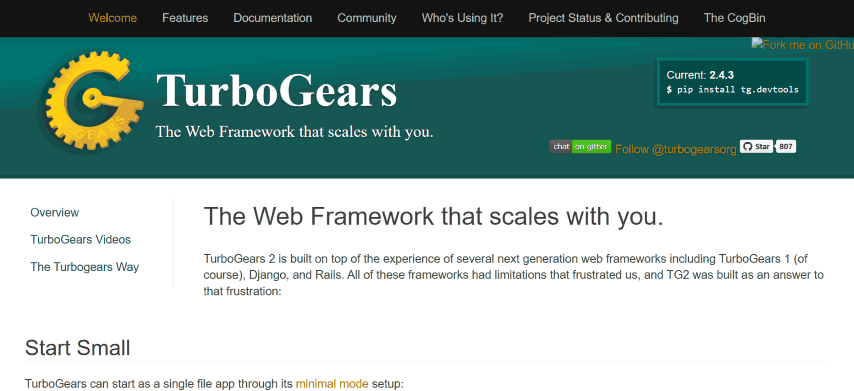
TurboGears is a Python web framework celebrated for its speed, flexibility, and developer-friendly features. It combines multiple tools and libraries into a cohesive package, simplifying web application development.
Key Features:
- Integrated Stack: TurboGears seamlessly integrates various components like SQLAlchemy for database management, making templates for rendering, and more, streamlining the development process.
- Flexible ORM: It offers a flexible Object-Relational Mapping (ORM) system, allowing developers to work with databases in an object-oriented manner.
- Built-in Widgets: TurboGears includes built-in widgets for forms and user interfaces, reducing the need for custom code.
Strengths:
- Rapid Development: TurboGears embraces the “sprint” development model, promoting quick project setup and development through code generation.
- Modular and Extensible: Developers can choose from a wide range of TurboGears components to tailor their applications precisely to their needs, fostering creativity and innovation.
Prominent Websites/Applications Built with TurboGears:
- SourceForge: TurboGears was initially used to develop SourceForge’s new project management system, demonstrating its capability to handle complex web applications.
- Launchpad: Launchpad’s collaborative platform initially used TurboGears for its web interface, highlighting its suitability for large-scale projects.
Dash
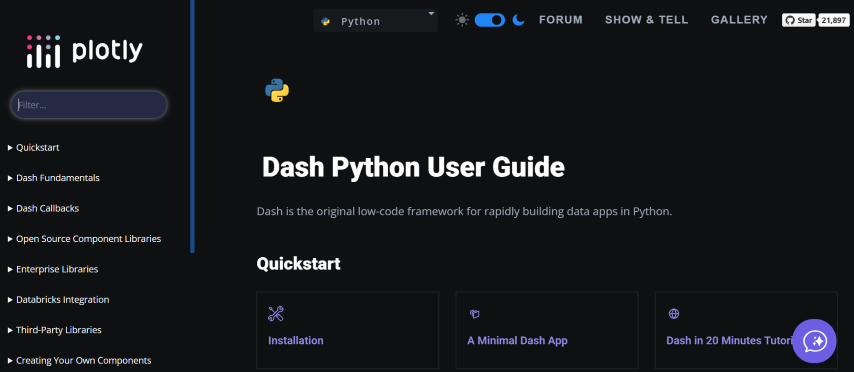
Dash is a Python web framework that stands out for its ability to create interactive and data-driven web applications with ease. It offers developers a powerful toolkit to build interactive web apps without the need for extensive front-end development.
Key Features:
- Interactive Web Apps: Dash excels in creating interactive, data-driven web applications, making it a go-to choice for data visualization and analytics projects.
- Python-Powered: Dash is entirely Python-based, enabling developers to leverage their Python expertise to build web applications without having to learn new languages or technologies.
- Component-Based: Dash uses a component-based architecture, allowing developers to assemble complex web apps using reusable building blocks, enhancing code modularity and reusability.
Strengths:
- Simplicity: Dash’s straightforward approach to building web apps simplifies the development process, making it accessible to both novice and experienced developers.
- Data Visualization: Dash’s integration with libraries like Plotly enables the creation of stunning data visualizations, making it an ideal choice for data-driven applications.
- Active Community: Dash benefits from a vibrant community, offering resources, documentation, and a wealth of examples to help developers create interactive web apps.
Prominent Websites/Applications Built with Dash:
- BioNTech, COVID-19 Dashboard: BioNTech, a pharmaceutical company involved in COVID-19 vaccine development, uses Dash to create a real-time dashboard for tracking vaccine distribution and the effectiveness of vaccination campaigns.
In a world where user experience is a make-or-break factor, testing applications is essential. You need to ensure they work flawlessly and deliver a smooth experience across multiple platforms.
Establishing high internal QA standards and investing in Automation Testing enables faster release cycles and better quality assurance.
Here is where you must consider employing TestMu AI for your testing requirements. TestMu AI is an AI-native test orchestration and execution platform that lets you run manual and automated tests at scale.
With 3,000+ browser and OS combinations and 10,000+ real devices, it offers cross-browser compatibility that empowers developers to establish testing procedures that scale as your project evolves.

What Factors Should You Consider When Choosing a Python Web Framework?
Consider project requirements, learning curve, community support, performance, security features, long-term viability, and legacy system integration when choosing a Python framework.
Choosing the right Python web framework is a critical decision. Let's look at the factors one should consider for this task.
- Project Requirements: Ensure the framework aligns with your project’s size, complexity, and scalability needs.
- Learning Curve: Assess the framework’s ease of learning and compatibility with your team’s skills.
- Community and Support: Check for an active community, good documentation, and reliable support resources.
- Performance: Evaluate if the framework can meet your application’s performance demands, especially for high-traffic or real-time scenarios.
- Security: Look for built-in security features and adherence to best practices.
- Long-Term Viability: Ensure the framework is actively maintained and updated.
- Legacy Systems: Ensure the framework can integrate with any existing systems.
How Is AI Changing Python Web Development Frameworks?
AI is pushing Python web frameworks toward API-first, async designs, because most AI features ship as model-backed endpoints that stream responses and call external tools.
FastAPI has become the default for serving models and agent backends, and the Model Context Protocol Python SDK builds MCP servers on the same ASGI stack, so an existing web app can expose its functions to AI agents. Django and Flask add AI features through async views and libraries rather than core changes.
AI coding assistants also generate much of the boilerplate in these frameworks, which makes tests more important. Frameworks such as pytest django setups catch generated views that break routing, auth, or database code.
Which Python Web Framework Should You Choose?
Choose Django for full-featured web apps, FastAPI for high-performance APIs, Flask for small services and prototypes, and Dash for data dashboards.
Python web frameworks are invaluable tools for modern web development, streamlining the creation of robust and efficient web applications. Python’s widespread popularity and flexibility position it as a frontrunner. By choosing the right framework, developers can easily navigate web development challenges, ultimately shaping outstanding digital experiences.
Author

Urwashi Priya
Blogs: 7


Urwashi is a passionate software engineer with a knack for crafting elegant solutions to complex problems. With a deep understanding of cutting-edge technologies and a strong desire to share knowledge, she is a dedicated professional in the tech industry. Her expertise lies in creating engaging and insightful blog posts that provide valuable insights into the world of software engineering.
Reviewer

Shravan Mahajan
Reviewer
Shravan Mahajan is a Software Engineer at TestMu AI building Kane CLI, the command-line tool that runs browser automation from the terminal, describing flows in natural language that execute in a real Chrome browser and return pass or fail with shareable proof. He has an experience of 6 years in the Technical industry. His top skills are JavaScript, React.js, and full-stack development. At Fractal he built automated data pipelines with T-SQL, SSIS, Python, and Azure. He is also a Microsoft Certified Azure Data Engineer Associate.


Python Web Framework FAQs
Did you find this page helpful?
More Related Blogs

TestMu AI forEnterprise
Get access to solutions built on Enterprise
grade security, privacy, & compliance
- Advanced access controls
- Advanced data retention rules
- Advanced Local Testing
- Premium Support options
- Early access to beta features
- Private Slack Channel
- Unlimited Manual Accessibility DevTools Tests