

Next-Gen App & Browser Testing Cloud
Trusted by 2 Mn+ QAs & Devs to accelerate their release cycles


21 Best Website Testing Tools You Must Use in 2026
Discover the best website testing tools to ensure cross-browser compatibility, performance, and security. Explore top picks like TestMu AI, Selenium, and more!

Shakura Banu
March 10, 2026
Website testing tools play a crucial role in verifying functionality, performance, and accessibility, ensuring that websites meet quality standards. Choosing the best among a wide range of website testing tools is critical for optimizing performance, catching issues early, and enhancing user satisfaction in today’s digital landscape.
Overview
Top Website Testing Tools at a Glance
This guide covers 21 website testing tools across automation, performance, security, and manual testing categories. Here's a quick breakdown by use case:
- End-to-End Automation: TestMu AI, Selenium, Playwright, Cypress, Puppeteer — for running automated tests across real browsers and devices at scale.
- No-Code / Low-Code Testing: BugBug, Katalon Studio, Autify, Reflect — for teams that want automation without writing scripts.
- Enterprise & Legacy Support: UFT (QTP), Tricentis Tosca, Ranorex Studio — for large organizations with complex, multi-platform testing needs.
- Performance & Monitoring: WebPageTest — for measuring page speed, Core Web Vitals, and load performance.
- BDD & Collaboration: Cucumber, Nightwatch.js — for teams practicing behavior-driven development with readable test specs.
- Manual & Exploratory Testing: Testpad, Digivante, Test IO — for human-driven testing and crowdsourced QA coverage.
How to Choose the Right Tool?
The best website testing tool depends on your team's tech stack, testing goals, and scale. Consider browser coverage, framework support, CI/CD integration, and whether you need codeless or scripted automation. For cross-browser testing across 3,000+ browser and OS combinations, platforms like TestMu AI offer the widest coverage with support for Selenium, Cypress, and Playwright.
What Are Website Testing Tools?
Website testing tools are software applications used to evaluate the functionality, performance, security, and compatibility of websites or web applications. They help ensure that the site works correctly across different browsers, devices, and screen sizes, performs reliably under various conditions, and is protected against potential vulnerabilities.

Note: Ensure your website works flawlessly across 3000+ browser and OS combinations. Try TestMu AI now!
Some of the Best Website Testing Tools
Explore some of the best website testing tools to find out if your go-to tool is included or to discover a new favorite.
1. TestMu AI
TestMu AI is one of the leading website testing tools, built to ensure your web application functions flawlessly across browsers, devices, and operating systems. It’s an AI-native test execution platform that enables you to run manual and automated tests at scale across 3,000+ browser and OS combinations and 10,000+ real devices.
With support for top automation frameworks like Selenium, Cypress, Playwright, and Puppeteer, TestMu AI empowers teams to scale their test automation efforts while maximizing coverage. Whether you’re validating functionality, responsiveness, or UI consistency, TestMu AI delivers a reliable and efficient environment for comprehensive web application testing.

Why is TestMu AI considered one of the best website testing tools?
- Cross-Browser and Device Testing: Run tests on 3000+ browser and OS combinations to validate your web application’s functionality.
- Real Device Cloud: Perform mobile application testing on 10,000+ real mobile devices.
- HyperExecute: Accelerate test execution with an intelligent, high-performance test orchestration platform.
- KaneAI: GenAI-native testing agent that allows teams to plan, author and evolve tests using natural language.
- Geolocation Testing: Test web applications from over 170+ countries to validate localization and geo-specific functionality.
- Localhost Testing: Easily test locally or privately hosted websites before deployment.
- LT Browser: Utilize the developer-friendly LT Browser to expedite responsive testing and debugging across devices.
- Automation Framework Support: Seamless integration with Selenium, Cypress, Playwright, Puppeteer, and more.
2. Selenium
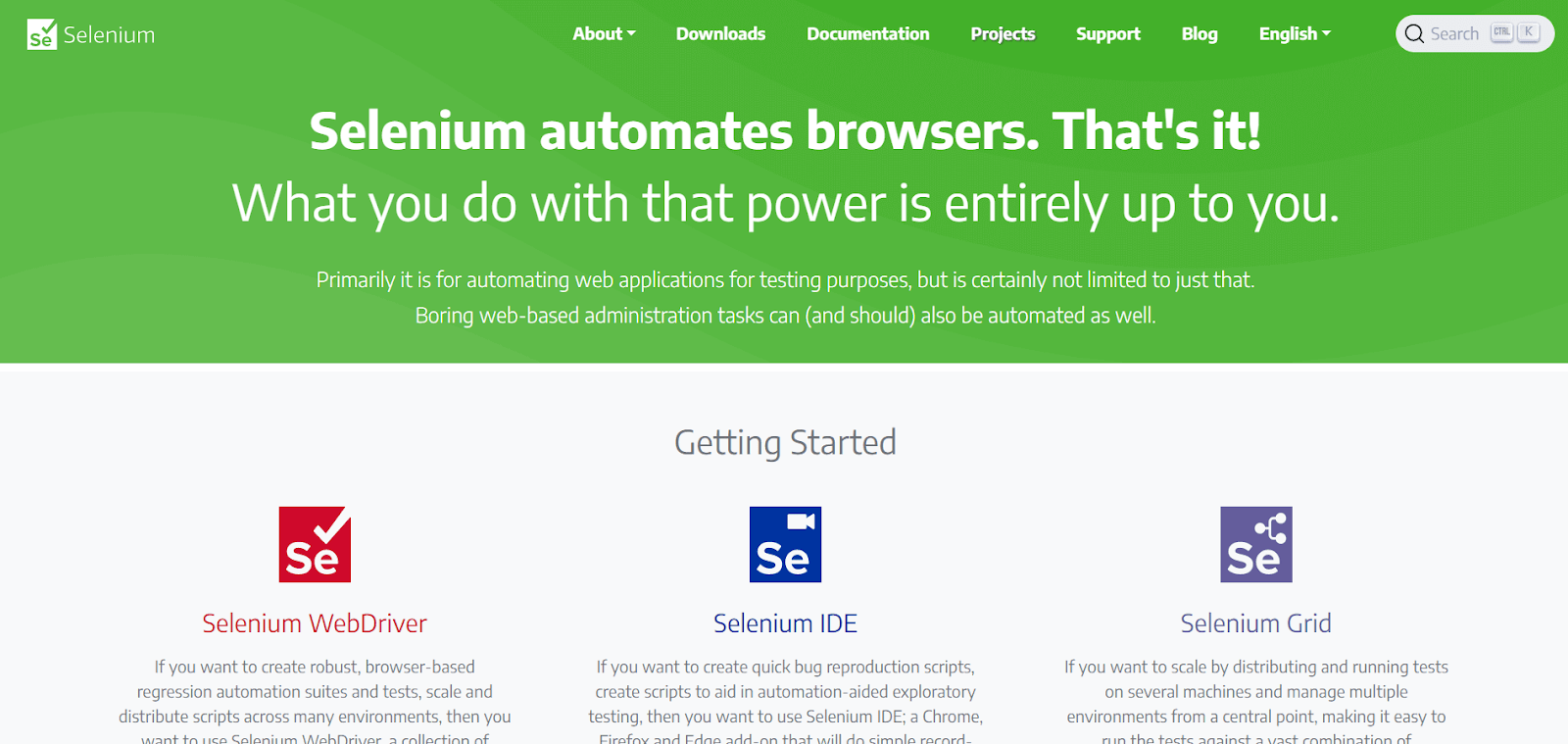
Selenium is the most extensively used and well-liked web testing solution available today. As one of the best website testing tools, it supports various operating systems, including Windows, macOS, and Linux, as well as popular browsers such as Firefox, Chrome, Internet Explorer, and headless browsers.
Why is Selenium considered one of the best website testing tools?
- Cross-browser and OS Testing: Selenium enables you to perform tests on various browsers and operating systems, ensuring the website functions properly across different platforms.
- Selenium WebDriver: The robust Selenium WebDriver helps you write more intricate and sophisticated automation scripts.
- Selenium IDE: Selenium’s browser extension provides record-and-playback capabilities.
- Selenium Grid: Allows you to run tests in parallel on different environments.
- Multi-language Support: Selenium supports various programming languages, including Java, Python, Ruby, and C#, allowing developers to use their preferred language.
3. BugBug
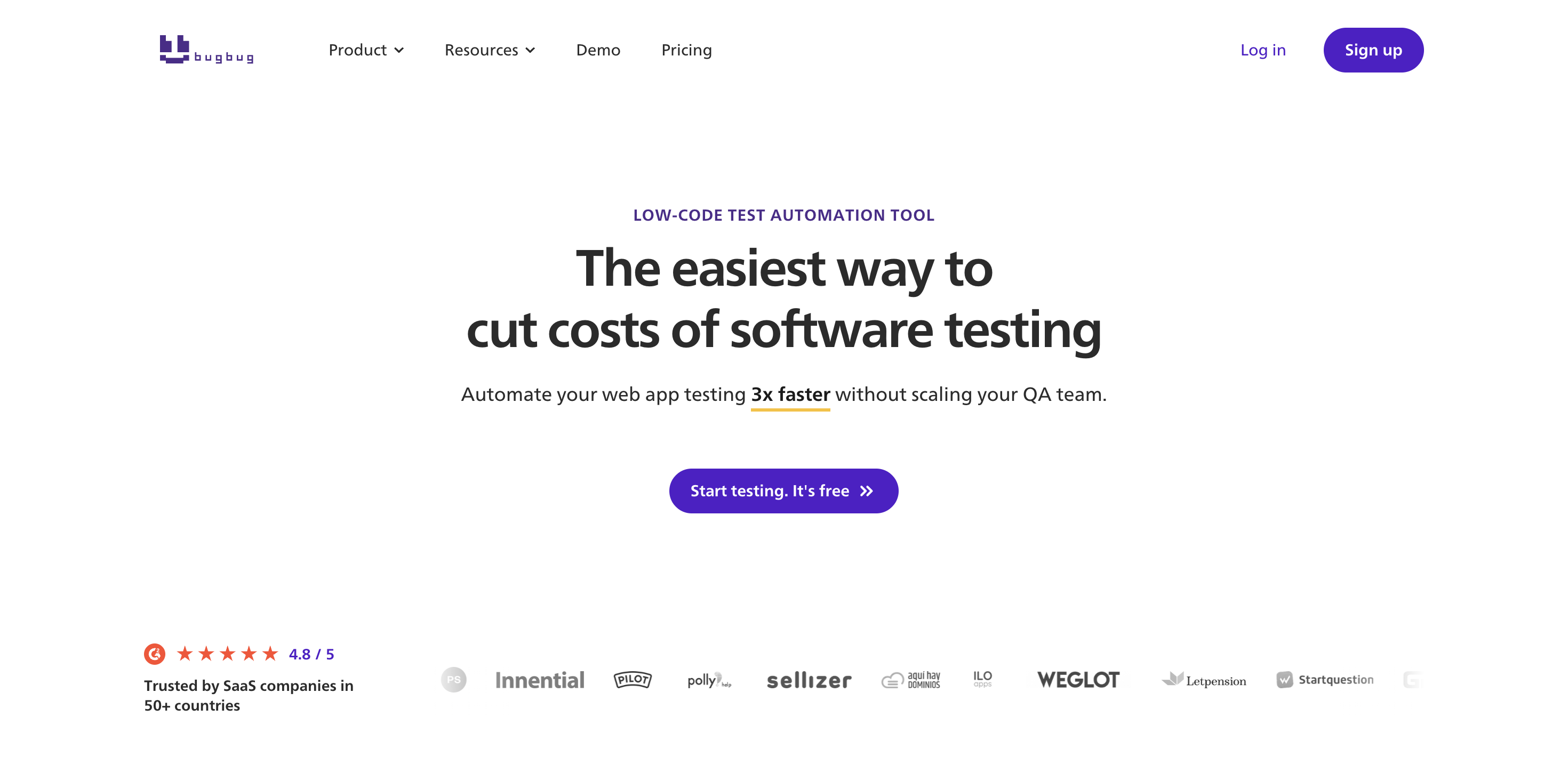
BugBug is a low-code test automation tool designed for web apps and websites. Perfect for teams that prioritize speed and simplicity over technical complexity. Its intuitive test recorder allows users to easily capture and replay tests, run them step by step, rewind execution, and schedule test runs while still accommodating custom JavaScript when needed.
Why is BugBug considered one of the best website testing tools?
- Low-code test creation: Records user actions directly in the browser, perfect for teams with limited technical skills.
- Schedule in the cloud: Runs tests automatically in the cloud on a set schedule and sends instant notifications via email or Slack.
- Fast and flexible test editing: Allows modifying and replaying tests from specific steps.
- Built-in testing inbox: Enables verifying and testing user signup or login process without while recording your test.
- CI/CD support: Integrates with popular CI/CD pipelines like Jenkins, GitHub Actions and GitLab.
4. Playwright
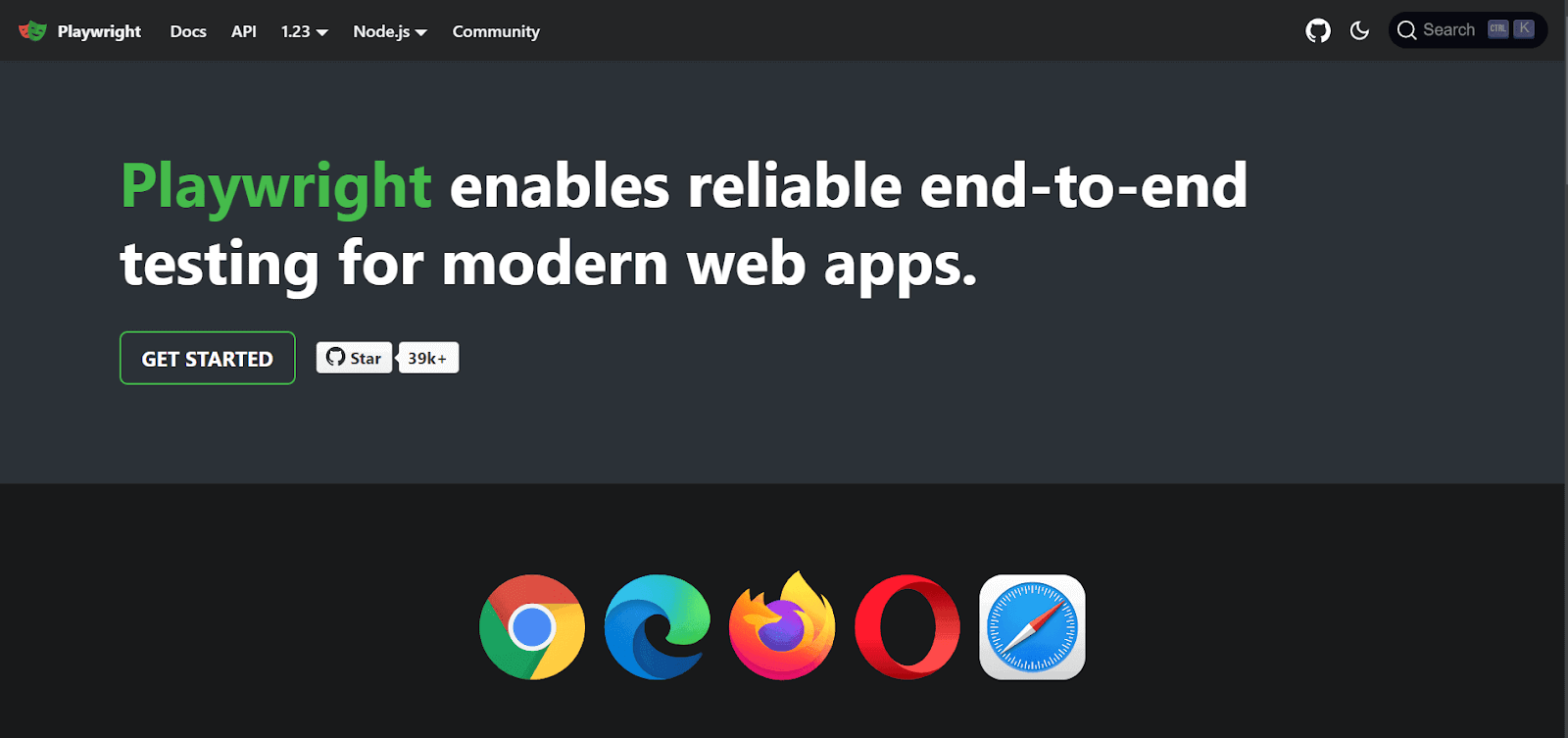
Playwright is an open-source website testing framework developed by Microsoft. It allows developers and testers to automate the testing of websites across different browsers and platforms. It provides a suitable API for interacting with web browsers, enabling easy cross-browser testing. Playwright testing is possible with JavaScript, TypeScript, and Node.js.
Why is Playwright considered one of the best website testing tools?
- Multi-Browser Support: Playwright supports multiple web browsers like Chromium, Firefox, and WebKit.
- Detailed Debugging: It provides detailed logs, screenshots, and video recordings for easy issue identification during test debugging.
- Responsive Testing: Playwright is used to perform responsive testing, verifying responsiveness.
- Multi-Page Interaction: It allows you to interact with multiple web pages, pop-ups, iframes, and tabs within a single test.
Subscribe to the TestMu AI YouTube Channel for more tutorial videos around different automation testing tools, and more.
5. Puppeteer
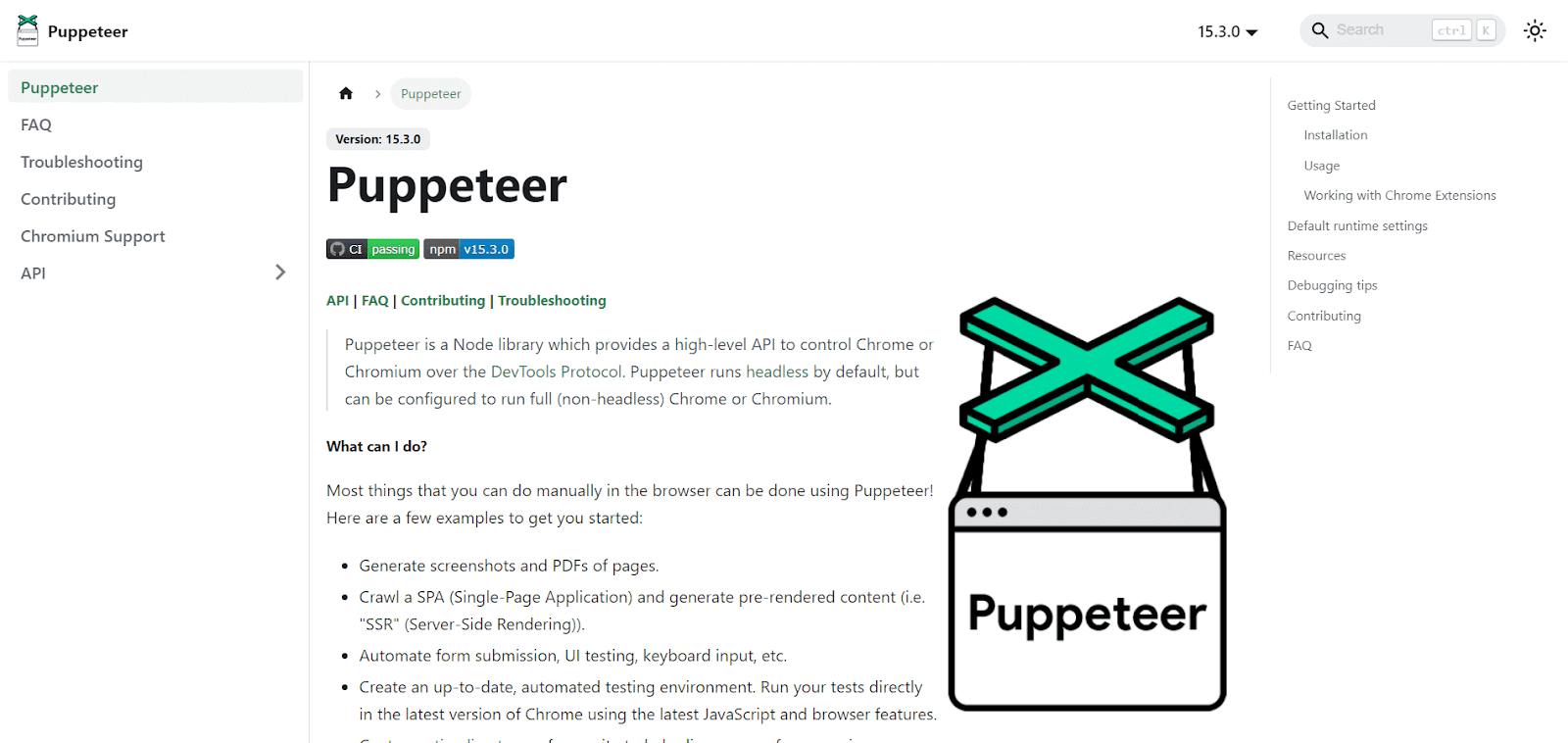
Puppeteer is a Node.js library that delivers an API to control headless Chrome or Chromium over the DevTools Protocol. Puppeteer runs on Windows, macOS, and Linux. It is easy to perform Puppeteer testing, including tasks such as generating screenshots and PDFs of pages, and crawling SPA (single-page applications). It enables developers to simulate user interaction with web pages in a realistic manner.
Why is Puppeteer considered one of the best website testing tools?
- Iframe Interaction: Puppeteer is used to interact with iframes on web pages.
- Advanced Features: It supports tracing, profiling, and code coverage reports.
- Framework Integration: Puppeteer integrates with popular test frameworks, including Jest, Mocha, and Jasmine.
- Network Control: It intercepts network traffic and allows modification capabilities.
6. Cypress
Cypress is a developer-focused, end-to-end testing automation tool that supports only JavaScript frameworks. Built on cutting-edge architecture, Cypress can operate seamlessly alongside your browser-based application, providing native access to elements and enabling faster execution for Cypress testing.
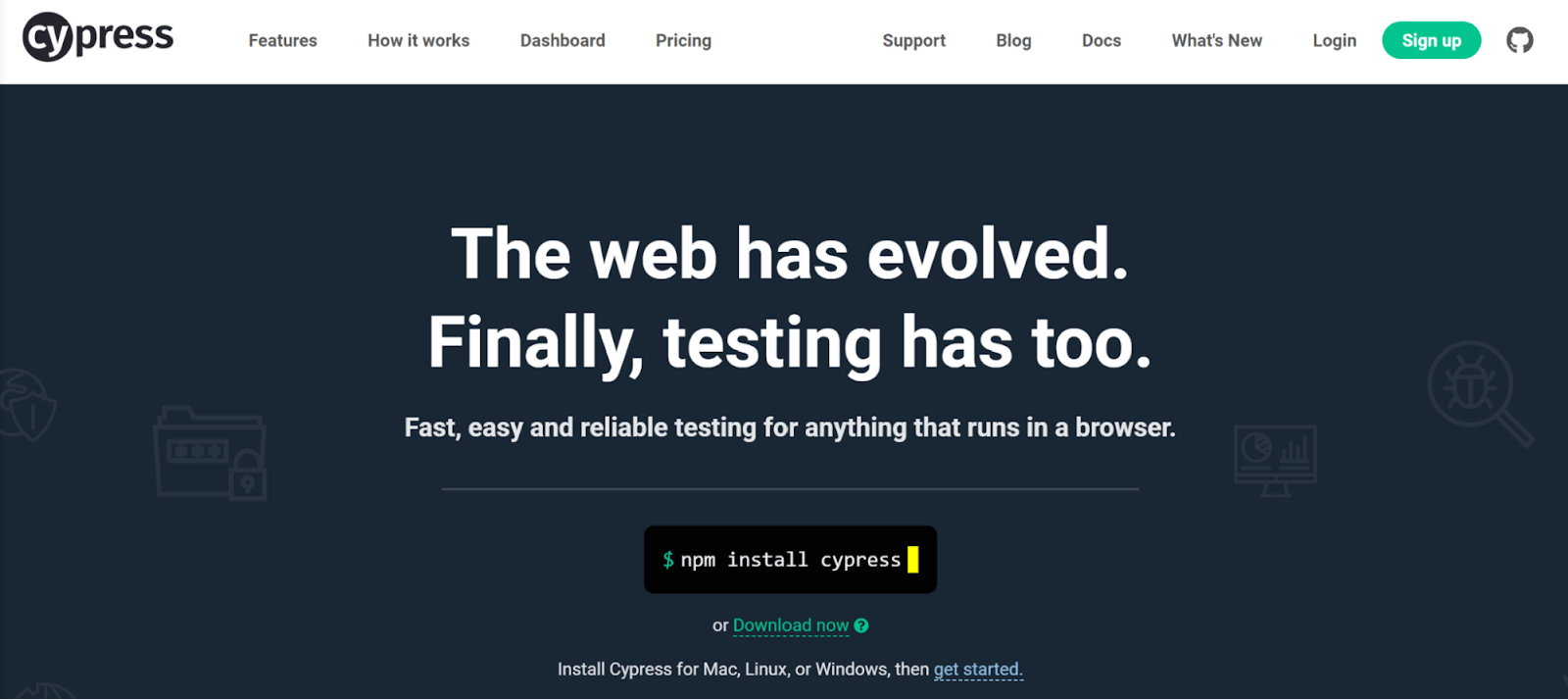
Why is Cypress considered one of the best website testing tools?
- Faster, Reliable Tests: Provides faster and more reliable test execution with its architectural design.
- Automatic Screenshots: Captures screenshots automatically during test failures for effective debugging.
- Network Control: Control server response times, network traffic, and function behavior.
- Debugging Tools: Features for debugging and screenshots of test steps from popular developer tools.
- Dashboard Service: Provides a dashboard service to enhance test performance.
- Real-Time Assistance: Assists in real-time during test execution.
7. Cucumber
Cucumber is a popular open-source testing tool for websites that supports Behavior-Driven Development (BDD). It enables developers and testers to write test cases in the Gherkin language, a readable format that is easily understood by non-technical stakeholders.
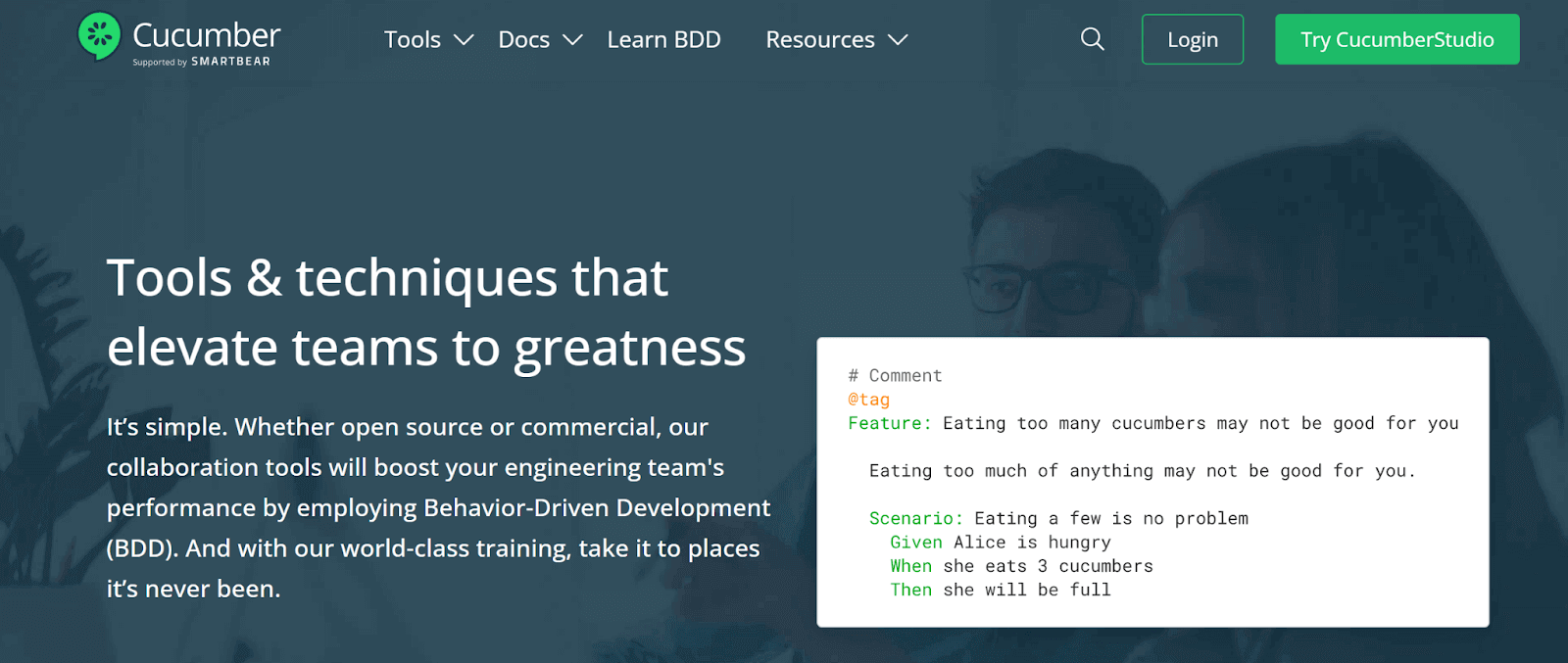
Why is Cucumber considered one of the best website testing tools?
- Easy Reuse and Maintenance: Cucumber is simple to reuse and maintain.
- Automation Integration: Supports test automation with various programming languages.
- Built-in Reporting: Offers built-in reporting to track test execution status.
- Living Documentation: Keeps specifications up-to-date as living documentation.
- Framework Integration: Integrates with popular testing frameworks and tools.
8. Nightwatch.js
Nightwatch.js is a JavaScript-based web testing tool used for end-to-end testing of web applications. It simplifies browser automation, making it easier to test web applications with an intuitive syntax. Built on top of Selenium WebDriver, it supports multiple browsers and provides a rich set of features for testing web applications at scale.
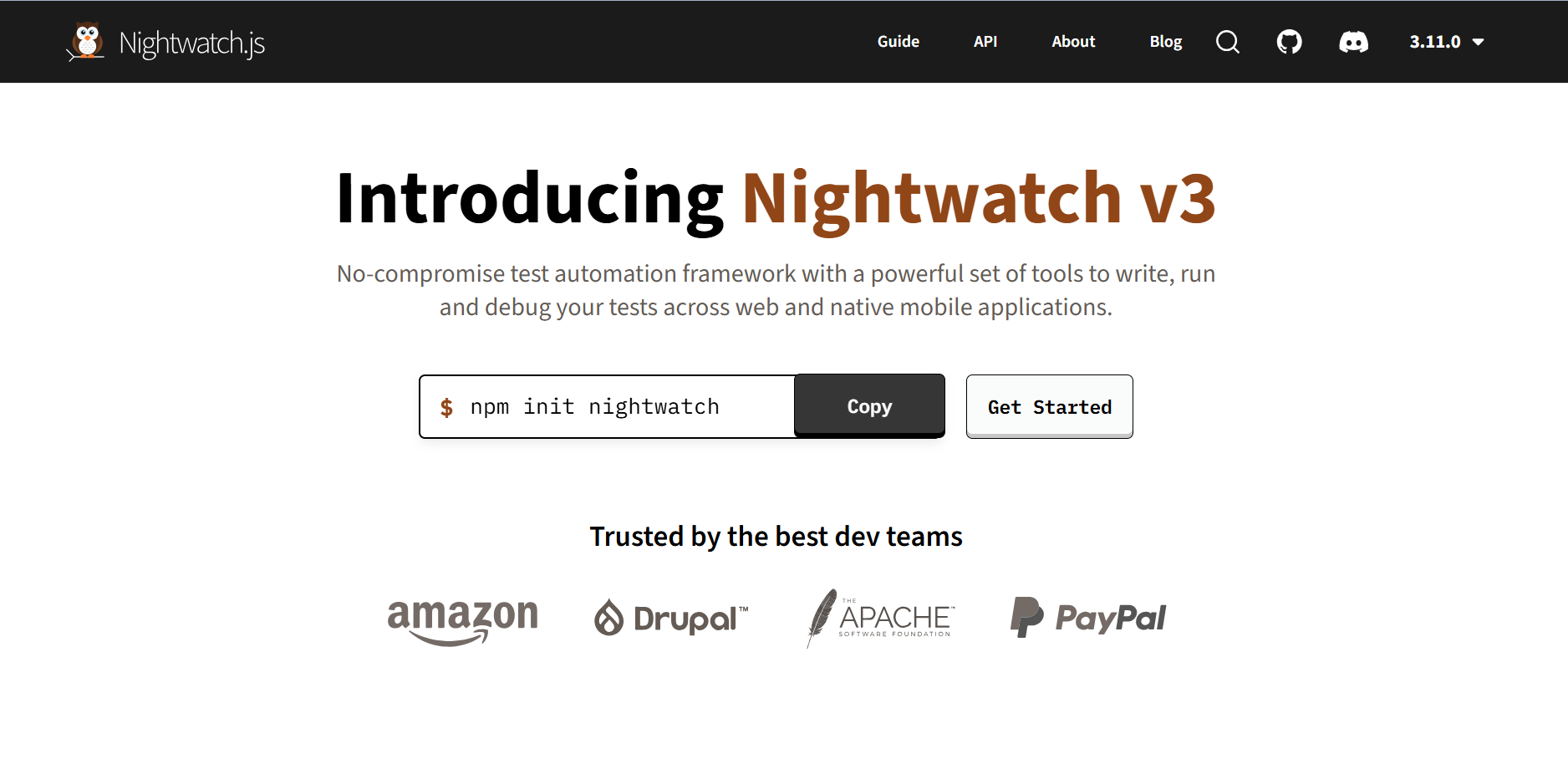
Why is Nightwatch.js considered one of the best website testing tools?
- Cross-Browser Testing: Works with Chrome, Firefox, and Edge for cross-browser testing.
- Intuitive API: Offers a straightforward API for effortless test writing.
- Built-in Waiting: Includes built-in waiting for elements to appear during tests.
- Parallel Testing: Allows running tests across multiple browsers in parallel.
- CI/CD Integration: Seamlessly integrates with Jenkins, Travis CI, and other CI/CD tools.
- Detailed Reports: Generates detailed pass/fail test reports.
- Custom Commands: Supports creation of custom commands and assertions.
- Headless Testing: Supports headless testing for faster execution.
- Maintainable Scripts: Encourages the creation of maintainable test scripts using the Page Object Model.
- Reliable Automation: Uses WebDriver for reliable browser automation.
9. TestCafe
TestCafe is a robust website testing tool that facilitates and enhances your web application testing process. With TestCafe, you can create dependable tests in TypeScript or JavaScript and execute them across various platforms and browsers.
It eliminates the need for browser plugins and offers automatic waiting, smart assertion, and other features that ensure precise and effective test execution. Built-in support for parallel test execution, remote device testing, and easy integration with well-known testing frameworks and CI/CD tools.
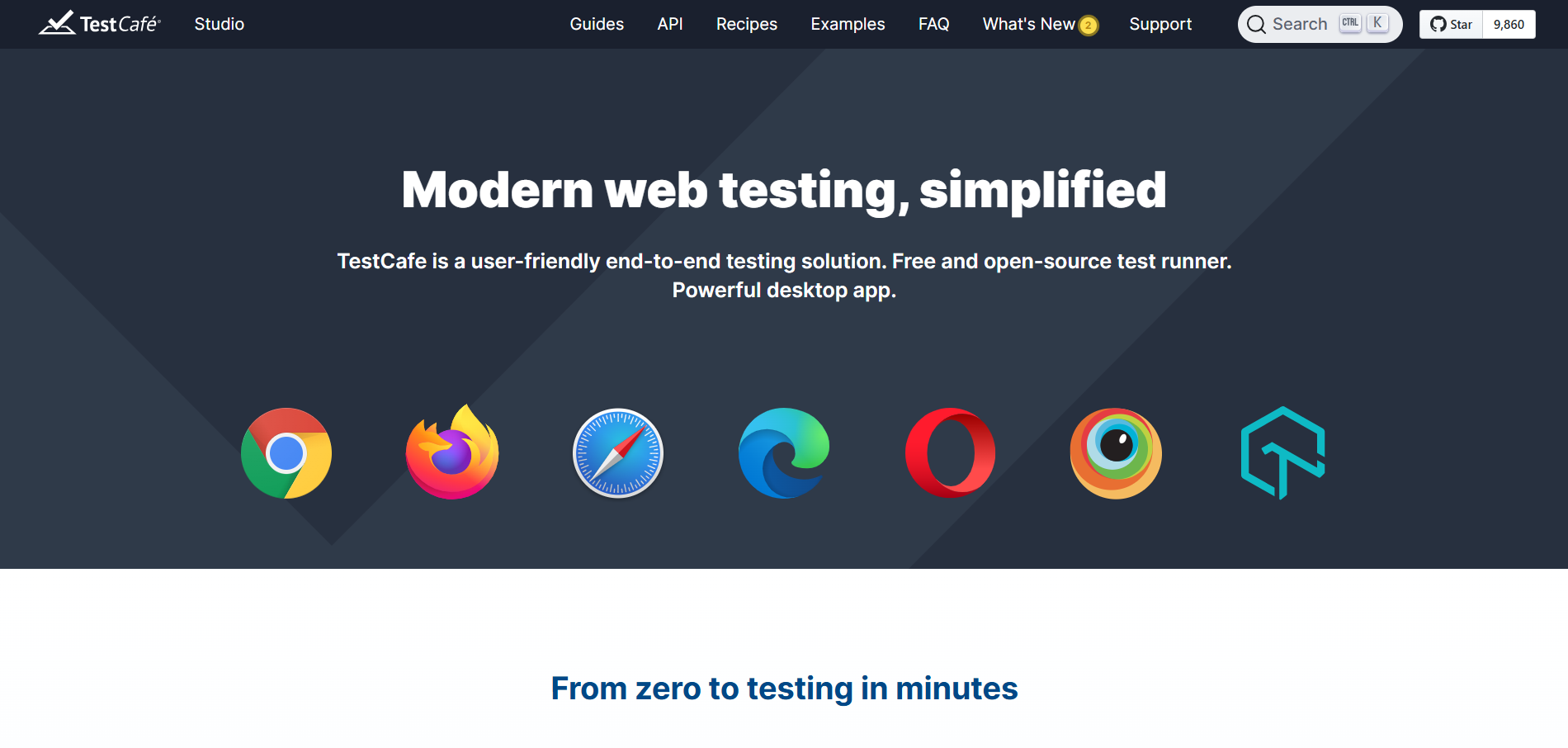
Why is TestCafe considered one of the best website testing tools?
- Cross-Browser Testing: Run tests on multiple browsers to ensure consistent website behavior across environments.
- Reliable built-in Assertions: Automatically retries on element state changes for stable, accurate results.
- Easy-to-use API: Simple and intuitive syntax makes test writing and configuration seamless.
- Fast Setup: Get started quickly without complex installations or dependencies.
10. Katalon Studio
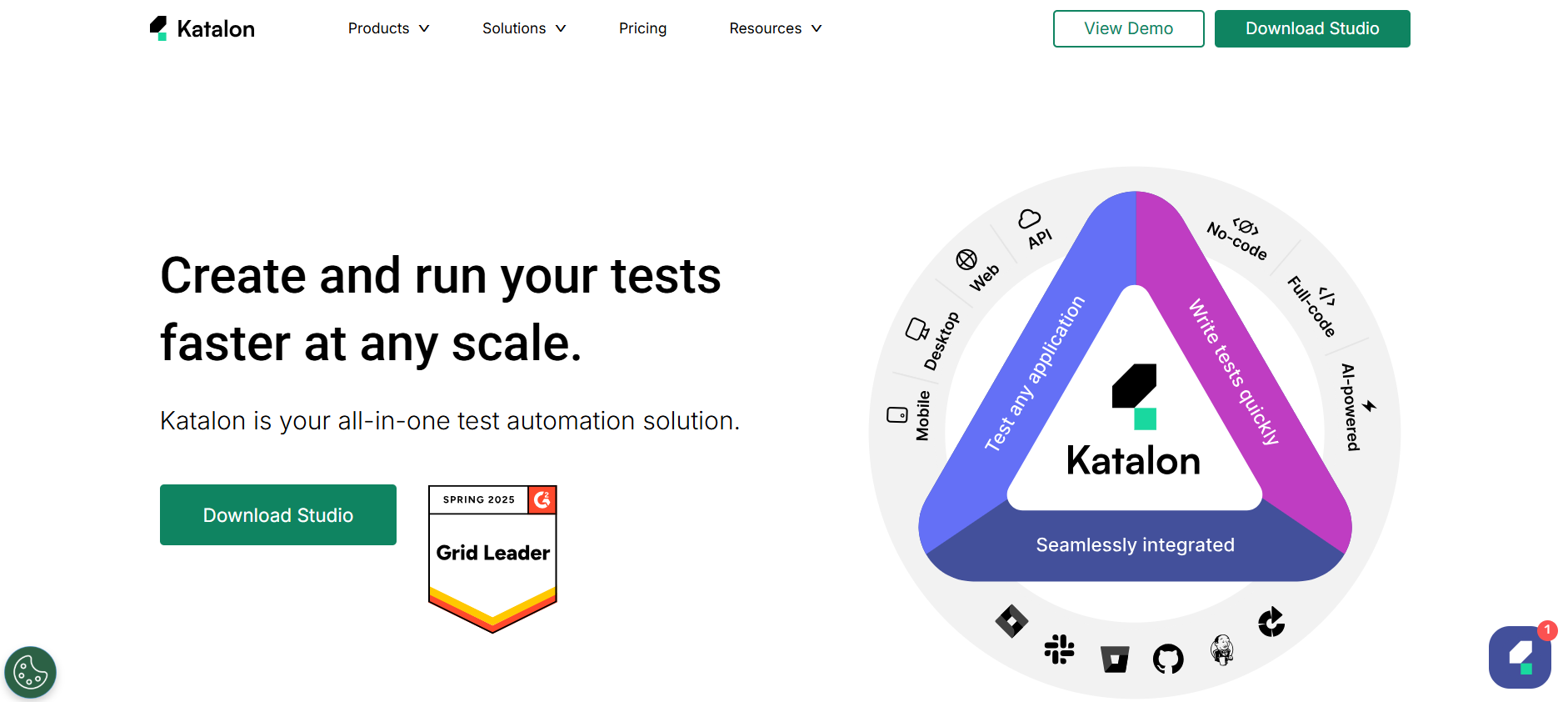
Katalon Studio is a comprehensive testing solution for Web, API, mobile, and desktop applications. With more than 500,000 users, novice and seasoned test engineers can benefit from its adaptable and useful features for stress-free testing. Katalon is also a requirements management tool.
Why is Katalon Studio considered one of the best website testing tools?
- Flakiness Handling: Hardwired flakiness handling mechanisms and pre-configured item locators reduce test maintenance costs and effort.
- Real-Time Graphics: Offers real-time illuminating graphics of all testing phases for improved project management.
- Cross-Browser Testing: Executes cross-browser automation testing on Chrome, Firefox, Safari, and more, integrating with top CI/CD tools.
- Supported Testing Approaches: Supports TDD/BDD, data-driven, page object model, and keyword-driven testing.
- User-Friendly Automation: Built-in keywords and advanced scripting enhance productivity for professionals, while beginners can easily use record and playback features.
11. UFT (QTP)
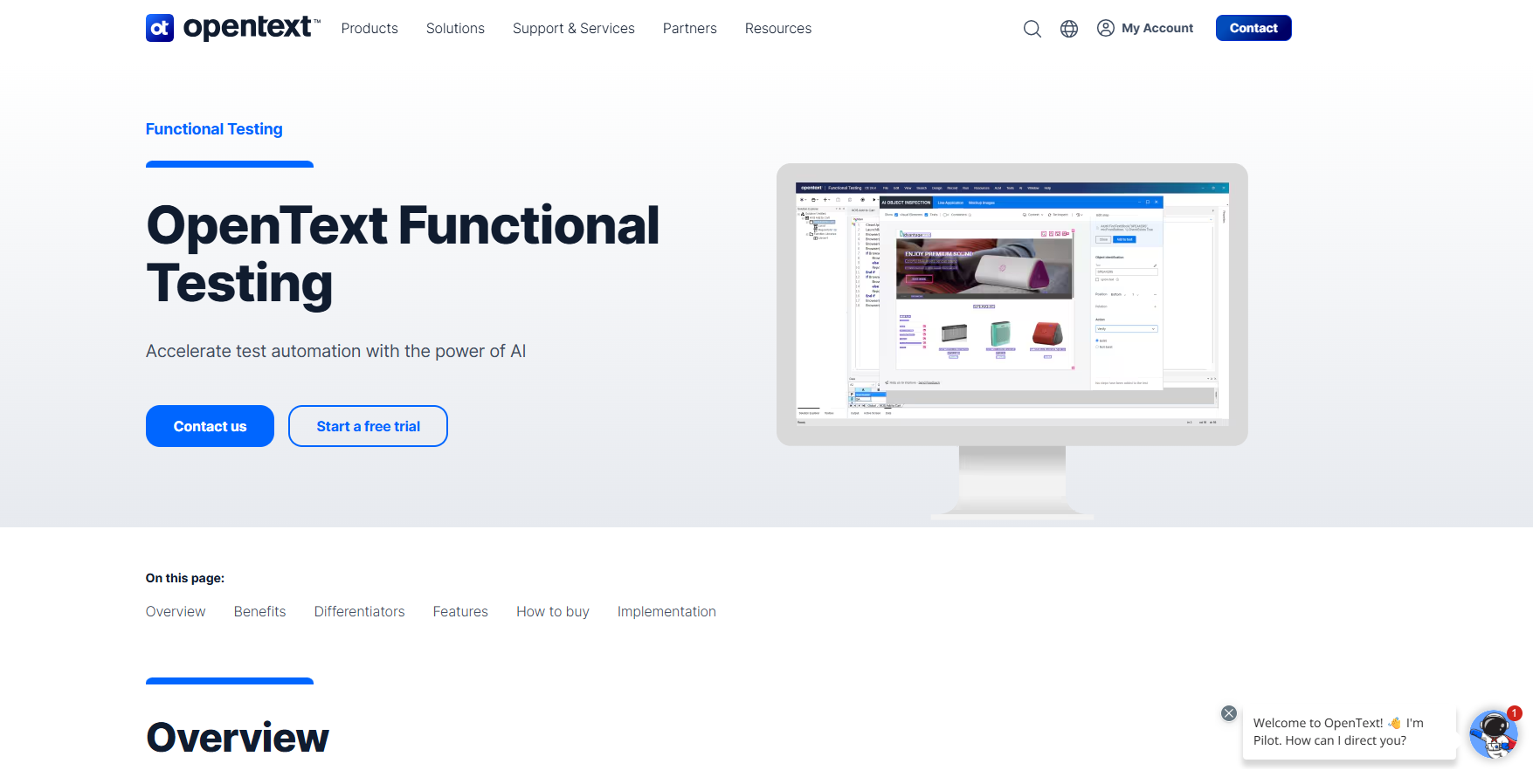
QTP (Quick Test Professional), a Windows-based website testing tool offered by Micro Focus, is suitable for functional testing and regression testing of desktop and web applications. The best cross-platform automated web testing tool is HPE Unified Functional Test. One of the greatest Internet testing tools available, it can automate various programs, including those written in Visual Basic, PowerBuilder, Siebel, SAP, Delphi, Net, ActiveX, Flex, Java, Oracle, Mobile, and PeopleSoft.
Why is UFT considered one of the best website testing tools?
- Test Outcome Recording: Records test outcomes for review.
- Test Summary Integration: Transmits test summaries to test management tools.
- Test Data Access: Provides access to data files for managing test data.
- GUI Object Comparison: Compares run-time screens or objects with stored expected results as GUI objects.
- Scripted Test Execution: Executes tests using saved scripts for automation.
12. Testpad
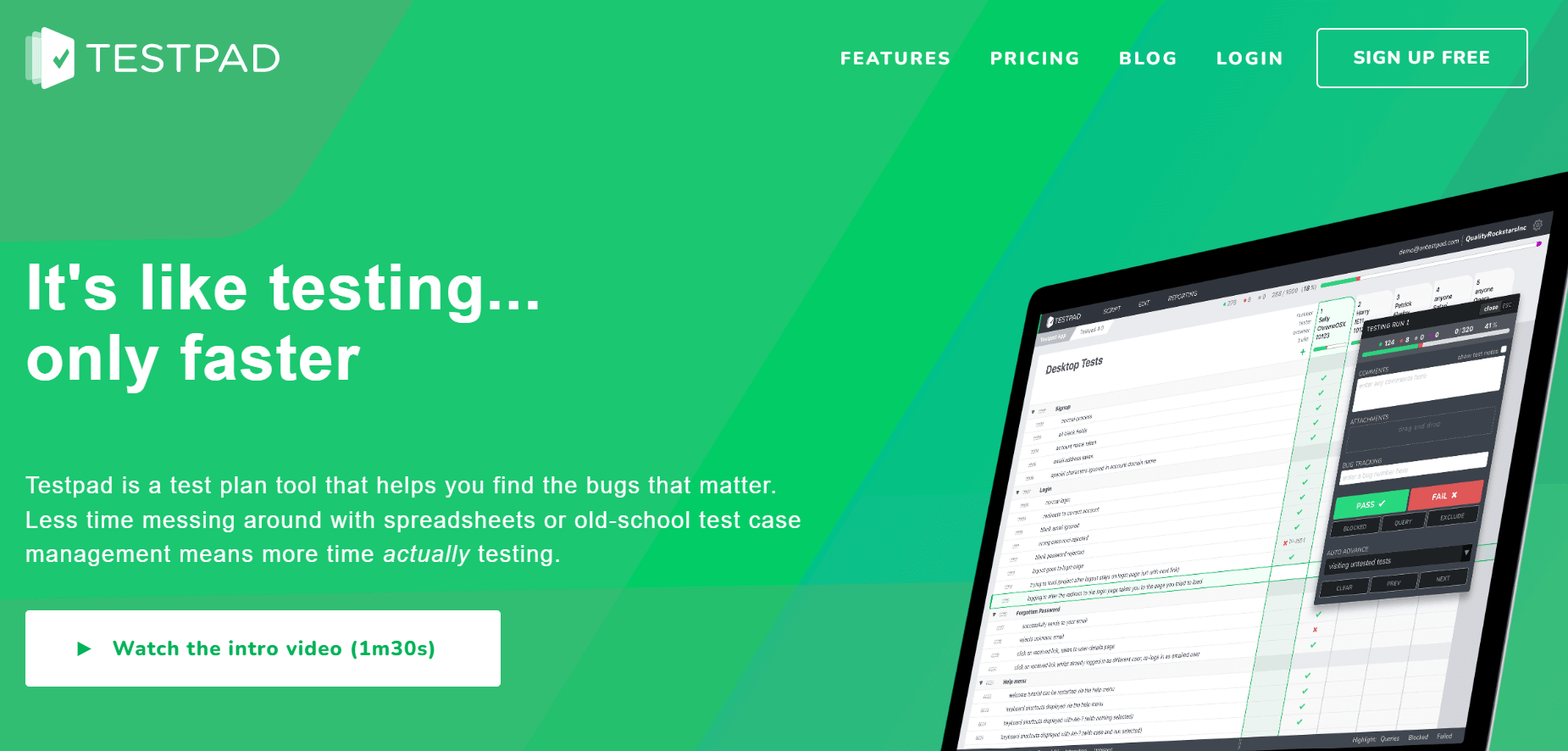
Testpad is a simple and user-friendly manual testing tool, ideal for testing web applications. It uses checklist-style test plans and focuses on practical testing rather than strict processes. You can easily adapt these test plans for various approaches, such as exploratory testing, manual testing in Agile, BDD with syntax highlighting, or traditional test management.
Why is Testpad considered one of the best website testing tools?
- Guest Tester Access: Invite testers without accounts via email.
- User-Friendly: Simple enough for non-testers to use effectively.
- Keyboard-Controlled Editor: Includes JavaScript support for flexibility.
- Issue Tracker Integration: Lightweight integration with JIRA and other trackers.
13. Digivante
Digivante provides comprehensive quality assurance, offering functional, usability, regression, exploratory, and test automation services. It supports agile and DevOps processes, mobile testing, user experience, and continuous quality monitoring to enhance the performance of digital platforms.

Why is Digivante considered one of the best website testing tools?
- Extensive Coverage: Supports many operating systems, browsers, and device combinations.
- Centralized Reporting: Access all flaws with images and video evidence in one place via the Digivante Portal.
- Global Tester Network: Tens of thousands of testers across 149 countries.
- 24/7 Testing: Testing available around the clock, tailored to your project’s needs.
- Integrations: Seamless integration with JIRA and other test management tools.
14. WebPageTest
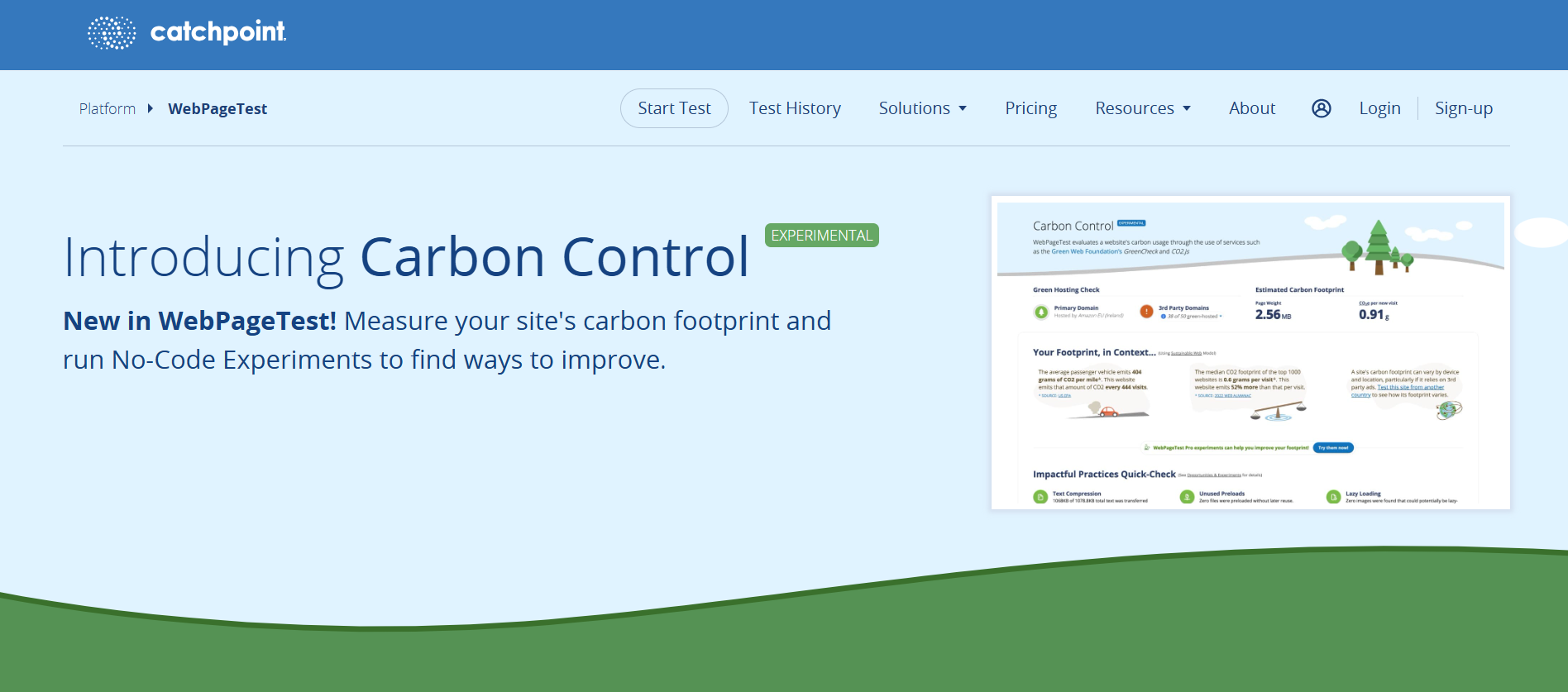
WebPageTest is a free website testing tool that evaluates the speed and functionality of your website. It offers an in-depth evaluation of the performance indicators for your website, such as fully loaded time, first-byte time, start render time, and others.
Why is WebPageTest considered one of the best website testing tools?
- Global Testing: Check your website’s functionality from multiple locations worldwide to understand its performance in different regions.
- Load Video Recording: Records videos of the loading process to visualize the user’s experience.
- Automation and CI Integration: Developers can automate tests using WebPageTest’s API and integrate it into continuous integration workflows.
15. Test IO
Test IO is a crowd-testing platform that allows you to test your web applications and pages on real browsers and devices under real conditions. It leverages the expertise of thousands of testers to improve the quality of your web apps and websites. Trusted by over 200 enterprises, Test IO helps you deliver high-quality software faster.

Why is Test IO considered one of the best website testing tools?
- Real-time Insight: Qualified testers provide fresh, objective perspectives to uncover errors your team might miss.
- On-Demand Scalability: Flexible testing scales with your needs, eliminating QA bottlenecks without slowing down.
- Extensive Coverage: Test across hundreds of hardware types, platforms, browsers, and operating systems in real environments.
16. Tricentis Tosca
Tricentis Tosca is a continuous testing platform that automates end-to-end testing for web applications. It supports GUI and API testing with features like model-based and risk-based testing, helping teams accelerate testing in Agile and DevOps environments.

Why is Tricentis Tosca considered one of the best website testing tools?
- Service Virtualization: Solves the challenge of testing responses from systems that are hard to access.
- Code-Free Automation: Enables creation of robust automated tests without coding.
- Vision AI Technology: Simplifies testing of websites that were previously difficult or impossible to test.
- Risk-Based Testing: Reduces the number of tests in your automation suite while minimizing risk in software releases.
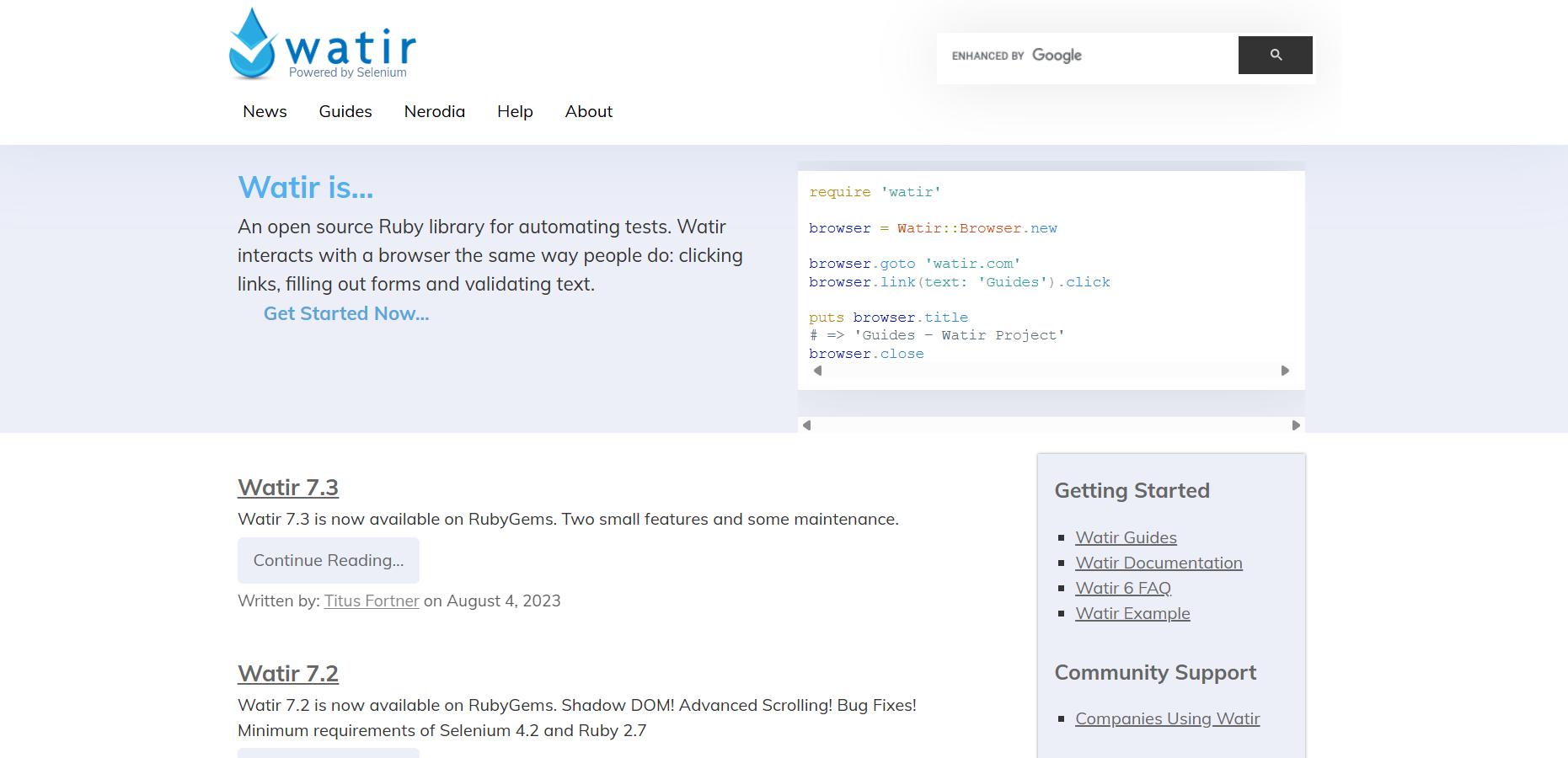
17. Watir
Watir is a free Ruby module for test automation. It uses a browser in the same ways as people, including clicking links, completing forms, and verifying content. It is a free tool for testing for regression. Regression test suites may be automated using Watir.
Why is Watir considered one of the best website testing tools?
- Portability: It is portable and simple to use.
- Browser Support: Supports multiple browsers for testing.
- Platform Independence: Works across different platforms and technologies.
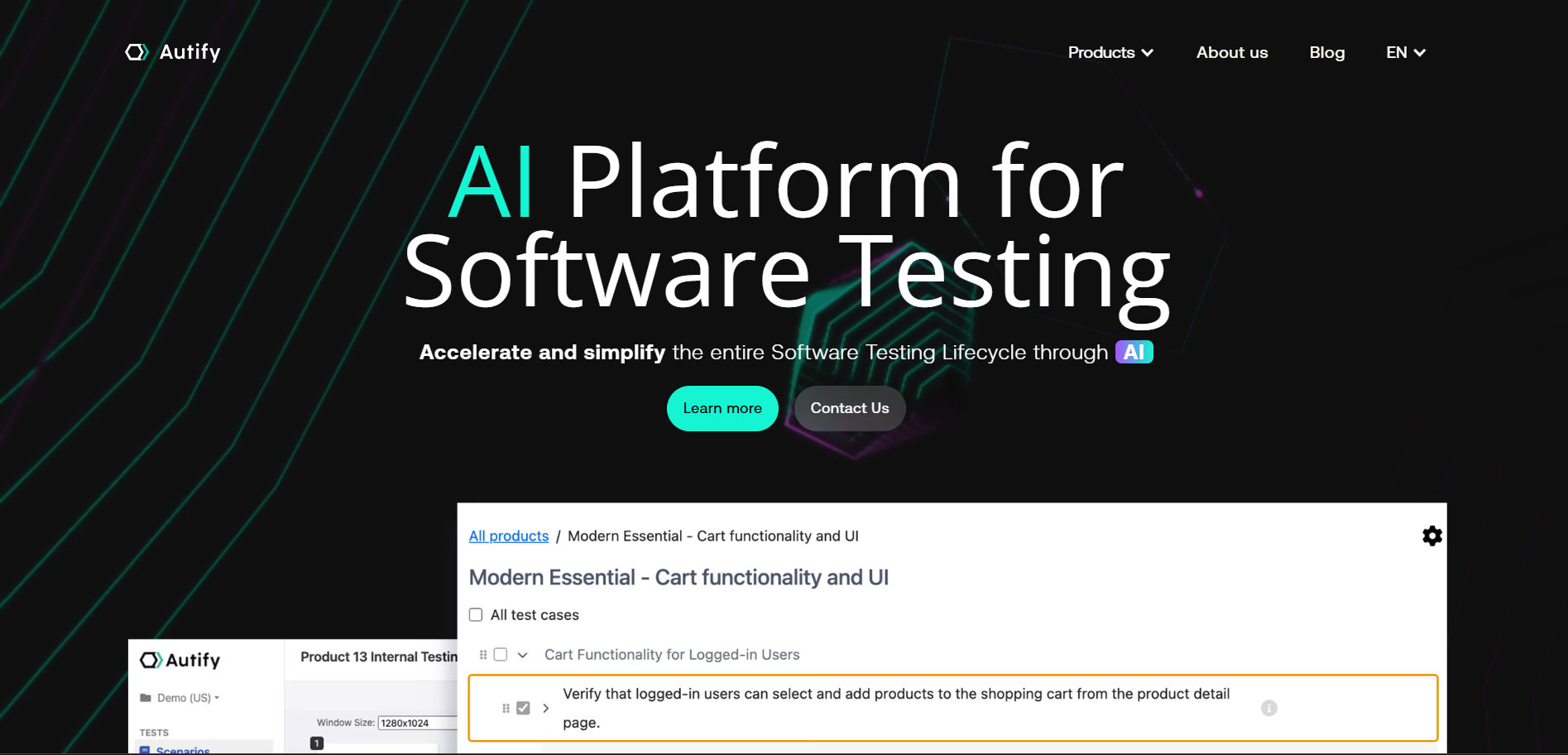
18. Autify
Autify is an AI-powered website testing tool that enables teams to automate web application testing without writing any code. It simplifies the QA process and helps teams release faster with stable, self-healing test cases and seamless CI/CD integrations.
Why is Autify considered one of the best website testing tools?
- No-code Test Creation: Recording user interactions directly on the web app.
- AI Maintenance: Automatically maintains and updates tests as your UI changes.
- Cross-Browser Support: Supports testing across major browsers like Chrome, Firefox, and Safari.
- CI/CD Integration: Integrates with pipelines like Jenkins, CircleCI, and GitHub Actions.
- Parallel Execution: Enables parallel test runs for faster results and shorter feedback loops.
- Custom Scheduling: Runs tests at regular intervals for continuous monitoring.
- Detailed Reports: Provides test reports with screenshots and logs for easy debugging.
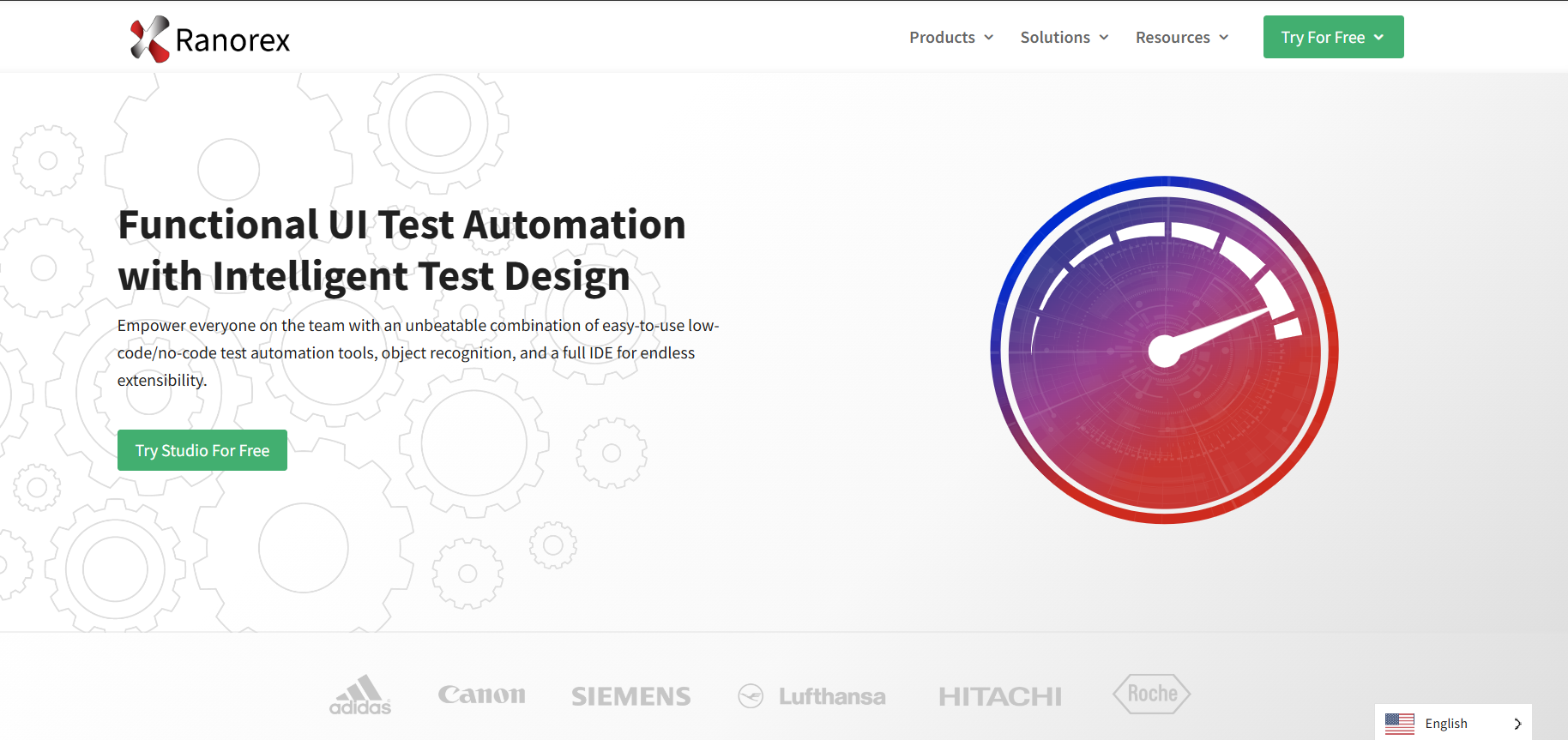
19. Ranorex Studio
Ranorex Studio is an all-in-one website testing tool. Ranorex Studio enables end-to-end testing utilizing real devices or emulators/simulators and testing across various platforms, gadgets, and technologies. It supports Chrome, Firefox, Safari, Microsoft Edge, and more for testing across many browsers.
Why is Ranorex Studio considered one of the best website testing tools?
- Keyword- and Data-Driven Testing: Enables versatile test approaches.
- Wide Integration: Supports Git, Travis CI, Jenkins, TestRail, Jira, and more.
- No-Code Automation: Quickly create automation projects without coding.
- Script Flexibility: Write automation scripts using common programming languages.
- Robust Object Recognition: Use Ranorex Spy to inspect UI elements in desktop, web, mobile, and dynamic apps.
20. Sahi
Sahi is a Java and JavaScript-based, open-source, cross-platform web testing tool distributed under the Apache License 2.0. It is featured in Pro v5.1.2 and is used to test a variety of Web 2.0 apps that run in browsers and contain a lot of AJAX and dynamic information. It is an automated regression testing tool that is tester-focused.
Why is Sahi considered one of the best website testing tools?
- Automated Reporting and Logging: Keeps detailed test records effortlessly.
- Distributed and Concurrent Playback: Enables parallel test execution across environments.
- Cross-Browser and Cross-OS Testing: Supports any browser on any operating system.
- Desktop Application Testing: Tests Windows desktop programs seamlessly.
- Mobile Testing: Supports native and hybrid apps on iOS and Android.
- Built-in Excel Framework: Allows non-technical users and business analysts to contribute.
- Simple and Effective APIs: Facilitates easy test automation scripting.
21. Reflect
Reflect is a no-code website testing tool that lets you create and run automated browser tests without writing any code. It captures real user interactions to generate stable and reusable test cases for web applications.
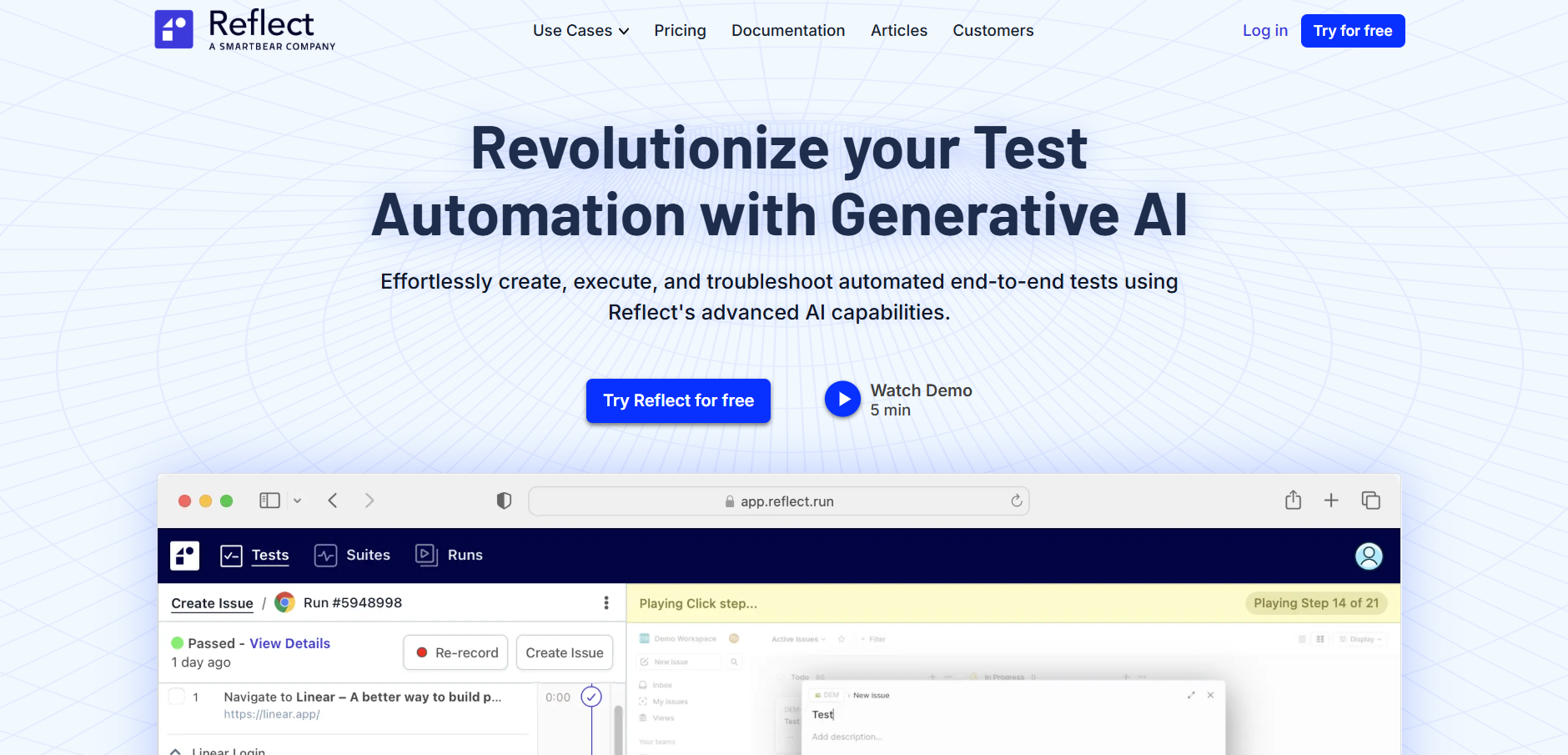
Why is Reflect considered one of the best website testing tools?
- No-code Test Creation: Record user interactions directly on your website to build tests without writing code.
- Cross-Browser Testing: Supports Chrome, Firefox, Safari, and Edge for comprehensive browser coverage.
- CI/CD Integration: Seamlessly run automated tests within your CI/CD pipelines using native integrations.
- Detailed Test Reports: Access video recordings and step-by-step diagnostics for efficient debugging.
- Scheduled Test Runs: Use the built-in scheduler to monitor your site continuously.
- Quick Setup: No browser extensions or infrastructure needed, get started instantly.
- Dynamic Test Data: Customize test inputs and environment variables for flexible testing scenarios.
Website testing tools help developers identify bugs early and ensure that websites function properly. Therefore, any organization that wishes to keep a bug-free website must select the right tool.
Let’s look at the criteria for choosing the best website testing tools.
Choosing the Best Website Testing Tool
Choosing the right website testing tool means matching the tool’s features to your project’s unique requirements. You can begin by figuring out what types of tests you want to run and what level of coverage you want.
Consider what devices/browsers/OSs your application needs to support, to match the preferences of your intended target audience. Also, think in terms of how many concurrent tests are required to maximize test coverage and speed up testing.
- Browser and Device Support: Look for a tool that has a wide range of browsers, operating systems, and devices to test on.
- User-Friendliness: Look for a tool that has a simple and user-friendly interface to reduce the learning curve and avoid project delays, so that teams can easily adopt and utilize its functions as efficiently as possible.
- Coverage and Testing Environments: The tool must be able to execute a good number of tests for robust coverage, along with the availability of multiple environment configurations.
- Automation: Choose a tool that supports an efficient automation process where testers can automate time-consuming tasks and run tests flawlessly on real devices and platforms to achieve reliable and faster results.
At the cutting edge, selecting the right tool for testing the website is essential. You should remember some key points from this website testing checklist to perform effective testing.
Best Practices to Efficiently Test a Website
Having a website alone is not enough. An organization must create an informative, easily accessible, and user-friendly website. The website needs to be thoroughly tested to preserve all of these attributes.
These key points need to be considered during website testing:
- Comprehensive Component Testing: Test every component, third party, and extension of the online application to ensure full functionality.
- Exploratory Testing Integration: Incorporate exploratory testing throughout software development to identify and address unexpected issues.
- Development Team Involvement: Engage developers actively during the testing process for faster feedback and better quality.
- Usability Criteria Definition: Define and select key usability criteria to effectively validate user-friendliness.
- Performance Testing Across Scenarios: Run performance tests in varied conditions to assess website stability and speed.
- Cross-Browser Compatibility: Conduct rigorous testing across multiple browsers to ensure a consistent user experience.
- Security URL Integrity: Ensure URL strings remain unaltered during security tests to prevent vulnerabilities.
- Progressive Load Testing: Execute load tests progressively to measure how the website handles increasing traffic.
Conclusion
As a website developer or tester, you must create the most optimal version of your product. You must test your site for various aspects to determine how far it can improve. There are various testing methods that the website testing tools can use. Online website testing tools come in both licensed and open-source varieties.
You can make your choice based on your needs. You must have at least a fundamental knowledge of the most widely used website testing tools, even though staying up with the newest and greatest may be challenging. By doing so, you can determine which tools are best suited for your project.
It’s worth noting that website testing should not be a one-time occurrence but an ongoing event throughout the development lifecycle. Regular testing helps identify bugs early on and ensures the website stays functional. With the right website testing tools and strategies in place, developers can create high-quality websites that meet user expectations and deliver a seamless browsing experience.
Co-Author: Saniya Gazala
Saniya Gazala is a Computer Science graduate from Reva University. She began as a manual tester, honing her skills in defect identification and problem-solving. Transitioning to technical writing, she simplified complex tech concepts for users. Her journey is marked by continuous learning and growth in the tech industry.


Frequently asked questions
Did you find this page helpful?
More Related Hubs
TestMu AI forEnterprise
Get access to solutions built on Enterprise
grade security, privacy, & compliance
- Advanced access controls
- Advanced data retention rules
- Advanced Local Testing
- Premium Support options
- Early access to beta features
- Private Slack Channel
- Unlimited Manual Accessibility DevTools Tests