

Next-Gen App & Browser Testing Cloud
Trusted by 2 Mn+ QAs & Devs to accelerate their release cycles


Top 13 Low Code Test Automation Tools [2026]
Check out top low code test automation tools that simplify testing by allowing you to create automated tests with minimal coding.

Zikra Mohammadi
February 25, 2026
Low code automation is an approach that helps developers and testers automate testing through the use of pre-built components and visual interfaces. Using automation testing tools can be complex, especially for teams without coding skills.
However, low code test automation tools help by simplifying test automation with minimal coding. These tools allow testers and developers to create, maintain, and scale test cases efficiently.
Overview
Low code test automation tools help teams create, run, and scale automated tests using visual interfaces and minimal scripting, making automation accessible to both technical and non-technical users.
What are the top low code test automation tools?
- TestMu’s Kane AI: KaneAI by TestMu AI is the world’s first AI-native end-to-end software testing agent. It enables teams to create, debug, and evolve end-to-end tests using natural language while integrating seamlessly with modern QA and DevOps workflows to accelerate release cycles. It is ideal for teams that want faster test authoring, smarter debugging, and seamless collaboration across Slack, Jira, and GitHub.
- ACCELQ: It is a cloud-native continuous testing platform built for enterprise-scale automation across web, API, mobile, and packaged apps. It enables low code test design with AI-powered self-healing and test management, making it ideal for complex business workflows.
- Testim: It is an AI-powered end-to-end test automation platform designed to help teams build stable tests quickly. It uses machine learning to improve test resilience, reduce flakiness, and simplify maintenance as applications change.
- Tricentis Tosca: It is a model-based test automation platform built for Agile and DevOps environments. It enables enterprise-wide functional testing with minimal scripting and supports risk-based testing to optimize regression coverage.
- BugBug: It is a lightweight, codeless test automation tool built specifically for web applications. It allows teams to record, edit, schedule, and run browser-based UI tests quickly without complex setup or programming expertise.
What Is Low Code Test Automation?
Low code test automation uses visual interfaces and pre-built components to create automated tests with minimal coding, making testing accessible to non-developers.
Low code test automation is a technique that uses testing tools that require minimal coding. These low code test automation tools have visual interfaces like drag-and-drop interfaces and point-and-click options that make it easily accessible.
This technique simplifies the creation of automated tests for websites and web apps by using visual tools like drag-and-drop interfaces or record-and-playback features. So, using a low code automation approach, teams with less coding expertise can collaborate on building and automating software testing without requiring extensive coding knowledge.
Why Use Low Code Test Automation Tools?
Low code tools offer faster test creation, reduced technical dependency, cost savings, better scalability, and improved collaboration across development teams.
Low code automation and no-code test automation are quickly gaining popularity in the software development industry. Even people with little coding experience can create and run automated tests more easily because of these tools.
Here are some of the reasons why you should use a low code automation test tool:
- Speed and Efficiency: Low code test automation tools make test creation and execution faster using visual interfaces and prebuilt components. The design, deployment, and performance of tests happen quickly without needing a lot of code. Features like drag-and-drop, visual flowcharts, and standard templates save time in running tests.
- Less Dependency on Technical Skills: Low-code platforms make test automation easier for everyone, letting non-technical team members join in. It opens up testing to a wider range of expertise. Non-developers can build and maintain tests easily because of user-friendly interfaces, with most tools needing little to no coding.
- Cost Savings: Low-code tools help lower development and maintenance costs by cutting down on heavy coding and the need for specialized skills. Teams depend less on highly skilled engineers for test design, and it’s easier to update tests, leading to lower long-term costs. This shift lets teams focus on more important tasks instead of repetitive coding.
- Scalability: Many low-code tools are cloud-based, offering scalable testing environments that can handle many tests. These cloud solutions provide flexible testing setups and support parallel testing, allowing multiple tests to run at once, which speeds up the overall process.
- Improved Collaboration: Low-code tools enhance teamwork among developers, testers, and business stakeholders by providing a unified platform for creating and executing tests. Centralized tools and dashboards let everyone access and engage in testing. Shared workspaces and real-time updates boost collaboration, while visual displays of test cases and results clarify outcomes and needs.
What Are the Top Low Code Test Automation Tools?
Top low code test automation tools include KaneAI, BugBug, Parasoft, CloudQA, Leapwork, Testim, ACCELQ, and Tricentis Tosca for simplified test creation.
In this section, we will go through the top 12 low code test automation tools for 2026. Each tool has distinct features and benefits that help with different testing requirements and circumstances.
From AI-native test generation to detailed reporting and analytics, these tools are designed to handle the challenges of modern software testing.
1. KaneAI
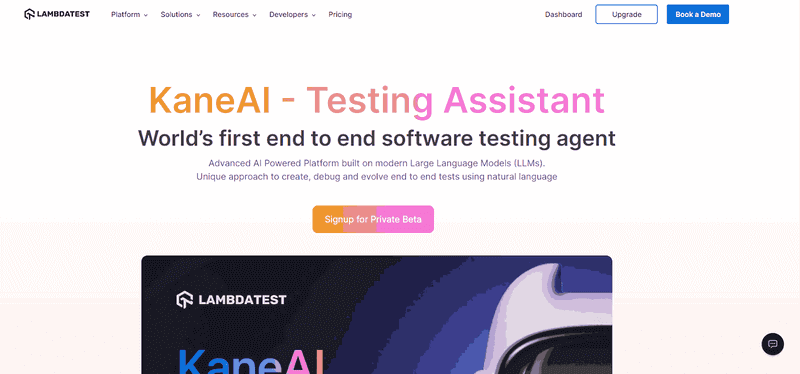
KaneAI by TestMu AI is an AI-native smart test assistant tailored for high-speed quality engineering teams. KaneAI automates various aspects of the testing process, including test case authoring, management, and debugging.
Teams can use KaneAI to create and refine complex test cases using natural language, making the process of automation faster and more intuitive. It also integrates with AI to optimize test execution and improve test data management, boosting the efficiency, precision, and reliability of software delivery.
Features:
- Test Creation: Enables users to create and evolve tests using natural language, making automation accessible to all skill levels.
- Intelligent Test Planner: Generates and automates test steps based on high-level objectives, simplifying the test creation process.
- Multi-Language Code Export: Converts tests into major programming languages and frameworks, allowing for flexible automation across platforms.
- 2-Way Test Editing: Synchronizes natural language edits with code, making it easy to modify tests from either end.
- Integrated Collaboration: Allows teams to tag KaneAI in Slack, Jira, or GitHub to start automation, enhancing team collaboration.
- Smart Versioning Support: Tracks changes with version control to ensure organized and manageable test management.

2. BugBug
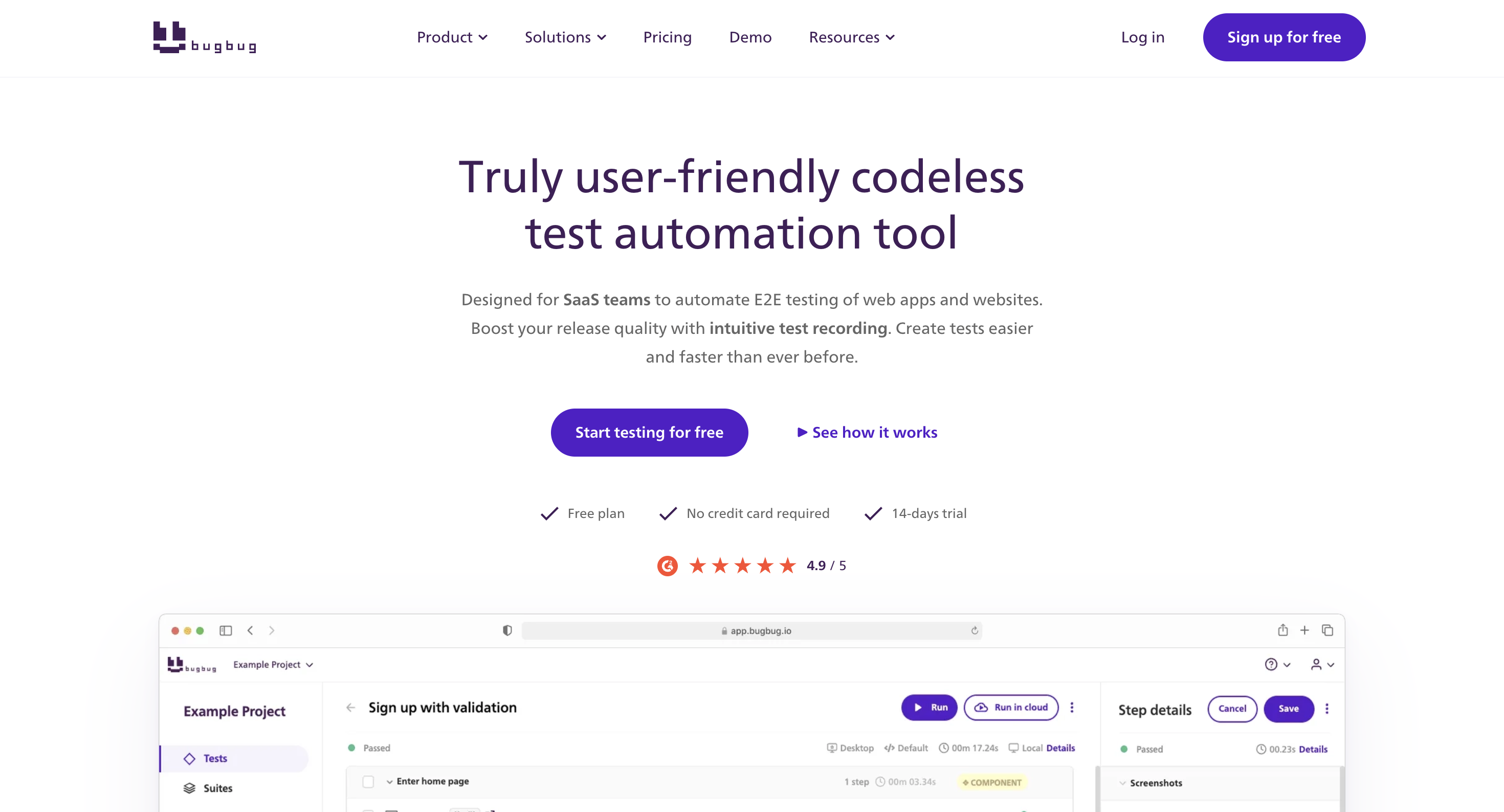
BugBug is a lightweight yet powerful codeless test automation tool designed specifically for web applications. It’s an ideal solution for startups and agile teams looking to automate their UI tests without writing code, offering an intuitive interface and flexible test execution options.
BugBug enables you to record browser actions and easily modify them using a visual test recorder. It allows fast creation, debugging, and maintenance of end-to-end tests without complex setup or configuration. You can also schedule tests in the cloud or run them locally in your browser.
Features:
- Codeless recorder and editor: Easily record and modify tests using a clean visual interface, with no coding required.
- Edit & Rewind: Re-execute tests from any step to debug faster and avoid restarting the entire test.
- Local & cloud test runs: Run tests in your local browser or on BugBug’s cloud infrastructure with scheduling and parallel execution.
- CI/CD integration: Seamlessly integrate with CI tools like GitHub Actions, GitLab, or Jenkins using BugBug’s CLI.
- Test scheduling: Running tests regularly (hourly, nightly, etc.) improves release stability, reduces last-minute issues, and keeps your app monitored 24/7.
3. Parasoft
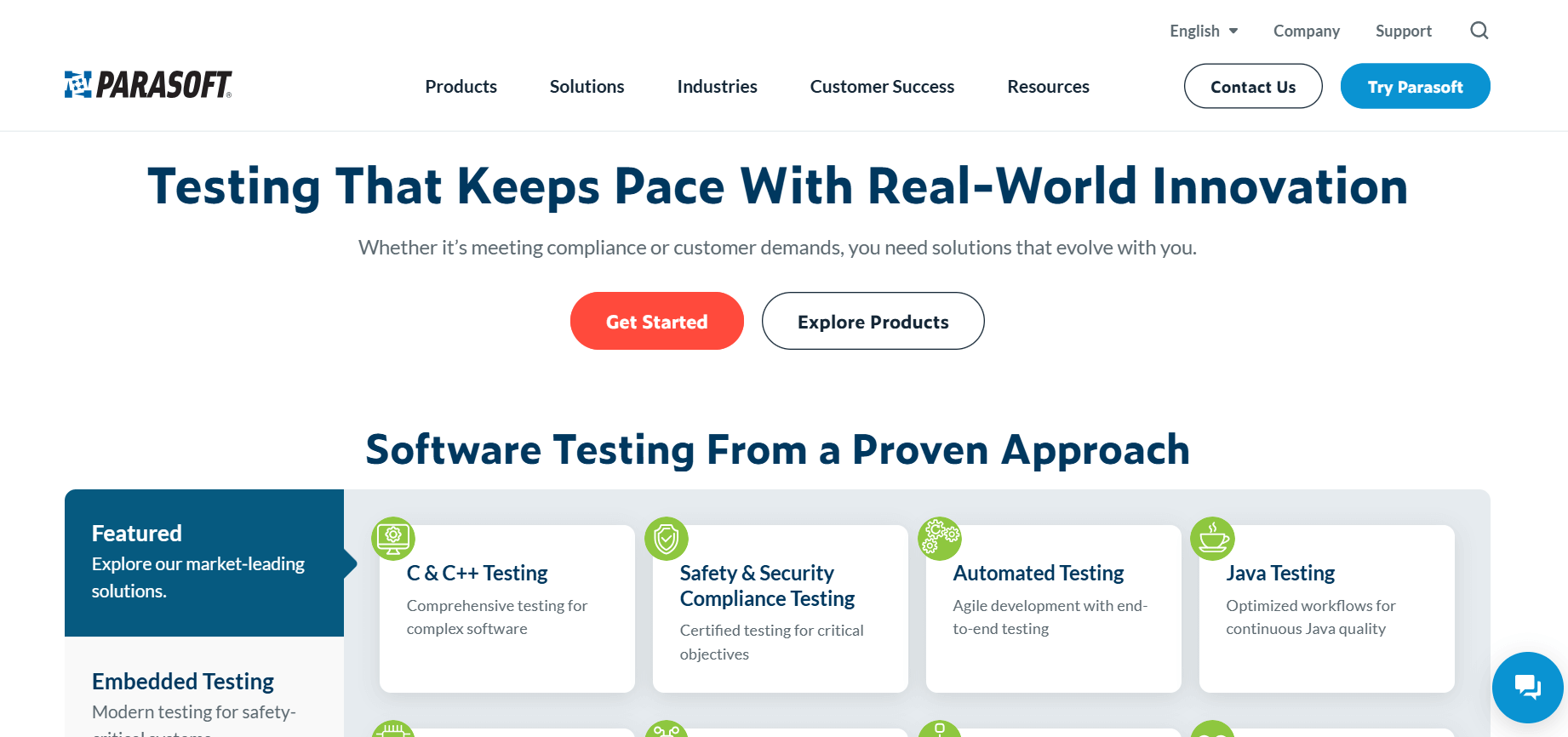
Parasoft is a complete set of automated software testing tools intended to ensure quality, compliance, and security across the SDLC. It offers solutions from static analysis and unit testing to API testing with AI-powered for efficiency and effectiveness in testing.
Parasoft, as a low code test automation tool, is created to improve software quality and productivity in testing. It is built to meet the demands of both technical and non-technical users, making the usage of this tool easy. It enables customers to create, run, and maintain automated tests by giving minimal effort to coding, thereby reducing the time and resources required for testing.
Features:
- AI-assisted test generation: Leverages AI to automatically generate comprehensive tests based on your code.
- Automated defect prediction: Predicts areas of your code that are likely to contain defects, helping you prioritize testing.
- Self-healing test automation: Adjusts tests dynamically when minor changes are detected in the application.
- AI-driven static analysis: Uses AI to perform intelligent code analysis, detecting potential issues early.
- Smart regression testing: Optimizes test suites, ensuring only the most relevant tests are run during regression.
4. CloudQA
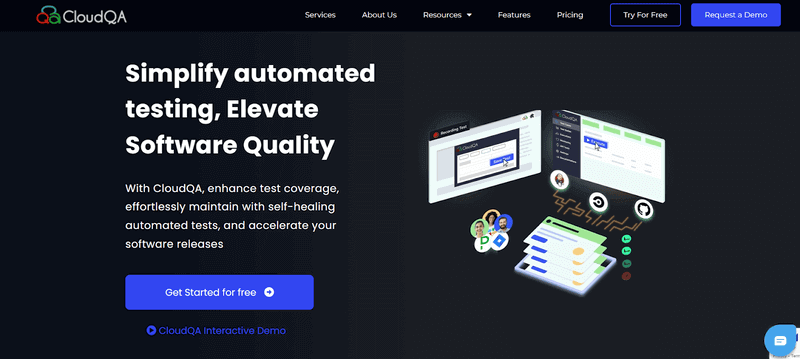
CloudQA is one of the powerful web test automation tools that aims to simplify and improve the software testing process. It provides a codeless testing environment in which users can write and run automated tests without the requirement for programming knowledge.
It automates end-to-end UI testing of websites and mobile apps, ensuring that the features visible to end users work as expected. It also includes regression testing and performance monitoring
If you’re exploring more tools focused on interface validation, check out our curated list of the best UI Testing Tools to discover options that suit your project needs.
Features:
- AI-enhanced test suggestions: Recommends test cases based on your application’s features and user patterns.
- Self-healing automation: Updates test scripts automatically to avoid test failures.
- Smart element identification: Identifies software application elements intelligently, even if they are dynamic or modified.
- Anomaly detection: Helps identify unusual patterns or behaviors in test results, pointing out potential issues early.
- Efficient test maintenance: Leverages AI to reduce the time needed to update or maintain test scripts.
5. Appian

Appian is a low code test automation tool that simplifies the development and testing of software applications. By combining low code development and process automation, users can create and test software applications quickly and efficiently with minimal coding. Appian has gained popularity by integrating various workflows, technologies, and data sources into one unified platform, streamlining processes across multiple departments.
It provides automated testing for complex workflows and works smoothly with CI/CD pipelines. This accelerates release cycles and improves software application quality by automating complex workflows and facilitating continuous integration.
Features:
- AI-driven process optimization: Analyzes workflows and suggests ways to improve efficiency.
- Natural language test generation: Lets you create test cases using plain language descriptions.
- Predictive analytics for workflows: Predicts bottlenecks and inefficiencies in your processes, offering actionable insights.
- Automated case management: Streamlines case management by automating task prioritization and assignment.
- Smart test maintenance: Reduces the need for manual updates by adapting tests to changes in your software application automatically.
6. Creatio
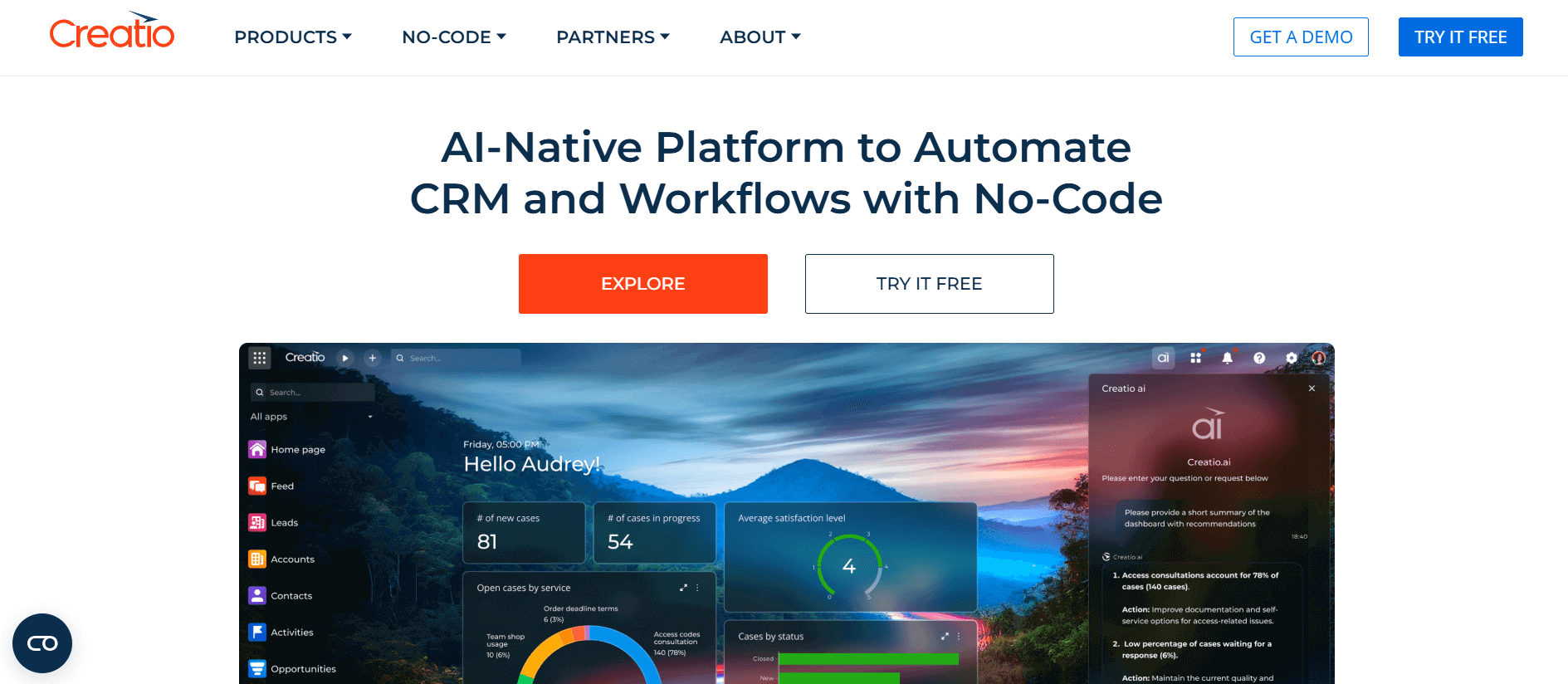
Creatio is a robust no-code platform for automating tests and managing customer relationships. It allows enterprises to create software applications and automate tasks without any programming experience, making it available to a large number of users.
Its testing tools optimize business operations, ensure consistent functionality, and integrate smoothly with other enterprise systems. Creatio allows businesses to swiftly adapt to evolving market demands while ensuring comprehensive testing for both quality and performance.
Features:
- AI-powered workflow recommendations: Suggests ways to optimize your business processes based on real-time data.
- Automated task prioritization: Prioritizes tasks based on their importance, helping teams focus on what matters most.
- Self-learning automation: Learns from user behavior to enhance process automation without manual intervention.
- Intelligent case management: Helps automate and streamline customer support cases, ensuring faster resolutions.
- Predictive analytics: Predicts future trends and outcomes based on historical data to improve decision-making.
7. Ghost Inspector
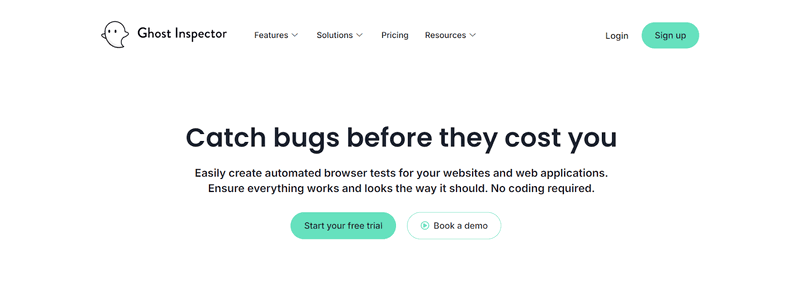
Ghost Inspector is a codeless automated testing tool built to empower users with ease in creating and running automated browser tests of websites and web applications.
Its easy visual interface and test recorder enable users to create automated tests without the need for substantial code knowledge. The recorder captures user interactions and converts them into automated tests, simplifying the process for both beginners and advanced testers.
Features:
- AI-driven visual testing: Compares screenshots to spot visual differences and UI regressions.
- Self-updating tests: Updates tests when the software application changes, keeping them up to date.
- Smart element handling: Helps recognize dynamic elements, reducing the need for manual test adjustments.
- Automated error detection: Pinpoints likely causes of test failures, helping speed up debugging.
- Test maintenance suggestions: Suggests improvements to maintain test quality as software applications evolve.
8. TestComplete
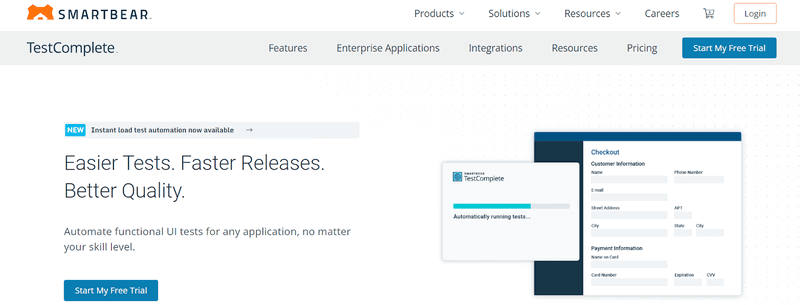
TestComplete is an advanced functional testing platform for automating desktop, web, or mobile applications. This means it helps to bridge the gap between manual and automated testing, making the entire process easier for everyone involved.
As a low code test automation tool, TestComplete enables testers to build and manage automated test scripts without requiring considerable programming experience.
Features:
- AI-based test creation: Uses AI to analyze your software application and generate relevant, automated test cases quickly.
- Self-healing tests: Fixes broken tests automatically when software application elements change, reducing maintenance time.
- Smart test stability insights: Analyzes your tests to provide insights on how stable they are, helping reduce flaky tests.
- Adaptive learning: Learns from your software application’s changes and improves test accuracy over time.
- Automated test enhancement: Enhances your tests by identifying opportunities to improve coverage and efficiency.
9. TestResults.io
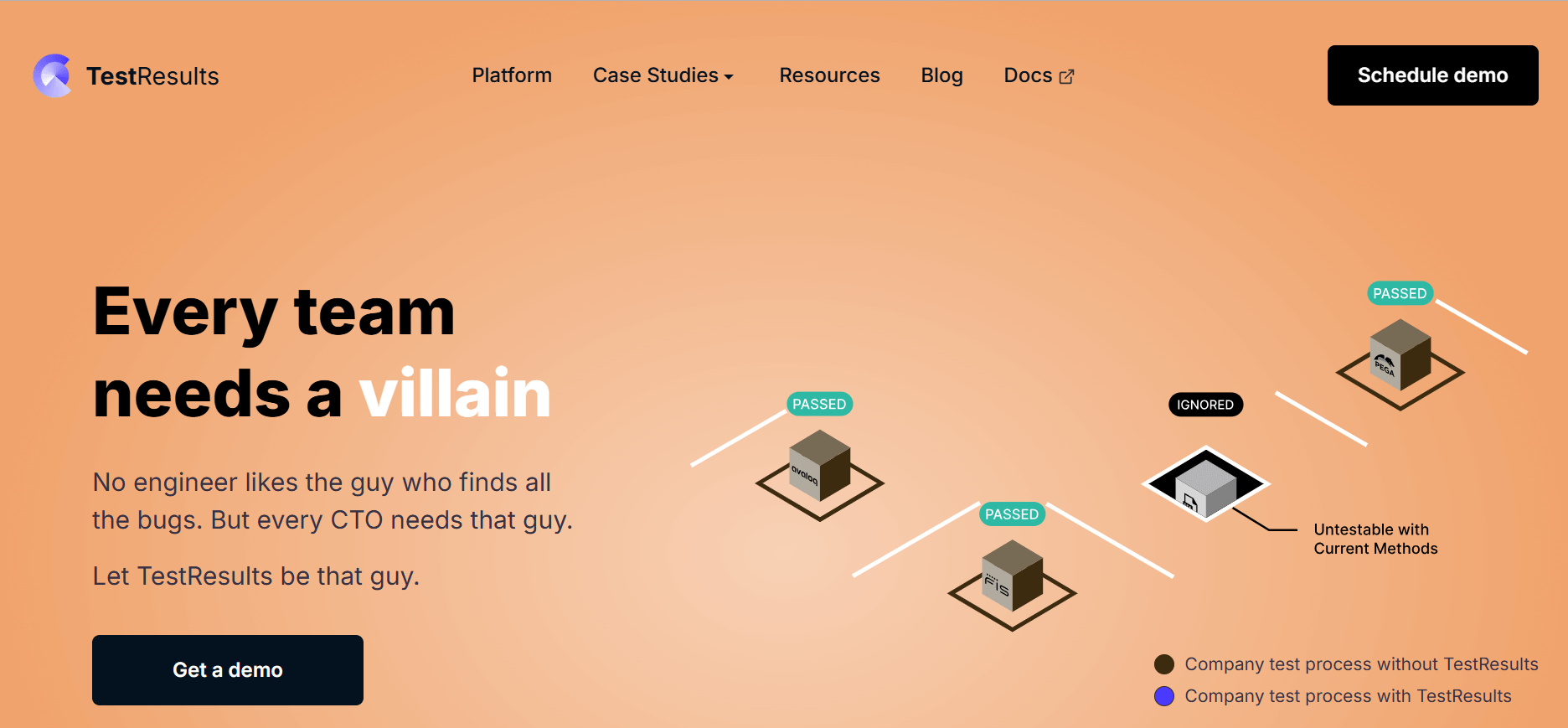
TestResults.io is a comprehensive platform for automated software testing. It provides low code automated testing where you write automated tests with minimal coding.
This makes it more accessible to a wider range of users, including those who do not have substantial programming experience. The platform integrates a no-code Generative AI prompt-to-automate designer with a low code C# designer, enabling both technical and non-technical team members to contribute to test automation.
Features:
- AI-driven test coverage optimization: Analyzes your software application to suggest areas where more test coverage is needed.
- Self-healing tests: Updates tests when minor changes occur in the software application, reducing maintenance time.
- Visual testing with AI: Compares screenshots to detect visual differences across builds.
- Intelligent test case generation: Helps create test cases based on software application behavior, improving test relevance.
- Predictive test failure analysis: Predicts potential test failures before they happen, allowing for proactive fixes.

Note: Perform AI-driven root cause analysis with HyperExecute. Try TestMu AI Today!
10. Leapwork
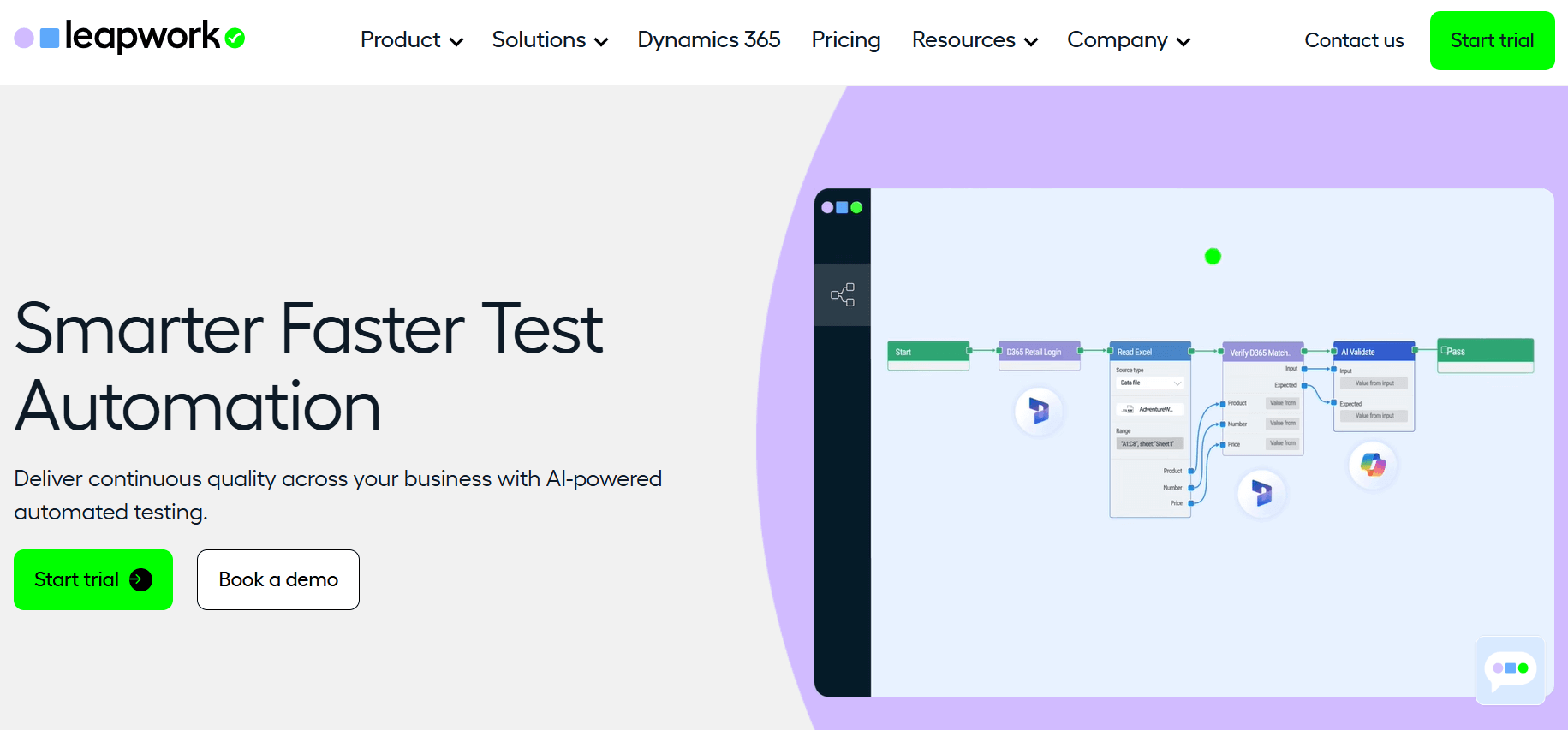
Leapwork is a versatile automation platform that aims to simplify and speed the automation of repetitive tasks. It uses a visual, no-code approach, making it suitable for both business and IT users. This enables organizations to adopt and deploy automation more rapidly.
Its low code automation testing approach allows users to write automated tests with minimal coding. Its simple visual interface enables users to create automation flows by connecting visual building blocks that perform specified activities.
Features:
- AI-based flow creation: Helps users create automated workflows through an intuitive, no-code interface.
- Self-healing automation: Adapts tests to prevent failures if there is a change in the software application.
- AI-guided test recommendations: Suggests tests based on how users interact with the software application.
- Automated visual testing: Analyzes screenshots to detect visual discrepancies, ensuring UI consistency.
- Smart test analysis: Uses AI to identify and explain the root cause of test failures, speeding up troubleshooting.
11. Testim
Testim is a robust test automation platform that enables teams to write stable, end-to-end tests quickly and efficiently. It uses AI to improve test stability and maintenance, making it easier to manage changes to the application being tested.
It provides a low code approach to automation testing, allowing users to write tests with minimal coding. Its simple visual interface allows users to develop and manage tests using a combination of codeless and coded steps, making it useful to both technical and non-technical team members.
Features:
- AI-based test creation: Uses AI to analyze your software application and generate relevant, automated test cases.
- Self-healing tests: Fixes broken tests automatically when app elements change, reducing maintenance time.
- Smart test stability insights: Analyzes your tests to provide insights on how stable they are, helping reduce flaky tests.
- Adaptive learning: Learns from your changes in software application and improves test accuracy over time.
- Automated test enhancement: Enhances your tests by identifying opportunities to improve coverage and efficiency.
12. ACCELQ
ACCELQ represents the modern, cloud-based testing solution that allows the development, execution, and maintenance of automated tests. It’s more suitable for organizations looking to process complex testing scenarios.
With the low code functionality provided by ACCELQ, one can automate tests with essentially minimal coding. Its intuitive visual interface, featuring drag-and-drop components, also makes it very user-friendly, even for non-tech individuals. This speeds up the testing process and lets teams construct complex test workflows with minimal programming knowledge.
Features:
- AI-powered test automation: Creates and maintains test cases automatically, reducing the need for manual effort.
- Self-healing tests: Minimizes test flakiness using self-healing by adapting to app changes in real-time.
- Smart test management: Suggests optimizations for test suites based on their usage patterns and coverage gaps.
- Visual test automation: Identifies visual elements to ensure they behave correctly across platforms.
- Predictive testing insights: Analyzes test results and predicts potential failures before they happen, improving test reliability.
13. Tricentis Tosca

Tricentis Tosca is a powerful test automation platform to simplify testing for Agile and DevOps teams. You can create automated, functional tests across all parts of your enterprise architecture and receive fast feedback, which makes testing continuous, ensuring that everything works seamlessly.
It stands out for its low code approach and helps users create and manage automated tests with less scripting, making it simple for team members of various skill levels, including those with limited programming experience, to participate.
Features:
- AI-driven model-based testing: Builds models of your software application to create highly automated, reusable test cases.
- Self-healing tests: Updates the affected tests automatically to prevent failures.
- AI-powered test optimization: Analyzes your tests and suggests ways to streamline and reduce redundancy.
- Smart risk-based testing: Helps prioritize tests based on the areas of your software application most likely to contain issues.
- Visual UI recognition: Uses AI to identify and interact with UI elements, even those that are dynamic or non-standard.
Conclusion
In summary, a variety of low code test automation tools are available in 2026, offering solutions to address diverse testing requirements across different skill levels. Such tools allow technical and non-technical users to design easy, scalable test cases with very minimal coding.
Low code test automation tools speed up testing and integrate well with CI/CD pipelines. It depends on which low code or no-code tool best meets the project needs, budget, and skills of the team.
As the demand for faster and more reliable software delivery grows, using the right low code test automation tool can make a major difference in producing high-quality software.
Also, explore how AI automation tools can further enhance your testing strategy and efficiency.


Frequently asked questions
Did you find this page helpful?
More Related Hubs
TestMu AI forEnterprise
Get access to solutions built on Enterprise
grade security, privacy, & compliance
- Advanced access controls
- Advanced data retention rules
- Advanced Local Testing
- Premium Support options
- Early access to beta features
- Private Slack Channel
- Unlimited Manual Accessibility DevTools Tests