

Next-Gen App & Browser Testing Cloud
Trusted by 2 Mn+ QAs & Devs to accelerate their release cycles


Webinar: Expecting The Unexpected-2023 Technology Trends [Voices of Community]
Explore key insights from the 'Expecting the Unexpected' webinar on 2023 technology trends, with expert opinions on navigating emerging tech challenges and innovations.

TestMu AI
January 10, 2026
Technological advancements have been driving significant changes in the world and revolutionizing how we live and work. Recent technological breakthroughs have opened up new avenues for businesses to increase their productivity and bring forth innovative offerings.
These technological advancements have not only improved the efficiency of organizations but also created new possibilities and opportunities in various industries.
In this constantly evolving world, companies must stay updated and leverage technology to stay ahead of the competition and meet the changing market demands. They must also understand the factors that influence innovation and adoption. While it is difficult to predict how these trends will play out, business leaders can get a head start by watching for new technological developments and anticipating how companies might use them.
We’re sure you will have many questions about what you should expect in tech in 2023 when you expect the unexpected.
But worry not! Our special guest Tariq King, Vice President of Product-Service Systems, EPAM Systems, has teamed up with Manoj Kumar, VP of Developer Relations and OSPO at TestMu AI, in yet another episode of Voices of Community to discuss and share their ideas and thoughts on the future trends in the tech industry and how individuals and organizations can position themselves to navigate the year successfully.
About the Webinar
The webinar starts with Tariq discussing how we’ve had a few rough years since 2020 while dealing with Covid. He mentions how the world has suffered from the Coronavirus outbreak and how Covid intersected at times. It was a catalyst for developing several digital technologies displaying new ways of doing things.
Tariq discusses how technology pushed the remote work culture as we were required to stay connected all the time. Tariq then discusses the upcoming technologies in this context.
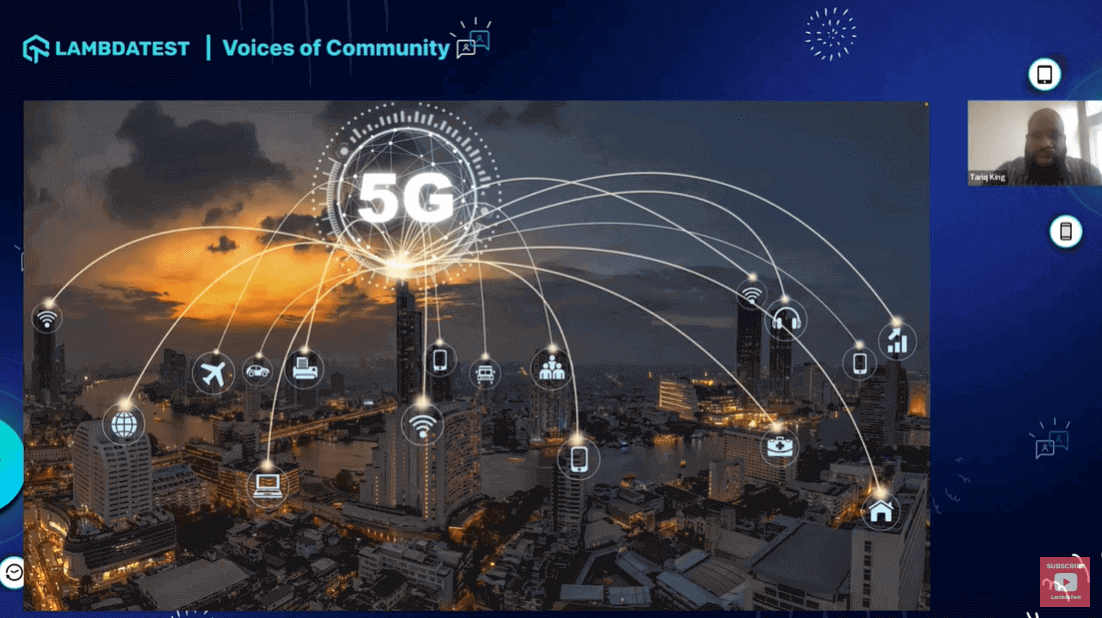
- 5G: To stay connected and collaborate, the first tech that he lists is related to connectivity. He states that over the last two years, there’s been the rollout of the fifth generation of wireless data networks, and that has matured globally. Tariq mentions that there are many advantages to 5G over previous generations, regarding higher speed, larger capacity, and lower latency. However, one of the critical challenges with 5G is that it covers a smaller area in terms of the signal reach because it uses a higher frequency band. Therefore, more base stations need to be built to spread 5G, which takes time.
- Edge Computing: As per Tariq, the concept of edge computing involves bringing the computation and storage closer to the source of the data, usually referred to as the edge of the network. To simplify, we’re talking about running fewer processes in the cloud and moving them closer to local places such as the user’s computer, Internet of Things (IoT) device, or even special edge networks. He further explains that moving the computation to that network’s periphery or edge minimizes typical long-distance communication.
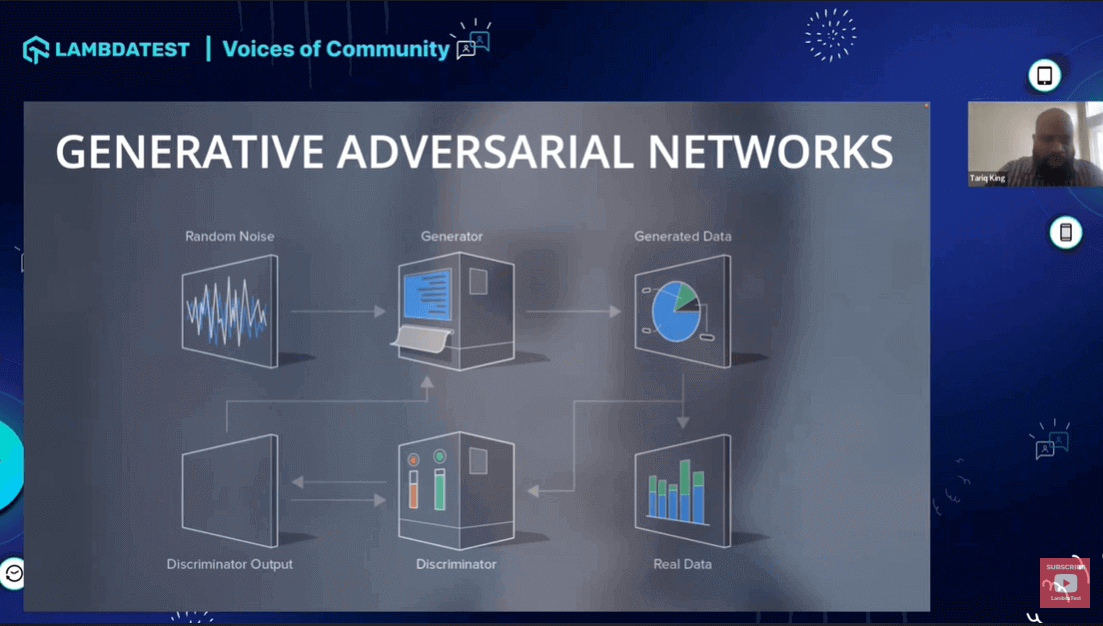
- Generative AI: While there have been several developments in AI concerning Big Data and analytics, one of the most impactful things within the last year or two has been the rise of generative AI. Tariq explains that when we talk about generative AI, we’re talking about AI systems that can “create things,” such as pictures, audio, or writing samples. So we’ve been able to get AI to generate photos, compose music, write poems, and use articles.
One of the critical areas where this showed a boom in 2021 and 2022 was the area of generative adversarial networks. He adds that there are two parts of this – Generative AI which creates things, and Discriminative AI, which can identify things like people in pictures or words and distinguish them from what is real and what is fake.
Tariq then discusses another foundational generative AI approach that has risen, called the generative pre-trained transformers (GPT). He explains how the newly launched ChatGPT has taken the world by storm.
He adds that ChatGPT is a specialized variant of GPT3, specifically designed to generate natural language responses to questions and conversations. So it uses the GPT3 architecture but has been optimized for conversational texts. This is important because GPT3 is familiar. It’s the third generation, indicating there are generative pre-trained transformers.
Refer to our detailed blog to learn how to use ChatGPT for test automation.
- Extended Reality (XR): He discusses that Meta announced their Metaquest Pro, a game changer in some respects, and how we’re now seeing other similar headsets on the market that are bringing us closer to solving physical challenges. Another essential advancement in 2022, especially again a lot triggered by the pandemic, is pushing toward this extended reality or XR.
- Computer-Generated Imagery (CGI): CGI has gone hand in hand with some of the year’s biggest announcements. The release of Unreal Engine 5 by Epic Games was a huge breakthrough in rendering technologies and how we can build these virtual worlds and even virtual humans or meta-humans.
He adds that Meta also had the AI-based code avatars that brought in many of these light flight movements. Still, the idea here is that even with CGI, you’re starting to see that it’s becoming challenging to determine whether or not this is computer generated or a real human being. Combining this with AI, we’ve seen a lot of deep fakes and so on that are slightly entertaining and disturbing when we start thinking about potential dangers.
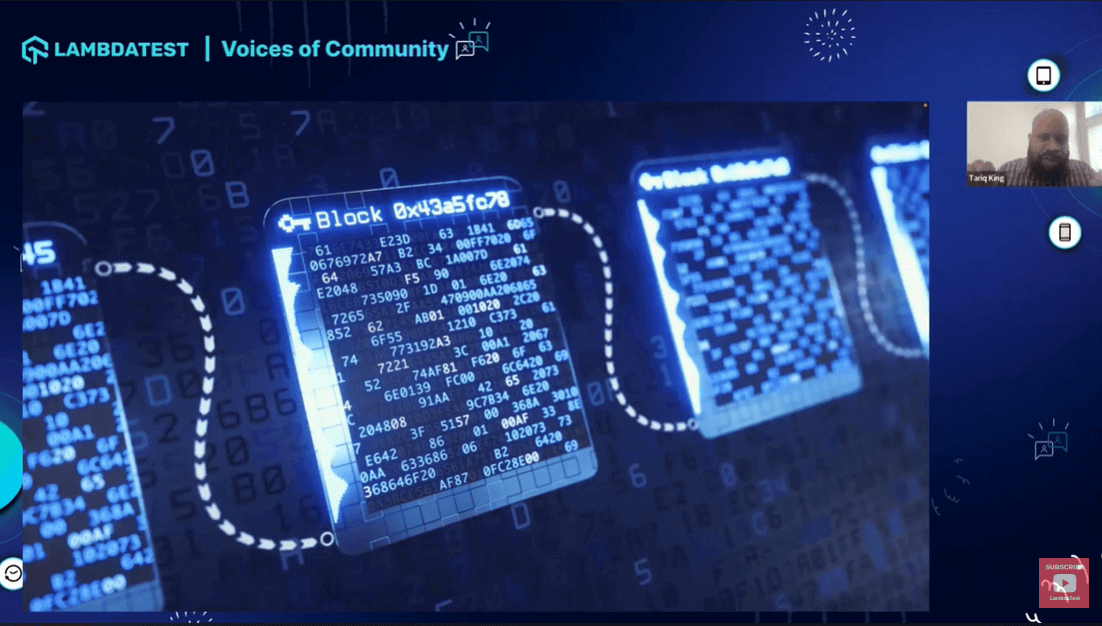
- Blockchain: We also have the world of crypto. Bitcoin is leading the pot there, and when we think about payment systems that use cryptography, we get value from crypto from the proof of the transactions and how they’re verified on the blockchain. It is very attractive to some, especially from an investment standpoint. Others are using it more traditionally for payments. Still, these have been technologies that have been quite prevalent in our minds and particularly blockchain technology, which decentralizes and has this kind of public digital ledger.
Uncertain Future: Recession or Recovery
Tariq talks about seeing throughout the last two years and how it’s not all about technological advances. He states that we’re in a season of uncertainty. As we are coming out of the pandemic, we are being hit with immense geopolitical tension and economic turmoil, leading us to wonder if we are on the road to recession or recovery. He adds that we need to know which way we’re headed. He continues that for many reasons, we’ve seen these mass layoffs, and because of such economic turmoil, companies will move into a different mode, and we’ve all been impacted by it. There’s not anyone that’s not affected or doesn’t know someone who’s been impacted by it.
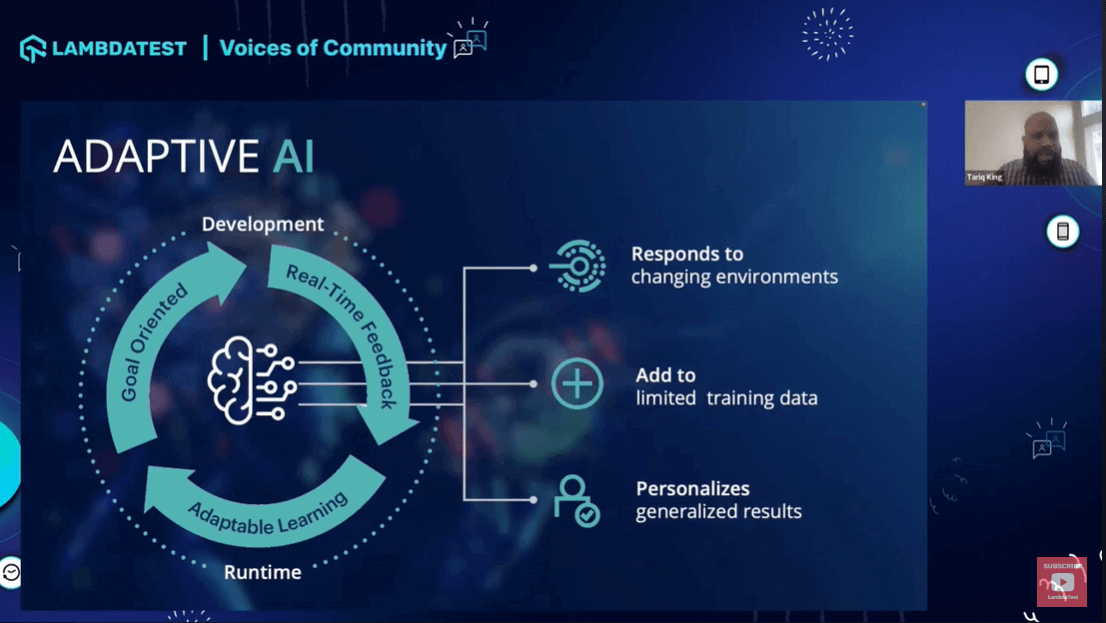
Moving forward, Tariq discusses Adaptive AI. He explains that Adaptive AI means the systems that can respond to changes in their environment. He believes that the next shift we’ll see is inward, similar to the concept of self-testing. From an engineering perspective, when we think about Adaptive AI, we have to recognize that we’re moving towards a place where we have to be able to do machine learning operations or ML Ops, sometimes referred to as AI Ops. We’re talking about these AI systems’ continuous integration deployment, learning, and testing. Thus, from an engineering standpoint, we need to be ready for that, specifically to talk about testing.
Rise of Super Apps
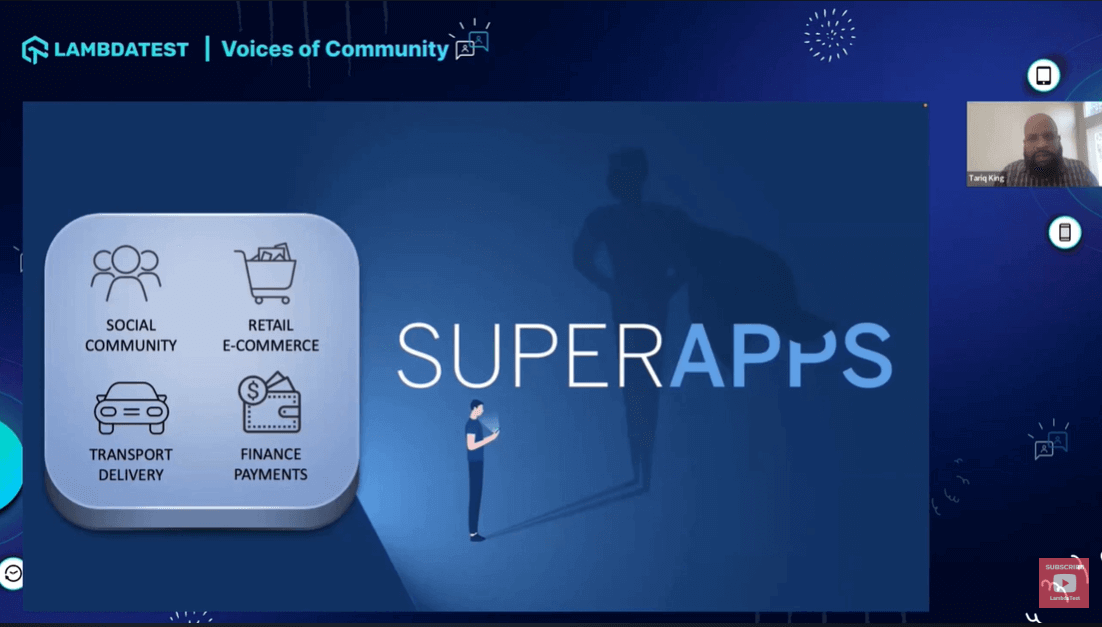
Tariq then discusses the upcoming trend of super apps. He explains that a super app is a mobile application that provides personal and commercial services in one self-contained ecosystem. Tariq states that the success of a super app depends heavily on the engineering side, as it is essential to have a seamless and secure user journey and experience.
Tariq believes that in 2023 we’ll see more focus on platform engineering, including composable architectures platform as a service and tying all that together with DevOps SRE monitoring.
Again, from the engineering standpoint, Tariq states that cloud-native technologies are here to stay, and containers, service meshes, microservices, immutable infrastructure, etc., are going nowhere. This means that the individuals in this space will expect a lot more focus on development, quality engineering, and testing.
Future of Metaverse
Tariq states that there’s been a lot of hype and a lot of talk about the metaverse. He adds that, of course, the metaverse has yet to exist. Still, this single iteration of the internet and many virtual and augmented reality aspects are coming into play here. Tariq adds that it is crucial to think about how to start building the metaverse. He adds that we need to find ways and techniques that we can leverage to help us discover and iterate over what is required.
Tariq states that when it comes to the metaverse design, we’re going to see a lot of need for acceptance-driven test design or designing the metaverse for testability because testing can be used as the headlights of the project to help guide it and shine lights on risk and then feed it right back into the process. Tariq thinks that there’s an alignment with the metaverse in everything we’ve talked about over the last two years, and he firmly believes that covid was a catalyst in doing so. He talks about how he enjoyed embarking on missions where he has leveraged AI and machine learning to test these different metaverse elements, such as digital avatars. He adds that testing now involves the look and feel or customizations of these various digital avatars and how moving into the world of actually being able to test conversations automatically opens up to a lot of complex problems like video quality testing, AI for open-world testing, and AI for virtual reality testing. He states that how good the user experience is in the metaverse will determine how immersed you are and how real the things will feel.
Final Word
Before diving into the Q&A, Tariq briefly discusses how we can navigate all the uncertainties we face.
Tariq then discusses how we start to navigate this uncertainty, whether you’re a business or an individual. The first thing he states is knowing that unexpected things can happen, and you must be prepared. You don’t want anything to catch you by surprise; thus, you should be strategic in everything as you go through and think about doing something. You have to be able to look forward critically, analyze pros and cons, things that could happen even if there’s not a high probability of them happening, and try to make sure that you have that strategic planning.
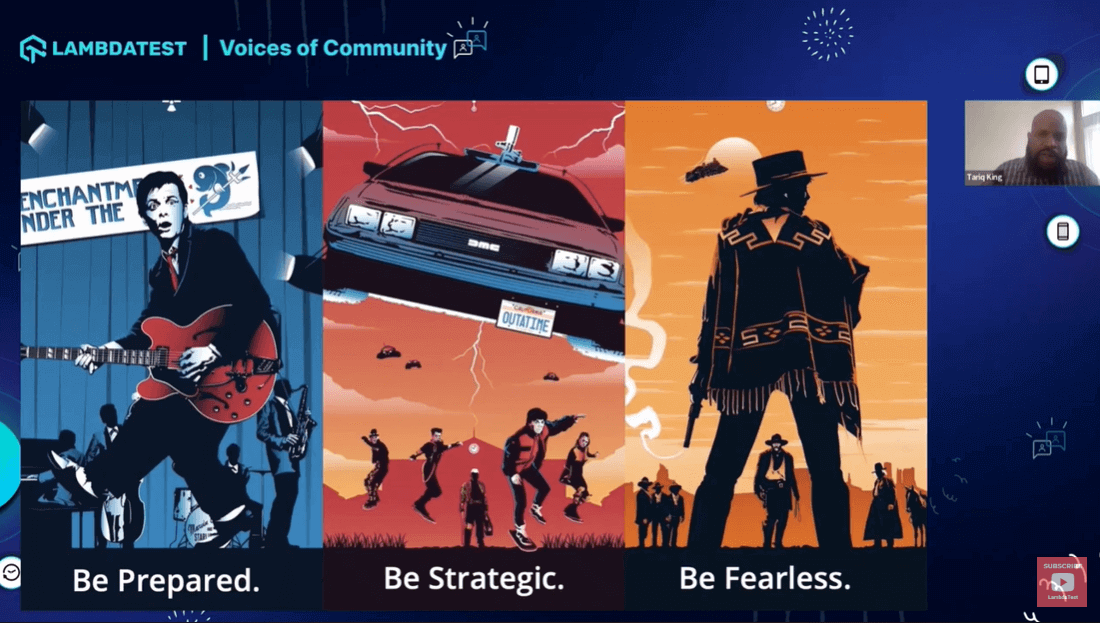
Another critical aspect to remember is to be fearless, knowing that if you prepare yourself, look forward, and know whatever happens, you have to face it head-on and move forward.

Q&A Session
Before wrapping up, Tariq answered several questions the viewers raised. Here are some of the insightful questions from the session:
- What advancements need to be made to test the decentralized applications?The first thing to realize is that testing decentralized and distributed systems, in general, is a difficult thing. There is a foundation of knowledge around testing distributed systems, and it’s something that the testing community has yet to recognize as a complex problem, even from as early as thinking of parallel processing.
In terms of testing blockchain specifically, I have seen some content. A former colleague of mine, Diony Santiago, created a tutorial at one point on testing the blockchain. I’ve seen others follow suit; I can find and share that material. But what I can say in terms of tooling is that folks are tackling it, and tools are coming up. I have yet to personally dabble enough to see any tooling, especially around testing blockchain.
- As a commoner, is there a place where I can find the information, or how do you recommend it for those people?My general advice to folks who want to venture into new areas, for example, AI and machine learning, is that innovation happens once you start to put your hands on the keyboard. Getting started with a good place where people post projects in a marketplace, but that only happens occasionally. However, some companies are active in the community and push things out there. Still, I always tell people that the first thing is to be able to find the resources to help them with the information they need to drive hands-on engagement.
Hope You Enjoyed The Webinar!
We hope you liked the webinar. In case you missed it, please find the webinar recording above. Make sure to share this webinar with anyone who wants to learn more about the upcoming 2023 technology trends. Stay tuned for more exciting TestMu AI Webinars. You can also subscribe to our newsletter Coding Jag to stay on top of everything testing and more!
That’s all for now, happy testing!


Did you find this page helpful?
More Related Hubs
TestMu AI forEnterprise
Get access to solutions built on Enterprise
grade security, privacy, & compliance
- Advanced access controls
- Advanced data retention rules
- Advanced Local Testing
- Premium Support options
- Early access to beta features
- Private Slack Channel
- Unlimited Manual Accessibility DevTools Tests