

Next-Gen App & Browser Testing Cloud
Trusted by 2 Mn+ QAs & Devs to accelerate their release cycles


On This Page
- What Is Vitest?
- What Is Jest?
- Core Differences Between Vitest vs Jest
- Core Features of Vitest vs Jest
- Advantages of Vitest vs Jest
- Getting Started with Vitest
- Migrating from Jest to Vitest
- Getting Started with Jest
- When to Use Vitest vs Jest?
- Performance in Large Test Suites
- Which Is Right for Your Project?
- Running Tests at Scale
- Conclusion

Vitest vs Jest: Which Testing Framework Should You Choose?
Vitest vs Jest: Compare performance, setup, features, and use cases. Learn which JavaScript testing framework is best for modern or legacy projects.

Harita Ravindranath
March 16, 2026
Testing is an essential part of building reliable JavaScript web applications. With several testing frameworks available today, choosing the right one can make a significant difference in your development workflow. Among the most popular choices are Vitest and Jest.
For years, Jest has been the de facto standard in the industry. It is mature, stable, and widely adopted by teams of all sizes. However, as the JavaScript ecosystem evolves, and with the rise of modern and faster build tools like Vite, a new testing framework, Vitest, has emerged and is quickly gaining popularity among developers for its speed and simplicity.
So, which testing framework is better - Vitest or Jest? The answer depends on several factors, such as your project architecture, ease of setup, module handling, performance requirements, and overall developer experience.
Overview
What Is the Difference Between Vitest vs Jest?
Vitest vs Jest is a common comparison between two popular JavaScript testing frameworks designed for different development ecosystems. Jest focuses on stability, extensive ecosystem support, and compatibility across various JavaScript setups, while Vitest emphasizes speed and seamless integration with modern Vite-based workflows.
- Vitest: A modern testing framework built on top of Vite that prioritizes faster execution and an improved developer experience.
- Jest: A mature JavaScript testing framework widely used for reliable testing across both frontend and backend applications.
When Should You Choose Vitest Over Jest?
Vitest is a better choice when your project uses Vite or modern frontend tooling, and you want faster feedback during development. It is especially useful for teams that prefer a lightweight setup with quick test execution and minimal configuration.
When Should You Choose Jest Over Vitest?
You should choose Jest when working on established projects that rely on traditional build systems or require extensive plugin support. It is also a strong option when long-term stability and compatibility across diverse JavaScript environments are priorities.
What Is Vitest?
Vitest is an open-source unit testing framework for JavaScript developed by the Vite team. Built on top of the Vite build tool, it provides modern testing capabilities such as assertions, mocking, snapshot testing, and code coverage while leveraging Vite's fast module transformation system.
As of the Vitest 4.x release, the framework includes several major improvements, including a stable Browser Mode, enhanced performance optimizations, and additional testing capabilities such as visual regression testing using toMatchScreenshot and the Schema Matching API.
These features make Vitest particularly well-suited for modern frontend applications built with Vite.
Vitest also supports modern JavaScript features such as ES Modules and TypeScript out of the box, reducing the need for complex configuration. Its API remains largely compatible with Jest, allowing teams to migrate existing test suites with minimal effort.
What Is Jest?
Jest is an open-source JavaScript testing framework originally developed by Meta. Built on top of the Jasmine testing framework, Jest provides built-in features such as assertions, mocking, snapshot testing, and code coverage, making it a comprehensive testing solution for JavaScript applications.
The latest Jest 30.x releases continue to improve support for ES Modules (ESM), performance optimizations, and compatibility with modern JavaScript tooling. Despite newer frameworks entering the ecosystem.
Jest remains one of the most widely adopted testing frameworks due to its stability, mature ecosystem, and extensive community support.
Jest integrates well with popular frameworks such as React, Angular, Vue, and Node.js, making it a reliable choice for both frontend and backend testing.
For a deeper understanding of the Jest unit testing framework and its features, follow this detailed Jest tutorial.

Note: Perform JavaScript tests at scale across 3000+ browsers and OS combinations. Try TestMu AI now!
What Are the Core Differences Between Vitest vs Jest?
When comparing Vitest vs Jest, both are powerful JavaScript testing frameworks, but they cater to slightly different project types.
Understanding how their performance, setup, and ecosystems differ helps decide which is better suited for modern Vite-based projects versus legacy or non-Vite projects.
| Feature | Jest | Vitest |
|---|---|---|
| Built On | Jasmine | Vite |
| Framework Support | Works with most JavaScript frameworks (React, Angular, Vue, Node.js) | Optimized for Vite-based modern frontend projects (React, Vue, Svelte) |
| Setup & Configuration | Simple setup, but requires extra configuration for TypeScript, ES modules, etc. | Minimal configuration for Vite projects as it reuses existing Vite settings |
| Performance & Speed | Good performance, but slower cold starts and watch mode on large projects | Faster startup and test execution |
| TypeScript Support | Needs additional configuration | Native support |
| ES Module Support | Limited support, needs additional configuration | Native support |
| Code Coverage | Built-in | Built-in |
| Snapshot Testing | Built-in | Built-in |
| Mocking Support | Built-in | Built-in |
| Watch Mode | Built-in | Built-in with fast reloading |
| Debugging | Basic debugging and manual setup are needed | Built-in features like watch-mode UI, instant reloads, and ESM debugging through tight integration with Vite |
| Test Runner Features | Mature and stable runner with CLI support | Fast Vite-powered runner with CLI support |
| Frontend Utilities | Supports Node.js and jsdom environments and React Native. Compatible with React Testing Library. | Supports node, jsdom, and happy-dom environments. Compatible with React Testing Library. Offers Browser mode, UI, and benchmarking tools. |
| Backend / Node.js Support | Excellent support for Node.js and backend services | Support for Node.js, but primarily optimised for Vite projects |
| CI/CD & Dev Workflow | Widely supported in most CI/CD environments | Integrates well with modern CI/CD workflows and provides faster execution |
| Plugin & Tooling Ecosystem | Mature ecosystem with extensive plugins and integrations | Smaller but rapidly growing ecosystem with fewer plugins |
| Migration / Legacy Support | Ideal for legacy or non-Vite projects | Best suited for modern projects. Easy to migrate from Jest. |
| Community | Larger community | Smaller but rapidly growing community |
| Documentation | Extensive documentation | Good documentation |
| Best For | Large-scale, legacy, and non-Vite projects | Modern, Vite-powered applications |
What Are the Core Features of Vitest vs Jest?
When comparing Vitest vs Jest, both frameworks offer powerful capabilities for JavaScript test automation. They support essential features such as assertions, mocking, snapshot testing, and code coverage, but their implementation differs based on architecture and ecosystem.
Understanding these core features helps developers choose the framework that best fits their workflow.
So, what makes Vitest appealing for modern Vite-based projects, and why does Jest remain a trusted choice for large-scale applications?
Core Features of Vitest Testing Framework
Vitest is designed for modern JavaScript projects and comes with a rich set of built-in features focusing on speed, simplicity, and seamless integration with the Vite ecosystem.
1. Native Integration with Vite: Vitest is built on top of Vite and reuses its configuration, plugins, and dependency graph. This ensures consistent behavior between development and testing environments.
You can configure Vitest using vite.config.js itself, eliminating the need for separate test configurations.
// vite.config.js
import { defineConfig } from "vitest/config";

export default defineConfig({
  test: {
    globals: true,
  },
});
2. Lightning Fast Startup and Execution: Vite delivers a near-instant startup and faster test execution by leveraging Vite's native ES module support and optimized transformation pipeline. The test runs directly in modern JavaScript without any transpilation overhead.
npm run testTests start immediately without long compilation steps, even in large test suites.
3. Jest-Compatible API: Vitest supports most of the Jest API, which means code written for Jest will often work with Vitest with minimal or no changes.
This makes migration between the two frameworks smooth. If you are already familiar with Jest, you can easily adapt to Vitest without relearning testing patterns, making the transition between Vitest vs Jest straightforward.
For example, here's a simple test case written in both Jest and Vitest. You will notice the structure and assertions are almost identical.
Using Jest:
describe("Sum", () => {
  it("adds two numbers correctly", () => {
    expect(1 + 2).toBe(3);
  });
});
Using Vitest:
import { describe, it, expect } from "vitest";

describe("Sum", () => {
  it("adds two numbers correctly", () => {
    expect(1 + 2).toBe(3);
  });
});
The main changes usually involve replacing jest with vi for mocks and updating configuration files. Otherwise, the migration is mostly seamless, which is why Vitest is often considered a drop-in replacement for Jest in modern projects.
4. Native TypeScript and ESM Support: Vitest works with TypeScript and ES Modules, without requiring any additional configurations. You can start writing tests directly in TypeScript. No extra Babel or transformer setup is needed.
// example.test.ts
import { describe, it, expect } from "vitest";

describe("TypeScript Test", () => {
  it("works correctly", () => {
    expect(true).toBe(true);
  });
});
5. Intelligent Watch Mode and UI Mode: Vitest provides instant feedback through its watch mode, powered by Vite's Hot Module Replacement (HMR)-like behaviour. Only the affected tests are rerun when a file changes, enabling a near real-time feedback and a faster development workflow.
You can start watch mode by running:
npm run test -- --watchVitest also provides an interactive UI mode that opens a web dashboard. This interface allows you to view, filter, and inspect test results, as well as rerun tests easily, making debugging and test management more convenient.
You can launch UI mode by running:
npm run test -- --ui6. Built-in Code Coverage: Vitest includes comprehensive code coverage with both V8 and Istanbul support built in. You can generate code coverage by running:
npm run test -- --coverageBy default, Vitest uses the V8 engine for code coverage, which provides faster results over Istanbul.
These features make Vitest a modern, fast, and developer-friendly testing framework. In a direct comparison of Vitest vs Jest, it is clear that Vitest offers smoother integration with Vite, faster execution, and a seamless developer experience while still maintaining compatibility with Jest for easier migration.
Core Features of Jest Testing Framework
Jest is a mature framework that comes with a rich set of built-in features that make it powerful and flexible.
- Zero-Configuration Setup: Jest works out of the box with sensible defaults, reducing configuration overhead. In most cases, you can start writing tests immediately after installation without a complex setup. All you need to do is run:
npm install -D jest
npx jest
That is it! Jest will automatically detect and execute your test files. No additional configuration is required for basic Jest testing.
Common Matchers are:
- toBe: Checks strict equality using
Object.is, ensuring both value and type match exactly. - toEqual: Performs deep equality comparison for objects and arrays by comparing their contents rather than their references.
- toBeGreaterThan / toBeLessThan: Verifies whether a numeric value is greater than or less than the expected value.
- toBeGreaterThanOrEqual / toBeLessThanOrEqual: Checks if a value is greater than, equal to, less than, or equal to the expected number.
- toBeTruthy / toBeFalsy / toBeNull / toBeUndefined: Validates common truthy, falsy, null, and undefined values in test conditions.
- toMatch: Matches a string against another string or a regular expression pattern.
- toContain: Confirms whether an array or string contains a specific value or substring.
- toThrow: Ensures that a function throws an expected error or exception when executed.
Refer to the official Jest documentation for the full list.
test("basic assertions example", () => {
  const sum = 2 + 3;
  expect(sum).toBe(5); // Exact match
  expect(sum).toBeGreaterThan(3); // Comparison
  expect(sum).not.toBe(10); // Negation
});Common Jest Mock APIs are:
- jest.fn(): Creates a new mock function that can track calls, return values, and be asserted against.
- jest.spyOn(): Monitors calls to an existing function without changing its implementation.
- Module Mocking: Replaces imported modules with mocks using
jest.mock('moduleName'), allowing you to control module behavior in tests.
test("mock function example", () => {
  const mockFn = jest.fn(); // Create a mock function
  mockFn(5);
  expect(mockFn).toHaveBeenCalled();
  expect(mockFn).toHaveBeenCalledWith(5);
});- If they match, the test passes.
- If they differ, the test fails, indicating that the UI has changed.
Assume you have a component named Button. You can create a snapshot test for it as follows:
test("Button matches snapshot", () => {
  const { asFragment } = render(<Button label="Click Me" />);
  expect(asFragment()).toMatchSnapshot();
});
When you run this test for the first time, Jest will generate a snapshot file inside a __snapshots__ folder.
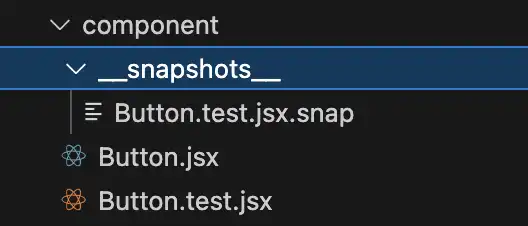
If the rendered output changes later, Jest will notify you and give you the option to update the snapshot if the change was intentional.
npm test -- --coverageThe report can be generated in multiple formats, for example: HTML, JSON.
npm test -- --coverage --coverageReporters=htmlBy default, Jest uses the Istanbul engine for code coverage.
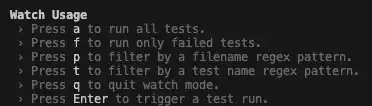
npm test -- --watchWatch mode even has an interactive menu for filtering and selecting which tests to run.
# Jest automatically uses all available CPU cores
npm test

# Customize worker count
npm test -- --maxWorkers=4
npm test -- --maxWorkers=50%
What Are the Advantages of Vitest vs Jest?
When comparing Vitest vs Jest, both frameworks offer powerful capabilities for JavaScript automation testing. Each tool provides unique strengths that appeal to different development environments and project requirements.
Understanding their advantages can help you decide which testing framework aligns better with your workflow and performance needs.
So, what makes Vitest attractive for modern projects, and why does Jest continue to dominate many production environments?
Vitest Advantages
Beyond its features, Vitest offers several advantages that make it an attractive choice for modern JavaScript projects.
Below are the advantages of Vitest in a direct comparison of Vitest vs Jest:
- Blazing Fast Performance: Built on top of Vite, tests run significantly faster in Vitest compared to Jest because of its native ES module support, optimized transformation pipeline, and smart caching.
- Minimal Configuration: Works out of the box with Vite projects, requiring little to no additional setup.
- Native ES Module Support: Fully supports ES modules without transpilation, avoiding the CommonJS conversion overhead that Jest sometimes requires.
- Native TypeScript Support: Write tests directly in TypeScript without extra configuration.
- Jest-Compatible API: Vitest supports most of Jest's API (
describe,it,expect,mock), making migration from Jest easy with minimal or no changes. - Intelligent Watch Mode with HMR: Leverages Vite's Hot Module Replacement; only affected tests are rerun on file changes, providing rapid feedback.
Jest Advantages
Beyond its rich feature set, Jest provides several practical advantages that make it a dependable choice for JavaScript automation testing. When considering Jest vs Vitest, these benefits help explain why many teams continue to favor Jest for their projects:
- Mature and Battle-Tested: Available since 2014, Jest is stable, reliable, and proven in real-world projects.
- Comprehensive Testing Tools: Built-in support for mocking, snapshot testing, and code coverage reduces the need for additional libraries.
- Minimal Configuration: Works out of the box with built-in test runners, assertions, mocking, and code coverage.
- Framework Support: Compatible with React, Vue, Angular, Next.js, Node.js, and most JavaScript frameworks.
- Long-Term Support: Actively maintained by Meta with regular updates and bug fixes.
- Performance and Reliability: Optimized for fast test execution, Jest handles large test suites efficiently.
- Massive Community and Ecosystem: Active community, extensive documentation, and a wide range of plugins and integrations.
How to Get Started with Vitest Testing Framework?
Let's learn how to set up Vitest in a Vite project and run a basic test.
Prerequisites:
- Node.js (v20 or later)
- npm, yarn, or pnpm package manager
- A Vite project (React, Vue, Svelte, etc.) with Vite >=v6.0.0
For this demo, I will be working with a React app using the npm package manager. If you do not have a Vite project yet, you can create one using:
npm create vite@latest my-app -- --template reactSteps to Install Vitest:
1. Install Vitest: Inside your Vite project, run:
npm install -D vitest2. Update Vite Configuration: Edit the vite.config.js or vite.config.ts with Vitest configuration:
// vite.config.js
import { defineConfig } from "vitest/config";

export default defineConfig({
  test: {
    globals: true,
    environment: 'jsdom', // for frontend projects
  },
})
3. Add Test Script: Open package.json and add the following code:
"scripts": {
  "test": "vitest"
}
4. Create a Sample Test File: Create a sample test file src/tests/example.test.js and add the following code:
// example.test.js
import { describe, it, expect } from "vitest";

describe("Sum", () => {
  it("adds two numbers correctly", () => {
    expect(1 + 2).toBe(3);
  });
});
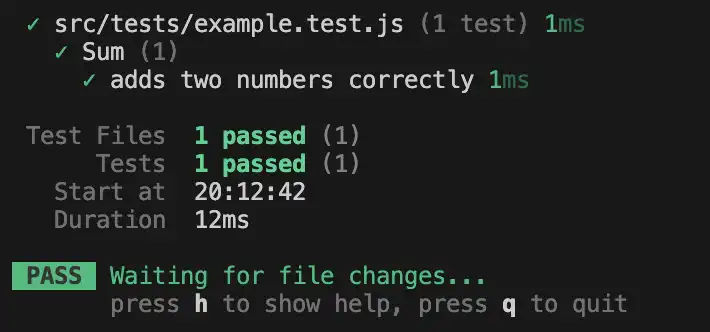
5. Run the Test: Execute the following command:
npm run testOutput: Vitest will start instantly and display the test results in the terminal.
How to Migrate from Jest to Vitest?
Migrating from Jest to Vitest is generally straightforward because Vitest provides a largely Jest-compatible API. Most existing test files work with minimal modifications, especially in modern JavaScript projects.
- Install Vitest and Remove Jest Dependencies: Install Vitest in your project and remove Jest-related packages such as
jest,babel-jest, orts-jest. - Replace the Jest Configuration: Rename or replace the existing
jest.config.jsfile with avitest.config.jsconfiguration file based on the Vitest configuration documentation. - Update Mocking APIs: Replace Jest's mocking utilities with Vitest equivalents, such as changing
jest.fn()andjest.mock()tovi.fn()andvi.mock(). These are documented in the Vitest Jest compatibility guide. - Remove Unnecessary Babel Configuration: If Babel was only used for running Jest tests, it can often be removed since Vitest works directly with Vite's module system.
- Update Test Scripts and CI Configuration: Update the test script in
package.jsonand modify CI pipelines to runvitestinstead ofjest.
How to Get Started with Jest Testing Framework?
Getting started with Jest is straightforward, making it easy for teams to begin testing JavaScript applications quickly. Its minimal configuration, built-in testing tools, and reliable performance allow developers to write and run tests almost immediately.
Let's learn how to set up Jest in a project and run a basic test.
Prerequisites:
- Install Node.js: Download and install Node.js (v16 or later) from the official website. This provides the runtime needed for your project and testing.
- Install a Package Manager: Use npm (comes with Node.js), or install yarn or pnpm to manage project dependencies and run scripts.
- Set Up Your Project: Ensure you have a JavaScript or TypeScript project ready, such as a React, Vue, or Node.js application, to run tests in.
For this demo, I will be working with a React app using the npm package manager. If you do not have a project yet, you can create one using:
- CRA (Create React App):
npx create-react-app my-app - Vite:
npm create vite@latest my-app -- --template react(choose React/TypeScript template if needed)
Steps to Install Jest:
To start using Jest as your automation testing framework, you first need to install it and configure it in your project.
1. Install Jest: Inside your project, run:
npm install -D jestFor modern JavaScript support, also install:
npm install -D jest-environment-jsdom babel-jest @babel/preset-env @babel/preset-react2. Configure Jest: Create a file called jest.config.js in the root directory:
// jest.config.js
export default {
  testEnvironment: "jsdom",
};
Now, configure Babel by creating the configuration file babel.config.js:
// babel.config.js
export default {
  presets: ["@babel/preset-env", "@babel/preset-react"],
};
3. Add Test Script: Open package.json and add the following code:
"scripts": {
  "test": "jest"
}
4. Create a Sample Test File: Create a sample test file src/tests/example.test.js and add the following code:
// example.test.js
describe("Sum", () => {
  test("adds two numbers correctly", () => {
    expect(1 + 2).toBe(3);
  });
});
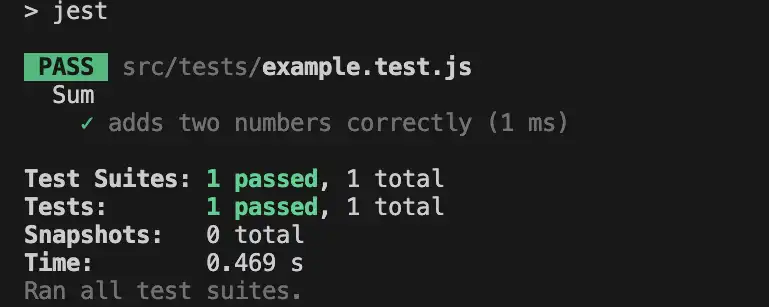
5. Run the Test: Execute the following command:
npm run testOutput: Jest will start instantly and display the test results in the terminal.
When to Use Vitest vs Jest?
Choosing between Vitest and Jest often depends on your project setup, performance requirements, and development workflow. While both frameworks support modern JavaScript testing, they are optimized for different ecosystems and use cases.
Understanding when each tool works best helps teams select the right framework for efficient and reliable testing.
So, when should you use Vitest for modern development environments, and when is Jest the better choice for large or established projects?
Choose Vitest When
Vitest is best suited for modern JavaScript projects that prioritize speed, simplicity, and tight integration with the Vite ecosystem.
- Vite-Based Project: Your application is already built using Vite, allowing Vitest to integrate seamlessly with the existing build setup.
- Modern Frontend Stack: You are developing a modern frontend application using frameworks like React, Vue, or Svelte.
- Minimal Configuration: You prefer a testing framework that works with modern defaults and requires little setup.
- ES Modules and TypeScript Support: Your project heavily relies on ES Modules or TypeScript and benefits from native compatibility.
- Faster Test Performance: You want a testing experience similar to Jest but with faster execution and instant feedback during development.
Choose Jest When
Often, when you are deciding between Jest vs Vitest, it is important to know when to choose which framework. Keep a few key points in mind to help you make the right choice:
- Project Type: Your project is not built with Vite (Webpack-based, Next.js, Angular, Node.js, etc.).
- Legacy or Large-Scale Projects: You are working on legacy or enterprise projects that already use Jest and rely on CommonJS.
- Stability: You need a stable, mature, and battle-tested testing framework.
- Ecosystem: You require a rich ecosystem of plugins, integrations, and strong community support.
- Backend Testing: You are testing backend services, APIs, or Node.js applications.
- React Native Support: You need support for React Native projects.
Overall, Jest remains one of the most popular automation testing frameworks for unit testing in JavaScript, helping developers build reliable automation testing solutions for modern applications.
How Does Vitest vs Jest Perform in Large Test Suites?
Performance is one of the most discussed aspects when comparing Vitest vs Jest, especially in large codebases with thousands of tests.
Several independent benchmarks and production case studies show that Vitest often performs faster in modern JavaScript environments, particularly when using Vite-based projects.
The study ran benchmarks on a real production monorepo containing roughly 50,000 tests across 12 packages, including React components and Node services, as documented in a Vitest vs Jest benchmark study.
Additional benchmark summaries published by DevToolsWatch confirm the same pattern: Vitest consistently shows faster cold starts, dramatically faster watch mode updates, and lower memory usage in large test suites.
- Cold Start Performance: Cold start measures full test suite execution from scratch; benchmarks show Vitest runs significantly faster than Jest in large monorepos.
- Watch Mode Feedback Speed: Watch mode measures feedback after file changes; Vitest reruns only affected tests using Vite's dependency graph, delivering faster results.
- Memory Consumption: Memory consumption evaluates resource usage during test execution; benchmarks indicate Vitest typically uses less memory than Jest in large projects.
- Impact on CI/CD Pipelines: Performance improvements reduce CI pipeline duration, enabling faster feedback cycles, quicker pull request merges, and improved developer productivity.
Which Is Right for Your Project: Vitest or Jest?
When framing the decision as Jest vs Vitest, the right choice often depends on project architecture, performance expectations, and the development ecosystem you are working in.
Both testing frameworks are widely used for JavaScript unit testing and provide powerful features such as assertions, mocking, and snapshot testing.
While Jest has long been a stable choice for many teams, Vitest has gained strong adoption in modern Vite-based development environments. Ultimately, the right choice depends on your team's workflow, project size, and testing needs.
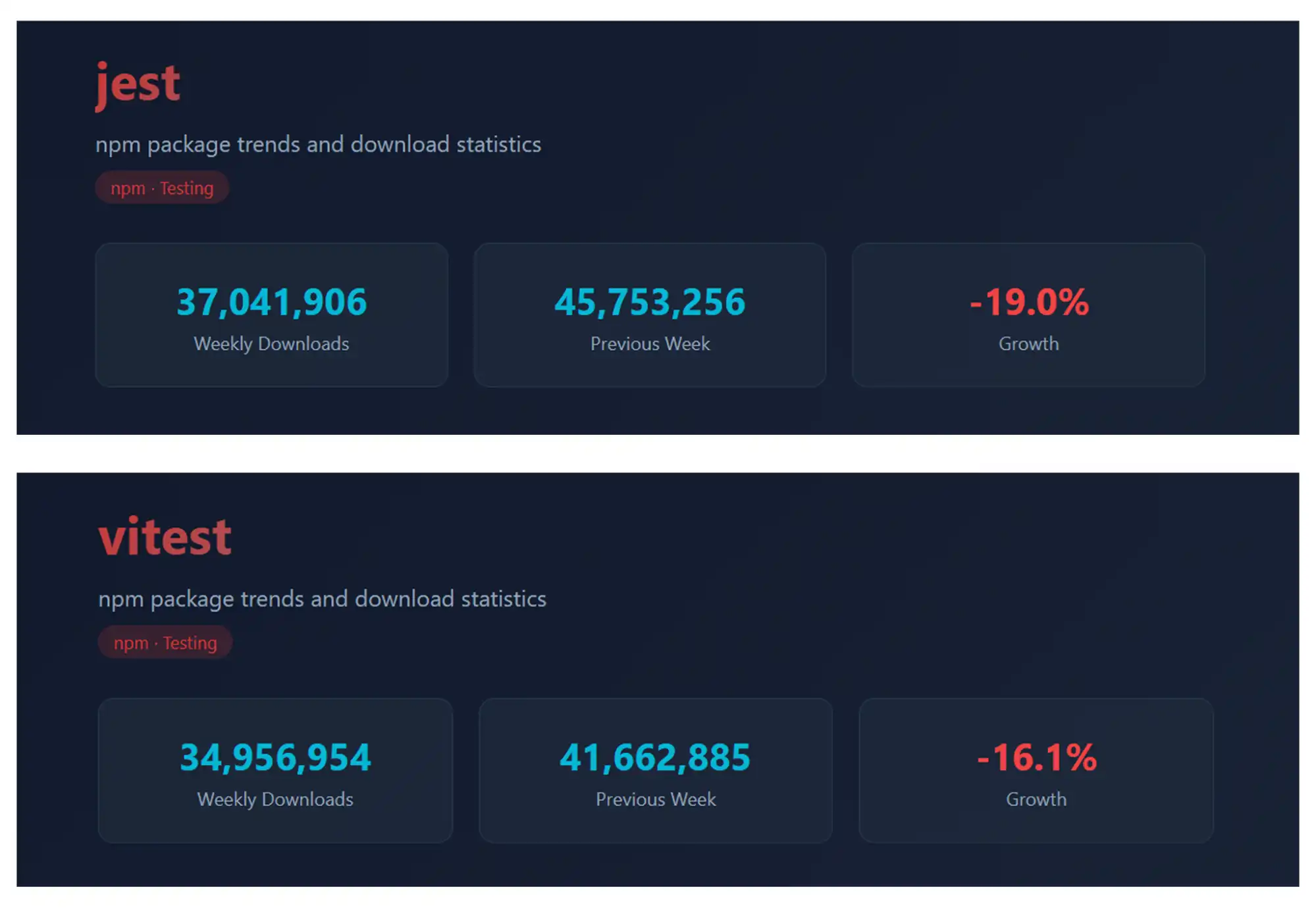
Jest continues to dominate in terms of usage, receiving over 30 million weekly downloads on npm, while Vitest has rapidly gained popularity with millions of weekly downloads, as modern Vite-based projects adopt it.
These numbers reflect how both testing frameworks serve different segments of the JavaScript community, from large enterprise applications to modern frontend stacks.
That said, selecting the right testing framework is only the first step. As projects grow and test suites expand, new challenges often emerge, regardless of whether you use Jest or Vitest.
Common bottlenecks include:
- Increasing execution time: Large test suites can slow down feedback cycles and impact productivity.
- Configuration complexity: Managing transformers, environments, and dependencies becomes harder over time.
- Flaky tests: Inconsistencies between test results in the local and CI environments can erode trust in the suite.
- Resource limitations: Running parallel tests may strain local or CI infrastructure and, without proper management, can slow down or crash the pipelines.
- Maintenance overhead: Keeping test setups up to date with evolving frameworks, dependencies, and upgrades requires continuous effort.
How to Run Vitest and Jest Tests at Scale?
To address these challenges, many teams adopt cloud-based testing platforms that provide scalable infrastructure, consistent environments, and automation support for running large test suites efficiently.
TestMu AI is one such cloud testing platform. It enables teams to execute automated tests across thousands of browser and operating system combinations and thousands of real devices.
By handling infrastructure management and enabling large-scale parallel execution, TestMu AI helps teams using Jest testing or Vitest testing frameworks maintain fast, reliable, and scalable testing workflows.
- Parallel Testing: Run multiple Vitest and Jest testing suites simultaneously across multiple machines to reduce execution time and accelerate CI/CD pipelines.
- Cross-Browser and Platform Coverage: Execute tests across 3,000+ browser and OS combinations, including both legacy and latest versions.
- Real Device Testing: Access 10,000+ real desktop and mobile devices to ensure accurate and reliable testing across real-world environments.
- Framework Compatibility: Supports modern JavaScript testing tools, including Jest testing frameworks and other automation testing frameworks, with minimal setup.
- CI/CD Integrations: Integrates seamlessly with tools such as Jenkins, GitHub Actions, GitLab, Bitbucket, and CircleCI, enabling automated testing within your development pipeline.
- Advanced Debugging Tools: Investigate failures using detailed logs, network capture, video replays, and step-by-step screenshots.
- Test Insights and Analytics: Monitor flaky tests, execution trends, success rates, and overall test performance through a unified dashboard.

To get started, follow the support documentation for setting up Jest testing with TestMu AI. These guides walk you through the setup, configuration, and best practices to run your tests smoothly on the cloud.
Conclusion
Whether you evaluate the decision as Jest vs Vitest or Vitest vs Jest, both frameworks provide powerful capabilities for JavaScript testing. The right choice ultimately depends on your project architecture, tooling, and performance requirements.
As the JavaScript ecosystem continues to evolve, Jest remains a reliable option for large or legacy codebases, while Vitest is quickly gaining popularity among modern projects built with Vite and ES modules.
If you're also evaluating AI-powered platforms for building the applications you'll be testing, check out our Lovable vs Replit comparison to find the best AI development environment for your team.
Citations
- Getting Started With Jest
- Snapshot Testing with Jest
- Configuring Jest
- Getting Started With Vitest
- Configuring Vitest
- Jest npm Package - Download Trends & Stats | ASOF
- Vitest Package - Download Trends & Stats | ASOF
- Vitest vs Jest 2026: Performance Benchmarks and Migration Guide
- Vitest vs Jest 2026: Speed, Features, Migration | DevTools Research


Frequently asked questions
Did you find this page helpful?
More Related Hubs
TestMu AI forEnterprise
Get access to solutions built on Enterprise
grade security, privacy, & compliance
- Advanced access controls
- Advanced data retention rules
- Advanced Local Testing
- Premium Support options
- Early access to beta features
- Private Slack Channel
- Unlimited Manual Accessibility DevTools Tests